
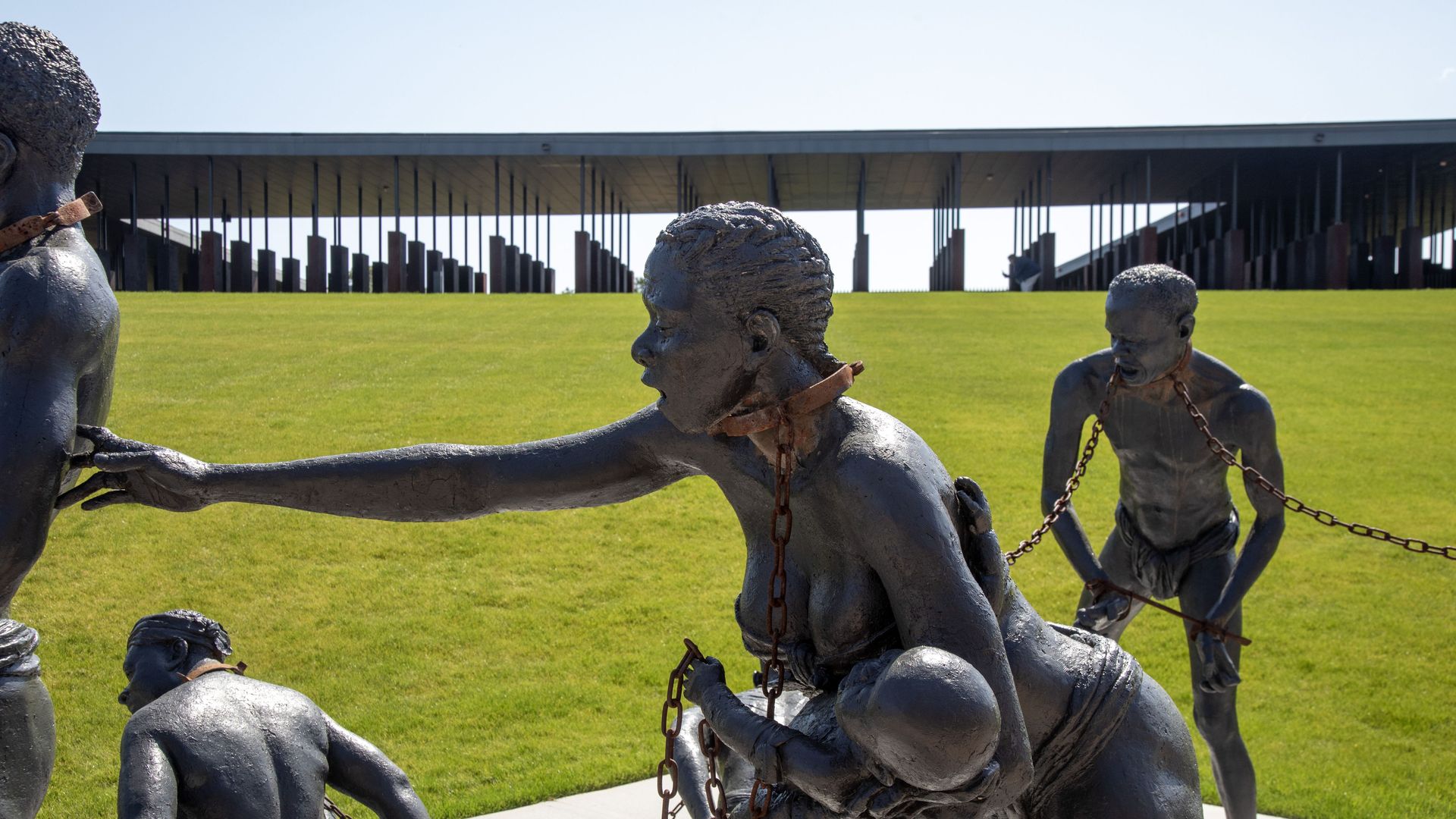

The National Memorial for Peace and Justice in Montgomery, Ala., documents and memorializes the more than 4400 victims of racial lynching’s that occurred in the United States from 1877 to 1950. The Memorial is a project of the Equal Justice Initiative. Photo: Jim West/UCG/Universal Images Group via Getty Images
New voices and previously hidden stories have been reinterpreting U.S. history and reshaping museums for the last 20 years, drawing conservative criticism that President Trump is now wielding against the Smithsonian.Why it matters: The U.S. is more diverse than ever, and since the Cold War ended, pressure to promote a mythic, triumphalist national story has given way to a history of multiple views and complexities.
The big picture: The bubbling change was mainly fought in local school boards as some white parents revolted against demands by parents of color and teachers to include Black and Latino history and books in K-12 curricula.It is now being waged against some of the nation’s most prestigious museums and historians over discussions of patriotism and national pride.Scholars say the battle risks gutting the field of history, pushing museums and historians to ignore research and revert to a 1950s version of U.S. history.
Catch up quick: A White House official told Axios last week that Trump intends to expand his review of American museums for “woke” ideology beyond the Smithsonian Institution.Trump said that the “Smithsonian is OUT OF CONTROL” on Truth Social, then directed his attorneys to conduct a comprehensive review of the museum system, similar to the process officials have conducted at colleges and universities.Meanwhile, the U.S. Department of Education is threatening to pull federal funding from public schools that maintain their DEI programs and keep books on Black history, per a Trump executive order.That order alleged that “Americans (had) witnessed a concerted and widespread effort to rewrite our Nation’s history, replacing objective facts with a distorted narrative driven by ideology rather than truth.
“Zoom in: Trump’s criticisms have drawn strong reactions from scholars like Pulitzer Prize-winning authors Annette Gordon-Reed and David Blight, who say it’s all part of a larger assault on historical scholarship.”In the authoritarian playbook, rewriting collective memory is just this critical strategy for controlling the masses,” Hajar Yazdiha, author of “The Struggle for the People’s King: How Politics Transforms the Memory of the Civil Rights Movement,” told Axios.Yazdiha said if any administration can dictate how we remember the past, it will define the present and the future, including dismissing documented cases of discrimination like enslavement.”With truth comes reckoning, and they don’t want to reckon,” Yazdiha said.
State of play: In recent years, the field of history has witnessed a surge in new books that challenge some of the long-held myths surrounding pivotal figures and events.
- For example, Erica Armstrong Dunbar’s 2017 book, “Never Caught: The Washingtons’ Relentless Pursuit of Their Runaway Slave, Ona Judge,” tells a story about George Washington trying to keep a woman in bondage while he spoke about freedom.
- Some museums, under pressure from tribal nations, have returned remains of tribal members and artifacts linked to tribes, while retelling the story of Indigenous people based on new research.
 THE ARTFUL DILETTANTE