Unknown's avatar

About theartfuldilettante

The Artful Dilettante is a native of Pittsburgh, PA, and a graduate of Penn State University. He is a lover of liberty and a lifelong and passionate student of the same. He is voracious reader of books on the Enlightenment and the American colonial and revolutionary periods. He is a student of libertarian and Objectivist philosophies. He collects revolutionary war and period currency, books, and newspapers. He is married and the father of one teenage son. He is kind, witty, generous to a fault, and unjustifiably proud of himself. He is the life of the party and an unparalleled raconteur.

More on J.D. Vance vs. Capitalism

A reader on my Facebook thread defending J.D. Vance’s opposition to capitalism:

We live in an economic “protectionist” world … Free trade will never follow a Idealist Milton Friedman Economic model again as long as there are States that use their economies as weapons to prop up their own economic initiatives like social welfare states or to pursue Global Military and economic dominance against us … Trade imbalances are the tools they use to defeat us ! IMO that is what Vance is talking about … the same as what Trump is now doing … and you don’t see that ? or am I missing something ?

My reply:

If every nation on earth were economically free, tariffs would be unnecessary. Because Americans opt to trade with totalitarians and slave holders like Communist China, Communist Canada and others, our government has to take some steps in self-defense. President Trump’s use of tariffs is an extension of his foreign and defense policy. The need for tariffs and other barriers to oppose bad governments is not a case against the free market. It simply shows how desperately the whole world needs free markets. At home and abroad, government is the problem, not unregulated markets. A better economist than Friedman is Ludwig von Mises; also his student, George Reisman, who wrote Capitalism. I have read all their books.

The faulty premise in what you (and others on this thread) have written is to assume that tariffs are the only or most important issue in human behavior and economics. False. If we didn’t have free markets and the wealth and profits they produce, there would be nothing to tax or impose tariffs on, because the economy would be stagnant. Again, the onus is on J.D. Vance to define his alternative to free markets. And if he is so great, does this mean the Republican Party will no longer be in favor of capitalism? We need Reagan and Thatcher as never before–at a minimum. If the Democrats regain power, as they likely will if their opponent is as weak and contradictory as Vance, then all this will be moot. Mamdani’s policies will be America’s, if we let Democrats anywhere near the federal government again.

Michael J. Hurd, Daily Dose of Reason

Boys to Men: Rourke, Bacon, Barking and More in Diner

SteynOnline
Mobile Edition
Regular Website

Boys to Men: Rourke, Bacon, Barkin and More in Diner

by Rick McGinnis
Rick’s Flicks

facebook sharing button
twitter sharing button
email sharing button
whatsapp sharing button
telegram sharing button
linkedin sharing button

Barry Levinson’s 1982 film Diner is set in Baltimore at the end of 1959, in the final days of what had been a momentous year, and just before what would be a pivotal decade. The year had begun with the success of the Cuban revolution and its recognition by both the US and Soviet governments, and Barry Gordy’s founding of Motown. Pope John XXIII announced the Second Vatican Council and Buddy Holly, Ritchie Valens and the Big Bopper died in a plane crash in Iowa.

Later in the year China abolished the Tibetan government and replaced the Dalai Lama, NASA introduced the first seven Mercury astronauts, Miles Davis released Kind of Blue and Hawaii was made the 50th state. Nikita Khrushchev was invited to tour the United States by President Eisenhower and, later that same month, met with Mao Zedong in Beijing. The Guggenheim Museum opened in New York City, the Clutter family were murdered by Richard Hickock and Perry Smith in Kansas, Ben Hur topped that year’s box office and Bell Labs invented the MOSFET transistor.

But none of these events are mentioned in Levinson’s film, which concerns itself entirely with a half dozen young men, brought together by the democratizing machinery of the American public school, barely a few years past graduation and living in a holding pattern on the threshold of real adulthood. For a period picture set during the lives of the culturally dominant baby boomer generation, it’s remarkably free of nostalgia; its focus is on these six friends, and Levinson could have swapped the cars, clothes and music with that of any point in time ten or even twenty years on either side of 1959.

Or as Fenwick (Kevin Bacon), one of the friends, wonders aloud to Boogie (Mickey Rourke): “You ever get the feeling there’s something going on that we don’t know about?”

The film begins at a dance in what looks like a church or legion hall, with a local band teasing out the Isley Brothers’ “Shout” to keep the crowd on the floor dancing. We’re introduced to the friends gradually, starting with Modell (Paul Reiser), Boogie and Fenwick, who’s in the basement, drunk and smashing windows. Boogie tells him he’s not being very mature.

“Fuck mature,” Fenwick replies.

Fenwick, it turns out, has sold his date for the night to another young man for five dollars; Boogie, the most emotionally adept member of the group and its designated ladies’ man, convinces the buyer to forget about the transaction and the girl to let Fenwick take her home. After playing a practical joke on his friends by pretending to roll his car – one of the idiotic “smiles” that Fenwick lives for – they convene at the diner on Baltimore’s harbour that is ground zero of their lives together.

Shrevie (Daniel Stern) is the only married member of the group; he sells TVs for a living and defines himself by his record collection. Eddie (Steve Guttenberg) is the next one to go – his wedding is scheduled for New Years Eve but his fiancée Elyse (whose face we never see) has to pass a grueling quiz about his beloved Baltimore Colts or it’ll get called off.

Modell is the designated wiseass; Reiser only had a few dozen lines in the original script but his background in stand-up allowed him to improvise and Levinson eagerly expanded his part. Fenwick comes from a family with money – not a lot, but enough to give him a hundred dollars a month until he’s twenty-three and allow him to be jobless and alcoholic. Boogie works at a hair salon and goes to law school at night, but he has a gambling problem that’s put him deep in debt to the local bookies.

The only member of the group who’s escaped Baltimore is Billy (Tim Daly), who goes to school in New York City and has come home for the holidays to be Eddie’s best man. Boogie, Fenwick and Shrevie meet him at the train station and catch up at the diner just before the sun rises; you know for sure that they’ve been doing this almost every day since they had enough money to pay for a plate of fries with gravy and a coffee.

Billy catches up with Eddie later that morning; the groom lives with his parents, a grown man living in a boy’s room, tormenting his mother for as long as he’s still living under her roof. Billy, on the other hand, is the smart, apparently level-headed one, a favorite of everyone’s parents.

Levinson was a veteran of TV and movie comedy, with a resume that included Mel Brooks pictures (Silent Movie, High Anxiety) and the Carol Burnett Show. He got an Oscar nomination for his script for Norman Jewison’s …And Justice For All (1979) and did uncredited work on the screenplay for Tootsie; that probably explains how he was able to get $5 million in backing from MGM/United Artists for his first picture, an autobiographical story starring a cast of unknown actors. Or perhaps it says something about Hollywood in the ’80s, still coasting on the fumes of the risk-taking, renegade ethos of the previous decade.

Ever since it came out, Diner has been a favorite of screenwriters and directors, and the way Levinson introduces his main cast and sketches in their shared backstories is textbook character-based movie making. In a 2012 Vanity Fair article about the movie for its 30th anniversary, New Yorker TV critic Nancy Franklin writes that “Levinson should get royalties any time two or more men sit together in a coffee shop.”

The main cast came to the film with varying degrees of experience, though they were all in the struggling phase of their careers – Bacon was sleeping on a piece of foam in a New York SRO hotel. Stern had the most onscreen experience, making his film debut in Breaking Away (1979) followed by small parts in picture like Stardust Memories, One-Trick Pony and Honky-Tonk Freeway.

Guttenberg came a close second with small roles in Rollercoaster and The Boys from Brazil before starring alongside The Village People in Can’t Stop the Music. Bacon had his film debut in Animal House before roles in Starting Over and Friday the 13th; while Mickey Rourke had just made a big splash in Body Heat after bit parts in 1941 and Heaven’s Gate.

For Daly (the brother of actress Tyne Daly) and Reiser Diner was their film debut. Ellen Barkin, who plays Shrevie’s neglected wife Beth, had just one uncredited role as “Woman Playing Guitar” in Cheech and Chong’s Up in Smoke on her resumé.

The hardest part that Levinson had to cast was the diner. The youthful experiences that inspired the film took place at the Hilltop Diner in Northwest Baltimore but it had been turned into a nightclub and a substitute in the city fell through when the owners kept asking for more money. Levinson and cinematographer Peter Sova were driving around the city when the director saw an empty lot by the water with the Domino Sugar sign on the far shore and decided it was perfect.

The director and executive producer Mark Johnson discovered a “diner graveyard” in New Jersey and arranged to have an old diner from Long Island trucked to Baltimore and placed on site. It was so convincing that production crew had to wave off truckers who tried to pull up at night when they were shooting.

When shooting was over they returned the diner to New Jersey but it had become so important to Baltimore that WBAL, the local radio station, bought it for $34,000 and had it parked two blocks from city hall. Initially it was to be run by the city to help train students in the hospitality trades but it lost money consistently and the Hollywood Diner now sits empty, maintained but unused except for occasional rentals as a film location.

It’s not hard to see how the film’s cast all went on to subsequent fame; Levinson handed each of them at least two or three great scenes from which they could build a career. Rourke was the obvious standout – his Boogie not only had the most compelling character but the most to do, from the infamous “popcorn box” scene to his desperate decision to sleep with Beth to win a bet and avoid a beating.

Bacon teases the self-loathing barely concealed behind Fenwick’s self-destructive behaviour and Levinson even drops a broad hint that he’s hiding real intelligence when we see him ace every question while watching GE College Bowl. Shrevie and Eddie seem like the most unformed and emotionally stunted of the gang, the latter with his obsession with the Colts (who would leave Baltimore for Indianapolis the year after the movie came out) and the former willing to pick a fight with his wife when she misfiles his record collection.

“This is important to me,” he shouts at her. “You never ask me what’s on the flip side… Every one of my records means something to me. When I listen to my records they take me to some place in my life.” When you consider that this life spans barely two decades this sounds like an unwitting cry for help, and it’s likely that anyone writing Shrevie today would probably take the easy and terribly contemporary way out and place him firmly on the autism spectrum.

You don’t need to have known your share of serious collectors – I’ve known more than I can count – to recognize the anxiety about change and fear of time’s passage that informs Shrevie’s rant, but Barkin is heartbreaking in this scene, baffled by his oversized rage and what seems like a wholly inappropriate reaction.

Barkin bears a heavy burden in the picture as the only woman with a character drawn with similar depth to the half dozen men at centre stage. Billy has a deep but platonic friendship with Barbara (Kathryn Dowling) that’s threatened by a pregnancy after their one-night stand earlier that fall, but she doesn’t have much to do but reject his offer to “do the right thing” and in any case Daly’s Billy is the least interesting of all the boy-men in Levinson’s film.

He’s presumed to be the point of view character for the audience, and in a “making of” documentary produced for the film’s twentieth anniversary most of the cast speculate that Billy was Levinson’s surrogate. Ultimately, though, he’s less crucial to the picture than Reiser’s Modell, the group’s most vestigial member and the smallest part on paper when filming began, but the performance that helped Levinson commit to film the banter that he admitted was the real point of a movie where story and plot took a distant second place.

“I wanted the piece to be without any flourish, without anything other than basically saying, ‘This is all it was,'” Levinson told Vanity Fair. “These conversations that can go on endlessly through the night – bets over the stupid fucking things that you can bet on – is it. Without gimmicks: nothing. Without gimmicks. This is it. Period.”

The Vanity Fair piece goes so far as to call Diner the most important film of the subsequent decade – its reliance on dialogue over action and plot a direct line to Seinfeld, The Office and the films of Quentin Tarantino and Judd Apatow: “More than any other production, Diner invented … nothing. Or, to put it in quotes: Levinson invented the concept of ‘nothing’ that was popularized eight years later with the premiere of Seinfeld.

“In Diner (as well as in Tin Men, his 1987 movie about older diner mavens), Levinson took the stuff that usually fills time between the car chase, the fiery kiss, the dramatic reveal – the seemingly meaningless banter (‘Who do you make out to, Sinatra or Mathis?’) tossed about by men over drinks, behind the wheel, in front of a cooling plate of French fries – and made it central.”

Writing about the film in Baltimore magazine three years ago, Max Weiss notes that the film doesn’t get the attention it once did and wonders if a film about six young men hasn’t slipped to the far side of acceptable subject matter. “I have no patience for the phrase ‘They couldn’t make this film today'” she writes. “Of course, they couldn’t! Norms change. Sensibilities change. You need to put films like this in their proper historical and cultural context and stop judging old films by modern-day standards – it’s a recipe for missing out on a lot of great art.”

There’s a lot of behaviour in the picture that would be flagged as “toxic masculinity” now – mostly by viewers whose knee-jerk reaction is the only one they trust, but Weiss insists that “it’s important to make a distinction between depiction and endorsement. Diner is very explicitly about the fact that these guys are afraid of growing up – and women come to represent one of two things to them: an object of lust to be chased or a potential wife, i.e., a jail sentence to be avoided at all costs. (They view Shrevie as a bit of a cautionary tale, even though he seems to hang out with the boys as much as ever.) They cling to each other, to the diner of their teen years, to their jokes and their games and their banter, as a way to fend off the inevitable.”

This contemporary reaction is notable considering how disappointed MGM was with the finished film. “The studio didn’t like it,” recalled Johnson in an oral history of the movie in another Baltimore magazine story. “They wanted it to be one those screw-around movies, they wanted it to be Porky’s – those crazy kids in Baltimore, trying to get drunk and laid, driving around. And it wasn’t one of those at all. They didn’t know what to make of it.”

The film was such a low priority for MGM that they couldn’t be bothered demanding changes or re-editing the picture, opting ultimately to cut their modest losses and bury it without a trace. But thanks to a bit of luck – Johnson’s mother happened to be best friends with Pauline Kael, the New Yorker‘s wildly influential movie critic, who gave it a rave review – MGM was shamed into a wider release. Still, if you want some idea of what the studio wanted you only have to look at the Italian poster for the film, released there as At Dinner with Friends.

(As a footnote, Mel Brooks told Levinson to watch Fellini’s I Vitelloni when he suggested he write a script based on the stories Levinson told him about his friends. But Levinson couldn’t find a copy. “Back then it wasn’t like you could pull it up on streamers.” Regardless, it’s the film Diner is compared to more than any other.)

My reasons for defending the picture are personal. I saw Diner when it came out, just as I was graduating high school, and couldn’t ignore how much it resonated with my own life, even if the characters were a few years older than me. I had spent the better part of my last few years at St. Michael’s College School in a group whose personalities and dynamics were remarkably like Levinson’s gang of friends.

We were a strange assortment of boys from different backgrounds (but all Catholic), and while I’m not sure we had our own Boogie we had at least two Fenwicks and swapped the roles of Shrevie, Eddie and Modell depending on the time of day and subject. It’s fun to speculate on what the future held for Levinson’s boy-men; it’s hard to imagine Shrevie and Beth making it but Eddie and Elyse might have stood a chance. Billy’s visits to Baltimore will probably be more and more infrequent until they’re finally reserved for funerals.

One of our Fenwicks has wholly reformed, the other just enough to make it to the verge of senior citizen discounts relatively unscathed. Some of us have moved away; others have fallen into distant orbits and a few new members have joined but we still get together several times a year for dinner and the same easy ball-busting and banter. If we ever had our diner it closed many years ago.

In a scene in a strip club near the end of Diner Billy confides to Eddie that “the whole thing with girls is painful. And it seems like it’s getting more painful instead of easier.” My first serious girlfriend once told me that she didn’t think men made real friendships but, looking back, I don’t know that she knew much more about men than I knew about women. But I do have a circle of friends who remember when we shared this kind of confidence, and from over forty years’ distance I’m confident enough to disagree with my old girlfriend.

Log into SteynOnline and share your thoughts with Rick. Commenting privileges are among the many perks of membership in The Mark Steyn Club. Please do stick to the other rules as you engage: no URLs, no profanity, and no ad hominem attacks. Thank you.

© 2026 Mark Steyn Enterprises (US) Inc. All rights reserved.
No part of this website or any of its contents may be reproduced, copied, modified or adapted, without the prior written consent of Mark Steyn Enterprises.

If you’re a member of The Mark Steyn Club and you take issue with this article, then have at it in our comments section.

receive the latest by email: subscribe to steynonline’s free weekly mailing list

Comment on this item (members only)

Viewing and submission of reader comments is restricted to Mark Steyn Club members only. If you are not yet a member, please click here to join. If you are already a member, please log in here:

Member Login

Email:

Password:

Remember me on this computer/device

Forgotten password?

Back to top of page

Ayn Rand on “The Civilized Man”

This is said to civilized men who are to venture into countries where sacred cows are fed, while children are left to starve – where female infants are killed or abandoned by the roadside – where men go blind, medical help being forbidden by their religion – where women are mutilated, to insure their fidelity – where unspeakable tortures are ceremonially inflicted on prisoners – where cannibalism is practiced. Are these the ‘cultural riches’ which a Western man is to greet with ‘brotherly love’? Are these the ‘valuable elements’ which he is to admire and adopt? Are these the ‘fields’ in which he is not to regard himself as superior? And when he discovers entire populations rotting alive in such conditions, is he not to acknowledge, with a burning stab of pride – of pride and gratitude – the achievements of his nation and his culture, of the men who created them and left him a nobler heritage to carry forward?”

–Ayn Rand, Capitalism, the Unknown Ideal

Ted Cruz Nails the Democrats of Today

U.S. Senator from Texas Ted Cruz:

“In New Hampshire. [AOC’s] the number one Democrat candidate in the country in New Hampshire. That’s today’s poll. I think she’ll run for president. I don’t think she will run for Senate. But I’m going to make a prediction for you, Sean. My prediction is comrade Mamdani will be the next Democrat senator from New York. That Mamdani will replace Schumer. I think Mamdani is the single most powerful Democrat in the country. And I got to say, by the way, there are some Republicans that are celebrating. This is great. Our opponents are crazy. That’s going to help us. I want to say for the record, I’m not celebrating. I think this is bad for the country. I think this is unhealthy…

…I want to see two normal parties that are not filled with crazy people who can actually do something reasonable and who actually love the country,” he added. “OK, if a Democrat likes some higher taxes and higher regulations, I don’t like that. But could we start with the premise that you love America? And the problem is these communist radicals, they not only don’t love America. They hate America. If you’re a small business owner, they hate you. If you’re a Christian, they hate you. If you’re a Jew, they hate you. That is dangerous. And I don’t like to see — look, in history, we’ve always had a pendulum from one party to the other. Unfortunately, there’s going to come a time when the Democrats are back in power. And I think it’s really dangerous if the Democrat who gets back in power, and I hope that’s not for a very long time, it’s dangerous if that Democrat is an open communist who aspires to be Mao or Stalin or Fidel Castro. These are the people driving today’s Democrat Party.”

Women Are Running the World’s Great Museums Into The Ground

Qualified women should certainly take their place at the top if they are the best candidates for the job…but that’s not what’s happening.

2023, the New York Times ran an article entitled, “Increasingly, Women Are Running the World’s Great Museums.” Some of the museums mentioned were the Louvre, the Vatican Museum, and the National Gallery of Art.

But it’s not only museums where women dominate. Other arts and cultural institutions seem to be on a permanent trajectory to hire women as CEOs. On the surface, this shouldn’t be a problem. Qualified women should certainly take their place at the top if they are the best candidates for the job.

But….

There seems to be a troubling common denominator here. The vast majority of the women in these positions fit a certain mold. They come pre-stamped and processed. They are monochrome, feminist, left-leaning women schooled in the progressive agenda.

That agenda might be summed up this way: they are the products of left-leaning universities where life is seen through a lens of oppressor and the oppressed. Feminist and gender ideology is also a big part of the mix, and so suddenly you have heretofore great cultural institutions like the Athenaeum of Philadelphia bowing before the latest left-wing craze to come down the pike.

The Athenaeum used to be a unique place. Once an institution of great cultural impact, it has now been “democratized” in a weedy grassroots way — thanks to the death of many of the classically educated old white men on the board and the institution’s takeover by a board of political progressives, all inspired by female leadership. 

What happened to the Athenaeum of Philadelphia reminds me very much of what the Smithsonian’s National Museum of American History has turned into: a museum too focused on “oppressors and the oppressed.”

The Athenaeum’s cultural offerings — lectures and receptions — has a largely woke focus. An author like Lionel Shriver, who wrote “A Better Life,” a novel about migrants who destroy a New York American family, would never be invited to speak there. That’s because there’s an ideological test every author and speaker must pass before being given the chance to appear before an audience there. This is cancel culture hiding behind a polite female smile; it’s censorship in the name of programming.

One Athenaeum offering slated for December is a talk by Bench Ansfield, an Assistant History Professor at Temple University who uses “they” pronouns. On videos Ansfield appears to be of indeterminate sex — the slanted little bun on the top of “they’s” head and “they’s” choice of intricately designed shirts suggest female, but the voice suggests otherwise.

Now, I am no enemy of androgyny. The hyper-masculine male culture in the 1970s needed a huge dose of David Bowie, Mick Jagger, and Lou Reed theatricality, but that’s not what is happening today. Today, the fun theater of Bowie has been exchanged for gender polemics as serious as Marxism.

By leftist standards, I’m sure the quality of Ansfield’s work is noteworthy. (Ansfield’s book won the Athenaeum’s Literary Award for Nonfiction.) 

One must not forget that these prize-winning works are all judged by leftist literary standards, so if you are on the wrong editorial page, you’ll never be on their list to win an award.

(Ansfield’s area of expertise in “their” latest book, “Born in Flames,” is a look into “late-twentieth-century transformations in race and capitalism.”)

While progressive, white liberal women are having their moment in the sun, the damage they often do in the institutions they control has negative consequences.

This brings us to the 162-page report issued on July 4 by the White House Domestic Policy Council, which accused the Smithsonian museum of being “subject to institutional capture by a radical, activist ideology that is fundamentally opposed to telling the noble, honest story of the great country we know and love.”

The council faulted the National Museum of American History with downplaying the Founding Fathers and early colonial and Revolutionary history. It also charged that the museum engaged in “anti-white,” “illegal alien,” and transgender activism, and accused the museum of trying to “indoctrinate” teachers and students through its exhibitions, programming, and teaching resources.

This is what progressive museums under the direction of leftist female academicians do, and it should come as no surprise to anybody.

During a heated House DOGE subcommittee hearing on Capitol Hill, Rep. Nancy Mace pressed Smithsonian Director Dr. Anthea Hartig on whether men can become women, what defines a woman, and how many genders there are.

Like most progressive women when they are asked such questions, Hartig refused to answer Mace when pressed on these questions. Throughout it all, Hartig was amazingly poker-faced and kept repeating the all-too familiar lie that the Smithsonian is a non-partisan institution, while neglecting to explain why a 2020–2023 exhibit there included a diary from a 13-year-old girl exploring issues including gender identity.

Gender identity, along with ICE and immigration, are the two chandelier issues of the left. For her part, Hartig seemed to have no knowledge of the gender exhibit and stated that she’d have to check into that.

Shortly after the Capitol Hill hearing, the Berkshire Conference of Women Historians, wrote a letter in support of Hartig:

We stand with Dr. Hartig…. The Berks remain steadfast in its commitment to inclusive feminist historical scholarship and the collaborative networks that make this work possible.

If only it were possible to bring the House DOGE subcommittee hearings on Capitol Hill to Philadelphia to get institutions like the Athenaeum of Philadelphia to answer a few questions.

White House backs Christian WNBA star attacked for opposing men in women’s sports: ‘Common sense’

White House press secretary Karoline Leavitt expressed the Trump administration’s solidarity Thursday with Sophie Cunningham, a Christian WNBA star who’s been under fire for opposing men in women’s sports.

During a press briefing at the White House, Leavitt said she doesn’t believe President Donald Trump has yet reached out to Cunningham, but is following the story of the 29-year-old Indiana Fever guard as she has fielded left-wing attacks and been mocked as “MAGA Barbie” for supporting the integrity of women’s sports.

Cunningham, an eight-season WNBA veteran who was re-baptized earlier this year to reaffirm her Christian faith as an adult, made headlines in 2022 when she approvingly retweeted an X post by CBS host Josh Prate opposing trans-identified male swimmer Lia (Will) Thomas being allowed on the women’s team.

During an interview with ESPN published earlier this week, Cunningham asserted that she doesn’t hate transgender-identifying people, but believes in standing up for young girls in their private spaces.

“I got a lot of negative feedback about me hating trans. And I’m like, ‘I never once said that,'” she told the outlet. “I think that I am here to extend love. But I also think with that love is truth, being honest. And I want to protect young girls in a locker room, or young girls in sport who shouldn’t have to go against biological men.” She also pushed back against the “MAGA Barbie” moniker, noting she is “very much in the middle” of the political spectrum.

When asked later about her remarks to ESPN this week, Cunningham remained adamant, saying, “I said what I said. I think it’s kind of common sense.”

Leavitt used Cunningham’s story as a springboard to reiterate the Trump administration’s support for shielding women from competing against men, noting that such a position is overwhelmingly shared by the American public.

“As you know, this is something the president feels strongly about as well, and the American people do too: that men should not be playing in women’s sports,” said Leavitt.

“It’s completely ludicrous that anyone could support that. It’s even more ludicrous that you do have Sophie Cunningham, a female athlete herself, very accomplished in her own right, coming forth and speaking that truth, that men shouldn’t play in women’s sports.”

Leavitt went on to push back against those on the political left who continue to push for ignoring biology when it comes to competitive sports.

“We want to protect women and girls, and the backlash [Cunningham] is receiving from Democrats and left-wing figures across the country is astonishing. They are clearly very out of touch with the American public on this issue, which, again, is an 80/20 issue.”

“It’s common sense. It’s rooted in basic biological fact that men should not be competing against women on playing fields across the country,” she added.

Cunningham said during an appearance on a podcast last year that being an outspoken Christian in the WNBA hasn’t come without challenges, and that some want to silence her.

“It’s different,” she said. “I’ve learned that my competition isn’t with anyone else, like, God gave me all these gifts and blessings to show all these young boys and girls and sometimes my parents and older people too, like, it’s OK to be like this, but you got to learn how to channel it a little bit.”

Cunningham said there are more Christians in the league than many realize, but that some of them prefer to keep their faith private.

“There’s a lot more believers than you would actually expect, because a lot of people don’t speak out about it. I think our league, they want to have a certain look to them, they want to have a certain style to them, and if you speak out against it, sometimes they want to hush you, but that’s not what I’m here for,” she said.

Jon Brown, Christian Post

Yet Another Embarrassment From The National Academy Of Pseudoscience

In my own professional life, I was not a scientist, and therefore I never much paid attention to the kinds of rewards and honors that practicing scientists pass out to each other. But at some point I became aware that there was something called the National Academy of Sciences, and that among scientists it was considered a big deal to get selected to become a member. This membership is one of those things that you cannot apply for; rather, one day you get “tapped” by some committee of super-elite gurus who invite you to come learn the secret handshake. Here’s what Wikipedia has to say about membership:

Membership of the National Academy of Sciences is an award granted to scientists that the National Academy of Sciences (NAS) of the United States judges to have made “distinguished and continuing achievements in original research”. Membership is a mark of excellence in science and one of the highest honors that a scientist can receive.

(At some point in the 2010s, the NAS got somehow consolidated with comparable “academies” of engineering and medicine, to become a combined organization going by the name of the National Academies of Science, Engineering and Medicine, or NASEM. This post only concerns the Science part of the combined entity, although I have no reason to think that the other parts are any better.)

There are only around 2000+ members of the NAS, out of a universe of some 2 million + people who do some kind of scientifically-related research. So only about one in a thousand gets in. Needless to say, these people must be really, really smart.

Well, as far as I can tell, they are all morons. Also, corrupt morons.

I last wrote about the NAS in February of this year, in a post titled “Would You Trust The National Academies Of Science To Tell You How Science Works?” The occasion for that post was that something called the Federal Judicial Center had just issued a new edition of its Federal Reference Manual on Scientific Evidence. Recognizing that this subject went outside the core of its own expertise, the FJC had called on the NAS to take the main role in the drafting. In the new edition, a chapter from prior editions of the Manual titled “How Science Works” had been taken over by new authors, and substantially re-written and greatly expanded (from 18 to 61 pages). In the process, the new authors had inserted a series of howlers that not only did not fairly describe how science works, but actually got the whole process wrong by 180 degrees. I cited several examples in the February post, but this is the one that goes closest to the heart of the craziness: “While the often-­stated maxim that correlation does not imply causation is true, in fact, correlation is the only means that we have of establishing causation in science.” That statement is just flatly wrong. Instead, the process for establishing causation in science operates through the falsification of alternative (“null”) hypotheses of causation. I do not know how anyone could even think to call themselves a “scientist” without basic understanding of that logical process.

And yet here was the NAS, supposedly a collection of the most elite among elite scientists, putting together a chapter of an official court Manual to tell non-scientists (lawyers and judges) “how science works,” and getting it 180 degrees wrong on the single most important point.

Which of course begs for a necessary consideration of the next question: Was this an innocent mistake by ignorant people, or was it an intentional distortion intended to further a political agenda?

Now, just last week, the National Academies have released their latest embarrassment, taking this fundamental fallacy and expanding and running with it. The event at issue was the release of a new Report called “Attribution of Extreme Weather Events and Their Impacts.” Here is the July 15 press release from NASEM, and here is another link to the body of the Report itself. The Report runs to some 175 pages, plus appendices.

The gist of the Report is that now, based on some sort of new research, we suddenly have the tools to “attribute” any extreme weather event of our choosing (hurricane, tornado, drought, flood, whatever) to “human activities.” “Human activities” in this context means the release of “greenhouse gases” into the atmosphere. With that, you can see where they are ultimately going, although this final piece is not mentioned in the Report: the basic idea is that every extreme weather event is the fault of the oil companies.

The very first line of the “Summary”reveals that they knew the conclusion before they started:

“Earth system changes driven by rising greenhouse gas concentrations from human activities are affecting characteristics of extreme weather and climate events, such as frequency and intensity.”

That’s nice. An how exactly do you know it? Here are the two fundamental questions that need to be addressed: (1) What are the alternative hypotheses that you have considered, and how have those been ruled out as the causes of the recent extreme weather events? And (2) what has been your consideration of the evidence, if any, that might contradict or undermine the hypothesis that “human activities” and increased greenhouse gas concentrations are the cause of these extreme weather events?

Get ready: In a Report of 175 pages, they don’t expend even one word to address either of those two questions.

Instead, it’s all about whatever confirming evidence they can find about correlation between extreme weather events and (slightly) increasing global temperatures. They claim to have a “foundational understanding” of the relationship between increasing greenhouse gases and extreme weather events. How they have achieved this “foundational understanding” without ever entertaining any alternative hypothesis is never mentioned. But the “foundational understanding” has supposedly been “strengthened” by the accumulation of evidence consistent with it (while deliberately ignoring all inconsistent evidence). Here is a lengthy quote from the Summary as to how the “foundational understanding” has been strengthened:

Over the past decade, advances in three key scientific pillars have continued to strengthen this foundation. First, physical understanding has matured through accumulation of observational and modeling evidence supporting long-standing theoretical expectations, so that increases in extreme heat and heavy rainfall events across much of the globe can be more confidently and precisely attributed to increasing greenhouse gas concentrations in the atmosphere. Second, the length and quality of observational data have improved in some regions with another decade of data collection . . . , new satellite-based Earth-observing missions, and the development and improvement of homogenized, high-resolution data sets. Third, climate models continue to improve in their representation of critical processes. . . .

Consideration of alternative hypotheses or potentially conflicting evidence? Hey, we don’t do that, we’re scientists!

Readers of this blog and of many skeptic websites know well that the real evidence out there is that extreme weather events are not increasing at all. How dozens of these supposedly top “scientists” from the NAS could write this Report without mentioning or discussing any of this evidence is beyond me. It’s completely humiliating for them.

I won’t try in this post to give any comprehensive set of links here to data sets showing that extreme weather events are not increasing. But, as an example, here is a page at Watts Up With That with data on hurricanes. From that page, here is a chart compiled by Ryan Maue with annual data since the early 1970s on accumulated cyclonic energy:

Can you spot the increasing trend? Neither can I. These clowns from the NAS are claiming that even though ACE has not gone up overall, and has gone down in the most recent years, they just know that whatever hurricane comes through next is the fault of Exxon. That’s the level of quality of this work.

On July 14, the day before this Report was released, a guy named Pat Parenteau, gave an interview to Politico’s E&E News on this subject. Parenteau is a long-time advisor to a law firm called Sher Edling, which is known for representing dozens of plaintiffs in lawsuits against fossil fuel producers claiming harm from climate change. The E&E News article is behind paywall, but Energy in Depth here has the key quote from Parenteau:

“A report with the kind of gravitas that the National Academies can bring will be a huge boost to the plantiffs’ cases.”

Further from EID:

The people involved in the report’s development include Michael Burger, an academic and attorney for climate plaintiffs’ firm Sher Edling, as well Delta Merner, who leads the Union of Concerned Scientists’ Climate Accountability Campaign and served on the NAS committee guiding the report’s development until January 2025. Both Burger and Merner have publicly discussed the critical relationship between attribution science and climate litigation.

The federal government needs to completely defund the NAS today, if not sooner. Also, I call on every member of the NAS to resign. If you stay in, you are complicit in this total scam.

UPDATE, July 24: John Christy sends along links to two of his recent papers. The first, published in April 2026, is titled “Declines in hot and cold daily temperature extremes in the conterminous US, 1899–2025.” That’s right, it’s declines rather than increases. The second, from November 2019, co-authored with Ross McKitrick, is titled “Assessing changes in US regional precipitation on multiple time scales.” From the abstract of the second paper: “We show that 2000-year proxy-based reconstructions of the Palmer Modified Drought Index for the US Southeast (SE) and Pacific Coast (PC) regions exhibit LTP and reveal post- 1900 changes to be within the range of longer-term natural fluctuations.” John says that an updated version of the second paper is currently under review pending publication. Needless to say, the NAS Report did not cite and completely ignored both of these two papers (along with all other adverse evidence).

Francis Menton, Manhattan Contrarian

Socialism for the Elites

Socialism is au courant in America today, though in its 21st-century form, it is less a rebellion of the proletariat than a by-product of the capitalist elite. Through its continued efforts to decrease the returns to human labour and by financing the very groups and ideologies increasingly dedicated to its overthrow, socialism has found fertile ground.

Today, more than one in four Americans waves the red flag. And no wonder. The oligarchs have engaged in increasingly brazen spending on themselves – epitomised by Jeff Bezos’s profligacy – while the widely unpopular AI boom they’ve ushered in seems to be leaving everyone else behind. Amid record profits, Big Tech firms have cut some 240,000 jobs since 2024. Amazon alone cut 30,000 roles in the past year.

Overall, productivity is rising but wages are not. A small group of elite tech workers at AI firms just cashed in $14 billion, but that will not be much comfort to those now unemployed. As economist Gad Levanon notes, ‘Ownership of future profit streams is concentrating far faster than employment, output or people’.

The pattern of rapacity is magnified by the Trump administration capitalising on its power, particularly through its dealings in the Middle East and its cryptocurrency speculation. The Bidens may have been scummy, but their corruption was of the six-figure kind as opposed to seven, eight or more.

The Big Tech elites tend to back progressives, but their vision of a roboticised future – where work is performed by machines while people are reduced to relying on state handouts – leaves many cold. Sam Altman, generally a supporter of Democrats, wants AI bots to serve as a ‘super assistant’ for every part of life, supplanting the roles once played by parents, friends, teachers, ministers and neighbours. Mark Zuckerberg, a longtime donor to Democrats, thinks human contact can be supplanted by the properly customised bots in his Metaverse. Peter Thiel warns darkly of ‘a deadly race between politics and technology’, with technology deemed superior to democracy. Thiel, who has funded many on the tech right, embraces the notion that the cognitively gifted should forge the future.

Tech executives, until the socialist insurgency, had little to fear from the Democrats. With the reformist but free-market-centred politics of JFK, LBJ and Bill Clinton, capitalism worked for most, producing opportunities to start businesses, buy homes, move up in income and secure a decent retirement. But today, that promise has faded. There’s much chatter about a rising ‘the upper-middle class’ but many of the ostensible gains, particularly for the young, have faded under the weight of inflation. The winners are at the commanding heights: the top one per cent of households have increased their share of national income from nine per cent in 1979 to 18 per cent in 2022. In contrast, the middle orders and poor have fallen back.

The same results seem to transcend parties and administrations. No wonder that even in a moderately good economy, public dissatisfaction is at historic lows. Less than 10 per cent of Americans under 30 think the country is heading in a good direction. Jobs like cleaning the New York subway, with good benefits and steady work, now attract tens of thousands of new applicants.

Fading promise drives successful socialist agitation. Of course, most Americans – particularly older ones – still embrace the capitalist ethos that worked for so many of them. The US has produced some 26million millionaires, only slightly less than the rest of the world combined. Last year, millionaires were made at a rate of nearly 1,200 a day.

Until recently, Americans displayed, as Marx wrote in Das Capital, the remarkable ‘versatility’ that could turn ‘The wageworker of today’ into tomorrow’s ‘independent peasant or artisan, working for himself’. And as Engels noted, Americans are ‘born conservatives’ and ‘purely bourgeois’. They may detest big corporations but, at the same time, love the notion of ‘free enterprise’. Only when the spectre of opportunity fades can socialism embed itself in this most individualistic of countries.

The traditional belief is often more evident among recent immigrants who are culturally more conservative than young, educated, white Democrats. As we found in a recent Civitas report, people from Latin America, the US’s largest racial minority, prioritise home ownership, safety and good schools. They also constitute the fastest-growing part of our police and military. They don’t seem like good comrades. Some of them, like New York City bodega owners, may not appreciate the government setting up stores to compete against them.

Socialism rises when capitalism looks ever more like corporate feudalism. But rather than oppose the trend, some of our elite overlords have long served as ‘useful idiots’ in service to the left. Take Silicon Valley Congressman Ro Khanna, a powerful advocate for a five per cent wealth tax. His campaign coffers include money from places like Google, whose co-founder Sergey Brin has become a conservative poster boy against the tax. Even today, according to the Washington Post, the AI models are generally tilted towards the left (Seattle and the Bay Area are progressive bastions, after all).

The ranks of big-money donors to the radical fringe include the Soros family; the Hamptons’ Jain family, a major Mamdani backer; California’s Patty Quillen, wife of Netflix founder Reed Hastings; and Elizabeth Simons, daughter of the late hedge fund billionaire Jim Simons, whose fortune was estimated at well over $30 billion. Khanna, himself worth an estimated $200 million, can boost his prospects using his wife’s inherited fortune and his own stock trades. Roy Singham, a wealthy tech bro turned backer of China’s Communist regime, has emerged alongside other like-minded techies with China ties to turn the West red.

This funding, sometimes coming from the corporate level, has funded openly anti-capitalist movements like Black Lives Matter and the environmental left, whose ideology is increasingly hostile to the market system. As Barry Commoner, one of the founding fathers of modern environmentalism, put it: ‘Capitalism is the Earth’s No1 enemy.’

Funded by the rich, the left’s key constituency is not in the working class but among young people whose degrees no longer translate into comfy jobs, including in academia. Forty per cent of recent college graduates are underemployed, notes the New York Fed, meaning that they’re working in jobs that don’t require their degree. The increasingly socialist-oriented New Republic now celebrates ‘the death of the yuppie dream’ and the conversion of the ambitious into pliable comrades.

Universities, not trade unions, provide the footsoldiers for the modern left. Senator Elizabeth Warren, a former Harvard teacher, and Zohran Mamdani, the son of a famous radical academic, are leftist royalty. The parents of Katie Wilson, Seattle’s new socialist mayor, were both professors. Nithya Raman, who could be LA’s next mayor, holds a graduate degree from MIT. Socialist candidates Melat Kiros, Darializa Avila Chevalier and Claire Valdez are all graduate students.

Not surprisingly, these candidates tend not to do particularly well with working-class voters. Most native New Yorkers may be less educated than the hipsters, but they were smart enough to vote against Mamdani, who drew support mostly from more recent, white, educated migrants. Their base is not among people like my grandfather’s red local in the window washers’ union. The Democratic Socialists of America (DSA), as the old liberal New York Times columnist Tom Edsall put it, is ‘a working-class party without many workers’.

Almost all the DSA victories – in New York, Seattle, Portland and Denver – rely mostly on college-educated voters. In LA’s mayoral race, DSA hopeful Nithya Raman gained her edge over challenger Spencer Pratt, where homeownership rates are low, families with children are rare, unemployment is high and the economy is driven largely by steep capital-gains growth and spending among the upper classes. Since 1980, the percentage of LA City residents who own their own home has fallen from 40 per cent to roughly a third, compared with two-thirds nationally and over 50 per cent in California more broadly.

The DSA base lies in versions of New York’s ‘commie corridor’ – places like LA’s Echo Park, Silver Lake and Hollywood. But can the socialists expand elsewhere? Perhaps if the US economy weakens and housing markets leave more people feeling destined to be permanent rent serfs. Their best shot was in Maine until the ersatz proletarian Graham Platner campaign turned into a disaster, as he was alleged to be a sexual deviant, a bully and an anti-Semite with a Nazi Totenkopf tattoo.

In contrast, widespread prosperity and upward mobility constitute the neo-socialists’ biggest adversary. Economic stagnation and loss of jobs are their feedstock. They do best in places where the American dream is being comprehensively extinguished – places, in particular, with the largest surpluses of unengaged workers. California alone has 500,000 surplus workers, while much of the South, Texas and the Plains are actually short of labour.

Despite this, the DSA is not focussed on growing the economy. Mamdani filled 40 positions for an office of ‘mass engagement’ but has been slow to appoint an economic-development director. Unlike traditional social democrats, the new socialists have little interest in expanding opportunities for workers and entrepreneurs, focussing instead on redistributing wealth and bolstering publicly funded employment.

Some of this reluctance stems from their links to oligarch-funded greens. Many now embrace the new red party line embraced by the likes of Thomas Piketty and Immanuel Saez, author of the controversial wealth-tax proposal in California. The basic idea is that the West should suck it up and have the state distribute goodies to the increasingly redundant working class.

Campaigners in California demand a wealth tax on ‘extreme wealth’, January 2026.

i

Campaigners in California demand a wealth tax on ‘extreme wealth’, January 2026.

This approach – along with university-honed views on such things as policing, transgenderism and homeownership – won’t appeal to much of the population. The socialists’ lesser-known positions on such things like controlling the means of production, abolishing the Senate, neutering the Supreme Court, and eliminating both the police and the border will not stir most people in suburbs, exurbs or small towns.

Only now are the oligarchs beginning to understand the threat posed by the DSA to their basic interests. New York state’s ban on data centres, a move pushed by the DSA but complied with by the supposedly moderate governor Kathy Hochul, has been a big wake-up call. Yet, as of now, the tech bros seem to have no real strategy to make their case – it’s as if the public is just an abstraction that can be contained by the right algorithm.

Although the far left’s base is only about eight per cent of the electorate, it has followed a far better political strategy. The socialists target low-turnout elections in deep blue states. Sometimes it takes less than 10 per cent of the total electorate, relying on superior get-out-the-vote operations in areas where the downwardly mobile class is clustered.

The world the DSA and its allies want to create would be one where capitalism is deemed a failure. The future for the ambitious, as is the case in many countries, will be working for the state, particularly in the largely government-funded health sector. This would provide a vast voter contribution and activist base. As for the taxpayers and private-sector workers, they will become the new kulaks.

Right now, the only thing that can stop the socialist takeover of the Democratic Party will be for more traditional liberals to stand up to the left’s increasingly authoritarian sentiments. But figures like New York governor Kathy Hochul, California’s Gavin Newsom, former VP Kamala Harris, as well as the likely next House speaker, Hakeem Jeffries, have decided instead to genuflect in their direction. Ron Klain, after his disastrous turn as Joe Biden’s vizier, appears to be backing Ro Khanna, one of the most openly opportunistic of potential DSA-backed presidential candidates.

With exceptions of Pennsylvania’s John Fetterman and New York’s Tom Suozzi, few Democrats seem ready to revive the party’s traditional focus on boosting wages, improving working conditions and providing opportunities for ownership. Left-wing populism shouldn’t be shunned entirely, however, given that most Americans believe that workers and small business owners should have more power, as opposed to tech executives, bankers and lawyers. Even Republican voters support higher taxes on the ultra-rich.

The Democrats can take steps to prevent DSA ‘parasites’ from inexorably seizing control. James Carville, the mastermind of Bill Clinton’s campaign, advocates ‘a firewall’ against DSA candidates, whose extreme positions on capitalism, Israel and race are simply beyond the pale for most voters. It is clear that many voters, now alienated by MAGA’s failures, feel the Dems have moved too far left – although as Nate Silver notes, this is less the case with Democratic primary votes.

The problem is that the party has no Bill Clinton to challenge their new Bolshevik factions, although perhaps Kentucky governor Andy Beshear, Pennsylvania’s Josh Shapiro or even former Obama chief of staff Rahm Emmanuel could fill the bill. If the socialists march on unchallenged, then Americans may opt for the current Republican regime, however tainted it may be.

Given America’s capitalist DNA and barring a financial collapse, the DSA’s appeal will remain a minority one, particularly outside the coasts. A party that sounds ever more socialist and culturally out of touch could well accomplish something: the presidency of JD Vance or Marco Rubio. Not exactly what blue state politicians dream about.

Joel Kotkin is a spiked columnist, a presidential fellow in Urban Studies at Chapman University in Orange, California, and a senior research fellow at the University of Texas’ Civitas Institute. Find him on Substack here.

Support spiked and get unlimited access

spiked is funded by readers like you. Only 0.1% of regular readers currently support us. If just 1% did, we could grow our team and step up the fight for free speech and democracy.

Become a spiked supporter and enjoy unlimited, ad-free access, bonus content and exclusive events – while helping to keep independent journalism alive.

Monthly support makes the biggest difference. Thank you.

Support

Comments

Want to join the conversation?

Only spiked supporters and patrons, who donate regularly to us, can comment on our articles.

Join todayLog in

null

Share

 X YouTube

spiked site

Selected topics

Selected writers

spiked Ltd

UK Company No
3935644

Email spiked

© spiked Ltd 2000 – 2026. All rights reserved. See terms of use. spiked is not responsible for the content of any third-party websites.

1776 to Now One Man Changed Everything. What About You?

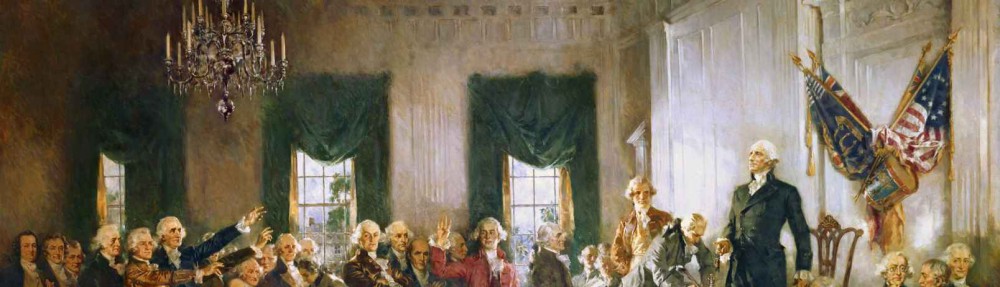
During my military career, I have led people in combat and made choices with real consequences. From this experience, I can say with confidence that George Washington’s crossing of the Delaware River in December 1776 was not desperate. It was a clear act of leadership.

By that point, Washington had suffered several defeats. Losing New York was a huge blow, and his army had been pushed back again and again. The British had the upper hand in almost every way—better ground, supplies, more troops, and momentum. Washington had lost the initiative and the trust of Congress and many leaders in Philadelphia, who started to expect a British win.

But Washington understood something that sets true leaders apart: an army’s will to fight depends not just on resources, but on the leader’s refusal to give up. His soldiers were hungry and sick, and they had every reason to walk away. In those conditions, giving up would have made sense.

Washington didn’t let his men think about surrender. Instead, he gave them a mission: cross a frozen river on Christmas night and attack the enemy at Trenton. He did this not because the odds were good, but because he truly believed the cause was still worth fighting for.

The win at Trenton mattered less for its size and more for how it lifted spirits. It changed the story and showed that winning was still possible. Washington’s refusal to give up inspired the whole nation to keep going. Washington won at Trenton because he chose to fight, even when things looked bad and success seemed unlikely. He took action when most would have given up.

This lesson isn’t easy or often taught today. Society usually tells people to wait for perfect conditions, more resources, or approval before acting. That kind of thinking leads to giving up. I’ve seen that key moments in military history frequently come from leaders who ignore common advice and keep going, even when things are tough.

Think of Washington at Trenton, Grant at Vicksburg, and Chamberlain at Gettysburg. In each case, the turning point occurred because a leader refused to give up and chose to act. People often forget that Washington didn’t win by waiting for help, approval, or a mistake from the enemy. He won because he made a clear choice and followed through with steadfastness and strong leadership.

I’ve seen this pattern in my own service. The best units under pressure aren’t always the ones with the best gear; they’re the ones led by people who won’t accept failure. When leaders are certain and assured, their teams follow. When leaders are unsure, people struggle. Washington had a clear goal: cross the Delaware and attack the Hessians. His troops followed him because they saw how determined he was, and that helped them refuse to give up too.

Today, some leaders tell Americans to give up, saying the system can’t be fixed, our opponents are too strong, and the cause is lost. They encourage people to just accept things as they are.

I’ve heard these views many times, including in 2020 when some said the election was lost for good and defending the Constitution was pointless. Others have argued that the government is too set in its ways for one person to make a difference. Usually, these ideas come from people who would rather settle than face tough challenges.

Every one of those people was wrong. You do not need permission to be the change. You don’t need Congress, a political party, or the media to approve you in order to show integrity, patriotism, or allegiance to the Constitution.

I didn’t become a general by waiting for someone else to lead. At every step, I took responsibility, acted when needed, and refused to give up for the people who counted on me. Now, you’re in charge of your own battlefield. That could be your neighborhood, your school, your family. Even your vote is an act of leadership.

People who focus on comfort often miss an important truth.

Historical change is not driven by those who seek comfort. At every turning point, people face a choice: to accept defeat and settle for comfort, or to take action for something greater. The first path is to surrender to the belief that the system is irreparably flawed, that resistance is pointless, and that no single effort will matter. This approach demands no sacrifice or courage and always results in the same outcome: surrender and stagnation.

The second path is harder. It requires pushing past the urge for safety and choosing to act, as Washington did when he crossed the Delaware. He was not motivated by ease or self-preservation, but by a sense of duty to his men, his country, and his faith. In making this choice, he showed that the Republic is worth the fight, that future generations deserve our effort, and that defending the Constitution calls for action, not just words. One individual’s certainty and commitment can change the direction of an entire community.

This way doesn’t promise quick results. Washington’s final victory took seven more years of fighting, including tough times at Valley Forge and many setbacks. But his choice to cross the Delaware and keep going at Trenton inspired Congress and gave hope to the states. In the end, America won its independence because one person thought the cause was worth it.

I’m asking you to make that same choice, not on a big stage, but right where you live. It could be as simple as helping a neighbor who is struggling or standing up for what’s right at a school board meeting. Leadership doesn’t always look grand. It happens every day when someone speaks up, lends a hand, or takes responsibility for the good of others.

It only takes one person. One person who decides not to give up. One person who won’t believe the story that the cause is lost.

We honor perseverance, and history remembers those who keep going when giving up would have been easier. The cause is still alive as long as even one American is willing to act.

Michael T. Flynn LTG USA (RET)

President Trump’s Primetime Address Reaffirms Election Fraud And Deep State As America’s Greatest Threat

Along with a willfully complicit media.

Since the 2020 election, the most common response to claims of election fraud—from virtually all leftists and an unfortunate number of conservatives—has been that it either doesn’t exist or that it does but it’s time to move on. However, the earth-shattering declassifications President Trump revealed to the nation on July 16, along with the left-leaning networks’ decision to refuse to air them, prove that it is not merely necessary, but obligatory to once and for all uncover and end the practice of election fraud in America and prosecute those responsible.

During his 25-minute primetime address, President Trump revealed newly declassified information regarding five major areas of concern involving American elections and what he directly described as the Deep State: China’s acquisition of 220 million U.S. voter files (including names, addresses, phone numbers, party affiliations of U.S. citizens and more), which he described as “the largest compromise of election data in history”; a subsequent cover-up of this and other key information by U.S. agencies such as the CIA and NSA; vulnerabilities in electronic voting and ballot-counting systems as well as other key election infrastructure; evidence of a massive voter fraud scheme in Michigan that was identified yet buried by government officials; and a DHS investigation that revealed hundreds of thousands of non-citizens on voter rolls throughout America.

This irrefutable information was unsurprising to those who have remained entrenched in the election integrity fight for the better part of a decade. But to the average citizen—who has been inundated with rehearsed lines about the 2020 election being “the most secure election in American history” (which Trump himself mocked during the address) or that election fraud is impossible and nothing more than a right-wing conspiracy theory—it was quite damning. Regardless of where one stood before the address, the question most are asking now is whether it still matters and, if so, why?

Firstly, though the Biden administration has come and gone, accurately documenting our nation’s history remains a matter of historical significance. To date, no official records note the various ways the 2020 election was illegally conducted—through governors and secretaries of state changing election laws and procedures that are reserved to state legislatures—or illegitimately certified, as was admitted this past January in Georgia. The only way to rectify this, no matter how long after the fact, is to follow the path toward total clarity that President Trump is leading. Additionally, while Trump did not go as far as announcing Georgia’s two Democrat senators as illegitimate —as some rumors (or perhaps leaks) alleged he would—the revelations he presented (along with other documented instances of fraud outside of the scope of these findings) strongly suggest that is the case. We are therefore still suffering injury as a nation from past election fraud, including from 2020. And due to the disproportionate resistance election fraud investigations face, we do not know how many other officials acquired their offices through illegitimate means. Such a travesty should be addressed regardless of how close the balance of power is. But this dilemma carries even greater weight considering Republican’s razor-thin Senate majority has proven insufficient to pass the Save America Act—the most powerful presently available mechanism to prevent election fraud from recurring.

Secondly, the declassified emails that were unearthed confirmed a tangible Deep State at work, not just vague speculation or allusions to one. The China breach, identified by the FBI months before the 2020 election, involved manufacturing illegal ballots for Joe Biden. Yet internal emails show intelligence analysts admitting they “deliberately massaged the presidential daily briefing to withhold information regarding Chinese activities related to the election,” while an FBI official described “running a shadow government”—both efforts aimed at preventing President Trump and the public from learning the truth and stopping the threat before the election. A separate scheme in 2020 that was reported to the FBI in Michigan saw state police raid a Democrat Get Out The Vote operation that revealed widespread fraud, including canvassers who admitted to signing voter registration forms in others’ names, submitting fraudulent registrations for people who did not exist, and receiving gift cards tied to the number of applications that they produced. Despite these key admissions, the investigation was slow-walked until the Biden administration took power and was subsequently squashed. The term “Deep State” has been overused to such a degree that many have become numb to its reality. But its existence—including an open admission of a shadow government—is now undeniable, even to those previously fearful of being labeled as crazy for believing so.

Lastly, one key element not detailed in the documents, but central to this grand conspiracy, is the mainstream media. China accessed sensitive information on 220 million Americans—a number that reaches nearly all voting-age American citizens (240 million) and far more than the roughly 175 million registered to vote. This alone signals a national emergency, yet numerous mainstream networks partook in a frantic weeklong scramble to “debunk” all of Trump’s forthcoming revelations before knowing what they would be—an inherently impossible task until the claims have been heard, analyzed, and investigated, which in and of itself is an extensive and time-consuming process. This, combined with their decision to not air Trump’s election fraud address while simultaneously trying to convince viewers there isn’t any, confirmed to every American—regardless of political affiliation—the exact opposite. Almost unbelievably, they dug their grave even deeper in the days that followed by citing the CHINESE COMMUNIST PARTY’S denial as evidence that the revelations unearthed by the AMERICAN PRESIDENT, were untrue.

To this day, the media-Democrat party duo has condescendingly framed election fraud as nothing more than a coping mechanism concocted by the world’s biggest sore loser. While their framing was effective in keeping the focus away from the fraud itself and those carrying it out for a time—as was its intended purpose—most now know this to be untrue. Public perception has shifted, and actively present election fraud—which was the only thing preventing Americans from discovering that most strong Democrat showings in elections are lies birthed from fraud and propaganda, and is also the mechanism that results in our elections seemingly always resulting in a near-50-50 result—has become undeniable.

This explains why the Democrat party vehemently opposes election-securing measures, despite the vast majority of Americans—and even a majority of Democrat voters—supporting them. It also explains why the media refuses to even cover it as a possibility, let alone a present reality, and why the “get over 2020” crowd is so mistaken. Election integrity is by far the most important issue of our time. Immigration, the economy, and foreign affairs are ever-present top issues of concern for Americans, rightfully so. But without free, fair, and trustworthy elections, as we saw in 2020, a candidate overwhelmingly preferred by the majority can still be denied his rightful office. And as long as those who enabled this system remain unaccountable, fraud will continue to disenfranchise the will of the people.

If last week’s revelations do not convince those straddling the fence that election integrity is a cause worth fighting for, nothing will.

Matt Kane served in President Trump’s second administration as Assistant Press Secretary for the Department of Homeland Security. Follow on X:@MattKaneUSA, Truth Social: @MattKane.