851332
Code
Reply

851332
To my recurring frustration, much of modern politics can be reduced to a series of language games. Political fights rarely touch the substance of the disagreement, but instead hover on the thin layer of language that merely refers to the substance—or all too often, conceals it from view.
In the modern era, the Left’s coalition of liberals, progressives, and Marxists have turned these language games into an art. They deploy particular concepts when it serves their needs to do so; they deny the existence of those same concepts when it does not.
Last week’s confirmation hearing for Claremont Institute fellow Jeremy Carl, nominated by President Trump as Assistant Secretary of State for International Organizations, neatly illustrates this phenomenon. In this case, it involved the use of one of the Left’s most beloved bits of language: “whiteness.”
Connecticut Senator Chris Murphy relentlessly grilled Carl about his past statements on race and his book, The Unprotected Class, which documents the history of DEI and “anti-white discrimination.” Murphy alternated between outrage and perplexity, accusing Carl of being a “white nationalist” for allegedly believing that “white culture” is a distinct sociological phenomenon. (The phrase does not appear in Carl’s book.) The subtext of Murphy’s performance was that he, Murphy, was befuddled by the notion of “white culture,” as if its existence were a wild fiction or conspiracy theory.
But his ignorance was purely performative. He knows exactly what “white culture” points toward. Murphy spent his formative years as the son of a corporate lawyer in Wethersfield, Connecticut, which was, at the time, almost exclusively white. He studied at Williams College, founded by Anglo-Protestants in 1793, and at the University of Oxford. As his campaign literature boasts, he is a true son of Connecticut, whose roots in the state trace back multiple generations on “[b]oth sides of Chris’s family.” This is precisely the milieu that constitutes “white culture,” which simply means the customs, manners, and habits of Americans of European descent.
Granted, it is theoretically possible that, like the water in which the proverbial fish swims, this culture was invisible to Murphy. But it is more likely that Murphy is simply playing a language game, denying the existence of the culture he grew up in to score points against a political enemy seated beneath him.
We’ve seen a lot of this game in recent years. During America’s “racial reckoning,” virtually all our prestige institutions advanced a notion of “whiteness” that sought to pathologize “white people” as inherently oppressive and “white culture” as pernicious. Now, the same people who marshaled these narratives, including the leadership of the Democratic Party, are pretending that these concepts don’t exist and that anyone who uses them is engaged in a racist conspiracy theory.
The only way to pass through the thicket of language games is first to clarify the concepts and define the terms. Only then can we begin to separate good from bad, useful from harmful.
In this case, we might begin with a short etymology of the term “white.” In the vernacular sense, everyone knows what “white” means: it is a color-coded shorthand for “Americans of European descent,” in the same way that “black” is a shorthand for Americans of African descent and “brown” is now often used as a shorthand for Americans of Latin American and Indian subcontinental descent. It is perfectly reasonable to argue that these terms are reductive, outdated, overbroad, or insensitive—I am not partial to them, for several reasons—but they are all attempts to describe the reality of continental ancestry groups.
The term “white” came into use after the discovery of the New World, when Europeans left the old continent and looked for ways to describe the different populations they encountered. While the dominant culture of England’s colonies was certainly English, there were enough Europeans of other nationalities that the colonial-era American writer Hector St. John de Crevecoeur described America’s mix of English, French, German, and Dutch frontiersmen as “a new race of men”—in short, “white people”—in contradistinction to the native tribes and African slaves who also populated the continent. (Again, we might wince at the crude use of color as a shorthand for groups, but as a historical matter, these were categories that all groups observed, including minority ones.)
Following the colonial period, America’s demographics became more complicated. New European groups arrived in the nineteenth century, and then other groups from around the world arrived in great numbers in the twentieth century, changing the demographic composition of the United States and increasing the diversity both within and between the main continental groups. Today, “white” contains Scandinavians and Sicilians, “black” contains descendants of slaves and recent African immigrants, and “brown” contains people from as far afield as Peru and Pakistan.
These terms are obviously imprecise, but most Americans can see their limitations and understand the categories as they are used in everyday life. For most people, as they survey their own experience, America is an assemblage of white, black, Latino, Asian, and Native American people, all with their own distinct cultures. At the superficial level, these can be distinguished by general patterns of ancestry, language, religion, cuisine, music, and shared history.
These cultures overlap in our freewheeling American context, and their mingling has provided a rich source of popular entertainment. The film Rush Hour, featuring Jackie Chan and Chris Tucker, is an extended riff on the cultural discontinuity between black and Asian culture. Likewise, the film White Chicks, featuring Marlon and Shawn Wayans, is a romp-style comedy in which two black FBI agents disguise themselves as white women. These films work precisely because most Americans immediately understand signifier and signified: “white,” “black,” “Asian,” and the groups they describe.
Why, then, would an educated man like Senator Murphy pretend not to understand these basic categories? Because the Left would like to portray “whiteness” exclusively as a force of oppression, and deny its existence in any other context. This particular language game is the identity-based version of what Michael Anton calls the “celebration parallax.” In this case, it means that “white,” as a shorthand for Americans of European descent, can be freely used for purposes of demonization—but it cannot be used to protest discrimination against white Americans.
This “whiteness parallax” is a malicious double standard. Personally, I don’t like the term “whiteness,” which is a Marxist coinage, and would be happy to replace the current shorthand with something better. But in any case, there should be a vocabulary to identify Americans of European descent in the same way that we identify all other groups. If all cultures truly can be celebrated, then that would mean the majority culture, too.
The Carl affair is a reminder that none of us should be shamed into silence about our history. The genius of the early Americans is that they gave us a nation that, over time, yielded a shared culture capable of recognizing the contributions of various groups while building a government based on equality under the law. At our best, we can honestly discuss the realities and differences among cultural groups while insisting that, as a matter of policy, we treat all individuals as individuals.
It is perfectly reasonable to acknowledge that our founding culture should be admired for its virtues, remonstrated for its vices, and celebrated alongside the contributions from all of those who came afterward.
Christopher F. Rufo, City Journal
“A Communist system can be recognized by the fact that it spares the criminals and criminalizes the political opponent.”
— Aleksandr Solzhenitsyn
On Thursday (February 12) President Trump and EPA Administrator Lee Zeldin held a press briefing at the White House where they announced the issuance of the final rescission of what is known as the “Endangerment Finding” — the 2009 Obama-era regulatory edict purporting to find that CO2 and other “greenhouse gases” are a “danger to human health and welfare.” The regulatory document finalizing the rescission then came out the next day, February 13.
The Rescission Document has the title “Rescission of the Greenhouse Gas Endangerment Finding and Motor Vehicle Greenhouse Gas Emission Standards Under the Clean Air Act.” It is 436 pages long. In this version, it appears in standard double-space typed format, with no page numbers. Although there is a table of contents, the lack of associated page numbers makes it extremely difficult to find anything in the Document. Within a few days, the Document will then appear in something called the Federal Register. The text will not be changed (other than that they reserve the right to correct errors); but the format will be substantially different — single-spaced and with multiple columns on a page. Publication in the Federal Register is what starts the clock ticking for deadlines to challenge the rescission in court.
Note that this Rescission Document is specifically directed to part of the Endangerment Finding that dealt with motor vehicles. Back when the Obamanauts implemented this stuff in 2009-10, they did the Endangerment Finding in pieces, starting with “mobile sources” (i.e., vehicles) in December 2009. Simultaneous with the Finding that GHG emissions from motor vehicles constituted a “danger,” they also issued something called the “Technical Support Document,” setting forth the purported scientific basis for the Finding. Later, they issued separate Endangerment Findings with respect to emissions from other sources, such as power plants. However, the subsequent Findings relied on the same Technical Support Document, so there never was any additional scientific support beyond the initial December 2009 regulatory action as to motor vehicles.
As others have already noted, this Rescission Document does not really take on the phony science of the climate alarm movement, as set forth in the 2009 Technical Support Document, or otherwise. Granted, there is a substantial discussion in the Rescission Document of the science issues, appearing in Section VI, from approximately pages 187-200 of this Document. From the first paragraph of that Section:
The discussion below is provided in the interests of transparency and public engagement and should not be understood as presenting any views or conclusions related to the bases for this final action set out in section V of this preamble.
So the basis for the rescission is not the phony science. Rather, they provide two main rationales: (1) the best reading of Section 202(a)(1) is that EPA lacks the authority under the statute to make the determination in question, and (2) the Endangerment Finding as to motor vehicles is futile, because the contribution of vehicles in the U.S. to overall world GHG emissions is de minimus.
I’ll give you some brief quotes from the document on these two issues. First, as to the interpretation of Section 202(a)(1), from the Executive Summary, approximately page 15 et seq.:
EPA now acknowledges that the Endangerment Finding and subsequent regulations exceeded the Agency’s statutory authority under CAA section 202(a)(1). These actions rested on a profound misreading of the Supreme Court’s decision in Massachusetts v. EPA, 549 U.S. 497 (2007). . . . Intervening legal developments reinforce our conclusion that Congress did not decide the Nation’s policy response to global climate change concerns in CAA section 202(a)(1), let alone clearly authorize the EPA to make that policy choice by prescribing emission standards that force a transition to EVs.
On the issue of futility, this is from the Executive Summary, approximately page 16:
Nor does climate impact modeling suggest that the EPA’s initiative has been anything but futile, which further supports the conclusion that CAA section 202(a)(1) was not designed with such a problem in mind. The inability of the EPA’s GHG emission standards to materially impact the identified risks both corroborates the interpretation of CAA section 202(a)(1) adopted in this final action and serves as an independent basis to revoke those standards, separate and apart from the question of statutory interpretation and of the nature of the EPA’s authority under this provision.
The “futility” ground is rather a good basis for rescission of this nonsense, separate and apart from any other basis. At about pages 178-180 of the Rescission Document the agency runs projected emissions reductions from extreme Biden EV mandates through some models and comes out with estimates that this transformation of the U.S. vehicle markets might reduce average surface temperatures by something in the range of 0.007 deg C by 2050 and 0.017 deg C by 2100. Modeled effects on global sea level are comparably minuscule. Conclusion (approximately page 180):
Whether viewed in terms of the complete elimination scenario or the illustrative 50 percent reduction scenario, these projections lead the EPA to determine that GHG emission standards under CAA section 202(a)(1) have no material impact (i.e., beyond a de minimis level) on the global climate change concerns relied upon in the Endangerment Finding to justify regulation. This determination leads us to two independent conclusions. First, as discussed in section V.A of this preamble, the futility of GHG emission standards under CAA section 202(a)(1) further supports that the best reading of the statute does not encompass global climate change concerns within the scope of the “air pollution” that Congress authorized and required the EPA to address. And second, as discussed in this section below, the futility of GHG emission standards under CAA section 202(a)(1) renders retaining such standards unreasonable given the certain and immense costs and other direct adverse impacts of the standards.
I have to say that I am disappointed by the agency’s decision to mostly duck the science questions. There are multiple simple demonstrations of the phoniness of the alarmist science that supported the finding of “danger,” the most obvious being the reliance in the 2009 EF for its main “line of evidence” on a global temperature data base in which most of the data for the Southern Hemisphere had been fabricated and infilled.
But there is some strategic thinking going on here that may be correct. Finding sufficient basis for rescission without taking on the “science” means the undermining of the ability of hundreds of seeming authorities from corrupt organization like the NSF and various scientific societies to make any counterarguments.
The litigation goes in the first instance to the DC Circuit. That court is likely to find some basis to reverse EPA’s action; and that likely would have been true no matter how definitive a showing on the science EPA could have made. Meanwhile, the current Supreme Court looks like it will be highly sympathetic to the arguments that EPA is putting forward in this Document. It’s really a question of how quickly it can get there.
Francis Menton, Manhattan Contrarian
Among those attending the 40th anniversary bash for the Oxford Centre for Islamic Studies, one guest stood out – King Charles III. The presence of the UK’s sovereign at an Islamic studies institute was hardly a surprise, however. And not just because he is the centre’s patron. Charles, it is fair to say, is an unabashed Islamophile. He may have claimed some three decades ago that, as king, he intended to be the defender of faith – rather than the defender of the faith as his official role has it – but there is definitely one faith that he prefers above all others. And it’s not that of the Church of England.
Charles’s near Orientalist fascination with Islam is not a new story. There were even rumours in the mid-1990s, circulated by the grand mufti of Cyprus no less, that the then prince had secretly converted to Islam during a trip to Turkey (which beats getting your teeth done). The palace promptly dismissed the rumours as ‘nonsense’, but their very existence was a testament to the extent to which Charles was cleaving ever closer to Islam.
This Islamic turn has always been entwined with Charles’s deep-seated animosity towards Western modernity. Towards its immense social and technological gains – from greater freedom to science’s growing mastery of nature. As the head of a pre-modern institution, grounded in the antiquated notion of the divine right to rule, Charles’s animosity to modernity is not exactly a shock. But what has always separated Charles from his tight-lipped, public-service-oriented predecessors has been the extent to which he has publicly endorsed reactionary ideas about how the world should be organised. There has been his long-standing, plant-whispering embrace of all species of greenism. And, intertwined with his fervent environmentalism, there is his embrace of Islam.
The seeds were likely sown while he was an undergraduate at Cambridge University in the mid-to-late 1960s. Studying archaeology and anthropology, he found himself drawn to non-Western cultures as alternatives to Western modernity. His ideas really took root during the 1980s, when South African author Laurens van der Post introduced him to an obscure school of philosophy known as Traditionalism. This pushed all of Charles’s reactionary buttons. Pioneered by a little-known French philosopher called René Guénon, Traditionalism castigates the soulless materialism and moral disorder of the modern world – blaming the Enlightenment for separating us from ‘the sacred’ – and looks to the religions of the East, and to Islam in particular, for an alternative.
Charles’s basic position echoes that of Guénon. Indeed, when the future king addressed the Traditionalist ‘Sacred Web’ conference in 2006, he praised Guénon’s ‘critique of the false premises of modernity’, and argued that humanity had been ‘uprooted’ by social and material progress, and was now leading itself through ‘our ignorance and arrogance… towards catastrophe’.
Like Guénon, Charles has consistently drawn on Islam to attack Western society. He did so most famously in his 1993 lecture, ‘Islam and the West‘, delivered at the very same Oxford Centre for Islamic Studies he attended last week. Charles spoke of understanding why Muslim societies reject ‘materialism’ and ‘consumerism’. He said that while we may think that ‘television, fast-food and the electronic gadgets of our everyday lives… are a modernising, self-evidently good, influence… The fact is that our form of materialism can be offensive to devout Muslims – and I do not just mean the extremists among them.’
Charles was not making a case for mere cultural relativism, different strokes for different folks. He was actively championing the Islamic worldview as superior to that of the post-Enlightenment West. It ‘can teach us today a way of understanding and living in the world which Christianity itself is the poorer for having lost’, he said. ‘Western civilisation has become increasingly acquisitive and exploitative in defiance of our environmental responsibilities’, he continued, before claiming that ‘we can relearn from Islam’ a ‘wider, deeper, more careful understanding of our world’.
Time and again over the past few decades, Charles has returned to this theme, pitching Islam as a corrective to the modern world. In a 1996 speech, subtitled ‘Building Bridges Between Islam and the West’, he said that Islam could ‘help us in the West to rethink, and for the better, our practical stewardship of man and his environment’. And in another speech delivered at the Oxford Centre for Islamic Studies, this time in 2010, he said Islam possesses ‘one of the greatest treasuries of accumulated wisdom and spiritual knowledge available to humanity’. This, he said, had been obscured by a drive towards ‘Western materialism’. For Charles, then, secular, materialistic Western society is the problem and Islam is the solution.
While Charles has wielded Islam as a cudgel to attack the inhabitants of the modern West – for being too free, for refusing to bow down before ‘sacred’ nature and no doubt before the king, too – he has also defended Islamic societies from criticism. In his 1993 lecture, he described objections to Islamic societies’ sometimes less-than-liberal attitudes towards women as a ‘Western prejudice’. More strikingly, he has consistently minimised the threat of Islamism. In the same 1993 lecture, he claimed that the Western public’s fear of ‘Islamic fundamentalism’ was little more than bigotry – a bigotry born of conflating isolated examples of violent Islamic extremism with a broader religious ‘revivalism’, fuelled by ‘the realisation that Western technology and material things are insufficient, and that a deeper meaning to life lies elsewhere in the essence of Islamic belief’.
It should perhaps come as no surprise that Charles seems to also think that Islam should be beyond criticism – and that those who mock, ridicule or raise objections against it deserve what’s coming to them. In 2006, after the publication of cartoons depicting Muhammad in a Danish newspaper sparked worldwide riots leading to at least 200 deaths, Charles defended the rioters. ‘The recent ghastly strife and anger over the Danish cartoons shows the danger that comes of our failure to listen and to respect what is precious and sacred to others’, he told an audience at Al Azhar University in Egypt.
According to author Martin Amis in 2014, Charles even refused to defend his own subject, Salman Rushdie, after Iran’s Ayatollah Khomeini declared a fatwa against him in 1989, following the publication of The Satanic Verses. Amis told Vanity Fair that Charles said he would not offer support ‘if someone insults someone else’s deepest convictions’. Quite the opposite, it seems. In 2003, at the Islamic Foundation in Leicestershire, Charles met up with someone called Chowdhury Mueen Uddin. Uddin, a member of Jamaat-e-Islami, had played a key role in organising the protests in Britain against Rushdie.
All this goes some way to explaining Charles’s fairly evasive official statement on the 20th anniversary of the London 7/7 bombings. Steadfastly omitting any reference to the Islamist motivation of the terrorists, he claimed the attacks showed the importance of ‘building a society where people of all faiths and backgrounds can live together with mutual respect and understanding’. Listening to Charles, one could be forgiven for thinking it was our fault – our lack of ‘mutual respect’ and understanding – that four young jihadists decided to detonate explosives on Tube trains and a bus.
This, then, is Britain’s king. A figure whose deep rejection of the social, political and material gains of modernity has apparently driven him towards Islam – or at least his Traditionalist-inflected version of it. So immersed is he in his reactionary, religious dreams that he now struggles to recognise the threat of Islamist terror even when it is literally exploding on our streets.
The Islamophilia of King Charles is fast becoming all of our problem.
Tim Black, Spiked
Sitting outside every morning with a fresh cup of coffee or reading a book in the front yard at night: it’s the simple pleasures that matter to Susan Cannon.
Lately, sky-high interest rates on the 73-year-old’s credit cards have cast a dark shadow.
“I can’t get the balance down because I am still having to use credit cards at the end of the month to get groceries and gas,” Cannon, who lives in a mobile home in rural Texas, told Business Insider. “I pay my bills, but because of the interest rates, it keeps going up. I feel like I’m being gouged.”
Cannon has $39,440 in credit-card debt spread across 19 cards with varying interest rates, from 12.15% to 34.99%. The issue began to spiral when the pandemic hit — she lost her part-time job as a mystery shopper, which she had held since retiring from her full-time job as a medical coder in 2015.
Since then, she has relied on minimal COVID relief funds, her Social Security, and her pension. Credit cards have helped her stay afloat, using them for gas, groceries, and home repairs. While she paid at least $25 more than the minimum monthly payment, the interest rates prevented her from making a dent in her balance.
The only way she believes she can pay off her balance is through lower interest rates. Capping rates is supported by both Democratic and Republican lawmakers, and even President Donald Trump — he recently proposed a 10% cap on credit card interest rates, a proposal pushed by lawmakers like Sen. Bernie Sanders.
Companies and leaders in the financial world have said that capping rates would ultimately have a negative impact on consumers because banks may limit their offerings, driving more people to riskier sources of credit.
Credit card debt in the US is at a record high. Inflation and high living costs are pushing consumers to turn to credit cards to stay afloat in the short term, while high interest rates drag them down in the long term.
Economic conditions play a significant role in high credit-card balances, Adam Rust, the director of financial services at the Consumer Federation of America, told Business Insider.
“Wages aren’t growing as quickly as the cost of living. People are struggling to get by,” Rust said. “They use their credit card when they’re having a tough time making ends meet, and repeated across tens of millions of households, the result is a surge in credit card debt.”
With this cold, my electric bill last month was $200, and I’m expecting to get hit with about a $300 bill, I believe, for next month,” Cannon said, adding that maintaining her home and land has added to her debt.
Still, many people use credit cards for reasons beyond making ends meet. For example, travel rewards can motivate people to purchase vacations and other travel expenses on their cards. A 2024 Bankrate survey said that respondents reported high credit card usage for medical costs, too much discretionary spending, and home renovations. A 2025 AARP report found that credit card debt is the most common type of debt among Americans aged 50 and older, with cardholders using them for everyday expenses and housing costs.
“I’ve always tried to put some in savings, but it’s gotten to where it’s all going toward interest,” Cannon said. “I just cannot get ahead.”
Those cards benefit from having a consumer who’s captive to using that card in that store to get that deal,” Rust said. “And so perhaps it’s not surprising that interest rates are frequently higher as a result.”
The motivation for companies to charge high interest rates could go beyond profit, an analysis from the New York Federal Reserve said. The rates could offset losses when a customer defaults, the analysis said, along with operating expenses, such as marketing costs, that might be built into the interest rate.
James Cobban Space Nerd since 1956.
Why is liquid hydrogen so challenging to handle when fueling rockets, and what special techniques are used to prevent leaks?
The most effective way to avoid the challenges of using liquid hydrogen is to not use liquid hydrogen. There is no galactic police officer holding a phaser forcing NASA to use liquid hydrogen. There is no law of physics which says rockets must use liquid hydrogen. What.there are is a bunch of collosally ignorant politicians being bribed to insist that NASA piss away billions of tax dollars on technology which killed fourteen American heroes.
One small example of this idiocy: each RS-25 hydrogen rocket engine costs NASA $145M. There are four on the SLS, so that alone is $580M of the cost of an SLS. And they are dumped in the ocean on every launch. The Blue Origin liquid methane engine costs less than $40M and has more thrust. The SpaceX Raptor 3 has about 25% higher thrust and weighs less than half as much as the RS-25, and costs Elon less than $1M each. Fuel for a rocket is merely a source of energy. The cost for a given number of Joules, or Kilowatt-Hours, or BTUs in the form of liquid methane (aka Natural Gas) is.1/60th of the cost of the same amount of energy in liquid hydrogen. So you drive up the rocket service station and the pump gives you a choice. You can buy $20 worth of methane or $1200 worth of hydrogen. Which one do you choose? If you choose $20 why do you keep reelecting the thieves who insist on spending $1200?
An old joke: Doctor, it hurts when I do this. Then don’t do that!
When I was growing up in the 1980s, there was a galaxy of left-wing, even socialist, intellectual stars such as Noam Chomsky, Michel Foucault and Gore Vidal whose works were like an inkwell that politicians and commentators could draw from. Judging from the Munich Security Conference this weekend, that inkwell has run dry.
Take this gem of a comment on global order from Rep. Alexandria Ocasio-Cortez, queen of the democratic socialists: “What we are seeking is a return to a rules-based order that eliminates the hypocrisies around when too often in the West we look the other way for inconvenient populations, to act out these paradoxes.”
Allow me to translate this into English: “The West is bad and mistreats the marginalized rest of the world.”
The use of 25-cent words and highfalutin sentence structure cannot hide the banality of what AOC is saying. Not even the assuring allure of assonance would help, given the asinine simplicity of her word salad.
Not to be outdone, Michigan Gov. Gretchen Whitmer, after apologizing for being less well-versed in foreign policy than AOC, offered this take on the war in Ukraine: “Ukraine’s independence, keeping their land mass, I mean, um, the support of all the allies, I think is the goal, from my vantage point.”
There is just nothing here but empty words that paint a picture of the facile progressive worldview, completely divorced, not only from reality on the ground, but from any sound intellectual framework whatsoever.
The American right has a core of intellectuals, from Christopher Rufo to Victor Davis Hanson to Mark Dubowitz and on and on, who can be referred to or drawn on in policy debates both foreign and domestic.
Not to be outdone, Michigan Gov. Gretchen Whitmer, after apologizing for being less well-versed in foreign policy than AOC, offered this take on the war in Ukraine: “Ukraine’s independence, keeping their land mass, I mean, um, the support of all the allies, I think is the goal, from my vantage point.”
There is just nothing here but empty words that paint a picture of the facile progressive worldview, completely divorced, not only from reality on the ground, but from any sound intellectual framework whatsoever.
The American right has a core of intellectuals, from Christopher Rufo to Victor Davis Hanson to Mark Dubowitz and on and on, who can be referred to or drawn on in policy debates both foreign and domestic.
MARK PENN: DEMOCRATS WIN THE MOMENT, BUT LEFT-WING TILT THREATENS THEIR FUTURE
In fact, about a decade ago we had the Intellectual Dark Web phenomenon with figures like Jordan Peterson and Bari Weiss, who are broadly seen, if not as conservative, as right-leaning. Who are their counterparts on the far leftin In fact, about a decade ago we had the Intellectual Dark Web phenomenon with figures like Jordan Peterson and Bari Weiss, who are broadly seen, if not as conservative, as right-leaning. Who are their counterparts on the far left?
Who is the contemporary socialist intellectual who AOC could have referenced to support her claim that what is needed is massive global redistribution of wealth?
I would posit that outside of the very narrow corridors of race and gender, such far-left public intellectuals no longer exist and for two very important reasons.
EVILS OF COLLECTIVISM ARE JUST WARMING UP. ‘RUGGED INDIVIDUALISM’ BETTER BE READY
The most obvious cause for the current dearth of popular far-left, socialist intellectuals is the collapse of the Soviet Union in the late 1980s. At least for the next two decades, the game was up, the experiment had failed and nobody wanted to be called a socialist.
The second reason is what took the place of outright socialism, which was cultural Marxism, specifically in the form of critical race theory.
In their brilliant 2013 Harvard Education Review study, “McIntosh as Synecdoche: How Teacher Education’s Focus on White Privilege Undermines Antiracism,” the Midwestern Whiteness Collective, a left-wing group of teachers, argued that centering race and identity in everything was stifling intellectual discourse.
WHEN TRUMP MEETS MAMDANI: FIVE CAPITALIST MESSAGES THE DEMOCRATIC SOCIALIST SHOULD HEAR
This was clearly true because the shibboleths of race and identity, what was allowed and not allowed to be expressed, went completely unchallenged. In fact, challenging them was punished.
So, once race and identity became a part of everything, then nothing could be legitimately questioned. It was equity, not equality, over everything else.
February 14th, 2026 7:03 PM
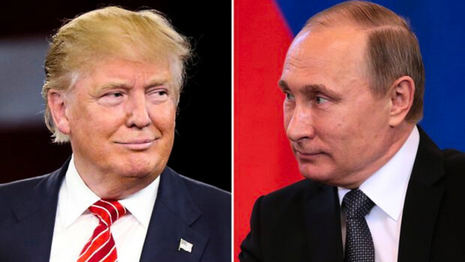
Most hard core liberals, especially in the media, take it as a matter of absolute faith that President Donald Trump is the puppet of Russian president Vladimir Putin. However, an article published in a very surprising source has shattered that myth.
The Atlantic magazine, yes that Democrat-loving periodical, published an article on Friday that destroyed that notion. And the two authors of the piece can’t be written off as ill informed. Both Thomas Graham and Alan Cullison are members of the Council on Foreign Relations. In addition, Graham is the author of “Getting Russia Right” and Cullison was a former Moscow correspondent for The Wall Street Journal.
Their article,“Putin Didn’t Know How Good He Had It,” sweeps away the sacred liberal belief that Putin somehow controls Trump. In fact, they make a strong case that it was in large part due to Trump that Putin and Russia are currently in a very bad position on the world scene.
For decades, Russian President Vladimir Putin railed against the world that the United States built after the Cold War. In his account, an international order run by a single power would hinder Russia and produce needless conflict, especially when that power was as self-serving and duplicitous as America.
Now Donald Trump is dismantling the order that Putin had so long abhorred, and a new multipolar world is emerging in its place. Putin had thought he could rise to the top of such a system, in which raw economic and military might outweigh diplomacy and alliances. But he was mistaken: The norms and institutions of the postwar order actually masked Russia’s vulnerabilities. Putin has gotten the world he wished for—and it’s threatening to crush him.
And if you are still clinging to the absurd notion that Putin somehow controls a compliant Trump then you (hello, Atlantic readers) have taken a fatal overdose of the thoroughly discredited Steele Dossier as Graham and Cullison continue to reveal the reality of the situation.
Putin also assumed that a multipolar world would free him from American interference. And indeed, Trump has accommodated Moscow in some ways. His conciliation does not, however, extend to Russia’s energy sector, the foundation of its economy: Last fall, Trump levied wide-ranging sanctions against Rosneft and Lukoil, the country’s two largest oil producers. The U.S. has also ramped up enforcement against shadow tankers, threatening a primary channel that Russia has used to sidestep sanctions on its oil sales. Trump’s plans to revive Venezuela’s petroleum sector might likewise hurt Russia. Executing those plans may prove more complicated than Trump anticipates, but they could drive Russia’s oil prices below what its federal budget can sustain.
Moscow is at the mercy of an American president who circumvents traditional channels of power and obliterates the constraints that once regulated their use. For example, Trump could attempt to use his recently constituted Board of Peace to bypass the United Nations Security Council—and Russia’s veto—and muscle through his preferred policy in the Middle East, eroding Moscow’s influence in the region. Thanks to decisions by both Trump and Putin, moreover, the two powers no longer have any functional arms-control agreements. Without these, Trump could choose to accelerate his “Golden Dome” missile-defense program, which Russia fears could undermine its own nuclear deterrence.
Trump’s disdain for international alliances and norms has also begun to reshape Europe in a way that may exacerbate Russia’s weakness. As U.S. security assurances wane, European countries are developing their hard-power capabilities. Germany has committed 100 billion euros to modernize its military, and Poland is building up its armed forces with a goal of amassing 300,000 troops. Putin has long wanted to split the U.S. and Europe. But he might soon find that the continent—which collectively dwarfs Russia in population and wealth—poses a significant challenge even if it doesn’t belong to a U.S.-dominated alliance.
This should dispel the idea that Trump is merely Putin’s puppet. However, never underestimate the liberal aptitude for self-deception. The same poor souls fully expected the Mueller Report to prove Trump-Russia collusion, when that report revealed no vast conspiracy, were still unable to let go of their delusions. However, it is refreshing to see cold reality splashed directly on the faces of the Atlantic readers.
Ayn Rand wrote, “Socialism is the doctrine that man has no right to exist for his own sake, that his life and his work do not belong to him, but belong to society, that the only justification of his existence is his service to society, and that society may dispose of him in any way it pleases for the sake of whatever it deems to be its own tribal, collective good.”
She nailed it.
Because I am a therapist, people always ask me: “What is self-esteem?”
In part, self-esteem refers to the attitude that you have a right to your OWN life, and to live for your OWN sake.
In line with Rand’s quote, socialism (which is tyranny) is incompatible with self-esteem.
In short: Freedom (economic and otherwise) is the mental oxygen you breathe. Your self-esteem will choke under socialism. And if you possess any self-esteem at all, you could never support socialism.
Michael J Hurd, Daily Dose of Reason

