The Artful Dilettante is a native of Pittsburgh, PA, and a graduate of Penn State University. He is a lover of liberty and a lifelong and passionate student of the same. He is voracious reader of books on the Enlightenment and the American colonial and revolutionary periods. He is a student of libertarian and Objectivist philosophies. He collects revolutionary war and period currency, books, and newspapers. He is married and the father of one teenage son. He is kind, witty, generous to a fault, and unjustifiably proud of himself. He is the life of the party and an unparalleled raconteur.
Socialists across Europe reacted with outrage over the Trump administration’s successful capture of Venezuelan dictator Nicolás Maduro on Saturday morning.
In a pre-dawn series of strikes and raids ordered by U.S. President Donald Trump and led by the elite Delta Force army unit, Nicolás Maduro and his wife were captured and are set to face criminal charges in the United States over suspected narco-terrorism.
The toppling of Maduro will likely lead to the end of nearly three decades of socialist rule in Venezuela, during which time the oil-rich nation was reduced to one of the most impoverished countries in South America after previously standing as one of the most prosperous.
Despite a record of economic failure, countless alleged human rights violations, and accusations of using electoral fraud to remain in power, the regime in Caracas has long enjoyed the support of socialists in Europe, including former UK Labour Party leader Jeremy Corbyn, who praised former socialist leader Hugo Chavéz upon his death in 2013 for having supposedly shown “that the poor matter and wealth can be shared.”
In response to the toppling of Maduro, Corbyn said: “The US has launched an unprovoked and illegal attack on Venezuela. This is a brazen attempt to secure control over Venezuelan natural resources.It is an act of war that puts the lives of millions of people at risk — and should be condemned by anyone who believes in sovereignty and international law.”
Corbyn’s far-left Your Party co-leader Zarah Sultana added: “Venezuela has the world’s largest oil reserves — and that’s no coincidence. This is naked U.S. imperialism: an illegal assault on Caracas aimed at overthrowing a sovereign government and plundering its resources. Starmer’s Labour government must condemn this unequivocally. Solidarity with the Venezuelan people.”
Far-left indignation was not contained to Britain. Across the Channel, former presidential candidate Jean-Luc Mélenchon, whose socialist La France Insoumise (France in Rebellion) party has been accused of aligning with radical Islamists, described the U.S. action as violating Venezuela’s “sovereignty with an archaic military intervention and the heinous kidnapping of President Maduro and his wife.”
Drug trafficking is now the pretext of the empire and its political and media agents to destroy what remains of the international order free from the law of the strongest. With Ukraine, Gaza, the Democratic Republic of the Congo, invasion has become an operational mode once again. The peace of the entire world is at stake,” he said.
Meanwhile, Ines Schwerdtner, the co-leader of the German Die Linke (The Left) party, which is the direct descendant of the communist ruling party of the now-defunct East Germany during the Cold War with the Soviet Union, accused the Trump administration of “state terrorism”.
“Hands off Venezuela! Whoever violates international law and allows presidents to be kidnapped is engaging in brutal state terrorism. In the case of wars of aggression that violate international law, there must be no double standards. The federal government should immediately condemn the US attack,” Schwerdtner wrote on X.
In Spain, the leader of the far-left Podemos party, Ione Bellarra, demanded that Madrid cut off relations with the United States, which she accused of being a “danger to the world” and demonstrating “imperialist and terrorist aggression.”
Nicolás Maduro is a mafia boss, not a president, and the Venezuelan government is now a criminal enterprise with the power of a state. It poses a threat to democracies everywhere.
Pablo Escobar was elected alternate representative to the Congress of the Republic of Colombia in 1982. Upon receiving the news of his victory, he told his wife: “Get ready to be the First Lady . . . the doors of the presidential palace will open for us.” The most notorious drug trafficker in history dreamed of becoming president of his country.
To realize that dream, Escobar oversaw a reign of terror that included bombings, assassinations of judges, police, and presidential candidates, and mass kidnappings. The exact number of victims is unknown but estimated to be around 50,000. The Colombian drug baron aimed to bend the authority of the state, transforming it into both a shield and a platform for his business. Yet despite his efforts, he did not succeed. Colombia’s institutional framework acted as a bulwark against his incursions. The Supreme Court, armed forces, media, and citizens confronted Escobar and prevented organized crime from taking over their country. Democracy prevailed.
Forty years later, however, Escobar’s vision became reality in Venezuela. Nicolás Maduro achieved what Pablo Escobar never could. On 25 July 2025, the U.S. Treasury Department’s Office of Foreign Assets Control identified the Venezuelan dictator as the leader of the Cartel of the Suns, a network of high-ranking military officers and officials that ships tons of cocaine abroad.
Maduro is the mafia boss in this story. He has succeeded in merging political power with criminal power into a single apparatus. He colonized the Venezuelan state and has bent it to serve international organized crime, destroying his country’s democracy along the way.
The Rise of Narco-Crime
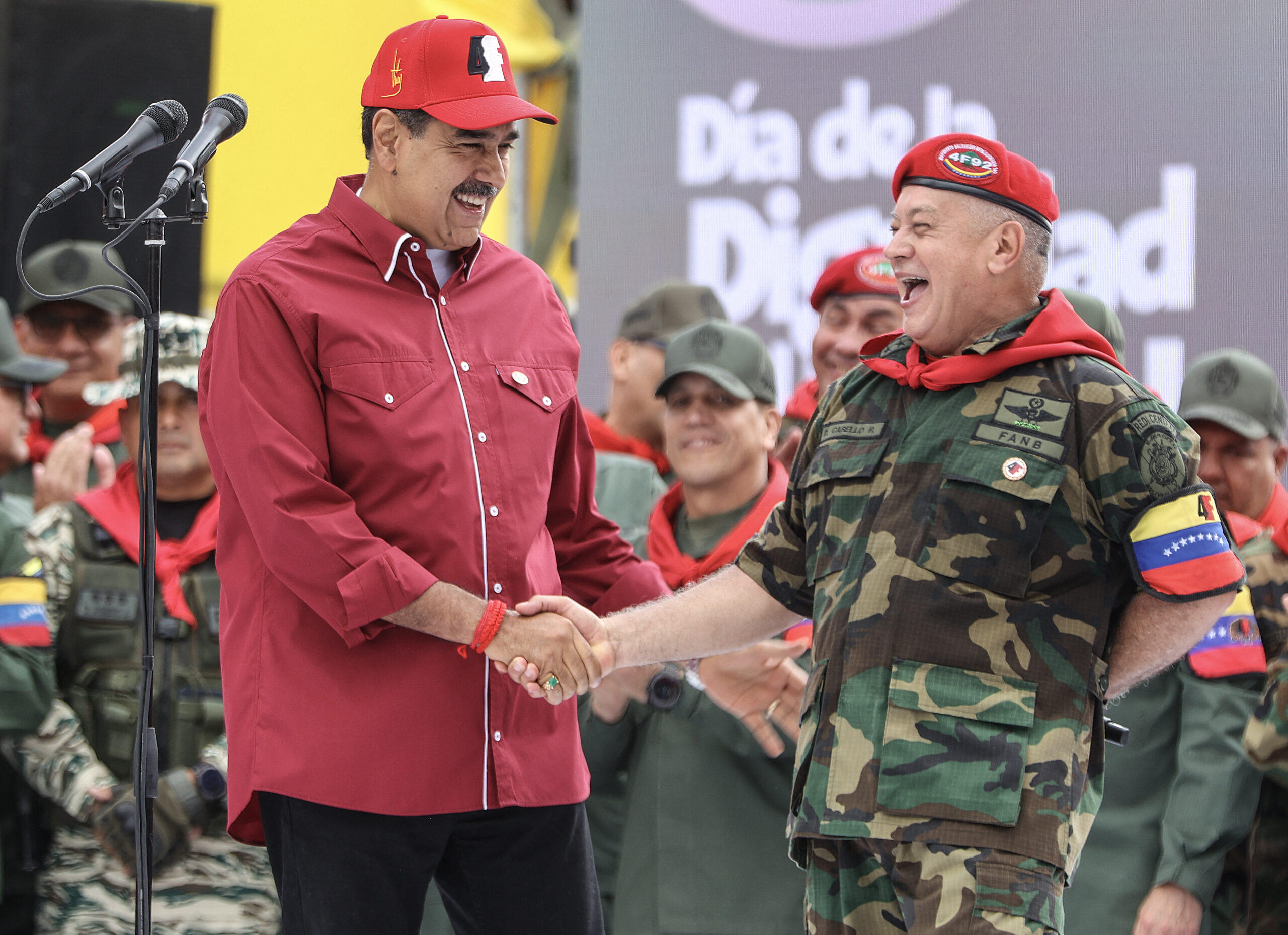
The relationship between Chavismo-Madurismo and drug trafficking began more than two decades ago. It was inaugurated by Hugo Chávez, who created the institutional conditions that allowed the degradation of the Venezuelan state and placed it at the service of national and international organized crime.
Perhaps the most important step in this regard was the expulsion of the U.S. Drug Enforcement Administration (DEA). On 5 August 2005, Hugo Chávez announced: “The DEA is using the fight against drug trafficking as a mask, to support drug trafficking and to carry out intelligence in Venezuela against the government.”
This event allowed Chávez to deepen his relationship with nonstate groups, especially Colombian ones such as the Revolutionary Armed Forces of Colombia (FARC). Both Venezuelan and internationalsources reported the deployment of such groups in Venezuela and the coinciding increase in criminal activity along the border.
By 2020, these ties were consolidated. In March of that year, the U.S. Department of Justice charged Nicolás Maduro with narco-terrorism. He was accused of leading, along with fourteen other high-ranking officials, a network that had sent more than 200 tons of cocaine into the United States since 1999.
In June 2025, Hugo “El Pollo” Carvajal, former head of Venezuela’s military intelligence, pled guilty in a New York federal court of conspiring to import cocaine and other related crimes. He acknowledged his role in the structure of the Cartel of the Suns and confirmed the involvement of the highest-ranking military officials in drug-trafficking operations on a continental scale.
One month later, in July 2025, the U.S. Office of Foreign Assets Control sanctioned the Cartel of the Suns, connecting it to networks such as the Tren de Aragua and Sinaloa Cartel. In August, the U.S. government increased the reward for Maduro’s capture to US$50 million. This is the highest amount ever offered by the United States for the capture of a criminal. During the same period, the United States began escalating its military campaign against narcotrafficking operations linked to the Maduro regime: In August, the U.S. Southern Command began deploying warships, aircraft, and forces to the Caribbean, and since September 2, U.S. forces havestruckseveral alleged drug boats departing Venezuela, killing seventeen people.
Maduro’s Machine
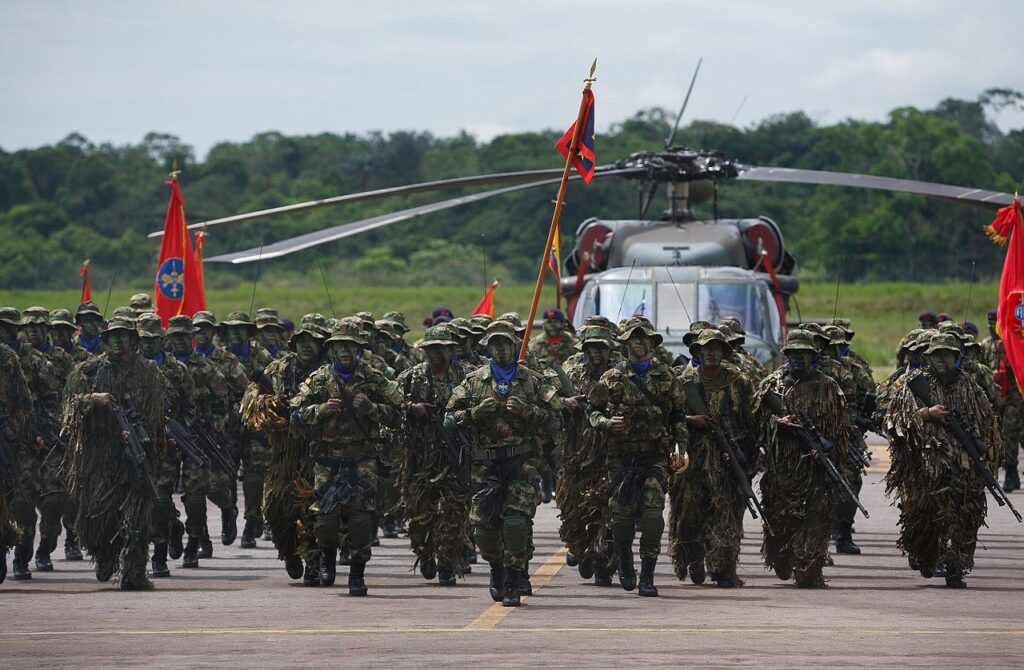
Nicolás Maduro’s closest circle sits at the core of organized crime both in Venezuela and internationally. These ties have transformed formal state institutions into structures that enable the domestic and foreign operations of the Cartel of the Suns. Generals are overseeing trafficking routes and shipments; ministers and governors control ports, airports, and borders; intelligence officers safeguard operations and eliminate “obstacles,” and diplomats are facilitating connections with international criminal networks while providing political protection. But this is the most essential point: Nicolás Maduro has placed the Venezuelan state at the service of criminal organizations with global reach.
The case of the “narco-nephews” exposed this dynamic. In 2015, Efraín Antonio Campo Flores and Franqui Francisco Flores de Freitas, the nephews of First Lady Cilia Flores, were arrested in Haiti. DEA agents intercepted them as they attempted to smuggle more than 800 kilograms of cocaine to the United States.
The men were tried and convicted in New York in 2017. During the trial, they revealed how they used official facilities, diplomatic passports, and protection from the highest levels of government to carry out their operations.
This episode provided evidence of the direct connection between Maduro’s family circle and the drug-trafficking business. The incident left no room for doubt: Corruption and complicity reach the very core of Venezuela’s dictatorial power.
The Cartel of the Suns, a political-military-criminal corporation, has maritime, air, and land routes that operate securely and freely across different regions. Its shipments travel in vehicles bearing official Venezuelan state insignia.
The Venezuelan Navy guarantees the departure of the cartel’s shipments to the United States and Europe, and flights to Central America and Mexico take off from both regular and irregular airstrips operating under military protection. Ports, airports, river routes, and border areas have been militarized to facilitate criminal logistics. In this way, they function as safe havens for drug trafficking and other illicit activities.
The loss of territorial sovereignty is evident: Entire regions are under the influence of criminal networks associated with the state structure. The border areas and municipalities of the Mining Arc, in particular, stand out. In these spaces, Venezuelan law does not apply; instead, the rules imposed by the cocaine trade prevail. The country’s geography has become an open channel for the transit of drugs, weapons, and illicit capital.
Moreover, the impact of the Cartel of the Suns transcends borders. Its ability to coordinate with groups such as Tren de Aragua allows it to carry out violent operations in other regions. And in these operations, criminal practices such as kidnappings, extortion, and assassinations are intertwined with political motivations.
Take the assassination of 32-year-old Ronald Ojeda, a former Venezuela soldier. On 21 February 2024, a group of men posing as Chilean state-security officials broke into Ojeda’s home in Santiago, Chile, and kidnapped him. A few days later, the young man was found dead inside a suitcase that had been buried under a concrete slab. Subsequent investigations revealed that he had been tortured and buried alive, ultimately dying from asphyxiation.
The case shocked Chilean society. With witnesses testifying during the criminal investigation that Venezuelan authorities were behind the brutal murder, the violent reach of Maduro’s regime came into sharp relief along with the morbid culture of the mafia and drug cartels.
The investigation revealed four critical facts: First, the crime was politically motivated. Ojeda, an army lieutenant, had been expelled from the Bolivarian National Armed Forces in 2017 for allegedly participating in a military conspiracy to foment a coup d’état. Second, it was the Maduro regime’s second-in-command, Minister of Interior, Justice, and Peace Diosdado Cabello, who ordered the assassination. Third, members of Tren de Aragua based in Chile carried out the killing. And finally, payment for the murder was made in Peru.
This illustrates the vast scope of the regime’s operations. Maduro’s narco-criminal dictatorship does not respect territorial boundaries and efficiently aligns political objectives with criminal mechanisms.
Each shipment that crosses the Atlantic and reaches Europe is an extension of the criminal threat. The Cartel of the Suns supplies mafias operating in Spain, Italy, France, Belgium, the Netherlands, and the United Kingdom, increasing urban violence, money laundering, and political corruption across the continent. For this reason, the tentacles of the Cartel of the Suns pose a serious security threat for Europe: Its ports and cities have been penetrated by a transnational crime ring backed by a Latin American state.
Western mechanisms to contain criminal-authoritarian expansion have clearly proven insufficient. The United States has, without ideological bias — because drug trafficking recognizes no ideology — taken the lead in pursuing and sanctioning those responsible. Most of the Americas, however, have shown limited capacity to respond, and Europe’s silence has effectively provided an escape route for Maduro and his associates, who have found ways to traffic drugs in Europe to bypass U.S. controls.
European Union countries should instead shut down the financial channels that Maduro’s regime uses for money laundering, strengthen judicial, police, and even military cooperation with Latin American countries, and support the formation of an alliance of Latin American armed forces to fight drug trafficking.
Moscow in Caracas
Nicolás Maduro’s narco-state counts the world’s autocracies, especially Russia, among its principal allies. The Cartel of the Suns maintains a direct relationship with Moscow, positioning Venezuela as its foremost enclave in Latin America.
Russia’s military, technological, and intelligence presence in Venezuela has at least three purposes: supplying the Maduro regime with weapons and tools that allow it to withstand Western pressure, providing strategic protection for its criminal operations, and integrating it into an international axis that grants it a place in the international community.
This relationship has turned Venezuela into a geopolitical platform for Moscow. From there, Vladimir Putin projects his growing influence over the Americas. On 5 May 2025 in Moscow, for example, Maduro and Putin signed a strategic cooperation agreement focused on energy.
The close ties between Moscow and Caracas are deep and visible. This is why NATO must turn its gaze toward Caracas, because the fight against drug trafficking and the defense of hemispheric security are one and the same battle. Without a doubt, recognizing this connection could serve as a crucial first step in containing a narco-authoritarian state allied with Vladimir Putin.
Hijacked Political Change
Nicolás Maduro’s dictatorship is not a traditional autocracy. Every level of the regime’s hierarchy participates in a system in which the state serves the enterprise of drug trafficking. Public administration has been degraded to the point of becoming just another cog in the machinery of international criminal trade.
How does all this impact Venezuelans’ struggle for democracy? This is not a simple question, but in my view it is the one that must guide analyses of political change in the twenty-first century. The democratization theories of the past simply cannot meet today’s challenges.
The Venezuelan people, for their part, continued to build an electoral path toward democracy with an eye on elections in 2024 — despite the threats of Nicolás Maduro’s criminal regime. This decision was not naïve and was driven by at least two structural concerns.
First, Venezuelans are deeply committed to democracy and have a long record of peacefulness. In the late 1960s, when Latin America was a powder keg, the guerrilla forces in Venezuela voluntarily laid down their arms and joined political life in a successful peace process led by President Rafael Caldera.
Second, Venezuelans’ democratic commitment has fostered political work centered on political parties and elections. In our political culture, democracy is achieved through the vote. That is why Venezuelan citizens are prepared for electoral battles. And when such battles represent a real opportunity for change, we engage in them with special enthusiasm.
Thus, on 28 July 2024, Venezuelans voted overwhelmingly for political change and for the recovery of the republic. A majority of citizens elected Edmundo González Urrutia the legitimate president. That mandate, however, was denied and usurped by the Maduro dictatorship.
The popular will for change was suppressed by a power whose survival rests on the cocaine trade, money laundering, and protection of international criminal networks. The sovereign decision of the Venezuelan people was neutralized by a machinery that blends internal repression, propaganda, and alliances with organized crime.
Restoring democracy in Venezuela will not simply be a matter of dismantling a traditional autocracy or rebuilding institutions captured by a conventional political elite. The challenge will be to dismantle a system in which political power and criminal power have fused into a single framework. The type of transition that awaits will demand creativity and innovation if we are to definitively defeat transnational criminal actors with enormous capacity for violence and corruption. To cure the ills and confront the challenges presented by Venezuela’s gangster-style autocracy, we will have to devise completely new formulas.
The priority on the day after Maduro must be the comprehensive reconstruction of the state. This means restoring its essential capacities, especially the legitimate monopoly on violence. Without a military subordinated to civilian power and at the service of democracy, defeating organized crime and reasserting sovereign control over the territory will not be possible. Organized crime — narcotrafficking — is a cancer that can be eradicated only through the legitimate use of force. Before any process aimed at restoring democracy can begin, Venezuela must first bring our borders, ports, airports, and areas currently militarized for illicit purposes back under state authority. Without this step, every attempt at institutional reform or economic opening will be doomed to fail, as the state will remain hostage to criminal networks that operate under their own logic and contrary to the interests of a republic.
Venezuela must also heal the cultural and moral wounds left by this prolonged period of degradation. The narco-state has devastated both the economy and the state, while instilling cultural patterns based on impunity, corruption, and violence as means of social “advancement.” The country must undergo a profound process of moral regeneration so that we can relearn what it means to be citizens. Civic education, the reconstruction of the social fabric, and the creation of cultural “antibodies” against organized crime will be as important as legal, institutional, and economic reforms. Democracy endures only when citizens are conscious of their responsibility to defend the common good.
Finally, the challenges of political change in Venezuela transcend our borders. Our case is a warning of universal scope: When organized crime captures a state, it threatens the entire liberal order. The routes, the flows of capital, and the alliances that sustain Maduro’s regime know no territorial limits. Countries across the Americas and Europe have already felt the impact of these networks in the form of violence, corruption, and political destabilization. The democratic struggle in Venezuela is thus not merely a national cause but part of a global battle for democracy and international security.
Solidarity among free nations must therefore be deepened and translated into more effective mechanisms of expression. The construction of a new Venezuelan democracy will demand the will and sacrifice of its citizens, as well as the active commitment of international allies. Defeating its gangster-like autocracy will be both a victory for Venezuela and a triumph for all who believe that freedom, human dignity, and the rule of law are stronger than organized crime and its violence. The cause is urgent. And it belongs to us all.
Juan Miguel Matheus is a Venezuelan politician in exile and was professor of constitutional law at Monteávila University (Caracas). He is currently a senior research fellow at the University of Texas School of Law (Austin) and affiliate of the Stanford Constitutional Law Center.
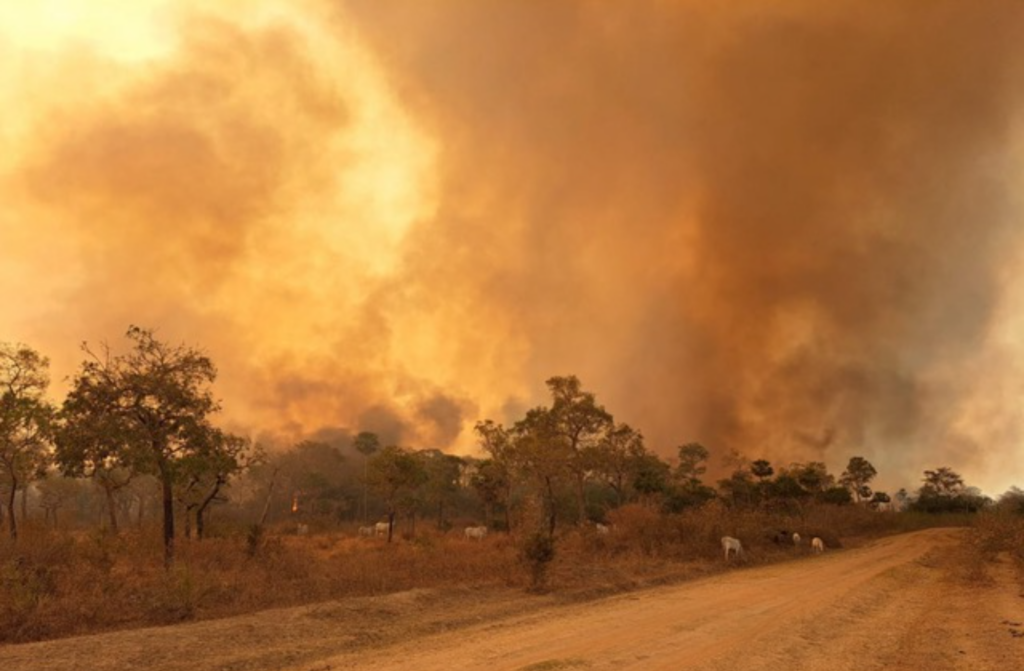
Bolivia’s Amazon forests are becoming scorched earth, with millions of acres lost each year to raging fires. Worse, this disaster is being caused by a government more interested in corrupt profits than protecting its people and wildlife.
Drug cartels possess the power of militaries, the profits of corporations, and the coercive capacity of a state. They will not be eliminated any time soon. But the region’s democracies can seek to raise their costs, limit their influence, and curb the violence.
His regime has hung onto power despite setbacks that would have toppled most democratic governments. Besides pure repression, Maduro has developed new autocratic tools that have kept Venezuela’s authoritarian state afloat.
Today begins a new era,” declared Zohran Mamdani upon his swearing in yesterday as New York City’s 112th mayor. “Beginning today, we will govern expansively and audaciously. We may not always succeed. But never will we be accused of lacking the courage to try.”
Inaugural ceremonies aren’t usually a forum for deep deliberation and rational discourse. But a new leader’s words are rarely disconnected from his underlying philosophy. Mamdani’s inaugural comments therefore give us an idea of what to expect: claiming to represent “all” New Yorkers, the new mayor will work quickly to push through decisions unpopular at best, and harmful at worst.
The character of those decisions, too, is clear. In a line widely circulated on social media, Mamdani promised to “replace the frigidity of rugged individualism with the warmth of collectivism.” Audacious collectivism: that’s the Mamdani agenda.
The inauguration ceremony reveals a mayor with no shortage of good intentions. But those intentions don’t align with economic realities, or with a sound grasp of human incentives and motivations. Like other collectivists before him, Mamdani’s vision is likely to run up against reality.
The commitment to the collective was on full display even in the lead up to Mamdani’s big moment. First came a speech from his fellow democratic socialist, Congresswoman Alexandria Ocasio-Cortez. In electing Mamdani, New York had “chosen prosperity for the many over spoils for the few,” she said. “Most importantly, Zohran will be a mayor for all of us!”
Then came the religious leaders, helmed by Imam Khalid Latif: “Let New York . . . continue to show that dignity, respect and compassion are no longer for the few but for all!” Then Public Advocate Jumaane Williams, who declared that “systems entrenched at the top” are the reason why “so many New Yorkers have too little.”
Last came Senator Bernie Sanders, there to administer the oath of office to the new mayor. Sanders’s speech congratulated him for taking on “some enormously wealthy oligarchs, defeating them “in the biggest political upset in modern American history.”
The subtext is not very subtle. On January 1, 2026, New York became a city “for all”—not, as it had been, a city governed in the interests of a power elite of billionaires, real-estate “speculators,” financiers, and the like. Mamdani’s swearing in marks what he promises will be “a new era” of governance, in which the public will be enlightened by socialism and politicians will intervene to improve our lives. Indeed, Mamdani explicitly promised such intervention against the city’s landlords mere hours after his swearing in.
The anti-elite diagnosis, of course, is not completely off the mark. Many of the city’s current problems—high rents, crime, homelessness, and food prices—are the result of an elite’s abuse of power.
But it’s not the elite Mamdani campaigned against. Rather, it’s the elite of previous public officials, who also promised to “remake New York.” They, too, arrived touting good intentions and big expectations and saw their electoral majorities as mandates to pass laws to “improve New Yorkers’ lives.”
The results include: statutes outlawing denser housing construction in most of the city—compounded by rent-stabilization laws that push thousands of apartments into disrepair—and billions spent on homeless programs. All this has driven higher rent burdens across the city.
Good intentions also created childcare regulations stricter than in most other jurisdictions, absurd liability laws on construction that don’t exist elsewhere, and some of the nation’s highest taxes. The elite—old and new—offers the same solution: higher taxes on the “1 percent,” which many of the wealthy won’t pay: they’re already fleeing the city.
For those who believe that New York City should reward excellence and provide opportunities, not hand-outs, Mamdani’s inauguration was a bracing experience. But will his policies succeed—even by their own metrics?
“There are people who are rooting for New York to fail,” Williams said in his speech. “They want to be right in their cynicism more than they want us to succeed in our idealism.”
No one should root for New York to fail. Its residents, and even America, depend on its success. But it’s not cynicism to believe that Mamdani’s agenda—the same one the state’s leaders have been pursuing for over a decade—will only make things worse. That’s just realism.
The law triggers a mandated “right of first offer” period, giving pre-approved nonprofits up to 45 days to express interest and another 90 days to submit a bid, followed by a 15-day window to match any third-party offer if one emerges.
Failure to comply could result in civil penalties starting at 3% of the sale price, and nonprofits could seek court injunctions to block deals.
Many are calling it a blow to private property rights and free-market principles, that gives the government and non-profits—exclusive first dibs on purchasing properties before owners can sell them on the open market.
The bill, which passed with a 30-10 vote despite fierce opposition from landlord groups and real estate stakeholders, requires owners of distressed residential properties to notify the city’s Department of Housing Preservation and Development (HPD) before even listing or accepting offers.
Supporters say the new law will preserve affordable housing as the city suffers from a housing shortage, but critics disagree saying it represents government overreach and will exacerbate the housing crisis by discouraging property maintenance and new development.
COPA’s rollout is phased.
In the first year (2026), it targets only the most severely distressed properties, such as those in HPD’s Alternative Enforcement Program, facing foreclosures, or with orders to fix the issues.
Starting in the second year, coverage widens to buildings with at least one open hazardous or immediately hazardous violation per unit, as well as those where affordability restrictions have expired within the past two years or are set to lapse soon.
Exemptions include one- to three-unit buildings, owner-occupied properties with five or fewer units, vacant lots, and purely commercial structures.
Conservatives say this plan ignores the root causes of New York’s housing crisis—decades of rent control, zoning restrictions, and high taxes that have lessened the supply and inflated costs for everyone.
In short: You can no longer sell property in New York City without first getting the permission of the government — on the price, and all the details of the sale.
Imagine being unable to sell your home without first getting permission from government authorities as to the price and the terms. Would you still feel like it’s your property? Would you still feel like you live in a free market, even a regulated one — or even in a free country, at all?
The government has, in effect, declared that it owns all private property in New York City. You can dispose of that property only with the government’s permission.
This is Communism. It’s evil — but it’s also poverty-inducing. When you stop people from acting rationally and in their own best interests economically, you force people into stupidity, bureaucracy and poverty as a way of life.
President Trump announced that U.S. forces had carried out “a large scale strike against Venezuela” and were flying President Nicolás Maduro and his wife out of the country. The Trump administration had been building pressure on Mr. Maduro for months.om West Palm Beach, Fla.
President Trump said on Saturday that the United States had captured the Venezuelan president, Nicolás Maduro, and was flying him out of Venezuela, in what would be a stunning culmination to a monthslong campaign by Mr. Trump’s administration to oust the authoritarian leader.
Mr. Trump made the announcement on Truth Social, his social media platform, and said that the United States had carried out “a large scale strike against Venezuela” in an operation that was conducted “in conjunction with U.S. law enforcement.” He also said that Mr. Maduro’s wife had also been captured.
In a brief phone interview with The New York Times after the announcement, Mr. Trump celebrated the success of the mission to capture the Venezuelan president. “A lot of good planning and lot of great, great troops and great people,” he said. “It was a brilliant operation, actually.”
When asked if he had sought congressional authority for the operation or what is next for Venezuela, Mr. Trump said he would address those matters during a news conference at 11 a.m. at Mar-a-Lago, his private club and residence in Palm Beach, Fla.
Venezuela’s vice president, Delcy Rodríguez, speaking on a state-run television station after Mr. Trump’s announcement, said that Mr. Maduro’s location was unknown and asked Mr. Trump for proof of life.
Earlier on Saturday, the government of Venezuela accused the United States of carrying out military attacks in the capital, Caracas, and other parts of the country after large explosions were reported at a military base in the city.
The Venezuelan government declared a state of emergency in response to the attacks and said they had occurred in Caracas and in the states of Miranda, Aragua and La Guaira, according to a statement from the Venezuelan communications ministry.
Venezuela “rejects, repudiates and denounces” U.S. military aggression, the statement said. It also called on “on all social and political forces in the country to activate mobilization plans and repudiate this imperialist attack.”
For months, Mr. Trump issued threats, warnings and accusations of drug smuggling against Mr. Maduro, whom the State Department has branded the head of a “narco-terrorist” state.
U.S. officials have called Mr. Maduro, a self-described socialist who has led Venezuela since 2013, an illegitimate leader and have accused him of controlling criminal groups tied to drug trafficking, charges he denies.
A broad range of experts on the use of lethal force have said that the strikes on small vessels amount to illegal extrajudicial killings, but the Trump administration has asserted they are consistent with the laws of war because the United States is engaged in an armed conflict with drug cartels.
In recent weeks, the United States has also carried out a campaign against tankers carrying Venezuelan crude, throwing the country’s oil industry into disarray and jeopardizing the government’s main source of revenue.
Maduro’s security: Before the U.S. operation on Saturday, the Venezuelan president had tightened his inner circle and taken to changing beds in an attempt to protect himself from a potential targeted strike or a special-forces raid.
U.S. buildup: Last month, C-17 cargo planes — largely used for transporting military troops and equipment — conducted at least 16 flights to Puerto Rico from American military bases, according to flight tracking data. The U.S. Southern Command has said that some 15,000 troops are already deployed in the Caribbean, one of the largest naval deployments to the region in decades.
Cartel accusations: In March 2020, Mr. Maduro was indicted in the United States on charges that he oversaw a violent drug organization known as Cartel de los Soles. U.S. intelligence agencies have assessed that Mr. Maduro is actually at odds with one group, Tren de Aragua, and analysts say the Cartel de Los Soles does not exist as a concrete organization. The term has been used to refer to the involvement of many high-ranking military officers in the drug trade, though there is no evidence that Mr. Maduro directs the effort.
GOP lawmakers are fleeing for the exit in droves, with many pointing to a Congress they argue has grown too dysfunctional and a demanding schedule that leaves little time for their families.
More than 50 lawmakers in both parties have announced decisions to leave their seats, scrambling the calculus on both sides of the aisle ahead of next year’s high-stakes midterms.
The wave of exits could be particularly ominous for Republicans in charge of the House and Senate. The number exiting is nearly on par with 2018, a dismal midterm year for the GOP.
Some lawmakers frustrated with inaction on Capitol Hill plan to run for governor and other statewide offices, while others are stepping back from public office altogether.
Those leaving include high-profile conservative and progressive firebrands such as Reps. Chip Roy (R-Texas) and Jan Schakowsky (D-Ill.), and battle-tested moderates such as Reps. Don Bacon (R-Neb.) and Jared Golden (D-Maine), who have repeatedly run for reelection and won in competitive districts.
Bacon told The Hill that a major reason he’s leaving is because he wants to “do something different,” including spending more time with his grandchildren and having a healthier lifestyle.
But while he said those were the major reasons, Congress’s problems also played a role.
“I just was ready for something new. I know my wife was. So, that’s the major reason. I think the more minor reasons are … I’ll say that the dysfunction isn’t attractive,” Bacon said.
I think, two, it’s hard — you got to be a really master tactician to run against the left and at the same time disagree with the president on a lot of things. And I’ve done it. I’ve done it since 2020, and I don’t know, to me, I’m just, I just knew it was time for a change,” he said.
Golden wrote in an op-ed for the Bangor Daily News that he’s grown “tired of the increasing incivility and plain nastiness that are now common from some elements of our American community—behavior that, too often, our political leaders exhibit themselves.”
Another high-profile House member leaving in January is Rep. Marjorie Taylor Greene (R-Ga.), who was once a top ally of Trump’s.
“No matter which way the political pendulum swings, Republican or Democrat, nothing ever gets better for the common American man or woman,” she said in a statement announcing her decision.
Rep. Ralph Norman (R-S.C.), who’s pursuing a gubernatorial bid in South Carolina, told The Hill he feels he can get more done on a statewide level than in Congress.
“I can accomplish far more on a national level being governor,” Norman said. “You know, you got what, 50 governors? You got 435 members of Congress, 100 Senators, 535. So my voice will be heard far greater as a CEO of South Carolina.”
Democrats argue a big problem with the House is the unwillingness of most Republicans to take on Trump.
“So long as the biggest fear of many Republicans is the danger of a mean Trump tweet, the House will remain broken,” Rep. Lloyd Doggett (D-Texas), who is retiring in light of GOP-friendly redistricting in Texas, told The Hill via email.
Rep. Bonnie Watson Coleman (D-N.J.) told The Hill she’s retiring because she thinks she’s contributed as much as she could during her time in Congress.
“I had tried to advance the issues that were of concern to me. … And I just thought that it’s now someone else’s turn to take up that mantle and hopefully carry out some of the values that I thought were important in terms of our domestic policy and our international policy,” she said.
But she added that, “I don’t disagree that Congress right now is at its weakest point, that it is becoming a tool of the administration and not in a good way at all.”
Some lawmakers feel they “hit a kind of wall” on Capitol Hill, said Michael Romano, a Shenandoah University political science professor who has studied congressional retirements.
Independent journalist Nick Shirley released a viral video on December 26, 2025, documenting visits to several state-funded daycare centers in Minneapolis.
These centers, many catering to the Somali immigrant community, were found empty during operational hours, with no children present and signs of disuse, despite receiving substantial public funding through Minnesota’s Child Care Assistance Program (CCAP).
Shirley’s investigation has uncovered over $110 million in suspicious payments in a single day, building on prior scandals like the Feeding Our Future fraud.
The revelations have fueled criticism of Democratic Governor Tim Walz, with Republicans like Rep. Tom Emmer demanding answers and linking the issue to immigration policies. Figures such as Vice President JD Vance, Elon Musk, and President Donald Trump have amplified the story, calling Minnesota a “hub of fraudulent money laundering.”
According to state records unearthed by Shirley and his team, this single center pocketed nearly $4 million in taxpayer dollars through Minnesota’s Child Care Assistance Program (CCAP) in recent years, with $1.9 million disbursed in 2025 alone.
When Shirley attempted to enroll a fictional child, staff rebuffed him, claiming the center was “full”—a laughable excuse given the vacant premises.
Shirley’s investigation, aided by a local whistleblower named David who had observed these sites for years without seeing a single child, uncovered a web of similar “daycares.”
Multiple locations shared addresses with other dubious operations, like non-emergency medical transport services and home healthcare providers, all funneling public money with little to no oversight.
CASE UPDATE: MINNESOTA FRAUD SCHEME
The FBI is aware of recent social media reports in Minnesota. However, even before the public conversation escalated online, the FBI had surged personnel and investigative resources to Minnesota to dismantle large-scale fraud schemes exploiting federal programs. Fraud that steals from taxpayers and robs vulnerable children will remain a top FBI priority in Minnesota and nationwide.
To date, the FBI dismantled a $250 million fraud scheme that stole federal food aid meant for vulnerable children during COVID. The investigation exposed sham vendors, shell companies, and large-scale money laundering tied to the Feeding Our Future network.
The case led to 78 indictments and 57 convictions. Defendants included Abdiwahab Ahmed Mohamud, Ahmed Ali, Hussein Farah, Abdullahe Nur Jesow, Asha Farhan Hassan, Ousman Camara, and Abdirashid Bixi Dool, each charged for roles ranging from wire fraud to money laundering and conspiracy.
These criminals didn’t just engaged in historic fraud, but tried to subvert justice as well. Abdimajid Mohamed Nur and others were charged for attempting to bribe a juror with $120,000 in cash. Those responsible pleaded guilty and were sentenced, including a 10-year prison term and nearly $48 million in restitution in related cases.
The FBI believes this is just the tip of a very large iceberg. We will continue to follow the money and protect children, and this investigation very much remains ongoing.
Furthermore, many are also being referred to immigrations officials for possible further denaturalization and deportation proceedings where eligible.
The case led to 78 indictments and 57 convictions. Defendants included Abdiwahab Ahmed Mohamud, Ahmed Ali, Hussein Farah, Abdullahe Nur Jesow, Asha Farhan Hassan, Ousman Camara, and Abdirashid Bixi Dool, each charged for roles ranging from wire fraud to money laundering and conspiracy.
These criminals didn’t just engaged in historic fraud, but tried to subvert justice as well. Abdimajid Mohamed Nur and others were charged for attempting to bribe a juror with $120,000 in cash. Those responsible pleaded guilty and were sentenced, including a 10-year prison term and nearly $48 million in restitution in related cases.
The FBI believes this is just the tip of a very large iceberg. We will continue to follow the money and protect children, and this investigation very much remains ongoing.
Furthermore, many are also being referred to immigrations officials for possible further denaturalization and deportation proceedings where eligible.
CASE UPDATE: MINNESOTA FRAUD SCHEME The FBI is aware of recent social media reports in Minnesota. However, even before the public conversation escalated online, the FBI had surged personnel and investigative resources to Minnesota to dismantle large-scale fraud schemes exploiting federal programs. Fraud that steals from taxpayers and robs vulnerable children will remain a top FBI priority in Minnesota and nationwide. To date, the FBI dismantled a $250 million fraud scheme that stole federal food aid meant for vulnerable children during COVID. The investigation exposed sham vendors, shell companies, and large-scale money laundering tied to the Feeding Our Future network. The case led to 78 indictments and 57 convictions. Defendants included Abdiwahab Ahmed Mohamud, Ahmed Ali, Hussein Farah, Abdullahe Nur Jesow, Asha Farhan Hassan, Ousman Camara, and Abdirashid Bixi Dool, each charged for roles ranging from wire fraud to money laundering and conspiracy. These criminals didn’t just engaged in historic fraud, but tried to subvert justice as well. Abdimajid Mohamed Nur and others were charged for attempting to bribe a juror with $120,000 in cash. Those responsible pleaded guilty and were sentenced, including a 10-year prison term and nearly $48 million in restitution in related cases. The FBI believes this is just the tip of a very large iceberg. We will continue to follow the money and protect children, and this investigation very much remains ongoing. Furthermore, many are also being referred to immigrations officials for possible further denaturalization and deportation proceedings where eligible.
The Washington state attorney general released a statement on X Tuesday evening warning independent journalists to stop investigating fraudulent Somali daycare centers or they could be charged with a hate crime.
“My office has received outreach from members of the Somali community after reports of home-based daycare providers being harassed and accused of fraud with little to no fact-checking,” State AG Nick Brown stated. “We are in touch with the state Department of Children, Youth, and Families regarding the claims being pushed online and the harassment reported by daycare providers. Showing up on someone’s porch, threatening, or harassing them isn’t an investigation. Neither is filming minors who may be in the home. This is unsafe and potentially dangerous behavior.”
Harmeet Dhillon, the Assistant Attorney General for Civil rights, issued a warning of her own in reaction to the Washington state AG’s post.
“ANY state official who chills or threatens to chill a journalist’s 1A rights will have some ‘splainin to do,” she wrote on X, Wednesday morning. “[The DOJ Civil Rights Division] takes potential violations of 18 USC § 242 seriously!” Dhillon added.
This statute, known as the Deprivation of Rights Under Color of Law, makes it a crime for any person acting under the pretense of law to willfully deprive another individual of rights, privileges, or immunities secured by the Constitution or laws of the United States.
The clash of the AGs came after Youtuber Nick Shirley exposed about a dozen Somali-owned, state-funded childcare facilities in Minneapolis, Minnesota, that appeared to be completely deserted.
Shirley produced a 42-minute video, which has been viewed over 131 million times on X since it was posted on December 26, alleging that Minnesota governor Tim Walz (D.) “knew about the fraud but never reported it.”
Inspired by Shirley’s bombshell report, citizen journalists in multiple states with large Somali populations have launched their own investigations in recent days.
In the Kent, Washington area Tuesday, YouTuber Chris Sims, a self-described “gonzo journalist,” visited seven suspicious Somali childcare sites and reported that they were “very unhappy” to see him.
Sims posted a video of him approaching a private home listed as a childcare facility that appeared to be not as advertised.
“There was no sign of kids or being a Daycare facility,” Sims wrote. “I was told by a few they weren’t Daycares despite receiving tax payer dollars. One yelled ‘Call the police’ behind the door.”
On Monday, independent journalists Jonathan Choe and Cam Higby visited an alleged Somali daycare facility in Seattle that receives hundreds of thousands in taxpayers funds and the person who answered the door said there was no daycare there in the past or present.
Higby said “Dhagash Childcare” has received over $210,000 just this year alone.
Another listed childcare facility, a house in a residential neighborhood in Kent, Washington, has received over $863,000 since 2023, according to Higby.
“Residents say there IS NO DAYCARE HERE,” the journalist said.
Another reporter reporting on potential fraud in the Rainier Vista neighborhood of Seattle on December 29th, faced hostile reactions from the Somali residents, who called the police on him.
In his statement, the Washington State AG encouraged members of the Somali community “experiencing threats or harassment” to call the police or his office’s Hate Crimes & Bias Incident Hotline or report it to the state’s hate crime website.
Addressing the independent journalists, Brown added: “If you think fraud is happening, there are appropriate measures to report and investigate. Go to DCYF’s website to learn more. And where fraud is substantiated and verified by law enforcement and regulatory agencies, people should be held accountable.”
The Post Millennial’s Andy Ngo responded to Brown’s threat on X, saying: “It is the duty of journalists to visit taxpayer-funded nonprofits and businesses to investigate where you have failed. The journalists have documented their visits on camera and there is no harassing or threatening behavior. You are trying to threaten journalists by telling people to call police with false allegations of a hate crime.”
Andy Cohen unleashed a wild rant about outgoing New York City Mayor Eric Adams that left Anderson Cooper visibly cringing live on CNN.
Cohen and Cooper, who have been co-hosting CNN’s New Year’s Eve special for the past nine years, were putting away drinks for hours and bantering live during the network’s coverage of the celebrations in New York City.
Soon after the ball dropped in Times Square, Cohen, with a drink in his hand, said: ‘Watching the final moments of Mayor Adams’s chaotic…’
Before he could finish his thought, Cooper interrupted and said: ‘Oh no. I’m out.’
Cohen continued, ‘I just want to say…’ before Cooper interrupted him again. ‘Don’t,’ he said while attempting to walk out of frame.
But the camera panned out to keep the co-host in frame. ‘He got his pardons,’ Cohen continued with a slight slur, before Cooper said ‘I’m out’ once again.
‘I’m just saying, great, you got your pardons. Go off into the sunset,’ Cohen said. ‘We’ll fiddle with what we have, with what you’ve left us with.’