Unknown's avatar

About theartfuldilettante

The Artful Dilettante is a native of Pittsburgh, PA, and a graduate of Penn State University. He is a lover of liberty and a lifelong and passionate student of the same. He is voracious reader of books on the Enlightenment and the American colonial and revolutionary periods. He is a student of libertarian and Objectivist philosophies. He collects revolutionary war and period currency, books, and newspapers. He is married and the father of one teenage son. He is kind, witty, generous to a fault, and unjustifiably proud of himself. He is the life of the party and an unparalleled raconteur.

Fired federal workers are being institutionalized, collapsing in cubicles and sobbing

May 26, 2025 (20 hours ago)

They told us DEI was progress. They told us these government jobs were building a better, more inclusive America. What they didn’t tell us is that this entire system was creating a class of emotionally broken dependents who tied their entire identity, purpose, and mental stability to a taxpayer-funded title.

Now, the house of cards is collapsing, and it’s getting really ugly.

Meet former federal worker Caitlin.

Caitlin was so devastated after being fired from her DEI federal job, her husband found her on the fire escape, contemplating whether it was high enough to jump. He later had her committed. Sadly, Caitlin, who suffered her entire life with mental health issues, committed suicide, and somehow, the Washington Post article made it seem as if this was Trump’s fault.

Washington Post:

The president had called federal employees “crooked” and “dishonest,” and his deputies had vowed to purge them from government and make them suffer. And now, on the sixth day of Trump’s second term, a federal health researcher was missing.

Her husband searched every room of their Baltimore townhouse, calling her name. “Caitlin?”

Caitlin Cross-Barnet had struggled with depression, and now her husband, Mike, found her on their narrow, third-floor fire escape. As he tried to coax her back in, she replied: “It’s not high enough to jump.”

Over the years, in her darkest moments, Caitlin had often told him she felt she didn’t measure up. She never felt adequate as a daughter, as a wife and mother, or as a researcher.

“Of course you’re enough,” Mike said over the phone. “You do so much. … You’re more than enough.”

Caitlin kept crying.

“You’re enough for me,” he tried to tell her. But soon after, she hung up.

The next call Mike received, 98 minutes later, was from a hospital in Virginia. He later learned that the mental health facility had staff checking on Caitlin every 15 minutes, but she saw an opening between checkups and killed herself.

Meet former federal worker Dick Midgette.

Richard was laid off from his IT job. This guy sat in his car sobbing to indie rock music and spiraled into suicidal thoughts. But he couldn’t call his parents for comfort because his dad voted for Trump.

Washington Post:

On the 26th day of Trump’s term, Richard Midgette, 28, was fired from his IT job at Yellowstone National Park. He drove to the only bridge in his town, stopping just past its edge. From the car, he listened to the rushing of the water and, for the first time, contemplated whether to end his life.

[…]

He pulled into a gas station next to the bridge and considered calling his parents. His dad had voted for Trump, and for weeks had been cheering the president’s promises to purge the government.

The Washington Post goes on to claim that Richard is “mentally healthy.” We beg to differ.

He had never suffered from depression or other mental problems, he said. But as he sat, newly unemployed, in his idling car just past the bridge, he was overwhelmed by dark thoughts.

And finally, you sadly can’t meet former federal employee Monique Lockett.

She collapsed at her cubicle after the DOGE dared to ask for access to her federal databases. But don’t worry, the Washington Post actually published a photo of her in the casket. Yes, they really did that, folks.

Look:

Monique was obese and had hypertension and high blood sugar, but somehow it was Trump and DOGE’s fault that she died.

Washington Post:

On the morning of Feb. 18, Monique and others returned from the Presidents’ Day weekend to an office tense with news of King’s departure and rumors of more cuts.

Monique was at her cubicle on the third floor of headquarters when she collapsed, co-workers said. The medical examiner listed the cause of death as “hypertensive, atherosclerotic cardiovascular disease.” Monique’s family and many close co-workers blamed her heart attack on stress at work.

Monique had risk factors for heart disease, including obesity, high blood sugar and high cholesterol, according to her medical records. Two experts who reviewed her records at The Post’s request said in cases like hers, stress, uncertainty and tension at work can contribute to cardiac arrest.

Sadly, this isn’t satire. This is what happens when emotionally fragile people are gifted jobs they don’t deserve and fed a delusion that they are freedom fighters on some noble crusade against “evil Republicans.” These aren’t resilient workers; they’re political cultists who’ve mistaken a job title for a mission.

READ MORE: Tributes pour in for Scott Adams…

For decades, these swampy bureaucrats have lived cozy off the backs of hard-working Americans, producing nothing of value and pushing policies that hurt the people who paid their salaries. Now that they’re feeling a small fraction of the disruption they heaped on the middle class, we’re all expected to mourn like it’s a national tragedy.

That’s the vibe from the Post article.

Business isn’t personal. Restructuring isn’t war. Cutting bloated federal agencies isn’t cruelty. But to these people, losing their cushy government job is like losing a father figure. The truth is, they don’t want work; they want Big Government Daddy protection.

READ MORE: Dems to spend tens of millions to find the new left-wing Joe Rogan…

What we’re seeing isn’t the result of “mean Trump policies,” it’s the total collapse of a fantasy gone wild. This taxpayer-funded DEI agenda gave broken people false status instead of the real help that they needed.

Revolver

EDITOR’S NOTE: I’m crying tears of joy.   A/D
Freed from Hamas Captivity, Former Hostage Tells His Story through His Paintings

You’d be forgiven for looking around Andrei Kozlov’s studio, dotted with paintings inspired by his eight months as a hostage of Hamas, and seeing only darkness — canvases splashed with gray and ocher, guns tucked into waistbands or resting against a wall, moments of angst and disbelief and pain.

He is a free man now, who often lets a wide smile spread across his face, who can’t believe his luck of surviving it all, and who urges you to look further.

A painting of a blackened street his captors led him down is drowned in darkness, but in the distance is a sliver of cerulean sky. A screaming man’s reflection is caught, but it’s in a mirror on a bubblegum-pink wall. A house beside barren trees is seen in the desolation of night, but its windows glow with lamplight.

When you’re surrounded by something dark,” the 28-year-old Kozlov says, standing in a shared art studio he works at in the Hudson Yards neighborhood of New York, “there always can be light inside.”

Nearly a year after his release from captivity, Kozlov is familiar with juxtapositions.

He is mostly happy and well-adjusted, able to matter-of-factly describe his ordeal, but sometimes returns in his mind to what he went through. He is alive and filled with gratitude but feels the weight of those not yet free. He is no longer a hostage but knows the world may always see him as one.

“I will be a former hostage forever,” he says. “It will forever be a part of my life.”

Kozlov grew up in St. Petersburg, Russia, but had long felt a sense of wanderlust. After serving a mandatory year in the military, he decided he wanted to live in Israel, arriving in August 2022 and taking part in Masa, a gap-year program that included an internship in motion design at a Tel Aviv company. His life was carefree, reflected in Instagram posts of beaches, biking, surfing, road-tripping and otherwise enjoying the days of a relaxed, unemployed 20-something.

That ended on Oct. 7, 2023, the deadliest day in Israel’s history. Kozlov had picked up a job working security at the Tribe of Nova music festival in southern Israel close to the Gaza border, barely sleeping in two nights keeping watch for ticketless intruders. On his third morning, daybreak unleashed hours of chaos and confusion, the sound of gunfire, mad dashes for escape, scaling down a cliff and ultimately being led to a vehicle that Kozlov believed would bring him to safety. He hadn’t been killed, he rationalized, so he would be rescued. He never considered kidnapping.

He sent no messages to his family. He was sure he would survive. He’d be home by night, he thought.

Soon, though, Kozlov was in Gaza, tied with rope. Reality set in. Guns were aimed and blows were delivered. He was certain he knew what would come next.

“You are sure that you will spend the last moments of your life like that,” he says, “and maybe tomorrow they will kill you.”

Those first days of Kozlov’s captivity were a “disgusting, terrible hell.” Over eight months, he says he was held in eight different houses, guarded by a rotating cast of two dozen militants who lived beside him.

Some, he said, feigned compassion; others treated their captives as animals. In some holding sites, he slept on a wet, sticky mattress that stunk of mold; others had far better conditions. Ropes were replaced by chains until restraints were removed altogether. He knows it could have been far worse.

“They didn’t pull out my nails,” he says. “They didn’t torture me with electroshock.”

In time, a weird normalcy set in. He spent time picking up Arabic from his captors and Hebrew from fellow hostages. They’d talk of music and women and life before. Days passed in endless hands of cards or invented games like listing 10 Will Smith movies or 100 songs with the word ‘love’ in the title.

He’d muse about escaping, but knew he’d never make it out alive. Sometimes, he wondered if he could telekinetically send a message to his parents. At others, this agnostic found himself trying to talk to God.

After a few months, his captors provided a small mercy: A pencil and a thin notebook.

Kozlov knew he had artistic talent from childhood, but it was a pastime that came and went. Sometimes, years went by without drawing. Now, with nothing but time, he drew daily — cartoonish aliens and Don Corleone of “The Godfather” and the summer home in Russia where he spent his happiest days of youth.

He wrote out goals, too. To go home the same person, or maybe better. To use his skills. To be free.

And, on the 247th day, it came. Israeli Defense Forces burst into the house in the Nuseirat refugee camp where Kozlov was held — a dramatic operation that rescued him and three other hostages, and killed at least 274 Palestinians caught in the cross-fire and an Israeli commando. In a moment, he was outside, feeling sun on his face for the first time in months, a Coke in his hand and a cigarette at his lips. A helicopter whirred him to safety.

“Euphoria,” he says. “You’re able to feel fresh air, to see a sea, beach, sand, sky without any clouds.”

He calls it the best day of his life.

In the days that followed, he’d be reunited with his family, crumpling and bawling at his mother’s feet at a hospital outside Tel Aviv, and recognized by passersby as that hostage on the news. Some nights, he’d wake up thinking he was back on that sticky mattress. Some days he had to pinch himself to believe he was truly free.

“Sometimes I feel what it means to have a war and sometimes I feel the pain of every hostage,” he says. “I feel pain of families who don’t know where their loved ones are right now. … I feel pain of people who left their houses in the south. I feel the pain of all the people who lost their houses. I feel pain.”

He says the vast majority of the time, he feels fine, but a day or so a month, the darkness returns. He spent his first few months of freedom in Israel, then traveling in the U.S. He was back in Israel for a time earlier this year, but found too many triggers, so he returned to the U.S.

Along the way, he’s made good on his goal, working on his art.

In his studio space a block from the Hudson River, he’s finalizing a planned exhibition of his work — a series of mostly acrylic paintings showing his capture, captivity and release. He wants to finish a few more pieces influenced by his time as a hostage before pivoting to new inspirations.

Maybe he’ll flit off to New Zealand, he says. Maybe he’ll write a book. So many doors are open to him. Maybe art will become his life and his work will be filled with color and happiness.

He sees that joy even in the paintings others might insist are dark.

“It’s not dark,” he says. “It’s about hope.”

___

Matt Sedensky can be reached at msedensky@ap.org and https://x.com/sedensky

___

Follow AP’s war coverage at https://apnews.com/hub/israel-hamas-war

Tariff Shock in Brussels

Donald Trump has run out of patience with Brussels. Effective June 1st, the President announced via Truth Social that tariffs on imports from the European Union will rise to a staggering 50%. Did EU bureaucrats really believe they could quietly let the 90-day negotiation deadline lapse and return to business as usual?

Just as European officials were mentally transitioning into their weekend, Trump dropped a bombshell. The punitive move, he stated, is a response to chronic EU protectionism: discriminatory VAT regimes, “ridiculous” fines on American corporations, currency manipulation, and what he called “unjustified lawsuits.” Brussels, he argues, maintains an artificial export surplus with the U.S. through these tactics.

Since April, we’ve seen Trump using steep tariffs as bargaining chips. These numbers might shift during negotiations. But Brussels seems to have forgotten: diplomacy is fluid, not rigid decree.

Europe’s Subsidy Superstate

Europe’s lackluster response — beyond a frail threat of retaliatory tariffs — betrays either ignorance of the gravity of the situation or a mindset so encased in its own ideological bubble that it can no longer decode external reality. The EU’s once-vaunted foresight seems to have met its limits.

Trump’s attack targets the EU’s power core: a sprawling protectionist system tied to a mechanism of subsidies and centralized approvals. The bloc operates much like a secular indulgence market: obey Brussels, accept its regulation-heavy ethos, and you’ll be allowed to do business — or even politics.

Despite the EU’s talk of a single internal market, it is in truth a patchwork of protectionist engines. Estimates suggest Brussels and its member states together direct over €500 billion annually in subsidies to prop up domestic industries. But these very policies corrode economic dynamism — something anyone reading European business news can verify.

Trade regulations, climate edicts, and harmonization mandates span volumes. In practice, EU-Europe has become a paradise for internal rent-seekers but a nightmare for foreign competitors — and consumers. Higher prices, higher taxes: the bill for regulation is paid by the public.

Free trade advocates have always viewed Brussels’ interventionism — be it French industrial policy or German bureaucratic excess — as a threat to liberty and market efficiency. Politicians, keen on preserving social peace and shielding labor markets from crisis, have flooded the economy with veiled subsidies. This shortsightedness has become a killer of productivity, eroding the Eurozone’s economic vitality. Germany, sliding toward a European version of America’s Rust Belt, is now the symbol of this decline.

Export Surplus as ‘Bycatch’

One side-effect of the EU’s trade model has been a ballooning surplus with the U.S. In 2023, the EU racked up a record €236 billion trade surplus, aided by hidden barriers. Mercantilists may cheer, but libertarians see danger. Every party, however, ends — and Trump, since his self-declared “Liberation Day” on April 2, is on the offensive.

His high-impact tariff salvo has already provoked confrontations with China and, surprisingly, with traditional allies like the UK. Contrary to some media narratives, the U.S. — as the world’s economic titan — will now secure more favorable trade terms. Expect an increase in tariff volume, perhaps reaching $300 billion annually, and a gradual narrowing of America’s trade deficit.

For EU leaders, long nestled in the ideological cocoon of Brussels, this reality-based trade policy comes as a shock. They are now realizing that old tricks — media spin, distraction, or clandestine jabs at U.S. bond markets (as in April) — will no longer suffice. Reality has arrived, and with it, the need for a drastic learning curve.

Brussels Under Siege

Trump’s tariff campaign is a strategic gambit designed to force Europe to shed its bloated protectionist apparatus. For EU leaders, the time has come to reassess the balance between regional autonomy and Brussels’ growing central authority. Dissident voices across the continent are calling — louder than ever — for reform.

A true political movement focused on decentralization, personal responsibility, and free markets will only emerge when Europe hits rock bottom. Argentina is the current example. President Javier Milei rose to power amid a deep trust crisis and catastrophic central planning failures.

Against all odds, Milei slashed Argentina’s deficit, tamed runaway inflation, and posted 5.5% economic growth early this year. It was a liberating blow that could serve as a model for other ailing nations. Radical economic freedom, it seems, is contagious.

Of course, Milei’s path hasn’t been flawless. Painful adjustments were inevitable. But that is the nature of real reform: messy, difficult — and the only route out of structural decay.

Trump has now internationalized this battle against overreaching state power. Tariffs and dollar policy have become geopolitical tools. We must decipher this strategy if we are to understand how global power relations are being redrawn.

The Realignment of Global Power

Trump’s tariff policy — mocked by legacy media and dismissed by Europe’s political elites — may look like trade policy. But pull back the curtain, and you see the dawn of a new geopolitical alignment.

Whether Europe likes it or not, it is a resource-poor, energy-dependent economy losing access to global supplies. France’s retreat from its African ex-colonies — once its uranium lifeline — is a case in point.

In the coming months, U.S.-EU trade negotiations will expose a brutal truth: geopolitical power is tied to energy and resource access. That Germany — Europe’s industrial core — has chosen this moment to abandon nuclear energy speaks volumes about its infantile delusions. And Chancellor Friedrich Merz’s hesitance to reverse course suggests no immediate correction.

Without delving too far into speculation, one cannot ignore the West’s feverish Russophobia. Is it dawning on Brussels that its dependence is unsustainable? The EU’s recent musings — like top diplomat Kaja Kallas’s hint at dismembering Russia — suggest deeper strategic designs than its leaders admit.

Thomas Kolbe, born in 1978 in Neuss/ Germany, is a graduate economist. For over 25 years, he has worked as a journalist and media producer for clients from various industries and business associations. As a publicist, he focuses on economic processes and observes geopolitical events from the perspective of the capital markets. His publications follow a philosophy that focuses on the individual and their right to self-determination.

Trump Says Putin Has Gone “Absolutely Crazy”

Trump says Putin has gone ‘absolutely crazy,’ warns of downfall of Russia

by Ian Swanson

President Trump in a new post on Truth Social on Sunday night accused Russian President Vladimir Putin of having gone “absolutely” crazy and said if he did not stop what he was doing, it would lead to the downfall of his country.

The social media comments came after Trump had issued some of his toughest comments about Putin earlier in remarks to reporters in New Jersey.

“I’ve always had a very good relationship with Vladimir Putin of Russia, but something has happened to him. He has gone absolutely CRAZY!,” Trump wrote.

“He is needlessly killing a lot of people, and I’m not just talking about soldiers. Missiles and drones are being shot into Cities in Ukraine, for no reason whatsoever,” Trump said.

“I’ve always said that he wants ALL of Ukraine, not just a piece of it, and maybe that’s proving to be right, but if he does, it will lead to the downfall of Russia!”

Trump then turned toward Ukraine President Volodymyr Zelensky, who he has repeatedly criticized. Zelensky on Sunday had faulted the silence of the U.S. and other countries in the wake of the latest missile and drone barrage from Russia against his country, an assault that killed a dozen people.

“Likewise, President Zelenskyy is doing his Country no favors by talking the way he does,” Trump said.

“Everything out of his mouth causes problems, I don’t like it, and it better stop.”

Trump campaigned on a vow to end the war, which he has repeatedly said would never have started if he had been president.

He returned to that theme at the end of his statement on Truth Social.

“This is a War that would never have started if I were President. This is Zelenskyy’s, Putin’s, and [former President] Biden’s War, not ‘Trump’s,’ I am only helping to put out the big and ugly fires, that have been started through Gross Incompetence and Hatred.”

Ian Swanson, The Hill

New Democrat Slogans

I was just thinking about all the democratic cheating and the fake news cabal. So I came up with some possible 2028 democratic slogans.

1. I have not yet begun to cheat!

2. Don’t cheat until you see the whites of their eyes!

3. I regret I have but one cheat to give for my country!

4. Ask not what your country can do for you but ask how you can cheat your country!

5. I cheat, therefore I am! One small cheat for man one giant cheat for mankind!

6. You have nothing to cheat for but cheating itself!

7. We have chosen to cheat and do the other things! etc. etc. I know this is lame but this is how I spend my retirement!

Trump Open to ‘Significant’ Senate Changes on House Reconciliation Package

President Donald Trump said he is open to the Senate making “fairly significant” changes to the reconciliation package that narrowly passed the House, which may complicate Speaker Mike Johnson’s (R-La.) effort to preserve what he called a “very delicate” compromise.

“I want the Senate and the senators to make the changes they want, and we’ll go back to the House and we’ll see if we can get them,” Trump told reporters on Sunday in Morristown, New Jersey. “In some cases, the changes may be something I’d agree with, to be honest.”

think they are going to have changes,” Trump added. “Some will be minor and some will be fairly significant.”

The House passed the bill on Thursday by a 215–214 vote along party lines. Following the passage, Johnson urged the Senate to avoid major revisions, warning that too many changes could upend the narrow margin needed to get the bill through the lower chamber again.

“We’ve got to pass it one more time to ratify their changes in the House, and I have a very delicate balance here, a very delicate equilibrium that we’ve reached over a long period of time, and it’s best not to meddle with it too much,” Johnson told CNN’s Jake Tapper on May 25 on “State of the Union.”

Trump’s greenlighting of Senate changes may be encouraging to hardline fiscal conservatives who criticized the bill for not going far enough to balance the budget.

“This bill falls profoundly short. It does not do what we say it does with respect to deficits,” Rep. Chip Roy (R-Texas) said before voting “present” to allow the bill to advance for a full vote. “What we’re dealing with here is tax cuts and spending a massive front-loaded deficit increase.”

House Freedom Caucus Chair Andy Harris (R-Md.) also voted “present” in the House floor vote in protest. The congressman took issue with, among other things, the bill’s Medicaid overhaul that includes new work requirements that won’t take effect until 2029 and more frequent eligibility checks, calling it a “joke” that would do little to prevent fraud and abuse.

Sen. Ron Johnson (R-Wis.), who calls for a return to pre-pandemic spending levels, said on CNN’s “State of the Union” on May 25 that he believes there is enough GOP opposition in the Senate to block the reconciliation bill.

“I think we have enough to stop the process until the president gets serious about spending reduction and reducing the deficit,” the senator said.

Sen. Rand Paul (R-Ky.) also said he wouldn’t support the bill without addressing its proposed $5 trillion debt ceiling hike.

“I think the cuts currently in the bill are wimpy and anemic, but I still would support the bill, even with wimpy and anemic cuts, if they weren’t going to explode the debt,” Paul said on Fox News Sunday.

“They’re going to explode the debt. The House’s [debt-limit increase] is $4 trillion. The Senate has actually been talking about exploding the debt by $5 trillion.”

For Trump, the Senate process could be an opportunity to pursue his policy goals left out of the House package.

For one, the House bill did not close what’s known as the carried-interest tax loophole, which allows private equity, venture capital, and hedge fund managers to pay a 20 percent long-term capital gains tax rate on the gains they receive from their investments that might otherwise be taxed as ordinary income at rates up to 37 percent.

Changing it could reduce the deficit by $13 billion over 10 years, according to the Congressional Budget Office.

Another exclusion was Trump’s proposal to create a new top tax bracket for the nation’s highest earners. While the president wants to extend the tax cuts he signed into law in 2017, he has proposed letting the current 37 percent top marginal rate expire and revert to 39.6 percent for individuals earning more than $2.5 million, or $5 million for married couples.

Senate Majority Leader John Thune (R-S.D.) has not set a timeline for the upper chamber to pass its version of the bill, although Treasury Secretary Scott Bessent said he is hoping that it would reach the president’s desk by July 4.

Due to the budget reconciliation process, the bill is not subject to the Senate filibuster and can pass with a simple majority.

With Republicans holding 53 seats, Thune can afford to lose three Republican votes and still pass the bill with Vice President JD Vance breaking the tie.

By Bill Pan, The Epoch Times • May. 26, 2025

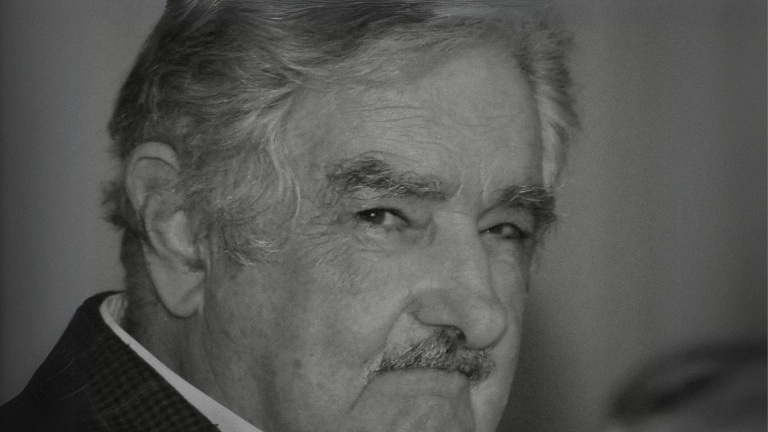
El Pepe


How José Mujica charmed, fooled, and shaped a nation.

José Mujica, Uruguay’s guerrilla-turned-president-turned-political-popstar, passed away on May 13. Trying to explain him to anyone living outside Uruguay can be a challenge, because Mujica was a completely Uruguayan character.

Let me illustrate. Uruguay is a country with two souls. One, urban, middle-class, socialist, with mostly European descent, and cosmopolitan pretentions that are impossible to fulfill in a country of 3 million people on the outskirts of Latin America. That’s mostly the capital, Montevideo, where half of the population lives. The other half lives in what is generally called “the countryside,” though the bulk of it resides in small towns scattered in a territory smaller than South Dakota. And its people, though ethnically similar, have a very different approach to life and politics. They are more individualistic, suspicious of government reach, linked to extensive farming production, and tend to vote conservative options. Comparisons to Texas have been made.

Mujica was a very peculiar, and some would say fabricated, mix of these two worlds. Worlds that since the country’s birth have clashed relentlessly, in a political power struggle that involved outright civil war throughout the 19th century. After that, the struggle “civilized” mostly, and the country had a period of economic flourishing that created the most equal and democratic society on the continent. Until Mujica and his friends, dazzled by the Cuban Revolution and frustrated by a period of economic stagnation, launched a guerrilla uprising that ended with them in prison for a decade, and the country in a military dictatorship.

After his release from prison, pardoned by a law passed by the same political enemies he had fought a decade before, Mujica starred in one of the most amazing—and some would say Hollywood-worthy—redemption stories in continental politics. He was the man that pushed his guerrilla group, the Tupamaros, to accept the rules of democracy, and eventually turned it into one of the most powerful political movements in the country, eventually making him president in 2010. That was made possible by a mix of charisma, straightforward talk with no concessions to political correctness or even politeness, and an extraordinary grassroots campaign. Mujica and his peers literally walked the whole country, gaining the trust of ordinary people, both in the city and in the countryside.

He made a point of showing that he lived the same way as every poor person in the country, and he effectively did so, even though his wife, Lucia Topolansky, a higher-ranked Tupamaro than himself, came from a very wealthy family. That was when the myth of “the world’s poorest president” started to gain traction. It all began during his first days as a congressman, when an unconfirmed episode repeated in bars and newsrooms, claimed that he arrived with his not-at-all-polished-look to the grand Parliament building on a battered Vespa, and parked in the spot reserved for elected representatives. A policeman approached him and asked how long he planned to stay there. And he supposedly replied: “The whole five years, unless something terrible happens.” The legend only grew as he scaled the political ladder. As president he was still living in a very humble house on a small farm outside Montevideo, where he would receive the king of Spain or Brazilian presidents, forcing them to sit on a chair made with plastic bottle caps.

His political legacy, as anyone reading this story can imagine, is extremely polarizing in Uruguay. Some love him; some hate him. Very few, though, dispute that his government was bad. Even though it happened at the same time as the biggest economic boom in the region, with export prices for Uruguayan products never before seen thanks to China’s expansion, he left the country with more debt than when he entered office. His time in power bankrupted the state-owned energy company that has a legal monopoly to sell gas, and never delivered on reforms he had promised as essential for the country’s future. In education, something that Mujica claimed was an absolute priority for his term, nothing happened.

On the other hand, during his government, abortion and same-sex marriage were legalized, and marijuana was regulated in a bizarre way, where the government holds a monopoly on production and selling. The truth is that Mujica never championed any of these reforms before his presidency, and only embarked on them after perceiving they had strong support from the young, intellectual left-leaning class, a group he generally despised.

That’s a perfect expression of Mr. Mujica’s political talent. He had a superhuman capacity to anticipate the trend changes in the electorate, and shamelessly change course from one minute to the next. He was also a cutthroat politician, and whoever mistook him for a nice grandpa figure would pay the price in full for his error.

He also contributed to a deep downgrade in political argumentation in Uruguay. In breaking every code of public speech and not hesitating in profane language, he triggered a degradation in a system once known for its politeness, even in the worst ideological battles. Not very far from what Donald Trump has been accused of in the US. Comparison between these two, apparently radically different characters, has not been unusual in Uruguay. Of course, more in the form than in the substance. Never in fashion or taste.

Mujica was a total political animal. Even during his final days, he got up from his bed to send a moving message to the voters in the last week of the November election. His hair messy, his teeth gone, and looking about to expire, he told them to vote for his political heir, Mr. Yamandú Orsi. And, according to most analysts, that was key for Orsi’s win.

He was contradictory, one day criticizing business leaders for being greedy, the next union bosses for being illiterate. He was an unrepentant socialist, but he could throw the most vitriolic criticism to communist experiments. He was a friend of Fidel Castro, but would get along just as well with the former king of Spain. Most of all, Mujica was a virtuoso, who could play better than anyone the subtle keys that move the regular Uruguayan emotions.

You could argue that he could have used that power for a better cause, or achieved better results. But in a world of aseptic, manufactured, and poll-obsessed politicians, he was one of a kind.

portrait photo of Martin Aguirre

Martín Aguirre

Martín Aguirre is a lawyer and journalist with degrees from the Uruguay’s University of the Republic and the University of Montevideo. He is newsroom director of Uruguay’s oldest newspaper, El País.

Patton’s Prayer (Battle of the Bulge)

Almighty and most merciful Father, we humbly beseech Thee, of Thy great goodness, to restrain these immoderate rains with which we have had to contend. Grant us fair weather for Battle. Graciously hearken to us as soldiers who call upon Thee that, armed with Thy power, we may advance from victory to victory, and crush the oppression and wickedness of our enemies and establish Thy justice among men and nations. Amen.

NOTE:  The Allied Forces were in a pickle during the Battle of the Bulge.  They needed clear skies to fly bombing missions behind enemy lines.  Patton wrote this prayer for fair weather.  Patton’s prayer was answered; the rest is history.–The Artful Dilettante

Memorial Day 2025: All Gave Some, But Some Gave All

As Americans observe Memorial Day 2025, Dallas joins the nation in honoring the men and women who gave their lives in service to the United States.

Unlike Veterans Day, which celebrates all who served, Memorial Day is reserved for those who never returned home — those who paid the ultimate price so others could live free.

The Origins of Remembrance

First observed after the Civil War as Decoration Day, the holiday was created to honor Union soldiers by decorating their graves with flowers. Over time, it expanded to include fallen service members from all American wars. In 1971, Congress declared Memorial Day a federal holiday, to be observed on the last Monday in May.

Today, the day is marked with parades, flag displays, cemetery visits, and memorial ceremonies, along with two national observances:

  • 11:00 a.m. – A designated time for prayer and reflection
  • 3:00 p.m. – The official National Moment of Remembrance

A Texas Landmark of Honor

In North Texas, that spirit of remembrance is embodied at the Dallas-Fort Worth National Cemetery, established in 2000 as the sixth national cemetery in Texas and the 118th in the national system.

The cemetery spans 638 acres, with 152 acres developed to date, offering more than 85,778 casketed burial sites and 31,918 niches for cremated remains. When fully developed, it will hold up to 280,000 veterans and eligible family members.

Its Memorial Walkway features more than 50 monuments, many commemorating campaigns and divisions from the 20th century. Each Memorial Day, volunteers place flags at every grave — a powerful visual reminder of the sacrifice made by so many.

A Lone Star State of Service

According to the U.S. Department of Veterans Affairs, Texas is home to more than 1.53 million veterans, one of the largest veteran populations in the country. Over 323,000 of those veterans reside in the Dallas-Fort Worth area.

Texas also leads the nation in active-duty military installations, reinforcing its deeply rooted connection to military service. From the beaches of Normandy to the streets of Baghdad, Texans have fought — and fallen — in every major U.S. conflict.

Memorial Day Ceremony at DFW National Cemetery

This Memorial Day, Dallas-area residents can attend the official Memorial Day Ceremony at Dallas-Fort Worth National Cemetery, scheduled for Monday, May 26, 2025, from 9:00 a.m. to 10:00 a.m. The event is open to the public, and attendees are encouraged to arrive early to ensure seating and parking.

This solemn observance is part of the Department of Veterans Affairs’ nationwide effort to ensure that America never forgets those who gave all.

More Than a Day Off

The phrase “All gave some, but some gave all.” is more than a slogan — it’s a national creed. It reminds us that the freedoms we enjoy today were secured by those who gave up their tomorrows.

So whether it’s a moment of silence, a visit to a local cemetery, or simply teaching the next generation what this day truly means — let Dallas remember rightly.

Dallas Express