Conservative pundits and bloggers are fond of asking themselves in times of crisis or despondency, “What would Ronald Reagan do?” I’m afraid I have bad news for you. We are well past the point of “What would Ronald Reagan do?” We have reached the point of “What would Samuel Adams do?”
Samuel Adams was the Father of the American Revolution. He fearlessly agitated and organized day and night for liberty and independence. He was He founded and coordinated the activities of the Sons of Liberty, an underground organization of patriotic merchants, artisans, and street toughs dedicated to making life miserable for the British government, while advancing the cause of liberty and independence. He could arguably be called “America’s first community organizer,” before the term was hijacked by Marxist thugs hellbent on imposing their warped agenda on a politically ignorant, house-trained citizenry.
So what would Sam Adams do today? Organize Tea Party bus tours and online petitions? Encourage us to make angry phone calls to our congressional representatives? Hardly. Adams and his fellow travelers were active, in-your-face incendiaries in the cause of liberty. Tarring and feathering British officials and sympathizers or ransacking their homes was just another day at the office. Adams was a brilliant and fearless seditionist and revolutionary tactician–always one step ahead of the law and always outwitting and outmaneuvering his adversaries. And he did it with aplomb. Sure, Adams was a prolific writer and propagandist, and would no doubt today be an active blogger. But writing wasn’t a hobby or something he did while watching the Patriots. It was an integral part of an active, ongoing, evolving strategy of agitation in the service of independence.
Sam Adams would, in all likelihood, consider today’s Tea Party a bunch of toothless wimps. The same goes for the Pajamas Media and the rest of the Tea Party bloggers and armchair, make-believe revolutionaries. Is blogging anonymously in your man-cave really comparable to openly pledging “your lives, your fortunes, and your sacred honor?” I don’t think so. Conservatives and libertarians and Tea Partiers all want change on the cheap. They want to radically reform the system without leaving the comfort of their homes or getting their hands dirty. Very few, I’d wager, have the courage to put their lives, fortunes, and sacred honor on the line for their professed beliefs. (Imagine where we’d be if the Founders had said, “I don’t know about this Declaration of Independence thing. I mean, the British might get mad at us. We might lose our jobs. Our health care. Our 401-ks.”)
It’s time to face the grim reality—the United States is an occupied country. The powerful are at the table, and the rest of us are on the menu. If Tea Partiers think they’re going to take back their country from their man-caves without making waves or breaking a sweat, they’re smoking pixie dust. It’s going to take more than pithy Tweets or inspired commentary to make these establishment bastards stand up and take notice. It’s going to take a well-organized and sustained campaign of non-violent civil disobedience and resistance, while relentlessly and consistently speaking truth to power. We must aggressively challenge those who would have insidious designs on our liberty. They and their criminal schemes must be held to contempt and ridicule. This is not going to be done quickly or easily; it’s going to take years of pain and hard work and struggle. Adversity summons the hero in all of us.
The Artful Dilettante—Conscience of the Second American Revolution
In terms of results in the measurable form of jobs created, lives enriched, communities built, living standards raised, and poverty healed, a handful of capitalists has done infinitely more for mankind than all the self-serving politicians, academics, social workers, and religionists who march under the banner of compassion.
“My philosophy, in essence, is the concept of man as an heroic being, with his own happiness as the moral purpose of his life, with productive achievement as his noblest activity, and reason as his only absolute.”–Ayn Rand
The Democratic fantasy is that Biden will win, and their party will control Congress and the courts, forever. It’s amazing how they seek simply to wish away the Trump supporters. Of course, socialism and Communism are based on reality-busting wishes and fantasies; so the leftist attitude is internally consistent. None of them are even thinking, “Now, if we beat Trump, how can we win over some of those Trump supporters?” They don’t care. They consider ALL dissenting opinion evil.
So if you don’t go along with the program — just as if you don’t go along with wearing a mask, forever; or if you don’t go along with socialized medicine, massive tax rates, and all the rest — then you’re out of the club. You are not socially acceptable. The only thing this can mean, with regard to government, is dictatorship.
Let’s face it: Under leftist-run cities in particular, we’re already in the early stages of dictatorship. Who wants to VISIT New York City ever again, much less live there? Or Portland. Or Minneapolis. Or Seattle. Or Chicago. Or pretty much ANY left-wing-run city.
All that seems to matter is getting Joe Biden — and, later on, Kamala Harris — “in there”. Then somehow, all will be well. In what universe will the Trump supporters ever change their minds, not just about Trump but about the rotten, corrupt way our government is run? About the insanity taking hold of our culture? It’s not sustainable.
THIS is the fatal weakness of the leftists. They fantasize a world where everybody thinks and acts like they do, and where everyone will submit. It will all be effortless and bloodless, so far as they’re concerned. Just so they get their power.
I mention it because it’s always good to know the fatal weakness, the unsustainable error, of your enemy. Knowing that is part of how you beat them … for real, not just in one election, and not just in politics. Conservatives and other non-left dissidents have no built-in cultural means of defense — no schools, very few universities, no actors, musicians, or corporate leaders (the non-leftists are terrified to speak out) … really, nothing. Right now, President Trump is how cultural dissidents make their voices heard. He does quite a job of it. But he’s not enough. At some point, we have to get out there and speak our minds more directly and openly than most of us seem willing to do. President Trump taught Republicans and conservatives how to fight. Now we have to learn how NOT to be afraid.
We have seen this time and time again, as the Leviathan strikes while the masses tremble. Somehow we are calmed by the sight of this powerful yet ugly serpentlike creature, believing that it is only grasping what it needs in order to protect us, and praying that it will release its grasp once the crisis passes.
However, government never willingly releases its hold of liberty. No, and in fact, any taste of the liberty that remains in possession of the masses simply whets government’s appetite for more. That which we give up in a momentary shudder of fear is gone forever.
Nevertheless, crises never seem to arise often enough for those wanting more power. Therefore, government will manufacture events, or spin the innocuous or unrelated incident into a crisis, whenever it desires more of the people’s liberty. While Higgs’s scholarship shows how this occurs at the national level, it also occurs at the local level as the sons of the Leviathan seek their own bits of power, the tidbits dropped from the mouth of the great beast.
Not four miles from my home is an old bridge that captivates many. Folks like the bridge’s style, simple beauty, and setting. The bridge, a registered national historic place, spans a section of the Olentangy River that still holds its natural qualities—a stretch of the water designated as a state scenic river.
Local and state officials—led by the county engineer, an elected official—wanted to tear down this bridge years ago. They regularly cited its age, restricted traffic flow, and possible structural deficiencies as reason to replace it with a modern—though institutional-looking—cement span. In opposition, local residents and other nature lovers have fought government all along. They have used every possible means to stop the destruction of their favored bridge. In fact, they even appealed to laws that protect areas designated as state scenic rivers and bridges deemed historic—anything to stop the state (you just have to love it when laws impede the state and its local minions).
The two groups—bridge lovers and government officials—locked horns, with neither side gaining ground. But, that all ended with one tragic event: the collapse of a bridge in Minneapolis. Finally, a crisis.
Within days, the county had reevaluated the structure of the bridge and determined that it was indeed deficient. Well, the bridge wasn’t actually deficient, but there was some slight evidence that overweight vehicles may have continued to cross it. So, they closed it down.
After years of battles, it only took one national event to change the balance of power at the local level: government had won. No voices arose from bridge lovers in defense of their span. No, they simply rolled over in the face of the fear; they blinked. And with that, years of battle ended, and their bridge is gone.
It certainly appears that local governments used the timing of a national tragedy to pursue their goals. The closing of the bridge was now an issue of safety, and government always claims a monopoly on the ability to provide safety. And, more important, the majority of local citizens have come to agree with government on this.
OK, so this incident is not really a matter of negative rights, but it does show how even local governments take advantage of any situation, large or small. And how local residents willingly concede that government is security.
More to the point: in June of 2001, a local resident was arrested for possession of pipe bombs, assault rifles, etc. This individual and his fellow conspirators were bombing and shooting in the state park not seven miles from my home, in an outlying suburban area. The man had strong ties to national groups that advocate violence as a means to achieve political ends.
Even though there was strong evidence to believe that harm would result from the groups’ activities, and given that this all occurred after Oklahoma City, it is hard to imagine today that the arrest was only considered minor local news. The Leviathan could not advance, not yet anyway.
A few years later, another local resident blustered about bombing a local mall. There was never any evidence that he possessed the wherewithal to execute his plans. Yet, post-9/11, this arrest achieved much greater attention. The Leviathan was allowed to advance because a majority of local residents have accepted—no, embraced—the belief that only government can provide safety in a crisis, and that safety is more valuable than liberty.
Finally, there are the debates over how much money is required by the various local governments to protect us in the event of a major natural disaster. Katrina has become the cry for more funding, because many believe that there can never be too much money spent on safety.
Given this, the city administrator rolls out the most fantastic scenario of catastrophe and emphatically states “We have to be ready for this.” Not to be outdone, the police and fire chiefs one-up the administrator and each other with scenarios bordering on the bizarre, claiming that “the city must be ready for these also.” Then, in unison, council members and local media race to bring attention to the need for more government, and the local Leviathans smile.
Of course, money is the solution, and more is always needed. However, dare question them and they will scream “Katrina, Katrina, Katrina!” The crisis drives it all.
So, we have a closed bridge, reduced liberty, and additional taxes. Yet many claim that we are safer for all of this. But are we safer, or is government safer? I venture to say that the local Leviathans are smug and more comfortable in our need for them. We, on the other hand, are in more danger than ever of losing the remnants of liberty that we still hold in our possession.
We must be vigilant with regard to the great Leviathan, as well as its local sons. They all exist solely to rob the liberty we hold dear.Author:
Does the COVID-19 crisis support Neil deGrasse Tyson’s call for “Rationalia,” a world in which “science” reigns supreme? Here’s how C.S. Lewis would have answered.
Tabitha Alloway
“You don’t need a mask.”
“Everyone needs to wear a mask.”
“Asymptomatic spreaders are the real problem.”
“No wait, it doesn’t look like asymptomatic carriers are spreading it.”
“Coronavirus will spread at protests… unless they’re protests over the death of George Floyd.”
Expert advice has ping-ponged on COVID-19 like a bead in a pinball machine. Even the medical literature itself has been rife with contradictions and retractions. Lawmakers have tripped over themselves trying to outdo one another in creating the most laws and regulations during the lockdowns in response to the nebulous (and ever-changing) “science” of the coronavirus.
Meanwhile, suicides, domestic violence, hunger and starvation, and economic difficulty have been on the rise. The Nobel Prize-winning Michael Levitt has said, “There is no doubt in my mind that when we come to look back on this, the damage done by lockdown will exceed any saving of lives by a huge factor.” Stacey Lennox, writing for PJ Media said, “COVID-19 may go down as history’s most devastating example of expert arrogance and media malfeasance.”
A New York Times piece from February which was titled “How Fear Distorts Our Thinking About the Coronavirus” carried the tagline, “The solution isn’t to try to think more carefully. It’s to trust the experts.”
“Trust the Experts”
A few years ago Neil deGrasse Tyson made waves with his “Rationalia” government proposal: Create a world in which all policies are based on “weight of evidence.” Let science rule us.
This utopian proposal was quickly criticized by a number of voices. Popular Science charged that such a misguided idea would lead to “vast human suffering,” and pointed out some obvious problems:
“Scientists study what they want, and they study what they can get paid to study, so the work of science is not free from the pressures of money, nor interaction with the business world…In a hypothetical world where a single person (let’s call him ‘Neil’) decided policy based on precisely measuring the weight of evidence, how that person selected evidence would matter a great deal, and would likely come down to values.”
But of course.
The idea that science could be wholly objectively applied, free from the biases, personal values, and limited understanding of the expert legislating (or proposing) it is a childish fantasy. While Tyson dreams of an unerring scientific principle formulated as a rule for society, his Rationalia proposal makes no room for human error, passion, and prejudice. Our application of science is necessarily limited by our ever-changing understanding of it. And while science can tell us what happens when X meets Y, it cannot tell us if it is moral and good for X to meet Y.
We have more than a little evidence from history that science (or what was accepted at the time as science) has most certainly caused “vast human suffering” when wielded by unscrupulous men and fascist dictators. From the murder of Aboriginal Australians to the forced sterilizations in America, eugenics, genocide, and racism have sprung from (or found their apology in) social Darwinism. As Robert F. Graboyes noted in U.S. News & World Report, “Nazi Deputy Fuhrer Rudolf Hess stated—probably sincerely—that ‘National Socialism is nothing but applied biology.’”
Bumbling do-gooders and their victims are not immune to unintended consequences either, as we have so lately observed.
“Man-Molding” and the High Priestly Class
The idea that the world would best be run by a class of intellectual elites and “experts” is hardly novel or original. The Greek philosopher Plato theorized that until philosophers were kings, cities would never have rest from their evils. He believed these men alone were immune to the corruption of power and money that came with politics, and thus the only group capable of leading men into virtue and ultimately “the good life.”
Join us in preserving the principles of economic freedom and individual liberty for the rising generationSupport FEE’s Mission
His utopian ideal relied on authoritarian elites who would “know better” than everyone else and who would use their “special” wisdom to dictate the lives of others.
This strain of idealism has manifested in many ways throughout human history, but at its heart, it is based on the belief that a special class of men (the intellectuals, the scientists, the philosophers, etc.) could function as the “high priests” of society, dictating the lives of everyone “below” them who are too ignorant to know what is best for them, or would lack the moral fiber to do what is right without “persuasion.”
For anyone not belonging to this class of elites, thinking would then become a luxury—potentially even a liability—but certainly not a necessity. Obedience is all that matters in such a state; one man becomes the conditioner, the other the conditioned.
While the dangers of such a state are obvious, they are compounded by the unique moral and philosophical landscape of modern society. What we see today is a compartmentalization of the different aspects of human thought and life. Science, like so much else, is divorced from the greater context of history, philosophy, ethics, and religion. The science of relations has been forgotten. Judgments of value are at times dictated by a soulless, truncated principle, often devoid of ethics.
Always the temptation for the ruling class exists, not only to control the bodies of men (human action), but their minds and conscience as well.
C. S. Lewis wrote of this “man-molding” in TheAbolition of Man. He observed that the innovators and conditioners attempting to reshape society were doing so by attacking traditional values and mores.
“A great many of those who ‘debunk’ traditional or (as they would say) ‘sentimental’ values have in the background values of their own which they believe to be immune from the debunking process. They claim to be cutting away the parasitic growth of emotion, religious sanction, and inherited taboos, in order that ‘real’ or ‘basic’ values may emerge.”
Lewis referred to the universal values and mores which man has held since the beginning of time as “Tao,” or Nature (and Natural Law). It is the beautiful and the good, all things inherently true and right. Things like, “Do not kill,” “Do not steal,” “Speak the truth”—these are universal laws God has imprinted on the conscience of man, regardless of culture, age in history, or ethnicity. Yet Lewis warned that the conditioners were trying to produce their own conscience in humanity.
“For the power of Man to make himself what he pleases means, as we have seen, the power of some men to make other men what they please… [T]he man-moulders of the new age will be armed with the powers of an omnicompetent state and an irresistible scientific technique: we shall get at last a race of conditioners who really can cut out all posterity in what shape they please…”
From extreme nanny states to brutal genocide, we can see that placing “experts” or “science” at the helm of authoritarian experiments has led to no utopias. And while consolidating power in the hands of a high-priestly few is always a dangerous idea, in a society that continues to embrace moral relativism and reject traditional morality and objective truth, it is an even more terrifying concept.
Lewis rightly warned us of the abolition of man.
Self-Governance
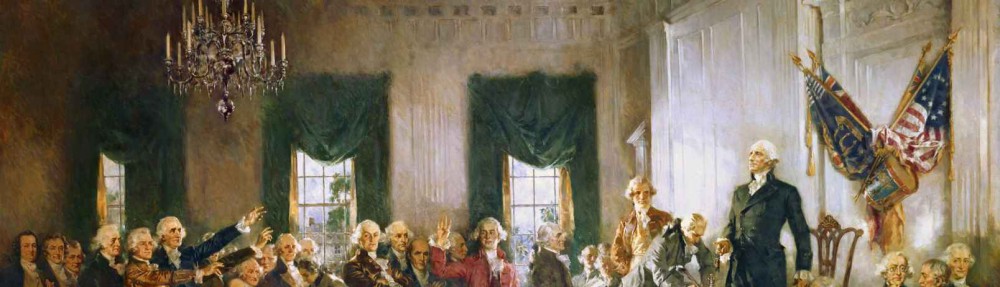
Appealing to the “Laws of Nature and of Nature’s God,” the Founding Fathers established a form of government that recognized and upheld the rights of man. By forming a republic in which officials must be elected by the people, they were doing away with the notion that a high-priestly class was necessary to govern man.
It was a bold statement: man could self-govern. He was a capable, rational creature. And he had a responsibility to self-govern responsibly: he must think, he must reason, he must be moral. They acknowledged that only such a people could remain a free people.
Tyson’s Rationalia proposal may have been scoffed at, but it’s becoming clear that our own leaders have indulged in more than a little of this very kind of fantasy. With governments increasingly treating their citizens in patronizing ways as incompetent children who must be molded and nannied by “experts” and “science,” we can already see the “vast human suffering” it has caused—and is causing.
Rather than codifying the “special” wisdom and knowledge of a few fallible men into governmental law, we must base policy on the protection of the rights of all men. We need more critical thinking, less mindless trust; more responsible self-education and self-governance, less abdication of such responsibility to “experts”; more individual, informed decision-making, less acceptance of one-size-fits-all mandates.
We are not mindless robots; our politicians and their advisors are not infallible dictators. It’s time for us to send that message to them loud and clear.
As a mother of four children, I’ve done A LOT of school shopping. I don’t mean the autumn ritual of purchasing school supplies. I mean shopping for schools – pouring over promotional materials, combing through websites, asking friends and community members for referrals to their favorite schools, attending open houses and orientations, comparing curriculums and educational philosophies, meeting teachers and principals and students who all claim that their school is the best.
But keep in mind – I’m not just a mom of four children. I’m a mom of four Black children, and I’m also a psychologist who is very interested in protecting my little ones from the traumatic experience that school can too often become.
For Black children in the United States, school can sometimes feel more like a prison than an educational institution. Research shows that Black students experience school as more hostile and demoralizing than other students do, that they are disciplined more frequently and more harshly for typical childhood offenses (such as running in the halls or chewing gum in class), that they are often labeled as deviant or viewed as deficient more quickly than other children, that teachers have lower academic expectations of Black students (which, in turn, lowers those students’ expectations of themselves), and that Black parents feel less respected and less engaged by their children’s teachers and school administrators. Perhaps these are some of the underlying reasons that Black students tend to underperform in most schools across the country.
The truth is that schools are more than academic institutions. They are places where children go to gain a sense of who they are, how they relate to others, and where they fit into the world. The best schools are places that answer these questions positively – ‘you are a valuable human being, you are a person who will grow up to contribute great things to your community, and you belong here, with us, exploring the world and learning how to use your gifts.’ Unfortunately, Black children looking for answers to these universal questions of childhood will often hit a brick wall once they walk into the classroom. If the curriculum does not reflect their cultural experiences, the teachers don’t appear to value them, and they spend most of their time being shamed into compliance rather than guided towards their highest potential, well…what can we really expect? How are they supposed to master basic academic skills if their spirits have been crushed?
Here’s the good news. In my years of school shopping, and in the research of Black education specialists such as Jawanza Kunjufu and Amos Wilson, I have found that there are some educational approaches that consistently provide a safer, more enriching and more affirmative environment for Black children. The Montessori method, developed by Italian physician Maria Montessori and introduced to the U.S. in the early 20th century, is one such approach.
The key feature of Montessori schooling is that children decide (for the most part) what they want to do each day. Led by their own interests and skill levels, children in a Montessori classroom move around freely and work independently or with others on tasks of their own choosing. The classroom is intentionally stocked with materials tailored to the developmental needs of children, including the need to learn through different senses (sight, touch/texture, movement, etc.). The teacher in a Montessori classroom is less like a boss and more like a caring guide who works with each child individually, demonstrating various activities and then giving them space to try it on their own. The idea is that over time, students learn to master even the toughest tasks and concepts, and they feel an intense sense of pride and accomplishment because they did it by themselves, without pressure or pushing.
I think that this aspect of the Montessori method is good for all kids. Do you remember the feeling of having your creativity or motivation crushed by being told exactly what to do, when to do it, how to do it, and why? The truth is that when presented with a new challenge and then given space, children actually accomplish a lot! They are born with a natural desire to learn. And it is that spirit of curiosity, sense of wonder, and excitement to explore that Montessori helps to keep alive in a child. But that’s not the only reason that I think Black parents need to consider Montessori.
Fostering a love of learning is great. But more importantly, I think that Montessori students excel at learning to love. It begins with Montessori’s acknowledgement that all children are precious because childhood is a precious time. In many school systems, Black children are treated like miniature adults (at best) or miniature criminals (at worse), and are subjected to stressful situations that no kids are equipped to handle – expectations to be still and silent for long periods, competitive and high-stakes testing, and punitive classroom discipline. It’s easy to get the sense that rather than being prepared for college or careers, our children are being prepared to fail. Couple this with the aforementioned bias against Black children that seems to run rampant within the U.S. school system, and you end up with children who feel burned out and bitter about school by the time they hit 3rd grade.
In my experience, Montessori does a better job of protecting the space that is childhood – and all the joy of discovery and learning that should come along with that. Without the requirement that students “sit down and shut up,” behavioral issues in Montessori classrooms tend to be non-existent (or at least, the Montessori method doesn’t harp on them; children are gently re-directed rather than shamed in front of the class). Montessori students don’t learn for the sake of tests; they demonstrate what they’ve learned by sharing with their teacher or classmates how they solve real world problems using the skills they’ve gained through reading, math, or science activities. And by allowing children a choice of what to focus on throughout the day, Montessori teachers demonstrate that they honor and trust children’s natural intelligence. The individualized, careful attention they provide indicates to children that they are each seen, heard, and valued for who they are, and who they might become. Now that’s love (and good education).
As a parent, I’ve come to realize that many schools offer high quality academics. Montessori is no different. Students in Montessori schools gain exposure to advanced concepts and the materials to work with these concepts hands-on. Across the nation, Montessori schools emphasize early literacy development, an especially important indicator of life success for young Black boys and men. Montessori students are provided with the opportunity to be successful every day, and the chance to develop a sense of competence and self-worth based on completing tasks at their own pace.
But I have also learned that the important questions to ask when school shopping are often not about academics at all. I now ask, ‘Will my children be treated kindly? Will they be listened to? Protected from bias and bullying? Will they feel safe? Will this precious time in their lives be honored as a space for growth, development, awe, and excitement? Will they get to see people like them included in the curriculum? Will they be seen as valuable even if they don’t always ‘measure up’ to other kids on a task? Will they get extra support if they need it? Will the school include me in major decisions? Will the school leaders help to make sure that my children reach their fullest potential? Will the teacher care about my children almost as much as I do?’Consistently, it’s been the Montessori schools that have answered with a loud, resounding ‘Yes!’ That is why my children ended up in Montessori schools, and I couldn’t be happier with that decision. If you’re a parent like me, shopping for schools with the same questions in mind, I’d urge you to consider Montessori education as a viable option for your precious little ones. Today more than ever, getting it right for our children is priceless.
Laura Turner-Essel, Ph.D
COMMENT: Easier said than done. Montessori schools are very pricey, as much as $30K a year for high school students. So, for most parents, of any race or ethnic background, Montessori is a pipe dream. And there are only about 4,000 in the country, and few K-12. The one where we lived offered only pre-K through 3rd grade. We sent our son there for one year pre-K. The education is unquestionably unparalleled. But availability and affordability are two huge stumbling blocks. Most everything you’d like to know about Montessori is on their website.
On the face of things, the July 2016 murder of Seth Rich had intrigue enough for a full season of House of Cards.
Unknown assailants gun down the young DNC data analyst at 4 A.M. on a Washington, D.C., street and take nothing. Two weeks later, international man of mystery Julian Assange strongly suggests on Dutch TV that Rich was his source for the purloined DNC emails then roiling the Democratic Party and offers a $20,000 reward to find the killer.
Three days before the November election, Assange reportedly tells liberal media analyst Ellen Ratner that Rich was indeed his source. Days after Trump’s inauguration, legendary investigative journalist Sy Hersh cites an FBI report confirming Assange’s claim. Later that year, DNC honcho Donna Brazile dedicates her book Hacks to Rich and wonders out loud whether the Russians had “played some part in his unsolved murder.”
Despite the stakes — the Trump presidency hinged on the investigation’s outcome — there was to be no TV series about Rich’s life and death, no movie, no serious books, not even a single episode of Unsolved Mysteries or 48 Hours. Incredibly, no major publication or network save for Fox News has even attempted to resolve the still unsolved murder, and Fox execs rather wish they hadn’t.
To understand how a story this potentially explosive could be suppressed for so long, it is necessary to understand one basic fact of Washington life: Donald Trump received just 4.1 percent of the District’s vote in the 2016 election. Trump’s election disrupted short-term strategies and long-term expectations in every one of the capital’s major institutions, local and federal, public and private, the legal community among them.https://lockerdome.com/lad/9371484590420070?pubid=ld-8832-1542&pubo=https%3A%2F%2Fwww.americanthinker.com&rid=www.americanthinker.com&width=692
According to Hersh, Trump was a “circuit breaker,” one who made a whole lot of enemies. Those enemies, as we have seen, would go to great lengths to discredit Trump and anyone associated with him. The pressure they can bring to bear on even those who want to tell the truth remains formidable.
Instead of a serious investigation by either police or reporters, the Seth Rich case generated a dumpster-full of frivolous lawsuits. These suits have had the result, likely intended, of silencing those who would dare to investigate Rich’s demise. All too predictably, the media have heaped abuse on the investigators and cheered on the litigators.
Prominent among the private citizens who asked questions is Ed Butowsky, a Republican wealth manager from Texas. “It is horrible,” he told me. “I had no idea how big the other side is, and they are completely after me.” Once he started inquiring into Rich’s death, said Butowsky, “everything just turned to crap.”
Butowsky stumbled into his role as sleuth. Through his occasional TV appearances, Butowsky met Ellen Ratner, a friend of Assange. Her late brother Michael Ratner had been one of the American lawyers for the fugitive WikiLeaks founder. On the day after the election, Ratner lobbed a grenade into an otherwise banal panel discussion at Florida’s Embry-Riddle Aeronautical University.
“I spent three hours with Julian Assange on Saturday at the Ecuadorian Embassy in London,” Ratner volunteered midway through the event. “One thing he did say was the leaks were not from, they were not from the Russians. They were an internal source from the Hillary campaign or from somebody that knew Hillary, an enemy.”
If the grenade had detonated, Ratner would have blown a hole in a collusion plot that centered on the presumed Russian hack of the DNC. Fortunately for the plotters, Ratner’s self-involved fellow panelists skipped over her comments, and the video of the event passed into the ether all but unseen.
According to a complex, multi-party defamation suit Butowsky filed in 2019, Butowsky learned of the Assange revelation from Ratner herself. She contacted him after the meeting and added the critical detail that Seth Rich was Assange’s source.
On December 17, Butowsky contacted Rich’s parents, Joel and Mary Rich. He felt sorry for the Riches, sensing they would get no help from the D.C. Police or the FBI. In addition, as Ratner reportedly told him, Assange had requested that the parents be made aware of Seth’s role, a material fact in the search for their son’s killers.
According to Butowsky, Joel Rich told him he knew that Seth and his older brother Aaron were involved with the DNC email leak. Joel chose not to go public lest people think his sons were “responsible for getting Trump elected.” Although the Riches would later deny many of Butowsky’s claims, no one disputes his offer to hire a private investigator for the Riches or their acceptance of that offer.
In the ensuing days, Ratner’s public silence frustrated Butowsky. On December 29, 2016, he sent an email to Ratner saying, “If the person you met with truly said what he did, is their [sic] a reason you we aren’t reporting it ?” That same day, Ratner responded, “because— it was a family meeting—- I would have to get his permission–will ask his new lawyer, my sister-in-law.”
Butowsky had one other lively source of information. In January 2017, he recorded a phone conversation with the profane and refreshingly candid Pulitzer Prize–winner Sy Hersh. As Hersh related, the D.C. Police called in the FBI when its cyber unit failed to open Rich’s computer. The FBI’s “hot s—” cyber team succeeded and filed a report. According to that report, Rich “submitted a series of juicy emails from the DNC” to the WikiLeaks drop box and asked Assange for money in exchange for more emails
Eager for confirmation, Butowsky asked Hersh if he had seen the FBI report himself. Hersh admitted he had not. He explained that he had someone on the inside who had seen it, and that person, over the years, had proved “unbelievably accurate” in providing Hersh information.
Although not an ardent Trump fan — he donated to Obama in 2007 and initially supported Carly Fiorina in 2016 — Butowsky thought the media were screwing the new president over. The apolitical Hersh agreed. “Trump’s not wrong to think they all lied about him,” he said. “I have a narrative of how that whole f—— [Russia collusion] thing began. It’s a [CIA director John] Brennan operation. American disinformation.”
For the next several months, Butowsky worked behind the scenes helping Fox News try to shed light on Rich’s death. On May 16, 2017, a report by Malia Zimmerman was published on the Fox News website headlined “Slain DNC staffer had contact with WikiLeaks, investigator says.”
A book could be written about the unraveling of the Fox story, but, in brief, Butowsky went wrong by hiring the investigator in question, former D.C. homicide detective Rod Wheeler. Wheeler’s quickly proven deceptions forced Fox to retract the story.
New York attorney Douglas Wigdor was the one person to sense Wheeler’s real potential. “Wigdor is the central point of all this,” Butowsky told me. Although his name seems to have been lifted from a Harry Potter novel, Wigdor was all business.
On August 1, 2017, his law firm filed a suit on behalf of Wheeler against Butowsky, Fox News, and Zimmerman. In the suit Wheeler claimed that Zimmerman had misquoted him to “establish that Seth Rich provided WikiLeaks with the DNC emails to shift blame away from Russia.”
The news of the lawsuit cheered the hearts of reporters everywhere except Fox. Most in the media failed to notice that a week after suing on behalf of Wheeler, Wigdor sent a letter to British regulatory agency Ofcom, citing the Wheeler suit as a reason to block the purchase of Britain’s Sky Television by Fox News’s parent company, 21st Century Fox.
If no one else in the media noticed, the smear artists at Media Matters certainly did. Its president, Angela Carusone, sent a lengthy letter to Ofcom confirming that Fox “exhibited tacit support for politically motivated misinformation.” Butowsky argues that the Wheeler suit was a setup for Wigdor “to extort money from Fox.”
In the report produced on August 17, 2017, NPR’s David Folkenflik does not so much as mention Wigdor, let alone his maneuvering against Fox News. Instead, he does a dumpster dive into Butowsky’s past. His not so subtle point in this disgraceful bit of pseudo-journalism is that a man who would fudge his academic credentials, however trivially, could not be trusted to tell the truth about Seth Rich.
Folkenflik adds not a whit of new information about the death of Seth Rich. He assures his audience a year after the murder that the D.C. Police “believed [Rich’s] shooting was the result of a botched armed robbery.” Believed? That’s it? Folkenflik also fails to mention Ellen Ratner. At the expense of his own credibility, Butowsky kept his promise not to reveal her role.
Ratner repaid him. In March 2018, two weeks after Joel and Mary Rich sued Butowsky, et al. for “emotional distress,” Ratner wrote an article for WorldNetDaily titled “I love my conservative friends!” She specifically cites Butowsky, “the man involved in the Seth Rich controversy.” Ratner adds coyly, “Some say he had the secrets of the Democratic National Committee, and some think he was just murdered.”
On August 2, 2018, a federal judge in Manhattan dismissed the suits brought both by the Riches and by Wheeler. Judge George Daniels was particularly cool to Wheeler, ruling that he failed to prove he had been misquoted and “had also given his tacit consent to the article’s publication.” Aaron Rich has sued Butowsky as well. Fed up with the harassment, Butowsky fired back with his own suit in March 2019.
In July 2019, Michael Isikoff of Yahoo News released a six-part podcast called “Conspiracyland,” in which the former claimed that “Russian intelligence agents” planted the story that Rich was the source of the leaked emails. This laughably lopsided podcast deserves a deconstruction of its own. Isikoff, it should be remembered, was the reporter first designated to spread the Christopher Steele nonsense. Yet three years after that embarrassment, Isikoff was still treating Intelligence Community reports about Russian mischief as though they were gospel.
The critical revelation in the Isikoff story is that Ratner denies telling Butowsky about Seth Rich. In what sounds like a staged phone call, Ms. Ratner did protest too much. “I had never heard of this character,” she tells Isikoff about Rich. This was an extraordinary claim for any journalist to have made, let alone a friend of Assange. Ratner spoke to Butowsky four months after Rich’s well publicized murder.
Once he learned of Ratner’s denial, Butowsky amended his suit to include her involvement in the affair. He also shared publicly the post–Election Day video of Ratner’s panel discussion as well as audio evidence confirming Ratner as his source. The major media wanted to know none of this. A Google search of “Ratner Butowsky” leads to no publication higher on the media food chain than Rolling Stone.
Andy Kroll’s August 2020 article, “Killing the Truth,” takes up where Isikoff left off. In this exhaustive waste of time and energy, Kroll cherry-picks his way through the available evidence and essentially accuses Butowsky of concocting everything he ever said about Ratner or Joel Rich, an accusation that shocked anew the long since jaded Texan.
As to Seth Rich himself, all that Kroll can tell his readers is that his murder was “just an attempted robbery gone wrong,” the lone fatality among “the rash of armed muggings” in his neighborhood that summer.
A botched robbery it may have been, but four years after Rich’s death, the skeptic has to ask: couldn’t Kroll or Isikoff or any major media reporter interview at least one of the other mugging victims? Couldn’t they at least look for fresh forensic evidence? Couldn’t they put aside their Fox-phobia for a moment and at least fake an interest in finding the killers of the unfortunate Seth Rich?
Or, better still, couldn’t someone in the Intelligence Community — anyone — ask Julian Assange what he really knows?
Jack Cashill’s new book, Unmasking Obama, is now widely available. To learn more see http://www.Cashill.com.
Americans are coming into the home stretch of the 2020 election campaigns. The constant media drumbeat of why we must vote has begun, but without any noticeable mention that voting without being informed cannot advance what our Constitution called the “General Welfare.” And the campaigns themselves have largely been filled with promises of using government power to deliver targeted voters something for nothing, rather than central, logically prior issues, such as what the legitimate powers of government are.
In dealing with the avalanche of politicking we are about to suffer from, where even phone blocking can’t keep politicos at bay, returning to that central issue is important, because most of the campaigns consist largely of violating the answer that our founders proposed. Consequently, that makes the almost 300-year-old Cato’s Letters—perhaps the greatest influence on their views on this question (or as Ronald Hamowy, put it, the most “immense authority” about issues such as “the natural restraints on government”)—worth returning to today. In particular, John Trenchard and Thomas Gordon’s sixtieth letter, “All Government Proved to be instituted by men, and only to intend the General Good of Mankind,” can bring us back to the fact that, as John Adams put it, to “nip the shoots of arbitrary power in the bud is the only maxim which can ever preserve the liberties of any people.”
Consider just a brief part of Cato’s Letters’ efforts to “maintain and expose the glorious principles of liberty, and to expose the arts of those who would darken or destroy them,” particularly the centrality of limiting the power of government to the powers men can legitimately delegate to it.
“Government…can have no power, but such as men can give, and such as they actually did give, or permit for their own sakes: Nor can any government be in fact framed but by consent…no man can give to another what is none of his own.”
“Nor has any man in the state of nature power…to take away the life of another, unless to defend his own, or what is as much his own, namely, his property. This power therefore, which no man has, no man can transfer to another.”
“Nor could any man…have a right to violate the property of another…as long as he himself was not injured by that industry and those enjoyments. No man therefore could transfer to the magistrate that right which he had not himself.”
“No man in his senses…[would] give an unlimited power to another to take away his life, or the means of living…But if any man…parted with any portion of his acquisitions, he did it with the honest purpose of enjoying the rest with greater security, and always in subservience to his own happiness, which no man will or can willingly and intentionally give away to any other whatsoever.”
“The nature of government does not alter the natural right of men to liberty, which is in all political societies their due.”
“All history affords but few instances of men trusted with great power without abusing it, when with security they could…For these reasons, and convinced by woeful and eternal experience, societies found it necessary to lay restraints upon their magistrates or public servants, and to put checks upon those who would otherwise put chains upon them…the power and sovereignty of magistrates in free countries was so qualified, and so divided into different channels, and committed to the direction of so many different men, with different interests and views, that the majority of them could seldom or never find their account in betraying their trust in fundamental instances.”
“The only secret therefore in forming a free government is to make the interests of the governors and of the governed the same, as far as human policy can contrive. Liberty cannot be preserved any other way.”
“When the deputies thus act for their own interest, by acting for the interest of their principals; when they can make no law but what they themselves, and their posterity, must be subject to; when they can give no money, but what they must pay their share of; when they can do no mischief, but what must fall upon their own heads in common with their countrymen, their principals may then expect good laws, little mischief, and much frugality. Here therefore lies the great point…in forming the constitution, that the persons entrusted and representing, shall either never have any interest detached from the persons entrusting or represented, or never the means to pursue it…Here every man concerned saw the necessity of securing part of their property, by putting the persons entrusted under proper regulations.”
One of America’s most famous founders, Patrick Henry, said that “No free government, or the blessings of liberty can be preserved…but…by a frequent recurrence to fundamental principles.”
Cato’s Letters provide just such fundamental principles. And letter 60’s reminder that government can’t be given powers by people who do not have those powers to give might be one of the best ways to inoculate yourself against the political siren songs we are about to be immersed in.Author:
Encountering a certain segment of our society’s acceptance of burning, looting, and execution of the police, not to mention the outrage prevalent when criminals or simple bad actors get their just desserts when police exercise their duty, I have been challenged to find any rhyme or reason to excuse such actions, not only in the permissiveness our leaders attach to such activity, but the actual encouragement they offer. Indeed, you can find many who are so completely invested in this mindset to the point they cannot cope emotionally with any pushback or appeal to traditional law, justice, or morality. Simply put, the traditional moral parameters of good behavior no longer apply.
What’s up with that? The answer may lie in a consideration of the contemporary trends in intellectual thought.
Starting sometime in the 1960s, a concept known as “situational ethics” sought to detach propriety from our traditional Christian mores. For example, when a man, severely abused as a child, finds himself abusing others in later life; how can we judge him by the same values as those righteously raised? Indeed, he labors under a burden, not of his own making, that clouds the difference between right and wrong, that renders him handicapped in ways parallel to those with physical deformities. There is an intellectual price to be paid for such seeming compassion. We have lost what anchors propriety in discarding responsibility.
Upon the intellectual propensities of moral relativism were built an intellectual relativism that could not but embrace what has become known as postmodern thinking, which cast aspersions on the very concept of truth. The idea of Truth, with a capital T, was discarded wholesale along with God and Law. The trend of this form of analysis neatly adopted the tools of Hegel’s dialectic, with a healthy dose of Marxist materialistic leanings, to engender this movement’s current incarnation as “critical justice theory” or “critical race theory,” where a single concept dominated the thesis of the day, to the exclusion of any mitigating thought or evidence. To this school of thought, in its hubris, debate became an anachronism, shunned at all cost. And those with the temerity to seek honest consideration of competing ideas were rudely cast aside if not eliminated entirely.
So goes the narrative: If there is no truth apart from whatever you may be feeling at the moment; there is no moral, legal, nor ethical underpinning to behavior. Your feelings trump propriety. Thus, should you be down and out, for whatever reason, it makes perfect sense that you are being oppressed. If you lack a good work ethic and cannot hold down a job, obviously the very idea of the worth of such a work ethic is an imposition, a shackle laid upon you. Now you are a victim, reduced to this sorry state by a faceless oppressor. Such concepts are nothing but a form of imperialism, laid upon the weak and vulnerable, simply to enslave them. All fault lies with the oppressor, with those of wealth and privilege, those who control the ways and means, those who seek to dominate the oppressed. No longer does any responsibility fall upon the individual but accrues solely to the oppressor who victimizes all in his patriarchal path.https://lockerdome.com/lad/9371484590420070?pubid=ld-8832-1542&pubo=https%3A%2F%2Fwww.americanthinker.com&rid=www.americanthinker.com&width=692
And indeed, he does have a face: a face in a blue uniform. Hence, the uniform — and the human underneath — becomes a ready and convenient target.
A corollary to this way of thinking is the equivalence of all cultures. If truth, the previous foundation of ethical behavior, is merely a construct to control a segment of the population; it follows that there are no superior mores underlying any particular culture, religion or tradition. Empirical evidence belying this theory, relying on the fact that certain cultures are more open, successful, or humane, is discarded as being, again, based upon a so called truth which is merely an illegitimate tool of the oppressor to cloud clear thinking. Thus, the concept that the drug culture, the ghetto culture, the gangsta culture, and the worst elements of the rap culture are in any way inferior to or must answer to society at large is without basis, is worthy of ridicule, must be obliterated. Such are the ideas floated by the woke.
It follows that our laws and the police who enforce them are illegitimate. Hence, the drive to defund, disperse, and destroy law enforcement. They have no moral superiority to, no ethical prevalence over, no right at all to condemn any competing cultural phenomenon. If one chooses to be a drug dealer within his culture, it is his right to do so and to live by the customs and mores of that culture. The victims of this turn of affairs are no longer the providence of society at large but belong to their own, capable of being judged solely by their own.
However, this is a descent into tribalism at best, nihilism at worst. Local power is absolute power. Exercised locally it is anarchy. We can understand this as entropy, and all nature trends this way. But once upon a time, it was society’s leaders’ duty to stem such chaos. Apparently, it is no longer. The contemporary shootings and deaths in cities like Chicago and New York are merely collateral damage endured and condoned for the higher good of combating this perceived oppression. This is simply the cost of doing business in a “woke” society.
Inevitably the chaos will submit to someone’s organization, for good or ill. Possibly, it will lead to even greater oppression and tyranny from a more pervasive, more powerful entity. And where power alone regulates activity, perdition is the inevitable outcome. This is the fate of a society that embraces such thinking in the first place.
Yet a light may yet penetrate the darkness enveloping our hopes, our neighbors, our religions, and our institutions; a light powered by a purer thought that holds life as sacred, as worthy, and that echoes a shared truth able to unite us to counter the forces that would tear us asunder. May we pray it overcomes the current vector pointing to a dystopian denouement.
Ziggy Bellino is the nom de guerre of a writer living off the east coast who dares not allow his mostly woke neighbors to know too much of his opinions.


















 THE ARTFUL DILETTANTE