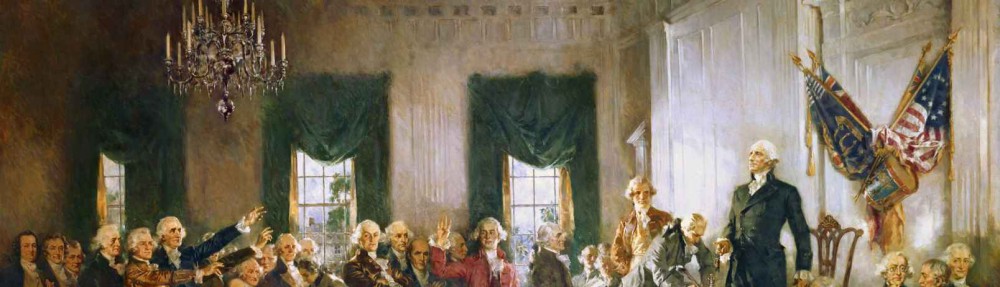
America Still Needs Its Own French Revolution

Recently, I heard someone criticize Big Media for only caring about money.

I don’t mind the media doing things for commercial purposes. I love trade and capitalism.

What sickens me is the media’s fawning, disingenuous and self-conscious faux embrace of self-sacrifice and Communism — while caring more about money (and money alone) than the stereotypical capitalist on his most materialistic day. Leftists (and make no mistake: the media is unadulterated in its leftism) are wretched, deplorable, sneering, irredeemable hypocrites.

*******

Former CIA Director John Brennan may be exposed to perjury problems after current CIA Director John Ratcliffe released an internal review of the agency’s Russia hoax materials, Breitbart News has learned exclusively.

We are not the United States again unless or until this savage in a suit — Obama’s own “CIA Director” — ends up in an orange jumpsuit, in Guantanamo Bay, or (my personal favorite) drifting from a hangman’s noose.

Michael J. Hurd, Daily Dose of Reason

SCOTUS Ruling Against Universal Injunctions Didn’t Go Far Enough

The Supreme Court’s ruling in Trump v. CASA that universal injunctions “likely exceed the equitable authority” Congress has granted federal courts has been framed as a victory for a Trump administration stymied by an unprecedented barrage of them. 

But the majority’s 6-3 opinion in favor of the administration’s challenge to universal injunctions — via its appeal of several such rulings in cases consolidated under CASA, whereby courts halted its executive order curtailing birthright citizenship — is far greater than a win for one president. It is a triumph for the rule of law and our republic over judicial tyranny, though it comes with loopholes that Resistance 2.0 is already plotting to drive a truck through in its ongoing lawfare campaign.

First, the good. The status quo ante, whereby an opponent of a presidential policy needed only to find a single favorable district court judge to prohibit the enforcement of that policy against anyone, everywhere, was an absurdity and an abomination. 

Courts exist to decide cases and controversies concerning the parties before them. The idea that an unelected judge in any district would deign to effectively expand his jurisdiction to the entire country by adding everyone as a plaintiff to a suit was an affront to our Constitution and common sense. Judges effectively coronated themselves as presidents in overriding executive decisions on personnel, policy, and practices. Thus the pre-CASA judiciary effectively disadvantaged and disenfranchised tens of millions of Americans who elected the commander-in-chief.

Inferior court judges elevated themselves not only above the president but Supreme Court justices too in unilaterally rendering opinions with nationwide effects, “invert[ing]” the typical appellate process, as Solicitor General John D. Sauer put it in oral arguments.

The Supreme Court’s ruling, however, rightly focused not on political or practical matters, but on first principles. The prevailing universal injunction regime, it argued, was anathema to American jurisprudence and its antecedents.

“Neither the universal injunction nor any analogous form of relief was available … at the time of the founding,” Justice Amy Coney Barrett wrote for the majority. 

As the court noted, universal injunctions are a novel remedy that arguably emerged in the 1960s. But they really only exploded in recent decades, namely under the first Trump administration, as I have chronicled at RealClearInvestigations.

“The bottom line,” Barrett wrote, is that “[t]he universal injunction was conspicuously nonexistent for most of our Nation’s history. Its absence from 18th- and 19th-century equity practice settles the question of judicial authority.”

Removing universal injunctions as a weapon of lawfare undermines the Resistance 2.0’s primary effort to stymie and sabotage Trump’s second term and the MAGA agenda. It neutralizes the judicial tyrants who have worked hand-in-glove with the Resistance in that effort. It also vindicates the jurisprudence of Justice Clarence Thomas, who once again was years ahead of the court but ultimately won it over in challenging universal injunctions.

Furthermore, it puts radicals in robes in the lower courts, who have suffered from delusions of grandeur, in their rightful place by disarming them of this legal WMD.

But the majority’s opinion is no panacea. Setting aside the fact that the court withheld judgment on whether universal injunctions would be legitimate should Congress permit them by law, and remained silent on what some perceive to be their analogues such as vacatur, it also refused to resolve pivotal questions of standing and channeled plaintiffs seeking widespread relief to potential universal class-action lawsuits.

Justice Samuel Alito addressed the latter two caveats in a critical concurrence joined by Thomas. As the associate justice noted, states, including in cases consolidated in Trump v. CASA, have sued on behalf of litigants, including their residents, with judges conferring “third-party standing” on them. Alito posed a hypothetical likely to become very real then, when asking in his concurrence whether injunctions granted to states will protect all of their citizens.

“If so, States will have every incentive to bring third-party suits … to obtain a broader scope of equitable relief than any individual resident could procure in his own suit,” Alito said. “Left unchecked, the practice of reflexive state third-party standing will undermine today’s decision as a practical matter.”

Justice Alito’s other concern is that lower court judges may not vigorously enforce the requirements necessary for plaintiffs to obtain class certification, pursuant to Rule 23 of the Federal Rules of Civil Procedure. These strictures are seen as a check on plaintiffs’ ability to secure injunctions as expansive as those under the pre-CASA regime. 

If judges take a lax view of the requirements to obtain class certification, Alito warns, “the universal injunction will return from the grave under the guise of ‘nationwide class relief,’ and today’s decision will be of little more than minor academic interest.”

Shortly after the court issued its opinion, so-called “immigrants’ rights advocates,” led by the ACLU, filed a “nationwide class-action” lawsuit challenging the birthright citizenship order challenged in the CASA cases.

Norm Eisen, one of the leaders of Democrats’ lawfare efforts against President Trump, revealed almost immediately after the Supreme Court’s decision that Resistance 2.0 plaintiffs would be filing class-action lawsuits in pursuit of de facto universal injunctions.

Further vindicating Alito’s concerns, D.C. District Judge Randolph Moss certified a massive class in an injunction entered shortly after CASA, halting President Trump’s first-day proclamation and guidance suspending asylum claims for those crossing the southern border. The class consists of all those who are or will be subject to the policy, who are or will be present in the U.S. In other words, Judge Moss entered something approaching a universal injunction.

The Supreme Court has raised the bar significantly for those seeking to block presidential policy via the courts. But ultimately, as Alito’s opinion reflects — and as is already being demonstrated by some on the federal bench — the courts will only be as good as the judges presiding over them.

Unless the Supreme Court reins in lower-court judges with blunt deterrent force or Congress asserts its power over the courts it established, judicial tyranny may persist.


Ben Weingarten is editor at large for RealClearInvestigations. He is a senior contributor to The Federalist, columnist at Newsweek, and a contributor to the New York Post and Epoch Times, among other publications. Subscribe to his newsletter at weingarten.substack.com, and follow him on Twitter: @bhweingarten.

Trump wants to set up a sovereign wealth fund. What is it?

President Donald Trump’s plan to create a sovereign wealth fund that’s the world’s envy remains undefined.

In the meantime, Norway’s Government Pension Fund Global is among the largest in the world, with more than $1.8 trillion in assets.

In February, Trump told Treasury Secretary Scott Bessent and Commerce Secretary Howard Lutnick they had 90 days to present him with a plan for a sovereign wealth fund. That time has passed and no plans have been released.

“Treasury and Commerce Departments have formulated plans for a Sovereign Wealth Fund, but no final decisions have yet been made,” White House spokesperson Kush Desai said.

Ana Nacvalovaite, a sovereign wealth funds research fellow at the University of Oxford’s Kellogg College, said the fund’s appearance depends on the details, including funding mechanisms, investment strategies, fund structure, and governance.

Nacvalovaite noted that relatively little information is known about the U.S. plans for a sovereign wealth fund. However, she said many other countries have established funds that the U.S. could follow, but the U.S. will likely face challenges.

Saudi Arabia’s Public Investment Fund, with $925 billion in assets, was established by royal decree in 1971. That could be one roadmap, but America has a different culture and government.

“There is a huge difference between a fund run by a country … where the Royals rule everything, versus an American system where it doesn’t quite work that way,” Nacvalovaite said.

Another question that remains unanswered is how the administration would seed the fund and whether it would need help from Congress, which traditionally allocates federal revenue. The U.S. has $36.2 trillion in debt and hasn’t had a surplus budget since 2001. The White House noted in February that the U.S. government holds about $5.7 trillion in assets. The administration said the U.S. holds far more in natural resources.

Trump also is bringing in new revenue through tariffs. Just how much that generates could vary based on the final terms of trade deals the White House initially hoped to complete by July 9. Tariffs are taxes on imported goods paid to the federal government by the company that imports the goods.

In Norway, the government declared it owned all offshore oil in the North Sea in 1963. Much of the money in the Government Pension Fund Global now comes from a mix of investments, including stocks and real estate. The fund reports it owns nearly 1.5% of total shares in the world’s publicly listed companies.

Nacvalovaite said some SWFs share more information publicly than others.

Most SWFs don’t report everything, which could raise concerns in the U.S.

“Any state-owned investment vehicle must have a focused mandate and a highly transparent and accountable governance structure,” Adnan Mazarei, Anna Gelpern and Edwin M. Truman wrote in a report for the Peterson Institute for International Economics after Trump’s executive order.

“Let’s not forget that there are some sovereign wealth funds which are not transparent,” she told The Center Square.

Four months ago, Bessent said the U.S. would have a fund “within the next 12 months.” That timeline could prove challenging.

Control in the U.S. would almost certainly be an issue. Some nations assign the task to a central bank or government agency.

Norway’s Ministry of Finance has overall responsibility for the fund. It also issues management guidelines. Norges Bank manages the fund.

Norway’s government gets some of the money to spend.

“The Norwegian government can spend only a small part of the fund, but this still amounts to almost 20% of the government budget,” according to the bank.

On average, the Norwegian government spends only the returns – estimated to be around 3% per year – not the fund’s capital.

The report from Peterson Institute for International Economics said the proposal carries risks, especially in absence of more information

“Without much greater clarity and a broadly shared understanding on these issues, a US SWF risks becoming a misplaced fiscal gimmick and an inefficient and potentially corrupt diversion of public resources that could do long-term damage to the US and global economy and financial markets,” it concluded.

Brett Rowland | The Center Square

Have We Reached Late-Stage Climate Hysteria?

A United Nation’s report issued last month calls for the criminalization of spreading “disinformation and misinformation” about global warming. Is it the desperate act of a dying crusade – or business as usual for the climate fanatics?

While our hope is the former, it’s more likely the latter.

According to Elisa Morgera, the U.N. special rapporteur on climate change, governments should “criminalize misinformation and misrepresentation (greenwashing) by the fossil fuel industry” as well as “criminalize media and advertising firms for amplifying disinformation and misinformation by fossil fuel companies.”

This is disturbing. Who gets to decide what is “disinformation and misinformation”? We’ve already seen, thanks to COVID-19, that the meaning of those words is determined exploitatively by the ruling class and the loudest voices, not by any objective means.

Just the News quotes experts who say the call for criminalization shows a growing desperation among the climate alarmists. Given that global warming has cooled off considerably as a pressing issue for the public, this rings true.

Yet demanding that skeptics be arrested and tried is not a fresh fantasy for the eco-fascists. They’ve been dreaming about a 21st-century inquisition of those who hold dissenting views (the Galileos of our time?) for more than a decade:

– Democratic Sen. Sheldon Whitehouse of Rhode Island urged the Justice Department “to consider filing a racketeering suit against the oil and coal industries for having promoted wrongful thinking on climate change,” author Walter Olson noted in 2015.

– Twenty “scientists” wrote a letter to President Barack Obama to “strongly endorse” Whitehouse’s “call for a RICO investigation.”

– In 2016, a year after 17 attorneys general pursued fraud allegations against climate change skeptics, Obama Attorney General Loretta Lynch told the Senate Judiciary Committee that “the FBI was looking into information regarding climate change dissent and ‘whether or not it meets the criteria for what we could take action on,’” the Washington Times reported.

-Even before that, a hack writing for Gawker claimed that “man-made climate change kills a lot of people,” that “it’s going to kill a lot more,” and insisted that “it’s time to punish the climate-change liars.”

– Bill Nye, “The Science Guy,” who is actually an engineer, said “we’ll see what happens” when asked about Robert Kennedy Jr.’s 2014 wish that there was a law to “punish” skeptics and “deniers.” Nye said he thought the “chilling effect” of punishment against “scientists who are in extreme doubt about climate change” was “good.”

– Fifteen years ago, a “British lawyer-turned-campaigner” was agitating for “the United Nations to accept ‘ecocide’ as a fifth ‘crime against peace,’ which could be tried at the International Criminal Court,” the Guardian reported. Supporters wanted to use it “to prosecute ‘climate deniers’ who distort science and facts to discourage voters and politicians from taking action to tackle global warming and climate change.”

– A U.S. attorney subpoenaed the Competitive Enterprise Institute’s donor lists for the purpose of punishing “CEI by making people less willing to donate,” University of Tennessee law professor Glenn Reynolds and Instapundit founder wrote in USA Today.

– Earlier this year, a screed from a “climate justice” academic writing under the imprimatur of UNESCO, the United Nations Educational, Scientific and Cultural Organization, asked if “international criminal law” should “be used against those who promote this dangerous trend” of “climate denial.” She answered the question thusly: “Criminal sanctions are the most potent tools we have to mark out conduct that lies beyond all limits of toleration.” The time has arrived, she added, “to prosecute them.”

– Michael Mann of the hockey stick graph tried to put National Review out of business with a lawsuit.

Rather than debate the science and weigh the evidence, global warming zealots have long preferred shutting down those who don’t agree with them, those who dare say things they don’t like. They’d rather silence heterodoxy with jail time, prison sentences, and economic sanctions, which neatly sums up who they are and what their goals are.

Issues and Insights Editorial Board

Harris Faces Backlash Over Grim July Fourth Post and Apparent Biden Snub

Former Vice President Kamala Harris faced backlash after sharing a July Fourth photo on social media that conveyed a bleak outlook for America’s future—and appeared to crop out former President Joe Biden.

Rather than celebrating America and its freedoms, Harris portrayed a bleak view of the country, claiming it is in a difficult place due to President Donald Trump’s leadership.

“This Fourth of July, I am taking a moment to reflect. Things are hard right now. They are probably going to get worse before they get better,” Harris posted on X. “But I love our country — and when you love something, you fight for it. Together, we will continue to fight for the ideals of our nation.”

The photo appeared to crop out Biden.

Social media users were quick to call out the hypocrisy in Harris’s post, pointing to the country’s decline under her leadership.

Montesquieu on Education in Republics and Despotisms

While Charles de Montesquieu’s The Spirit of the Laws was an oft-cited source during the federal convention of 1787, his observations weren’t limited to the balance of powers in government. He also touched on the nature of educational systems in republics and despotisms.

Parents and educators form our first impressions. They prepare people for civil life in republics and for servitude in despotisms. From previous chapters, Montesquieu had explained the springs, the forces which propel nations. Public Virtue is the propellant in republics, while the bayonet of fear prods despotisms.

Education in despotic countries debases the mind. The mind of the despot and his slaves are made servile, for both fear and are enslaved to each other. Excessive obedience presupposes ignorance in the person that obeys. The tyrant is also beset by ignorance because he has little need to deliberate, to doubt or to reason. All he has is will.

Every home in despotic states is its own little government; its education is limited to filling hearts with fear and a little religion. Actual learning is dangerous, for its emulation outside the home is fatal. Montesquieu agrees with Aristotle that slaves are without virtue. Education here is practically pointless, for it cannot work toward forming a good citizen. Actual citizens refuse to share in public misery, and as patriots, they will work to relax the springs of despotic government. If they fail, they are dead. If they succeed, they expose themselves, the prince and the country to ruin.

Republican education lifts the heart as well as mind. Virtue, which Montesquieu defines as “love of country” permits men to promote public prosperity, peace of mind, and independence. Love of country translates into love of laws; such love requires a constant preference of public over private interest. Love of country is the source of all private virtues; for they are nothing more than this very preference itself. Such love is peculiar to republics. In these alone the government is entrusted to private citizens. In this sense, republican government is like any other earthly creation or possession; in order to preserve it, we must love it.

Everything therefore depends on establishing this love in a republic. To inspire it ought to be the principal business of education, and the surest way of instilling it into children is for parents to set the example. Parents have it generally in their power to communicate their ideas to their children; but they are better able to transfuse their passions. If it happens otherwise, it is because the impressions made at home are effaced by those they have received elsewhere.

Young people do not degenerate; if they are corrupted, it done by those of mature years already sunk in corruption.

American taxpayers direct enormous sums toward government schools. To what purpose? Do schools uplift or debase? How many promote love of country? Does government promote or discourage the foundation of republics: two-parent families which form the next generation’s first impressions?

Rodney Dodsworth

US Workers Account for All Job Gains in 2025

The gap between American and foreign employment narrows.

by Andrew Moran | Jul 5, 2025 | Articles, Business News, Opinion

Over the last several years, dating back to before the COVID-19 pandemic, a trend has emerged in the labor market: a divergence between employment levels of natural US citizens and foreign-born individuals. The gap widened substantially during the previous administration, favoring newcomers. In the early days of President Donald Trump’s second term, however, American workers have gained all the new jobs this year.

US Workers Taking Foreigners’ Jobs

For years, both sides of the aisle have shrieked that foreigners are taking Americans’ jobs. Well, no more. According to data from the Bureau of Labor Statistics, US-born employment levels have soared by 2.079 million, and employed foreign-born workers have declined by 502,000.

Employment prospects appear to be bright for both American men and women, too. Job growth had been flat for both genders after the US labor market fully recovered from the public health crisis by late 2022. However, once the calendar flipped to 2025, payrolls surged by about one million for US male and female workers. Meanwhile, the government’s data indicates a significant decline in the number of employed foreign male and female workers beginning in March.

Over the years, Liberty Nation News has spotlighted this development in the national labor market. One point that requires mention is that the Bureau of Labor Statistics categorizes foreign-born individuals as both legal and illegal immigrants. However, defenders of former President Joe Biden insisted that illegals were neither skewing the data nor taking jobs away from the American people.

Of course, the timing is suspect because border crossings have tanked, and the White House is engaged in a massive deportation operation. Now that this has become commonplace, employment conditions are favoring individuals born in the United States.

Will Trumponomics Reverse Trumponomics?

President Trump has floated the idea of permitting deportation exemptions for illegal migrants who have spent years working in the agriculture and hospitality industries. While not formally announced, the president has discussed a couple of times establishing a system that would mandate employers to take legal responsibility for long-term employees who are in the country illegally.

The undocumented workers, according to President Trump, would then be in the country legally and pay taxes without being granted citizenship.

“We have a lot of cases where ICE would go into the farm, and these are guys that are working there for 10 to 15 years, no problem,” Trump said at a news conference after touring Alligator Alcatraz in Florida on July 1. “The farmers know them. It’s called ‘farmer responsibility’ or ‘owner responsibility,’ but they’re going to be largely responsible for these people, and they know these people. They’ve worked on the farms for 15 years. We have a great feeling for the farmer and for others in the same position.”

Media reports indicate that corporations are accelerating their imports of foreign workers, mainly from India. Microsoft has reportedly requested more than 6,300 H-1B visas, which comes as the tech titan laid off thousands of employees. Additionally, companies like Amazon and Google are asking H-1B visa holders not to leave the United States.

This has sparked many questions. If tech juggernauts are trimming headcount because of artificial intelligence, why is there a need to import foreign labor? Do US workers lack the necessary skills to fill these positions? Will the president heed his MAGA base and issue a red alert to the likes of Jeff Bezos and Satya Nadella?

Nevertheless, it will be fascinating to see if the US-foreign divergence continues to narrow or if it restarts in the second half of 2025.

Mixed June Jobs Data

In the end, there will be various folks asking, “If not for illegals, who will pick the crops?” While the United States is suffering from a labor shortage – with 7.7 million job vacancies – the reality is that there is a labor shortage at the lower wage rates. Put simply, Americans will perform these jobs if compensation is high enough to attract labor.

The June jobs report, on the surface, was once again impressive. The US government created a better-than-expected 147,000 new jobs, and the unemployment rate fell to 4.1%. However, the update was mixed, highlighting growth in government and government-adjacent jobs, while the household survey revealed fewer new positions. Still, the fact that American workers are gaining employment rather than illegal immigrants suggests the forgotten men and women are no longer being forgotten.

~

Liberty Nation does not endorse candidates, campaigns, or legislation, and this presentation is no endorsement.

Read More From

Andrew Moran

Economics Editor

Self-Evident

“Freedom is never more than one generation away from extinction.” (President Ronald Reagan)

“We hold these truths to be self-evident, that all men are created equal, that they are endowed by their Creator with certain unalienable Rights, that among these are Life, Liberty and the pursuit of Happiness.–That to secure these rights, Governments are instituted among Men, deriving their just powers from the consent of the governed, –That whenever any Form of Government becomes destructive of these ends, it is the Right of the People to alter or to abolish it, and to institute new Government, laying its foundation on such principles and organizing its powers in such form, as to them shall seem most likely to effect their Safety and Happiness.” (Thomas Jefferson, 1776)

You gave us back our republic.

Thank you, President Trump, for protecting our freedom against unprecedented enemies within.

As always, it will be up to us to keep it.

Michael J. Hurd, Daily Dose of Reason

Ways Trump and his Team Can Throw the Screws to China

There are several areas where Trump and his team can improve to confront an increasingly aggressive Red China.

Much like during his first administration, President Donald Trump has made confronting the increasingly aggressive Chinese Communist Party (CCP) a big part of his foreign policy agenda. And while the commander-in-chief has done a great deal so far — such as prioritizing U.S. military readiness and efficiency — there are several areas where he and his team can improve to better confront America’s primary foreign adversary.

Rescind Chinese Student Visas..

Whether Chinese students should be permitted to study at American universities has been a contentious question plaguing the Trump administration for the past several months.

After the State Department announced in late May that federal officials would begin “aggressively” revoking visas for these students, Trump came out weeks later reversing course. The president emphasized that such a policy is “good for our country,” and added that he’s “in favor of having them stay.”

While it’s possible the president has viewed Chinese student visas as nothing more than bargaining chips to be used in trade negotiations with Beijing, allowing hundreds of thousands of Chinese nationals to study at U.S. academic institutions every year has presented notable security issues.

U.S. government agencies and Chinese affairs specialists have raised concerns about the Chinese Communist Party’s abuse of America’s student visa program to collect valuable research and intellectual property and conduct various forms of espionage. In the past few years alone, numerous Chinese nationals studying in the U.S. have been apprehended by federal officials for committing such actions.

And while not every Chinese national studying in America is a willing accomplice of the CCP, China’s national security laws require all Chinese citizens and organizations to “support, assist, and cooperate” with so-called “national intelligence efforts” and give the state the power to demand “relevant organs, organizations, and citizens provide necessary support, assistance, and cooperation.” Even if they wanted to, these students lack the power to resist any demands the Chinese government may make of them.

In April 2024, Congress passed legislation forcing ByteDance to sell TikTok or face a ban in the United States. According to the left-wing Associated Press, the law gave ByteDance “nine months to sell TikTok, and a possible three-month extension if a sale is in progress,” the latter of which was granted by Trump shortly after his Jan. 20 inauguration.

Despite the law only permitting one prolongation of the deadline, Trump has unilaterally delayed enforcement of the statute on two separate occasions to allow TikTok to continue operating within the U.S. Irrespective of the president’s personal views, the law is the law, and the security concerns associated with the company and its practices are very real. If ByteDance refuses to sell it to an American buyer, TikTok deserves to be banned.

Ban Chinese Purchases of Critical U.S. Land.

In recent years, Chinese entities have been purchasing an alarming amount of U.S. farmland — a significant portion of which is conveniently located near U.S. military sites. A June 2024 analysis by the New York Post, for instance, “identified 19 bases across the US from Florida to Hawaii which are in close proximity to land bought up by Chinese entities and could be exploited by spies working for the communist nation.”

The CCP’s espionage efforts don’t stop at social media apps and America’s classrooms, however. They’re also playing out across the country’s vast landscapes.

…

Federalist Senior Contributor Chuck DeVore previously outlined in these pages the national security concerns of these oftentimes “strategic” purchases — namely, intellectual property theft, espionage, and even biological warfare.

“The FBI’s ongoing counterintelligence investigations and warnings from experts underscore the urgency of addressing the national security risks posed by Chinese-owned real estate,” DeVore wrote. “Failure to act swiftly and decisively leaves America vulnerable to a range of threats, from electronic espionage to biological warfare.”

Fortunately, Trump has recognized the threat of allowing unfettered Chinese purchases of critical U.S. lands. The president signed a memorandum in February, which stated in part, “The United States will protect our farmland and real estate near sensitive facilities.”

Trump and his administration should go a step further by ensuring the passage of congressional legislation aimed at securing important American farmlands and other areas from China and other adversarial powers.

Shawn Fleetwood, The Federalist

What Happened In 2013-2014 That Caused Democrat Pride In America To Fall Off A Cliff?

The Black Lives Matter hashtag and slogan was developed in 2013 in reaction to the (lawful self-defense) shooting of Trayvon Martin by George Zimmerman. The following year, 2014, the organization was formalized by self-avowed “trained Marxists” after the (lawful) police shooting of Michael Brown in Ferguson, Mo.

Those two shootings falsely were portrayed as racially motivated, while the facts (which we covered in exhaustive detail at the time) proved otherwise. Nonetheless the narrative was set and hating America and being American was necessary to be accepted into Democrat spaces. Even Bernie was not spared the wrath of BLM activists.

The formation of Black Lives Matter as an organized movement led to over a decade of non-stop virtue-signaling activism deriding the U.S. as systemically racist and worthy of deconstruction. It all culminated in the post-George Floyd riots and “anti-racism” activism whose bubble finally appears to have burst.

But not before severe damage was done to the nation, particularly Democrat pride in being American.

In fact, 2013-2014 is when Democrats’ pride in being American fell off a cliff and never recovered, as a just-released Gallup survey shows:

A record-low 58% of U.S. adults say they are “extremely” (41%) or “very” (17%) proud to be an American, down nine percentage points from last year and five points below the prior low from 2020. The 41% who are “extremely proud” is not statistically different from prior lows of 38% in 2022 and 39% in 2023, indicating most of the change this year is attributable to a decline in the percentage who are “very proud.” ….

Democrats are mostly responsible for the drop in U.S. pride this year, with 36% saying they are extremely or very proud, down from 62% a year ago. This is only the second time Democrats’ pride has fallen below the majority level, along with a 42% reading in 2020, the last year of the first Trump administration. That poll was conducted during the early stages of the COVID-19 pandemic and shortly after the murder of George Floyd by Minneapolis police officers.

Political independents’ pride has also reached a low point, with 53% expressing a great deal of pride, down seven points from last year, which had been the previous low for this group. Independents’ pride has been declining since the early 2000s, dropping below 80% for the first time in 2005, then below 70% in 2019 and below 60% this year.

Republicans’ level of national pride has been much steadier, typically registering above 90%, including 92% this year, up from 85% in 2024. The only years in which fewer than nine in 10 Republicans were proud were 2016 and 2020 through 2024. All but 2020 were when a Democratic president was in office.

It’s pretty easy to see the inflection point in Democrat (lack of) pride occuring in 2013-2014, and never recovering. Independents also showed a decline but not as steep or severe:

[box added]

Coincidence?

Correlation does not equal causation?

Sure. Don’t believe your own eyes or memories.

William A. Jacobson, Legal Insurrection