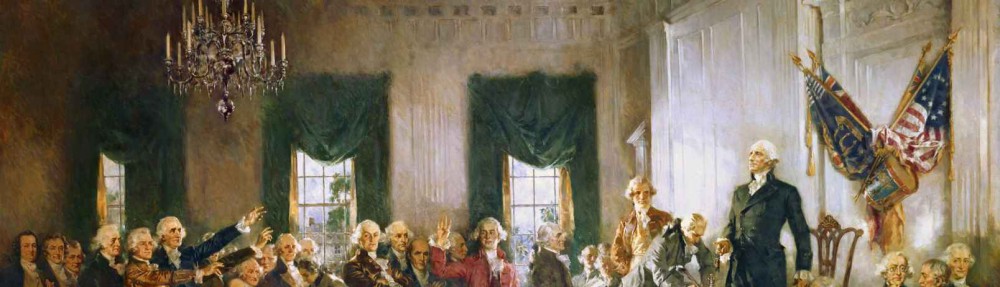
What was Different on the 5th of July ?

There was no difference between July 3, 1776, and July 5. By all outward appearances, the American colonies were no more free and no more independent. Practically speaking, the governing structures were not different.

So what makes the Fourth of July so special?

Think about it. We do not celebrate October 19, 1781, the date the war for American independence ended. There are no parades commemorating September 3, 1783, when the Treaty of Paris formally concluded the war.

No, we celebrate July 4, 1776. That is the day when our Founding Fathers firmly, finally, and officially committed themselves—their lives, their fortunes, their sacred honor—to the cause of American liberty.

Now, make no mistake: many of them had done so personally and individually weeks, months, even years earlier. They already had an army, and blood had already been shed.

Yet, the Fourth of July is celebrated because that is when they formally, out loud, with one voice, declared their independence. They acknowledged to each other and a candid world that they were dissolving their political ties with England.

We celebrate their commitment to the fight. It is a recognition that, in the most important ways, by choosing to declare their independence, they had already achieved it.

Nearly all of our Founding Fathers were men of faith; they understood that the struggle upon which they were to engage may or may not be successful in the eyes of the world. That didn’t matter; they achieved freedom in their choice, declared on the Fourth of July, and the fight ahead was merely the necessary consequence.

On Independence Day, we celebrate our Founding Fathers’ commitment to the ideals of self-governance. On Independence Day, we celebrate their willingness to exercise their convictions for themselves and for us.

On this Independence Day, let us recommit ourselves to their founding convictions. Let us recognize that refusing to accept the yoke of tyranny is the highest expression of liberty.

As it was in 1776, so it is today. The real difference between July 3rd and July 5th is what we commit ourselves to on the Fourth of July.

Michael Quinn Sullivan

America No Longer Has A ‘Common Cause.’ Our Forefathers Would Be Ashamed

I can’t remember the last time Americans were truly united. Maybe Sept. 12, 2001, but I was too young to remember. 

Now the only thing tethering us to one another is our complacency. It’s the one thing we all share. We’ve been fed — and willingly consume — distractions, mostly petty grievances stoked by politicians who thrive on division and chaos, on social media and television. Who has time to care about government overreach or lawfare when our favorite TV show starts in an hour?

We’ve ceded too much power to the government because generation after generation slowly let their foot off the pedal and became willingly complacent via distractions. It’s why we ended up with an administrative state that lets unelected bureaucrats write their own laws. It’s why private citizens were — up until the Supreme Court stepped in this week — allowed to be tried in certain criminal cases without a jury of their peers. We were told government experts know best. We traded political power for expediency, and in doing so we’ve forfeited the “common cause” that was responsible for the inception of this nation.

The American Revolution didn’t begin on July 4, 1776. It began in the decades prior when the British began creating an untenable position for the colonists. There was the Sugar Act of 1764, The Stamp Act of 1765, and The Townshend Acts of 1767; all of which raised taxes on the colonists in various forms to subsidize the British war machine. Colonists resented the notion that they should be taxed without representation. They also rejected corruption and big government. Their rights could not be reconciled with Britain’s long-standing position of total control.

The culmination of British efforts to subdue their subjects perhaps reached a pivotal turning point when Parliament passed The Tea Act of 1773. The act gave the East India Company a tax break which lowered tea prices for colonists but also allowed the East India Company to create a virtual monopoly. It was a gotcha-moment. Colonists still had to pay the Townshend tax that they had decried just six years earlier and saw The Tea Act for the farce it was — a ploy for the king to flex his muscle — “You have no choice but to buy the tea we sell you.”

The move revived colonial resentment toward the British.

Following the passage of The Tea Act, most tea ships that arrived at ports in New York and Philadelphia could not unload their cargo due to swarms of angry colonists. But in Massachusetts, loyalist governor Thomas Hutchinson forbade the ships to leave without unloading their cargo. 

After years of attempts at reconciliation, it was clear that diplomatic efforts had failed.

At least 5,000 colonists gathered in Old South Church to deliberate how they would respond to the situation. On Dec. 16, 1773, dozens of men in disguises boarded the ships and dumped chests of tea into Boston Harbor. 

In response, Parliament passed the so-called Intolerable Acts, restricting trade into Boston, ordering colonists to house British soldiers and removing the local elected government and replacing them with a council appointed by the king, among other measures. 

As John Dickinson later noted, “the insanity of Parliament has operated like inspiration in America. The Colonists now know what is designed against them.”

And suddenly, the phrase “the common cause” began appearing in pamphlets up and down the East Coast. The “common cause” was a call to all colonists to stand with their oppressed brethren in Boston against tyrannical overreach by the government. 

To be clear, the Southern colonies had little in common with their Northern counterparts. For example, their economies were vastly different and dependent on different goods. Georgians could have ignored the plight of their fellow colonists in Massachusetts, but they knew should the same fate befall them, they too would have to face it alone. And so, the colonists moved forward under a united front.

“The die is now cast, the [American] colonies must now either submit or triumph,” King George III infamously said in Sept. 1774. 

Colonists owed no obedience to unjust laws. There would be no such submission. They would take death or liberty. 

Their sacrifices, willpower, and commitment to the “common cause” are why we celebrate the Fourth of July, Independence Day. 

But it is a lack of that “common cause” that has put us in the position we are in today. Government has become too big, and Americans are — just as our forefathers — treated as piggy banks for bureaucrats who spend uncontrollably to finance their partisan agenda. There can be no better tomorrow under these circumstances, but who would know? We’re all too busy endlessly scrolling on social media to realize what’s happening around us. We’re willingly distracted.

America is in need of a “common cause” now more than ever. Too much is at stake.


Brianna Lyman is an elections correspondent at The Federalist.

Not Pretending

It’s hard to celebrate July 4th in 2024 because it’s supposed to be a celebration of freedom. America might not yet seem like a totalitarian dictatorship. But free countries do NOT throw the primary political opposition (the more popular candidate) in jail. Free countries do not redistribute wealth (student loan forgiveness only the latest example). Free countries do not suspend due process for years on end over misdemeanor charges, as with January 6 prisoners. Free countries do not devalue the currency, in the process eroding the middle class for the sake of a wealthy, politically connected elite who will control everything we do. Call it what you will. NONE of this is freedom.

I will celebrate freedom today. I will celebrate America for what it might and ought to be, but not for what we have let ourselves become.

Follow Dr. Hurd on Facebook. Search under “Michael Hurd” (Charleston SC). Get up-to-the-minute postings, recommended articles and links, and engage in back-and-forth discussion with Dr. Hurd on topics of interest. Also follow Dr. Hurd on Twitter at @MichaelJHurd1, drmichaelhurd on Instagram, Michael Hurd Ph.D. on LinkedIn, @DrHurd on TruthSocial

Biden Must Resign or Be Impeached

President Biden’s duty to the American people is to “faithfully execute” his office. As a public trustee, Biden took an oath to do what is right. He is a trustee of powers bestowed upon him by the Constitution in return for his promise to be dutiful.

Like every agent and trustee, Biden owes fiduciary duties to those who are served by his decisions. He owes them two duties: the duty of always acting with due care; and the duty of giving them his absolute loyalty, always putting their interests above his own.

A president’s failure to use due care or be loyal is ground for impeachment. Under our Constitution, impeachment for “high crimes and misdemeanors” is not a criminal proceeding. Rather, it is a civil proceeding to discharge from office one who has failed in his or her trusteeship.

John Locke put it this way:

Who shall be judge, whether the prince or legislative act contrary to their trust? … To this I reply, The people shall be judge; for who shall be judge whether his trustee or deputy acts well, and according to the trust reposed in him, but he who deputes him, and must, by having deputed him, have still a power to discard him, when he fails in his trust? If this be reasonable in particular cases of private men, why should it be otherwise in that of the greatest moment, where the welfare of millions is concerned, and also where the evil, if not prevented, is greater, and the redress very difficult, dear, and dangerous?

More than 50 years ago, when the impeachment of Richard Nixon was under consideration in the House of Representatives, I researched the English parliamentary practice of impeaching high officers for “high crimes and misdemeanors.” The lead special counsel in the impeachment proceeding, John Doar, incorporated my conclusions into the articles of impeachment of Richard Nixon in these words:

In all of this, Richard M. Nixon has acted in a manner contrary to his trust as President and subversive of constitutional government, to the great prejudice of the cause of law and justice and to the manifest injury of the people of the United States.

Wherefore Richard M. Nixon, by such conduct, warrants impeachment and trial, and removal from office.

The same standard of abuse of fiduciary duties was later included in the articles of impeachment of Donald Trump:

In all of this, President Trump has acted in a manner contrary to his trust as President and subversive of constitutional government, to the great prejudice of the cause of law and justice, and to the manifest injury of the people of the United States.

As we saw last Thursday, President Biden is no longer capable of acting with due care as steward of the best interest of the American people. He appeared physically and cognitively inept. His answers to simple questions were nonsensical. Even Nancy Pelosi wondered aloud, “Is this an episode or is this a condition?”

For Biden to remain in office, he will not be faithfully executing it. Rather, he will be using the powers of the office for self-serving ends, depriving the American people of a vigorous defender of our rights and privileges. If Biden does not resign immediately, he has committed an impeachable offense by causing “manifest injury of the people of the United States.”

Should Biden attempt to have his cake and eat it too, he might withdraw his candidacy for this year’s presidential election but not resign as president. If he affirms that he would not be qualified to execute the office of president in January 2025, then why is he qualified to serve in that office today? To withdraw from the presidential race but continue in office would be a violation of his duty of loyalty to the American people.

Joe Biden made a choice when he took the oath of office to serve as our president. If he can no longer be loyal or serve with due care, then he must resign his office or be impeached.

Stephen B. Young is global director of the Caux Round Table for Moral Capitalism. He was an assistant dean at the Harvard Law School and later dean and professor of law at the Hamline University School of Law.

Retribution…What’s so Bad About it ?

What’s so bad about retribution?

In the event that Donald Trump actually becomes president again, I surely hope he engages in retribution.

Here’s the dictionary definition of “retribution”:

“ret·ri·bu·tion”
noun
punishment inflicted on someone as vengeance for a wrong or criminal act.
“employees asked not to be named, saying they feared retribution”.
Works for me.

What’s the problem? Why be on the defensive?

The question isn’t whether it’s right or wrong to engage in retribution. The question is whether the person you’re holding accountable is actually guilty of anything.

The leftists and RINOs who rule us don’t care about whether or not someone is guilty. If they dislike you, then you’re guilty. And if you’re guilty, you’re going to jail. They’ve done it to Trump, they’ve done it to Steve Bannon and others, they’ve done it to January 6 “offenders” and they’re coming for everyone else they can, especially if we don’t remove them from power.

People who say, “Trump doesn’t dare punish Biden, Obama, Bill Barr, Merrick Garland, etc. because that would be retribution” are giving an after-the-fact, moral and legal blank check to the worst tyrants and sociopaths ever to be part of the American landscape.

Of course Trump, if he has the chance, should engage in retribution. The people he will hopefully go after are guilty of treason; of literal, open weaponization of America’s legal system and, with it, destruction of not only America’s Bill of Rights, but the entire idea of objective justice going back for centuries even before America.

Remember the terrorist group Black Lives Matter and its destruction of America’s once great cities? Remember COVID fascism? We’re still not over these catastrophes. These were inflicted by our own governments, federal and, in many cases, state and local. Why are every single one of the victimizers still in office? Why are not all of them on trial and in prison, right now?

The people who deserve to go to jail and even face execution for treason have literally ruined America — perhaps irreparably. They are not just scoundrels; they are worse than scum. Not only have they ruined our system; they have made billions of dollars in the process, in many cases. The Bidens, while just puppets, sit at the middle of that toxic tyranny. Yes, Trump should absolutely start with them.

I don’t know that it will or can happen. I can only say that it should. Stop apologizing; stop hesitating, conservatives. Grow a pair. These people deserve far worse than we will probably ever give them.

Follow Dr. Hurd on Facebook. Search under “Michael Hurd” (Charleston SC). Get up-to-the-minute postings, recommended articles and links, and engage in back-and-forth discussion with Dr. Hurd on topics of interest. Also follow Dr. Hurd on Twitter at @MichaelJHurd1, drmichaelhurd on Instagram, Michael Hurd Ph.D. on LinkedIn, @DrHurd on TruthSocial

Does the Supreme Court Decision REALLY Matter?

“The most dangerous person is the one who thinks, listens, and observes.”–Bruce Lee

It doesn’t really matter how the Supreme Court ruled on presidential immunity and the use of presidential power. In a republic where the Constitution still is taken seriously, it would matter. But that’s not where we are. The fact remains that a president supported by the ruling elite (Obama, Biden, etc.) will have unlimited authority and unlimited immunity for whatever he wishes to do — so long as the ruling elite approves of his actions.

The Court can rule against any future vax mandates, but it does not matter. The minute the regime in power wishes to impose a medical mandate, a lockdown, or anything else it wishes in the name of “health” or “the environment” — we’re going to get it. The minute the regime in power wishes to transfer wealth — as in “student loan forgiveness” — or inflate the currency, it’s going to do so without consequence. The Biden regime has done everything it wanted, sometimes with court approval and in a few cases not — but so what? They do it anyway.

Court rulings matter in theoretical principle, perhaps, but not in practice — unless your country is an actual Constitutional republic, as opposed to a banana republic. So don’t get too excited about this latest Supreme Court decision. Biden or his elite-picked successor (Harris, Michelle, Gavin — it doesn’t matter) are all going to decimate our individual rights until enough people figure out a way to resist and/or fight back. It’s as simple — and as sad — as that.

Follow Dr. Hurd on Facebook. Search under “Michael Hurd” (Charleston SC). Get up-to-the-minute postings, recommended articles and links, and engage in back-and-forth discussion with Dr. Hurd on topics of interest. Also follow Dr. Hurd on Twitter at @MichaelJHurd1, drmichaelhurd on Instagram, Michael Hurd Ph.D. on LinkedIn, @DrHurd on TruthSocial

Let’s Put the Independence back in Independence Day

America’s cities and towns will soon fill with parades, fireworks, and barbecues. They will be celebrating the Fourth of July, the [246th] birthday of America. But one hopes that the speeches will contain fewer bromides and more attention to exactly what is being celebrated. The Fourth of July is Independence Day, but America’s leaders and intellectuals have been trying to move us further and further away from the meaning of Independence Day, away from the philosophy that created this country.

What we hear from politicians, intellectuals, and the media is that independence is passé, that we’ve reached a new age of “interdependence.” We hear demands for mandatory “volunteering” to serve others, for sacrifice to the nation. We hear demands from trust-busters that successful companies be punished for being “greedy” and not serving society. But this is not the message of America. It is the direct opposite of why America became a beacon of hope for the truly oppressed throughout the world. They have come here to escape poverty and dictatorship; they have come here to live their own lives, where they aren’t owned by the state, the community, or the tribe.

“Independence Day” is a critically important title. It signifies the fundamental meaning of this nation, not just of the holiday. The American Revolution remains unique in human history: a revolution–and a nation–founded on a moral principle, the principle of individual rights. Jefferson at Philadelphia, and Washington at Valley Forge, pledged their “lives, fortunes, and sacred honor.” For what? Not for mere separation from England, not–like most rebels–for the “freedom” to set up their own tyranny. In fact, Britain’s tyranny over the colonists was mild compared to what most current governments do to their citizens.

Jefferson and Washington fought a war for the principle of independence, meaning the moral right of an individual to live his own life as he sees fit. Independence was proclaimed in the Declaration of Independence as the rights to “life, liberty, and the pursuit of happiness.” What are these rights? The right to life means that every individual has a right to his own independent life, that one’s life belongs to oneself, not to others to use as they see fit.

The right to liberty means the right to freedom of action, to act on one’s own judgment, the right not to have a gun pointed at one’s head and be forced to do what someone else commands. And the right to the pursuit of happiness means that an individual may properly pursue his own happiness, e.g., his own career, friends, hobbies, and not exist as a mere tool to serve the goals of others. The Founding Fathers did not proclaim a right to the attainment of happiness, knowing full well that such a policy would carry with it the obligation of others to make one happy and result in the enslavement of all to all. The Declaration of Independence was a declaration against servitude, not just servitude to the Crown but servitude to anyone. (That some signers still owned slaves does not negate the fact that they established the philosophy that doomed slavery.)

Political independence is not a primary. It rests on a more fundamental type of independence: the independence of the human mind. It is the ability of a human being to think for himself and guide his own life that makes political independence possible and necessary. The government as envisaged by the Founding Fathers existed to protect the freedom to think and to act on one’s thinking. If human beings were unable to reason, to think for themselves, there would be no autonomy or independence for a government to protect. It is this independence that defines the American Revolution and the American spirit.

To the Founding Fathers, there was no authority higher than the individual mind, not King George, not God, not society. Reason, wrote Ethan Allen, is “the only oracle of man,” and Thomas Jefferson advised us to “fix reason firmly in her seat and call to her tribunal every fact, every opinion. Question with boldness even the existence of a God.” That is the meaning of independence: trust in your own judgment, in reason; do not sacrifice your mind to the state, the church, the race, the nation, or your neighbors.

Independence is the foundation of America. Independence is what should be celebrated on Independence Day. That is the legacy our Founding Fathers left us. It is a legacy we should keep, not because it is a legacy, but because it is right and just. It has made America the freest and most prosperous country in history.

First published in Capitalism Magazine in 2007. Copyright 2007 Ayn Rand Institute. All rights reserved. A version of this article was first published in 2007. Capitalism Magazine is republishing it again because its message still remains relevant today.