SearchSearch for:
Franklin’s Warning: A Republic . . . If You Can Keep It
Benjamin Franklin’s famous warning links government to the character of the people.
February 3, 2023

“Well Doctor what have we got, a republic or a monarchy?” is one of the more famous questions in American history. Elizabeth Powel asked this of Benjamin Franklin on September 17, 1787, the last day of the Constitutional Convention. He replied, “A republic . . . if you can keep it.”
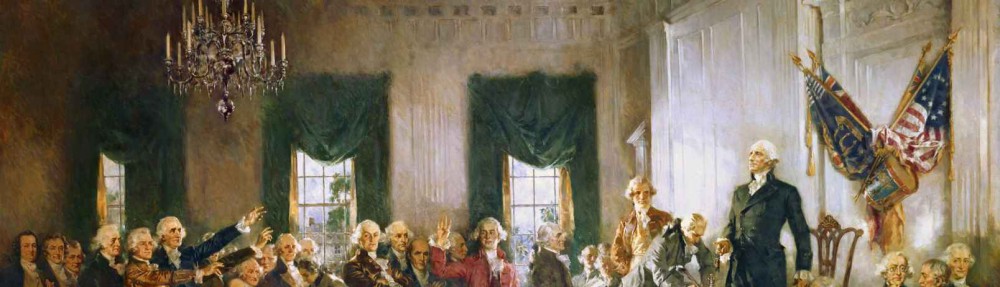
Franklin was a delegate to the convention that had met behind closed doors for more than three months to address questions about the future of American governance. The delegates did not publicize their efforts until they emerged that day to present a newly drafted Constitution. From there, delegates to specially elected state conventions debated the document and put it to an up or down vote. A republic replaced the confederation of states when the ninth state ratified the Constitution on June 21, 1788. Ratification by all 13 states did not occur until May 29, 1790.
Elizabeth Powel’s intimation that monarchy may have been an alternative may seem far-fetched today, but independence from Great Britain had occurred less than a dozen years prior, in 1776. The recent death of the British monarch Queen Elizabeth II offers a bridge from present to past as it calls to mind the shared history between the United States and Britain. Queen Elizabeth’s ancestor King George III was the monarch when America declared independence. At the queen’s funeral, her crown, scepter, and orb were dramatically displayed on the coffin, symbolizing the power, authority, and sanctity of the monarchy.
Report Adabout:blank
In colonial America, the colonists lived as British subjects under a constitutional monarchy and complied with the demands of the crown and parliament. As the colonies grew in population and developed independently, the colonists increasingly became more mindful of their rights. The famed statement, “no taxation without representation” is one example of a disputed issue between the Americans and the British, which also highlighted the lack of British recognition of their rights.
In response to these conflicts, the colonists formed a Continental Congress to address issues that went beyond singular colonial disputes. One of its most significant acts was the Declaration of Rights and Grievances in 1774, with the following preamble to the colonies’ list of rights: “That the inhabitants of the English colonies in North-America, by the immutable laws of nature, the principles of the English constitution, and the several charters or compacts, have the following rights.”
Representatives in the Second Continental Congress subsequently voted to declare independence from the British when efforts to resolve their differences failed.
The Declaration of Independence included both grievances against the British and the statement of universal principles. The extraordinary phrase in the Declaration’s first sentence—To assume among the powers of the earth, the separate and equal station to which the Laws of Nature and of Nature’s God entitle them—recognized a universal standard independent of man-made governments and institutions. It also included the phrases—all men are created equal and [assuming] a separate and equal station—which cast off the British monarch’s crown, scepter, and orb. All the trappings of monarchy, as shown in Queen Elizabeth’s televised funeral, ceased to have effect. Americans were no longer subordinate to the British monarchy and government; they assumed an equal station. Nor were there Kings and Queens in America’s future. Article I, Section 9, Clause 8 of the 1787 Constitution underscores the notion that the drafters of the Constitution were serious about ridding the nation of any vestiges of royalty or nobility:
No Title of Nobility shall be granted by the United States: And no Person holding any Office of Profit or Trust under them, shall, without the Consent of the Congress, accept of any present, Emolument, Office, or Title, of any kind whatever, from any King, Prince, or foreign State.
Upon declaring independence in 1776, Parliament no longer governed American affairs, former British subjects could become citizens of the new nation, and Americans could strive to become a free and self-governing people under new governance for the nation. This work continued in 1787 when Franklin and others participated in the Constitutional Convention, which laid the foundation for a new American republic.
A Well-Administered Government
Franklin’s participation in these efforts was expected, as he was a towering figure in colonial America. He was known best as a printer, writer, and publisher. He was not university-educated like Adams, Jefferson, and Madison but had been an apprentice in his older brother’s print shop. His curiosity and self-directed study led him to pursue his interests in politics and science. He was a man whose learning and wisdom had also been formed by his experiences throughout America and in foreign countries. Most colonists and citizens in early America did not venture far from their hometowns or states, but Franklin had traveled to England, France, Scotland, and Germany in private and official capacities, and had lived abroad for several years. He also had experiences with foreign governments, including serving as U.S. Ambassador to France.
Report Adabout:blank
America also benefited from Franklin’s political skills. He was a delegate to the second Continental Congress and the Constitutional Convention, and among the five who drafted the Declaration of Independence. He signed the 1776 Declaration, the 1778 Treaty of Alliance with France that secured French support during the Revolutionary War, the 1783 Treaty of Paris that ended the Revolutionary War with the British, and the 1787 Constitution.
Franklin was more than 80 years old during the convention, and his speech was the last delivered, read by fellow delegate James Wilson. The content gives insight into his views of not only the document, but government in general. He began by expressing his doubts about the work just completed.
I confess that I do not entirely approve of this Constitution at present, but Sir, I am not sure I shall never approve it: For having lived long, I have experienced many Instances of being obliged, by better Information or fuller Consideration, to change Opinions even on important Subjects, which I once thought right, but found to be otherwise.
An example of Franklin changing his views relates to the previous comments about declaring independence. As a colonist, he supported the British. In an exchange with William Strahan in 1769, he gave a sober assessment of the relations between the two countries and the potential for malice and mutual hatred that prevailed between other countries. He concluded his letter with the hope that his predictions “may all prove false Prophecy” and that they both “live to see as sincere and Perfect a friendship establish’d between our respective Countries.” Franklin’s hope did not come to pass. His experiences with British officials and their poor governance of the American colonies eventually led him to join the fight for independence.
Despite Franklin’s doubts about the newly drafted Constitution, he sought to persuade his fellow delegates to sign the document. He spoke candidly to them.
I agree to this Constitution, with all its Faults, if they are such: because I think a General Government necessary for us, and there is no Form of Government but what may be a Blessing to the People if well administred; and I believe farther that this is likely to be well administred for a Course of Years, and can only end in Despotism as other Forms have done before it, when the People shall become so corrupted as to need Despotic Government, being incapable of any other. I doubt too whether any other Convention we can obtain, may be able to make a better Constitution: For when you assemble a Number of Men to have the Advantage of their joint Wisdom, you inevitably assemble with those Men all their Prejudices, their Passions, their Errors of Opinion, their local Interests, and their selfish Views.
Similar to the qualification in his response to Elizabeth Powel, “a republic . . . if you can keep it,” Franklin included another qualification in his speech to the delegates: “there is no Form of Government but what may be a Blessing to the People if well administred;” A well-drafted Constitution is a first step, but his added requirement that it must be well administered is necessary for it to be a blessing to the people. Those who work in government—legislators, the president, judges, and officials—contribute to a well-administered government.
Franklin gave a vote of confidence to the work that he and his fellow delegates had just completed when he added, “I believe farther that this is likely to be well administred for a Course of Years.” He did not say that it would be well administered forever but a course of years. Would it be 10 years, 50 years, or 100 years? Even though Franklin’s fellow delegates heard this speech more than 200 years ago, questioning whether the current American government is well-administered and a blessing to the people engages citizens in a continuous assessment of their government.
Report Adabout:blank
Franklin’s warning that “[it] can only end in Despotism as other Forms have done before it, when the People shall become so corrupted as to need Despotic Government, being incapable of any other” links government to the character of the people. This prompts the question: what is required of a people to maintain a good government and their liberty?
George Washington stated in his 1796 Farewell Address that religion and morality support political prosperity; and virtue or morality support popular government. Franklin had long before addressed the importance of virtue, having sketched his intended writings on the subject in a letter to Lord Kames in 1760. The character of the people in a republican government matters because of the prominent role that they play in participating in governance, selecting their representatives, and voting on matters that concern both citizen and nation. The sovereign authority in America’s constitutional republic also resides in the people. A corrupt people are no longer self-governing and thus fall prey to tyrannical and despotic governments. iStock/Getty Images
The Document, the Implementation, and the Citizenry
There is a progression of topics in Franklin’s speech to the Convention delegates. He begins with the new foundation of the Constitution, continues with the administration of the new government, and then discusses the people. In other words, his speech encompassed the document, the implementation and execution, and the citizenry. In addition to the necessity of the people being of good character, Franklin expanded the scope with reference to their opinion.
Much of the Strength and Efficiency of any Government, in procuring & securing Happiness to the People depends on Opinion, on the general Opinion of the Goodness of that Government as well as of the Wisdom & Integrity of its Governors.
In his Politics, Aristotle included a discussion of judging the goodness of government and its rulers. He distinguished between governments that rule on behalf of the common good and those whose rulers use the government to further their own interests. The former garners the good opinion of the people, whereas the latter does not. The British government advanced its own interests rather than those of the colonists. The colonists’ opinions of British governance were such that they could no longer remain under its authority, which eventually led them to declare independence from the crown.
Franklin’s statements are also applicable to citizens in modern-day governments. In a republic, it is particularly important to assess the government and its governors. If their political leaders or institutions are deemed inadequate, the people must act.
Franklin ended his speech with a call for support of the new Constitution. “I hope therefore that for our own Sakes, as a Part of the People, and for the Sake of our Posterity, we shall act heartily & unanimously in recommending this Constitution, wherever our Influence may extend, and turn our future Thoughts and Endeavours to the Means of having it well administred.” Thirty-nine delegates signed the document on September 17, 1787, and submitted it to the people.
about:blankReport Ad
These excerpts from Franklin’s speech demonstrate how he pairs concepts that lead to good government. It is not just the Constitution but how it is administered; it is not just the people, but their character and their opinion of the government and its governors; it is not just any opinion, but opinion as to the goodness of the government and the wisdom and integrity of its governors. He moves from the Constitution’s text to the people to those who govern, thus encompassing the whole of the new American republic.
What may have seemed a throw-away line in his exchange with Elizabeth Powel is now seen in a different light when the political skills and experience of Franklin are known. This wise man’s response —A republic . . . if you can keep it—was profound. There are two parts to it: the first identifies a form of government and the second, similar to the excerpts quoted from his speech to the Convention delegates, is cautionary. Both parts require elaboration.Caroline Brehman/CQ via Getty Images
A Republic . . .
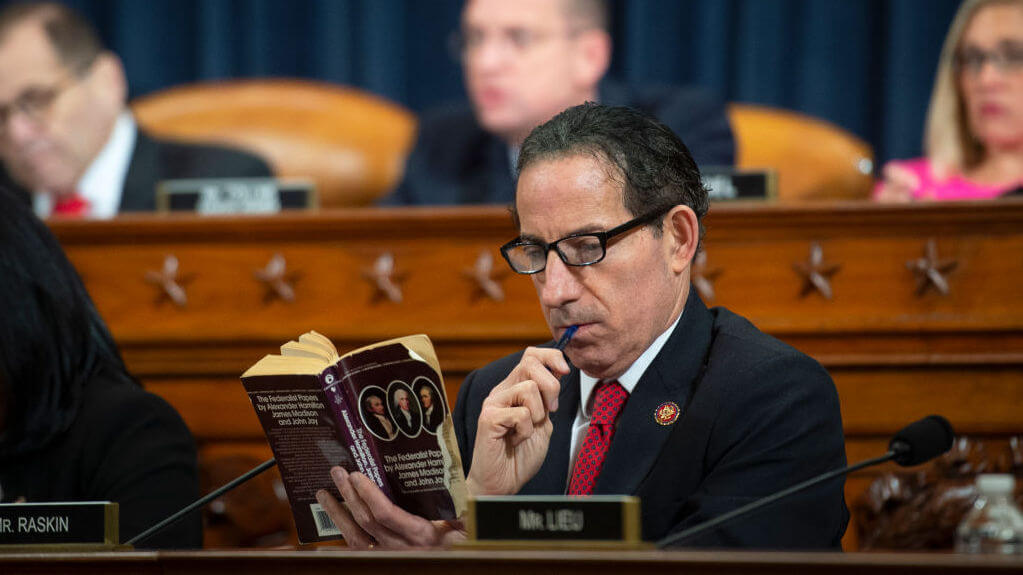
The new U.S. Constitution laid the foundation for a republic, a form of government that had never been present in America at a national level. To explain the Constitution and persuade delegates to support it, Alexander Hamilton, James Madison, and John Jay, writing under the pseudonym Publius, published 85 essays commonly referred to as the Federalist Papers. Publius defined a republic as “a government which derives all its powers directly or indirectly from the great body of the people”.
Franklin’s speech to the delegates, quoted above, linked the power and sovereign authority of the people to the administration of government to underscore the connection between government and people. A republic, which derives its powers from the people, is a sharp contrast to the constitutional monarchy that governed colonial America and the confederation. While the 13 original colonies drafted constitutions upon declaring independence, each state retained its sovereignty and delegated power to the United States. The adoption of a confederation of states ultimately proved to be inadequate in the governance of the new nation. The new constitutional structure in 1787 preserved the states but replaced the confederation.
Publius further defined a republic as “administered by persons holding their offices during pleasure, for a limited period, or during good behavior.” Recall the words from Franklin’s speech: “there is no Form of Government but what may be a Blessing to the People if well administered.” It is not simply going through the motions to fulfill tasks, but it must be administered well. Publius’ definition also included three requirements: pleasure, limited period, good behavior.
The word “pleasure” is not in the Constitution, but the concept of serving at the pleasure of a government official or the people is. For example, the president’s cabinet members serve at his pleasure; he can hire and fire at his own discretion. Representatives, senators, and the president serve defined terms, with the president limited to a four-year term before standing for reelection. Article III, Section 1 includes the language: “The Judges, both of the supreme and inferior Courts, shall hold their Offices during good Behaviour.” There is a contrast between those serving in a republic who have specified terms or conditions and a hereditary monarchy. Elizabeth Powel’s question included two possible choices: a monarchy or a republic. When America declared independence, the presence of monarchy was abolished in America. A decade later, the people again rejected monarchy and ushered in a republic framed by the Constitution. Monarchy was thus twice rejected.
Report Adabout:blank
There are advantages to a republican form of government. First, it serves as a check on faction, as explained in Federalist 10. A group with different opinions or interests within a larger group allows for a healthy exchange of ideas. When those groups become factions, party strife, and dissension may occur. Publius called factions one of the great threats to free government. In a republic, a majority vote can stop a faction. If the faction represents a majority, a means to defeat it in a large republic is by taking in “a greater variety of parties and interests.” Publius argued that in an extended sphere, it would be “less probable that a majority of the whole will have a common motive to invade the rights of other citizens; or if such a common motive exists, it will be more difficult for all who feel it to discover their own strength and to act in unison with each other.”
Justice is a check on the majority, as Publius argues in Federalist 51:
In the extended republic of the United States, and among the great variety of interests, parties, and sects which it embraces, a coalition of a majority of the whole society could seldom take place on any other principles than those of justice and the general good.
A second advantage of a republican form of government is that it protects against pure, raw democracy, which in the worst form leads to mob rule. Publius explained in Federalist 10 that a republic “refine(s) and enlarge(s) the public views by passing them through the medium of a chosen body of citizens, (including elected officials and representatives or judges) whose wisdom may best discern the true interest of their country and whose patriotism and love of justice will be least likely to sacrifice it to temporary or partial considerations.” These words remind the body of people electing representatives to choose candidates who will govern with the best interests of the country in mind.
A third advantage of a republican form of government is that it brings together the many and the few. The people—the many—participate in governance by electing their representatives—the few—who are drawn from the people. One of the reasons representatives in the House have two-year terms is to ensure that they are closer to the people. Publius explains in Federalist 52: “it is essential to liberty that the government in general should have a common interest with the people.” Regrettably, a trend in recent decades is a return rate greater than 90 percent for incumbents. When politicians hold their offices for decades, the common interest is subverted.
These advantages in the republican form of government are but a few of those that emerged from the convention. Yet, Franklin added a cautionary note “. . . if you can keep it.” Why was he skeptical?
. . . If You Can Keep It
Republican government was not a new pursuit in the history of government. Rome was the most famous republic in the classical world, and more recently many countries have republics that vary based upon their governing principles. Anticipating America’s unique challenges, the framers made three additions to the U.S. Constitution.
Report Adabout:blank
First, there was a concern whether a republican form of government in the United States could stand up to the dramatic expansion that was possible and likely. At the conclusion of the Constitutional Convention, there were 13 states and a vast expanse of land that lay beyond the borders of these states. Some 25 years after the ratification of the Constitution, the Louisiana Purchase of 1803 expanded the landmass of the United States, doubling the size of the republic.
While Publius argued that extending the sphere was a positive means of pushing back against factions, it is legitimate to ask whether an extended sphere would prevent the elected officeholders from being close to the people in a representative form of government. One response is to recall that the original Constitution was intended to be a limited government. Its scope of authority was delineated carefully. An example is the enumeration of legislative powers in Article I, Section 8. It circumscribes or limits what legislators can do.
Another example is the 10th Amendment in the Bill of Rights: “The powers not delegated to the United States by the Constitution, nor prohibited by it to the states, are reserved to the states respectively, or to the people.” The states had their own Constitutions and governed within their boundaries when the Constitution was ratified. There was also an orderly process for new territories to form and new states to enter the union. Within these states, there was local governance. The 1787 Constitution was transformational, but much of what was in place with respect to local and state governance remained, and so provided continuity.iStock/Getty Images
A Carriage for a Sedan
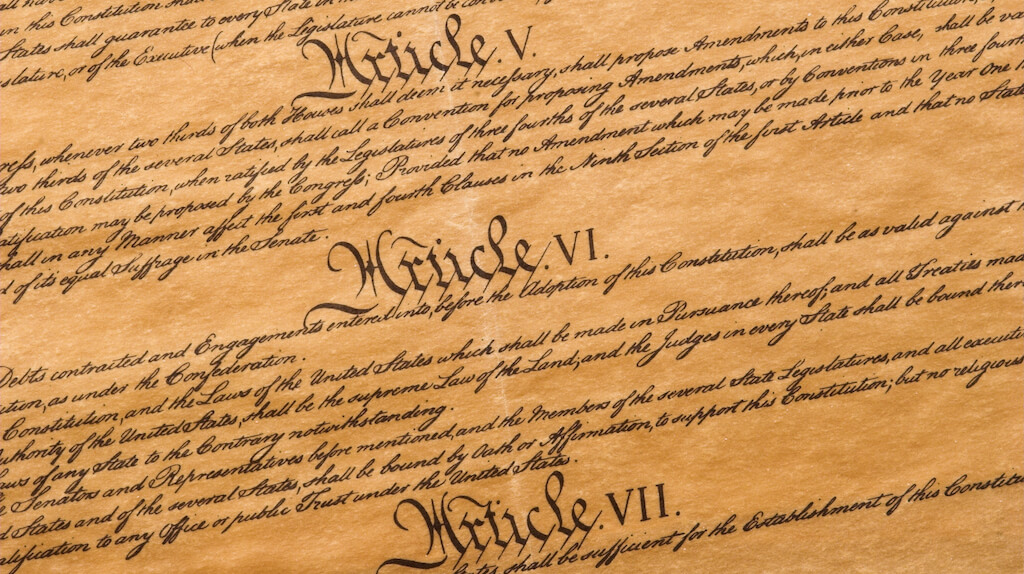
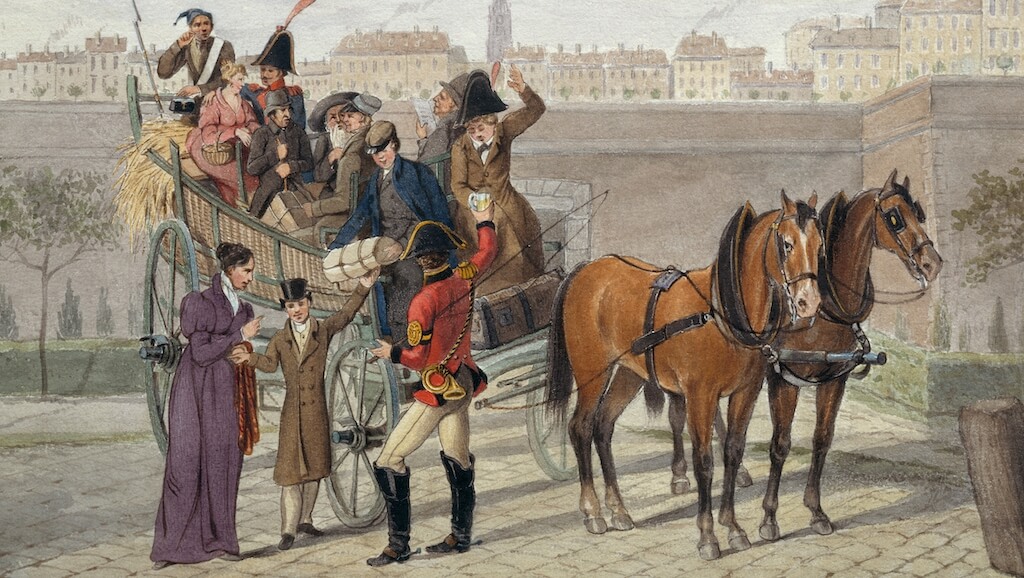
From Franklin’s time to the present, significant changes have taken place. Were he living today, he would trade in his carriage for a sedan, and he would arrive in Paris in a matter of hours instead of spending weeks on a ship. The serious consideration is how to “keep” a republican form of government that was introduced 235 years ago. Politics is dynamic, not static. The drafters of the Constitution recognized that social conventions would change, and political exigencies and unforeseen events would arise. They included an orderly process to amend the Constitution in Article V. In addition to the Bill of Rights, the first 10 amendments to the Constitution, there have been 17 additional amendments. Others have been proposed, but not ratified.
These three examples—orderly expansion, maintaining a republican form of government, and the amendment process—demonstrate how the drafters of the Constitution anticipated challenges and potentially destabilizing events and provided the citizens and their government the means to “keep” the Republic within a constitutional framework.
Other concerns are present in the United States that make Franklin’s cautionary statement very real. One of the requirements of a successful republican government is the participation of the people. An educated citizenry is a necessary component to achieve this. Franklin drafted Proposals Relating to the Education of Youth in 1749, long before the events that led to America adopting a republican form of government. His mention of the commonwealth and public service links it to the present conversation.
Report Adabout:blank
The good Education of Youth has been esteemed by wise Men in all Ages, as the surest Foundation of the Happiness both of private Families and of Common-wealths. Almost all Governments have therefore made it a principal Object of their Attention, to establish and endow with proper Revenues, such Seminaries of Learning, as might supply the succeeding Age with Men qualified to serve the Publick with Honour to themselves, and to their Country.
In addition to educating the youth, there were also proposals for a national university. The university was seen as a means to make “republican citizens” to achieve the goals of a permanent union. George Washington’s December 7, 1796 statement to the United States Congress recognized that “among the motives to such an institution, the assimilation of the principles, opinions, and manners of our countrymen, by the common education of a portion of our youth from every quarter, well deserves attention.” He envisioned a plan “for communicating it [the science of government] to those who are to be the future guardians of the liberties of the country.” The plan never came to fruition, but it is noteworthy that Franklin and Washington recognized the importance of the education of youth and young adults to the perpetuation and prosperity of the nation.Spencer Platt/Getty Images
Miseducation Bolstered by Cancel Culture
There is a present-day crisis in education that imperils the perpetuation of American political institutions. Curricular changes that stem from efforts to upend the traditional foundations of America are seen most recently in the advancement of critical race theory and the “1619 Project” in schools. Critical race theory dates to a legal studies movement at Harvard Law School in the 1970s. In a legal setting, instead of an individual’s actions being judged by the rule of law, the theory advocated a broader scope that considered, among other things, a disadvantaged background or racial injustices when determining innocence or guilt. The aim was to transform the principle of equality before the law by consideration of other factors that went beyond the action or behavior of the accused.
What has come to be known as “The 1619 Project” originated as a series of articles published in the New York Times Magazine in August 2019. It was originally presented in the following manner: “The 1619 Project is a major initiative from the New York Times observing the 400th anniversary of the beginning of American slavery. It aims to reframe the country’s history, understanding 1619 as our true founding, and placing the consequences of slavery and the contributions of black Americans at the very center of our national narrative.” The language “understanding 1619 as our true founding” was subsequently removed, but the curricular programs were launched.
These two movements are bolstered by what is commonly referred to as cancel culture. Those in political, educational, and activist circles stifle or target the speech and activity of others who question or challenge them. The First Amendment protects the freedom of speech, but speech must be understood in the broadest sense. Speech, dialogue, and debate are necessary and beneficial in a republic for many reasons. They advance participation among citizens and those who govern and contribute to unity and fellowship, even when there is disagreement. These pursuits also foster the prospect of living in a good political community by articulating ideas, aspirations, and goals; bringing to light solutions to problems; and contributing to the resolution of differences.
These movements of critical race theory, the “1619 Project,” and the attack on speech and ideas imperil both education and the republic. There is also a link between these movements, slavery, and the republican form of government announced to Elizabeth Powel on the last day of the Convention. The Constitution is not pro-slavery, but the Convention delegates made compromises regarding slavery (including the Three-fifths Compromise, the slave trade clause, and the fugitive slave clause) to complete the final document.
With respect to the question of a republic, one can ask whether there was a republic throughout the United States upon ratification of the Constitution. Arguably, there was only a partial republican form of government in those states where slaves were denied the opportunity to consent to and participate in governance. We again look to the language of the Declaration of Independence and recall that Franklin was on the drafting committee. It includes the phrase, “Governments are instituted among Men, deriving their just powers from the consent of the governed.” The incongruity of proclaiming that all men are created equal and they are endowed by their Creator with certain unalienable rights is seized upon by those who question and discredit the founding. Franklin, however, took a different approach.
Report Adabout:blank
Franklin had owned slaves as a young man, but he later joined the effort to abolish slavery. He became president of the Pennsylvania Society for Promoting the Abolition of Slavery in 1787. Among their goals was to abolish slavery and integrate freed slaves into American society. After ratification of the Constitution, he published essays supporting the end of slavery and, two months before his death, he petitioned Congress in February 1790 to address slavery. Congress tabled the Petition. It took 76 years after ratification of the Constitution to pass the Civil War Amendments that ended slavery. Although discrimination persisted, former slaves from that point on could participate as citizens in the republic and be among those who were not deprived of their unalienable rights as recognized in the Declaration of Independence.
In a 1784 letter Franklin wrote to Charles Thomson, he described the transition that occurred in America since declaring independence. “The several colonies were distinct and separate governments, each jealous of another and kept apart by local interests and prejudices.” Franklin identified several contentious issues which “afforded little Opportunity of acquiring National sentiments.” Over the period of eight years, “the time elapsed since we became a Nation,” he gave this assessment: “And I am happy to think that the people every day become more and more impressed with the necessity of honorably paying our debts, supporting public credit and establishing a national character.”
This mention of a national character provides direction for meeting the current challenges of keeping the American republic. The attacks on the founding of the nation, in part due to the continuance of the slavery that began in colonial America, can be met with a call to reassert a concept of a national character whereby all Americans are included. The divisiveness and fragmentation into groups undermine the nation and may well destroy the republic. While Franklin also expressed his concerns that Britain would attempt to recover what she had lost or “at least to be revenged for what she has suffered,” Americans, too, must guard against these same acts by those who attack or attempt to change or end the American constitutional order. Franklin wrote that it was necessary for America (and her French allies) “to be on their guard and not suffer themselves to be duped by the arts of their common enemy.” Americans, too, must not be “duped” and be ever mindful of keeping our republic.
This essay is adapted from a speech given on September 23, 2022, during the Constitution Week events at Lake Havasu, Arizona.
About Elizabeth Eastman
Elizabeth Eastman holds a Ph.D. in Political Science from Claremont Graduate School, an M.A. in Liberal Education from St. John’s College, and a B.A. in French Literature and Civilization from Scripps College. She has taught in political science and history departments and in the liberal studies programs at colleges and universities around the country. She was the 2020-21 senior scholar in residence at the Benson Center for the Study of Western Civilization in Boulder, Colorado.