The Wisdom of Ayn Rand on Love

Love, friendship, respect, admiration are the emotional response of one man to the virtues of another, the spiritual payment given in exchange for the personal, selfish pleasure which one man derives from the virtues of another man’s character. Only a brute or an altruist would claim that the appreciation of another person’s virtues is an act of selflessness, that as far as one’s own selfish interest and pleasure are concerned, it makes no difference whether one deals with a genius or a fool, whether one meets a hero or a thug, whether one marries an ideal woman or a slut.
Romantic love, in the full sense of the term, is an emotion possible only to the man (or woman) of unbreached self-esteem: it is his response to his own highest values in the person of another—an integrated response of mind and body, of love and sexual desire. Such a man (or woman) is incapable of experiencing a sexual desire divorced from spiritual values.

There are two aspects of man’s existence which are the special province and expression of his sense of life: love and art.

I am referring here to romantic love, in the serious meaning of that term—as distinguished from the superficial infatuations of those whose sense of life is devoid of any consistent values, i.e., of any lasting emotions other than fear. Love is a response to values. It is with a person’s sense of life that one falls in love—with that essential sum, that fundamental stand or way of facing existence, which is the essence of a personality. One falls in love with the embodiment of the values that formed a person’s character, which are reflected in his widest goals or smallest gestures, which create the style of his soul—the individual style of a unique, unrepeatable, irreplaceable consciousness. It is one’s own sense of life that acts as the selector, and responds to what it recognizes as one’s own basic values in the person of another. It is not a matter of professed convictions (though these are not irrelevant); it is a matter of much more profound, conscious and subconscious harmony.

Many errors and tragic disillusionments are possible in this process of emotional recognition, since a sense of life, by itself, is not a reliable cognitive guide. And if there are degrees of evil, then one of the most evil consequences of mysticism—in terms of human suffering—is the belief that love is a matter of “the heart,” not the mind, that love is an emotion independent of reason, that love is blind and impervious to the power of philosophy. Love is the expression of philosophy—of a subconscious philosophical sum—and, perhaps, no other aspect of human existence needs the conscious power of philosophy quite so desperately. When that power is called upon to verify and support an emotional appraisal, when love is a conscious integration of reason and emotion, of mind and values, then—and only then—it is the greatest reward of man’s life.

To love is to value. Only a rationally selfish man, a man of self-esteem, is capable of love—because he is the only man capable of holding firm, consistent, uncompromising, unbetrayed values. The man who does not value himself, cannot value anything or anyone.

To love is to value. The man who tells you that it is possible to value without values, to love those whom you appraise as worthless, is the man who tells you that it is possible to grow rich by consuming without producing and that paper money is as valuable as gold . . . . When it comes to love, the highest of emotions, you permit them to shriek at you accusingly that you are a moral delinquent if you’re incapable of feeling causeless love. When a man feels fear without reason, you call him to the attention of a psychiatrist; you are not so careful to protect the meaning, the nature and the dignity of love.

Love is the expression of one’s values, the greatest reward you can earn for the moral qualities you have achieved in your character and person, the emotional price paid by one man for the joy he receives from the virtues of another. Your morality demands that you divorce your love from values and hand it down to any vagrant, not as response to his worth, but as response to his need, not as reward, but as alms, not as a payment for virtues, but as a blank check on vices. Your morality tells you that the purpose of love is to set you free of the bonds of morality, that love is superior to moral judgment, that true love transcends, forgives and survives every manner of evil in its object, and the greater the love the greater the depravity it permits to the loved. To love a man for his virtues is paltry and human, it tells you; to love him for his flaws is divine. To love those who are worthy of it is self-interest; to love the unworthy is sacrifice. You owe your love to those who don’t deserve it, and the less they deserve it, the more love you owe them—the more loathsome the object, the nobler your love—the more unfastidious your love, the greater your virtue—and if you can bring your soul to the state of a dump heap that welcomes anything on equal terms, if you can cease to value moral values, you have achieved the state of moral perfection.

Keep it Real by Keeping it Honest

One of the biggest impediments to human associations is the unwillingness to say what you think and ask for what you want. Note the word “ask”; no one is entitled to anything from another person simply because he or she wants it. We are entitled to make the request, but that person is equally entitled to say no. And this applies not only to strangers, but to family and loved ones as well.

If I ask somebody for something, I’m counting on one very important thing: If they say they’re willing to do it, then they mean it. We’re all entitled to this authenticity from others. But sadly, most of the time we don’t get it. This doesn’t mean that most people are willfully malicious and seek to lie, but the unfortunate lack of authenticity can definitely lead to problems. It’s actually a form of lying, even if you don’t have malicious intentions. Like regular lying, the creation of one inauthentic statement leads to creating others in order to disguise the inauthenticity of the first, therefore heaping lie upon lie. For example, “Oh, I love doing that with you. Let’s do it again sometime.” The truth might be different: “Good God, I hope I don’t have to do that again.” And then wouldn’t you know it, you’re invited to do the same thing again! You dug this hole all by yourself.

You might sometimes run into passive-aggressive behavior where a person says they want to do something, or that they like something, but their actions suggest the total opposite. And wouldn’t you know it: They fail to show up, or they show up late, or they seem half-hearted about the whole thing. Usually the best way to handle these situations is to say, in one form or another, “Please be straight with me. I’m OK with what you say. Just be honest. That’s the only way we can resolve this.” I call it the “invitation to authenticity,” and it applies to every kind of relationship and association from the most intimate to the most distant and professional.

People might say this is risky. “I can be authentic, even in a calm and diplomatic way. But the truth sometimes hurts and I’ll lose people over it.” OK. So what? If you lose somebody simply because they discover something about you that they don’t like, then why not lose them? It’s OK to lose people, especially when keeping them in your life would necessitate continued misrepresentation on one or both of your parts.

The truth always works even when it hurts. If somebody rejects you for something you’re proud of, then you don’t want that person anyway. If somebody rejects you for something you’re ashamed of, then it’s something they should have been calling to your attention in the first place. By rejecting you, that authentic person did you a favor. Yes, the truth can hurt, but hurting is not necessarily bad! Hurting is often how we get to a place where we’re stronger and can hurt less.

Running from the truth is what creates the buildup in stress, anxiety, depression, and all the other things psychology and psychiatry attempt to treat. Inauthenticity takes too much work, and can be destructive.

I am NOT saying that you should go out of your way to give uninvited advice in an attempt to be “real.” That’s just rude and is not my point. What I mean by “being real” is never saying or doing anything that isn’t part of your authentic self. You don’t have to impose yourself on others, but you don’t have to fake it, either. That’s my point.

If you promise yourself to always keep things real in your relationships, you might lose some people along the way. But the ones you keep will be the most valuable, and your self-respect will shine even brighter.

Michael J. Hurd, Daily Dose of Reason

Biden’s America: One Nation or Us Versus Them

We have met the enemy and he is us,” said Walt Kelly’s cartoon character Pogo, half a century ago, about what we Americans were doing to our environment.

Rereading President Joe Biden’s inaugural address, Pogo’s remark comes to mind.

Biden began on a lofty, hopeful and familiar note:

“This is a great nation. We are a good people.”

He ended in the same vein: “So, with purpose and resolve, we turn to those tasks of our time. Sustained by faith. Driven by conviction. And, devoted to one another and the country we love with all our hearts.”

Within the address itself, however, Biden recited what he believes to be the historic crimes of the nation and the sins of the soul that torment a considerable portion of our population.

Among the afflictions from which America suffers, said Biden, are “political extremism, white supremacy” and “domestic terrorism.”

How do we overcome these evils?

Said Biden, “Unity is the path.”

But how can good Americans unite with white supremacists and domestic terrorists? Ought we not separate ourselves and do battle with them? And who exactly are they?

Surely, among the enemy is the mob that invaded and trashed the Capitol on Jan. 6. But what of the hundreds of thousands who came out for Trump rallies? What of the 75 million who voted for Donald Trump?

Are all the deplorables outside the company of the saved? Are they, as Hillary Clinton once said of them, “irredeemable”?

“Today, we celebrate the triumph not of a candidate but of a cause,” said Biden, “the cause of democracy.”

The clear implication here is that a victory for Trump on Nov. 3, would have been a defeat for democracy. How unifying is that?

“Today, on this January day,” said Biden, “my whole soul is in this: Bringing America together. Uniting our people. And uniting our nation. I ask every American to join me in this cause.”

He then enumerated the characteristics of our enemy: “Anger, resentment and hatred. Extremism, violence and lawlessness.”

Yet, on inauguration night, antifa mobs attacked the Democratic Party headquarters in Portland and torched American flags in Seattle, the same kind of left-wing mobs that gave us a long hot summer of rioting, looting and arson after the death in Minneapolis of George Floyd.

Has Biden ever condemned by name these mobs the way he did the mob that invaded the Capitol on Jan. 6?

Biden went on to describe U.S. history as he sees it, as a long Manichaean struggle for the soul of America.

“The forces that divide us are deep and they are real. … Our history has been a constant struggle between the American ideal that we are all created equal and the other harsh, ugly reality that racism, nativism, fear and demonization have long torn us apart.”

But if our history has been an endless struggle against racism, nativism and demagoguery, and today’s struggle is against rampant anger, resentment, hatred, extremism, violence and lawlessness, as well as “white supremacists and domestic terrorists,” how can we credibly call ourselves a “great nation” and “good people”?

While Biden identifies the demonic character of the enemy, he does not name them. Who are they? How can we defeat them if the president will not identify them? And if they are evil and we are good, then why should we unite with them rather than ostracize and crush them?

In Joe’s depiction: “We can see each other not as adversaries but as neighbors. We can treat each other with dignity and respect. We can join forces, stop the shouting and lower the temperature. For without unity, there is no peace only bitterness and fury.”

But is “fury” not a legitimate attribute of those fighting the hateful enemies Biden describes?

“Today in this time and place, let’s start afresh. All of us. Let’s begin to listen to one another again. Hear one another. See one another. Show respect for one another.”

This call to unity is followed by another call, to “reject the culture in which facts themselves are manipulated and even manufactured.”

After this, Biden went off on a tear against mendacity.

“Recent weeks and months have taught us a painful lesson. There is truth and there are lies. Lies told for power and for profit.”

All our leaders have a duty and responsibility “to defend the truth and defeat the lies.”

But who are the liars? And if we are to do battle against the liars, why did Biden declare a minute later: “We must end this uncivil war.”

It was said of Warren Harding’s inaugural address that it was “an army of pompous phrases marching across the landscape in search of an idea.”

Joe Biden’s inaugural was the most confusing, contradictory and incoherent ever delivered from the steps of the Capitol, reflective of the mind of its author and the state of the Union he now leads.

Good luck, Mr. President. You will need it, and so will we.

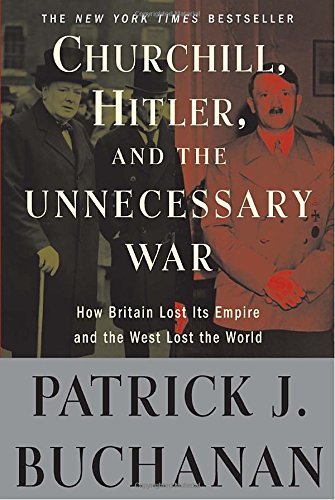
Patrick J. Buchanan is the author of “Nixon’s White House Wars: The Battles That Made and Broke a President and Divided America Forever.”

Copyright 2021 Creators.com.

Industrial-Scale Election Fraud–Did it Happen ?

I’ve read pieces from congresspeople, CEOs of tech companies, from hacks on television (like Karl Rove) that there was no election fraud, let’s move on.

Wait just a minute.

I led the team that built the fraud detection engine for the largest online auction house on the planet. They were on the front page of USA Today because some mother never received that gift for her child after sending in her last dollar. The auction house publicly said their multi-billion-dollar brand was in jeopardy.

I led industrial-scale fraud investigations in the biggest of the big leagues, and proved fraud.

Cyberauction fraud is really complicated. A perp runs a scam where they sell a computer, for instance, get paid and ship the product. They do this for weeks, building trust. Then they sell 20 computers, keep the dough, ship nothing, and off they go.

What can the auction house do?

They kick the perp off the site. What does the perp do? He changes his name, credit card, mailing address, every bit of information about himself and rejoins as a new, clean seller. And another bunch of customers gets screwed!

The Secret Service, the FBI, about every fraud detection company tried to solve a problem where the perp changed every identifier thus left no trail. No pattern recognition. No matching on any field. Neural net = zero. Nothing.

Well, my team built a cyber-fraud technology and solved the problem. We broke insurance fraud rings where the insurance firm’s 30-person, police trained, 25-year experienced fraud team said there was no fraud. The funniest example is where we flagged a doctor, the recipient of a decade’s worth of six figure checks from this insurer. The fraud team said the guy was clean. Nothing to see here!

The CEO, sitting at the head of the board room table looked at us. We smiled. We then showed the address to which they had sent several million dollars was a federal prison.

We were hired by most of the top 10 property and casualty insurance firms to find fraud they could not find any other way, fraud that their expert teams said did not exist. It did, at industrial scale.

We quickly learned fraud is icky, unsightly, uncomfortable and those with a vested interest in not finding it, because they couldn’t, denied it. Happens all the time.

My team and I know industrial-level fraud and I can tell you with 100% certainty that the 2020 presidential election had massive, organized, discoverable fraud in most of the swing states.

How do I know this in the face of virtually every media company denying significant fraud?

Let’s do a fraud look-see, actually several, together.

Industrial fraud in insurance, Medicaid, or credit cards never starts with a flashing red light with letters, in English and Spanish, saying fraud, look here! There must be a starting point and the starting point is often only one or two cases that lead to tens of thousands of incidents across hundreds of participants.

Let’s see if there are any starting points here:

Jesse, a truck driver, has a semi-tractor rig delivering dogfood to pet shops across America. This particular brand is the expensive stuff yuppies buy for their Schnoodle dogs bred by crossing Schnauzers and Poodles and costing about $1,000. Only the best for Pierre.

Jesse, our truck driver, sees something sketchy. He has been driving this route for months, yet something this day is different. Jesse looks into the truck and sees the labels do not quite look the same. He reports it to his boss, then to the trucking service, and nobody does anything.

Jesse, a dog lover, goes to PETA and they do a video. Jesse signs an affidavit under penalty of perjury, gets on TV for a couple of days saying this dog food may not be the real thing. It might be fake, from China. He just wants someone, anyone to look into it.

Jesse, a dog lover, goes to PETA and they do a video. Jesse signs an affidavit under penalty of perjury, gets on TV for a couple of days saying this dog food may not be the real thing. It might be fake, from China. He just wants someone, anyone to look into it.

Dog lovers across America would stop buying that dog food until the company had an open, public investigation. The board of directors would probably fire the CEO if an investigation showed she was not all over this possible claim. Sales would collapse. No major pet chain would carry the dog food until everything was investigated.

Ya think maybe there would be a full-scale investigation? Do you think people would stand up and say: “…there is no evidence! There is no reason to investigate!”

A third-tier media company obtains the laptop from the cocaine addicted, meth-addled son of the Borthreed Aerospace CEO Joe Asterisk. It is legally secured from a computer repair store where it was abandoned.

On the laptop, there are emails saying that the CEO Asterisk and his loser son have done a deal with China and the “Big Guy,” probably the CEO, gets 10% of the take.

What would the board do?

Faster than a flying bullet they suspend the CEO, call in the FBI, bring in an outside law firm, and publish every detail of every discovery. The FAA, FBI, state agencies, foreign governments launch investigations. Every email on that laptop would become public.

For either of these examples, who would stand up in public and say: “Where’s the evidence?”

You just love that new Asian fusion place in downtown, on that gentrified block where the African Americans have been pushed out so Millennial snowflakes can open coffee shops.

One night you are watching TV, that bottle of Chardonnay at hand. You see a TV crew in front of the restaurant. The health inspectors are there for a sanitary inspection. But the employees are putting cardboard over the windows so the inspectors cannot see in. You hear the manager say: you can look in, through the edge of the cardboard, but you must stand 30 feet back. COVID policy!

Do you think this may be a starting point? Are you going to call in there for your next takeout meal?

One more: It’s a local school board election. At risk is the charter school your entire neighborhood loves. It is the only hope for your kids getting into college.

The night of the election, they announce there is a water main break and everyone needs to leave.

A few days later, you learn there was no water main break. Then a video comes out showing they were taking ballots from under the tables and tossing them, unexamined, unvetted, and unwitnessed, in with all the rest.

Oh, the charter school was voted to be closed. There was overwhelming support for shutting it down. Everyone you know wanted it open, but alas, no, it is to be closed. The people have spoken.

Would you believe in that result? Would you be cool with “…no evidence of fraud here. Nothing to see.”

So, in the 2020 Presidential election, where is the evidence of fraud?

All you have to do is change the context to dog food labels, to the local restaurant health inspector, to Borthreed Aerospace, or the school election — in that context, yes, there was enough obvious fraud to do investigations at industrial scale.

In these examples, there was enough evidence to destroy CEO careers, shut manufacturing plants down, upend careers.

After you get your starting point, and they are everywhere, the first question you should ask is: “who benefits from denying fraud with all these obvious starting points?”

You know you would not buy that dog food, you would not eat at that restaurant, you would not buy Borthreed stock, and you would not believe that charter school vote without complete investigations.

So why do you believe Karl Rove?

Jay Valentine’s web site is http://www.JayValentine.com

Philosophy of Capitalism

“I am not primarily an advocate of capitalism, but of egoism; and I am not primarily an advocate of egoism, but of reason. If one recognizes the supremacy of reason and applies it consistently, all the rest follows. This—the supremacy of reason—was, is and will be the primary concern of my work, and the essence of Objectivism.”

“…Reason in epistemology leads to egoism in ethics, which leads to capitalism in politics.”

— Ayn Rand*

Capitalism is commonly taken as an economic system, that can be grafted onto any political system. Yet, economics is not a self-evident primary. An economic system (in our case, the free-market) does not exist in a vacuum but, like a house or skyscraper, is an expression of a specific intellectual foundation — a philosophy.

What is philosophy?

One’s view of what is the proper social system for human beings depends on how one views the nature of existence, how one grasps the world one lives in, and how one views human nature. It depends on one’s philosophy — an integrated, systematic view of existence.

According to philosopher Ayn Rand, philosophy consists of three primary branches:

  • Metaphysics is the branch of philosophy that studies the nature of reality (that which is); it answers the question: “what kind of world do I live in?”
  • Epistemology (epistēmē is the Greek word for knowledge) is the branch of philosophy that studies the nature and means of human knowledge, of grasping reality; it answers the question: “how do I know it?”
  • Ethics is the branch of philosophy that defines a code of values that one should live by. It answers the question: “what should I do?”

The answers to these fundamental questions will, in part, determine the answers to the branch of philosophy known as politics.

  • Politics is the application of ethics to social issues. Politics seeks to answer, “how should one live with other individuals in an organized society?”

The importance of philosophy

Philosophy is important. It is not a mere plaything of ivory-tower professors or a “…bauble of the intellect, ” writes Professor Leonard Peikoff,

“…but a power from which no man can abstain. Anyone can say that he dispenses with a view of reality, knowledge, the good, but no one can implement this credo. The reason is that man, by his nature as a conceptual being, cannot function at all without some form of philosophy to serve as his guide.” [1]

If one’s philosophy is that one lives in a world of miracles (religion), where truth is by revelation (faith), and morality means sacrificing oneself for others (altruism), one’s politics will be very different from someone who believes in a world of cause and effect (science), that one can understand rationally (reason), to pursue and achieve personal happiness (self-interest).

To concretize this point further, observe that if one’s philosophy is that of a religious fundamentalist then abortion is murder, and a fetus has the right to live in a woman’s body irrespective of the woman’s thoughts on the subject. Life comes from God, and what God giveth let no man (or women) take away.

If one is an advocate of statism, then the individual has no rights but lives by permission of the state, and the government can revoke (alienate) this permission at whim. The right to abortion becomes a matter of dictatorial vote, i.e., political might makes ethical right. The state may force one to have an abortion or prevent one from having an abortion as it sees fit for the “good of society.”

Observe that on this political issue, the answer is not determined purely by “playing politics,” but is justified by one’s fundamental philosophy. ‘

Politics is an inseparable branch of the tree of philosophy. Separate a fruitful branch from the tree of good philosophy, and graft it onto the tree of bad philosophy and that once fruitful branch will wither, crumble and die.

Philosophy is a matter of life and death.

It is on the withered cross of anti-reason, altruistic (self-sacrificial), collectivist philosophy that capitalism is being crucified.

The philosophy of anti-capitalism

In philosopher Ayn Rand’s view, the reason why capitalism is attacked and misrepresented (even by its alleged defenders) is because of the anti-enlightenment philosophies that dominate our culture:

“It is often asked: Why was capitalism destroyed in spite of its incomparably beneficent record? The answer lies in the fact that the lifeline feeding any social system is a culture’s dominant philosophy and that capitalism never had a philosophical base. It was the last and (theoretically) incomplete product of an Aristotelian influence. As a resurgent tide of mysticism engulfed philosophy in the nineteenth century, capitalism was left in an intellectual vacuum, its lifeline cut. Neither its moral nature nor even its political principles had ever been fully understood or defined. Its alleged defenders regarded it as compatible with government controls (i.e., government interference into the economy), ignoring the meaning and implications of the concept of laissez-faire. Thus, what existed in practice, in the nineteenth century, was not pure capitalism, but variously mixed economies. Since controls necessitate and breed further controls, it was the statist element of the mixtures that wrecked them; it was the free, capitalist element that took the blame.

“Capitalism could not survive in a culture dominated by mysticism and altruism, by the soul-body dichotomy and the tribal premise. No social system (and no human institution or activity of any kind) can survive without a moral base. On the basis of the altruist morality, capitalism had to be—and was—damned from the start.” [2]

It is the altruist-collectivist moral base that capitalism must be “saved” from.

Laissez-faire capitalism is a political-economic system that requires a specific philosophical framework. If capitalism is built upon an improper philosophical base, it will be like a towering skyscraper built on quicksand.

The philosophy of capitalism

What is the proper philosophical base? In the words of the American philosopher Ayn Rand:

“It is . . . by reference to philosophy that the character of a social system has to be defined and evaluated. Corresponding to the four branches of philosophy, the four keystones of capitalism are: metaphysically, the requirements of man’s nature and survival—epistemologically, reason—ethically, individual rights, politically, freedom.” [3]

This site holds that the philosophy that provides a proper foundation for capitalism is Ayn Rand’s revolutionary philosophy: Objectivism.

Objectivism holds that one should live by one’s mind and efforts, in the pursuit of one’s rational self-interest, neither sacrificing oneself to others, nor sacrificing others to oneself (ethics); that one can understand reality by reason and logic (epistemology), as one lives in a world of cause and effect where there are no contradictions (metaphysics).

A complete, systematic presentation of Objectivism is beyond the scope of this site. For a comprehensive presentation of Rand’s philosophy, I recommend Objectivism: The Philosophy of Ayn Rand by Dr. Leonard Peikoff.

How Does One Apply Rational Egoism in a Mixed Economy, Welfare State? BY JAANA WOICESHYN | JAN 15, 2021 | BUSINESS

While the welfare state cannot be transformed into a free-market system overnight, businesspeople can help by speaking up (in forums open to them) when restrictions on freedom of business are being proposed by government and other groups.

I recently taught a short course introducing business ethics and rational egoism to Executive MBA students. One student observed that it would be easier to apply egoist principles in free markets where acting on such principles, for example, rationality, productiveness, and justice, would be rewarded and profit-making valued. But, the student asked, how does one apply rational egoism in a mixed economy, the prevailing welfare state system?

The student’s question was apt: the welfare state system makes it challenging for business to pursue its (owners’) self-interest—long-term profit maximization—because the rational egoist moral principles are at odds with the dominant moral code on which the welfare state is founded: altruism. It is a code that guides putting others’ interests always ahead of one’s own. This contrasts with the free-market system—capitalism—that is based on in rational egoism. This code advocates the pursuit of self-interest that allows only voluntary and mutually beneficial interactions and renounces the initiation of physical coercion against others.

In a welfare state, many investors, customers, employees, and the government expect business to act altruistically at least some of the time. The business is expected to sacrifice profits for the causes that these stakeholders favor, such as fighting climate change, reducing income inequality, and for various government programs that support them. In contrast, in capitalism, business is expected to focus on creating material values on which people’s lives depend and on trading these values for profit.

The social pressures to conform to others’ altruistic expectations can be significant in a welfare state system and can lead to business appeasing them. As an example, in 2019, the Roundtable of CEOs of 200 major corporations re-defined the purpose of the corporation from creating wealth for its shareholders to serving all its stakeholders equally, including “communities.”

However, if business wants to perform its proper—necessary—role as the creator of material values, such appeasement will not do. It must pursue its long-term self-interest, guided by the rational egoist principles. For that, business must claim the moral high ground. This requires recognizing that business is a tremendous force for good in society. Businesses produce the goods and services that not only make people’s lives possible, but make them better: from food to medicine to energy and beyond. Businesses do this by trading freely with their employees, customers, and suppliers, without violating anyone’s rights.

Understanding that business is a moral endeavor which enhances human life gives businesspeople the courage to defend their companies’ profit-maximization against demands for altruistic sacrifice for the sake of social and environmental goals. A good recent example of moral clarity and courage is Adam Anderson, CEO of Innovex Downhole Solutions in Texas, who wrote an open letter defending his company and industry to North Face. The latter had refused an order of 400 jackets with Innovex logo. North Face did not want to sell branded products to companies in the oil and gas industry because of their CO2 emissions (despite the fact that North Face’s products are derived from oi).

In a welfare state, it may not be always possible for business to pursue self-interest by applying the rational egoist principles, or to benefit from doing so. In such a system, the government controls the economy and business to varying degrees. Governments can prevent the creation of material values altogether, for example, by banning the production of fossil fuels, construction of oil pipelines, or operations of new businesses that disrupt existing industries (such as ride-sharing services Uber and Lyft). In addition, welfare state governments use cronyism to grant favors (exclusive contracts, tax breaks, coercive monopolies, etc.) to some businesses, thus disadvantaging others. Governments also curtail companies’ profits through regulations and welfare programs.

Therefore, business claiming the moral high ground is not enough for it to be able to pursue rational self-interest. It must demand also freedom to operate: being left alone by the government. But once the morality of business has been asserted, this is easier to do. Because the mixed economy welfare state is unstable, always being pulled to the opposite directions of its main elements—government control and freedom, it is possible to help move it to either direction.

While the welfare state cannot be transformed into a free-market system overnight, businesspeople can help by speaking up (in forums open to them) when restrictions on freedom of business are being proposed by government and other groups. This way, business can move the needle towards more freedom, and therefore, towards more value creation, more prosperity, and more human wellbeing.

The Wisdom of Ayn Rand on Pragmatism

[The Pragmatists] declared that philosophy must be practical and that practicality consists of dispensing with all absolute principles and standards—that there is no such thing as objective reality or permanent truth—that truth is that which works, and its validity can be judged only by its consequences—that no facts can be known with certainty in advance, and anything may be tried by rule-of-thumb—that reality is not firm, but fluid and “indeterminate,” that there is no such thing as a distinction between an external world and a consciousness (between the perceived and the perceiver), there is only an undifferentiated package-deal labeled “experience,” and whatever one wishes to be true, is true, whatever one wishes to exist, does exist, provided it works or makes one feel better.

A later school of more Kantian Pragmatists amended this philosophy as follows. If there is no such thing as an objective reality, men’s metaphysical choice is whether the selfish, dictatorial whims of an individual or the democratic whims of a collective are to shape that plastic goo which the ignorant call “reality,” therefore this school decided that objectivity consists of collective subjectivism—that knowledge is to be gained by means of public polls among special elites of “competent investigators” who can “predict and control” reality—that whatever people wish to be true, is true, whatever people wish to exist, does exist, and anyone who holds any firm convictions of his own is an arbitrary, mystic dogmatist, since reality is indeterminate and people determine its actual nature.

Epistemologically, their dogmatic agnosticism holds, as an absolute, that a principle is false because it is a principle—that conceptual integration (i.e., thinking) is impractical or “simplistic”—that an idea which is clear and simple is necessarily “extreme and unworkable.” Along with Kant, their philosophic forefather, the pragmatists claim, in effect: “If you perceive it, it cannot be real,” and: “If you conceive of it, it cannot be true.”

What, then, is left to man? The sensation, the wish, the whim, the range and the concrete of the moment. Since no solution to any problem is possible, anyone’s suggestion, guess or edict is as valid as anyone else’s—provided it is narrow enough.

To give you an example: if a building were threatened with collapse and you declared that the crumbling foundation has to be rebuilt, a pragmatist would answer that your solution is too abstract, extreme, unprovable, and that immediate priority must be given to the need of putting ornaments on the balcony railings, because it would make the tenants feel better.

There was a time when a man would not utter arguments of this sort, for fear of being rightly considered a fool. Today, Pragmatism has not merely given him permission to do it and liberated him from the necessity of thought, but has elevated his mental default into an intellectual virtue, has given him the right to dismiss thinkers (or construction engineers) as naive, and has endowed him with that typically modern quality: the arrogance of the concrete-bound, who takes pride in not seeing the forest fire, or the forest, or the trees, while he is studying one inch of bark on a rotted tree stump.

By itself, as a distinctive theory, the pragmatist ethics is contentless. It urges men to pursue “practicality,” but refrains from specifying any “rigid” set of values that could serve to define the concept. As a result, pragmatists—despite their repudiation of all systems of morality—are compelled, if they are to implement their ethical approach at all, to rely on value codes formulated by other, non-pragmatist moralists. As a rule the pragmatist appropriates these codes without acknowledging them; he accepts them by a process of osmosis, eclectically absorbing the cultural deposits left by the moral theories of his predecessors—and protesting all the while the futility of these theories.

The dominant, virtually the only, moral code advocated by modern intellectuals in Europe and in America is some variant of altruism. This, accordingly, is what most American pragmatists routinely preach . . .

In politics, also, pragmatism presents itself as opposed to “rigidity,” to “dogma,” to “extremes” of any kind (whether capitalist or socialist); it avows that it is relativist, “moderate,” “experimental.” As in ethics, however, so here: the pragmatist is compelled to employ some kind of standard to evaluate the results of his social experiments, a standard which, given his own self-imposed default, he necessarily absorbs from other, non-pragmatist trend-setters . . . When Dewey wrote, the political principle imported from Germany and proliferating in all directions, was collectivism.

The two points central to the pragmatist ethics are: a formal rejection of all fixed standards—and an unquestioning absorption of the prevailing standards. The same two points constitute the pragmatist approach to politics, which, developed most influentially by Dewey, became the philosophy of the Progressive movement in this country (and of most of its liberal descendants down to the present day)

The American people were led to embrace the pragmatist philosophy not because of its actual, theoretical content (of which they were and remain largely ignorant), but because of the method by which that content was presented to them. In its terminology and promises, pragmatism is a philosophy calculated to appeal specifically to an American audience . . . .

The pragmatists present themselves as the exponents of a distinctively “American” approach, which consists in enshrining the basic premises of [German philosophy] while rejecting every fundamental idea, from metaphysics to politics, on which this country was founded. Most important of all, the Americans wanted ideas to be good for something on earth, to have tangible, practical significance; and, insistently, the pragmatists stress “practicality,” which, according to their teachings, consists in action divorced from thought and reality.

The pragmatists stress the “cash value” of ideas. But the Americans did not know the “cash value” of the pragmatist ideas they were buying. They did not know that pragmatism could not deliver on its promise of this-worldly success because, at root, it is a philosophy which does not believe in this, or any, world.

When the Americans flocked to pragmatism, they believed that they were joining a battle to advance their essential view of reality and of life. They did not know that they were being marched in the opposite direction, that the battle had been calculated for a diametrically opposite purpose, or that the enemy they were being pushed to destroy was: themselves.

The Making of the U.S. Empire at the Dawning of Its End

As the Exceptional Empire gets ready to brave a destructive – and self-destructive – new cycle, with dire, unforeseen consequences bound to reverberate across the world, now more than ever it is absolutely essential to go back to the imperial roots.

The task is fully accomplished by Tomorrow, the World: The Birth of U.S. Global Supremacy , by Stephen Wertheim, Deputy Director of Research and Policy at the Quincy Institute for Responsible Statecraft and a research scholar at the Saltzman Institute of War and Peace Studies at Columbia University.

Here, in painstaking detail, we can find when, why and especially who shaped the contours of US “internationalism” in a roomful of mirrors always disguising the real, ultimate aim: Empire.

Wertheim’s book was superbly reviewed by Prof. Paul Kennedy. Here we will concentrate on the crucial plot twists taking place throughout 1940. Wertheim’s main thesis is that the fall of France in 1940 – and not Pearl Harbor – was the catalyzing event that led to the full Imperial Hegemony design.

This is not a book about the U.S. industrial-military complex or the inner workings of American capitalism and finance capitalism. It is extremely helpful as it sets up the preamble to the Cold War era. But most of all, it is gripping intellectual history, revealing how American foreign policy was manufactured by the real flesh and blood actors that count: the economic and political planners congregated by the arch-influential Council on Foreign Relations (CFR), the conceptual core of the imperial matrix.

Behold Exceptionalist nationalism

If just one phrase should capture the American missionary drive, this is it: “The United States was born of exceptionalist nationalism, imagining itself providentially chosen to occupy the vanguard of world history”. Wertheim nailed it by drawing from a wealth of sources on exceptionalism, especially Anders Stephanson’s Manifest Destiny: American Expansion and the Empire of the Right.

The action starts in early 1940, when the State Dept. formed a small advisory committee in collaboration with the CFR, constituted as a de facto proto-national security state.

The CFR’s postwar planning project was known as the War and Peace Studies, financed by the Rockefeller Foundation and boasting a sterling cross-section of the American elite, divided into four groups.

The most important were the Economic and Financial Group, headed by the “American Keynes”, Harvard economist Alvin Hansen, and the Political Group, headed by businessman Whitney Shepardson. CFR planners were inevitably transposed to the core of the official postwar planning committee set up after Pearl Harbor.

A crucial point: the Armaments Group was headed by none other than Allen Dulles, then just a corporate lawyer, years before he became the nefarious, omniscient CIA mastermind fully deconstructed by David Talbot’s The Devil’s Chessboard.

Wertheim details the fascinating, evolving intellectual skirmishes along the first eight months of WWII, when the prevailing consensus among the planners was to concentrate on the Western Hemisphere only, and not indulge in “balance of power” overseas adventures. As in let the Europeans fight it out; meanwhile, we profit.

The fall of France in May-June 1940 – the world’s top army melting down in five weeks – was the game-changer, much more than Pearl Harbor 18 months later. This is how the planners interpreted it: if Britain were the next domino to fall, totalitarianism would control Eurasia.

Wertheim zeroes in on the defining “threat” for the planners: Axis dominance would prevent the United States “from driving world history. Such a threat proved unacceptable to U.S. elites”. That’s what led to an expanded definition of national security: the U.S. could not afford to be simply “isolated” within the Western Hemisphere. The path ahead was inevitable: to shape world order as the supreme military power.

So it was the prospect of a Nazi-shaped world order – and not U.S. security – that shook foreign policy elites in the summer of 1940 to build the intellectual foundations of global U.S. hegemony.

Of course there was a “lofty ideal” component: the U.S. would not be able to fulfill its God-given mission to lead the world towards a better future. But there was also a much more pressing practical matter: this world order might be closed to liberal U.S. trade.

Even as the tides of war changed afterwards, the interventionist argument ultimately prevailed: after all, the whole of Eurasia could (italics in the book) eventually, fall under totalitarianism.

It’s always about “world order”

Initially, the fall of France forced Roosevelt’s planners to concentrate on a minimum hegemonic area. So by midsummer 1940, the CFR groups, plus the military, came up with the so-called “quarter sphere”: Canada down to northern South America.

They were still assuming that the Axis would dominate Europe and parts of the Middle East and North Africa. As Wertheim notes, “American interventionists often portrayed Germany’s dictator as a master of statecraft, prescient, clever and bold.”

Then, at the request of the State Dept., the crucial CFR’s Economic and Financial Group worked feverishly from August to October to design the next step: integrating the Western Hemisphere with the Pacific Basin.

That was a totally myopic Eurocentric focus (by the way, Asia barely registers on Wertheim’s narrative). The planners assumed that Japan – even rivaling the US, and three years into the invasion of mainland China – could somehow be incorporated, or bribed into a non-Nazi area.

Then they finally hit the jackpot: join the Western Hemisphere, the British empire and the Pacific basin into a so-called “great residual area”: that is, the entire non-Nazi dominated world except the USSR.

They found out that if Nazi Germany would dominate Europe, the U.S. would have to dominate everywhere else (italics mine). That was the logical conclusion based on the planners’ initial assumptions.

That’s when U.S. foreign policy for the next 80 years was born: the U.S. had to wield “unquestionable power”, as stated in the CFR planners “recommendation” to the State Dept., delivered on October 19 in a memorandum titled “Needs of Future United States Foreign Policy”.

This “Grand Area” was the brainchild of the CFR’s Economic and Financial Group. The Political Group was not impressed. The Grand Area implied a post-war peace arrangement that was in fact a Cold War between Germany and Anglo-America. Not good enough.

But how to sell total domination to American public opinion without that sounding “imperialistic”, similar to what the Axis was doing in Europe and Asia? Talk about a huge P.R. problem.

In the end, U.S. elites always came back to the same foundation stone of American exceptionalism: should there be any Axis supremacy in Europe and Asia, the U.S. manifest destiny of defining the path ahead for world history would be denied.

As Walter Lippmann succinctly – and memorably – put it: “Ours is the new order. It was to found this order and to develop it that our forefathers came here. In this order we exist. Only in this order can we live”.

That would set up the pattern for the subsequent 80 years. Roosevelt, only a few days after he was elected for a third term, stated it was the United States that “truly and fundamentally…was a new order”.

It’s chilling to be reminded that 30 years ago, even before unleashing the first Shock and Awe over Iraq, Papa Bush defined it as the crucible of a “new world order” (incidentally, the speech was delivered exactly 11 years before 9/11).

Henry Kissinger has been marketing “world order” for six decades. The number one U.S foreign policy mantra is “rules-based international order”: rules, of course, set unilaterally by the Hegemon at the end of WWII.

American Century redux

What came out of the 1940 policy planning orgy was encapsulated by a succinct mantra featured in the legendary February 17, 1941 essay in Life magazine by publishing mogul Henry Luce: “American Century”.

Only six months earlier planners were at best satisfied with a hemispheric role in an Axis-led world future. Now they went winner takes all: “complete opportunity of leadership”, in Luce’s words. In early 1941, months before Pearl Harbor, the American Century went mainstream – and never left.

That sealed the primacy of Power Politics. If American interests were global, so should be American political and military power.

Luce even used Third Reich terminology: “Tyrannies may require a large amount of living space. But Freedom requires and will require far greater living space than Tyranny.” Unlike Hitler’s, the unbounded ambition of American elites prevailed.

Until now. It looks and feels like the empire is entering a James Cagney Made it, Ma. Top of the World! moment – rotting from within, 9/11 merging into 1/6 in a war against “domestic terrorism” – while still nurturing toxic dreams of imposing uncontested global “leadership”.

Pepe Escobar, UNZ Review

(Republished from Asia Times by permission of author or representative)

THOU SHALT NOT STEAL: PLUNDER, THEFT, AND STICKY FINGERS

The cunning man steals a horse, the wise man lets him alone.”[1]

It had been less than three months since Congress had adopted a Declaration of Independence, but George Washington was already warning that the Articles of War governing the behavior of troops was in desperate need of an update, “otherwise the Army, but for the name, might as well be disbanded.”

In a lengthy letter to the president of congress, John Hancock, Washington bemoaned the collapsing state of discipline in the Continental Army. Much of the difficulty stemmed from Congress’s well-meaning attempt at altruism. When the Second Continental Congress initially adopted the Articles of War in June 1775, legislators had endeavored to establish humane limits on punishment. In an age when some armies punished malefactors with 500 or even 1,000 lashes, Congress limited the number of lashes that could be administered to thirty-nine.

Washington, however, found that inconsistent administration of punishments only encouraged further lawless behavior. Washington informed Hancock that “For the most atrocious offences (one or two Instances only excepted) a Man receives no more than 39 Lashes, and these perhaps (thro the collusion of the Officer who is to see it inflicted) are given in such a manner as to become rather a matter of sport than punishment.”

In particular, Washington was dealing with mounting incidents of, as he likened it, “the infamous practice of Plundering.” Under the pretense of seizing Tory property, explained Washington, “no Man is secure in his effects, & scarcely in his Person . . . in order that the Villainy may be more effectually concealed, some Houses have actually been burnt to cover the theft.” Washington did his best to put a stop to the crimes, but without effectual means of punishment, he felt that “I might almost as well attempt to remove Mount Atlas.”[2]

In fact, lawmakers had already obliged. On September 20, 1776, Congress adopted revised Articles of War which increased potential floggings from thirty-nine to one hundred lashes. Additionally, the private property of the “good people of the United States” was to be shielded from theft and destruction. Wanton acts of outright plunder could be punished with death.[3]

But the Continental Army, like virtually any army in history, was regularly plagued with crimes that ranged from petty theft to dangerous violations of the articles of war such as plundering. Surviving court-martial proceedings reveal that almost anything and everything was stolen at one time or another: money, clothing, cheese, sheep, hogs, handkerchiefs, cucumbers, and pocket watches. Mundane non-violent crimes were regularly punished by flogging with the cat-o-nine-tails. More egregious violations, including violent home invasions, could result in a death sentence.

Following a particularly egregious rash of plunder and theft in the autumn of 1778, Washington gave vent to his frustrations in general orders on October 23. The commander-in-chief was “Shocked at the frequent horrible Villainies of this nature committed by the troops of late, He is determined to make Examples which will deter the boldest and most harden’d offenders—Men who are called out by their Country to defend the Rights and Property of their fellow Citizens who are abandoned enough to violate those Rights and plunder that Property deserve and shall receive no Mercy.”[4]

All of You Will be Hung

The first inklings that members of George Washington’s Life Guard had gone astray occurred on October 6, 1778, when Elijah Fisher returned to duty after a five-day pass to visit relatives. Fisher noticed that John Herrick was wearing some new clothing, and told Herrick he was glad for it, as Herrick had clearly received some money from home. “I hoped we should not be so putout for money to bye things with,” quipped Fisher, “and that you will be able to pay me that trifill you owe me (Sixteen Dollars).”

Fisher’s suspicion mounted, however when several more soldiers joined them. All of them seemed to be wearing new clothing and Fisher pressed them on the matter. “Have you had money sent you from home too?” he asked, “I fear that you have taken them some other way to git it than that.”

At that, Herrick spilled the beans. The previous night, John Herring, who possessed a special pass so that he could leave camp to secure supplies for Washington’s guard, came to the home of John Hoag, but he would not “Let him have any thing.” While he was there he caught sight of a number of items that interested him. After returning to camp, he enlisted the help of Moses Walton, Elias Brown, and John Herrick to return to Hoag’s home on a plundering expedition.

While on the way there, Herrick had second thoughts, but was threatened by the other three men. Once back at Hoag’s, the men broke into the house and had a field day, making off with silver spoons, hard currency, miscellaneous clothing and household items, as well as £450 in Continental scrip. After Fisher heard the story, he warned the four thieves that whether or not Hoag was a Tory, “If it should be found out (which such things as Robery seldim is) some or all of you will be hung.” As it turned out, it was the second robbery the men had committed.

The following day, John Stodgel, another member of Washington’s guard, happened to call at the home of Prince Howland. Howland let it be known that he had been robbed several nights before. He couldn’t identify the culprits because they had blackened their faces, but they had been wearing distinctive rounds hats with a piece of bearskin attached. It was a dead give-away that men from Washington’s Life Guard were involved. Howland asked if any of Washington’s guard was “more fuller of money than usual.” He then told Stodgel that “he Did not want any man hurt upon his account for he knew that they would be hung if they were found out.” If Stodgel could quietly arrange for the return of his goods, Howland graciously promised to hush the matter up.

John Hoag was less understanding. He arrived at camp that very day, protesting to Life Guard officers that he had been robbed. After they looked into the matter, word leaked out that Stodgel had information. When questioned by officers, Stodgel “tried to hide what he Could,” but when it became apparent that he could end up in serious trouble for simply being quiet, “he up and tells all that he knew Consarning the affare.”[5]

On October 23, the army convened several courts-martial to look into an unfortunate rash of plundering and insubordination. Forced to deal with a spate of criminal activity, the high command was clearly intent on making an example of the guilty and restoring order to the army. Herrick agreed to testify against his accomplices, but considering the weight of evidence, there was little doubt as to the verdict. Walton, Herring, and Brown were sentenced to death. Herrick was sentenced to receive “one hundred lashes on his bare back well laid on.”[6]

Ultimately, only one of the condemned, Herring, would face the noose. Walton escaped his guard soon after the court-martial. Brown, while being transported to New Milford, Connecticut, for execution, slipped away from his guards and disappeared.[7]

An Officer and a Gentleman . . . and a Toy Thief

For George Washington, one of the most outrageous incidents of theft perpetrated by his troops occurred during the middle of September 1776, when a Captain Ramsay[8] caught sight of a group of about twenty soldiers outside of Harlem loaded down with plunder. They were carrying quite a collection, including furniture, poultry, two large mirrors, kettles, kitchen utensils, china, delftware, and, oddly enough, ladies’ garments. A disgusted Ramsey “told them they had been acting exceeding wrong, and would have to answer for their conduct.”

He then exchanged words with the groups’ obvious ringleader, Ens. Matthew Macumber of Col. Paul Dudley Sargent’s Massachusetts regiment. Macumber brushed it off, telling Ramsay that he operated under the orders of Colonel Sargent and that “he had a right to take any thing outside of our lines.” Ramsay wasn’t impressed. Peeking out of Macumber’s bulging knapsack was a pair of children’s wax toys. Ramsay apparently tapped on the toys and sarcastically “jested with him on his having such a pretty sort of plunder.”

Macumber ignored him and went about his business. About that time Brigade-Major Daniel Box arrived on the scene with a handful of men intent on enforcing Washington’s orders proscribing plunder. “I ordered him to lay it down,” said Box, “or carry it back to the place he took it from.” Macumber refused, claiming that he was acting under orders from Colonel Sargent. Box persisted, identified himself, and reminded Macumber of “how express the General’ s orders were about plundering.”

The conversation rapidly turned ugly. Box, wielding a cocked pistol, ordered then men to lay down their plunder or he would fire on the first man that refused. Macumber glanced back at his men, then barked “may lads, stand to your arms and form.” Glaring at Box, Macumber then said “we’ll see who has the strongest party.” Box and his men, badly outnumbered, seem to have leapt over a fence for protection, but were surrounded. Macumber’s men were “clamorous”; several cocked their firelocks and threatened to “blow out Major Box’s brains, if he cocked his pistol again.”

Captain Ramsay, watching the whole unpleasant scene unfold, was afraid a gunfight would break out and accordingly said, “I stood on my guard.” Macumber insisted that he would take the plunder to Colonel Sargent, “who might act with them as he pleased.” Worked up into quite a dander, Macumber declared that he would rather “spill his blood” than give up his arms and plunder on the spot. With little choice, Box backed down.

Not surprisingly, Macumber faced a court-martial on September 19, “accused of plundering and robbery, and also of mutiny.” But several of his men testified on his behalf, insisting that Macumber had expressly forbidden his men to plunder, that a number of men perpetrated the deed out of his sight, and that he ordered them to return the plunder to Colonel Sargent. The court found Macumber not guilty of plundering, robbery, and mutiny, but guilty of offering violence to Major Box. He was sentenced to little more than a reprimand, and ordered to offer an apology to Box.

For his part, George Washington was less than pleased with the verdict. Clearly convinced that the weight of evidence pointed to Macumber’s guilt, the general was annoyed that too much weight had seemingly been given to the testimony of Macumber’s accomplices. “It is to be observed,” he wrote, “that the men who were to share the plunder, became the evidence for the prisoner.”

At Washington’s insistence, a second court-martial was held on September 21. Although Captain Ramsay had not testified during the first trial, his testimony at the second, paired with obvious pressure from the commander-in-chief, resulted in a reversal of the initial verdict. The presiding officers found Macumber guilty of plundering and mutiny and expressed their opinion “that the prisoner be cashiered for said offence; and he is accordingly cashiered.”[9]

In a letter reporting on the matter to John Hancock, Washington expressed disgust at petty thievery countenanced by officers, and that Macumber had been caught with stolen goods “which one would think, could be of no use to him.”[10]

Grand Theft Goose

Military table fare during the Revolution could be somewhat unappetizing, an indignity which Capt. John Baptist Allen was disinclined to endure. A company commander in the 1st Canadian Regiment, Allen’s military career met an ignominious end due to the sordid theft of a hapless goose.

The tragic saga unfolded when Sgt. Zachariah Holsapple appeared in camp bearing a plump goose. Lt. Andrew Peppin asked him where he got it. Holsapple claimed that he purchased the bird about three miles from camp. Unconvinced, Peppin asked if “he did not steal it.” Holspapple denied stealing the bird, but remained under a cloud of suspicion.

The sergeant then offered the bird for sale to his commanding officer. Clearly licking his lips, Allen inquired where the goose came from. According to Holsapple’s later testimony, he openly admitted that he stole it a mile and a half outside of camp and wanted a dollar for it. Allen readily agreed to the purchase, but apparently paid Holspapple with a half-pint of rum from the company stores. Although court records fail to indicate the ultimate fate of the goose, it can be safely assumed that Allen devoured it.

Despite the complete destruction of the evidence, a suspicious Ens. John Gates looked into the incident and had Holsapple placed under arrest. According to Gates, Holspapple confessed to the theft and implicated Captain Allen in receiving stolen goods. Shockingly, when Holspapple was given permission to have a private meeting with Allen, he offered two more geese for sale. A voracious Allen reportedly admitted that he’d love to purchase the birds, but was afraid that “he should be found out” and that his fellow officers “would be offended with him.”

Indeed they were. Although Allen had a reputation for bravery under fire, he also had a checkered history that seems to have nettled his subordinates. The accusations had included drunkenness, drunkenness while on duty, and drunkenness with enlisted men. His gastro-felonious purchase of the goose was simply the last straw.

Allen ultimately faced a court-martial for “purchasing a Goose of Serjt Holsapple, when it appeared, he must have known, or suspected the said goose was stolen.” After Holsapple, Gates, and Peppin testified against Allen, the verdict was harsh and to the point. The officers who made up the court found Allen to be “of a notorious bad character and of opinion that the stealing of the Geese was under his direction, & that he be cashiered with infamy.”[11]

On September 26, Allen penned a desperate letter to Maj. Gen. John Sullivan in an attempt to salvage his commission and his honor. Insistent that he did not deserve “Such a disgrace,” an indignant Allen claimed that he had been “Condamn’d without having the opportunity of producing what Evidances I had in my favour.” In truth, it was an unfortunate situation. Allen explained that “I have left my Wife, Childrin and all my properties in Canada to pursue the Cause of America.” After asking for another court-martial to be convened so that he could produce further evidence, Allen assured Sullivan that “I have not deserved such a disgrace.”[12]

Higher authorities would have none of it. When Congress received Allen’s appeal, it was rejected out of hand.[13] The commander-in-chief was of the same mind, and in a letter to Sullivan explaining his thinking, George Washington refused to intervene. “The evidence so materially contradicts” Allen’s defense, explained Washington, “that I cannot see any objections to confirming the Sentence.”[14]

Check This Out

The crack troops of the Delaware Regiment were easily identified by their distinctive blue uniforms faced in red, a color scheme that was apparently inadequate for one unlucky soldier who possessed flashier stylistic sensibilities. On March 1, 1777, a regimental court-martial was convened to try James Pemberton, accused of stealing an irresistible swatch of checked linen.

While on march earlier that spring, Ens. Griffith Jordan noticed that Pemberton was headed down the wrong road and called him back. As a hesitant Pemberton returned to the column, Pvt. James Moones noticed that Pemberton was fumbling with a piece of checked cloth that he was trying to hide under his uniform coat. In an apparent attempt to conceal the conspicuous bulge of cloth, Pemberton attempted to shift the goods around to the backside of his coat. Unimpressed by the ploy, Moones advised Pemberton to hide the cloth in the snow or he would be found out. In fact, Pemberton did a poor job of hiding his treasure. Pvt. Hugh Coffel also noticed the cloth, and observed that it was brand new material, with “fringes or thrumbs on it, as is common from the loom.”

At his court-martial, Pemberton claimed that he simply had an old checked shirt and that “he had nothing with him that he was afraid of being detected with.” Another soldier, Cornelius Grimes, testified that Pemberton “told him” that he owned a checked shirt, but apparently hadn’t seen it.

The officers who tried the case weren’t impressed with the defense and found Pemberton guilty, sentencing him to “receive thirty nine lashes on his bare back well laid on with the cat o nine tails; & also to make restitution for the linen.”[15]

Blaze of Glory

The recollections of aged revolutionary veterans, often recorded decades after the war, are generally not considered as entirely reliable. The passage of time can serve to cloud memories, conflate precise facts, and exaggerate personal experience. But for the history of any war, veterans’ accounts can record priceless glimpses of the day-to-day minutia of soldiering that would otherwise be lost to history.

On October 8, 1832, Ohio resident and Virginia veteran John Hutt applied for a pension for his Revolutionary War service. Hutt gave a lengthy and detailed account of his service, which was largely in a Virginia state artillery outfit. Hutt’s unit was eventually attached to an infantry regiment under the command of Lt. Col. Charles Porterfield in Nathanael Greene’s southern army, and he later saw service in the state militia during the siege of Yorktown. Hutt certainly didn’t exaggerate his own exploits, bluntly explaining that although he heard “a few whistling bullets” when he was stationed Gloucester Point, “I never was in any battle but marching.”

Near the end of his pension application, Hutt left a curious anecdote regarding his service in the southern theater. The fantastic story might be too good to be true, but nevertheless records a humorous glimpse at Revolutionary War campfire gossip.

Another tale and a part I know to be a fact that a cannon was fired at a late hour of one night while Porterfield commanded and was encamped on a dense settlement of Tories. It was said to alarm and awe them, a report next morning spread abroad that one of Col Porterfield’s regiment had stolen a shirt and trousers and for safe keeping had put them in the gun that was fired. The wide spreading sheet of flaming light spread over the encampment and the loss of the soldier’s shirt and trousers was the cause of much sport and laughter amongst the soldiers in camp.[16]

Joshua Shepherd, Journal of the American Revolution

Thoughts on the First “Presidency” of the Post-American Republic

America has come full circle. Before 1776, the government was the individual’s adversary. After the Declaration of Independence and later the Bill of Rights, the government became the champion of the individual–his rights to life, liberty, property and the pursuit of happiness. This was the theory, and often the practice. The sovereignty of the individual was the gold standard not just of government, but of a culture that embraced and cherished freedom and happiness. Now, both the theory and the practice are gone. Look at those loathsome, sneering sociopaths with the power they never could have obtained in a better society. They are your adversaries, now and until a similar transformation such as that of 1776-1787 recurs, if and when it ever does. We are honored to have known the rare burst of freedom that America once was; even if we only knew that glorious freedom in its twilight.

Be FOR individualism; not socialism.
Be FOR freedom; not totalitarianism.
Be FOR rationality; not warped “wokeness”.
Be FOR a strong defense; not wars to keep defense contractors happy.
Be FOR capitalism — unhampered, free market capitalism; not big business benefitted by lockdowns at the expense of small business.
Be FOR freedom of speech; and the more they tell you to shut up, the more loudly you should say: GO TO HELL.
Stand for what’s good, and true. That’s the best way to defeat evil. Just let it wither.
#NotMyDictatorship

If the federal government will not enforce individual rights, we will have to find STATES that will.

“The liberties of our country, the freedoms of our civil Constitution are worth defending at all hazards; it is our duty to defend them against all attacks. We have received them as a fair inheritance from our worthy ancestors. They purchased them for us with toil and danger and expense of treasure and blood. It will bring a mark of everlasting infamy on the present generation – enlightened as it is – if we should suffer them to be wrested from us by violence without a struggle, or to be cheated out of them by the artifices of designing men.”
— Samuel Adams, American founder

Michael J. Hurd, Daily Dose of Reason