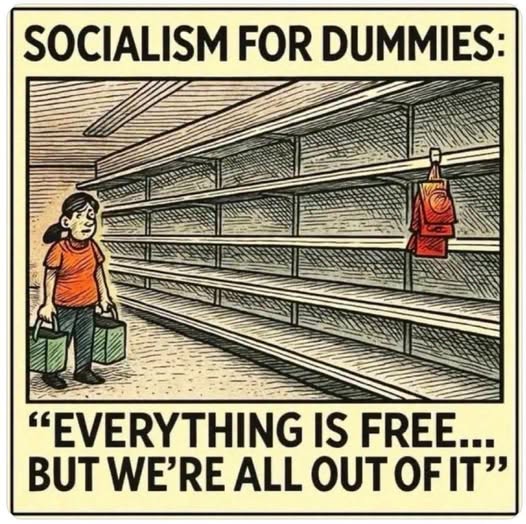
I am an eyewitness to the Grand Conspiracy against President Trump, which started in 2015…someone in the Fox leadership ordered that my interview not be aired. The full interview was never aired. Someone blocked it…the election was one year away.

October 27, 2019

I flew to NYC at my own expense to give very important testimony to the American people on Maria Bartiromo’s show. I stayed in a hotel near the studio, again at my own expense. This was during the Special Counsel Durham investigation, which I assisted.

I am an eyewitness to the Grand Conspiracy against President Trump, which started in 2015, directed by Obama and implemented by the CIA, MI6, the FBI, and the media.

I spoke to Maria and her producers for weeks in advance to make sure they understood the importance of the story. I was not paid a cent for all the hours I spent on this. It was really important that a major network finally told the truth to the American people.

On the morning of the interview, I was driven by a car arranged by Fox. I had hair and makeup done. The interview was recorded.

Then someone in the Fox leadership ordered that my interview not be aired. After the public outcry, Maria even retweeted the demand for it to be shown. A one-minute extract was then shown weeks later behind the Fox Nation paywall.

The full interview was never aired. Someone blocked it. The presidential election was one year away.

Svetlana Lokhova @RealSLokhova, x.com

The West Faces Two Islams

A long-forecast civilizational struggle increasingly plays out not in the Middle East but in Western countries themselves.

Published in 1996, Samuel Huntington’s Clash of Civilizations predicted that, with the end of the Cold War, global conflict would center on the divide between Islamic and Western civilizations. Thirty years later, however, and a quarter-century after 9/11, the principal fault line runs through Islam itself, separating two ideological worlds.

Within Western diaspora communities, Islam has become intertwined with Third-Worldism and postcolonial theory, both of which see Western imperialism as the great evil of the modern era. Meantime, much of the Middle East and Asia has turned toward pragmatism, normalization, and acceptance of Western predominance as a geopolitical reality. The gap between these rival outlooks now exceeds the divide between Islam and the West that Huntington anticipated when his book first appeared.

After 9/11, American strategy focused on political Islam. Al-Qaeda and its eventual Islamic State offshoot, the Taliban, the Muslim Brotherhood, Hamas, Hezbollah, and Iran’s Islamic Republic differed sharply in theology and tactics but shared a revolutionary ambition to overturn the Western led order. Today, that Islamist challenge has fragmented. Al-Qaeda has splintered, the Islamic State has lost its caliphate, Egypt has outlawed the Muslim Brotherhood, and the Gulf monarchies increasingly treat Islamist movements as threats.

Iran remains the principal revolutionary holdout. The Islamic Republic defines itself through opposition to the United States and Israel while sustaining a regional network of armed proxies. Yet the foundations of that project have weakened. Hezbollah has suffered major battlefield losses, Iranian influence in Syria has contracted, nationwide protests in 2019 and 2022 exposed deep domestic disillusionment, and the ideals of the 1979 Iranian Revolution command little enthusiasm among younger generations. Tehran still exports its revolutionary ideology, but its influence across the broader Middle East continues to wane.

Much of the Middle East has chosen a different course. The Abraham Accords institutionalized security cooperation and trade with Israel. Morocco expanded ties with Jerusalem to strengthen diplomacy, defense, and economic growth. The United Arab Emirates built partnerships spanning artificial intelligence, aviation, finance, and defense. Saudi Arabia evaluates normalization through the lens of security guarantees, advanced technology, its Vision 2030 modernization program, and regional stability. Across the region, partnerships are judged less by ideology than by the capabilities they deliver.

This transformation reflects a broader shift in how Arab and Muslim states understand statecraft. Scientific discovery, industrialization, and institutional innovation have long rewarded societies that adopt the world’s most advanced technologies, regardless of their origin. Middle Eastern governments have embraced the same logic after experiencing the costs of resisting Western innovations—most notably, the Ottoman Empire’s centuries-long restriction on printing in Arabic script until 1727, which left the region lagging in the spread of knowledge long after Europe had surged ahead.

That historical stagnation gave rise to a century of Arab intellectual discourse centered on the crisis of modernity: the painful question of why Islamic societies had fallen behind the West. Thinkers such as Shakib Arslan, in works like Our Decline: Its Causes and Remedies, diagnosed cultural isolation and technological backwardness as the root of the problem and urged selective emulation of Western advances. Leading-edge technologies have become strategic assets because they determine military capability, economic competitiveness, and geopolitical influence. Leaders once legitimized through anti-Western resistance now measure success through modernization.  

Western intellectual life has followed a different trajectory. Universities interpret the Middle East through postcolonial theory, with Edward Said’s Orientalism becoming one of the field’s canonical texts. Within that framework, the Israeli–Palestinian conflict serves as the paradigmatic story of settler colonialism and resistance. After October 7, these ideas spread beyond academia into campus protests, divestment campaigns, professional associations, philanthropic organizations, and elections. Palestine became the organizing symbol for broader critiques of American influence, capitalism, and the liberal international order. Muslim identity merged with narratives of dispossession and resistance.

The consequences extend well beyond the campus. Anti-Israel activism once largely confined to Islamist organizations now operates comfortably within progressive politics. Zohran Mamdani’s appointment of Ramzi Kassem—who represented Ahmed al-Darbi after his conviction for the al-Qaeda-linked MV Limburg bombing—as New York City’s chief counsel illustrates that institutional migration. University encampments, municipal resolutions invoking “from the river to the sea,” and coalitions organized around decolonization reflect the same evolution. Revolutionary Islam now finds expression through postcolonial theory rather than religious doctrine. Iranian-aligned clerical networks in places such as Dearborn, Michigan, frame public life around opposition to American influence and solidarity with Tehran.

The same rift has hardened in Europe, where diaspora activism contrasts with the pragmatism of Middle Eastern governments. Universities and progressive institutions have embraced postcolonialism, entrenching narratives of permanent resistance and contributing to a sharp rise in anti-Semitism, particularly on British campuses, where incidents increased more than fourfold after October 7. Gulf states view these environments as incubators of radicalization. The UAE, for example, removed British universities from its state scholarship program—even though nearly 9,000 Emirati students had studied in the U.K. in recent years—while still funding study in Israel.

These trajectories suggest sustained confrontation. The version of Islam that has emerged within Western universities, activist groups, and progressive politics clashes with both the Western societies in which it operates and the Middle Eastern governments now abandoning revolutionary politics.

Three forces drive this collision. First, the opposing sides draw political legitimacy from different sources. Much diaspora activism is rooted in historical grievance, anticolonial struggle, and opposition to Western influence, producing an anti-system worldview in which cooperation with the U.S.-led order can itself signify submission or betrayal. Pragmatic Middle Eastern governments increasingly see cooperation with the United States and Israel as a means to strengthen security, attract investment, acquire technology, and accelerate economic growth. This divide now plays out across Western democracies, where boycotts, campus protests, municipal resolutions, and electoral campaigns target both Arab governments pursuing these partnerships and the Western institutions that support them.

Second, priorities have diverged between governments in the Middle East and North Africa and some of their diasporas in the West. Regional governments increasingly prioritize investment, technology, military strength, and economic growth. Saudi Arabia and the UAE, for example, are investing heavily in AI and data centers. Meantime, several pro-Palestinian movements in the West have expanded their campaigns from opposition to Israeli technology contracts to opposition to the data centers and cloud infrastructure supporting them. The divide increasingly places diaspora activism at odds with the economic and technological priorities of regional governments and complicates relations with the United States.

Third, Western institutions amplify the diaspora vision far beyond its demographic weight. Universities, philanthropic foundations, professional associations, media organizations, and segments of electoral politics have absorbed postcolonial ideas that recast Middle Eastern affairs through the lens of decolonization and racial justice. By contrast, Gulf restrictions on Islamist financing and expanding cooperation with Israel reflect a deliberate effort to contain the same ideological currents sweeping across Western public life. The United States and Europe thus face pressure from two directions: an ideological movement extending its institutional reach at home; and regional allies that regard that same movement as a direct threat.

Huntington was right that culture would matter after the Cold War, but he misidentified the principal fault line. Political evolution within civilizations matters more than the boundaries between them.

The United States will continue to confront Islamism in the twenty-first century. But the principal challenge will not come from Huntington’s civilizational Islam, but instead from the version the West has itself helped cultivate: a diaspora Islam molded by Third-Worldism, postcolonial grievance, and a politics of permanent resistance.

Zineb Riboua, City Journal

The Rescuing Syndrome Gave Rise to Socialism in America

Posted on September 3, 2026Bookmark this article

In order to understand the rise of socialism, you have to understand the psychology of rescuing. It’s not just that some people wish to control others; they wish to rescue others. That’s why so many people (women in larger numbers than men, and women vote Democratic-socialist more than men) want the government to “do something” or “pass a law” or issue a directive to alleviate suffering. Their fantasy is two-fold: (1) that the unhappy circumstances of the suffering person never, ever have anything to do with his or her own faulty choices; and (2) that the government actually can or will do something about that suffering. The fallacy of the latter is easy to prove: When you give people huge, unprecedented sums of money to spend on the “needy,” they’re going to keep or otherwise redirect it toward their own ends. If USAID and the fraud in Minnesota — the most spectacular and expensive grifting operations in all of human history — won’t convince you, then nothing will.

Worse than the grifting? The false belief that every individual is his brother’s keeper, AND that it’s the job of government to regulate him (and enslave him if necessary) in order to enforce that belief. The fantasy of rescuing — which seems benevolent enough, on the surface — leads us down a toxic, dark road that involves barbaric control and even censorship and political prison camps, or concentration camps. The well off American citizen has been made well off by the rise of the middle class under capitalism, something that ONLY happens under capitalism. In their middle class guilt, they feel pain for those who aren’t as happy as they are; and they command government to lower everyone’s standard of living in order to somehow make it all better. It’s almost as if it’s a form of self-punishment arising out of guilt — a feeling that “I’ve rescued the needy and the suffering,” simply by voting for the Democrat or other socialist who will keep most (if not all) of the redistributed loot for himself. It’s a con game, but it’s a con game that people suffering from the rescuing complex psychologically demand.

Michael J. Hurd, Daily Dose of Reason

Democrats: Totalitarians Without Boundaries

J.D. Vance: “My message to Abdul El-Sayed is: You can pal around with terrorist sympathizers, and you can say that America deserves 9/11, or you can empathize not with the children who were targeted at Temple Israel, but with the attacker. These are all despicable things, but they’re all things that the people of Michigan will judge you on based on your record.
But whatever you want to talk about, Abdul — keep my wife’s name the hell out of your mouth, because she’s way out of your league.”

El-Sayed is the voice of today’s Democratic Party. It’s a voice of undiluted hatred of the good, of barely contained savagery and brutality. It’s not marginal. Any Democratic voter you know will vote for this barbarian over ANY Republican, and feel smug and self-righteous while doing so.

Future Republicans will experience these kinds of attacks routinely. Communists, like terrorists, have no boundaries, scruples or limits.

Michael J. Hurd, Daily Dose of Reason

The Rush to Pull Gold out of the United States

Something interesting is happening inside the plumbing of the global financial system.

It was reported yesterday that the Netherlands just shifted approximately 86 tonnes of its gold reserves from New York and Ottawa to London, explicitly citing “increasing geopolitical unrest” and the need to prepare for severe crises.

The Dutch central bank says gold held in London can be accessed and traded more quickly during an emergency than gold stored in New York or Canada.

That is some wonderfully sanitized central-bank language to deliver a message that seems to me to be “confidence in the U.S. holding the world’s gold…and likely being a cornerstone of the global economic machine…is dwindling.”

Either way, it means the Netherlands has effectively decided that if the world goes sideways, it would prefer substantially less of its ultimate crisis reserve sitting in North America.

Why is the Netherlands moving gold to London? What is behind the central bank’s choice? – La Sicilia

Before the move, 31.3% of Dutch gold was in New York, 19.7% in Ottawa and 18.1% in London. Now New York and Ottawa each hold 18.5%, while London has jumped to 32.1%. The Netherlands owns 612.4 tonnes of gold altogether.

Technically, all 86 tonnes weren’t loaded onto planes and flown across the Atlantic. DNB sold roughly 59 tonnes in New York and bought equivalent market-standard gold in London. More than 27 tonnes were physically moved from the U.S. and Canada to the Netherlands, while a similar quantity moved from the Netherlands to London.

The distinction matters operationally. Economically, not so much. The result is fewer Dutch reserves in New York and considerably more in London.

And we’ve seen this before. In 2014, the Netherlands physically brought 122.5 tonnes home from New York. Germany later completed the relocation of 300 tonnes from New York to Frankfurt. And between July 2025 and January 2026, France eliminated its remaining New York gold position, replacing 129 tonnes held there with market-standard bars now stored in Paris. France says that decision was about trading efficiency, not politics, which is fair enough. The bars nevertheless wound up in Paris instead of New York.

India has also dramatically reduced the portion of its gold stored overseas, although most of that repatriation involved gold held in London rather than America.

This seems to be me to be a very obvious trend toward central banks wanting greater control over the one reserve asset that is nobody else’s liability.

Gold doesn’t require Washington to pay you back. Funny how attractive that feature becomes when Washington owes more than $40 trillion.

As I have droned on about for a decade, the entire modern financial system is ultimately held together by confidence and fiat. The dollar works because everyone believes everyone else will continue accepting dollars. Treasuries work because the world believes the United States will honor its debts without destroying the purchasing power of the currency used to repay them.

Confidence…not basic math or economics…is what encourages people like Paul Krugman to say things like “debt is money we owe to ourselves”.

It’s what allows Stephanie Kelton to write a book called “The Deficit Myth”.

For decades, that confidence allowed America to enjoy the greatest financing arrangement imaginable: running up a tab with no worries about paying it back, while we turn into entitled chickensh!t cowards about equity markets because we feel like the Fed can, and always will, bail us out at the very first sign of trouble.

But there are little cracks appearing everywhere.

The dollar still dominates global reserves, so claims that it is about to disappear are nonsense. It represented 57.13% of disclosed foreign-exchange reserves in Q1 2026. But that’s down substantially from levels above 70% around the turn of the century.

Meanwhile, central banks can’t seem to get enough of the barbarous relic.

They bought 863 tonnes of gold in 2025 after three consecutive years of purchases above 1,000 tonnes. The World Gold Council’s 2026 survey found 89% of reserve managers expect global central-bank gold holdings to increase over the coming year, while a record 45% expect their own institution to buy more.

Apparently nobody told the world’s central bankers that gold is just a shiny rock. Also, as I’ve constantly talked about here with my friend Andy Schectman, something unusual has also happened at COMEX.

DBS data show roughly 289,000 gold delivery notices during the first nine months of 2025, versus approximately 119,000 during the same period of 2024…about 2.4 times as many. A delivery notice transfers title to deliverable metal; it doesn’t necessarily mean somebody immediately backs a Brinks truck up to the warehouse. But it is another indication of heightened demand for physical settlement.

Gold is moving. Central banks are buying it. Countries are repositioning it. And increasingly, they want to know exactly where it is and how quickly they can get their hands on it. All of which would be merely interesting if America’s fiscal situation weren’t simultaneously becoming absurd.

U.S. federal debt has now crossed $40 trillion, while some Treasury yields have reached their highest levels in nearly two decades. For some reason, it feels like 6% on the 10 year Treasury is looming closely….

The global bond selloff reflects several forces: inflation, huge government borrowing requirements, geopolitical pressures and expectations for interest rates. So it would be too simplistic to blame rising yields entirely on declining confidence in America.

But the bond market is sending Washington a message nonetheless: Money isn’t free anymore and something is horribly wrong with the status quo.

And that creates the problem I have been writing about for years. At $40 trillion of debt, higher interest rates produce higher interest expense. Higher interest expense produces larger deficits. Larger deficits require more borrowing. More borrowing creates more Treasury supply. And eventually investors demand still-higher yields to absorb it.

It’s a fiscal snake eating its own tail, except the snake has a Bloomberg terminal and an Excel spreadsheet that allows it to temporarily mess with the numbers. There are only so many ways out. Washington could slash spending, dramatically raise taxes or…as Treasury Secretary Bessent suggested this week, somehow grow its way out of the problem. I’ll pause for laughter.

But my longstanding view is that eventually Washington chooses another solution: yield curve control.

We’ve done it before. Beginning in 1942, the Federal Reserve pegged Treasury bill rates at 0.375% and effectively capped long-term Treasury yields at 2.5%. Maintaining those rates required the Fed to buy government securities whenever necessary. Federal Reserve historians explicitly note that the policy forced the Fed to surrender control over the size of its balance sheet and money supply.

That is the endgame I continue to worry about. If the free market eventually demands 6%, 7% or 8% to finance America’s debt and Washington decides those rates are economically or fiscally intolerable, somebody has to buy the bonds at lower yields.

That somebody is the Federal Reserve. Call it yield curve control. Call it QE. Call it an “emergency market functioning facility” if you’d like to make it sound sufficiently boring for financial TV. It amounts to the same basic choice: suppress the cost of financing the debt and let the currency absorb some of the consequences.

And that is why these seemingly obscure gold stories matter. The Netherlands isn’t abandoning America. France isn’t declaring war on the dollar. Germany didn’t empty the New York Fed because it expected the apocalypse. Something subtler is happening.

Central banks are buying enormous quantities of an asset with no counterparty risk while increasingly emphasizing physical control, accessibility and geographic diversification. At the same time, America’s debt has crossed $40 trillion and the bond market is demanding increasingly expensive compensation to finance governments around the world.

The monetary system is a confidence game. This is why I focus my efforts on highlighting potential areas of the market that cannot be printed and can sidestep, or benefit, from inflation.

So when another American ally decides that, for the next crisis, it would prefer substantially less of its gold sitting in New York, I pay attention. They can call it diversification, crisis preparedness, or improved tradability.

These a-holes in charge always have a wonderful vocabulary for avoiding the obvious. I just call it as I see it: taking chips of the table as you lose confidence in the U.S. financial system.

The Raven, Quote the Raven

No one runs out of space—everyone runs out of time

In his day, Christ rebuked both the people and the religious leaders for having a total lack of discernment.

“The Pharisees also with the Sadducees came, and tempting desired him that he would show them a sign from heaven. He answered and said unto them, When it is evening, ye say, It will be fair weather: for the sky is red. And in the morning, It will be foul weather today: for the sky is red and lowering. O ye hypocrites, ye can discern the face of the sky; but can ye not discern the signs of the times?” Mt. 16:1-3

NASA just sent up a rocket with a telescope that can jump through technical hoops. They hope that it will explain or give new insight into dark matter. They think it can send digital replies back to Earth more than the Hubble or any other attempt by man to map out the universe. Yet here on Earth, it still seems we can’t see beyond our noses to discern the signs of the times.

Dealing with prophecy has a couple of helps connected to it: first, we are only told to proclaim it. We’re not asked to prove it. Time proves everything.

Secondly, we are given a long list of precursors, signs, and indicators of when the time is that time will be no more. An ordinary news outlet can provide us with most of what we need.

We have another ace that people in our world don’t seem to understand. When the final day comes, when time shall be no more, oddly, that’s when time really begins, but our time and the way we use time will come to a sudden and complete stop just before that moment.

This is exactly why, when speaking of prophecy and the second coming of Christ, I always add, “Time won’t stop completely; only time as we know it will stop.”

On a personal level, God visited me almost 60 years ago. He gave me a very detailed and protracted vision of the second coming of Christ. The details are in the Bible. The few that were not in the Bible did not contradict the Bible. The saddest part of the whole thing is something I’ve repeated in my messages for the last 21 years. That is, the reaction of people worldwide was universal.

All replied with these remarks:

“Oh no! He’s returned, and we didn’t believe.
 Oh no! He’s returned, and we were not ready.”

Real prophets are in for a ride. Not only can God take us back to show us things, but because past, present, and future are all the same to Him, He takes us forward. What does that mean?

It means these words that I heard were not part of a vision. They were a part of real life. I heard the world mourning for what they had ignored.

They were the actual voices of mankind, not the noises of a stage play of Dante’s Inferno.

2,000 years later, our discernment hasn’t improved at all.

Prophecy: Daniel promised that as we approach the last days, knowledge would be increased. He failed to mention that natural discernment, wisdom, and common sense would be on the wane. Perhaps he knew that men love to be told they’re getting smarter, but who dares mention the dumb stuff they do?

Modern civilization has the collective mental savvy of a teenage kid. They do things that promise to be destructive; they proceed glibly and gleefully along the way until they slam into a solid wall.

The end of time as we know it is the next great solid wall for mankind.

There are more fulfilled prophecies today than at any other time in history, and that includes the 4,000 or so years before Christ and the 2,000 years following his appearance. In fact, there’s only a handful of indicators that have not already been fulfilled.

The Apostle Paul admonished us to study the Scriptures so we could rightly divide it. 2 Tim. 2:15 That is to say, make the subtle divisions clear in our thinking. What kind of prophecy are we looking at? Is it exilic, pre-exilic, post-exilic, messianic, or premillennial?

Had we looked carefully at the messianic prophecies of the Old Testament, Jesus would have been fully accepted by the Jewish people in his day, and nobody would dare to have raised a hand against him. They would call him their Messiah.

But as they largely do in rabbinical schools to this day, it went into debate and argument and contestation and ended up preparing no one. Christ came and went and decried the nation that had been prepped and made ready to be pulled in under the wing of the covering mother hen.

We failed Messianic – Are we about to fail premillennial

This day of fulfilled premillennial prophecies is shaping up the same way. The world is waiting to feel the sudden slap of an immovable wall right in its face.

A little work on the temple, a strong physical alliance between Russia, China, and Iran, and a few minor prophecies are all it will take to bring the world to the most shocking day of its entire history.

I have been warning for years, of which I have only a few left, that it won’t be like disasters we know as hurricanes, tornadoes, and earthquakes. It will be definitive, beyond the scale our imaginations can cope with.

All cities will fall across the globe. People will die in the billions, many more than in all world wars put together. Judgment will strike the world as we know it, and the kingdoms of men will be taken from men and handed to the Creator God and his only begotten Son.

The troubles we see today with Iran, with Russia, with China, the perversion and moral decline, the disregard for life and the life of children, these are only the beginnings of trouble. When judgment comes, we will quickly forget how easy it was to deal with a mere hurricane or an earthquake.

In that day, no one will be sitting around trying to remember what “they” read from a great world leader, a politician, an academician, or a great tech mind.

They will remember the prophets who warned, from Scripture, that time would run out. They will wish they had heeded that simple, loving, life-saving message.

Our Savior, like us, said it this way: “Search the scriptures; for in them ye think ye have eternal life: and they are they which testify of me. And ye will not come to me, that ye might have life.” Jn. 5:39-40

Here you can see that not one person misses out on everlasting life because they ran out of space. It is always because they ran out of time.

Michael Bresciani
Victor Davis Hanson: The Left Is Dragging America Back to the Dark Ages

Victor Davis Hanson•   September 3, 2026

Editor’s note: This is a lightly edited transcript of today’s video from Daily Signal senior contributor Victor Davis Hanson. Subscribe to our YouTube channel to see more of his videos.

Hello, this is Victor Davis Hanson for the Daily Signal. 

The more you look around us today, I think a good description of 2026, culturally, economically, socially, politically, is that we are in a modern medieval world.  

Maybe we’re progressive regressives, and I don’t mean that just in the sense that progressives are regressive, and they are, but that one part of our society is advancing at lightning speed to the future and progressing. But the other part is regressing, and regressing at a phenomenal pace back to what I would call the medieval period. 

Remember, the medieval period was roughly that area in time after the fall of the Roman Empire in the West, roughly AD 500 to around AD 1300 to 1400, the beginning of the Italian Renaissance. In medievalism, we often talk about primitivism after the destruction of the classical world during the Dark Ages, the early medieval period, and it’s characterized by epidemics, bubonic plague, typhus, typhoid, smallpox, terrible sanitation in urban centers. They had forgotten the Roman use of sewage and aqueducts. 

There were open borders. National states popped up that couldn’t defend themselves, so you saw castles and walls pop up all over the European countryside in a way you had not during the Roman period. In cities, they were walled, towns even, and the gates closed at dusk to prevent gratuitous crime. 

But at the same time that this was happening, you had some of the greatest works of literature in the Western world. You had Chaucer’s “Canterbury Tales,” Dante’s “Inferno,” St. Thomas Aquinas’ “Summa Theologica.” And if you look at the architectural expertise and scientific knowledge of architecture, it was progressing at a geometric rate when you look at the huge cathedrals at Seville or Cologne. 

I should remind everybody that around 536, Santa Sofia was created, the Church of the Holy Wisdom in Constantinople. It would be the largest church in Christendom for a thousand years. And everything from the mass production of crossbows to eyeglasses was a product of the medieval period, even if, as I said, the daily lives of most people were wretched. 

Now let’s switch to the modern period. All of us now can call anywhere in the world in seconds on our iPhones. Anything you want to know, past, present, future, you can just get on a cheap computer and ask an artificial intelligence program from the many free platforms. You can watch movies, you can watch entertainment on satellites. Anything you want is at your fingertips. 

We have sophisticated researchers who go into a hospital in Chicago or go to a cancer center in San Francisco and have to check the bottoms of their shoes to make sure they don’t have feces as they go into their space-age laboratories. 

The nation itself is exploring space. We’re getting close to conquering cancer. I can attest to that. Computers allow you to write without even speaking. You can, unfortunately, compose a whole term paper or a book with AI. You can make a movie with AI. 

Yet at the same time that’s happening, look at what’s going on in Berkeley here in California or Los Angeles. We’re seeing outbreaks of medieval diseases that we thought had been conquered years ago, given our sophisticated knowledge of sewage and water treatment. We had a typhus breakout in Los Angeles. We had leptospirosis, a rat disease, in Berkeley. 

You look at the homeless camps all over our major cities. People are just out in the open fornicating, urinating, defecating, injecting drugs. There’s tons of feces that has to be removed, and it’s so strange in this modern medievalism. 

It’s really funny. In the medieval period, public hangings and beheadings were sort of public events that people flocked out to see. Is that any different than our glorification of murderers? 

And there is a difference. Luigi Mangione, they named an opera after him in California. The killer of Charlie Kirk brought people jubilation. I won’t even get into Lindsay Clancy, who strangled her three children and became every woman to the feminist left.  

At least in the medieval period, they knew that the murderer had done something wrong and was being punished. In the post-medieval period, we are glorifying that murderer, and that’s really striking. 

And so, what I’m getting at is we are the most regulated, the most advanced, the most modern, the most scientific society in history, even as we can’t solve problems that were solvable, and the medieval period would have died to know the solutions that we have in our hands to make sure we have clean water, to make sure there is no crime, to make sure there is no disease, to make sure that people don’t defecate on the street. But we don’t do it. We willingly don’t do it. 

Now, the question to finish is why? 

We have an elite that has embraced a very toxic ideology throughout history, and that is mandated, government-sanctioned equality of result. And they have divided, therefore, to further that ideology, the world into victims and victimizers, an arbitrary classification, sometimes based on class, but increasingly on race. 

And once they identify someone as a victim who’s not responsible for his plight, then it’s the duty of the society to allow him to express himself. If you have a lot of teenagers who want to loot a jewelry store, then you say they were hungry and they needed food.  

If you see homeless people living on the street, then it was because of something the majority culture did to them. 

And the result of that is when people engage in very dangerous antisocial behavior, an elite will tell the rest of us that they’re not subject to law enforcement or they’re not subject to the laws that apply to the rest of us. 

But there are two really pernicious addenda here. 

No. 1, the people who do this on the left, who believe in this mandated equality and a binary of victim and victimizer, are never subject to the consequences of their own ideology. Nancy Pelosi‘s home is not surrounded by homeless people. Jane Fonda doesn’t have to trip over people injecting drugs when she walks outside her door. The Hollywood stars in Malibu who champion the homeless have very clear security. You can’t get near their homes. 

In other words, we, the lab rats, are those upon whom they experiment. 

And there’s another reason as well. It’s not just that they experiment on us. and this ideology is not applicable to itself, but more importantly, they believe that they are morally superior because most of them are agnostics or atheists. They have lost their God, but they have found it in a post-Enlightenment caring, abstract though it may be, for victims. 

And when you put this religious element to it, because it makes no sense to allow medieval diseases and medievalism to dominate your cities in crime, filth and homelessness, but they do it. They feel morally superior, and it gives them meaning in their life in a way that we, the majority, find not morally superior, but morally repugnant. 

Victor Davis Hanson is a Daily Signal senior contributor, hosting a podcast, producing video commentaries, and writing a weekly column. He is the author of “The Counterrevolution The Fall and Rise of Donald Trump and the MAGA Movement.”

Gloria Steinem: Abortion restrictions are ‘the fundamental cause of climate change’

A self-avowed “radical feminist” is blaming so-called ‘man-made’ climate change on too few women aborting their children.

In an interview with Refinery29, 1960’s feminist icon Gloria Steinem began with the debunked population explosion myth.

“What causes climate deprivation is population,” she said, echoing the current liberal spin.

She then tied her pet issue, unrestricted government-funded abortion and its global coercion, with the standard “Florida-is-sinking-into-the-ocean” fearmongering:

“If we had not been systematically forcing women to have children they don’t want or can’t care for over the 500 years of patriarchy, we wouldn’t have the climate problems that we have. That’s the fundamental cause of climate change,” she said.

Steinem, who popularized the “I got an abortion” t-shirt, then said that the world’s main salvation from polar ice-cap melt is more abortions.

“The human load on this earth is the biggest cause of global warming, and that is because of forcing women to have children they would not on their own choose to have,” she said.

The Daily Caller noted the irony in climate change activists like Steinem, who want to save the planet for future generations…by aborting the future generation: “We have to kill the children, or else we won’t have any sort of planet to leave to the… children. Wait.”

Refinery29 did not challenge the logic of Steinem’s claims that “climate deprivation” threatens the world, that its cause is “population,” that there are too many children in the world, that women historically have been “systematically forced” to bear children they don’t want, that patriarchy is 500 years old, or that universal abortion-on-demand would eliminate climate change.

Steinem made the same batty assertions last year as the keynote speaker at a Planned Parenthood fundraiser. “Forced childbirth is the single biggest cause of global warming,” she said.

subscribe to our daily headlines

Not surprisingly, she also blames the Pope and “patriarchal religions” for “the earth’s temperature…ticking upwards.”

“We should have this massive education campaign pointing out that the Pope and all of the other patriarchal religions that dictate to women in this way, accusing them of global warming,” Steinem said. “Does (the Pope) know he’s causing it?”

The 83-year-old former Playboy bunny, whose mother went partially insane before she was born, doesn’t have any children of her own. She waited until she was in her sixties before marrying. (Her husband died just three years after they were married.)

Steinem characterizes her own abortion at age 22 as “positive” and guilt-free, even though “I used to sit and try and figure out how old the child would be.”

Father Mark Hodges, Lifesite News

Syria Begins Destroying Assad-Era Chemical Weapons

avatarby Reuters and Algemeiner Staff

Ammar Awad

Syria has begun destroying the remnants of a clandestine Assad–era chemical weapons program that it recovered in May, the first such destruction in a decade, a Syrian envoy and a UN representative said on Thursday.

Reuters reported in May that Syria‘s new leadership had located remnants of former Syrian President Bashar al-Assad‘s chemical weapons program, including raw materials and munitions similar to those used in deadly gas attacks during the country’s civil war.

Izumi Nakamitsu, the United Nations High Representative for Disarmament Affairs, told a Security Council briefing on Thursday that for the first time since 2014, the Organization for the Prohibition of Chemical Weapons had verified the destruction of chemical munitions in Syria.

Following the May finding, Syria had found “one additional chemical weapons production facility, a newly discovered chemical used in the production of nerve agents, and empty chemical munitions. It also declared two chemical weapons storage facilities where the newly discovered facilities were being stored,” Nakamitsu said.

Last month, the OPCW deployed a team to Syria to verify the destruction of category three chemical weapons, referring to unfilled munitions and other equipment used to release chemical weapons. She said the team verified “the irreversible destruction of 42 aerial bombs” as part of that mission.

Syria‘s ambassador to the UN, Ibrahim Olabi, told the council that Syria was “protecting the world and the region through such work.”

But he heavily criticized Israel, saying that repeated Israeli attacks had impeded some search and destruction operations, and exposed the Syrian teams at work to risk.

“We cannot safeguard the security of the region if our security is exposed to attacks at the hands of Israel, and they are flouting the security of the region at large and they are breaching the conventions and treaties we have talked about,” said Olabi, whose Arabic remarks were translated at the council.

The Israeli military did not immediately respond to a request for comment.

Olabi said Syria was preparing to hold the first court hearing of people suspected of involvement in the chemical weapons program.

Syrian authorities earlier this year took 18 suspects into custody for alleged involvement in Assad‘s chemical weapons program, including high-level military, political, and technical officials.

Iran’s Rial in Free Fall: How US Sanctions Are Reshaping Daily Life, Public Opinion for the Iranian People

avatarby Maddie Ali


Search

Share On Facebook
Share On Twitter
Print Article
Email This Article
avatar

September 3, 2026 1:56 pm

0

Iran’s Rial in Free Fall: How US Sanctions Are Reshaping Daily Life, Public Opinion for the Iranian People

by Maddie Ali

A woman walks on a street in Tehran, Iran, Sept. 2, 2026. Photo: Majid Asgaripour/WANA (West Asia News Agency) via REUTERS

IRAN — As the Trump administration continues to tighten the economic noose around Iran with US sanctions and a naval blockade, ordinary Iranians are bearing the most immediate cost — but largely blaming their own government for the country’s current financial crisis.

Many Iranian officials publicly insist that Washington’s latest pressure campaign to strangle the economy is ineffective and will fail. Yet in bazaars, pharmacies, and household budgets, the economic damage is no longer concealable.

In late August, the US dollar crossed 200,000 tomans on Iran’s open market — equivalent to more than two million rials — for the first time. The currency had weakened by more than seven percent in less than a week, reflecting growing anxiety over further US sanctions, restricted oil revenue, and Iran’s declining access to foreign currency.

On Wednesday, Iran’s rial fell to a new record low of about 2.2 million to the US dollar, collapsing from around 1 million rials to the dollar a year ago.

“We can’t afford basic necessities anymore; this government is unable to manage the economy,” a housewife from downtown Tehran told The Algemeiner.

For millions of Iranians, the rial’s collapse is not merely a financial headline. It means that salaries lose value before they are spent, savings accumulated for years can disappear within days, and imported necessities become increasingly unaffordable.

Shopkeepers struggle to replace stock because the price of the next shipment may be significantly higher than the last.

“Whenever the dollar goes up, the price of everything goes up; people can’t afford it anymore,” said a butcher shop owner.

Families respond by cutting meat, fruit, and other increasingly expensive items for their diets, while postponing medical treatment and abandoning purchases once considered routine.

Iran’s economic situation was already in shambles before the current conflict with the US and will likely further deteriorate in the coming weeks.

The US recently expanded secondary sanctions that target countries doing business with Iran, and its naval blockade continues to cut off Tehran’s main source of revenue: oil and gas exports.

According to commodity analytics firm Kpler, Iran loaded about 260,000 barrels of crude oil per day for export at its ports last month, a decline of more than 80% compared with 1.7 million barrels per day in August 2025.

Meanwhile, Iranian President Masoud Pezeshkian said last week that Iran’s overall exports and imports had fallen by between 25% and 35%, with imports plummeting even more sharply than exports.

With the official unemployment rate at 9.1% and the average monthly salary reportedly well below what’s needed for basic household expenditures, the country is facing the possibility of total economic collapse.

“I think it could be within weeks or months — and the economy doesn’t have to collapse; we just have to have the regime come to their senses,” US Treasury Secretary Scott Bessent told reporters on Monday when asked how long it would take for the Iranian economy to collapse.

US sanctions are officially designed to deprive the Islamic Republic of the money it spends on its nuclear and missile programs, military operations, regional terrorist proxies, and human rights abuses inside Iran.

The US Treasury says its campaign has targeted Iranian oil exports, shadow banking networks, cryptocurrency channels, and the vessels used to evade sanctions, arguing these measures have prevented Tehran from accessing tens of billions of dollars in revenue.

But in an economy where the state and institutions connected to the Islamic Revolutionary Guard Corps (IRGC) dominate major industries, pressure imposed at the top doesn’t remain there. Reduced oil income limits the supply of foreign currency. Banking restrictions complicate trade. Importers pass their higher costs to the retailers, who then pass them to consumers. Powerful institutions may possess the connections and resources necessary to evade restrictions, but an employee paid in rials has no comparable protection.

“Twenty years ago, we were able to purchase daily necessities, but now the situation is horrible; we can’t even afford bread,” said Amir, a factory worker.

American sanctions contain formal exemptions for food, pharmaceuticals, and medical equipment. However, humanitarian exemptions do not automatically create functioning payment and transportation channels.

A pharmacy worker in the capital said patients were increasingly asking for cheaper alternatives or leaving the store without their prescriptions.

“People come in with a doctor’s prescription, but when they hear the price, they ask what they can remove,” she said. The problem, she added, was not always an absence of medicine, but the inability of patients to afford it after repeated currency declines.

In the southern city of Shiraz, a salaried office employee said his family had stopped buying meat regularly and was postponing repairs to their apartment. “Our income arrives once a month, but prices change every week,” he said.

A university student in Isfahan described a different kind of pressure. “My parents worked so I could study and have a better life,” he said. “Now they tell me to find any job I can, even though they know my salary will not be enough for our basic needs.” He said many young people were considering emigration, while others felt trapped by the cost of leaving.

This crisis is also reshaping public opinion. Many Iranians blame the regime for sacrificing the country’s economic future to preserve its expansive regional ambitions and ideological confrontation with the United States. According to interviews conducted by The Algemeiner, they believe Tehran could have reduced the economic pressure through serious negotiations with the US but has instead continued policies that prolong sanctions and international isolation.

At the same time, resources which Iranians widely believe should support jobs, health care, infrastructure, and public welfare continue to be directed toward military programs, security institutions, and conflicts across the Middle East that Iranians consider unnecessary.

“I don’t want my country’s money spent on proxy groups and regional conflicts,” a merchant from Isfahan said. “Our government has failed terribly to manage the impact of sanctions and tackle corruption at home.”

Iran supports a wide range of militias and internationally designated terrorist groups across the Middle East, including but not limited to Hamas in Gaza, Hezbollah in Lebanon, the Houthis in Yemen, and various militant organizations in Iraq and elsewhere.

For many Iranians, the collapsing rial is therefore more than a consequence of US sanctions; it is evidence of a government that has chosen confrontation over economic stability.

As living standards decline, frustration over prices and unemployment has increasingly developed into broader political anger, with citizens questioning why they must bear the cost of decisions they neither made nor benefitted from.

Maddie Ali, a former schoolteacher, is now a freelance contributor to The Algemeiner based in Iran. In addition to her academic work, she has been involved in civic activity in her hometown, including participating in and helping organize local protests alongside friends and family. Her name has been changed to protect her identity.