One Way or Another, Vaccines Will Be Mandatory

Prediction: Vaccinations will be mandatory. It may be done indirectly, and subject to enforcement by health clubs, restaurants, grocery stores or even big corporations like banks, mortgage-holders and credit card companies. They will say it’s not mandatory, but it will be, unless you stay confined to your house 24/7 — and some will even advocate for authorities showing up at your door. The Supreme Court could strike it all down, theoretically; but it will take months or years for the case to get there. There’s no doubt the leftist justices and John Roberts (now a leftist) will back it up; and we have no guarantees on conservatives not going wobbly (aside from Justices Thomas and Alito). And, of course, if Biden establishes a regime and the U.S. Senate is stolen for Democrats after anticipated fraud in Georgia Senate runoffs, then the Supreme Court will be stacked with leftists forever, and will no longer be relevant as a check on the tyranny of our government. A sad scenario, but 100 percent of our experience in 2020 suggests it will happen.

A reader wrote me: “Personally, I see a big difference between a private company requiring proof of vaccination versus the state mandating. To be clear, no mandates put on private companies to require proof – that is just an indirect state mandate i.e. fascism.”

My reply: The “private” companies will be required to enforce vaccination proof just as they are now required to enforce masks and distance. There are no private companies any longer.

Michael J. Hurd, Daily Dose of Reason

Is Our Second Civil War also a Forever War?

When the Electoral College meets Monday, it will almost surely certify former Vice President Joe Biden as the 46th president of the United States. And he will take the oath of office Jan. 20.

There is, nationally, a growing if grudging realization of that reality.

Yet millions of Americans will refuse to accept the legitimacy of that election and its outcome and will continue to believe, with President Donald Trump, that it was “rigged.”

“Was the 2020 election stolen by the establishment to get rid of a president, Donald Trump, whom it loathed?” will be debated decades hence — as are questions such as, “Did FDR have advance knowledge the Japanese were going to attack?” and, “Did Lee Harvey Oswald act alone in Dallas?”

That perception that something was afoot first arose in the minds of millions in the hours after the election on Nov. 3, when 83% of Republicans polled by Gallup said they did not believe reports of Trump’s defeat.

Things perceived as real are real in their consequences.

And there was justification for that perception. Who was not stunned to learn that as Trump seemed to be pulling ahead in the voting count on Nov. 3, suddenly, around midnight, the vote counting appeared to stop in the crucial swing states, and we were told it would begin again early the next morning? Why the halt?

Again, things perceived as real are real in their consequences.

The Washington Post reports this week that, midway between Election Day and Inauguration Day, only 27 congressional Republicans would acknowledge Biden’s win. Some 220 GOP members of the House and Senate — 88% of Republicans serving in Congress — would not say who won the election.

And Trump continues to fight on, millions behind him, to persuade public officials in such battleground states as Pennsylvania, Wisconsin, Michigan, Georgia, Arizona and Nevada to withdraw their certifications.

He is said to be working the phones to get Republicans in Congress to reject the designation of Biden as president.

He has joined a suit by 17 states’ attorneys general to have the Supreme Court accept Texas’ argument that late alterations in the voting processes in four swing states be declared unconstitutional and illegal.

Among the more credible charges is that, due to the pandemic, late changes were made in the voting processes of states, especially with mailed-out and mailed-in ballots. The contention is that votes cast as a consequence of changes done contrary to state laws or constitutions should be thrown out. Most of those votes came from the urban precincts where Biden’s margins were massive.

While some 50 lawsuits filed in Trump’s cause may have been rejected in courts, the hourly allegations of fraud in the collection and counting of ballots have given credence to a generalized belief that Trump was cheated of votes he received and Biden received votes that were illicitly cast.

Where will this leave us Jan. 20?

American politics will be even more poisoned and polarized than it has been for the last four years. Tens of millions of Americans will see themselves as disfranchised and believe that the greatest champion they have had in decades was illegally driven from power by the same deep state-media conspiracy he fought for four years.

Reinforcing this perception is the sudden revelation this week that Biden’s son Hunter is indeed the target of a federal tax investigation.

That is a story the mainstream media not only refused to cover but sought to bury. And it further buttresses a widespread belief that the mainstream media were in the tank for Biden and will use the power they have to fix the outcome of future American elections in favor of the establishment to which they belong.

For scores of millions of Americans, the mainstream media have lost any credibility and moral authority they once had.

The media have spent four years promoting the falsehood that Vladimir Putin and Donald Trump conspired to steal the 2016 election, a charge for which the two-year Robert Mueller investigation could not find any substance at all. They championed the cause of impeachment of Trump over a single comment in a phone call to the president of Ukraine.

And all the while, they painted Trump as racist, sexist, homophobic and treasonous, and his followers as torch-carrying deplorables.

The hypocritical calls from the mainstream media today for us all to come together, after the atrocities they perpetrated, boggle the mind.

Amazing. And now that the Democrats appear to have captured the White House, the message is, “Can’t we all just get along?”

What lies ahead?

Some see secession. But though secession is unlikely, a secession of the heart has already taken place in America. We are two nations, two peoples seemingly separated indefinitely. Can a nation so divided as ours, racially, ideologically, religiously, still do great things together, as did the America of days gone by, to the amazement of the world?

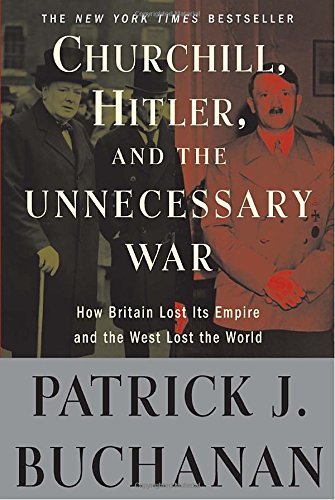
Patrick J. Buchanan is the author of “Nixon’s White House Wars: The Battles That Made and Broke a President and Divided America Forever.”

Why They Hate Trump

who are not part of the political and corporate elite, who lack the advantages and connections of the Deep State, who are not media, academics, or celebs.  President Trump puts ordinary Americans first, and it drives the elite nuts.

The elite have spent so many years enjoying their advantages, including the psychological advantage of despising ordinary people, that they panicked when someone tried to take it all away from them.  They can’t go on living without that warm, reassuring sense of superiority.

Contempt for average Americans was palpable in Hillary Clinton, which is why she lost the election of 2016.  It was just too obvious.  Joe Biden conceals it somewhat better, or perhaps he just cares more for other advantages of office — for both himself and family members.  Either way, he is taking advantage of ordinary people.   

What really upset the elite was that average Americans were beginning to believe in themselves.  Their wages were rising for the first time in decades, and they felt proud to be restoring America to what it could be.  If Biden wins, that will be lost.  The everyday American can crawl back to his cell and watch the country stagnate for another four or eight years.

What if the deplorables — the guy who delivers the bread to your supermarket, the woman caring for three children at home, the insurance salesman, the Target checkout clerk — were actually smarter than the Washington types, smarter than you in the universities and the media?  For the elite, it would mean that the world had been turned upside-down.

That’s exactly what President Trump began to accomplish in four years.  For four years, those everyday Americans were treated like something special, listened to, moved to the front of the line.  Trump rallies were exciting because they were primarily a celebration of the rise of the real America — of those who get up five mornings a week to an alarm clock, start the car in the cold, drive to work in the dark, put in eight or ten hours, come back to football on TV in a two-bedroom apartment, bathe and sleep, and do it again and again.  On weekends, they coach and volunteer and attend church and care for family and neighbors.

This is a way of life that the Washington elite despise.  They prefer $300 restaurants, chauffeured limos, escort services funded by lobbyists, drugs and alcohol, junkets to exclusive resorts, secret bank accounts, and the status of high office.

The elite think they are so far above us, but they are not happier for it.  It’s the parents in Oklahoma with their newborn child, the kid in Indiana receiving his first promotion, the grandparents in Florida living on not much more than Social Security but still giving of themselves — these are the great Americans who understand what President Trump is talking about, and they are the Americans he understands and respects.

Can you say Obama understood and respected these ordinary Americans?  Or the Clintons, or even the Bushes, with their New England heritage and Texas money?  Or Nixon, LBJ, or Kennedy with his serial adulteries?  Or Carter, with his twisted ideology of “save everyone in the world at the expense of the American middle class”?  Only Reagan and Trump put ordinary Americans first.

Now, unless the Supreme Court steps in, it’s back to “normal.”  Already the word has come down from Biden appointees — herd the riffraff back to their pens, tape their mouths, steal their votes, and strip them of their rights.  It’s high times again in Washington.

What is really important to the elite is the illusion that only they know what’s “smart” and what’s right.  “Smart” was the byword of the Obama/Biden administration, and it implied that anyone who questioned their policies — policies designed to enrich the elite — was truly dumb.  It was their way of ending the discussion, like saying “the science is settled.”  Now, from being “smarter” than we are, the next step is to prosecute those who oppose them, and they’re halfway there with the accusation that those who question anthropogenic climate change are “deniers.”

The elite are evolving from political snobs to something more sinister.  It’s not enough to condescend to conservatives.  Now the elite want to imprison them.  The persecution of Gen. Flynn by a politicized Justice Department should be a warning to the rest of us.  Michael Flynn is a hero for standing up to it, but most Americans would probably buckle under the pressure, and we’d be living in a totalitarian state.  We’re close to that already. 

There are many policies to fear from Biden/Harris, but censorship and persecution of opponents may be the worst thing.  Progressives have a history of elevating their goals above the law and established practice — Woodrow Wilson’s Espionage Act, FDR’s attempt at court-packing, LBJ’s bullying of Congress and the courts, Obama’s pen and a phone.  Obama/Biden was the most activist administration since LBJ, intent on promoting universal abortion “rights,” open borders, and globalist policies that weakened the United States, and they used the Justice Department and FBI, along with many other agencies, to persecute those who opposed them.  What they especially attacked was the traditional faith of the heartland.

Hobby Lobby found that out, so expect there to be more Hobby Lobbies under Biden.  When the CEO and Founder of Hobby Lobby, David Green, stood up for what he believed and refused to fund contraceptive coverage mandated under Obamacare, Obama’s Justice Department sued with the intention of fining and imprisoning him into submission.  Green refused to bow to the Deep State and ultimately won in the Supreme Court.

Thanks to President Trump’s appointees, the Court may be the salvation of others like David Green, but it can go only so far.  And there is nothing except a Republican Senate to prevent Biden from packing the Court with liberals.

Even the Court can’t defend us against the corruption of the political elite.  They believe they have a right to practice graft and influence peddling, and to reap the benefits of drugs, fine liquor, call girls, and the rest.  Eliot Spitzer and “Client 9” aren’t the only politicians caught up in prostitution — Hunter Biden may be worse.  As progressives see it, this behavior is just something to smirk about and look the other way.  They think it’s provincial to think there’s anything wrong with Hunter’s behavior.  Will Hunter Biden’s behavior change if his father becomes president?

The one thing progressives will not surrender is their sense of superiority to the American people, and their tactics are becoming more aggressive, shifting from disparagement to criminalization.  Should Biden take office, expect the censorship and persecution of conservatives to continue and increase.  The only way to stop them is to speak the truth and hope the public will vote them out of office.  

Jeffrey Folks is the author of many books and articles on American culture including Heartland of the Imagination (2011).

$5$10$50Otherhttps://lockerdome.com/lad/8965120688797543?pubid=ld-7146-6908&pubo=https%3A%2F%2Fwww.americanthinker.com&rid=www.americanthinker.com&width=692

 Parler| 212 Comments| Print|sponsored contentFrom the WebPowered by ZergNet

Actors Who Enjoyed Kissing Their Co-Stars A Bit Too Much

The One Key Reason Trump Allowed Biden’s Transition To Begin

Here’s How Fox News Is Doing After Taking On Trump

The Truth About Powell’s Claim Of A ‘Broken Algorithm’

What Maxwell Said About Bill Clinton In New Unsealed Disposition

The Most Inappropriate Outfits Melania Trump Has Wornsponsored content

RECOMMENDED

The Horrifying Truth About CBDSeniors Under 82 Yrs Old Get Up to $75k in Life Insurance from $15/moTree Removal: Don’t Overpay, Check out Average PricesMesothelioma Cancer: Warning Signs Shouldn’t Be IgnoredYou’ll Never Think About Solar Panels Again After Seeing This (Watch)Symptoms of Psoriatic Arthritis (Some Signs May Surprise You)Hepatitis C Can Cause Itchy Skin Along with Other Symptoms – See Hep C SymptomsSignals of Lung CancerThe Most Successful Attorneys in Tyrone. See the ListJackie Kennedy Was a Style Icon – but Her Shoes Revealed What We Long Suspected

RECOMMENDED

Pennsylvania Residents Rush To Qualify For Concealed Carry (It’s Ending Right Away)Pennsylvania Launches New Policy for Cars Used Less Than 50 Miles/day20 Heartbreaking Selfies Taken Right Before Tragedy. # 10 Will Make You CryNew Research On Jesus’ Tomb Could Change Our Understanding Of EasterTree Removal: Don’t Overpay, Check out Average PricesNew Vision Discovery Can Restore Your Vision Naturally (Watch)Bizarre Rules Old Hollywood Stars Were Forced to ObeyMetastatic Colon Cancer – Early Diagnosis is KeyAfter 31 Years of Marriage, Tom Selleck Makes Unexpected Family AnnouncementYou’ll Never Think About Solar Panels Again After Seeing This (Watch)null

Advertisement

FOLLOW US ON

American Thinker on Facebook
American Thinker on Twitter
American Thinker on Parler

Recent Articles

Blog Posts

Monthly Archives

https://b1609ae750c269556366ec459bf76165.safeframe.googlesyndication.com/safeframe/1-0-37/html/container.htmlhttps://b1609ae750c269556366ec459bf76165.safeframe.googlesyndication.com/safeframe/1-0-37/html/container.htmlsponsored contentFROM THE WEBby ZergNet

McEnany’s Husband Breaks Silence After Briefing Room Incident

The Truth Nobody Knew About Hope Hicks

Here’s What Kamala Harris Picked As Her Secret Service Code Name

Ant Anstead Throws Subtle Jab At Christina Amid Show Departure

The Truth About Sasha Obama Finally Revealed

The Unbearable Lightness of White College Democrats

Eighty-five percent of counties with a Whole Foods store voted for Joe Biden. That factoid, relayed by The Cook Political Report’s David Wasserman, tells you something important about the election — and about today’s Democratic Party.

“The Democracy,” as it was called in the 19th century, long thought of itself as the party of the people, the defender of the little guy, the side that stood up for the folks not able to stand up for themselves.

There was always something to this. From its formation to reelect Andrew Jackson in 1832, the Democratic Party has always been a coalition of groups not considered typical Americans but that together could form a national majority. Naturally, the precise composition of this coalition has changed over time.

Barack Obama’s Democratic Party was a top-and-bottom coalition of those at both ends of the income, education and occupational scales. Obama, who, as an Illinois legislator, gerrymandered a top-and-bottom district for himself, provided substantive and psychological sustenance to both sides.

Joe Biden’s Democratic Party has a different balance. The boy from working-class Scranton, as he is billed, ran best not in factory cities but in university towns.

His highest percentage in Michigan was in the county containing Ann Arbor, not Detroit. He ran stronger in Madison, Wisconsin’s Dane County than in Milwaukee County; stronger in Iowa City than in Des Moines; stronger in Missoula, Montana, with its university than in Butte with its copper mines; just as strong in metro Columbus (Ohio State University) as in metro Cleveland.

Biden’s strongest area in California was the San Francisco Bay (University of California, Berkeley and Stanford University). His strongest county in upstate New York was Tompkins (Cornell University). His strongest counties in North Carolina were Durham and Orange (Duke University and the University of North Carolina, Chapel Hill).

White college grads — Joel Kotkin’s “gentry liberals,” Arnold Kling’s “highly educated elites” — have become the dominant constituency in the Democratic Party. Even as the descendants of the party’s blue-collar constituents have become Donald Trump Republicans, Democratic percentages among white college graduates have ballooned.

Pew Research Center polling showed white college graduates 50% to 42% Republican in 1994 — the breakthrough year when Republicans captured the House after 40 years of Democratic control — and 57% to 37% Democratic in 2019. That’s happened even as they’ve become a larger percentage of the electorate.

To which an old-time Democratic Party boss — Tammany Hall’s Charles F. Murphy or Chicago’s Richard J. Daley — would have asked, “What do these people want?”

In the 1990s, the answers very fairly obvious. Affluent voters wanted tax rates held down, and they wanted their verdant suburban and trendy central city neighborhoods protected from violent crime and welfare dependency.

Led by Wisconsin’s Tommy Thompson and New York’s Rudy Giuliani, local Republicans and some Democrats cut violent crime and welfare rolls by more than half. In Washington, Newt Gingrich and Bill Clinton assisted and encouraged this process and largely froze tax rates.

Today’s college graduates, more numerous than their 1994 predecessors and schooled on increasingly “politically correct” campuses, don’t have such concrete goals. They’re unfazed by marginal Obama-era tax increases and untroubled — so far, anyway — by the vertiginous increases in homicides after the May 25 incident in Minneapolis.

What they want out of politics is not so much anything concrete as it is symbolic: assertions of opposition to what they regard as America’s “systemic racism,” and opposition to assertions of “America first,” whether that means enforcement of immigration laws or “xenophobic” restrictions on travel from China, where COVID-19 originated.

In Democratic primaries, these voters, as I wrote in June, “flitted from one candidate to the next, tilting toward Sen. Kamala Harris after she whacked Joe Biden for opposing busing in the 1970s, then luxuriating in Sen. Elizabeth Warren’s stentorian assurances that, on every issue, ‘I have a plan for that,’ then swooning for the assured articulateness of then-South Bend Mayor Pete Buttigieg.”

They seem chemically dependent on denunciations of Donald Trump, to the point that subscription- or ratings-hungry news media feel obliged to lard not just news accounts but even food pages and movie reviews with “Orange Man Bad” sneers. Trump is routinely described as a “racist” with no evidence cited.

White Democratic college graduates’ central faith is that they oppose other Americans’ systemic racism. Nearly a majority of them told pollsters they were bothered that Joe Biden is a white male in his 70s. Only about 30% of black and Hispanic Democrats feel the same, according to Pew. One group has more concern for ethnic origin and personal style than for real-life consequences for actual people.

White Democratic college graduates complain that Trump acts childishly; is impervious to criticism and fixated on symbolic trivia; and refuses to confess error or admit defeat. Fair criticism or self-description? Or both?

Michael Barone, townhall.com

All those who self-identify as being left-of-center are enemies of this nation, and there is no middle ground

Here’s a recent news item that may appear isolated, but which provides a very clear object lesson in the character of those on the left. In a sense, it’s also queerly germane to the holiday season – assuming we’re still allowed to use the word “queerly” in this context.

Based on news reports and a video that began circulating on social media this week, apparently a masked, socially-distanced, politically-correct mall Santa recently brought a little boy to tears when he refused the child’s request for a Nerf® gun for Christmas after being asked for his wish list.

Obviously, Santa’s response was in keeping with the individual’s personal disdain for firearms, and the liberal convention of presuming one’s view is the only righteous one. Leave it to a liberal to impose his views and preferences upon a child who can’t understand the dynamic at hand. I definitely empathize with the child, and I hope the incident doesn’t ruin his Christmas – a holiday the guy in the Santa suit probably cherishes about as much as he does the Second Amendment.

Before we delve into this analysis, let us establish that it really isn’t a mall Santa’s job to vet the wish lists of the children with whom they chat. Even if the kid asked for a 55-gallon drum of hydrochloric acid with which he might dissolve his siblings, it’s Santa’s job to pass on said request to the attending parent – not to judge or engage in activism.

Many will remember the “no war toys” campaigns that began on the left during the 1970s. Here, lobbyists and activists advanced an effort to remove “war toys” (read toy firearms) from every home, game, toy store, commercial and children’s television program in America. Violent cartoons – even such fare as “Tom & Jerry” and “Looney Tunes” – came under attack by liberals as potentially turning little boys into spree killers. The nascent conventional wisdom (read aggressively promoted liberal orthodoxy) held that parents who continued to allow their children to play with toy firearms were knuckle-dragging troglodytes.

Bear in mind that all of this came about despite the admonitions from many prominent psychologists that little boys are naturally aggressive and really need to get those impulses out during childhood, or there was a real danger they actually would wind up as spree killers. This endeavor was also part of leftist efforts toward emasculating males and promoting gender confusion, the early sexualization of children, casual sex, premarital sex, unfettered abortion and other challenges to traditional morality that began during the same period.

In response, cartoons that represented various forms of conflict became “dumbed-down,” bland and barely worth watching. Even the GI Joe® cartoons of that era depicted every single enemy pilot parachuting to safety after the dogfight. While most of the traditional “war toys” (cap guns and such) continued to be sold, toy manufacturers switched gears; instead of promoting overtly militaristic toys, they began to market and sell – guess what? – a whole lot of Nerf® guns.

If I haven’t made my sentiments abundantly clear in recent weeks, let me proffer this in unambiguous terms: Liberals are slime. In order to avoid being accused of engaging in empty, vicious invective, allow me to clarify precisely what I mean by “slime.” Those who are bereft of honor, ethics, scruples or any sense of moral obligation qualify as such – and it has been made painfully evident in recent years that this is the character of the liberal.

Is it “a bit much” to relegate all liberals to slimehood? No, I don’t think it is. As I recently demonstrated in this space, liberalism (or progressivism) is simply the wedge radical leftists insidiously engaged in order to incrementally usher in a socialist state. Well, you can kill someone with a bullet to the head, or by slow poison; they’ll still be just as dead. Thus, there is no reason that liberal policies should have been tolerated in the name of fair play or erroneous interpretations of constitutional law over the last 60 years. None.

As we know, the truly rabid left exist in extremely small numbers; it is only their immoderate vociferousness and the fact that many of these people occupy places of power that give the impression of a wider scope of influence. It is probable that the majority of self-identifying liberals have simply been thoroughly deluded. Regardless, I would say that these people are likely to be faced with a significant decision in the very near future. With factions in our nation so perilously close to being enemy combatants, the committed liberal should be mindful that enemy combatants typically don’t engage in intellectual analysis as to whether or not their enemy may be following an evil doctrine or regime out of ignorance or delusion.

In other words, if you commit treason, those who ultimately wind up judging you won’t be concerned with the fact that you did so out of ignorance or delusion, only with the fact that you committed treason.

For the committed conservative, libertarian, or even the unbiased, non-ideological swing voter, the lines that have been drawn should be unmistakable. In the last year alone, the abysmal character of those on the left and the danger they represent have been made clear, whether we’re talking about the Squad’s cries for free everything, orchestrated mayhem in our cities, Democratic elites skirting COVID-19 restrictions for personal economic benefit or calls for the systematic persecution of our president’s supporters.

All those who self-identify as being left-of-center are enemies of this nation, and there is no middle ground.

Eric Rush

All Roads Lead to Barack Obama

What role is Barack Obama playing in America’s election crisis? This is arguably the most underreported aspect of the extraordinary effort to take down Donald Trump and demolish America. The more you research this question, the more you realize: All roads lead to Barack Obama.

In today’s Trumpet Brief, I want to spotlight just one of these roads.

In his new book, A Promised Land, Barack Obama heaps praise on David Plouffe, his former campaign manager. Obama has publicly lauded Plouffe as the unsung hero and supreme architect of his presidential campaigns. Plouffe was the strategic mastermind behind Team Obama’s extraordinary 2008 grassroots campaign and its pioneering digital program.

When Obama took office in January 2009, Plouffe took a sabbatical. But he never left Obama’s orbit; he remained an outside senior adviser to the Obama administration. In 2011, Plouffe returned to the White House and did a two-year stint as an assistant to the president and senior adviser. Reading Obama’s book, it’s obvious that he and Plouffe are kindred spirits and are very close.

In January 2017, at the same time President Obama left the White House, David Plouffe was hired by Facebook ceo Mark Zuckerberg to be the head of policy and advocacy at the Chan Zuckerberg Initiative (the Zuckerberg’s philanthropic organization). In this role, Plouffe was responsible for leading czi’s effort to support political and policy reform across America. Plouffe retired from his full-time position at czi in October 2019, but remained with the organization in the part-time role of resident “strategist.”

So, here’s what we know so far: Barack Obama and David Plouffe are close, and David Plouffe and Mark Zuckerberg are close. There is also plenty of evidence to show that Obama and Zuckerberg have a strong relationship, so it’s reasonable to conclude that all three know each other well. These men have worked together for years now. And most significantly, these three are political and ideological brothers.

Now, let’s skip ahead to this past September and October. This is when the Chan Zuckerberg Initiative gave $350 million (in two installments) to the Center for Tech and Civil Life (ctcl). Established in 2012 and headquartered in Chicago, the ctcl is a nonprofit organization that works with citizens, community groups and local governments to promote greater participation in federal, state and local elections. Its mission is to “connect Americans with the information they need to become and remain civically engaged, and ensure that our elections are more professional, inclusive and secure.”

Among its various activities, the ctcl helps local governments and community groups implement election legislation, educate voters, equip voting locations with new technology, train poll workers, collect and analyze election data, and tackle cybersecurity concerns. In some states, election workers are paid directly by ctcl grants.

The ctcl claims to be nonpartisan, but as you will see, it doesn’t take much digging to learn that it leans heavily to the left.

Back to Zuckerberg’s money. Prior to receiving his gigantic donation, ctcl received an average of around $1 million per year. Only a pittance of what it received from Facebook’s ceo this fall. How did Zuckerberg learn about this relatively small nonprofit in Chicago? It’s hard to imagine David Plouffe, as former head of policy and advocacy and the resident “strategist” at Zuckerberg’s organization, not being involved in the decision to donate $350 million to ctcl. After all, this was exactly the type of work he was brought on to do.

It’s even plausible that Barack Obama himself put ctcl on Zuckerberg’s radar. ctcl and some of its principal staff have multiple connections to the former president, even going as far back as his 2008 presidential campaign. Tiana Epps-Johnson, ctcl’s founder and executive director, is an Obama Fellow at the Obama Foundation in Chicago.

Here’s what we do know: When ctcl received Zuckerberg’s first donation, it immediately gave at least $75 million to local authorities in heavily Democratic areas in battleground states!

“The vast majority of the money handed out by ctcl—especially in the early days of its largesse—went to counties that voted overwhelmingly for Hillary Clinton in 2016,” wrote Ken Blackwell in Breitbart.

In Plouffe’s A Citizen’s Guide to Beating Donald Trump, released earlier this year, he wrote that “the contest for the presidency may come down to block-by-block street fights in Detroit, Milwaukee and Philadelphia.” Is it a coincidence, as Blackwell wrote, that “some of the biggest recipients [of ctcl’s money], in fact, were the very locales Plouffe had identified as the linchpins of the Democrat strategy in 2020”?

A recent study by the Amistad Project listed the 20 largest publicly identified recipients of ctcl funds. Remarkably, the counties and cities that received Zuckerberg’s money is virtually the same as the counties and cities where the fraud and corruption occurred! This list includes the city of Philadelphia, Pennsylvania; Delaware County, Pennsylvania; Alleghany County, Pennsylvania; Fulton County, Georgia; Cobb County, Georgia; DeKalb County, Georgia; the city of Detroit, Michigan; the city of Minneapolis, Minnesota; and the city of Milwaukee, Wisconsin. Do these names sound familiar? They’ve been in the news constantly since November 4.

All these are overwhelmingly Democratic counties or cities in four key swing states. And all of these cities and counties received at least $2 million from Mark Zuckberg via ctcl less than two months before the election!

In September, not long after the ctcl began distributing the money, lawsuits were filed against the organization in four states. These suits were filed by the Election Integrity Fund in Michigan, the Wisconsin Voters’ Alliance, the Minnesota Voters’ Alliance and by a group of candidates and office-holders in Pennsylvania. These lawsuits argued that the local governments were prohibited by federal law from accepting private federal election grants.

The plaintiffs in these lawsuits were worried that the money donated by Mark Zuckerberg—who was counseled by David Plouffe, and maybe even Barack Obama—would be used to commit fraud!

And rightly so. Amistad Project director Phillip Kline obtained a court order from the Middle District of Pennsylvania that allowed him to view Philadelphia’s communications with ctcl. “Those communications show that ctcl dictated the way the election would be run in Philadelphia, how many polling places they would have, they paid the election officials, they paid the satellite election officials, they paid the judges, they brought in these drop boxes,” said Kline.

The lawsuit filed in Michigan claimed that Zuckerberg’s money was given to county officials in the battleground state to print and distribute absentee ballots and mail-in ballots, and to add extra drop boxes in Democratic areas. The lawsuit stated that the purpose of the money was to increase ballots cast “in only certain urban and predominantly Democratic precincts” and to “selectively influence the outcome of the 2020 general election.”

Unfortunately, all four lawsuits were dismissed. The reasons for this varied, but the judges across all states generally rejected the notion that the money would be used to manipulate the election. In the end, that’s exactly what happened!

Under the advice of David Plouffe, and perhaps Barak Obama himself, Mark Zuckerberg paid election officials in heavily Democratic counties in Pennsylvania. He paid for extra drop boxes in heavily Democratic counties. He paid for extra polling places in Democratic areas. As Ken Blackwell wrote, “Zuckerberg and ctcl left nothing to chance. … [W]riting detailed conditions into their grants that dictated exactly how elections were to be conducted, down to the number of ballot drop boxes and polling places.”

In this article, we have considered only one of the paths of evidence that suggests Barack Obama lies at the epicenter of this election crisis. There are others. The fact that the media is not seriously investigating evidence like this, nor exposing what figures like Obama, Plouffe, Zuckerberg and the entire radical left are doing, is itself a massive scandal!

In his recent article “Why Donald Trump Will Remain America’s President,” Trumpet editor in chief Gerald Flurry wrote, “I am also certain that we are about to see some of the biggest frauds exposed perhaps ever!” Over the next few weeks and months, you should expect to see more evidence of Barack Obama’s fingerprints on this election coup.

To understand the prophetic significance of Barack Obama, read America Under Attack. Biblical prophecy reveals that this man is playing a seminal role in America’s downfall, and it’s imperative that we see this.

Brad MacDonald

The Rise of Capitalism

The precapitalistic system of production was restrictive. Its historical basis was military conquest. The victorious kings had given the land to their paladins. These aristocrats were lords in the literal meaning of the word, as they did not depend on the patronage of consumers buying or abstaining from buying on a market.

On the other hand, they themselves were the main customers of the processing industries, which, under the guild system, were organized on a corporative scheme. This scheme was opposed to innovation. It forbade deviation from the traditional methods of production. The number of people for whom there were jobs even in agriculture or in the arts and crafts was limited. Under these conditions, many a man, to use the words of Malthus, had to discover that “at nature’s mighty feast there is no vacant cover for him” and that “she tells him to be gone.”1 But some of these outcasts nevertheless managed to survive, begot children, and made the number of destitute grow hopelessly more and more.

But then came capitalism. It is customary to see the radical innovations that capitalism brought about in the substitution of the mechanical factory for the more primitive and less efficient methods of the artisans’ shops. This is a rather superficial view. The characteristic feature of capitalism that distinguished it from precapitalist methods of production was its new principle of marketing.

Capitalism is not simply mass production, but mass production to satisfy the needs of the masses. The arts and crafts of the good old days had catered almost exclusively to the wants of the well-to-do. But the factories produced cheap goods for the many. All the early factories turned out was designed to serve the masses, the same strata that worked in the factories. They served them either by supplying them directly or indirectly by exporting and thus providing for them foreign food and raw materials. This principle of marketing was the signature of early capitalism as it is of present-day capitalism.

The employees themselves are the customers consuming the much greater part of all goods produced. They are the sovereign customers who are “always right.” Their buying or abstention from buying determines what has to be produced, in what quantity, and of what quality. In buying what suits them best they make some enterprises profit and expand and make other enterprises lose money and shrink. Thereby they are continually shifting control of the factors of production into the hands of those businessmen who are most successful in filling their wants.

Under capitalism private property of the factors of production is a social function. The entrepreneurs, capitalists, and land owners are mandataries, as it were, of the consumers, and their mandate is revocable. In order to be rich, it is not sufficient to have once saved and accumulated capital. It is necessary to invest it again and again in those lines in which it best fills the wants of the consumers. The market process is a daily repeated plebiscite, and it ejects inevitably from the ranks of profitable people those who do not employ their property according to the orders given by the public. But business, the target of fanatical hatred on the part of all contemporary governments and self-styled intellectuals, acquires and preserves bigness only because it works for the masses. The plants that cater to the luxuries of the few never attain big size.

The shortcoming of 19th-century historians and politicians was that they failed to realize that the workers were the main consumers of the products of industry. In their view, the wage earner was a man toiling for the sole benefit of a parasitic leisure class. They labored under the delusion that the factories had impaired the lot of the manual workers. If they had paid any attention to statistics they would easily have discovered the fallaciousness of their opinion. Infant mortality dropped, the average length of life was prolonged, the population multiplied, and the average common man enjoyed amenities of which even the well-to-do of earlier ages did not dream.

However, this unprecedented enrichment of the masses was merely a by-product of the Industrial Revolution. Its main achievement was the transfer of economic supremacy from the owners of land to the totality of the population. The common man was no longer a drudge who had to be satisfied with the crumbs that fell from the tables of the rich. The three pariah castes that were characteristic of the precapitalistic ages — the slaves, the serfs, and those people whom patristic and scholastic authors as well as British legislation from the 16th to the 19th centuries referred to as the poor — disappeared. Their scions became, in this new setting of business, not only free workers, but also customers.

This radical change was reflected in the emphasis laid by business on markets. What business needs first of all is markets and again markets. This was the watchword of capitalistic enterprise. Markets — that means patrons, buyers, consumers. There is under capitalism one way to wealth: to serve the consumers better and cheaper than other people do.

Within the shop and factory the owner — or in the corporations, the representative of the shareholders, the president — is the boss. But this mastership is merely apparent and conditional. It is subject to the supremacy of the consumers. The consumer is king, is the real boss, and the manufacturer is done for if he does not outstrip his competitors in best serving consumers.

It was this great economic transformation that changed the face of the world. It very soon transferred political power from the hands of a privileged minority into the hands of the people. Adult franchise followed in the wake of industrial enfranchisement. The common man, to whom the market process had given the power to choose the entrepreneur and capitalists, acquired the analogous power in the field of government. He became a voter.

It has been observed by eminent economists, I think first by the late Frank A. Fetter, that the market is a democracy in which every penny gives a right to vote. It would be more correct to say that representative government by the people is an attempt to arrange constitutional affairs according to the model of the market, but this design can never be fully achieved. In the political field it is always the will of the majority that prevails, and the minorities must yield to it. It serves also minorities, provided they are not so insignificant in number as to become negligible. The garment industry produces clothes not only for normal people, but also for the stout, and the publishing trade publishes not only westerns and detective stories for the crowd, but also books for discriminating readers.

There is a second important difference. In the political sphere, there is no means for an individual or a small group of individuals to disobey the will of the majority. But in the intellectual field private property makes rebellion possible. The rebel has to pay a price for his independence; there are in this universe no prizes that can be won without sacrifices. But if a man is willing to pay the price, he is free to deviate from the ruling orthodoxy or neo-orthodoxy.

What would conditions have been in the socialist commonwealth for heretics like Kierkegaard, Schopenhauer, Veblen, or Freud? For Monet, Courbet, Walt Whitman, Rilke, or Kafka? In all ages, pioneers of new ways of thinking and acting could work only because private property made contempt of the majority’s ways possible. Only a few of these separatists were themselves economically independent enough to defy the government into the opinions of the majority. But they found in the climate of the free economy among the public people prepared to aid and support them. What would Marx have done without his patron, the manufacturer Friedrich Engels?

Ludwig von Mises

Ayn Rand on Thought and Thinking

All thinking is a process of identification and integration. Man perceives a blob of color; by integrating the evidence of his sight and his touch, he learns to identify it as a solid object; he learns to identify the object as a table; he learns that the table is made of wood; he learns that the wood consists of cells, that the cells consist of molecules, that the molecules consist of atoms. All through this process, the work of his mind consists of answers to a single question: What is it? His means to establish the truth of his answers is logic, and logic rests on the axiom that existence exists. Logic is the art of non-contradictory identification. A contradiction cannot exist. An atom is itself, and so is the universe; neither can contradict its own identity; nor can a part contradict the whole. No concept man forms is valid unless he integrates it without contradiction into the total sum of his knowledge. To arrive at a contradiction is to confess an error in one’s thinking; to maintain a contradiction is to abdicate one’s mind and to evict oneself from the realm of reality.

Thinking is man’s only basic virtue, from which all the others proceed. And his basic vice, the source of all his evils, is that nameless act which all of you practice, but struggle never to admit: the act of blanking out, the willful suspension of one’s consciousness, the refusal to think—not blindness, but the refusal to see; not ignorance, but the refusal to know. It is the act of unfocusing your mind’ and inducing an inner fog to escape the responsibility of judgment—on the unstated premise that a thing will not exist if only you refuse to identify it, that A will not be A so long as you do not pronounce the verdict “It is.” Non-thinking is an act of annihilation, a wish to negate existence, an attempt to wipe out reality. But existence exists; reality is not to be wiped out, it will merely wipe out the wiper. By refusing to say “It is,” you are refusing to say “I am.” By suspending your judgment, you are negating your person. When a man declares: ‘Who am I to know?’—he is declaring: “Who am I to live?”

This, in every hour and every issue, is your basic moral choice: thinking or non-thinking, existence or non-existence, A or non-A, entity or zero.

Thinking is not an automatic function. In any hour and issue of his life, man is free to think or to evade that effort. Thinking requires a state of full, focused awareness. The act of focusing one’s consciousness is volitional.

Thinking is a delicate, difficult process, which man cannot perform unless knowledge is his goal, logic is his method, and the judgment of his mind is his guiding absolute. Thought requires selfishness, the fundamental selfishness of a rational faculty that places nothing above the integrity of its own function.

A man cannot think if he places something—anything—above his perception of reality. He cannot follow the evidence unswervingly or uphold his conclusions intransigently, while regarding compliance with other men as his moral imperative, self-abasement as his highest virtue, and sacrifice as his primary duty. He cannot use his brain while surrendering his sovereignty over it, i.e., while accepting his neighbors as its owner and term-setter.

That which you call your soul or spirit is your consciousness, and that which you call “free will” is your mind’s freedom to think or not, the only will you have, your only freedom, the choice that controls all the choices you make and determines your life and your character.

The Return of Brutalism

The lockdowners probably had no idea what they were about to unleash. On paper, their plans all seemed fine. Keep people apart. Make them stay home. Only essential workers should go to work. Government can do the rest. Church, theaters, sports, bars, schools – everything has to give way to rule by disease mitigators.

Let the kids play computer games. Let the offices operate through Zoom. A bit of time off never hurt anyone, and, besides, there is Netflix. We’ll beat this virus by hiding from it, and then it’ll get bored and go back where it came from. The model builders will be heroes. We only need to demonstrate the power of computers over even the awesome and previously uncontrollable forces of nature. The virus will relent in the face of our intelligence, power, and resources.

What they did not expect were riots in the streets, toppled statues, secession movements, the rise of political extremism on all sides, the fueling of race conflict, and the spread of nihilism. What’s happening all over the world feels like revolution.

Once you lock down a population by executive fiat, based on obvious ignorance and fear, you send a signal that nothing much matters anymore. Nothing is true, permanent, right, wrong. Might as well tear it all down. You literally unleash Hell.

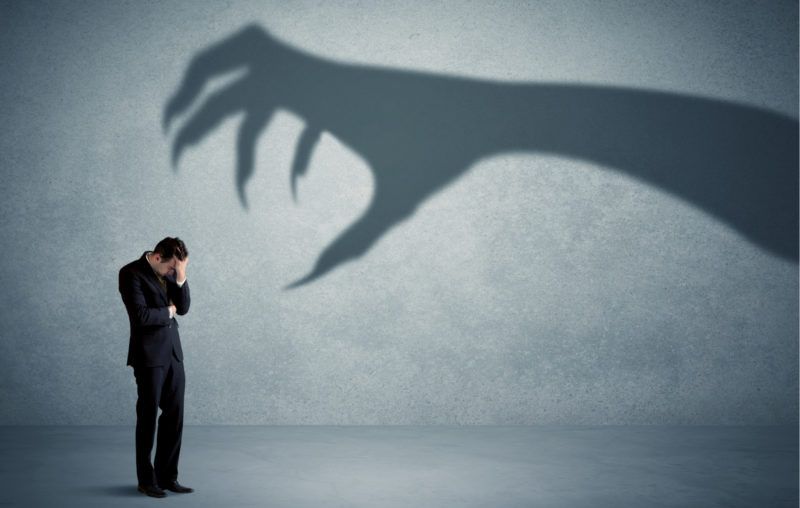
beast-800x508.jpg

There is plenty of historical precedent for this but one episode has long intrigued me. It concerns the rise of Brutalist architecture after World War II. The movement was about stripping adornments from buildings, forgetting about beauty, eschewing aesthetics of the past, and designing for temporality and functionality only.

Brutalism, which began in Germany as a successor to the Bauhaus movement following the Great War, is the movement that eventually gave us all the ghastly government buildings in the U.S. that were put up in the 60s through the 90s. They are concrete, sparse, and just slightly horrible to the eye because they are meant to be. It was a movement that rejected aesthetics. It wanted and demanded the raw truth: a building is to be occupied. It should only be “essential” and nothing more.

After World War II, the question concerned what should replace that which was bombed and destroyed in wartime, the worst example of which was Dresden, which faced unbelievable destruction. Eventually that city and all its glorious architecture was restored. But the shock that governments could just smash everything in sight, that nothing is sacred, was a lesson that impacted a whole generation of designers. Throughout the rest of Germany and most of the rest of Europe, the U.K., and the U.S., the lesson was: buildings should be bombable. That way, nothing of value is lost.

That is the spirit that drove the Brutalist school to be so influential. Many old buildings, from the Middle Ages through the early 20th century, were constructed with high aspirations, including theological ones. But the war demonstrated that everything is temporary. Nothing is really true or sacred. God is dead else countless millions would not have been slaughtered. Our postwar architecture should embrace the reality that we learned in wartime, which is that nothing much matters in the end. Everything can be bombed. Nothing is beyond destruction. Hence the past should die and everything new should be expendable.

This is nihilism. It is an expression of despair. It is a cry against the idea that the future and past should have any relationship to each other. Might as well tear down the monuments. Burn buildings. Have riots in the streets. And while we’re at it, let’s forget logic, rationality, the lessons of history, and even humane concern for others. Our governments, democratically elected, clearly care nothing for the rule of law, empathy, morality, and lack all humility, so why should we not believe the same things and behave the same way?

The rage that pent up between March 15 and June 1, 2020 expressed itself in many ways. You know this from your own life. Think of the relationships that have been shattered, how you took out your anger on those you love, and they on you, and how you said and did things that would have been unthinkable this time last year. The lockdowns made everyone a bit pathological. I’m not talking only about the spike in suicides and drug overdoses. I’m speaking of the casual cruelty that people dabbled in over these months, the way in which our old codes of manners, discipline, character, and integrity suddenly seemed irrelevant. Truth and lies blended in a confusing mush.

After all, if governments can really lock us in our homes, slice and dice the population into essential and nonessential, close our houses of worship, force us to mask our faces, and demand that we hop around like grasshoppers to avoid each other, what does that say about the codes of morality and human decency we’ve built up over generations? If governments don’t care, why should we? To some extent or another, everyone has dabbled in this form of nihilism over the last 75 days.

For many people, this has tumbled into destructionism itself.

In the best of worlds, what is true and right should not hinge on government’s treatment of essential rights. In reality, it makes a huge difference. If governments care nothing for our freedom of movement and our economic rights, why should anyone really? This is the essence of the Brutalist view of life. Just get it done. We only need essentials. Everything else is expendable. Nothing else matters, not context, truth, decency, the past, the future.

You could say to me that the riots and destruction and the sheer insanity all around us are not obviously connected to lockdown. I disagree. The protestors, rioters, statue topplers, and building burners might not articulate the precise reasons for their behavior. But if you look carefully, what you see is people crying out with a demand that governments and establishments pay attention to what the people want. People matter. Volition matters. We cannot be locked down. We are not animals and nor will we be treated as automatons in agent-based models.

We won’t be part of someone else’s idea of history. We are history.

In this way, governments have pushed us all into adopting a Brutalist theory of life, if only because they made the first move and now we have no choice but to fight back. Brutality will be met with brutality.

To be sure, I’m not endorsing this view of the world. I find it highly regrettable and even immoral. It creates nothing. Still, when governments behave this way, as if freedom doesn’t matter, this is what they unleash. They punish and drive out decency, integrity, and virtue. When you do that, you release unpredictable forces within society that make the world ugly, even terrifying.

There is an answer to this rampant incivility. Don’t let governments and their egregious mismanagement of this crisis wreck your integrity, your capacity for love, your belief in rights, your aspirations for yourself and others. The only way to fight back against Brutalism is with freedom and beauty, and that begins in your own life.

This article appeared first at American Institute for Economic Research and is reprinted with the author’s permission.

Jeffrey A. Tucker

ABOUT THE AUTHOR:

Jeffrey A. Tucker

Jeffrey A. Tucker is Editorial Director for the American Institute for Economic Research. He is the author of many thousands of articles in the scholarly and popular press and eight books in 5 languages, most recently The Market Loves You. He is also the editor of The Best of Mises. He speaks widely on topics of economics, technology, social philosophy, and culture. Jeffrey is available for speaking and interviews via his email. Tw | FB | LinkedIn

Ten Tips to Effective Coping in Times of Conflict, Chaos, and Coronavirus

If the 20th century is known as the Age of Anxiety, the current era may become known as the Age of Depression (with a generous side portion of anxiety). What else would historians call our society’s preoccupation with what is wrong in the world? Focusing primarily on supposed flaws is a sure-fire way to diminish self-esteem in individuals. And it works the same for a country.

July 20 was the anniversary of the most awe-inspiring event in our lifetime and among the most historically significant events of all time. When images of conflict, chaos, and coronavirus dominated the news, the world should have celebrated a heroic human accomplishment that unites people of all races, religions, and countries—literally everyone on Earth. Yet the event passed with little mention in the media and no fanfare.

It is a measure of our preoccupation with what is wrong in society that some readers may now be scratching their heads trying to recall what happened on July 20. Hint: it was the day human beings first set foot on another world. Neil Armstrong and Buzz Aldrin. The Moon landing. July 20, 1969.

Just for a moment, on that one day, we should have shifted our minds from turmoil to tranquility, to Tranquility Base, which retains the footsteps of men with extraordinary courage who rose above the temporary concerns of the human race to remind us all of what the human mind can accomplish.  

Back to the reality portrayed on nightly news broadcasts and newspaper headlines. While the pandemic dominates the media, we go about our daily lives with heightened anxiety and severe restrictions on normal sources of pleasure. A rational approach to this state of affairs must balance the conscious awareness of the state of the world with the need to function effectively on a daily basis and to continue the pursuit of important goals and values.

Here are ten tips for accomplishing this balance.

1. Recognize the signs of depression and anxiety. A hopeless outlook, disrupted sleep, a loss of interest in usual pastimes, significant weight change, fatigue, irritability, and diminished concentration are some symptoms of depression. Headaches, stomachaches, sleeplessness, rapid heartbeat are a few of the more common signs of anxiety.

2. Accept your fears. Often, people deny that they are afraid. That makes them less able to conquer their fears. We cannot master a fear by pretending it is not there. Only when we acknowledge our fears can we begin to take charge of them. By acknowledging fear, we bring it within our control rather than letting the fear control us.

3. Learn relaxation techniques. Certain behaviors help to clear the mind of worries. Deep breathing, meditation, yoga, massage, and exercise can all help to reduce anxiety and induce relaxation.

4. Talk, talk, talk. Talk about your thoughts and feelings and encourage your children to do the same. Anxiety does the most damage when we ignore it or try to bottle it up. Talking about distress helps to relieve it.

5. Agree to disagree. Differences in political positions and in how best to cope with the pandemic threaten to rupture long-standing relationships. Conflicting opinions may taint what are otherwise benevolent relationships. To protect against this, recognize that people who agree on fundamental principles of conduct and political goals can disagree on how to implement such principles.

One should never allow a disagreement about a particular policy, even one with effects as grave and far-reaching as coping with a virus, to overshadow the entire history and basis for a close personal relationship. To do so is to drop the context of the relationship. Rejecting someone on the basis of one stance on policy requires us to shrink our awareness of all the experiences and shared values that form the bedrock of the relationship. This is reminiscent of the vindictive parents I write about inDivorce Poison who encourage their children to reject the other parent on the basis of one alleged misdeed or grievance, as though an emotionally-based response to one aspect of reality should stand in for a balanced consideration of all relevant facts.

Strong relationships can usually tolerate a good deal of conflict and disagreement. But when heated political discussions threaten to overwhelm the basic love and respect between relatives and friends, the most reasonable approach is “agree to disagree.” Such a policy reflects an awareness of the importance and value of maintaining the good will of those who love us and are loved by us.

6. Respect individual needs. Many conflicts in marriages occur because spouses do not recognize and respect each other’s different needs. For example, some people cope best with anxiety by seeking lots of information; other people find that distractions from anxiety-provoking world events help them maintain a reasonable level of comfort. So, if your spouse is tired of hearing about the coronavirus, respect this. Do not confuse it with evasion of reality—it can be a reasonable tactic for coping with anxieties that are stimulated by the risk of events over which we have no direct control.

7. Take positive action. Action helps to offset a sense of helplessness. Initiate video calls. Tackle projects at home and for work that yield a relatively immediate sense of accomplishment. Reach out (virtually) to neighbors who are anxious and alone. Donate to a food bank. Being engaged in benevolent and constructive pursuits reminds us and our children that there is far more to value than to fear in the world.

8. Laugh. I recall that in the days immediately following 9/11, late-night comedy talk shows stayed off the air. When they returned, the hosts avoided their usual comedy format out of respect for the grief-stricken state of the nation. This was understandable, appropriate, and healing. When the humor re-emerged, though, it was more than welcome.

Humor is one of our most potent weapons against stress and depression. It rapidly diffuses anxiety and provides a socially acceptable outlet for hostility. It is also a great outlet for the additional hostility we feel in response to the sometimes maddening drivel we see and read in the news. So try to balance watching the news with your favorite sitcom.  

9. Recognize your limitations. If depression and anxiety are dominating your life, and you are unable to shake either, accept the reality that you need some assistance and get it. Don’t sacrifice your well-being and that of those around you on the altar of a misguided notion of individuality and independence. Even Howard Roark sought help from Henry Cameron.

10. Take things in stride. Get in the habit of seeing unpleasant, even frightening, current events in full context. Catastrophes are departures from the norm. Hold on to a benevolent sense of life by reminding yourself that today’s events are temporary, and that you can rise to the challenge. We have been to the moon in the past. And we will return in the future.

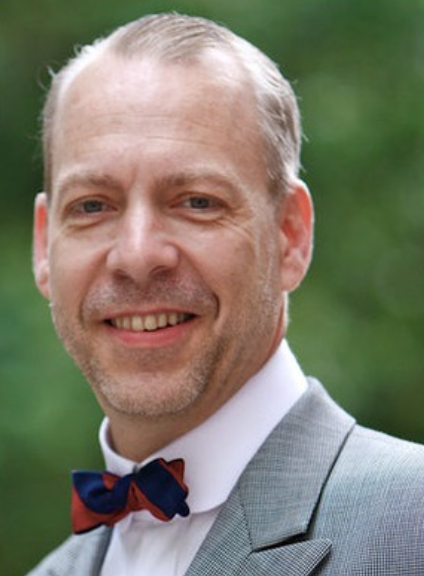
Richard A. Warshak, Ph.D., is a psychologist in private practice in Dallas, former Clinical Professor of Psychiatry at the University of Texas Southwestern Medical Center, and author of Divorce Poison: How to Protect Your Family from Bad-mouthing and Brainwashing (HarperCollins, 2010). For additional tips, visit: www.warshak.com.