Some Federal Reserve officials are calling for tougher banking regulations in order to prevent the Fed’s low interest rate policy from leading investors to take “excessive” risks that will create asset bubbles. The Fed is understandably worried that these bubbles will burst leading to another market meltdown. However, the boom-and-bust cycle will not end because regulators stop investors from taking “excessive” risks. Almost every bubble and economic downturn America has experienced over the past 107 years was caused by the Federal Reserve’s manipulation of the money supply.
The Federal Reserve’s actions artificially lower interest rates, thus distorting the signals sent by the rates, which are the price of money. Artificially low interest rates cause investments to be made in projects that are not supported by the real underlying market conditions. This results in a boom, inevitably followed by a crash, then by a new round of money creation and government bailouts restarting the cycle.
Increased regulations will not just fail to head off the next crash, they will make the next recession worse. Federal regulators are not capable of determining what is “excessive” risk. Instead, that determination is best left to market participants. Regulators are subject to having the same Fed-induced distorted view of the marketplace as nearly everyone else. Thus, regulators may mistake a growing asset bubble as a thriving sector of the economy that will serve as a long-term source of growth. This is especially the case if, as with the housing bubble, government policies such as the Community Reinvestment Act encourage the malinvestments. Also, regulators may impede the growth of businesses that are actually responding to real economic conditions instead of Fed-created illusions.
Support among the people, if not among the financial and political elites, for auditing and even ending the Fed, as well as for cryptocurrencies and precious metals, suggests we may soon reach what Ludwig von Mises referred to as the “crack-up.” The crack-up occurs when enough people realize that continuous expanding of the money supply, and the accompanying decline in a currency’s purchasing power, is a feature of central banking. Therefore, they spend their money as soon as they get it, accelerating the rise of hyperinflation.
Concerns over the effects of the US government’s debt, the precarious American economic condition, and growing resentment of US foreign policy have led to a decline in the dollar’s international value. Eventually, these factors will lead to a rejection of the dollar’s world reserve currency status.
Rejection of the dollar’s reserve currency status abroad and the crack-up at home will cause an economic meltdown worse than the Great Depression. Among the problems this will lead to is increased violence as some Americans who believe they are entitled to live off the stolen property of others cut out the government middleman and start stealing from their fellow citizens.
The only way to avoid this fate is to spread the ideas of liberty among the people. A strong liberty movement that can pressure politicians to cut spending, audit and end the Fed, legalize competing currencies, and stop promoting divisive identity politics is the key to peacefully transitioning away from the Keynesian welfare-warfare state to a free society.
In my recent Townhall article, “What if the Deep State Has No Bottom?” one of the commenters issued a brief roster of 12 deep state layers and below is my take on each of them.
1. Ignorant Youth – A blameless group indoctrinated to either hate America or over-focus on her faults. Students rarely hear about the greatness of America and what we’ve done for the world, let alone our own citizens. These youth eventually join the Democrat/progressive machine that seeks to rewrite our history and to make our populace subjects of the state and not much more.
2. Brainwashed Teachers – Today, teachers from kindergarten to grade 12, invariably lean left. Those who graduated college in the last 20 years were indoctrinated by activist professors. Veteran teachers have had to endure ‘white fragility’ re-education lectures, hear that they are guilty by virtue of their physiology, and learn that sucking up to the cause leads to redemption. Yay, BLM and Antifa!
3. College Professors – Above 90% of college professors vote Democrat year after year. No good comes from this level of conformity; diversity of political thought on campus is not tolerated. The few professors who lean right keep a low profile, as to not make waves, and do not discuss issues with their indoctrinated academic peers.
4. University Committees – Individual professors could be autonomous if not for the academic committees and higher ups: deans, provosts, chancellors, department heads, directors, regents, etc. Group think infects campuses everywhere; bone-headed resolutions appear everywhere, from Berkeley to Cambridge. Students and the larger community are told, say, that Israel is evil and, “We must divest from Israel.” “Republicans are evil,” part of the great unwashed. We tolerate them, but not for long.
5. Rank and File Government Workers – At the local, state, or federal level, those entering government learn that surviving requires one to toe the line. Merely walking the halls, standing in elevators, and being in earshot of their peers reinforces the Democrat/progressive/liberal/socialist party line. The rank and file on all levels overwhelmingly vote and donate to Democrats.
6. Agency Heads – Cabinet secretaries, under secretaries, deputy directors, legal counsel, and other long-term, high-ranking GS level bureaucrats rule Washington. These people, primarily Democrats, also some Republicans, have been in office for too long and represent the essence of the swamp. Beyond the administrative, judicial, and legislative branches of government, they know that the ‘fourth branch’ is their own bureaucracy. Agencies can slow walk any program, document, or mandated action for months or years, for what should have taken days or weeks.
7. Lobbyists – These swamp creatures aren’t officially part of government; they are paid by advocacy groups to influence elected officials. Lobbyists from the left, right, and middle are highly compensated to advocate for a cause, often contrary to the effective functioning of democracy.
8. The Court System – Judges in America wield great power. While the Trump Administration placed 300+ district-level judges, there are over 370 more judgeships across America. Judges are not supposed to legislate from the bench, yet they do. Impacted by the mainstream media, even conservatives judges are coaxed into the middle, if not the left (See Justice John Roberts).
9. Politicians – From senators, to representatives, to governors, all the way down, even many in the GOP, embrace socialist doctrine in one form or another. Dislodging 20 to 30 year swamp creatures, or in the case of Joe Biden, 47 years, is a huge task. They feed from the gravy train of inside information. No one wants to depart because the rewards are lucrative. Their loyalty isn’t to any president or party, but to what keeps them in office and feeling ultra-important while doing so (see Mitt Romney).
10. Three Letter Agencies – The alphabet soup group includes the FBI, NSA, CIA, IRS, DoJ, EPA, SBA, etc. The infiltration of swamp creatures within them is vast and deep. These agencies are often headed by two-faced leaders who are corrupt in private and virtuous in public. Their deputies and staff are often far worse.
11. Technocrat Kings – The billionaire boys club seeks to rule the world. Mark Zuckerberg, Jack Dorsey, Bill Gates, Eric Schmidt, etc. each believe that they’re God’s moral gifts to humanity. They lean left because embracing socialism helps decimate America and supposedly leads to a “one-world global government,” led by enlightened leaders, (such as billionaires) who become the elite ruling class while everyone else becomes a serf.
12. Globalist Visionaries – You could hardly call George Soros a visionary, he’s more demented than anything. He is among the global scoundrels who fervently believe in dissolving all nations and all borders. Then, one grand “Central Authority” will prevail with themselves at the very top. This vision fuels the American Left, including the dimwits in BLM, and Antifa, who barely know why they riot, but figure it’s got something to do with a ‘global vision.’
Swamp Fans
Other entities and groups keep the swamp in place – unions that benefit from Democrat capitulation, recipients of government largesse including welfare, non-profit associations, quasi-government groups, community groups, and all others who believe that government ought to take care of everything, including themselves.
The fractional-reserve banker, even if he violates his contract, cannot be treated as an embezzler and a criminal; but the banker must still face the lesser, but still unwelcome fact of insolvency. There are two major ways in which he can become insolvent.
The first and most devastating route, because it could happen at any time, is if the bank’s customers, those who hold the warehouse receipts or receive it in payment, lose confidence in the chances of the bank’s repayment of the receipts and decide, en masse, to cash them in. This loss of confidence, if it spreads from a few to a large number of bank depositors, is devastating because it is always fatal. It is fatal because, by the very nature of fractional-reserve banking, the bank cannot honor all of its contracts. Hence the overwhelming nature of the dread process known as a “bank run,” a process by which a large number of bank customers get the wind up, sniff trouble, and demand their money. The “bank run,” which shivers the timbers of every banker, is essentially a “populist” uprising by which the duped public, the depositors, demand the right to their own money. This process can and will break any bank subject to its power. Thus, suppose that an effective and convincing orator should go on television tomorrow, and urge the American public: “People of America, the banking system of this country is insolvent. ‘Your money’ is not in the bank vaults. They have less than 10 percent of your money on hand. People of America, get your money out of the banks now before it is too late!” If the people should now heed this advice en masse, the American banking system would be destroyed tomorrow.1
A bank’s “customers” are comprised of several groups. They are those people who make the initial deposit of cash (whether gold or government paper money) in a bank. They are, in the second place, those who borrow the bank’s counterfeit issue of warehouse receipts. But they are also a great number of other people, specifically those who accept the bank’s receipts in exchange, who thereby become a bank’s customers in that sense.
Let us see how the fractional-reserve process works. Because of the laxity of the law, a deposit of cash in a bank is treated as a credit rather than a bailment, and the loans go on the bank’s balance sheet. Let us assume, first, that I set up a Rothbard Deposit Bank, and that at first this bank adheres strictly to a 100-percent reserve policy. Suppose that $20,000 is deposited in the bank. Then, abstracting from my capital and other assets of the bank, its balance sheet will look as in Figure 4:
So long as Rothbard Bank receipts are treated by the market as if they are equivalent to cash, and they function as such, the receipts will function instead of, as surrogates for, the actual cash. Thus, suppose that Jones had deposited $3,000 at the Rothbard Bank. He buys a painting from an art gallery and pays for it with his deposit receipt of $3,000. (The receipt, as we shall see, can either be a written ticket or an open book account.) If the art gallery wishes, it need not bother redeeming the receipt for cash; it can treat the receipt as if it were cash, and itself hold on to the receipt. The art gallery then becomes a “customer” of the Rothbard Bank.
It should be clear that, in our example, either the cash itself or the receipt to cash circulates as money: never both at once. So long as deposit banks adhere strictly to 100-percent reserve banking, there is no increase in the money supply; only the form in which the money circulates changes. Thus, if there are $2 million of cash existing in a society, and people deposit $1.2 million in deposit banks, then the total of $2 million of money remains the same; the only difference is that $800,000 will continue to be cash, whereas the remaining $1.2 million will circulate as warehouse receipts to the cash.
Suppose now that banks yield to the temptation to create fake warehouse receipts to cash, and lend these fake receipts out. What happens now is that the previously strictly separate functions of loan and deposit banking become muddled; the deposit trust is violated, and the deposit contract cannot be fulfilled if all the “creditors” try to redeem their claims. The phony warehouse receipts are loaned out by the bank. Fractional-reserve banking has reared its ugly head.
Thus, suppose that the Rothbard Deposit Bank in the previous table decides to create $15,000 in fake warehouse receipts, unbacked by cash, but redeemable on demand in cash, and lends them out in various loans or purchases of securities. For how the Rothbard Bank’s balance sheet now looks see Figure 5:
In this case, something very different has happened in a bank’s lending operation. There is again an increase in warehouse receipts circulating as money, and a relative decline in the use of cash, but in this case there has also been a total increase in the supply of money. The money supply has increased because warehouse receipts have been issued that are redeemable in cash but not fully backed by cash. As in the case of any counterfeiting, the result, so long as the warehouse receipts function as surrogates for cash, will be to increase the money supply in the society, to raise prices of goods in terms of dollars, and to redistribute money and wealth to the early receivers of the new bank money (in the first instance, the bank itself, and then its debtors, and those whom the latter spend the money on) at the expense of those who receive the new bank money later or not at all. Thus, if the society starts with $800,000 circulating as cash and $1.2 million circulating as warehouse receipts, as in the previous example, and the banks issue another $1.7 million in phony warehouse receipts, the total money supply will increase from $2 million to $3.7 million, of which $800,000 will still be in cash, with $2.9 million now in warehouse receipts, of which $1.2 million are backed by actual cash in the banks.
Are there any limits on this process? Why, for example, does the Rothbard Bank stop at a paltry $15,000, or do the banks as a whole stop at $1.7 million? Why doesn’t the Rothbard Bank seize a good thing and issue $500,000 or more, or umpteen millions, and the banks as a whole do likewise? What is to stop them?
The answer is the fear of insolvency; and the most devastating route to insolvency, as we have noted, is the bank run. Suppose, for example, that the banks go hog wild: the Rothbard Bank issues many millions of fake warehouse receipts; the banking system as a whole issues hundreds of millions. The more the banks issue beyond the cash in their vaults, the more outrageous the discrepancy, and the greater the possibility of a sudden loss of confidence in the banks, a loss that may start in one group or area and then, as bank runs proliferate, spread like wildfire throughout the country. And the greater the possibility for someone to go on TV and warn the public of this growing danger. And once a bank run gets started, there is nothing in the market economy that can stop that run short of demolishing the entire jerry-built fractional-reserve banking system in its wake.
Apart from and short of a bank run, there is another powerful check on bank credit expansion under fractional reserves, a limitation that applies to expansion by any one particular bank. Let us assume, for example, an especially huge expansion of pseudo-warehouse receipts by one bank. Suppose that the Rothbard Deposit Bank, previously hewing to 100-percent reserves, decides to make a quick killing and go all-out: upon a cash reserve of $20,000, previously backing receipts of $20,000, it decides to print unbacked warehouse receipts of $1,000,000, lending them out at interest to various borrowers. Now the Rothbard Bank’s balance sheet will be as in Figure 6:
Everything may be fine and profitable for the Rothbard Bank for a brief while, but there is now one enormous fly embedded in its ointment. Suppose that the Rothbard Bank creates and lends out fake receipts of $1,000,000 to one firm, say the Ace Construction Company. The Ace Construction Company, of course, is not going to borrow money and pay interest on it but not use it; quickly, it will pay out these receipts in exchange for various goods and services. If the persons or firms who receive the receipts from Ace are all customers of the Rothbard Bank, then all is fine; the receipts are simply passed back and forth from one of the Rothbard Bank’s customers to another. But suppose, instead, that the receipts go to people who are not customers of the Rothbard Bank, or not bank customers at all.
Suppose, for example, that the Ace Construction Company pays $1 million to the Curtis Cement Company. And the Curtis Cement Company, for some reason, doesn’t use banks; it presents the receipt for $1 million to the Rothbard Bank and demands redemption. What happens? The Rothbard Bank, of course, has peanuts, or more precisely, $20,000. It is immediately insolvent and out of business.
More plausibly, let us suppose that the Curtis Cement Company uses a bank, all right, but not the Rothbard Bank. In that case, say, the Curtis Cement Company presents the $1 million receipt to its own bank, the World Bank, and the World Bank presents the receipt for $1 million to the Rothbard Bank and demands cash. The Rothbard Bank, of course, doesn’t have the money, and again is out of business.
Note that for an individual expansionist bank to inflate warehouse receipts excessively and go out of business does not require a bank run; it doesn’t even require that the person who eventually receives the receipts is not a customer of banks. This person need only present the receipt to another bank to create trouble for the Rothbard Bank that cannot be overcome.
For any one bank, the more it creates fake receipts, the more danger it will be in. But more relevant will be the number of its banking competitors and the extent of its own clientele in relation to other competing banks. Thus, if the Rothbard Bank is the only bank in the country, then there are no limits imposed on its expansion of receipts by competition; the only limits become either a bank run or a general unwillingness to use bank money at all.
On the other hand, let us ponder the opposite if unrealistic extreme: that every bank has only one customer, and that therefore there are millions of banks in a country. In that case, any expansion of unbacked warehouse receipts will be impossible, regardless how small. For then, even a small expansion by the Rothbard Bank beyond its cash in the vaults will lead very quickly to a demand for redemption by another bank which cannot be honored, and therefore insolvency.
One force, of course, could overcome this limit of calls for redemption by competing banks: a cartel agreement among all banks to accept each other’s receipts and not call on their fellow banks for redemption. While there are many reasons for banks to engage in such cartels, there are also difficulties, difficulties which multiply as the number of banks becomes larger. Thus, if there are only three or four banks in a country, such an agreement would be relatively simple. One problem in expanding banks is making sure that all banks expand relatively proportionately. If there are a number of banks in a country, and Banks A and B expand wildly while the other banks only expand their receipts a little, claims on Banks A and B will pile up rapidly in the vaults of the other banks, and the temptation will be to bust these two banks and not let them get away with relatively greater profits. The fewer the number of competing banks in existence, the easier it will be to coordinate rates of expansion. If there are many thousands of banks, on the other hand, coordination will become very difficult and a cartel agreement is apt to break down.
The Civil War (1861-1865) was nothing less than a revolutionary reorganization of American government, society, and economics. It claimed almost as many lives as every other U.S. conflict combined and, by war’s bloody logic, forged the nation which the Founding Fathers could not by settling once and for all lingering national questions about state sovereignty and slavery.
The postwar period, however, was one of arguably greater turmoil than the war itself. This is because many men in the South did not, in fact, lay down their arms at the end of the War. What’s more, freedmen, former slaves that were now American citizens, had to take defensive measures against pro-Democratic Party partisans, the most famous of whom were the Ku Klux Klan.
America’s militia has existed for a number of purposes and has exercised a surprising number of roles over the years. But at its core, it’s a bulwark of the power of the country against the power of the state. In Early American Militias: The Forgotten History of Freedmen Militias from 1776 until the Civil War, we covered the historical roots of the militia. Below is the modern history of the militia following the Civil War, and how unforeseen changes which started during Reconstruction have set the stage for the contemporary movement of Constitutional citizens militias. Table of Contents:
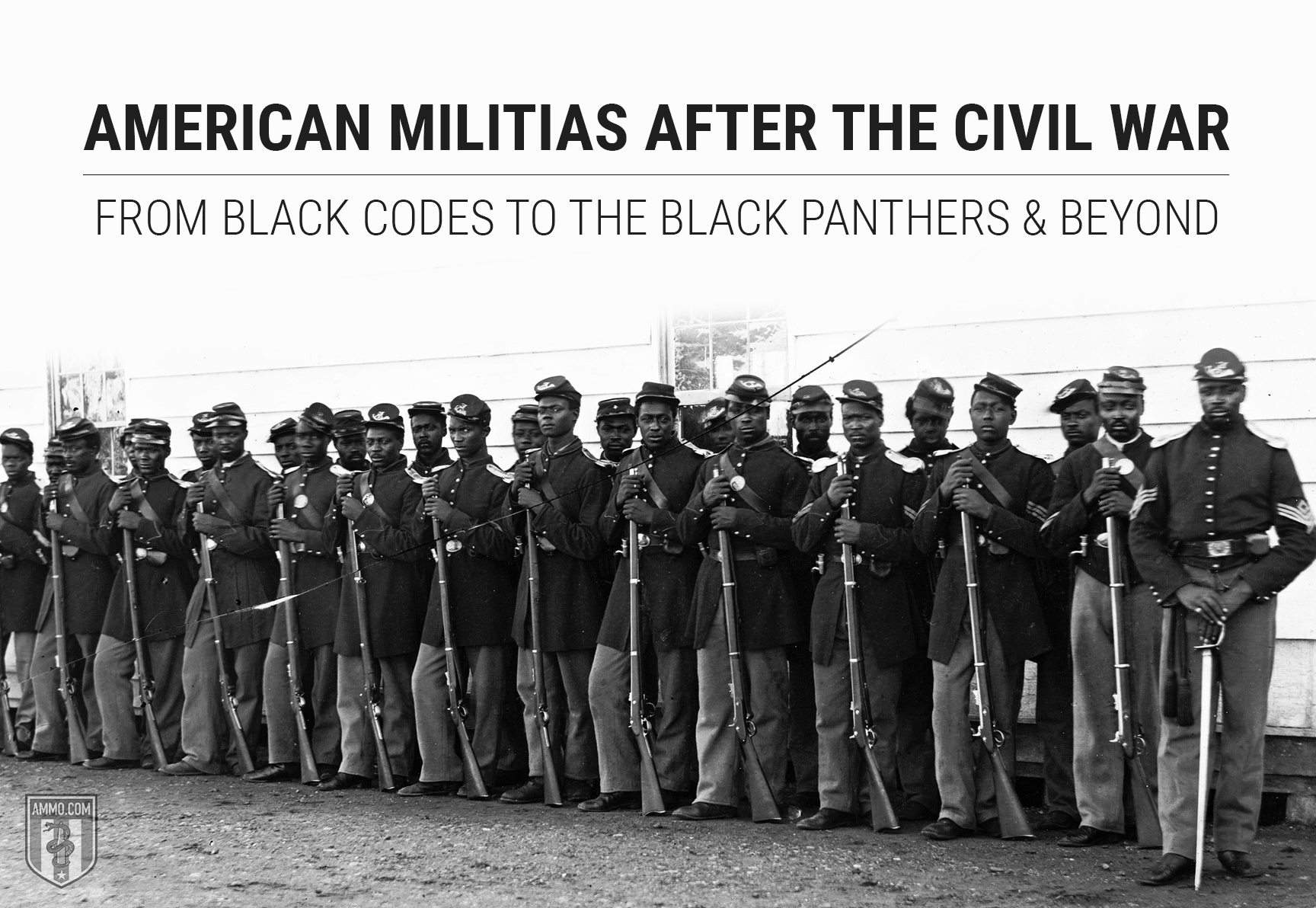
The Reconstruction Era (1865-1877) is one of the most fascinating – and violent – periods of American history. After the defeat of the Confederate States, the United States Army took direct control of the quelled rebel states. Elections were eventually held and Republicans won every state, with the exception of Virginia. The state governments then organized militias, which were comprised of a majority of black men.
To say that there was racial tension in the former Confederate states would be an understatement. Not only was the South under continued military occupation, but they were also being occupied by their former slaves, now armed by what was until very recently a foreign power. The white population of the South responded to what they considered to be an attack on them and their rights by organizing militias of their own, despite the fact that this was prohibited by law. In fact, postbellum laws on militia organization prohibited drilling, parading, or organizing.
White Militias and the Black Codes
Fears among Southern whites were not unfounded, nor without precedent. The 35th United States Colored Troops went house to house in Charleston confiscating firearms. Black troops were known for looting and rioting during the final days of the war. The 52nd United States Colored Infantry sacked the Vicksburg plantation belonging to Jared and Minerva Cook, where it is believed some of them had been slaves. They confiscated the plantation’s guns at the point of a revolver, shooting both Cooks, killing Minerva and seriously wounding Jared.
A correspondent writing at the time spoke of the palpable fear of the white population: He believed that a massacre of the entire white population was impending. This anxiety is what led to the so-called “Black Codes” of the postwar era, which included tight restrictions on the weapons that could be owned by free blacks – if any at all. Some laws even restricted blacks from owning knives.
It’s worth noting that black veterans of the time were armed quite well. Not only did many keep their service weapons after the war was over, but they were also in possession of weapons claimed as war prizes. The average black citizen of the time, however, wanted only arms for self defense. Indeed, the mutual feeling of uneasiness in the postwar South seems to have a solid foundation for each group. How comfortable would most people feel with an occupying army of hostile former slaves? And how comfortable would most former slaves feel surrounded by recent insurgents?
These independent white militias were effectively a form of guerilla resistance against reasserted Union control in the South. Activity on either side tended to peak around the time of elections, suggesting that each was engaged in a campaign of intimidation against the other.
Some of the first anti-gun control movements in the United States were among freed blacks seeking to keep and bear arms for their own protection against the white independent militias. The names are familiar to most Americans: The Ku Klux Klan, the Knights of the White Camelia, The Red Shirts, The White League, The White Brotherhood. These white independent militias have been called by George C. Rable the “military arm of the Democratic Party.” Many blacks who had no intention of firing a shot in anger wanted a weapon simply to keep themselves and their families secure in the face of armed terrorist gangs seeking to circumvent the Reconstruction.
The End of Reconstruction
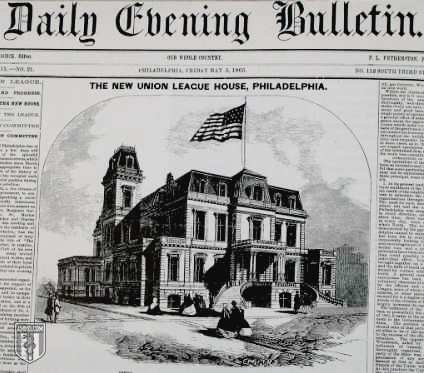
However, winners, as they say, write the history books. The Southern side of the argument is that the Union League, a Northern organization dedicated to patriotism, unionism and opposition to “Copperhead” Peace Democrats was, by the end of the war, organizing in the South. While less known than the above-mentioned groups, the Union League (also known as the Loyal League) was certainly not innocent of violent assaults, murder and rape. This made the most innocent of Union League members a target for Southern, pro-Democratic groups.
In the battle between the largely black, pro-Federal and Republican groups and the overwhelmingly (if not exclusively) white, pro-Southern and Democratic groups, the latter ultimately won the day. Reconstruction was ended as part of a bargain to secure Republican Rutherford B. Hayes the presidency in 1876. The North in general, and the Republican Party in particular, was tired of dealing with the Southern issue. Northern sympathies for black troubles were tepid to nonexistent a decade after President Andrew Johnson declared a formal end to hostilities.
Beyond the national political loss of will to continue Reconstruction, there are other, more intangible factors in play. White independent organization was stronger than the black, federally backed organizations. What’s more, while the black population was afraid, the white population was mad with desperation. Blacks in government, armed with the backing of federal power seemed to them no less than an inversion of nature and an existential threat to all white Southrons.
With federal troops and backing withdrawn from Reconstruction, the stage was set for Jim Crow and a rollback of many of the social gains blacks enjoyed during this era.
While the popular vision of the post-Reconstruction Era is one of constant terror from pro-Democratic paramilitary groups such as the KKK, this is inaccurate. The Knights of the White Camelia, an upper-crust organization, had largely ceased to exist by 1870. Nathaniel Bedford Forrest ordered the Klan disbanded in 1869, increasingly concerned with their lawless behavior and his inability to control it. President Grant’s Enforcement Acts of 1870 and 1871 were squarely designed toward dismantling what remained of the Original Klan. The White League, perhaps the most militant of the group, disbanded in 1876, seeing their aims as largely accomplished. The Red Shirts lingered on until 1900, but their efforts were primarily around voter intimidation at election time, rather than a constant campaign of harassment, terror and intimidation.
The point is not to soft pedal or minimize the attacks against blameless black civilians during and after the Reconstruction Era. However, the white paramilitary groups were largely inactive for the simple reason that the Democratic Party state governments were accomplishing most of their goals through the rule of law.
The Posse Comitatus Act of 1878 and Striking Workers
Curiously hidden within an otherwise banal defense appropriations bill, the Posse Comitatus Act of 1878 radically changed the role of the militia in the United States. It prevented the Army from enforcing federal law in the United States. This was later amended to include the Air Force, however, both the United States Marine Corps and the United States Navy are lacking from the law. The Navy has regulations which effectively provide the same prohibitions.
Also missing from the Act is anything preventing the state militias or the National Guard from enforcing relevant laws, provided that they are acting under the command of the governor and the state government. This meant that the state governments, acting largely under the control of the Democratic Party, could still use organized military – while the federal government, still dominated by Republicans, could not. While state militias were rarely, if ever, used in the same manner as the Klan and other white paramilitary organizations, the writing was on the wall – black citizens would no longer receive protection from the federal government against either the Democratic Party state governments or their more militant and rambunctious voters.
The Great Railroad Strike of 1877
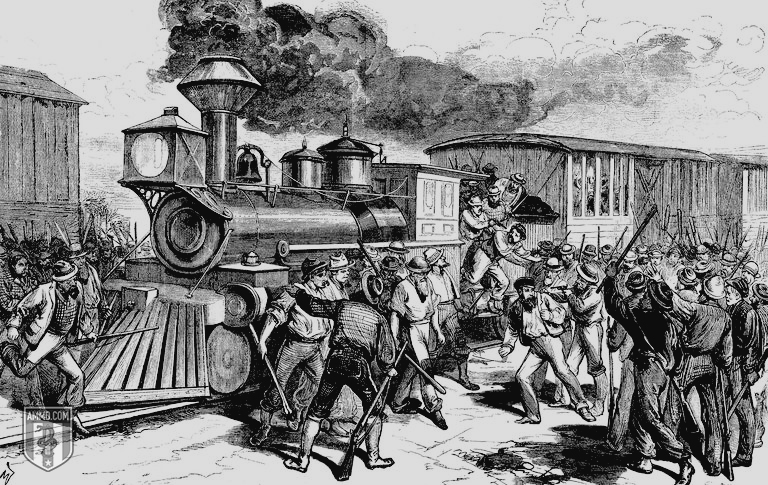
Militias under the control of the state largely acted not along racial lines, but economic ones. State militias were increasingly deployed against striking workers in labor disputes. The Great Railroad Strike of 1877, known contemporaneously as “the Great Upheaval,” is one such example. The first nationwide strike in American history, railroad workers went out on strike against a third wage cut in the span of a year. Over 100,000 workers walked off the job. Local and state militias played an instrumental role in breaking the strike, which lasted 45 days and left over 100 dead. Militia forces killed striking workers across the nation, including in Baltimore, Pittsburgh and Chicago.
The Great Railroad Strike was not the last time that militias were used against striking workers. In Lemont, Illinois, two striking Polish quarry workers were killed by the militia. There was also a racial component to some strikebreaking. For example, in Thibodaux, Louisiana, the Louisiana Militia shot at least 35 unarmed striking black sugar workers.
The Ludlow Massacre of 1914
However, the most violent incident by far was the Ludlow Massacre of 1914. When the dust settled, 20 were dead – including 12 children and one bystander. As with many of the most pitched battles in American labor history, this involved the United Mine Workers. Mine work is dangerous everywhere, but this was particularly true out west. Workers were frequently paid in tonnage, and work that did not involve the digging of resources was unpaid. This meant workers often took chances with their lives, letting important repairs go undone and engaging in risky activities to get valuable minerals out of the ground.
Most of the striking workers in Ludlow, Colorado, had demands most Americans would sympathize with: Increased wages, payment for maintenance work, measures to keep weightmen honest, the right to live, shop and see a doctor at a place of their choosing, and the enforcement of existing state and federal laws.
The Massacre took place on Orthodox Easter, with the militia firing on striking worker camps with a machine gun. Women and children were attacked in an underground shelter with a fire set by the militia. While the United Mine Workers failed to obtain official recognition, the Massacre led to sweeping labor law reforms both in the United States and Canada. A monument erected by the United Mine Workers sits on the land once occupied by the striking workers’ tent camp.
The Militia Act of 1903 and the Modernization of the Militia
The Militia Act of 1903 was the most sweeping reorganization of the militia before the formation of the modern National Guard. Prior to the enactment of the Militia Act of 1903, the militias were governed both by the Constitution and the Militia Acts of 1792. The latter simply enabled the president to call out and command militias when appropriate and set the parameters for what constituted the militia. It left the question of state versus federal control of militias unresolved.
While the militia as a national defense had been problematic since the days of the War of 1812, the Spanish-American War demonstrated that the militia system in the United States was badly in need of reform. The Militia Act of 1903 repealed the Militia Acts of 1792. It was this new Act which separated the militia into the organized and unorganized components. It also created the National Guard, an organization separate from both the organized militia and the National Guard of the United States, but with significant overlap with each. It has been argued that one of the issues driving the adoption of the Militia Act of 1903 was further disarmament of black Americans, particularly in the South during what is considered to be the nadir of race relations in the United States.
Left without much recourse in the way of self defense, the more militant members of the Civil Rights Movement began organizing what were effectively militias under the auspices of the National Rifle Association.
The Civil Rights Movement and the Militia
Robert F. Williams was a Civil Rights activist who believed strongly in the right of blacks to self defense against racist violence. Born in North Carolina, Williams moved to Detroit and served in the segregated Marine Corps during the Second World War. Like many black men of his generation, he was not content to return to a servile status after securing the peace in Europe. Returning to North Carolina, Williams quickly became a target of a revitalized KKK.
Williams eventually fled to Cuba where he attacked the United States government on Radio Free Dixie. He was an intimate of Chinese Communist Party elites who routinely attacked the official Communist Party in the United States. Upon returning to the United States in the 70s, he became an academic, little involved in the newly militant Black Power movement, which saw him as their touchstone.
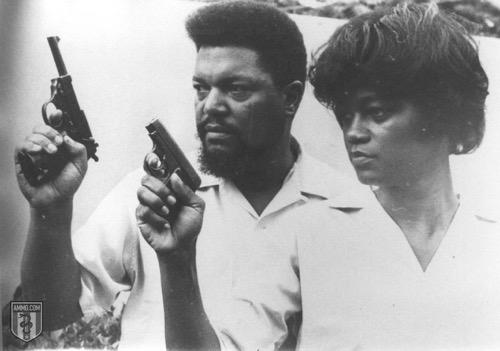
The Black Panthers started as a similar phenomenon. While their contemporary fans focus on their social programs like free lunches, the Panthers were known to carry, even on the steps of the California State Capitol. This is what prompted then-Governor Ronald Reagan to pass some of the most sweeping gun control laws in modern history.
While this militant wing of the Civil Rights Movement was not an inspiration for the modern Constitutional Militia Movement, it’s hard not to see it as its John the Baptist.
The Constitutional Militia Movement
The Constitutional Militia Movement is often derided as a “far-right extremist group” by the usual suspects. Whether this is true or not is largely a matter of perception. However, what is undeniable is that the militia movement is profoundly American, as has been seen throughout our history of the militia.
While we discussed in detail how the militia in the United States has been used to suppress rebellion, it’s worth noting the degree to which the militia – the armed bodies of men who have made up the bulk of the American population until recent history – have also been a force of resistance against the state power which ultimately suppressed them. There are several examples of this, including the Revolution of 1800, the Dorr Rebellion and, more recently, the American Liberty League, to say nothing of the aforementioned black Civil Rights Movement gun clubs. In this sense, a Constitutional Militia Movement is no less American than a Free Speech Movement, and certainly more American than a movement championing the separation of church and state.
The origins of the modern militia movement in the United States are shady. Some date it back to 1958, but this is unfair and imprecise – the date is picked because of a militia formed by the Christian Identity movement. Indeed, much of the information about the history of the Constitutional Militia Movement in the United States is difficult to tease out, because it’s primarily documented by the movement’s enemies at self-styled “hate group” watches like the SPLC and the ADL or left-wing media like Vox and Mother Jones.
One thing is certain: The militia movement really started kicking off after the Ruby Ridge massacre where Randy Weaver’s son, wife and (of course) dog, were all shot down by federal agents on Weaver’s property. While the Weaver case has some nuance, it’s worth noting that the only thing Weaver was ever convicted of was failing to appear in court at a time when he didn’t know he was supposed to appear. Gun-owning patriots were, naturally, put aback by this. Combined with the Waco siege, where 76 men, women and children were burned alive, a new militancy in the nascent militia movement was inspired.
This is when groups such as the Michigan Militia, who allegedly had ties with Oklahoma City bomber Timothy McVeigh, began to crop up. Indeed, there is a veritable rogue’s gallery of militias and militia members who were arrested, prosecuted and imprisoned for a litany of crimes. The degree to which these are legitimate charges and to what degree they are entrapment is anyone’s guess.
But there’s a whole other side to the militia movement. Militias such as the Missouri Citizens Militia, the Missouri Militia, the Ohio Defense Force and the Pennsylvania Military Reserve primarily see their mission as supporting the common defense in the event of an emergency. While it’s likely that individual members might be skeptical of, or even hostile toward, federal power, they’re not planning armed insurrections or even waiting for the right moment to do so. They see themselves as the successor of the organized militias of old. And while they might not realize it, this makes them more than a little like the militias raised to put down the Dorr Rebellion and other civil disturbances attacking federal power.
The two largest militia groups active today (though, of course, actual member numbers can be difficult to ascertain for obvious reasons) are probably the Oath Keepers and the 3 Percenters. The former’s membership is restricted to current and former military, peace officers and first responders. The Oath Keepers were involved in patrolling Ferguson, Missouri, during the rioting there in 2014 and 2015. They were positioned on rooftops around the city and ignored a police order to cease and desist. When Kim Davis refused to issue marriage licenses to homosexual couples, the Oath Keepers stated that they would prevent local police from arresting her a second time. Her legal team reached out to politely but firmly decline the offer.
The Bundy Ranch Standoff
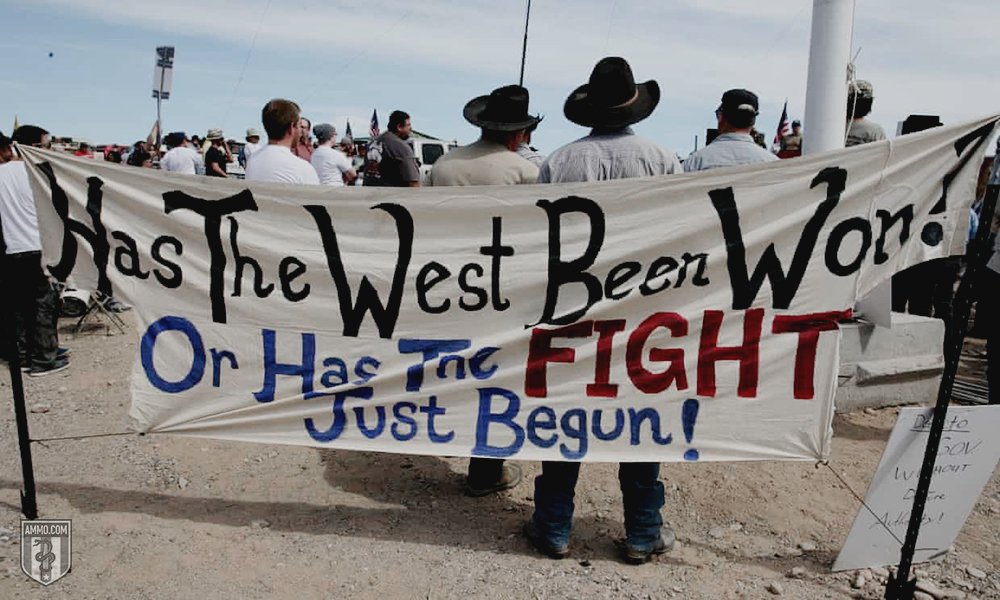
Both groups were present at the Bundy Ranch standoff as well as the Occupation of the Malheur National Wildlife Refuge. The Bundy Ranch standoff was one episode in a 25-year legal odyssey the Bundys waged against the Bureau of Land Management. The background of this is complicated, but the gist is that the BLM claimed Cliven Bundy owed them over $1 million in grazing fees, while Bundy claimed that he did not. On March 27, 2014, nearly 150,000 acres of land were closed for the collection of trespassing cattle. On April 12, 2014, protesters, some of whom were armed, confronted a BLM official. Sheriff Doug Gillespie negotiated a settlement with Bundy and then-BLM director Neil Kornze.
The standoff is interesting from the perspective of militia history because it features not only the unorganized militia (Bundy and his men), but also several organized militias, albeit not those explicitly under the command of the federal government, the Constitutional status of which would be a grey area anyhow. The Oath Keepers, 3 Percenters, the White Mountain Militia and the Praetorian Guard were all on the scene of the standoff.
The Occupation of the Malheur National Wildlife Refuge
Several of these figures showed up not much later in the Occupation of the Malheur National Wildlife Refuge, a 40-day standoff (again) over the proper role of the federal government with regard to large tracts of land. The central character this time was Ammon Bundy, son of Cliven. The 3 Percenters also made an appearance, but did not stay for the duration of the standoff.
In each case, while the particulars of what was and was not legal about the Bundy’s relationship to the land and the BLM is, to some degree, in the eye of the beholder, what is not is that the Bundy and militia resistance worked, at least temporarily, in favor of the Bundys as a check on federal power.
This harks back to the original, revolutionary origins of the militia. The militia has existed for a number of purposes and has exercised a number of roles over the years. But at its core, it’s a bulwark of the power of the country against the power of the state.
“Envy” is not the emotion I have in mind, but it is the clearest manifestation of an emotion that has remained nameless; it is the only element of a complex emotional sum that men have permitted themselves to identify.
Envy is regarded by most people as a petty, superficial emotion and, therefore, it serves as a semihuman cover for so inhuman an emotion that those who feel it seldom dare admit it even to themselves. . . . That emotion is: hatred of the good for being the good.
This hatred is not resentment against some prescribed view of the good with which one does not agree. . . . Hatred of the good for being the good means hatred of that which one regards as good by one’s own (conscious or subconscious) judgment. It means hatred of a person for possessing a value or virtue one regards as desirable.
If a child wants to get good grades in school, but is unable or unwilling to achieve them and begins to hate the children who do, that is hatred of the good. If a man regards intelligence as a value, but is troubled by self-doubt and begins to hate the men he judges to be intelligent, that is hatred of the good.
The nature of the particular values a man chooses to hold is not the primary factor in this issue (although irrational values may contribute a great deal to the formation of that emotion). The primary factor and distinguishing characteristic is an emotional mechanism set in reverse: a response of hatred, not toward human vices, but toward human virtues.
To be exact, the emotional mechanism is not set in reverse, but is set one way: its exponents do not experience love for evil men; their emotional range is limited to hatred or indifference. It is impossible to experience love, which is a response to values, when one’s automatized response to values is hatred.
Consider the full meaning of this attitude. Values are that which one acts to gain and/or keep. Values are a necessity of man’s survival, and wider: of any living organism’s survival. Life is a process of self-sustaining and self-generated action, and the successful pursuit of values is a precondition of remaining alive. Since nature does not provide man with an automatic knowledge of the code of values he requires, there are differences in the codes which men accept and the goals they pursue. But consider the abstraction “value,” apart from the particular content of any given code, and ask yourself: What is the nature of a creature in which the sight of a value arouses hatred and the desire to destroy? In the most profound sense of the term, such a creature is a killer, not a physical, but a metaphysical one—it is not an enemy of your values, but of all values, it is an enemy of anything that enables men to survive, it is an enemy of life as such and of everything living.
They do not want to own your fortune, they want you to lose it; they do not want to succeed, they want you to fail; they do not want to live, they want you to die; they desire nothing, they hate existence, and they keep running, each trying not to learn that the object of his hatred is himself . . . . They are the essence of evil, they, those anti-living objects who seek, by devouring the world, to fill the selfless zero of their soul. It is not your wealth that they’re after. Theirs is a conspiracy against the mind, which means: against life and man.
White parents whose children are discriminated against by affirmative action and kept out of prestige universities resorted to a scheme run by sports coach Rick Singer that allegedly boosted their chances of gaining admission to prestige institutions. It cost the parents a lot of money and is now costing them prison time.
Harvey Silverglate, a noted defense attorney and former head of the American Civil Liberties Union in Massachusetts says that the parents are fraudulently convicted of a non-existent federal crime and are in fact victims rather than perpetrators of a corrupt college admissions system. Silverglate writes:
“The imposition of federal criminal law on fraudulent college admissions is itself a fraud, for it gives a gullible public the misleading impression that, without such activity as is described in these indictments, the system would be honest and would be a meritocracy.
“This whole series of prosecutions is dependent on a corrupt federal criminal prosecutorial system where crimes are made up and shoe-horned into indictments because the behavior was accomplished by means of mail, wire, and interstate commerce. Without such jurisdictional “hooks,” the activities could not be prosecuted in federal court because they are not specified crimes in the federal criminal code. Yet, every single one of those charged has pleaded guilty (or will shortly do so). All have been or will be sentenced to a much shorter prison term than would have been if the case had gone to trial (statistically, over 95% of all federal prosecutions end in guilty pleas because of the hair-raising sentences that await a defendant who goes to trial and loses). And so there will be no opportunity to test within the federal courts whether these pay-offs are federal crimes or simply business-as-usual in the ugly, but probably legal system by which families get their kids admitted to elite colleges.” https://www.wgbh.org/news/commentary/2020/12/05/varsity-blues-prosecution-perverts-u-s-law-and-camouflages-deep-campus-corruption
Clearly, these false prosecutions are part of the program of displacing white people from influential positions in their own society. The networks of elite institutions and the preference of employers for their graduates are a primary determinant of influence in American society. By reducing white presence in these institutions with affirmative action and now with false prosecutions, the influence of native born white Americans in their society is whittled away. It should wake up white Americans and scare them to death that the DOJ and FBI are committed to this reduction in the influence of white Americans.
Note also that the FBI and the US Department of Justice (sic) are much more focused on keeping white kids out of prestige universities than they are in the use of electoral fraud to overturn American democracy. Despite the massive amounts of evidence being presented to state legislatures and the legislatures’ calls for a forensic investigation of the Dominion voting machines and invalid mail-in ballots, Trump’s Attorney General supports the anti-Trump media’s allegation that there is no evidence of electoral fraud. Neither the presstitutes nor the DOJ have done any investigation of the electoral fraud; yet they dishonestly give assurances that there was no fraud.
When the US Department of Justice is this corrupt, what chance does America have?
I heard someone say, “Now that Trump is going, there will be less hatred.” How clueless. Trump defeated ISIS, cut taxes, cut regulation, incited an economic boom, appointed 3 non-Communists to the Supreme Court, and tried at least to minimize the spread of COVID fascism across the country. How do ANY of these things stand for “hatred”? Hatred of tyranny? Additionally: How will disenfranchising 74 million-plus voters instill peace, love and brotherhood under a fraudulently elected regime headed by a demented has-been career politician working for the Chinese Communist Party?
Are 74 million-plus REALLY PISSED OFF citizens, most of them armed, truly a good thing for the cause of serenity now? These delusional fools think they’re about to get love and tolerance, under a government that will be marked by escalating restrictions on every minute of human activity, on confiscation of weapons for self-defense and on de facto state censorship imposed by liability-immune, left-wing social media giants. Good luck with all that, comrades and snowflakes.
It’s out in the open for everyone with eyes and ears, not only here in the United States but around the world. The November U.S. Presidential election produced a fraudulent result — appearing to deliver a defeat for extraordinarily popular and remarkably successful incumbent President Donald Trump and a victory for extraordinarily unimpressive Democrat challenger Joe Biden.
Trump drew crowds of 35-40,000 and more at every rally. Biden couldn’t attract more than a few dozen at his public meetings — none of which could be called rallies. Biden’s handlers decided on a basement strategy early on, recognizing that a discharged and failing battery was no match for the orange energizer bunny. Additionally, why take the risk of gaffes in public appearances when you know that the fix is in with upcoming multilevel vote fraud. First, a refresher and some background.
Donald Trump was elected President in 2016 as an outsider, the candidate whose “Make America Great Again” platform included draining the Swamp and taking on corruption in Washington.
Prior presidents had generally accommodated Washington corruption, and it naturally grew over time. A major contributing factor that compelled Trump to run was that under the Obama administration corruption became egregious. First Amendment rights were violated in new ways with surveillance conducted on select media reporters who criticized Obama, and with muzzling of some 160 patriotic conservative groups by Lois Lerner in her position as director of the Exempt Organizations Unit of the Internal Revenue Service. Then there was the outrageous saga of Secretary of State Hillary Clinton and her husband and ex-president Bill who played tag team in shaking down foreign governments for nearly a billion dollars, which got shoveled into the Clinton Foundation. All the while Secretary Clinton flagrantly violated U.S. Code § 1924 that prohibits the private storing of classified documents and confidential state matters, which she circumvented by use of an unsecure private server and email system. That was obviously implemented to cover up her conflicts of interest while serving as secretary.
And then there was Obama’s achievements: the Iran Nuclear Deal was consummated with the payment of $1.7 billion to the ruling mullahs in Iran, which the Senate wouldn’t have ratified were it a treaty rather than a backchannel deal. Obama’s crowning achievement — er crime — that lead us to today’s vote fraud dilemma was his oversight and approval of massive clandestine surveillance on Trump, his family and his entire campaign staff by way of an earlier fraud — the illicitly obtained FISA warrants to authorize surveillance — that were undertaken to facilitate an impeachment coup.
Because Trump was an outsider committed to fighting corruption and changing Washington’s ways, multiple coup plots against him were contemplated even before he was inaugurated. Taking down General Michael Flynn was just the beginning of the siege of President Donald Trump by the Deep State, instigated by the FBI Director James Comey. Flynn’s takedown was immediately followed by two years of the Mueller Commission investigation into Trump’s alleged ties to and collusion with Russia. Try as they might, no substantive evidence could be found. Then the baton was passed to House Speaker Nancy Pelosi who commenced impeachment hearings. That too failed for lack of evidence.
Since there were no penalties from the previous coup efforts based on the fraudulently obtained FISA warrants, it’s only natural that the Deep State and Democrat Party operatives were emboldened to make a third attempt by seizing on the coronavirus crisis to continue the coup effort in Trump’s fourth year — this time putting in the fix on the November 2020 Presidential election.
They took advantage of the lockdowns and public fear and pushed specific actions to game the system to increase their delivery of votes leading up to election day. First they legitimized the wholesale distribution of ballots and mail-in balloting, and then they blanketed swing states with armies of lawyers filing suits to challenge voter ID laws, signature verification laws and extending the deadlines for mail-in ballots. Changing rules in these ways in key swing states created ambiguities that contributed to voting irregularities, such as over-voting, ballot harvesting, filing fraudulent ballots from dead people still on the voter rolls, ballot dumps, and other fraud and poll place shenanigans. And then there was the use of Dominion voting machines and software technology that were implemented in various jurisdictions in all swing states as well as 18 others. Dominion vice president of U.S. engineering, Eric Coomer, is on record acknowledging the programmability of Dominion voting technology to fix votes, saying “Don’t worry about the election; Trump’s not going to win. I made f***ing sure of that!”
Common sense, longstanding predictable voting behavior patterns in many specific jurisdictions, big data statistical pattern analysis and forensic analysis of Dominion Voting Systems machines and software, and polling place wrongdoings in the contested states don’t just reveal garden variety voting irregularities, but rather overwhelming massive voter and polling place fraud.
People who think Trump is hated for his loud braggadocio persona and style don’t get it. Trump was targeted from the beginning because he threatened the Deep State, which includes a self-serving corporate elite, their Washington lobbyists, the internationalist establishment in and out of government, the one-sided politically corrupt media, as well as a myriad of unaccountable agencies that include the FBI, CIA, FEMA — to name only a few powerful bureaucracies that now operate with almost no Constitutional constraints.
Donald Trump was uniquely prepared and chosen for such a time as this. Seen in the context of historical America, the speed at which the demise of Constitutional law and rule in America was advanced during the Bush and the Obama administrations years is startling. And today, it’s quite obvious — for Supreme Court justices and all Americans to see — that we are in the last stage of the takedown and final usurpation of the Constitution of the United States.
With distrust, division, and corruption being so prevalent in the big cities and lower courts of many of the contested states — as to nullify the seriousness of over 400 affidavits documenting vote fraud and polling place irregularities, documenting that there were more votes cast than registered voters in quite a number of jurisdictions, and overwhelming evidence of massive computer driven vote manipulation associated with key states’ use of Dominion Voting Systems, and pay-to-play corruption at the highest level of Republican Party-led Georgia government to contract with Dominion to use their voting machines — the Supreme Court is compelled to adjudicate.
The American people cannot allow fraudulent election results or even the appearance of such to stand. It undermines the Constitution and demoralizes the citizenry. When people lose confidence in the integrity of elections, their respect for government is eroded and their willingness to comply with the laws it legislates is undermined.
Democrats and some establishment Republicans may want to pursue the easier course of denial and ignore the facts of massive vote fraud because it delivers their desired results and/or it protects their crimes, but the world is watching to see what we do as a nation. Allowing proven election and vote fraud to stand would irreparably damage the nation’s moral authority and relegate the United States to the status of banana republics and communist regimes. And with that status would come ever more corruption, cynicism and even the collapse of the U.S. currency.
The U.S. dollar is backed by nothing except the full faith and credit of the United States. If that faith and trust deteriorates, so does the nation’s currency. No one wants to talk about it, but the U.S. financial balance sheet is now in its weakest condition in the last 200 years. Between 1960 and 2000 the total national debt-to-GDP ratio averaged between 35-55%. By 2010 debt-to-GDP rose to 90%. With the $3.5-trillion-dollar COVID pandemic bailout-stimulus, total national debt is now nearly $27.5 trillion and the U.S. debt-to-GDP stands at 128%, a ranking shared with countries like Mozambique and Eritrea.
For those with critical thinking faculties and a knowledge of history, there can be little doubt that this extraordinary energetic leader Donald Trump is what is needed for a time such as this. With America facing almost insurmountable challenges and unfinished business, a decisive majority of Americans voted for his reelection because they sensed that a return to a corrupt establishment government was simply not an acceptable option. The Supreme Court needs to do its job of adjudication and protect and save the Constitution at this critical time.
Scott Powell is senior fellow at the Discovery Institute and founder of RemingtonRand LLC, a law partner search firm . Reach him at scottp@discovery.Org
Every day, it seems, we see another story about governors and mayors (all of them Democrats, seemingly) who impose orders on the rest of us and then break them themselves. This New York Post cover itemizes some of these instances, but by no means all:
In California, a restaurant owner was shut down by order of Mayor Garcetti, only to find that she was in the wrong business–i.e., a small one. The rules that are driving her out of business don’t apply to the movie industry.
— Klavan Squarebeard, first of his name (@SpencerKlavan) December 4, 2020
In Minnesota, Larvita McFarquhar’s case has become famous. Even the Daily Mail has picked up on her story. I wrote about Larvita here and here. Larvita believes that the governor’s shutdown order is both unconstitutional and unwarranted. She also points out that government is trying to prevent her from opening her business, a restaurant/bar called Havens Garden, while at the same time insisting that she pay her property taxes. The state’s latest move is to cancel Havens Garden’s food and beverage licenses. This short video about Larvita was produced by Center of the American Experiment.
The current shutdown order in Minnesota closes all restaurants and bars, along with gyms and health clubs, even though the state’s own records indicate that, of sources of infection that can be tracked, restaurants and bars account for only 1.7%, and gyms a small fraction of a percent. By any normal standard, the governor’s order is arbitrary and capricious. But years will probably go by before the courts rule definitively on the legality of arbitrary one-man rule in Minnesota, California and other states. In the meantime, small business owners like Larvita McFarquhar and the restaurant owner in Los Angeles are being devastated, while those favored by government–generally, big business–are thriving. It remains to be seen how long small business people and ordinary Americans will be willing to put up with this situation.
As to Trump’s campaign to expose the media’s blatant, often vicious anti-Republican bias so that much of America will never again trust it, Trump won. Huge.
Convinced that President Donald Trump lost his bid for reelection, the media suddenly became less hysterical. Just like that, the media, at least to some degree, rediscovered concepts such as fairness and perspective, AWOL the last four years.
Two weeks after the election, New York Times Pulitzer Prize-winning columnist Nicholas Kristof haltingly, grudgingly and reluctantly, admitted that yes, Trump was right. Banning in-person school education to fight COVID-19 was and is bad policy. Kristof wrote:
“Some things are true even though President Trump says them. Trump has been demanding for months that schools reopen, and on that he seems to have been largely right. Schools, especially elementary schools, do not appear to have been major sources of coronavirus transmission, and remote learning is proving to be a catastrophe for many low-income children.”
Kristof, of course, could not acknowledge Trump’s correct judgment without the “somethings are true even though Trump says them” snark. But remember, this is The New York Times, a paper that has not endorsed a Republican for president since 1956. Little steps.
Kristof even took a Trump-like swipe at Democratic-run cities. And, whether inadvertently or not, he made the case for K-12 vouchers for inner-city kids: “So Democrats helped preside over school closures that have devastated millions of families and damaged children’s futures. Cities such as Boston, Philadelphia, Baltimore, and Washington, D.C., have closed schools while allowing restaurants to operate. … School closures magnify these inequities, as many private schools remain open and affluent parents are better able to help kids adjust to remote learning. At the same time, low-income children fall even further behind.”
The New York Times again, after the media awarded the election to former Vice President Joe Biden, even questioned the science behind a ban on outdoor dining, like most counties in California recently enacted. In “Small Gatherings Spread the Virus, but Are They Causing the Surge?” the Times wrote:
“But are dinners and backyard barbecues really the engine driving the current surge of infections? The available data do not support that contention, scientists say. Still, the idea has been repeated so often it has become conventional wisdom, leading to significant restrictions in many states. …
“But many epidemiologists are far less certain, saying there is little evidence to suggest that household gatherings were the source of the majority of infections since the summer. Indeed, it has become much harder to pinpoint any source of any outbreak, now that the virus is so widespread and Americans may be exposed in so many ways. …
“A constant drumbeat about the dangers of social gatherings may help to convey the seriousness of the current surge, (Harvard University infectious disease epidemiologist Julia Marcus) said. On the other hand, in some states, the misperception has led to draconian policies that don’t square with science.”
Goodness! If Pulitzer gave a prize for “Fair and Balanced Coronavirus Stories in the Post-Trump Era,” The New York Times might actually deserve this one.
Former Washington Post reporter Carl Bernstein shared the mood of much of the Trump-hating left when he accused Trump of “homicidal negligence” in his handling of the coronavirus. But Dr. Anthony Fauci, post-election, also sounds Trumpian. On the possibility of further lockdowns, Fauci recently said: “There is no appetite for locking down in the American public, but I believe that we can do it without a lockdown. I really do. … You could still get businesses going. You could still have economic forward-thinking while you’re doing that. You don’t necessarily have to shut everything down. Hopefully, we won’t have to do that.”
No “appetite” for another lockdown? What happened to “follow the science”? This is yet another tacit admission that, as Trump insisted, we must consider the unintended consequences of shutting down the economy, including increased rates of suicide, depression, homicide, drug abuse, alcoholism, and domestic violence.
Finally, did serial Trump CNN critic, Jake Tapper praise, literally praise and credit Trump for the speed with which drug manufacturers have apparently developed vaccines for COVID-19? Yes, he did. Tapper said: “We should take a moment, as we always have when discussing vaccine and Operation Warp Speed, that this is — you know, putting aside all of the failures of the Trump administration when it comes to the coronavirus, and there are lots — this is an unmitigated success and we should acknowledge that.”
For four years, major media, along with their Democratic comrades, banded together to bring down Trump. They appear to have succeeded. But as to Trump’s campaign to expose the media’s blatant, often vicious anti-Republican bias so that much of America will never again trust it, Trump won. Huge.