The Words and Wisdom of Montesquieu

CHARLES Louis de Secondat, Baron de Montesquieu, was called “perhaps the most central thinker … of the enlightenment” by Robert Wokler. He was such an important influence on America’s founders, particularly his argument that a separation of powers was necessary for liberty to be maintained, that one writer characterized him as the “Ideological co-founder of the American Constitution,” along with John Locke.

Of particular importance for America was his analysis of liberty (including economic liberty), property, and the role of government in a republic. Countries are well cultivated, not as they are fertile, but as they are free.

Liberty consists principally in not being forced. Political liberty consists in security. In a country of liberty, every man who is supposed a free agent ought to be his own governor. The liberty of one citizen is of greater importance to the public than the ease or prosperity of another.

In a well regulated democracy, men are equal only as citizens. In republican governments, men are all equal; equal they are also in despotic governments: in the former, because they are everything; in the latter, because they are nothing.

Political liberty is to be found only … when there is no abuse of power. The real wants of the people ought never to give way to the imaginary wants of the state.

A nation may lose its liberties in a day. It is much better to leave trade open than … to restrain the liberty of commerce. Severe and tyrannical government was incompatible with commerce.

Commerce … flies from the places where it is oppressed, and stays where it has liberty to breathe.

When a democracy is founded on commerce, private people may acquire vast riches without corruption of morals. Trade produces … exact justice, opposite to robbery. Commerce … renders every man willing to live on his own property.

When the inhabitants of a state are all free subjects … each man enjoys his property with as much right as the prince. The public good consists in everyone’s having his property … invariably preserved.

Each citizen contributes to the revenues of the State a portion of his property in order that his tenure of the rest may be secure.

Whenever the public good happens to be the matter in question, it is not for the advantage of the public to deprive an individual of his property, or even to retrench the least part of it by a law, or a political regulation.

The state is the association of men, and not men themselves. In a democracy the people are the sovereign.

We cannot give someone else greater power over us than we have ourselves. In an extensive republic … there are trusts too considerable to be placed in any single subject; he has interests of his own; he soon begins to think that he may be happy and glorious, by oppressing his fellow-citizens.

The tyranny of a prince in an oligarchy is not so dangerous to the public welfare as the apathy of a citizen in a democracy. Cut the tree at the bottom and gather the fruit. That is exactly a despotic government. Useless laws weaken the necessary laws. Laws undertake to punish only overt acts.

Montesquieu was one of the most influential political thinkers behind America’s founding in pursuit of the blessings of liberty. Central to that influence was his recognition that those blessings required that “government should be set up so that no man need be afraid of another.” But his intellectual legacy is now honored mainly in the breach, with government primarily devoted to transferring resources and power to the politically influential, which forces Americans to constantly fear that government’s power will be employed against them. We need to revive our commitment to that legacy, rather than to developing new and improved means for the state to prey on citizens it was intended to protect.

The Words and Wisdom of John Locke

EACH July 4th, Americans celebrate the “birthday” of the Declaration of Independence. But little is ever said on August 29th about another birthday—that of John Locke, in 1632, without whom the Declaration of Independence as we know it would not exist. Locke’s 1689 Second Treatise on Government was the origin of so much of the reasoning in our founding document that Richard Henry Lee accused Thomas Jefferson of plagiarizing from him. The Declaration of Independence is based on the concepts of natural law; equal, inalienable rights; strictly limited government; the consent of the governed; and the right to reject a government which has exceeded its just powers. These all connect back to Locke.

“All men are naturally in … a state of perfect freedom to order their actions, and dispose of their possessions and persons, as they see fit, within the bounds of the law of nature, without asking leave, or depending upon the will of any other man. But though this be a state of liberty, yet it is not a state of license: though man in that state have an uncontrollable liberty to dispose of his person or possessions.… The state of nature has a law of nature to govern it … that being all equal and independent, no one ought to harm another in his life, health, liberty, or possessions.”

“Man … hath by nature a power … to preserve his property, that is, his life, liberty and estate, against the injuries and attempts of other men. No body has an absolute arbitrary power … to take away the life or property of another … having in the state of nature no arbitrary power over the life, liberty, or possession of another.”

“Their power, in the utmost bounds of it, is limited to the public good of the society. All men by nature are equal … that equal right, that every man hath, to his natural freedom, without being subjected to the will or authority of any other man.”

“The power of the society, or legislative constituted by them, can never be supposed to extend farther than thecommon good; but is obliged to secure every man’s property. The legislative acts against the trust reposed in them, when they endeavor to invade the property of the subject, and to make themselves, or any part of the community, masters, or arbitrary disposers of the lives, liberties, or fortunes of the people.”

“Every man has a property in his own person: this nobody has any right to but himself. Nobody can desire to have me in his absolute power, unless it be to compel me by force to that which is against the right of my freedom. The end of law is not to abolish or restrain, but to preserve and enlarge freedom … for liberty is, to be free from restraint and violence from others … a liberty to dispose, and order as he wish, his person, actions, possessions, and his whole property.”

“Man … seeks out, and is willing to join in society with others … for the mutual preservation of their lives, liberties and estates, which I call by their general name, property. The great and chief end, therefore, of men’s uniting … and putting themselves under government, is the preservation of their property.”

“For all the power the government has, being only for the good of the society … ought to be exercised by established and promulgated laws; that both the people may know their duty, and be safe and secure within the limits of the law; and the rulers too kept within their bounds, and not be tempted, by the power they have in their hands, to employ it to such purposes, and by such measures as they would not have known, and own not willingly.”

“Political power … can have no other end or measure … but to preserve the members of that society in their lives, liberties, and possessions; and so cannot be an absolute, arbitrary power over their lives and fortunes, which are as much as possible to be preserved. Political power … has its original only from compact and agreement, and the mutual consent of those who make up the community.”

Gary M. Galles, Lines of Liberty

A Rotten Education isn’t Pre-ordained

Black politicians, civil rights leaders and their white liberal advocates have little or no interest in doing anything effective to deal with what’s no less than an education crisis among black students. In city after city with large black populations, such as Baltimore, St. Louis, Detroit, Philadelphia and Washington, D.C., less than 10% of students test proficient in reading and math. For example, in 2016, in 13 Baltimore high schools, not a single student tested proficient in math. In six other high schools, only 1% tested proficient in math. Citywide, only 15% of Baltimore students passed the state’s English test. Despite these academic deficiencies, about 70% of the students graduate and are conferred a high school diploma.

Ballou High School is in Washington, D.C. Five percent of its students test proficient in reading and 1% test proficient in math. In 2017, all 189 students in Ballou High School’s senior class applied to college. All 189 members of the graduating class of 2017 were accepted to universities. In November 2017, an investigation showed that half of Ballou’s 2017 graduates had more than three months of unexcused absences. One in five of the graduating class was absent more than present, therefore missing more than 90 days of school.

Examples of academic underachievement can be seen at predominantly black public schools across the nation, but that’s only part of the story. The strangest part of this is that poor academic performance is accepted and tolerated by black politicians, civil rights organizations and white liberals. Poor performance is often blamed on finances; however, the poorest performing schools have the highest per pupil spending. New York, Washington, D.C., and Baltimore rank among the nation’s highest in per pupil educational spending.

The underachievement story is compounded by the gross dishonesty of colleges that admit many of these students. I cannot imagine that students who are not proficient in reading and math can do real college work. In a futile attempt to make up for 12 years of rotten education, colleges put these students in remedial courses. They also design courses with little or no true academic content. Colleges have their own agendas. They want the money that comes from admitting these students. Also, they want to make their diversity and multiculturalism administrators happy.

Poor black education is not preordained. Dr. Thomas Sowell has examined schools in New York City and student performance on the NY State English Language Arts Test in 2016-17. Thirty percent of Brooklyn’s William Floyd elementary school third graders scored well below proficient in English and language arts, but at Success Academy charter school in the same building, only one did. At William Floyd, 36% were below proficient, with 24% being proficient and none testing above proficient. By contrast, at Success Academy, only 17% of third graders were below proficient, with 70% being proficient and 11% being above proficient. Among Success Academy’s fourth graders, 51% and 43%, respectively, scored proficient and above proficient, while their William Floyd counterparts scored 23% and 6%, respectively. Similar high performance can be found in some other Manhattan charter schools such as KIPP Infinity Middle School.

Liberals tell us that racial integration is a necessary condition for black academic excellence. Public charter schools such as those mentioned above belie that vision. Sowell points out that only 39% of students in all New York state schools who were recently tested scored at the “proficient” level in math, but 100% of the students at the Crown Heights Success Academy tested proficient where blacks and Hispanics constitute 90% of the student body.

There’s little question that many charter schools provide superior educational opportunities for black youngsters. The New York Times wrote, “Over 100,000 students in hundreds of the city’s charter schools are doing well on state tests, and tens of thousands of children are on waiting lists for spots.” But here’s New York Mayor Bill de Blasio’s take on charter schools, expressing the interests of the education establishment: “Get away from high-stakes testing, get away from charter schools. No federal funding for charter schools.”

Black people cannot afford to buy into any attack on education alternatives. Charter schools across the nation offer a way out of the educational abyss.

Walter E. Williams is a professor of economics at George Mason University. To find out more about Walter E. Williams and read features by other Creators Syndicate writers and cartoonists, visit the Creators Syndicate webpage at http://www.creators.com.

The Words and Wisdom of John Locke

EACH July 4th, Americans celebrate the “birthday” of the Declaration of Independence. But little is ever said on August 29th about another birthday—that of John Locke, in 1632, without whom the Declaration of Independence as we know it would not exist. Locke’s 1689 Second Treatise on Government was the origin of so much of the reasoning in our founding document that Richard Henry Lee accused Thomas Jefferson of plagiarizing from him. The Declaration of Independence is based on the concepts of natural law; equal, inalienable rights; strictly limited government; the consent of the governed; and the right to reject a government which has exceeded its just powers. These all connect back to Locke.

“All men are naturally in … a state of perfect freedom to order their actions, and dispose of their possessions and persons, as they see fit, within the bounds of the law of nature, without asking leave, or depending upon the will of any other man. But though this be a state of liberty, yet it is not a state of license: though man in that state have an uncontrollable liberty to dispose of his person or possessions.… The state of nature has a law of nature to govern it … that being all equal and independent, no one ought to harm another in his life, health, liberty, or possessions.”

“Man … hath by nature a power … to preserve his property, that is, his life, liberty and estate, against the injuries and attempts of other men. No body has an absolute arbitrary power … to take away the life or property of another … having in the state of nature no arbitrary power over the life, liberty, or possession of another.”

“Their power, in the utmost bounds of it, is limited to the public good of the society. All men by nature are equal … that equal right, that every man hath, to his natural freedom, without being subjected to the will or authority of any other man.”

“The power of the society, or legislative constituted by them, can never be supposed to extend farther than thecommon good; but is obliged to secure every man’s property. The legislative acts against the trust reposed in them, when they endeavor to invade the property of the subject, and to make themselves, or any part of the community, masters, or arbitrary disposers of the lives, liberties, or fortunes of the people.”

“Every man has a property in his own person: this nobody has any right to but himself. Nobody can desire to have me in his absolute power, unless it be to compel me by force to that which is against the right of my freedom. The end of law is not to abolish or restrain, but to preserve and enlarge freedom … for liberty is, to be free from restraint and violence from others … a liberty to dispose, and order as he wish, his person, actions, possessions, and his whole property.”

“Man … seeks out, and is willing to join in society with others … for the mutual preservation of their lives, liberties and estates, which I call by their general name, property. The great and chief end, therefore, of men’s uniting … and putting themselves under government, is the preservation of their property.”

“For all the power the government has, being only for the good of the society … ought to be exercised by established and promulgated laws; that both the people may know their duty, and be safe and secure within the limits of the law; and the rulers too kept within their bounds, and not be tempted, by the power they have in their hands, to employ it to such purposes, and by such measures as they would not have known, and own not willingly.”

“Political power … can have no other end or measure … but to preserve the members of that society in their lives, liberties, and possessions; and so cannot be an absolute, arbitrary power over their lives and fortunes, which are as much as possible to be preserved. Political power … has its original only from compact and agreement, and the mutual consent of those who make up the community.”

Gary M. Galles, Lines of Liberty

Time for a New Declaration ?

Here’s a serious question.  Have we passed that Rubicon in America beyond which it is no longer possible to pretend the American government is legitimately representing the people?  I know that question is on a lot of Americans’ minds these days, and I think it speaks volumes about our brewing crisis that none of our elected leaders has even attempted to acknowledge, let alone address, the growing unease outside the capital.  People are arming up right now in record numbers not because of hunting season; they’re buying weapons because their instincts tell them America is on the brink.  But if America is on the brink, the D.C. Leviathan seems unsympathetic or unaware.  That makes for an awfully dangerous situation.  

Doesn’t it feel as though we’ve been here before?  An out-of-touch capital far removed from American life starts imposing its will on ordinary folk until enough Americans who desire only to be left alone finally dig in their heels, embrace their independent spirits, and refuse to be subjects of an unjust government any longer.  The British Parliament gave us the Stamp Act in 1765 and the Townshend Acts in ’67, and after the Boston Massacre in ’70, the Tea Party in ’73, and the Intolerable Acts of ’74, the tinderbox finally exploded at Lexington and Concord in April of ’75.  Revolution began.  A decade is all it took.  

Ten years ago, millions of furious Americans began protesting the federal government’s suicide pact forced upon the states in the forms of our untenable national debt and the Democrats’ insistence on burdening future generations with even more unfunded liabilities arising from government-run health care and other new entitlements.  “Tea Parties” sprang up across the country to draw attention to the ticking financial time bomb hanging over us all.  Obama mocked them.  The media pretended they were dangerous.  Nobody listened to their pleas.  So they set to work flipping first the House and then the Senate for the Republicans.  When that didn’t work, they voted in an “outsider” president who took both parties by surprise.  

Instead of learning from the moment and recognizing that a significant portion of the electorate had become so fed up with the federal government that it essentially decided to call in a Wild West sheriff to clean house, the self-installed and self-replicating bureaucracy chose instead to sabotage the elected president every step of the way.  Now those same fed up Americans are told they must accept the results of a highly suspicious national election in which the incumbent president won a record number of votes and almost all traditional bellwether counties but came up short against the unprecedented use of mail-in balloting from a handful of Democrat-controlled counties to capture battleground states well after Election Day. 

Americans worked within the system for change, and the system changed the rules under the pretext of a health emergency.  When those Americans protest, their voices are censored, and their livelihoods are threatened.  There is a presumption among Obama Democrats and Big Government Republicans that Americans who take their freedoms seriously will simply roll over and obey if they are increasingly attacked, punished, and ignored.

If “taxation without representation” was enough to boil the blood of American patriots two hundred and fifty years ago, I have my doubts that “socialism without representation” will fare much better with their descendants.

It is the height of irony that an American system of government that arose from rebellion against the unchecked demands of an insular ruling class seems intent on planting the seeds for rebellion once again.  How else can one describe this moment in history when the American government and the American people are heading in different directions?  

According to some polling, less than half the country believes that the election for president was “free and fair.”  Democrat mayors and governors have once again begun flexing powers they do not possess in order to shutter businesses and trample civil liberties in ways that would have seemed unfathomable to Americans not long ago.  And elected Democrats and their supporters in the media and business communities openly make lists of ordinary Americans they deem worthy of harassment and persecution.  These threats to liberty should shock the consciences of true friends of freedom everywhere.

Twenty-five years ago, the witty and prescient Claire Wolfe offered some wisdom that resonated with a lot of people: “America is at that awkward stage,” she wrote.  “It’s too late to work within the system, but too early to shoot the bastards.”  I’m sure you’ve seen those words, and I’m sure you laughed, but I bet you also wondered when the shooting would actually begin.  An awful lot has happened since then.  Matt Drudge burst onto the scene, shattered the left’s monopoly over journalism for a time, and then joined forces with the left himself.  Republican honchos like Michael Steele and Bill Kristol decided that the best way to protect Republican voters from themselves was to repeatedly stab them in the back, and Fox News created an unbridled outlet for conservative points of view before taking a hard turn toward bend-the-knee, kiss-the-ring champagne socialism.  The great majority of Americans have pleaded for sensible immigration reforms, trade policies that benefit workers at home, and an end to “endless wars,” but the American government has pursued the opposite agenda.  American technology giants emerged to expand the flow of information and the free expression of ideas before transforming into filters of information and suppressors of ideas.  And Big Media, Big Tech, and Big Government conspired repeatedly for four years to remove an American president because he challenged the establishment status quo.  I wonder what stage Ms. Wolfe thinks we’ve entered now.

Perhaps it’s time to follow in the footsteps of the wise generation of men and women who first fought for our freedoms by setting forth our grievances in the kind of formal writing that might make it clear to those who wish to rule over us that our patience has run its course — a declaration, if you will, that states plainly our belief that just power comes only from the consent of those governed.  A free people should expect nothing less.  A government truly “of the people” should insist upon it.

J. B. Shurk

COVID-1984: It’s Getting Worse By the Hour

The Governor of Pennsylvania has commanded that citizens wear masks in the house, at all times. HOW will this be enforced? If you live in PA, or if this comes to your state, how will you respond if your Karen neighbor spies on you and reports you?

Joe Biden’s “medical advisors” have talked about such mandates nationally.

This is literally where we are.

Someone who didn’t wear a mask gets sick. “You see? People who don’t wear masks get sick.”

Someone who always wore a mask gets sick. “You see? If everyone wore masks, nobody would get sick. It’s the non-mask wearers’ fault.”
But if masks work, then nobody who wears them would get sick. If you require another to wear a mask so YOU don’t sick, then what good is your own mask?

It’s so obvious! People are either too STUPID to see it; or too frightened to say it. Either way, no civilization can survive like this. If mass numbers of people are actually this stupid, we can’t survive; and if mass numbers of people are too fearful to state the obvious, they don’t deserve to survive.

Michael J. Hurd, Daily Dose of Reason

Awaiting the Kraken

The only way the Left could win this election was by massive fraud. That is what they realized during the early morning hours after midnight of Election Day.

So they piled it on.

This really is startling. Not that the Left cheated, not that they engage in psychological warfare to cover up their cheating.

But that all the constant pounding, the immense effort by the enemy-of-the-people, false and fake, media, the near-criminal defalcating do-nothingness of the DOJ, even the held-back news of Trump’s vaccine — failed miserably against the forces of MAGA.https://lockerdome.com/lad/9371484590420070?pubid=ld-8832-1542&pubo=https%3A%2F%2Fwww.americanthinker.com&rid=freerepublic.com&width=692

We Republicans, or whatever we are, gained a governorship, at least ten seats in Congress, several statehouses, and, regarding the presidential race, support from nearly every demographic, including a tremendous gain amongst black and Latino voters.

President Trump himself garnered 73 million votes – 10 million more than in 2016.

It was the forces of MAGA that triumphed, not the Democrats.

Why did this happen? Because under the administration of President Trump, our blinders were removed. The curtain was drawn back. The sick cult of the left is the state religion no longer. Its high priests have been exposed as frauds and hucksters.

And we’ve realized we don’t have to lose. Trump taught us that.

And we’ve realized we can be joyful winning. It’s amazing, and a whole lot of fun.

Witness the D.C. MAGA march. How can it not be fun – after all, the MAGA movement is one of love. Does that need summing up? We are unified around the flag.

The entire message, the foundational idea, of the Left is the opposite. Witness the boarding up of D.C. – and the non-boarding up during the MAGA march.

Moreover, there is no set-in-stone reason the shift should not continue. 

There are even indications that the pace of the shift, the awakening, will continue. There are new social media replacing the old, censored and propagandizing, media, and a large shift to them is occurring. People are also fleeing a newly leftist, propagandizing, news network for more objective ones.

All of this in the face of a concerted effort to make us accept results of an election; we are supposed blindly to believe everything is O.K. with it. Anything claimed is at once condemned; even Trump’s attorneys are being told – by other attorneys, a big no-no – that they are traitors.

That is the measure of their desperation.

They are relying on deep state bureaucrats, the ones placed in positions by the various states to monitor the election process, to maintain the party line that everything is all right.

(Remember when no one believed in the deep state because, well, there wasn’t one?)

In the corrupt deep state’s maintenance of the party line, one of the things they played on early on relates to the difference between the crime of election fraud and its consequences.

Briefly, a criminal case for election fraud is a criminal case; a crime is a crime, whereas an election result that cannot be certified, because of lack of confidence in its results, is a completely different thing.

The Left has been conflating the two on purpose. But the purpose of criminal law is completely different from a process undertaken to assure the legality of votes cast. The former we generally leave to law enforcement. The latter we don’t.

The difference between the two should be obvious, but because it has been obfuscated, an example might do.

Someone places a faked ballot in with lawful ones. This is a crime. It is within the precinct of law enforcement. It is also irrelevant.

What is relevant is whether the votes cast were lawful and lawfully, properly, counted. Discrepancies by themselves, without more, are, let us repeat, are, enough to make this determination.

For it is evident that, say, 100,000 illegal ballots were secretly mixed in with the rest. If they are physically indistinguishable from legal ones, recounts or audits might be of no use. 

Jonathan Turley describes this problem as one of “authentication.” He recently said,

But the main thing I’m looking at is, when you talk about systemic problems is the, is how these ballots were authenticated. Because if there is a problem in the system as to authenticating ballots, that would affect the entire election. 

The same certainly can be said about votes, especially if the insertion were accomplished by means of a computer program. Such chicanery would subvert even a fair ballot authentication and vote counting system.

Thus, the question of whether to have confidence in the election is in the first place left to the legislature. That is what is meant by the idea of their having to certify results. They don’t certify that they were collected. They certify they are believable.

The power the legislatures have is plenary. How plenary? As many have newly discovered, legislatures can and have appointed the electors themselves, without elections. (Bush, @ B)

The state legislature could decide to ignore, for instance, an unfair election and to exercise the power to appoint electors itself. As the Supreme Court has said,

[T]here is no doubt of the right of the legislature to resume the power at any time, for it can neither be taken away nor abdicated.   McPherson v. Blacker, 146 U. S. 1, 35 (1892).

It’s not mechanical, although the Left would like it to be that way. It’s not a matter for the deep state to handle silently.

The point, really, is that state legislatures have a great deal of power in this matter. They certainly should and must take into account the evidence of fraud and chicanery, not to mention the perception of so many of their voters that the election was rigged. State legislatures are close to the people, and the people should let their concerns be known, without letting the legislatures squirm off the hook of their responsibility.

Having said that, a moment can be spent reflecting on how we got here.

Was any of this unpredictable? Of course it was. Yet it should have been prepared for. A major effort should have been expended in order to guarantee fair elections. We were caught flat-footed.

Should Trump have seen it coming? Yes. In his defense, he’s been attacked so fiercely and continually, it may well have been too much, even for him. And the scale of it all is shocking.

But we can take comfort in that no matter what, this election rigging need never surprise us again.

We know now we are the majority. We know the Left will stop at nothing, even targeting our children.

They do not realize that they give themselves away by seeking to brand as illegitimate ab initio any questioning of the voting process. This in itself is a hijacking, a perversion, of the process. It militates necessarily to the conclusion that any proclamation of their favored candidate is illegitimate as well.

And such an illegitimate outcome, if that is what is to occur, will only serve to galvanize us further.

Indeed, no matter whether our well-founded objections to the chicanery and discrepancies in this election will play out in a very un-level playing field, with the electoral gains we’ve made and the growing strength and size of our movement, there is little doubt that, with some effort, we will restore real, not feigned, democracy.

Our efforts will be energized by our righteous anger.

Paradoxically, we forbear only because of our lingering faith in the process, the same process that the Left has hijacked and perverted. But a day may soon come when we are provoked beyond the limits of our forbearance.

Then truly shall the kraken shall awaken.

Tadas Klimas, the author of several books, is a former FBI agent, awarded the National Intelligence Medal of Achievement (NIMA). He is also a former law professor and former Chief Legal Counsel to the Speaker of the Lithuanian parliament Prof. Vytautas Landsbergis.

Image credit: Picryl public domain

 Parler| 164 Comments| Print|sponsored contentFrom the WebPowered by ZergNet

Here’s What Kamala Harris Picked As Her Secret Service Code Name

Influencer ‘Ethan Is Supreme’ Dead at 17

The Mom Of This Borat 2 Star Had A Sad Reaction To The Film

Sheriff Deputy Gets The Axe For ‘Disgusting’ Kamala Harris Photo

Donald Trump Jr.’s Ex Just Dropped Some Bombshell Allegations

Kayleigh McEnany Makes Intriguing Claim About Nancy Pelosisponsored content

RECOMMENDED

The Horrifying Truth About CBDNew Vision Discovery Can Restore Your Vision Naturally (Watch)How Dogs Cry for Help: 3 Warning Signs Your Dog is Crying for HelpThe Mask People Are Using In Pennsylvania To Stay SafeMorrisdale, Pennsylvania Drivers Are Fuming over New RuleAmericans May Get Rid of Their Cell Phones for VoipHepatitis C Can Cause Itchy Skin Along with Other Symptoms – See Hep C SymptomsThis Woman is the Subject of Three Legendary Rock SongsJackie Kennedy Was a Style Icon – but Her Shoes Revealed What We Long SuspectedHere’s Why Doris Day May Not Have Been As Wholesome As She Seemed

RECOMMENDED

How Dogs Cry for Help: 3 Warning Signs Your Dog is Crying for HelpNew Vision Discovery Can Restore Your Vision Naturally (Watch)Morrisdale, Pennsylvania Drivers Are Fuming over New RuleAmericans May Get Rid of Their Cell Phones for VoipMan Cracks Open Rock, Discovers Jaw-dropping TreasureAre You Using the Right Mask To Protect Yourself?Shatner and Takei’s 50-year Feud Finally ExplainedShe Dropped Jaws at the American Country Music AwardsThe Horrifying Truth About CBDAmerican Seniors Should Wear This Health Watch

FOLLOW US ON

American Thinker on Facebook
American Thinker on Twitter
American Thinker on Parler

Recent Articles

Blog Posts

Monthly Archives

nullnullsponsored contentFROM THE WEBby ZergNet

Gretchen Carlson Says Fox News Host’s Firing Is a ‘Victory’

Mary Kay Letourneau Passes Away at 58

Eric Trump Deletes Tweet After Savage Reminder About His Father

Melania Trump Breaks Silence After Election Results

These Surprising Companies Are Actually Profiting From COVID-19

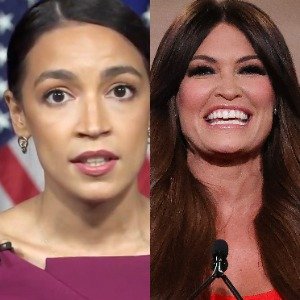
AOC Fact Checks Kimberly Guilfoyle’s Immigrant StatusAbout Us | Contact | Privacy Policy | RSS Syndication © American Thinker 2020

Read more: https://www.americanthinker.com/articles/2020/11/awaiting_the_kraken.html#ixzz6eLlC5XAV
Follow us: @AmericanThinker on Twitter | AmericanThinker on Facebook

The Historical Record Shows America was Founded Against Racism, not for it

The following essay is part of The Federalist’s 1620 Project, a symposium exploring the connections and contributions of the early Pilgrim and Puritan settlers in New England to the uniquely American synthesis of faith, family, freedom, and self-government.

In recent years, some prominent voices on the left have contended that America is and has been from its inception a nation established on racism and racial subjugation. This judgment implicitly informs The New York Times’s 1619 Project. According to its introductory blurb, the project “aims to reframe the country’s history by placing the consequences of slavery … at the very center of our national narrative.”

The American Civil Liberties Union is more direct: “America was founded on white supremacy.” What are we to make of such a disturbing claim?

Before examining its intrinsic merits, we might begin by noting — and rejecting — the improper use that is sometimes made of this interpretation of our country’s character. The assertion that America is a fundamentally racist nation has been deployed to discredit our traditional political institutions, including and especially the Constitution.

More than one article has been written holding that the Electoral College was devised to protect the political interests of the slave states. The same claim has been made more generally about America’s system of federalism. Federalism means “states’ rights,” and everybody knows that the southern defenders of slavery held that their right to self-government at the state level permitted them to enslave African Americans. Later on, after slavery had been abolished, southerners used “states’ rights” to defend their systems of racial segregation and denial of voting rights for black Americans.

Such arguments are both exaggerated and, of course, fallacious. Aside from a few provisions (such as the Fugitive Slave Clause) that were admittedly included to protect slavery, most of the Constitution’s structures and principles were not designed exclusively by or for slaveholders. They were intended instead to both empower the federal government to tend to the nation’s needs and prevent the abuse of that power. They should be judged today by how well they accomplish those (utterly non-controversial) purposes.

From the fact that federalism once sheltered slavery, it does not follow that state-level self-government today is unworthy of the Constitution’s protection. To take an even more obvious example, the First Amendment’s protections for freedom of speech are not bad or tainted just because some southerners once used that freedom to defend slavery or segregation.

It is also worth noting that today’s left, in claiming that America is founded on racism, aligns itself with some historical characters it might wish to avoid. Racial politics makes for strange bedfellows. This point was made many times by the late Harry Jaffa in response to an earlier generation of critics of America, and it is no less relevant now.

It was, after all, Stephen Douglas — a proponent of the right of territorial governments to establish slavery or not as they saw fit — who argued that “this government was made on the white basis, by white men, for the benefit of white men and their posterity forever.”

It was Abraham Lincoln — the Great Emancipator — who contended in response that America was founded on the Declaration of Independence’s claim that “all men are created equal.”

It was Chief Justice Roger Taney — writing in Dred Scott, holding that black Americans could never be citizens — who contended that at the time of the Founding:

[Black Americans had] for more than a century before been regarded as beings of an inferior order, and altogether unfit to associate with the white race, either in social or political relations; and so far inferior, that they had no rights which the white man was bound to respect; and that the negro might justly and lawfully be reduced to slavery for his own benefit.

Dissenting from Taney’s view, Justice John McLean noted:

I prefer the lights of Hamilton, Madison, and Jay as a means of construing the Constitution in all its bearings, rather than to look behind that period, into a traffic which is now declared to be piracy, and punished with death by Christian nations.

Lincoln and Frederick Douglass likewise rejected Taney’s account as both a misinterpretation of and a slander on the nation’s Founding. Similarly, in the twentieth century Martin Luther King, Jr., presented the struggle for civil rights as a call to live up to the nation’s original principles, not as a call to reject and replace them.

The point here is not to taunt the left with this embarrassing pedigree of ideas. It is rather to ask which interpretation of America’s fundamental character has proven more constructive. It seems obvious, from even a cursory glance at our nation’s history, that most of the work of making America better has been carried out by people like Lincoln, Douglass, and King, who believed it was fundamentally good to begin with.

As important as these considerations are, they cannot excuse us from the duty of confronting more directly the claim that America was founded on white supremacy, that it was fundamentally characterized by racism from its earliest origins. But is this claim defensible?

Certainly, slavery existed in America from the time of its earliest colonial settlements. That fact alone, however, cannot settle the question. After all, a country with racism in its midst is very different from a country dedicated to racism.

The question is often difficult to address because we are apt to be misled, either by indignation or by protective love. Outraged by the injustices that were committed against generations of African Americans, we might be inclined to condemn the country that committed or permitted those injustices as fundamentally bad.

This is a common enough temptation in our judgments about individuals. Thus a man who has committed theft can be dismissed as nothing but “a thief,” when he is more than only that. On the other hand, a spirit of patriotic affection for our country might lead us to overlook some real defects or minimize their scope.

Just as an affectionate son would not want to admit that his father is a thief, no warm-hearted patriot would want to admit that his nation was founded on racism. How can our minds escape the distorting influence of these natural human passions?

We might try to avoid this problem by taking as our guide an intelligent, sympathetic, and honest outsider. Since it is so hard to judge our own country impartially, we might learn from the judgments of a candid and foreign friend, one who is willing to acknowledge and explain what is good and bad about America. We find such a guide in Alexis de Tocqueville, whose great work, “Democracy in America,” frankly, and honestly, confronts our nation’s experience with slavery, but without holding that it should be understood to define the nation’s core character.

Tocqueville famously notes the decisive importance of a nation’s “point of departure” for its subsequent development. If you want to really know a man, you have to know his childhood. “Only then will you understand the origin of the prejudices, habits, and passions which are to dominate his life.” So it is, Tocqueville adds, with nations. “Peoples always bear some marks of their origins. Circumstances of birth and growth affect all the rest of their careers.”

If we can examine a nation’s birth and infancy, there we will find the origins of its “prejudices, habits, dominating passions, and all that comes to be called the national character.” Here Tocqueville might seem to offer decisive support for the contemporary left’s criticism of America. But unlike many contemporary voices, Tocqueville does not view slavery and racism as fundamentally shaping the nation’s dominant character.

In the first place, he points out that slavery primarily influenced only a particular, localized part of America. Virginia “had hardly been established when slavery was introduced,” and this institution ended up exerting “an immense influence on the character, laws, and future of the whole South.” For Tocqueville, slavery shaped the South but not the whole country’s way of life.

In the second place, Tocqueville presents the origins of slavery in America less as a deliberate choice of the New World settlements and more as a tragic accident the consequences of which gradually grew to immense proportions. Here is how Tocqueville suggests American slavery should be understood:

[An] evil which has percolated furtively into the world. … It began with an individual whose name history does not record; it was cast like an accursed seed somewhere on the ground; it then nurtured itself, grew without effort, and spread with the society that accepted it.

Tocqueville clearly regards the original southern settlers as less moral and less enlightened than their northern counterparts. The northerners came to America primarily to found self-governing communities based upon their (lofty and demanding) religious vision of a righteous society. The original Virginians came primarily in the pursuit of gain. Nevertheless, as Tocqueville reminds us, it would be unjust to the original southern settlers to say that they came to America with a premeditated purpose to establish slavery.For Tocqueville, the North’s combination of religion and self-government — and not the South’s experience with slavery — set the tone for all of America.

In Tocqueville’s view, America’s original national character was not characterized by the local introduction of slavery by certain settlers, but instead by the long-established culture and deliberate aims of the Anglo-American colonists as a whole. They were, to begin with, liberty-loving Englishmen. They came from a country that had long been agitated by party conflict, and therefore in which “each faction, in turn, had been forced to put itself under the protection of the laws.” Thus, they had learned the value of the rule of law, and had acquired “more acquaintance with notions of rights and principles of true liberty than most of the European nations at that time.”

In addition, by the time of the first settlements, “local government, that fertile germ of free institutions, had already taken deep root in English ways.” Thus the English settlers came to America already committed to “the dogma of the sovereignty of the people.”

Moreover, the northern settlers — and particularly the Puritans of New England — came to America not only with the general habits of freedom characteristic of all the English but with a peculiarly intense inclination toward self-government. They came, Tocqueville says, driven by a “purely intellectual craving,” seeking the “triumph of an idea.”

They wanted to establish communities based upon their Puritan religious and moral convictions. “Puritanism,” however, “was not just a religious doctrine; in many respects, it shared the most absolute democratic and republican theories.” These settlers had “shaken off the pope’s authority” and “acknowledged no other religious supremacy.” Accordingly, they “brought into the New World” a “democratic and republican” form of Christianity,” and “this fact singularly favored the establishment of a temporal republic and democracy.”

For Tocqueville, the North’s combination of religion and self-government — and not the South’s experience with slavery — set the tone for all of America. “New England principles spread first to neighboring states and then in due course to those more distant, finally penetrating everywhere throughout the confederation.” As a result, America was able to embark on its experiment with self-government at a time when most European nations were still ruled by absolute monarchies.

Tocqueville thus offers us a balanced account of America’s origins, one that is both critical and respectful, one that acknowledges the fundamentally good character of our country without ignoring the evils that have marked its history.

The despotism of slavery arose within America and did much to mar its development. But the Americans who built the country were not fundamentally a despotic people. On the contrary, they were a freedom-loving people who sought to establish and perpetuate republican self-government.

This Tocquevillian interpretation of America’s point of departure is certainly more plausible than the claim made by some today that America was “founded on white supremacy.” It is reasonable to suppose that what is fundamentally bad will tend to deteriorate and what is fundamentally good will tend to improve. Nazism was fundamentally established on an ideology of racism. Its evil accordingly grew more malignant over time and was only stopped by the application of overwhelming external force.

Self-generated improvement, however, has obviously been the course of American development. If slavery and racism were the deepest marks on America’s national soul, then why would it have moved so consistently away from them and toward the establishment of freedom and equality?Christianity provided Americans with the moral and spiritual resources to overcome differences of race, to cast aside old prejudices, to seek and to bestow forgiveness for past injustices.

A fundamentally racist nation would not have produced the generation of leaders who, in 1787, placed in the Constitution a power to abolish the foreign slave trade and who publicly condemned slavery and openly hoped for its eventual abolition. A nation founded on white supremacy would not have exerted itself first to limit the scope of slavery, later to abolish slavery, and finally to eliminate racial discrimination.

Ultimately, in a certain sense, America turned out to be a better country than even Tocqueville appreciated. He was deeply pessimistic about the potential for racial peace in America, even if slavery should be eliminated. Because slavery had been based on race, he thought, nobody on either side would be able to forget it or move beyond it. White Americans would never overcome their prejudices against black Americans, and black Americans would forever burn with resentment about the wrongs that had been done to them.

Tocqueville was certainly correct that the dire legacy of slavery would not be eliminated immediately upon its abolition. America’s path toward racial justice was long and difficult, continuing for many decades after the end of the Civil War. Nevertheless, over time the process turned out better than Tocqueville expected. The country was not engulfed in a race war, and whites and black Americans gradually learned to live with each other as fellow citizens.

Here Tocqueville may have overlooked something about the Americans that he actually appreciated and examined closely in other contexts. Tocqueville is famous for his positive account of Christianity’s influence on American democracy. Besides noting the aforementioned role of Puritanism in planting the seeds of self-government, he emphasized Christian morality’s role in placing limits on the power of the majority in America, as well as its ability to elevate the souls of Americans above the narrow individualism and petty materialism that threatened to dominate their lives.

This is the truth but not the whole truth about Christianity. It also teaches its adherents to love their fellow human beings as created in the image and likeness of God, and demands that they forgive those who have wronged them just as they hope God will forgive their own wrongdoing. Indeed, Christianity provided Americans the moral and spiritual resources to overcome differences of race, to cast aside old prejudices, to seek and to bestow forgiveness for past injustices.

Racism existed in America from the beginning, but America was not founded on white supremacy. It was instead founded, as Tocqueville teaches us, on the spirit of religion, freedom, and self-government — a benevolent spirit that gradually overcame racial injustice. This is the true and constructive account of our country that we ought to teach our children.


Carson Holloway, a political scientist, is a Washington Fellow in the Claremont Institute’s Center for the American Way of Life.