Personal Note

“I’ve never talked to a Democrat who ever wanted to listen. They start to glitch out if you try.” — Sasha Stone.

This past summer, I tried to open a line of communication with a West Coast relative. We exchanged a few letters. I tactically steered the conversation away from the political. Here was the closer salvo from my relative:

Jimmy, on a completely personal level, and in different times, I think we could have been very good friends. At this point in our history, I find what you say in your blogs and Kunstlercast to be outrageous, deceptive, and ugly. I disagree with almost everything you hold dear politically, and even if, for instance, we agree about the horrors of Big Pharma, your worship of Kennedy makes me ill. Your language falls right into all the clichés of the far right ideologies I loathe.Maybe someday things will change. For now, this is the last you’ll be hearing from me.

Frankly, what stung most keenly was the accusation that my language fell “into all the clichés of the far right ideologies. . . .” I like to think that I am allergic to clichés, though it’s possible that I am deluded about that. If anything, the dynamic collective thought disorders of our time present themselves in astonishingly fresh ways — for instance, a Supreme Court nominee who can’t define what a woman is. (Makes you kind of wonder how such a mind could parse Article Two of the Constitution.)

Mostly, I would have liked to know what those “far right ideologies” are, exactly, but it looks like I will never find out now. Maybe it is being opposed to censorship. . . or against Ukraine’s entry into NATO. . . or wanting coherent procedure for foreigners seeking to enter the USA. . . or keeping biological men out of the women’s swim lanes. . . or saying that ivermectin is a safe and effective anti-viral med. . . or supposing that people charged with felonies should not be released to the streets without significant cash bail. Stuff like that.

As it happened, we were not discussing these matters in our brief correspondence, but I was at something of a disadvantage since I am a professional writer who posts his opinion for public scrutiny and my relative is not. Of course, I describe what is a pandemic of broken family relations in our country. And social relations. I have been cancelled by most of my old friends, too, and I’m quite sure that I am not a special case. I am mystified by what these relatives and old friends actually believe these days. When we were hippies back in the day, they were very much opposed to war, turned-off by attempts at censorship, and deeply averse to the dark operations of the CIA and FBI. Now, they seem avid for intel ops and hoaxes, eager for war, and all-in for censoring ideas that make them feel “unsafe.”

There are various useful theories for this state-of-affairs, all pretty cross-compatible. Strauss and Howe’s Fourth Turning template of generational cycles explains a lot. Elizabeth Nickson has some fine insights about the extreme discontents of women these days leading them to summon political demons. Mattias Desmet, the Belgian psych professor has his Mass Formation theory, which states that societal anxieties provoke aligned “radical intolerance” among a populace. I recommend Wendy Williamson’s recent blog discussion of The Law of Reversal. Joseph Tainter’s classic, The Collapse of Complex Societies lays out the pitfalls of our “over-investments in complexity.” I wrote a book in 2005 titled The Long Emergency which describes the drawn-out collapse of our techno-industrial economy — the widespread apprehension of which helps define the societal anxieties described by Dr. Desmet that bring on his “Mass Formation Psychosis.”

All these theories tend to imply an inflection point where our assumptions about human progress get undermined, provoking an intense loss of faith in institutions and authorities, resulting in epochal socio-political disorder. Wouldn’t you agree we are seeing exactly that now? That the net effect of all this is of a society driven insane. Surely, the craziness is amplified by the novel connectivities of the Internet and exacerbated by many other high-tech innovations from ubiquitous camera surveillance to cryptocurrency to drone warfare.

In our country these days, all of this has apparently produced two camps at war psychologically, now verging on something like a hot civil war. One camp calling itself “progressive” insists on a roster of ideas, policies, and practices that look patently absurd, abusive of the public interest, and hostile to the values of Western Civ. The other camp styles itself as “conservative” seeking to preserve Western Civ and the advancement of our so-called way of life — an ever growth-seeking high-tech economy.

Personally, I doubt that the latter is possible. I believe we’re due for a pretty serious time-out from the sort of economic “growth” we enjoyed the past two-hundred years. That high-tech mega-fiesta has thrown off a lot of entropy, which is now working hard to slow things down and make us stop a lot of what we are doing. It manifests in many ways, but most vividly by flinging us into social disorder, turning what had been communication and correspondence into a rising babel that is driving us crazy. That is exactly why it is so hard to talk to our relatives and old friends. But mark this: there is a time coming when we will get tired of being crazy, and then things will go differently for us. We’ll start talking again.

James Howard Kunstler

Rep. Fallon to Newsmax: 58 Dems Snub Unity in Kirk Vote

Rep. Pat Fallon, R-Texas, blasted House Democrats who voted against a resolution condemning the murder of conservative leader Charlie Kirk, telling Newsmax that partisan “pettiness” prevented the chamber from presenting a united front against political violence.

Appearing Monday on “National Report,” Fallon contrasted last week’s vote on the Kirk resolution with a recent unanimous House measure denouncing the killing of Minnesota state Rep. Melissa Hortman.

“We had the unfortunate killing of the state representative in Minnesota, and that resolution condemning that act of political violence passed unanimously,” Fallon said. “This is what Charlie Kirk’s resolution should have been like as well. But unfortunately, it wasn’t because some Democrats just can’t bring themselves to really embrace unity.”

Kirk, co-founder and CEO of Turning Point USA, was killed earlier this month in what authorities have described as an act of political violence.

Fallon said that while not everyone agreed with Kirk’s views, “that doesn’t mean you can’t come together and condemn political violence and condemn his killing and honor his legacy because he focused on discourse. He wanted us to have debate. He wanted us to have a spirited exchange of ideas in the public square. And what’s wrong with that?

“That’s going to make our republic stronger. And an act of evil took him away from us, and we should have come together as a chamber.”

Instead, Fallon said, 58 Democrats opposed the measure, which passed the GOP-led House.

“Unfortunately, 58 Democrats chose really pettiness and ignorance,” he said.

Fallon also paid tribute to Kirk’s widow, Erika, whose public forgiveness of the suspect moved him deeply.

“His legacy is going to live on,” Fallon said. “His wife, Erika, really is a true inspiration — to forgive the evil killer is something that, I mean, she’s a better Christian than I. That is amazing.”

Newsmax TV

Pessimism over two-state solution challenges Europe’s effort to recognize Palestine sovereignty

An effort to recognize a Palestinian State was at the center of United Nations meetings on Monday, but years of conflict have taken a toll: Now most Israelis and Palestinians are both pessimistic that two states could ever coexist side-by-side, and Palestinians are increasingly supportive of armed resistance. 

The UN meetings come as a handful of Western countries, including close U.S. allies, such as the United Kingdom, Australia, and Canada, as well as France, have formally recognized the concept of a Palestinian State, but without a concrete plan to bring about that reality. France and Saudi Arabia jointly hosted an international peace conference in support of the two-state solution on the sidelines of the UN General Assembly meetings in New York this week. 

The souring of public opinion dims the prospects for the two peoples to live alongside one another and threatens to undermine the European effort to secure a two-state solution. Prematurely pressuring Israel to end the war and accept a two-state solution may also encourage continued militancy in the Palestinian territories, including Gaza, experts and polling data suggest.

Increasing pessimism on both sides

The percentage of Israelis who are pessimistic about the prospect of coexisting alongside an independent Palestinian state is at  record levels since Pew Research first began asking the question in 2013. In that year, 50% of Israeli citizens said that peaceful coexistence with such a state was possible.

By 2025, following the Oct. 7 terrorist attack by Palestinian terror group Hamas and after two years of war in Gaza to eliminate the group, the share of Israelis that believed peaceful existence was possible had declined to 21%. 

Regular polling of Palestinians is more difficult to obtain, but generally appears to follow a similar pattern. In the most recent polling from 2024, just one-third of Palestinians surveyed in both the West Bank and war-torn Gaza supported a two-state solution. 

Additionally, more than half of those Palestinians surveyed said an “armed struggle” was the most effective way to end the Israeli occupation of purported Palestinian territories and to establish an independent Palestinian state, a statistic that illustrates the difficulty of achieving a lasting peace under current circumstances.

Terrorist elements in Palestinian groups given opportunities to regroup

Victoria Coates, first-term Deputy National Security Advisor to President Trump and Vice President of the Heritage Foundation’s foreign policy institute, told Just the News that efforts to reach a diplomatic settlement before the conflict is over may undermine long-term peace that would benefit both the Israelis and the Palestinian people.

“From my perspective, historically, a lot of the problem we have is that the Palestinians have never been definitively defeated by Israel,” Coates told the “John Solomon Reports” podcast on Sunday.

“There’s always been so much outcry from the international community that you do get to some kind of negotiated settlement that lets the terrorist elements within the Palestinians regroup,” she continued. 

But, in the country’s early days, Israel was in constant conflict with more than just the Palestinians. The Jewish state was surrounded on all sides by Arab enemies that viewed the State of Israel as an illegitimate authority imposed by colonial governments. However, after multiple wars, Israel and its Arab neighbors established a permanent, if sometimes tenuous, peace. Coates said this was because Israel decisively defeated its challengers before diplomacy could take place.  

Coates said the Israel-Palestine struggle is “so different from what happened with the Arab nations, who, in 1973, decided they were tired of attacking Israel because they had lost.” She noted that those Arab states, including Egypt and Jordan, “definitively lost all of those wars from 1948 to 1973.” 

Coates: Resolution comes by defeating Hamas

“But that resolution to the issue, and I think the most important thing for the Palestinians, even more than Israel, is to bring a resolution to this situation, and that comes by defeating Hamas.”

The European powers leading the charge to recognize a Palestinian state for the first time—led by the United Kingdom and France—did so out of frustration with the deadlocked peace negotiations and after seeing the chance of a two-state solution slipping away because of that deadlock. 

However, far from encouraging a ceasefire in the conflict that has raged in the Gaza Strip for nearly two years, U.S. officials and the president warn that the European efforts will only encourage Hamas to continue fighting, prolonging the conflict that has devastated Gaza.

“You’re rewarding Hamas if you do that. I don’t think they should be rewarded,” President Donald Trump told reporters last month. 

Trump also previously criticized French President Emmanuel Macron’s July 24 vow to officially recognize a Palestinian state while downplaying the impact that European countries would have on the ongoing ceasefire and hostage negotiations, saying it wouldn’t “change anything.” 

Several countries have long advocated for a two-state solution, a proposal that would see an independent Israel and Palestine coexist alongside one another as homelands for their respective peoples. 

But the ongoing war between Israel and Hamas, which is a designated terrorist group in the United States, has brutalized the notion that a peaceful coexistence is within immediate reach. Despite attempts by the United States to mediate a hostage rescue and ceasefire, negotiations between the sides have stalled, with no end to the conflict in sight. 

French, UK proposals do not empower “moderate” Palestinians

Both the French and the British argue that moving to formally recognize a State of Palestine – teaming up with Saudi Arabia and a coalition of Arab states – is important for charting a path forward for a post-conflict Gaza and West Bank that preserves the dream of a two-state solution.  

However, the polling data suggests that the Americans are probably correct in assessing that recognition of a Palestinian state directly impedes the negotiation process, confirming the views of a majority of the Palestinian people that armed resistance is not only necessary but effective. 

“Rather than empowering moderate Palestinians, as the Europeans hope would happen, it would have the opposite effect,” David May, a senior research analyst at the Foundation for Defense of Democracies who focuses his research on Israel and Palestine, previously told Just the News

“Not only is there no credible moderate Palestinian leadership, this action as a result of a war Hamas started would prove to the Palestinians that they can only achieve independence through violence, and Hamas will be crowned as the deliverer of Palestinian statehood,” May added. 

In an official statement in response to the Europeans bestowing recognition on a Palestinian state, Israel said the plan “does not promote peace, but, on the contrary, further destabilizes the region and undermines the chances of achieving a peaceful solution in the future.” 

In retaliation for the decision, the Israeli government is currently weighing further annexations of West Bank territory that would make up the core of any future Palestinian state.

Prime Minister Benjamin Netanyahu also delivered a defiant promise: “A Palestinian state will not be established.” 

Netanyahu: Rewarding terror

“I have a clear message to those leaders who recognize a Palestinian state after the horrific massacre of October 7: you are granting a huge reward to terror,” Netanyahu said in a statement on Sunday after the coalition of English-speaking countries announced they would recognize Palestine. 

“And I have another message for you: It will not happen. There will not be a Palestinian state west of the Jordan,” he added, referring to the Jordan River, which separates the West Bank territory from the country of Jordan. 

The terrorist group Hamas said that the recognition from the UK and others marks “a victory for Palestinian rights and the justice of our cause,” The Telegraph reported

Just the News

Media Psyop Against Climate Scientists

A coordinated offensive unfolded with precision September 2 against five scientists questioning the popular media’s most sacred bogeyman — the hypothesis that human-induced emissions of carbon dioxide threaten to overheat the planet.

The scientists attacked had written a report published in July by the U.S. Department of Energy (DoE), “A Critical Review of Impacts of Greenhouse Gas Emissions on the U.S. Climate.”

Delivering virtually identical narratives, proclaiming that 85 “climate experts” had discredited the DoE report, were CBSNPRABCCNNThe New York TimesLos Angeles TimesReuters and others.

Language in the news reporting was nearly indistinguishable, and the focus identical: a number (“85” or “dozens”), a designated group (“scientists” or “experts”) and a verdict (“flawed,” “lacks merit,” “full of errors”). This is not the natural variance of independent newsrooms pursuing a story. This is the result of a shared press release, a common source or a backroom agreement to push a common storyline.

It was a master class in singing the same tune that would make any propaganda ministry proud — a calibrated flash mob of climate-fear messaging in an explicitly partisan tone.

Fooling the Public

The first volley of the assault was a classic ad hominem attack. The authors of the DoE report, five of the world’s most distinguished and academically rigorous researchers of climate issues, were immediately branded as the “Trump Team.”

This is a deliberately dishonest tactic. The authors — doctors John Christy, Judith Curry, Steven Koonin, Ross McKitrick, and Roy Spencer — are not political operatives. They are scientists with decades of experience and hundreds of peer-reviewed publications.

Dr. Koonin served as Undersecretary for Science in the Department of Energy under President Obama, a fact conveniently omitted from most of the media’s hit pieces. Drs. Christy and Spencer are world-renowned for developing the first global temperature dataset from satellites, for which they received NASA’s Medal for Exceptional Scientific Achievement.

No mention that Ross McKitrick is a Canadian academic with no political ties. No mention that Judith Curry stepped away from academia partly because of the politicization of climate research and previously had been much sought after for her research into hurricane intensity.

Most critically, the authors themselves have stated that there was no oversight or compulsion from anyone in any government department during the creation of their report. They say they crafted the report independently, with no interference from Energy Secretary Chris Wright. But the media gloss over that. Instead, the scientists are derided as the “Trump team.”

In stark contrast to the vilified DoE authors, the 85 individuals who signed the critical letter were anointed as “climate experts” and “leading scientists.” Yet, the list of signers is padded with individuals whose specializations are, to put it generously, tangential to the core issues of climate science.

The strategy is clear: assemble a gaggle of academics, label them “climate experts” and use the sheer number to create an illusion of overwhelming scientific consensus against the DOE report.

Sell Lies, Instill Fear With a ‘Black Mirror’

Adding to the theater, the National Academies of Sciences, Engineering, and Medicine (NASEM) has announced a panel to review the DoE report. But here’s the twist: The panel is headed not by a climate scientist, but by a biologist. Out of the panel’s members, only a few have direct expertise in atmospheric science. Yet the announcement was trumpeted as if the nation’s top climate experts were mobilized.

Predicting catastrophe is a media business model. NPR warned of “irreversible” sea-level rise in 2023, ignoring tide gauge records that show no acceleration beyond historical norms. News outlets regularly report on “unprecedented” floods, yet data indicate no uptick in floods due to climate change.

If everybody believed climate impacts were manageable, the case for sweeping carbon taxes, bans on fossil fuels and subsidies for wind and solar energy would collapse. That’s why the DoE report — noting forecasting uncertainty, adaptation possibilities and economic trade-offs — is so threatening. It undermines a narrative of an “existential” threat or imminent collapse. So, the media did not debate the five scientists; they sought to destroy them and their report. Not with data, but with labels.

This is a psyops initiative like that depicted in the Netflix dystopian series “Black Mirror.” The media outlets are not mirrors reflecting reality; they are black screens projecting a manufactured one. They have become instruments of a political agenda, sacrificing journalistic integrity to enforce a specific viewpoint on climate change. They operate not as individual watchdogs but as a wolf pack. They decide what you should think and seek to broadcast it in unison until you do.

I’d encourage you to read the DoE report for yourself or at least countervailing opinions of it. Scrutinize the credentials of those who attack it. Ask the hard questions that the journalists refuse to. The black mirror can only hold power over you if you consent to stare into it. It is time to look away and see the world as it is, not as they tell you it is.

Vijay Jayaraj is a Science and Research Associate at the CO2alition, Fairfax, Virginia. He holds an M.S. in environmental sciences from the University of East Anglia and a postgraduate degree in energy management from Robert Gordon University, both in the U.K., and a bachelor’s in engineering from Anna University, India

Homan: Nearly 2 Million Immigrants out of U.S. Under Trump

Nearly two million immigrants in the United States illegally have left since President Donald Trump began his second term, and the numbers will “explode” in the upcoming year with Immigration and Customs Enforcement (ICE) planning to triple its workforce, according to White House border czar Tom Homan.

Homan said in a television interview that ICE and Customs and Border Protection (CBP) have carried out more than 400,000 deportations, with another 1.6 million migrants leaving voluntarily because of the increased enforcement efforts, reports The Washington Examiner on Tuesday.

“We’re at over 400,000 deportations between CBP and ICE, and that’s just since the president took office,” Homan said. “The first four months of the fiscal year, we can’t count them because Joe Biden wasn’t doing anything. But here’s what people need to understand: over 1.5 million illegal aliens, close to 1.6 million illegal aliens, have already left the country on their own. Why? Because they see what ICE is doing out there every day.”

He added that the increased number of ICE agents will also affect the number of immigrants being apprehended.

“What’s to come? ICE is getting 10,000 more agents,” he said. “Right now, we have 5,000 deportation officers. We’re tripling the size of the workforce.”

Homan said he knew that once ICE started making arrests, many migrants would opt to leave on their own or decide not to try entering the United States.

“One of the reasons we have the most secure border in the history of this nation is because of the great work of the men and women of the border patrol, the great work of President Trump and his leadership, but also because ICE is out there, over a thousand teams, all across the country arresting people,” Homan said.

“A lot of people have left, a lot of people aren’t coming, which helps us secure that border. And that was part of the strategy from the beginning,” he added. “We said that if we show consequences, if we show we’re actually out there looking for them, many will leave. So, we knew a large population would leave, and over 1.5 million have.”

Sandy Fitzgerald 

Sandy Fitzgerald has more than three decades in journalism and serves as a general assignment writer for Newsmax covering news, media, and politics. 

You Can’t “Make” Someone Feel Better

The subject of grieving and loss comes up quite often in my office. During these sessions, I learn so much about what people want (and don’t want) to hear. Most often, they simply want you to “be there.” They need you to remain present in their lives and available if they need you. They don’t want you to try and cheer them up. One of the worst things you can do is to (inadvertently) make light of their sorrow by saying things like, “You’ll get through this,” or, “What doesn’t kill you makes you stronger.” These statements might be true, but that doesn’t make them the right thing to say. One of the most idiotic things I’ve ever seen was a sympathy card in a store that read, in flowery script, “He is only sleeping.” Imagine receiving THAT when you’re trying to endure the anguish of a loss!

You can’t “make” someone feel better. They will almost certainly get better in their own time. Human beings are a resilient lot. A grieving friend cannot, in a certain sense, be consoled. He or she just needs you to be the same person you always were; a soothing reminder that they still have something valuable. The best you can do is to provide stability and familiarity in their time of sorrow.

It’s hard to watch a friend or loved one suffer. But, in a desperate attempt to “do something,” you can often do more harm than good. Don’t preach to them. It might make you feel better, but they’ll respond by thinking, “How can he (or she) understand what I’m going through?” Any attempt to make things right applies a subtle pressure that they have to get over this quickly. But why? I regularly tell people in grief counseling, “You’re never going to get over this, and that’s OK. You’re not always going to feel like you do right now, but whenever you think about the loss, you’ll feel sad. Forever allowing a part of yourself to grieve is a way to stay loyal to your lost loved one. And, over time, you’ll begin to see that it’s equally loyal to go on with your own life as well.” My clients appreciate this, because rarely is anybody else saying it to them. Most people either preach or back away; the two worst things you can do in their time of need.

Funerals, viewings, wakes and other social rituals are certainly a necessary part of the grieving process. But because they occur so soon after the death — before the shock wears off and the real grieving sets in — they don’t provide everything that’s needed. This isn’t the time to escape the sadness and get back to normal. They need you more after the ceremony than they did in the initial two or three days. If you want to truly be there for them, that’s the time. Forget about, “What can I say to help them feel better?” It isn’t your job, and it isn’t possible anyway. Just be present, without unintentionally pressuring them to get over it. Your gentle silence can effectively communicate everything you feel.

This applies most dramatically to the death of a loved one. The demise of a close family member is undoubtedly the worst kind of loss for most people. But other kinds of loss can also bring sadness. People lose their jobs, they lose beloved pets, they lose their homes to fire or natural disasters, or they lose friends. Although most of these situations may not be as drastic as the events following a death, the same general themes apply.

You don’t have to offer clichés and empty platitudes to pressure them into getting through it. They feel what they feel, and that’s fine. Your job is to simply be yourself; the trusted friend or family member that you always were. In doing so, you help them appreciate the fact that, despite their loss, life still has good things to offer.

Michael J. Hurd, Life’s a Beach

Millions Quit the Democrat Party: The Charlie Kirk Effect Explained

Millions of Americans are quitting the Democrat Party, and the “Charlie Kirk Effect” is sparking a major political shift. Viral clips, trending debates, and nationwide reactions to this controversy have created a movement that’s impossible to ignore.

The coverage of Charlie Kirk’s recent tragedy has dominated social platforms, with viral clips capturing the attention of millions. Reactions from voters highlight the growing influence of his ideas on public opinion, conservative movements, and political realignment across the country.

Social media is buzzing with firsthand accounts of Americans leaving the Democratic Party. Many former Democrats are sharing why they’re making the shift, and the “Charlie Kirk Effect” has become a trending term to describe this mass political realignment.

Red Dawn Daily

Overregulated to Death

By Thomas Kolbe

Looking at the emaciated EU economy, Commission President Ursula von der Leyen calls for a push to restore competitiveness. What never crosses her mind is that it is precisely the ecosocialist agenda of her own administration that now threatens the very economic survival of the Union.

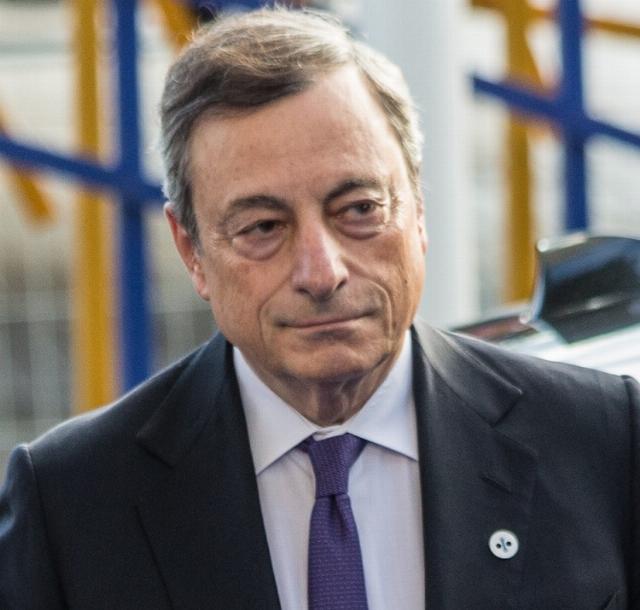
Every narrative needs its hero. In the fairy tale of a prosperous and expanding European Union, Mario Draghi — once president of the European Central Bank and later unelected, technocratic prime minister of Italy — was mythologized by the media as the savior of the Eurozone, and by extension, the EU.

Draghi the Magician

His famous “whatever-it-takes” line in the midst of the sovereign debt crisis a decade and a half ago still echoes: it turned the ECB into Brussels’ money-printing machine. Out of that supposedly heroic state rescue by credit-pumping grew a power apparatus that today runs an ecologist command economy. Forgotten in the process was that capital comes from savings — not the push of a button inside the ECB tower.

This peculiar understanding of economics, combined with ostentatious ignorance of reality, has become the trademark of Brussels politics. Real problems exist only until they can be regulated away at the green table with yet another subsidy fund.

And whenever the going gets tough, especially with regard to the public finances of the EU’s key pillars like France, Italy, and increasingly Germany — Mario Draghi emerges once again from the fog of decline, stylized as the radiant savior. And once more, in the shadow of the Eurozone’s persistent deindustrialization and permanent recession, the Italian has produced one of his notorious reports.

In 383 pages of dust-dry technocratic prose, Draghi lays out his ideas to revive the Euro-economy. This is badly needed: Europe has long been in recession. High government demand distorts the statistics: with public spending routinely above 50% of GDP, net new borrowing around 4%, and official growth of about 1%, there is only one conclusion — private industry is shrinking. In the Eurozone by roughly 3%, in Germany by 4.5% this year.

On their diagnosis, Draghi and von der Leyen are correct: the Eurozone must become more competitive, especially against the heavyweights on the global chessboard — China and the U.S.

Draghi’s Idea Catalog

Draghi’s strategy offers nothing new: more government, more debt, more central control. He proposes a massive investment program of €800 billion annually, four to five percent of EU GDP, financed through joint debt or national coalitions.

It all reads so convincingly, so strategically sound: Europe should leap forward in AI, infrastructure, green tech, and defense — four birds with one stone. If only it were that simple.

Even sacred cows like the GDPR and AI Act are to be “trimmed,” not to free the market, but to carve out new room for state-led industrial policy.

The whole scheme boils down to Keynesian demand management: public spending as a “lever” for private investment, underpinned by more Brussels coordination. Draghi’s plan is central planning in disguise: permanent state therapy instead of real capitalism, preferably financed through common funds.

Eurobonds, Again

And here it is again: the push for joint EU debt. Brussels refuses to admit that another sovereign debt crisis is already looming. France should have been a warning — but Eurocrats conveniently ignored it. They live in a bubble of illusions, where the hyper-state already takes shape — its power extending deep into citizens’ private lives, cemented by censorship laws, control over digital platforms, and soon even private chats.

This is today’s EU: a construct of debt, delusion, and lust for power.

Whether through Eurobonds or so-called “war bonds” justified by the specter of a Russian invasion, the EU is playing a dangerous game. It never had the right to fiscal sovereignty. Yet von der Leyen and her commission have trampled that principle without hesitation.

The underlying goal is clear: consolidate national debt under Brussels’ umbrella, keeping the bond market liquid via the ECB’s printing press. But in doing so, policymakers erase any incentive for fiscal discipline. The debt spiral will only accelerate — until the inevitable collapse.

Von der Leyen’s Answer

In the same centralist spirit, von der Leyen’s commission has responded to Draghi’s report with more planning, more subsidies, more top-down control.

The centerpiece: a €400 billion “European Competitiveness Fund,” flanked by a doubling of research spending, a fivefold increase in digital investment, and a sixfold boost for green tech. With a “Competitiveness Compass” and a “Single Market Roadmap 2028,” Brussels is unleashing a new wave of regulatory paper wars.

This is nothing more than the Green Deal on steroids. The sick patient gets double the dose, in the hope of a miracle cure. Brussels hails “lead markets” for circular economy and decarbonization, spiced up with a “Battery Booster Package” and “single-market freedoms” for knowledge and innovation — grandiose visions wrapped in a socialist-style seven-year plan.

Meanwhile, capital flees the continent. Germany alone lost €64.5 billion in net capital outflow last year, much of it leaving the EU altogether. These are resources that would otherwise have supported assets, jobs, and growth — and they will not return.

Von der Leyen also promises to cut bureaucracy by €8 billion — a drop in the ocean when Germany alone shoulders €60 billion annually in regulatory costs. A PR stunt, not a breakthrough.

On top come €130 billion for defense and war economy buildup. None of this will make Europe’s private sector more competitive, nor will it generate welfare gains. Every euro will be siphoned off from the productive economy, through taxation, debt markets, or later inflation.

The Digital Euro: Closing the Gate

In Brussels, nothing changes. The dream of a free single market has long been corroded by bureaucracy. Instead of competition, Europe gets dirigisme in energy and micromanagement in regulation. The outcome is inevitable: economic disaster, with shrinking market room left to mitigate the damage.

The ship “Euro” is steaming full speed toward the iceberg that has long been visible. Policymakers know their central planning and green transformation are failing. Their focus is now on stopping the inevitable flight of capital.

Enter the digital euro. Soon to be ratified by national parliaments, it is designed to plug the capital drain. Behind the façade of “innovation” hides the most severe capital control Brussels has ever wielded — a last desperate attempt to shield the faltering Union from the coming bond market storm by raising the drawbridge.

Image: Estonian Presidency/Aron Urb

What Are You Doing Democrats? New Survey Crushes Narrative Republicans Are in Trouble for Midterms

CNN shared a new survey that crushes the narrative that Americans are not happy with the moves by President Donald Trump’s administration when it comes to policies on things like crime, the economy, and immigration.

In a video posted on X on Monday by our sister site Townhall.com, CNN’s data guy Harry Enten had to ask what the heck the Democrats are doing, and the answer is their obstructionist agenda is crushing them, resulting in a massive lead for the Republican party when it comes to MORE: Oh My: Dem Approval Just Hit New All-Time Low

Enten pointed out that Democrats are crowing that things are just going to go swimmingly for them and that the party is just going to “fly high in midterms.”

He then unveiled a survey that read, “Trust the Dems or GOP more on” the following: the economy, immigration, and crime.

“Who leads on the economy? Republicans by seven points,” Enten said. “Immigration? Republicans by thirteen points.”

“How about crime? A big issue for Donald Trump and the Republican Party. Look at that. Lead by twenty-two points,” he added. “So, the bottom line is this…At this particular point, it’s the Republicans who are running with the ball on the top issues, the economy, immigration, and crime.”

And when he compared how the GOP’s numbers look to the last time the Republicans took the House in 2022, Enten said it “gives away the game here.”

The survey showed a slight dip in the economy question, but the GOP actually went way up in immigration and nearly doubled when it comes to the favorability of them over crime.

“The Republican lead has actually gone up by ten points,” Enten said. “What are you DOING, Democrats? And on crime, the Republicans were up by 13, and now they are up by 22 points. The lead again expanding by nearly double-digits.”

When he broke down the numbers, Independents are giving Republicans the lead in all three categories.

Enten’s colleague asked if these were numbers for the overall period since Trump took office; he said no, this is just for the month of September 2025.

So, that means Americans like what they are seeing on the policies from the Trump White House on the economy. It means that all the crime crackdowns that President Trump has been doing in places like Washington, D.C., are what Americans want to see. Not to mention, all the arrests by ICE to rid our country of alleged illegal criminals is a winning move for the GOP.

As my RedState colleague Andrew Malcolm reported, Trump’s low approval numbers do not translate to a win for the Democratic Party ahead of the midterms.

Malcolm wrote:

A recent study by a nonpartisan data company of the 30 states that register by party found that since 2020, all 30 had a drop in registered Democrats while 22 had increases in Republicans, a jumbo swing of 4.5 million voters.

Another revealing stat: Currently, of the 435 voting House representatives, fully 419 are members of the party whose presidential candidate won that district. This makes fewer races genuinely competitive, which would hurt Democrat swing opportunities this time.

To put it simply, even if Trump’s approval numbers are underwater, Americans do not trust the Democrats to make things better and are willing to let the GOP continue to lead.

Katie Jerkovich, Red State

Secretary of State Marco Rubio Delivers Remarkable Tribute to Charlie Kirk

In a rather remarkable moment of intercessory faith, Secretary of State Marco Rubio delivered a tribute to Charlie Kirk filled with purpose and faith.

There were some very remarkable moments in the hours-long Christian affirmation for Charlie that took place yesterday in Glendale, Arizona; however, this testimonial from Marco Rubio is among the top tier.

Rubio begins with good natured humor; this cognitively breaks the psychological drag of recent memory and reorients the audience. Secretary Rubio then begins to speak eloquently about the impact of Charlie Kirk and the light he brought to a generation. Rubio bears witness.

Toward the end of his remarks, Secretary Rubio then enmeshed the truth of Charlie’s message to the life of Christ, and the immortal connection that binds a Christian nation in spiritual purpose. Like Charlie, Rubio has a giftWATCH:

THAT, my friends, is a powerful seven minutes!

♦ The First Martyr – Stephen is introduced in the Book of Acts as one of the seven deacons appointed to oversee the distribution of food to widows in the early church. He is described as a man full of faith and the Holy Spirit. Stephen’s bold preaching and miracles drew the attention of the Jewish authorities, leading to his arrest.

During his trial, Stephen delivered a powerful speech recounting Israel’s history and accusing the religious leaders of resisting the Holy Spirit. This speech culminated in his being stoned to death, making him the first Christian martyr.

♦ Paul – Saul, who later became known as the Apostle Paul, was present during Stephen’s stoning. The witnesses laid their clothes at Saul’s feet, indicating his approval of the execution. At this time, Saul was a zealous Pharisee, actively persecuting Christians and seeking to eradicate the new faith. His involvement in Stephen’s death highlights the intense opposition faced by early Christians from Jewish leaders.

♦ Transformation of Saul – Saul’s life took a dramatic turn on the road to Damascus, where he encountered the risen Christ. This event led to his conversion, and he became one of the most influential apostles in spreading Christianity. His transformation from a persecutor of Christians to a devoted follower of Christ is a powerful testament to the grace and power of God.

Significance – The stories of Saul and Stephen illustrate the early church’s struggles and the profound changes that can occur through faith. Stephen’s martyrdom is often seen as a catalyst for the spread of Christianity, as it prompted many believers to flee Jerusalem and share the gospel elsewhere. Saul’s conversion marks a pivotal moment in Christian history, as he became a key figure in establishing the church and writing many of the New Testament letters.

Summary: Stephen’s martyrdom and Saul’s transformation are central to understanding the early Christian movement and the challenges it faced. Their stories reflect the depth of faith, the virtue of redemption, and the power of the gospel.

Many people, me included, have pondered the remarkable transition of Marco Rubio.

God is in control!