We saw great news earlier with Federal Reserve Chair Jerome Powell hinting that interest rate cuts will be coming. Then, the Congressional Budget Office (CBO) estimated that tariffs on foreign countries will likely reduce the deficit by $4 trillion over the decade. Those stories likely helped to send the stock market soaring, with the Dow Jones hitting its all-time high.
Now there’s more positive news. President Donald Trump and Canadian leader Mark Carney had a phone call on Thursday on trade issues. As a result, Carney announced on Friday that Canada would be dropping most of its retaliatory tariffs on the United States. After all the anger the liberals whipped up, Carney had to explain that they would remove tariffs on goods covered under the USMCA agreement.
Canadian Prime Minister Mark Carney announces that Canada will be DROPPING their retaliatory tariffs against the US and removing tariffs on US goods covered by existing trade deals.pic.twitter.com/Y9ONDpOk1g— Libs of TikTok (@libsoftiktok) August 22, 2025
Carney said Canada will now match the US by ending its tariffs on goods compliant with the US-Mexico-Canada free trade agreement (USMCA). He said that would “re-establish free trade for the vast majority” of goods that move between the two countries.
The decision will go into effect on 1 September, Carney said. [….]
In a statement to the BBC’s US news partner CBS, the White House said it welcomes Canada’s move, adding that it is “long overdue” and that the US looks forward to continuing discussions with its northern neighbour about trade and national security.
Trump confirmed that, and it sounded like they made a lot of progress.
Translation? Canada can posture all it wants. However, the bottom line is: we have the leverage, and they had to cave. They rely on us, even for national security. Trump knows it and can push them. That’s why Carney had to explain to the Canadians why their deal is better than that of other countries, and how important the relationship with the U.S. is.
They’re still working on the questions around steel, aluminum, and autos.
Canada, for its part, has placed 25% tariffs on American steel, aluminium and autos. Those will remain in place for now, Carney said.
Economists have warned that US tariffs on steel and aluminium are “hugely disruptive” to Canada, as it is a major supplier of both metals to the US. Canadian companies have already reported cutbacks and contract cancellations as a result.
Expect Canada to bring that down, too, after they talk again.
That’s more winning on the day, with likely more to come.
President Trump’s administration is actively reviewing a proposal to move cannabis from Schedule I to Schedule III of the federal Controlled Substances Act (CSA) and a decision on rescheduling is expected within the next few weeks.
Rescheduling would officially recognize medical use and remove cannabis from the same federal control category as heroin and other dangerous drugs.
Key benefits for the cannabis industry include elimination of IRS 280E tax penalties, improved access to banking and capital, and accelerated medical research.
Vicente LLP recommends cannabis operators seek legal and policy guidance to navigate possible regulatory changes and compliance risks.
President Donald Trump has confirmed that his administration is “looking at” a proposal to move cannabis from Schedule I to Schedule III of the federal Controlled Substances Act (CSA), with a decision expected “over the next few weeks.”
This is the first time the president has spoken publicly about cannabis rescheduling since taking office. His remarks follow reports from CNN and The Wall Street Journal that the White House is actively reviewing agency recommendations on the matter, which is a development with major implications for the cannabis industry and federal marijuana policy change in 2025.
Trump’s Comments on Cannabis Rescheduling
During an August 11 White House press conference, President Trump described marijuana reclassification as “a very complicated subject,” stating that “some people like it, some people hate it,” and noting he has “heard great things” about medical cannabis but “bad things” about other uses, according to Cannabis Business Times. He said the administration will “make a determination over the…next few weeks, and that determination hopefully will be the right one.”
The president’s remarks echo a Trump campaign pledge to support rescheduling, although Monday’s comments appeared more cautious than his prior endorsements.
Acknowledge medical use for the first time in 50+ years: Officially recognize cannabis’ medical benefits and lower abuse potential compared to Schedule I and Schedule II drugs, removing it from the same category as heroin and PCP.
Legitimize cannabis in the medical community: Federal recognition will strengthen credibility for doctors, patients, and researchers, with far-reaching benefits across healthcare.
Accelerate cannabis research: “Existing research indicates cannabis holds tremendous promise for a wide range of medical and therapeutic uses, including pain and opiate use disorders, which have reached epidemic levels in recent years. Yet clinical trials are limited in comparison to other treatments. Schedule III will not lift all barriers to research, but it may contribute to the advancement of urgently needed research, which should be prioritized and vigorously pursued,” Vicente partner Shawn Hauser explains in a Marijuana Moment op-ed. This, along with recent legal changes supporting cannabis research, such as the HALT Fentanyl Act, can significantly advance this much-needed research.
End 280E tax penalties: Eliminating the IRS rule preventing cannabis businesses from deducting ordinary expenses could potentially save operators hundreds of thousands or millions annually.
Improve access to banking and capital: Reduce legal risk for lenders, potentially increasing credit, loans, investment activity, and mergers & acquisitions across the industry.
Reinforce current enforcement trends: Federal enforcement against compliant state-licensed operators has historically been low; rescheduling could further solidify that stance, though formal DOJ guidance is not guaranteed.
Increase momentum for broader reform: Recognition of cannabis’ medical use and rescheduling may embolden policymakers and advocates to push for further medical changes, positioning Schedule III as the first step rather than the finish line.
What Schedule III Marijuana Would Not Do
Rescheduling maintains marijuana as a controlled substance under the purview of DEA and commercial cannabis products are not FDA-approved products. It does not legalize marijuana. Even under Schedule III cannabis classification:
Make cannabis fully federally compliant: Sales under state programs would still violate federal law.
Open interstate commerce: Transporting cannabis across state lines would remain illegal.
Allow dispensary products in pharmacies: Whole-plant cannabis and cannabis products would not suddenly become available at pharmacies without FDA approval.
Prevent FDA enforcement: Rescheduling does not change marijuana’s illegality as a consumer good under the FDA (excepting certain approved drugs). However, it’s possible that rescheduling may increase FDA scrutiny of cannabis products, especially around false or misleading health claims, as seen in the FDA’s approach to hemp.
Falls short of imminently needed criminal justice reform: Cannabis arrests and convictions could still occur. Rescheduling does not remove potential criminal penalties, expunge past records, free those incarcerated for marijuana offenses, or address ongoing disparities in enforcement.
Replace the need for descheduling: The industry would still face challenges tied to the controlled status of cannabis, including patchwork compliance burdens and limits on federal reform until cannabis is removed entirely from the CSA. However, rescheduling and acknowledgment of marijuana’s medical use and relatively low abuse potential are critical incremental progress for the industry.
Trump Derangement Syndrome (TDS) is a term used to discuss people who dislike Donald Trump so intensely that they are willing to abandon all logic and reason that goes against this criticism. It is a term used by Trump himself and other Republicans to negatively describe those who are against his politics in America, including Joe Biden, Kamala Harris, Barack Obama, and other Democrats formerly in office.
The term Trump Derangement Syndrome has been used to describe individuals who oppose Trump and larger organizations that speak against him, such as The Washington Post. It is a particularly polarizing topic today as emotions are still fresh after the 2024 presidential election and in a political climate that could be described as tense at best.
Furthermore, because TDS as a cultural phenomenon grows particularly strong during election periods, people standing on all sides must have safe mechanisms for coping. In some instances, this can mean seeking professional treatment for political obsession or a related disorder.
Understanding Trump Derangement Syndrome
When talking about Trump Derangement Syndrome, it is important to understand the origin of the term and what it represents for those who use it.
The Origins of the Term
TDS is a pejorative, or derogatory, term that is most often used by Trump supporters to describe his opponents and people who dislike him. It describes people who are negative and critical towards Donald Trump but who are also described as being irrational or insane in their dislike for him.
So how did the term “Trump Derangement Syndrome” come about? The term originated out of the term “Bush Derangement Syndrome,” which was coined by Charles Krauthammer, a conservative political columnist, during the presidency of George W. Bush. It was first adapted for Trump during his 2017–2021 presidency.
What TDS Represents
TDS is not an actual diagnosed condition, however, and is a representation of political obsession and polarization, both of which can be very dangerous.
Political obsession, sometimes referred to as political obsession disorder, refers to someone so obsessed and engaged with current politics that it is negatively affecting their daily life. Political polarization, on the other hand, occurs when people veer towards ideological extremes in their political beliefs.
When political obsession and political polarization are found together within the same individual, it can be a scary and dangerous combination.
Symptoms of Political Polarization
Political polarization can result in symptoms that include intense emotional reactions, especially during political topics or when discussing Donald Trump. These emotional outbursts can result in strained relationships with loved ones and even cause people to withdraw socially from family and friends.
Withdrawal and isolation can present further dangers in that they can lead the person suffering from political obsession to overly consume media that is related to Donald Trump in any way.
Trump Derangement Syndrome (TDS) is a term used to discuss people who dislike Donald Trump so intensely that they are willing to abandon all logic and reason that goes against this criticism. It is a term used by Trump himself and other Republicans to negatively describe those who are against his politics in America, including Joe Biden, Kamala Harris, Barack Obama, and other Democrats formerly in office.
The term Trump Derangement Syndrome has been used to describe individuals who oppose Trump and larger organizations that speak against him, such as The Washington Post. It is a particularly polarizing topic today as emotions are still fresh after the 2024 presidential election and in a political climate that could be described as tense at best.
Furthermore, because TDS as a cultural phenomenon grows particularly strong during election periods, people standing on all sides must have safe mechanisms for coping. In some instances, this can mean seeking professional treatment for political obsession or a related disorder.
Understanding Trump Derangement Syndrome
When talking about Trump Derangement Syndrome, it is important to understand the origin of the term and what it represents for those who use it.
The Origins of the Term
TDS is a pejorative, or derogatory, term that is most often used by Trump supporters to describe his opponents and people who dislike him. It describes people who are negative and critical towards Donald Trump but who are also described as being irrational or insane in their dislike for him.
So how did the term “Trump Derangement Syndrome” come about? The term originated out of the term “Bush Derangement Syndrome,” which was coined by Charles Krauthammer, a conservative political columnist, during the presidency of George W. Bush. It was first adapted for Trump during his 2017–2021 presidency.
What TDS Represents
TDS is not an actual diagnosed condition, however, and is a representation of political obsession and polarization, both of which can be very dangerous.
Political obsession, sometimes referred to as political obsession disorder, refers to someone so obsessed and engaged with current politics that it is negatively affecting their daily life. Political polarization, on the other hand, occurs when people veer towards ideological extremes in their political beliefs.
When political obsession and political polarization are found together within the same individual, it can be a scary and dangerous combination.
Symptoms of Political Polarization
Political polarization can result in symptoms that include intense emotional reactions, especially during political topics or when discussing Donald Trump. These emotional outbursts can result in strained relationships with loved ones and even cause people to withdraw socially from family and friends.
Withdrawal and isolation can present further dangers in that they can lead the person suffering from political obsession to overly consume media that is related to Donald Trump in any way.
The Psychological Impact of Political Obsession
Political obsession can not only affect people on the surface and in their personal relationships and professions, but it can have deep psychological implications as well.
Emotional Overload
Political obsession can easily turn into emotional overload, especially during an election year or shortly after when coverage of the candidates is still going strong. This can result in extreme anxiety, anger, or frustration, especially during political events or when discussing them.
To make matters worse, people who are in the throes of political obsession may actively seek out encounters and situations that are known to trigger strong emotional reactions. One study conducted in 2017 found that the stress associated with politics can be equivalent to, if not worse than, the stress associated with an alcohol use disorder.
Social and Familial Strains
Differing political views can put strains on social and familial relationships, especially when people have strongly opposing views that they are both very passionate about. Someone with Trump Derangement Syndrome could find it difficult to hear the viewpoints of others.
In some instances, the strain can be so strong that family members completely avoid each other or refrain from speaking to or seeing each other. While it may be easier said than done, family members may want to set boundaries for each other in terms of discussing politics and making sure to put family first.
Broader Cultural Implications
The broader cultural implications of TDS are multifaceted and reflect the deep political polarization in the United States.
Some of these broader cultural implications include:
Increased polarization: TDS highlights the growing divide between political factions. It underscores how political discourse has become more emotionally charged and less focused on policy and facts.
Impact on public discourse: The term is used to discredit critics of Trump, suggesting that their opposition is based on irrational hatred rather than legitimate concerns. This can stifle meaningful debate and reduce the quality of public discourse.
Social division: TDS can contribute to social division, as individuals become more entrenched in their beliefs and less willing to engage with opposing viewpoints. This can lead to increased conflict and a breakdown in social cohesion.
Media and perception: The media plays a significant role in shaping perceptions of TDS. Pro-Trump media outlets often use the term to dismiss criticism, while anti-Trump media may highlight the term’s use as a tactic to avoid addressing important issues.
Rise of echo chambers: An environment where a person only encounters information or opinions that agree with or reinforce their own opinions and feelings. Not only can this create misinformation, but it can also distort a person’s viewpoint so that they cannot listen to or consider other perspectives.
Broader Lessons on Political Polarization
One significant benefit of political polarization is the broader lessons it imparts, revealing deep societal divisions and prompting critical discussions about governance, cooperation, and compromise. By exposing the challenges of ideological conflict, polarization underscores the necessity of long-term solutions that promote stability, inclusivity, and sustainable progress.
Recognizing the Humanity in Opposing Views
Political polarization such as TDS provides an opportunity for people to recognize the humanity in opposing views and try to build empathy through mature dialogue. This often requires specific strategies for productive conversations and can be easier said than done, but is possible when both sides are ready to move forward.
5 Strategies for productive political conversations include:
Make a point to truly listen to one another
Stay professional and respectful
Assume that both sides have good motives
Avoid rumors, gossip, and conspiracy theories
Be able to recognize when the conversation should end
The Role of Media Literacy
It can be difficult to find media that you know to be completely true and honest, and it can also be hard to avoid sensationalism. Political polarization is a great tool for bringing attention to the importance of being critical of all the news you consume.
For this reason, you may want to use only news sources that you know to be reliable and unbiased, including the Associated Press, Reuters, The New York Times, Bloomberg, and C-Span.
Long-term Solutions for a Divided Society
Experts agree that one key solution for a divided society is to enhance education on civic engagement and critical thinking, equipping individuals with the skills to navigate complex social and political issues. Another effective long-term approach is fostering community-building initiatives that promote dialogue, mutual understanding, and social cohesion.
Some examples of ways this can be done include:
Attending local town halls or other government meetings
Volunteering for political campaigns or candidates that you support
Joining local advocacy groups or creating a new one
Running for a local office position
Writing letters to local newspapers or publications
Attending community service or volunteer events
Attending peaceful protests or demonstrations
Seeking Treatment and Building Resilience
properly licensed and experienced. Not only that, look for therapists who have specialty experience in issues like anxiety management, mindfulness, and conflict mediation. If they have additional experience in treating patients with political anxiety or political obsession, this is a bonus.
Reviews and Recommendations
While researching facilities you should read reviews and testimonials from past clients, if available. You can also seek referrals and recommendations from friends or colleagues that you trust who have had similar experiences.
Accessibility and Affordability
Make sure that the facility that you are interested in accepts your health insurance or offers other means of financial assistance, such as sliding fee scales, payment plans, or discounts.
The facility should also be in close enough proximity to you so that it is realistic for you to attend, especially in terms of outpatient treatment. If you are not able to attend sessions in person, the facility should offer virtual options for you.
How to Find a Treatment Center for Trump Derangement Syndrome
In today’s highly charged political climate, finding and maintaining emotional balance is more crucial than ever for individuals on both sides of the spectrum. This makes self-awareness essential, as it enables people to recognize when they need support and develop healthy coping mechanisms to navigate difficult times effectively.
Moreover, reducing political polarization requires a collective effort, with individuals, communities, and organizations all playing a role in fostering understanding, dialogue, and unity.
For assistance in finding a treatment center that addresses Trump Derangement Syndrome and other forms of political obsession, contact RehabNet.com via our contact form or call us today.
By nature’s curious design, I was born an optimist — though in some obscure recess of my soul a cynic curls and whispers his dry, inconvenient truths. I believe neither in immaculate conceptions nor second comings, and certainly not in the benevolence of Russian rulers. The fragile hope entertained by some, that they might one day act with reason, springs from a naïve faith in miracles, and miracles stand at odds with both nature and common sense. At all times, under all tsars, commissars, and the latest Kremlin grotesques, Russian rulers, with rare exceptions, have acted not for the benefit of their people but against it and against the peace of neighboring lands.
These summer days find the sensible world intoxicated with hope, almost giddy with expectation. There is talk, wistful and bright-eyed, of Trump’s extraordinary plan: that he might, by sheer force of his strong will, summon Ukraine’s Zelensky and Russia’s Putin to one mythical table where reason will descend like a dove and the guns will fall silent. And afterward, so the dream goes, Europe will stand shoulder to shoulder, guardians of a fragile new peace against Russia’s future temptations.
Sweet dreams indeed — but somewhere deep within me, the cynic stirs and scratches, begging to be heard, so let us give him his say.
A word, first, about Trump, a man of magnificent contradictions where virtues and vices twist like strands of the same golden thread. Judging by the results of his first seven months in office he tips toward the positive; his strengths outweigh his flaws.
He has a fierce love of country, a restless capacity for work, a quick, darting intelligence, a faultless memory, remarkable personal courage, a stubborn will, bold generosity, compassion and an instinctive grasp of the delicate machinery of economics.But flaws, too, gather around him like moths to lamplight: a narcissism without borders, an unshakable belief in his own infallibility, a poor grasp of world history, a coarse, almost theatrical brusqueness with his opponents, and a failing–perhaps his gravest–in understanding the psychology of cultures unlike his own.
Trump, a shrewd and successful businessman, mastered the craft of negotiation with those who, like him, see every bargain in terms of material gain. It is the classic logic of the Western deal maker: offer a carrot sweet enough, brandish a stick big enough, and any opponent will eventually yield. It is here his trouble begins.
As recent failures abroad such as his inability to sway Hamas and his vain attempts to force Putin’s hand have shown, the carrot-and-stick philosophy falters when faced with men for whom material gain means nothing. It does not move the zealot, the fanatic or the dictator whose singular aim is to cling to power until his final breath. Against such men, Trump’s diplomatic engine grinds and stalls.
This is the unspoken heart of Russia: almost every ruler it has known (save, perhaps, for the brief and tragic apparition of False Dmitry in the seventeenth century) has treated the will and welfare of its people as faint abstractions if not outright inconveniences. Compassion finds no foothold there. The entire machinery is designed to secure power, not to share it.
Putin is no different, save that he hides his wealth more cleverly. Some whisper he is richer even than Elon Musk, though his treasures are buried beneath a labyrinth of cutouts. His true passions, however, are not counted in gold. They are three, and they are absolute: to hold power until death, to prolong his life and to carve his name into history as the restorer of the Russian Empire.
Misunderstand this, and you misunderstand everything. To dream of peace with Ukraine is to dream against Putin’s nature, against his hunger, against the architecture of his soul. The war does not threaten his wealth or his health, but peace — peace imperils everything. Peace steals his legend; it risks his throne. He will conjure endless war if endless war serves him. There have been long wars before — the Hundred Years’ War, the War of the Roses, Russia’s own Caucasian campaigns 200 years ago that stretched for nearly half a century. Why should this one be any shorter?
When optimists speak of negotiations, my faith withers like flowers in late August heat. Even should he fail to prevent such talks, Putin will choke them with impossible demands, twisting every promise into a deadlock.
A meeting with Zelensky will end in a stalemate. I do not wish to play Cassandra, whispering calamity into the wind. And yet in the quiet of the night, my cynic leans close and murmurs: there will be no peace.
Now more than ever, the ability to speak our minds is crucial to the republic we cherish. If what you see on American Thinker resonates with you, please consider supporting our work with a donation of as much or as little as you can give. Every dollar contributed helps us pay our staff and keep our ideas heard and our voices strong.
“There is no difference between communism and socialism, except in the means of achieving the same ultimate end: communism proposes to enslave men by force, socialism—by vote. It is merely the difference between murder and suicide.” (Ayn Rand)
New York City — at one time, mankind’s greatest city — seems poised to commit suicide.
When asked their biggest financial regret in 2025, most Americans said it was not saving enough, according to a new Bankrate poll.
Altogether, 3 out of 4 respondents said they had a financial regret in the past year, with around 40% pointing to regrets tied to savings — whether for retirement, emergency expenses or children’s education — making it the most common theme in this year’s 2,078-person survey.
By comparison, 20% say their biggest regret was taking on too much debt from credit cards or student loans.
“One consistent takeaway from this study every year is the durability of ‘not saving enough for retirement’ as a regret. The percentage of people with this regret grows with age as retirement draws closer,” says Stephen Kates, financial analyst at Bankrate.
Among those with regrets, 43% say they haven’t made any progress toward addressing the issue over the past year. And when asked what would most improve their finances in the near term, Americans pointed to cheaper essentials such as gas and groceries, followed by better job opportunities, lower rent and a rising stock market.
How to get back on track with your savings
Whether it’s saving up a cash emergency fund or boosting retirement investments, experts say the hardest part can be simply starting, especially if it feels late.
But, “starting late is better than never starting at all,” says Jake Martin, a certified financial planner in Ohio. Here are three steps to help you get on track.
1. Put out ‘financial fires’
Before focusing on long-term savings, prioritize putting out “financial fires,” Martin says. High-interest debt such as credit cards or payday loans should be paid down first. “These typically carry rates above 15%, making them a drag on your finances and your retirement goals,” he says.
“Credit card debt should always be prioritized and paid down, but debt such as student loans and mortgages need to be thought out more strategically,” says Paul Gaudio, a CFP in Boston.
These loans often carry relatively low interest rates, which may make it smarter to stick with minimum payments and put extra cash into investments instead, he says.
2. Build an emergency fund
Once your debt is under control, work on building up emergency cash reserves worth three to six months of living expenses, so an unexpected job loss or medical bill doesn’t push you back into debt, Martin says.
An emergency fund is crucial because it helps you avoid relying on high-interest credit cards when the unexpected happens, he says.
3. Save for retirement
Next, focus on retirement. For late starters, that usually means saving more aggressively. “While most people shoot to save 5% to 10% of their income, someone who is trying to catch up should look for ways to boost this savings rate to 20% to 30%,” particularly if you’re starting in your 40s, says Martin.
You may also want to consider extending your retirement age if you need more runway for savings, he says.
The exact amount that will make sense for you to save will vary based on a number of factors, including your age and your ideal lifestyle in retirement. CNBC Make It’s savings calculator can help you determine how much you may want to aim for.
“Identify where discretionary dollars are leaking, whether dining out, streaming sprawl, app subscriptions you forgot about, convenience delivery, impulse buys, and lifestyle creep,” he says. “Every dollar you don’t spend is a dollar you can assign for better use.”
Want to stand out, grow your network, and get more job opportunities? Sign up for Smarter by CNBC Make It’s new online course, How to Build a Standout Personal Brand: Online, In Person, and At Work. Learn from three expert instructors how to showcase your skills, build a stellar reputation, and create a digital presence that AI can’t replicate. Sign up today with coupon code EARLYBIRD for an introductory discount of 30% off the regular course price of $67 (plus tax). Offer valid July 22, 2025, through September 2, 2025
FBI agents raided former Trump National Security Advisor John Bolton’s DC-area home Friday morning in a high-profile national security probe, The Post can exclusively reveal.
Federal agents busted into Bolton’s house in Bethesda, Md., at 7 a.m. in an investigation ordered by FBI Director Kash Patel, a Trump administration official told The Post.
“NO ONE is above the law… @FBI agents on mission,” he said in a cryptic post to X shortly after the raid began.
The probe — which is said to involve classified documents — was first launched years ago, but the Biden administration shut it down “for political reasons,” according to a senior US official.
Bolton has previously been accused of including classified information in his 2020 book, “The Room Where it Happened.”
President Trump fought to quash its publication over its inclusion of national secrets — saying Bolton broke an NDA signed as a condition of his employment — but was ultimately unsuccessful.
His first-term Justice Department opened an inquiry into the book in September 2020.
The ex-Trump adviser has been at odds with his old boss since, regularly appearing on cable news criticizing the president’s national security and foreign policy.
National security adviser John Bolton worked during President Trump’s first administration.The Washington Post via Getty Images
It comes a day after Patel revealed former FBI Director James Comey had authorized leaks of classified documents “while misleading Congress” just before the 2016 elections.
Patel has pledged to rid the federal government of corruption and expose cover-ups.
Ninety years ago, President Franklin Delano Roosevelt signed the Social Security Act, which created the program that now sends monthly benefit checks to millions of Americans, including retirees, disabled individuals and families.
But by the time the program celebrates its centennial, benefits may not look the same as today’s Social Security payments.
The reason: Social Security’s trust funds, which the program relies on to help pay benefits, are facing a looming shortfall.
Starting in 2033 — two years before its 100th anniversary — the program may only be able to pay 77% of scheduled benefits for retirees, their families and survivors, Social Security’s trustees projected in an annual report released in June.
However, should those funds be combined with Social Security’s trust fund for disability benefits, as has happened in prior emergencies, payments may be cut one year later, in 2034. At that point, 81% of scheduled benefits would be payable, Social Security’s trustees project.
Importantly, Social Security benefits would not disappear entirely. The program would still have ongoing income from payroll taxes to help fund benefit payments.
That scenario is not inevitable. Changes to the program may be enacted sooner to shore up its funding and prevent sudden benefit cuts.
Most, 83%, of surveyedAmericans think Social Security reform should be a top priority for Congress, even if it means benefit cuts or tax increases for future beneficiaries, according to a new poll from the Bipartisan Policy Center’s American Savings Education Council. The group polled more than 4,000 adults.
“This is the time for action,” said Sen. Bill Cassidy, R-Louisiana, who is among the lawmakers pitching a plan to help restore the program’s solvency, told CNBC.com.
Cassidy has teamed up with Sen. Tim Kaine, D-Virginia., to co-lead a bipartisan pitch — the centerpiece of which is a new $1.5 trillion investment fund for Social Security, separate from Social Security’s current trust funds.
The initial $1.5 trillion outlay would be borrowed. Because the money would be held in escrow and could be liquified, it would not increase the national debt, Cassidy said.
The funds would be invested more aggressively than Social Security’s current trust funds, which are invested in U.S. Treasury securities. Because those investments are backed by the full faith and credit of the U.S. government, they are secure. However, the average rate of return over a one-year period was around 2.5% in 2024.
In contrast, the S&P 500 has returned an annual average of around 10%, though those results vary from year to year.
Investing the proposed separate investment fund in stocks, bonds and other investments could cover an estimated 70% of Social Security’s trust fund shortfall, Cassidy said. That would make it much more doable for lawmakers to address the remaining 30%, he said.
Most Americans — 64% of Democratic voters and 61% of Republicans — want Congress to work together across party lines to reform Social Security, the Bipartisan Policy Center found in its recent poll.
That’s as 41% of surveyed Americans expect Social Security will be their primary source of income in retirement, according to the BPC. Moreover, 74% of Americans worry Social Security will run out before they retire, while 80% worry Congress will cut benefits.
Nevertheless, the poll results show Americans would welcome a “comprehensive, balanced reform package that entails both benefit adjustments and tax increases,” said Emerson Sprick, director of retirement and labor policy at the Bipartisan Policy Center.
Increasing taxes on the wealthiest 1% to help repair the program’s finances had the most support among BPC’s poll respondents, with 85% of Democrats and 72% of Republicans. That’s in contrast to the 65% of Democrats and 62% of Republicans who support a higher cap on payroll taxes.
A majority of voters also support adjusting benefits for those most in need, with 63% of Democrats and 62% of Republicans; reducing benefits for higher income individuals, with 64% of Democrats and 61% of Republicans;and increasing the amount that both employees and employers pay into the program, with 61% of both Democrats and Republicans.Most voters also support encouraging legal immigration that would result in more workers paying into the program, with 64% of Democrats and 54% of Republicans.
The urgency of addressing Social Security’s funding woes will increase over time.
Two new laws have provided generous enhancements for certain Social Security beneficiaries. The Social Security Fairness Act increased benefits for some public pensioners, while President Donald Trump’s “big beautiful” budget and tax package provides a tax deduction for seniors.
The changes in both laws will accelerate the trust fund depletion dates. The Fairness Act was included the Social Security trustees’ latest projections. The more recent “big beautiful” legislation will move the insolvency date for the retirement trust fund to late 2032 up from the early 2033 trustees’ projection, according to the Committee for a Responsible Federal Budget.
Senators who are elected in 2026 will be in office during those projected depletion deadlines, Sprick said.
As the trust fund depletion dates come closer, there will be more discussion about Social Security’s future on Capitol Hill, Sprick said. The current proposals on Capitol Hill are a start, he said.
“We’ve put this off for way too long; the political process moves very slowly,” Sprick said. “But that does not negate the fact that these conversations are moving in the right direction.
Opinion: The Political Disaster Hiding in Plain Sight for Democrats
• 15h •
2 min read
Photo Illustration by Thomas Levinson/The Daily Beast/Getty
I am generally bullish about Democrats’ chances of retaking the House majority in 2026. That’s because the history of midterm elections is pretty overwhelming when it comes to seat losses for the president’s party.
When a president is unpopular in polls—as Donald Trump is today—those losses are even steeper. And yet, I don’t think a Democratic-controlled House is in the bag just yet.
Why?
Well, for much of the past year, I have been hearing from smart Democratic strategists who insist that their party has fallen badly behind Republicans in one of the critical nuts and bolts needed for winning elections: Registering voters.
President Donald Trump answers questions from reporters in the Oval Office on August 14, 2025 in Washington, D.C. / Andrew Harnik / Getty Images
Of the 30 states that track voter registration by political party, Democrats lost ground to Republicans in every single one between the 2020 and 2024 elections — and often by a lot.
That four-year swing toward the Republicans adds up to 4.5 million voters, a deep political hole that could take years for Democrats to climb out from.
It gets worse. In all four swing states that register voters by party—Arizona, Nevada, North Carolina and Pennsylvania—Democratic registration eroded between 2020 and 2024. That year, for the first time since 2018, more voters registered as Republicans than Democrats; in 2018, two-thirds of new voters under the age of 45 were registering as Democrats, while in 2024, more than half of new voters under 45 registered as Republicans.
This is both an operations problem and a brand issue.
Democrats have largely farmed out their voter registration operation to outside groups who, clearly, have not done a good job.
And now, even if the Democratic National Committee wanted to take back over the registration efforts, it might not have the financial wherewithal to do so. At the end of July, the Republican National Committee had more than $84 million in the bank to spend. The DNC? Less than $14 million.
(Sidebar: How does DNC Chair Ken Martin still have his job?)
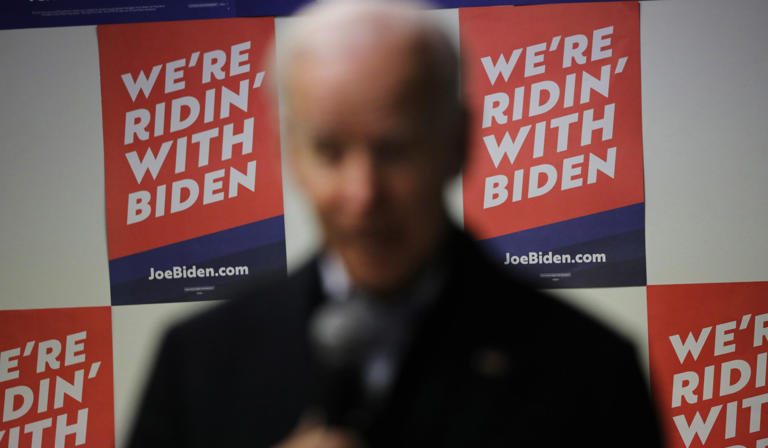
Democratic presidential candidate Joe Biden speaks to volunteers at state campaign headquarters on January 13, 2020 in Des Moines, Iowa. / Spencer Platt / Getty Images
The Democrats’ current issues with their ‘brand’ are well known. In poll after poll, Democratic favorability is near or at all-time lows. How does that affect voter registration? Voters—and new voters especially—clearly don’t want to be associated with the Democratic brand. And that is a major problem.
I still tend to think 2026 will be a good election for Democrats. The historical trends are just too damn strong. But, man does the party have problems. And, at least on the voter registration front, there’s no quick fix.
Want more ball and strike calling—no matter what uniform the batter at the plate is wearing? Check out Chris Cillizza’s Substack and YouTube channel.







 THE ARTFUL DILETTANTE