Economics Reality

I have been teaching economics since 1967 — 40 years of it at George Mason University in Fairfax, Virginia. During that interval, economic reality has not changed. Just as Galileo’s law about the independent influence of gravity on falling objects has not changed, neither have the fundamental principles of economics. Economics is fun and simple. It’s made complicated by some economics professors — fortunately, not by my colleagues at George Mason University. Let’s apply some simple tools of economics to reveal outright myths, lies and tricks.

Who is punished by tariffs on imported goods? Let’s go through the steps. The Canadian government imposes high tariffs on American dairy imports. That forces Canadians to pay higher prices for dairy products and protects Canada’s dairy producers from American competition. What should be the U.S. government’s response to Canada’s screwing its citizens? If you were in the Trump administration, you might retaliate by imposing stiff tariffs on softwood products built from pine, spruce and fir trees used by U.S. homebuilders. In other words, the U.S. should retaliate against Canada’s harming its citizens by forcing them to pay higher dairy product prices, by forcing Americans through tariffs to pay higher prices for wood and thereby raising the cost of building homes.

Many politicians, pundits and some economists would have us believe that corporations pay taxes, but do they? Economists distinguish between entities who ultimately bear the tax burden and those upon whom tax is initially levied. Just because a tax is levied on a corporation doesn’t mean that the corporation bears its burden. Faced with a tax, a corporation can shift the tax burden by raising its product prices, lowering dividends or laying off workers. The lesson here is that only people pay taxes, not legal fictions like corporations. Corporations are simply tax collectors for the government. Similarly, no one would fall for a politician telling a homeowner, “I’m not going to tax you; I’m going to tax your property.” I guarantee that it will be a person, not the property, writing out the check to the taxing authority. Again, only people pay taxes.

Here’s a question: Are natural or manmade disasters good for the economy? Dr. Larry Summers, top economic adviser to President Obama, said about the Kobe, Japan, earthquake: “(The disaster) may lead to some temporary increments ironically to GDP as a process of rebuilding takes place. In the wake of the earlier Kobe earthquake Japan actually gained some economic strength.” After devastating Floridian hurricanes, it’s not uncommon to read newspaper headlines such as “Storms create lucrative times,” or “Economic growth from hurricanes could outweigh costs,” or “It’s a perverse thing … there’s real pain, but from an economic point of view, it is a plus.” Then there’s Nobel Laureate Paul Krugman who wrote in his New York Times column “After the Horror,” after the 9/11 attack, “Ghastly as it may seem to say this, the terror attack — like the original day of infamy, which brought an end to the Great Depression — could do some economic good.” He went on to explain that rebuilding the destruction would stimulate the economy through business investment and job creation.

One would never hear my colleagues in George Mason University’s economics department spouting such insanities. Just ask yourself whether the Japanese economy would have faced even greater opportunities for economic growth had the earthquake also struck Tokyo, Hiroshima, Yokohama and other major cities? Would the 9/11 terrorists have made a greater contribution to our economy had they also destroyed lives and buildings in Chicago, St. Louis, Los Angeles and Atlanta? The belief that a society benefits from destruction is sheer lunacy.

French economist Frederic Bastiat (1801-1850) explained it in his pamphlet “What is Seen and What is Not Seen.” He said, “There is only one difference between a bad economist and a good one: the bad economist confines himself to the visible effect; the good economist takes into account both the effect that can be seen and those effects that must be foreseen.” That’s why my George Mason University colleagues are good economists.

Walter E. Williams is a professor of economics at George Mason University. To find out more about Walter E. Williams and read features by other Creators Syndicate writers and cartoonists, visit the Creators Syndicate webpage at http://www.creators.com.

What It Means to Have “Control Issues”

But the fact remains that everything has a price. Just as objects have financial costs, the choices we make come with emotional and psychological costs. Marriage, for example, means having less control over your independence, but (hopefully) the satisfaction of intimacy with another person.

Flying comes with a psychological cost. Some people are focused more on terrorism. Others don’t like being cooped up. Others dread flying for fear of mechanical failure and human error.

It’s important to point out that airlines — at least as long as they are required to make a profit and stand accountable for passengers’ lives — have a self-serving interest in sending up a safe airplane every time. For example, in the mid-1990s, U.S. Airways experienced a number of crashes. In response to the naturally bad publicity, they overhauled their safety team and advertised that they were making safety “priority one.” Although accidents are always possible, that particular airline did not suffer a major crash for many years thereafter. Similar examples are everywhere.

Ironically, we’re safer in the air than in many other places. There are well over 100,000 commercial flights every day — more than 20 million a year. And the overwhelming majority land safely. These examples could, theoretically, reduce a person’s fears, but I find that they usually don’t. Why? Because, for most people, fear of flying raises issues of control. When you board an airplane, you’re forced to confront the fact that you have no control. You are placing your life totally in the judgment of the pilots, controllers, mechanics and airline executives. There’s no denying this powerful emotion every time you walk down the Jetway.

When you drive a car, you have more control over what happens. You’re the one driving, and you’re the one responsible for making sure maintenance is adequate. But, when you step onto a jetliner, you surrender that control, and that’s what makes you anxious. Every bump, every noise, reminds you of that fact.

There are various techniques for treating the symptoms: anti-anxiety medication, deep breathing, happy thoughts, rational thoughts (i.e., based on facts, not fears), focusing on what you will do when the plane lands, keeping yourself busy, using alcoholic beverages (careful, now…), and so forth. But these approaches only address the symptoms. The fear will return next time.

If you’re interested in tackling the root causes rather than just the symptoms, work on the issues of control and emotional cost in your daily life. Ask yourself how you can become more accepting of things over which you have no control. Ask yourself how you can better accept not only the fiscal costs of things, but more importantly, the psychological costs. Keep a journal, and note when you handle these situations more (or less) rationally than usual. Practice letting go. Sometimes a skilled cognitive therapist or qualified counselor can help reinforce your efforts.

Learn to distinguish the probable from the merely possible. A plane crash is always possible. So are car crashes and lightning strikes. But, under normal circumstances, none of these are likely. The overwhelming majority of flights on the overwhelming majority of days occur without incident. To remain in business, airlines have every incentive to make sure this is the case.

So we pay the emotional cost for the convenience of flying by learning to relinquish control over certain things. Doing so will be difficult in the beginning, but the reward can be a more interesting and exciting life. Consider the alternatives. If the effort is worth it to you, then you can make it happen.

It’s surprising how many people have a fear of flying. Many of those I encounter tell me that they worry about incompetent mechanics on the ground or cost-cutting CEOs sending an airplane with maintenance problems up into the sky. Even worse, some airlines are considering single-pilot operation (rather than a Captain and a First Officer) on passenger jets. Let’s hope that never happens!

But the fact remains that everything has a price. Just as objects have financial costs, the choices we make come with emotional and psychological costs. Marriage, for example, means having less control over your independence, but (hopefully) the satisfaction of intimacy with another person.

Flying comes with a psychological cost. Some people are focused more on terrorism. Others don’t like being cooped up. Others dread flying for fear of mechanical failure and human error.

It’s important to point out that airlines — at least as long as they are required to make a profit and stand accountable for passengers’ lives — have a self-serving interest in sending up a safe airplane every time. For example, in the mid-1990s, U.S. Airways experienced a number of crashes. In response to the naturally bad publicity, they overhauled their safety team and advertised that they were making safety “priority one.” Although accidents are always possible, that particular airline did not suffer a major crash for many years thereafter. Similar examples are everywhere.

Ironically, we’re safer in the air than in many other places. There are well over 100,000 commercial flights every day — more than 20 million a year. And the overwhelming majority land safely. These examples could, theoretically, reduce a person’s fears, but I find that they usually don’t. Why? Because, for most people, fear of flying raises issues of control. When you board an airplane, you’re forced to confront the fact that you have no control. You are placing your life totally in the judgment of the pilots, controllers, mechanics and airline executives. There’s no denying this powerful emotion every time you walk down the Jetway.

When you drive a car, you have more control over what happens. You’re the one driving, and you’re the one responsible for making sure maintenance is adequate. But, when you step onto a jetliner, you surrender that control, and that’s what makes you anxious. Every bump, every noise, reminds you of that fact.

There are various techniques for treating the symptoms: anti-anxiety medication, deep breathing, happy thoughts, rational thoughts (i.e., based on facts, not fears), focusing on what you will do when the plane lands, keeping yourself busy, using alcoholic beverages (careful, now…), and so forth. But these approaches only address the symptoms. The fear will return next time.

If you’re interested in tackling the root causes rather than just the symptoms, work on the issues of control and emotional cost in your daily life. Ask yourself how you can become more accepting of things over which you have no control. Ask yourself how you can better accept not only the fiscal costs of things, but more importantly, the psychological costs. Keep a journal, and note when you handle these situations more (or less) rationally than usual. Practice letting go. Sometimes a skilled cognitive therapist or qualified counselor can help reinforce your efforts.

Learn to distinguish the probable from the merely possible. A plane crash is always possible. So are car crashes and lightning strikes. But, under normal circumstances, none of these are likely. The overwhelming majority of flights on the overwhelming majority of days occur without incident. To remain in business, airlines have every incentive to make sure this is the case.

So we pay the emotional cost for the convenience of flying by learning to relinquish control over certain things. Doing so will be difficult in the beginning, but the reward can be a more interesting and exciting life. Consider the alternatives. If the effort is worth it to you, then you can make it happen.

Michael J. Hurd, Life’s a Beach

Criminals Are Soft on Crime

CNN chief data analyst Harry Enten said Thursday on “News Central” that polls showed Americans trusted President Donald Trump and Republican lawmakers on crime over Democrats.

Why would anyone trust a Party openly dedicated to the well-being of murderers to protect them from violent crime? They ARE the criminals. They experience no accountability, no pain, no shame and no retribution. And no suffering. Unless going through life as a worthless pile of human debris rewarded for your lowest qualities constitutes suffering.

Hopefully, it does.

Michael J. Hurd, Daily Dose of Reason

Bondi Power Move: DOJ Strips DC Police Chief of Power, Rescinds Some Protections of Illegals

Attorney General Pam Bondi on Thursday issued an order wiping out Washington, D.C,. police policies that protected illegal immigrants, and she named a temporary leader for the district’s Metropolitan Police Department.

Bondi’s actions follow an order from President Donald Trump declaring a crime emergency in D.C. and putting its police under federal control.

However, the attorney general for D.C.’s government is pushing back on Bondi’s directive in court.

Bondi’s order removed Metro Police Chief Pamela Smith from running the department and named Drug Enforcement Administration Administrator Terry Cole MPDs “emergency police commissioner,” according to Fox News.

Bondi’s order gives Cole the power to issue orders and says any existing officials in the police department must get his approval before issuing orders.

Bondi also specifically rescinded three orders that have limited local police collaboration with immigration officials. D.C. has considered itself a sanctuary city where illegal immigrants are protected from immigration authorities.

One rescinded order said that MPD officers “shall not arrest individuals based solely on federal immigration warrants or detainers as long as there is no additional criminal warrant or underlying offense for which the individual is subject to arrest.”

Bondi also rescinded a June 2024 order that limited inquiries into an individual’s immigration status and an October 2023 banning arrests for federal immigration warrants.

One rescinded order said that MPD officers “shall not arrest individuals based solely on federal immigration warrants or detainers as long as there is no additional criminal warrant or underlying offense for which the individual is subject to arrest.”

Bondi also rescinded a June 2024 order that limited inquiries into an individual’s immigration status and an October 2023 banning arrests for federal immigration warrants.

Lest there be confusion over whom to obey, Bondi wrote in her order, “To the extent that provisions in this order conflict with any existing MPD directives, those directives are hereby rescinded.”

“Residents of the District of Columbia, the thousands of Americans who commute into the District for work every day, and the millions of tourists from all over the world who visit our nation’s capital have a right to feel safe and to be free from the scourge of violent crime,” Bondi wrote.

However, D.C. Attorney General Brian Schwalb has said Cole’s appointment is “unlawful,” according to Axios.

Mayor Muriel Bowser posted the city’s defiance on X.

D.C. council member Christina Henderson also pushed back, saying, “Respectfully, the Attorney General does not have the authority to revoke laws.”

The dispute is likely to be resolved in court, with the D.C. attorney general filing a lawsuit to stop what he termed a “hostile takeover” of the police, according to The Washington Post.

Jack Davis, Western Journal

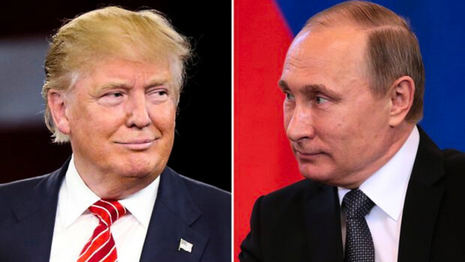
Putin Convinced that Conflict in Ukraine Would Have Never Happened Under Trump

Anchorage hosted the first in-person talks between the Russian and US leaders since June 2021

ANCHORAGE /Alaska /, August 16. /TASS/. Russian President Vladimir Putin confirmed that the conflict in Ukraine would have never started had Donald Trump been the president of the United States in 2022.

“I’d like to remind you that in 2022 during the last contact with the previous administration, I tried to convince my previous American colleague that the situation should not be brought to the point of no return, when it would come to hostilities. And I said it quite directly back then that it’s a big mistake,” Putin said at a joint news conference. “Today, when President Trump is saying that if he had been the president back then, there would have been no war, and I’m quite sure that it would indeed be so. I can confirm that.”

Anchorage hosted the first in-person talks between the Russian and US leaders since June 2021, when Putin met with then US President Joe Biden in Geneva. Putin became the first Russian leader to visit Alaska.

The US side hosted the Alaska summit under the slogan of ‘Pursuing peace’.

TASS

Using generative AI, researchers design compounds that can kill drug-resistant bacteria

You might be using generative AI products like ChatGPT and Gemini to create drafts, summarize documents, reason through complex topics, or make viral videos, but others are using these models to come up with solutions to much bigger problems. For example, an MIT Antibiotics-AI Project study recently published in scientific journal Cell details not one but two AI techniques that allowed researchers to discover never-before-seen antibiotics that might neutralize two dangerous drug-resistant bacteria.

Artificial intelligence models did not create the new drugs on their own. Instead, the AI simply followed complex instructions to discover molecules that might be able to destroy Neisseria gonorrhoeae (gonorrhea) and Staphylococcus aureus (MRSA). The AI models generated millions of possible chemical compounds that would harm the bacteria and thus put a stop to infections. In each case, the researchers applied specific filters to narrow down the lists of compounds to adequate candidates. These filters included requirements that the resulting antibiotic should not harm humans nor share common traits with existing antibiotics that have lost their efficacy against the two bacteria. After applying these conditions, the researchers ended up with a few viable candidates that show promise in lab testing.

With help from artificial intelligence, MIT researchers have designed novel antibiotics that can combat two hard-to-treat infections: drug-resistant Neisseria gonorrhoeae and multi-drug-resistant Staphylococcus aureus (MRSA).

Using generative AI algorithms, the research team designed more than 36 million possible compounds and computationally screened them for antimicrobial properties. The top candidates they discovered are structurally distinct from any existing antibiotics, and they appear to work by novel mechanisms that disrupt bacterial cell membranes.

This approach allowed the researchers to generate and evaluate theoretical compounds that have never been seen before — a strategy that they now hope to apply to identify and design compounds with activity against other species of bacteria.

“We’re excited about the new possibilities that this project opens up for antibiotics development. Our work shows the power of AI from a drug design standpoint, and enables us to exploit much larger chemical spaces that were previously inaccessible,” says James Collins, the Termeer Professor of Medical Engineering and Science in MIT’s Institute for Medical Engineering and Science (IMES) and Department of Biological Engineering.

Collins is the senior author of the study, which appears today in Cell. The paper’s lead authors are MIT postdoc Aarti Krishnan, former postdoc Melis Anahtar ’08, and Jacqueline Valeri PhD ’23.

Over the past 45 years, a few dozen new antibiotics have been approved by the FDA, but most of these are variants of existing antibiotics. At the same time, bacterial resistance to many of these drugs has been growing. Globally, it is estimated that drug-resistant bacterial infections cause nearly 5 million deaths per year.

In hopes of finding new antibiotics to fight this growing problem, Collins and others at MIT’s Antibiotics-AI Project have harnessed the power of AI to screen huge libraries of existing chemical compounds. This work has yielded several promising drug candidates, including halicin and abaucin.

To build on that progress, Collins and his colleagues decided to expand their search into molecules that can’t be found in any chemical libraries. By using AI to generate hypothetically possible molecules that don’t exist or haven’t been discovered, they realized that it should be possible to explore a much greater diversity of potential drug compounds.

In their new study, the researchers employed two different approaches: First, they directed generative AI algorithms to design molecules based on a specific chemical fragment that showed antimicrobial activity, and second, they let the algorithms freely generate molecules, without having to include a specific fragment.

For the fragment-based approach, the researchers sought to identify molecules that could kill N. gonorrhoeae, a Gram-negative bacterium that causes gonorrhea. They began by assembling a library of about 45 million known chemical fragments, consisting of all possible combinations of 11 atoms of carbon, nitrogen, oxygen, fluorine, chlorine, and sulfur, along with fragments from Enamine’s REadily AccessibLe (REAL) space.

Then, they screened the library using machine-learning models that Collins’ lab has previously trained to predict antibacterial activity against N. gonorrhoeae. This resulted in nearly 4 million fragments. They narrowed down that pool by removing any fragments predicted to be cytotoxic to human cells, displayed chemical liabilities, and were known to be similar to existing antibiotics. This left them with about 1 million candidates.

“We wanted to get rid of anything that would look like an existing antibiotic, to help address the antimicrobial resistance crisis in a fundamentally different way. By venturing into underexplored areas of chemical space, our goal was to uncover novel mechanisms of action,” Krishnan says.

Through several rounds of additional experiments and computational analysis, the researchers identified a fragment they called F1 that appeared to have promising activity against N. gonorrhoeae. They used this fragment as the basis for generating additional compounds, using two different generative AI algorithms.

One of those algorithms, known as chemically reasonable mutations (CReM), works by starting with a particular molecule containing F1 and then generating new molecules by adding, replacing, or deleting atoms and chemical groups. The second algorithm, F-VAE (fragment-based variational autoencoder), takes a chemical fragment and builds it into a complete molecule. It does so by learning patterns of how fragments are commonly modified, based on its pretraining on more than 1 million molecules from the ChEMBL database.

Those two algorithms generated about 7 million candidates containing F1, which the researchers then computationally screened for activity against N. gonorrhoeae. This screen yielded about 1,000 compounds, and the researchers selected 80 of those to see if they could be produced by chemical synthesis vendors. Only two of these could be synthesized, and one of them, named NG1, was very effective at killing N. gonorrhoeae in a lab dish and in a mouse model of drug-resistant gonorrhea infection.

Additional experiments revealed that NG1 interacts with a protein called LptA, a novel drug target involved in the synthesis of the bacterial outer membrane. It appears that the drug works by interfering with membrane synthesis, which is fatal to cells.

In a second round of studies, the researchers explored the potential of using generative AI to freely design molecules, using Gram-positive bacteria, S. aureus as their target.

Again, the researchers used CReM and VAE to generate molecules, but this time with no constraints other than the general rules of how atoms can join to form chemically plausible molecules. Together, the models generated more than 29 million compounds. The researchers then applied the same filters that they did to the N. gonorrhoeae candidates, but focusing on S. aureus, eventually narrowing the pool down to about 90 compounds.

They were able to synthesize and test 22 of these molecules, and six of them showed strong antibacterial activity against multi-drug-resistant S. aureus grown in a lab dish. They also found that the top candidate, named DN1, was able to clear a methicillin-resistant S. aureus (MRSA) skin infection in a mouse model. These molecules also appear to interfere with bacterial cell membranes, but with broader effects not limited to interaction with one specific protein.

Phare Bio, a nonprofit that is also part of the Antibiotics-AI Project, is now working on further modifying NG1 and DN1 to make them suitable for additional testing.

“In a collaboration with Phare Bio, we are exploring analogs, as well as working on advancing the best candidates preclinically, through medicinal chemistry work,” Collins says. “We are also excited about applying the platforms that Aarti and the team have developed toward other bacterial pathogens of interest, notably Mycobacterium tuberculosis and Pseudomonas aeruginosa.”

The research was funded, in part, by the U.S. Defense Threat Reduction Agency, the National Institutes of Health, the Audacious Project, Flu Lab, the Sea Grape Foundation, Rosamund Zander and Hansjorg Wyss for the Wyss Foundation, and an anonymous donor.

Anne Trafton | MIT News

Alaska meeting was a start, but Putin is still up to his old tricks — and Trump knows it (Douglas Murray)

As the people of Ukraine know, neighborliness is not among Putin’s great qualities.

Still, it was with a reference to the US and Russia being neighbors that Putin kicked off his conversation with President Trump in Alaska yesterday.

On the red carpet at the airport he apparently said to Trump: “Good afternoon, dear neighbor. Very good to see you in good health and to see you alive.”

Trump’s own remarks at the joint press conference were friendly and formal.

But he acknowledged that while the talks were a start there was no deal.

Because there were still a number of small things and “one which is the most significant” that the two sides had not agreed on.

Presumably that one big thing was whether or not Putin should be allowed to keep the territory of Ukraine that his forces have already annexed.

This is a point of contention not only for the Ukrainian people, but for America´s NATO allies, who are united in the belief that giving Putin something of Ukraine will not satisfy his appetite for land, but only encourage it.

There are those at home in the US who say that this is fever-dream of war-mongers. But America’s allies in Lithuania, Latvia, Estonia, Poland, Finland, Sweden and nearly all of the rest of Europe fear it.

And for them this is not some theoretical, grand-strategy game.

It is a matter of whether their countries will be at existential risk of invasion by Putin next.

Douglas Murray, New York Post

Carefully and Gracefully

And so, now, in Alaska, Mr. Trump sits down with Vlad Putin to attempt a settling of Ukraine’s hash. This war has been a three-year bloody grind, millions killed, mostly Ukrainians, provoked underhandedly by US State Dept / CIA neocons, Britain’s MI6 apparatus, and the girl-bosses of the EU, for no good reason, namely, to weaken and possibly break-up Russia so as to get at its vast mineral and energy resources. This has been tried before in history, always to the grief of the triers.

From our country’s point of view, the dynamics in play at this moment are delicate to an extreme. In the background of the Trump-Putin meet-up, amid an eerie silence in the DOJ and FBI, an epic, sweeping prosecution of the RussiaGate hoaxers creeps forward. RussiaGate, of course, was born in the false charge (by America’s highest officials, derived from nonsense cooked up by Hillary Clinton) that Donald Trump was a Russian agent.

. It was preposterous and continually disproven, but the many-footed creatures of America’s deep state, which controlled so many levers of power, dragged it out for years. Altogether, that endeavor amounted to a campaign of sedition and arguably treason.

The delicacy comes in as President Trump must now avoid at all costs any appearance of giving-in to Mr. Putin, of appearing to be any sort of a vassal — “Putin’s puppet,” as charged in RussiaGate.

The raw truth is that Russia has likely already “won” the war in Ukraine, in the sense that it has finally gained control of the battlespace and worn out its opponent. It is fait accompli. What remains is the disposition of Ukraine’s future which, in another raw truth, is mostly Russia’s to determine.

Yet another raw truth is that this would probably be the best outcome for all concerned: a neutralized, disarmed Ukraine returned to its prior condition as a mostly agricultural sovereign backwater of Europe within Russia’s sphere-of-influence, resuming its longstanding status as not being a problem for anyone.

Still, yet another raw truth is that the USA would benefit hugely from normalized relations with Russia, no more sanctions, fair trade, a rebalance of the drift toward China, lessening the chance of nuclear war — and this would even benefit the knuckleheads of Europe whose economies are imploding due to a lack of affordable energy (and also because of, let’s face it, the EU’s terrifically stupid “green” policies).

All of which means there will necessarily be a lot of “pretend” played in Anchorage for show. Mr. Trump must pretend to be tough on Putin, and Mr. Putin must pretend, a little bit, to give-in to Mr. Trump’ proposals. That is, it will be something of a kabuki, a kafabe. Surely, many of the stickiest points have been pre-negotiated by Mr. Trump’s envoy, Steve Witkoff, who quietly visited Moscow a week ago.

Mr. Trump must appear strong with Russia because his appointees are commencing to go medieval on the folks who called him “Putin’s Puppet” nine years ago — and subjected him to a series of epic torments including the subversion of his whole first term in office, nonstop obloquy from the media, impeachment (X 2), home invasion, and a grotesque set of malicious, nitwit prosecutions that have either failed completely (Fani Willis, Jack Smith) or will be subject to humiliating reversals in the higher courts. Not to mention two attempted assassinations.

You should assume that Mr. Putin well understands all this and intends to play along. He will appear to make some generous concessions to Ukraine, starting with the promise that it can go forward as a sovereign, self-governing nation.

The big enchilada might be to grant that Ukraine can retain possession of Odessa, the port city on the Black Sea which is Ukraine’s depot for export to the world of its chief commodity, grains. In any case, both Russia and the USA intend to relieve Volodymyr Zelenskyy of his duties — notice he is conspicuously not invited to the Alaska meeting.

Mr. Trump well understands that one way or another, Russia is going to prevail in this conflict on-the-ground. He abhors all the killing. He has already expressed a disinclination to keep backing the war with money and weapons. He must be disgusted at how the Bidens (and the Deep State) used Ukraine as a money-laundry, as a site for bioweapons labs, and how it served as a nexus for human trafficking.

He also knows that Russia wants badly to be re-admitted to normal relations with the West, which is in everybody’s interest, except perhaps China’s. You should infer therefore that Russia wants the war to end in a way that does not humiliate the losers and backers — perhaps along the lines of how America managed our victory against our enemies in World War Two, carefully and gracefully.

James Kunstler

BREAKING: Democrat New Orleans Mayor LaToya Cantrell Indicted on Federal Charges

Democrat New Orleans Mayor LaToya Cantrell was indicted on federal charges on Friday.

A federal grand jury indicted Cantrell and former New Orleans Police officer Jeffrey Vappie after an investigation by the FBI.

Details of the indictment are forthcoming.

WVUE reported:

New Orleans Mayor LaToya Cantrell was indicted by a federal grand jury on Friday, August 15, marking the first time in the city’s history that a sitting mayor is facing criminal prosecution.

The mayor’s legal troubles come after more than two years of mounting criticism including; an alleged romantic relationship involving her former executive security officer, a legal battle with a New Orleans resident who took photos of the alleged relationship, a legal battle with New orleans Public Schools over a broken multi-million dollar funding promise, the indictment of a former city inspector who allegedly bribed her with Saints tickets, and frequent travel amid an ongoing jail escape and in the aftermath of a mass power outage.

Details of the indictment have not yet been released at this time.

Last year it was reported that LaToya Cantrell was under FBI investigation for allegations of an ‘ongoing adulterous affair’ with Jeffrey Vappie, the former head of her police detail, and potential misuse of taxpayer funds, according to the Daily Mail.

The FBI scrutinized the mayor’s actions, including her time spent with Vappie on city property and during personal trips funded by the government.

Security footage has allegedly captured Mayor Cantrell and Vappie spending extensive periods together in a city-owned apartment during work hours, raising questions about the nature of their relationship.

Source: fox8live This revelation comes amidst an investigation into Vappie’s work hours and activities.

In 2023, Vappie was accused of multiple incidents of timesheet discrepancies while serving on Mayor Cantrell’s security detail. This accusation partly stemmed from WVUE-TV’s reports on the mayor’s use of an Upper Pontalba apartment on Jackson Square. In response, the City Council prohibited the mayor from using the apartment as a personal residence.

According to the New Orleans Advocate, the investigation by the New Orleans Police Department concluded that Vappie breached departmental regulations by logging 18 hours of work in a single day. Additionally, he was cited for spending “numerous hours” in the company of Mayor Cantrell beyond his scheduled duty hours, and for participating in two board meetings as the mayor’s appointee on the Board of the Housing Authority of New Orleans.

The allegations have been fueled by Danielle Vappie’s divorce filings, which imply an affair between her husband and Cantrell dating back in May 2021, coinciding with the start of Vappie’s tenure on Cantrell’s security detail.

Cantrell was previously under fire for spending more than $30,000 of taxpayer money to fly first class to Europe.

Cantrell argued the first class flights were for her safety as a black woman and to protect her from Covid.

Christine Laila, Gateway Pundit

Hillary Clinton Says She’d Nominate Trump for Nobel Peace Prize — for Real

President Trump arrived in Anchorage, Alaska, on Friday with a single urgent demand for his meeting with Russian President Vladimir Putin: a ceasefire in Ukraine, and he wants it immediately. “I’m not going to be happy if it’s not today… I want the killing to stop,” Trump told reporters as he headed to the high-stakes summit, which is taking place at Joint Base Elmendorf-Richardson, a Cold War–era military facility. Trump will greet Putin upon arrival, a symbolic gesture underscoring the significance of the talks. 

If the meeting goes well, a follow-up summit that includes Ukrainian President Volodymyr Zelensky will be the next step, one that, according to Hillary Clinton of all people, could even put Trump in line for a Nobel Peace Prize if he manages to broker an end to the bloody, grinding war between Russia and Ukraine. Not only that, but she also says she’d nominate him herself.

Yes, you read that right. On Jessica Tarlov’s “Raging Moderates” podcast, Tarlov asked what she would be aiming for if she were heading to Alaska to meet Putin, drawing on her experience as a former secretary of state. Clinton was candid in her response. She said she personally wouldn’t be going but acknowledged the reality that President Trump had chosen to take on the mission at a military base on U.S. soil. She said her focus would be on convincing Trump that “he gains nothing by capitulating to Putin.”

Clinton revealed that, from what she’s gathered, Trump “very much would like to receive the Nobel Peace Prize.” 

“Honestly, if he could bring about the end to this terrible war where Putin is the aggressor invading a neighbor country, try to change the borders, if he could end it without putting Ukraine in a position where it had to concede its territory to the aggressor, had to in a way validate Putin’s vision of Greater Russia, but instead could really stand up to Putin, something we haven’t seen, but maybe this is the opportunity,” she said. 

Clinton laid out the conditions she would demand: a ceasefire with “no exchange of territory” and Putin gradually withdrawing from seized lands over time to demonstrate “good faith efforts, let us say, not to threaten European security.” She said, “If we could pull that off, if President Trump were the architect of that, I’d nominate him for a Nobel Peace Prize.” Her main goal was to prevent “capitulation to Putin, aided and abetted by the United States.” She warned that any such capitulation would set “a terrible, terrible precedent,” making America “less safe” and rewarding Putin’s aggression, which “he will not stop.” 

Clinton closed on a note that mixed skepticism with hope: “You can dream, Jessica, you can dream. And I’m dreaming that for whatever combination of reasons, including the elusive Nobel Peace Prize, President Trump may actually stand up to Putin on behalf of not just Ukraine and its democracy and its very brave people, but frankly, on behalf of our own security and interests.”

Does she mean it? I wouldn’t trust a Clinton as far as I could throw one. But watching her have to swallow those words? That would be priceless.

Imagine Hillary Clinton having to endorse Trump for peace! If you’re sick of the media’s selective outrage, PJ Media dives deeper where others fear to tread. Unlock exclusive analysis with PJ Media VIP. Use the code FIGHT for 60% off. Stand with free speech — support fearless journalism today!

Matt Margolis

“He’s a great columnist. I think he’s terrific.”  – Mark Levin

Matt Margolis is a conservative commentator and columnist. His work has been cited on Fox News and national conservative talk radio, including The Rush Limbaugh Show, The Mark Levin Show, and The Dan Bongino Show. Matt is the author of several books and has appeared on Newsmax, OANN, Real America’s Voice News, Salem News Channel, and even CNN.