Chinese Profs and Students Keep Poisoning People at U.S. Universities

You may have come across this recent story of Agatha Christie in the 21st century.

A University of Wyoming student was arrested after police say she tried to poison a colleague, then attempted to flee to China when officers questioned her.

Aili Wang, 32, was questioned by campus police after surveillance cameras set up by a coworker experiencing medical symptoms allegedly caught her rinsing his mug with liquid from her own cup on Oct. 1, according to a University of Wyoming police affidavit, which added that she was seen on camera “taking photos and manipulating notebooks.”

Wang didn’t get along with the coworker, who wasn’t named in court documents. Surveillance footage allegedly showed Wang searching through the victim’s desk; the victim specialized in disease treatment technology, work similar to what she had done in China.

The liquid was identified as acrylamide, a chemical that can “cause a number of health problems, including cancer,” according to the American Cancer Society. According to authorities, Wang purchased the chemical through eBay. It was discovered after the victim’s wife ran a test on water taken from the coffee maker he used to brew tea.

Now you may think this is just some sort of bizarre thing that one crazy person did. But there’s been a pattern of such incidents all involving foreign researchers and students involved in the sciences on college campuses.

Meanwhile, David Xu is back in the news after a pro-crime justice system chose to expunge his conviction.

A Berkeley engineer whose co-worker was convicted of poisoning her is speaking publicly about the case for the first time after a court agreed to expunge his felony conviction despite objections from prosecutors.

Rong Yuan said she spent years trying to understand a series of unexplained health problems starting in 2017, including vomiting and hair loss, before discovering what she says was happening at her workplace.

For more than two years, she sought answers from countless doctors, but her condition continued to worsen.

The breakthrough came after her mother noticed an unusual smell coming from her water bottle. When cleaning it did not solve the problem, Yuan decided to install a small camera at her desk.

The camera captured a co-worker, David Xu, pouring a substance into her water bottle.

Testing later identified the substance as cadmium, a toxic chemical.

Xu is a chemical engineer at Berkeley Engineering and Research.

Here’s one from this April. Unlike the others, the perpetrator here is Japanese, not Chinese.

A University of Wisconsin lab worker allegedly confessed to using ChatGPT to help plot the poisoning of his rival colleague over a longstanding grudge, according to authorities.

Makoto Kuroda, a 41-year-old staff scientist at the university’s Influenza Research Institute in the School of Veterinary Medicine in Madison, was charged with recklessly endangering safety and tampering with a household product, according to a criminal complaint obtained by The Post.

University police officers arrived at the lab on April 6 after receiving a report of possible chemicals discovered in an employee’s water bottle, the criminal complaint detailed.

That employee, identified in court documents by the initials TM, grew suspicious after taking a sip from a Trader Joe’s water bottle and spitting it out when he noticed “a strange taste,” the complaint said.

Two days later, he “observed this strange odor from his shoes” and believed it to be chloroform, court documents added.

Kuroda then allegedly told police that he had developed a longstanding grudge against TM over his behavior at work, including not following the “lab rule of wearing a lab coat and goggles.”

Here’s a story from 2023 involving a U of F PhD Chemistry student

A Florida man is facing charges after police say he may have been attempting to poison his neighbors by injecting chemicals under the front door of their apartment.

Police say undercover video shows 36-year-old Xuming Li allegedly sticking a syringe under his neighbors’ front door and injecting a liquid into the Tampa Bay apartment.

Umar Abdullah, 36, lives inside that apartment with his wife and 1-year-old daughter. He says for more than a month, a chemical smell in their home was making his family sick. The symptoms included a headache worse than a migraine, nausea, shortness of breath, drowsiness and hair loss.

Here’s a similar story from 2018.

A Lehigh University student has been arrested after authorities say he had been trying to kill his roommate for months.

Prosecutors announced Thursday that 22-year-old Yukai Yang will be charged with attempted homicide and related offenses.

It was inside his Lehigh University dorm where police say the student from China developed a murder plot, and carried it out trying to discreetly and slowly kill his roommate.

Authorities say Yang, a chemistry major, sickened his roommate with thallium and possibly other chemicals last spring. Juwan Royal experienced symptoms that included dizziness, shaking and vomiting, and his blood tested positive for thallium.

And another story from 2018 in Canada.

A graduate student who pleaded guilty to poisoning a fellow chemist at Queen’s University in Kingston, Canada has received a seven-year prison sentence for ‘administering a noxious substance’, and ‘aggravated assault’. The court deducted time already served, meaning that Zijie Wang, a chemistry PhD candidate, will spend just under six years in prison for repeatedly smuggling the carcinogen N-nitrosodimethylamine (NDMA) into the food and drink of the victim, a postdoctoral fellow at the university.

And 2015 in Stanford.

Xiangyu Duyang, 26, a graduate student from Singapore, was captured by a security camera during the time she allegedly poisoned four of her labmates by contaminating their drinking water bottles with the cancer-causing chemical paraformaldehyde.

“I’ve never heard of something as extreme as this,” said student Jamie Blundell.

Most Stanford students are just starting to hear about the case, even though it happened late last year. Court documents say graduate students doing stem cell research in the Lorry Lokey Building near the Stanford Medical Center began smelling paraformadehyde when they drank from their water bottles during September and October of last year.

Some students ingested enough to give them burning sensations in their mouths and throats. All of the victims are women. They began to suspect Duyang when she was spotted and photographed in stem cell incubators where she didn’t belong. And at the same time, the students tell investigators their stem cells began mysteriously dying.

There’s some obvious patterns here.

1. The perpetrators are grad students or professors in the sciences who have access to noxious chemicals and the expertise to use them.

2. Their targets are generally fellow Asians or third worlders. That’s interesting. But it may also be that these cultures are predisposed to suspect someone of poisoning them whereas most westerners wouldn’t even think of such things outside a Poirot yarn.

3. Professional rivalry likely plays a role. China is very academically competitive and while the vast majority of students aren’t poisoning people, clearly some are, while others understand that such behaviors exist.Call it ‘cultural differences’. Or something else to be aware of.

Daniel Greenfield, Front Page Magazine

Strength in Mind

“You have power over your mind — not outside events. Realize this, and you will find strength.”

— Marcus Aurelius

It’s true, in the following sense: You survive and flourish in life with the use of your mind. Anything you DO control is because of the thinking and focusing you employ in bringing about the desired result.

It’s probably true that we do not control most things. But of the things we do control, we do so with our chief tool of survival: our own reasoning, thinking minds.

Michael J. Hurd, Daily Dose of Reason

The Unsustainability of Today’s American Government

I was just reading how Jerry Seinfeld, who has never been political, has been harassed into taking a pro-Israel stand after being heckled at his shows. Mind you, he’s not being heckled for his political views, because he is not political. He’s being heckled for being Jewish. If you cannot see how we’re recreating Nazi Germany, you are part of the problem.

America isn’t just going batshit crazy. America is becoming a bad country. Not evil–just bad. The evil people are the minority, the beheading and stealing sociopaths disrupting and destroying (in a drip, drip, drip kind of way) all of Western civilization going back to the Magna Carta or earlier. You call them Muslims–I call them homicidal cultists. You call them Democrats. I call them totalitarians. Those are the evil people.

The bad people, on the other hand, are the average Americans who stand by and say nothing. And do nothing, even in their own private sphere. The country is FULL of fearful conservatives, but you will not find a fearful leftist anywhere. The bad people make the evil people stronger. This is how you got Nazi Germany. A majority became fearful, so the evil minority gained a foothold and created the greatest destruction in human history to date.

On our present course, the next wave of destruction will be far worse: Islam, Marxism, fascism and Nazism (the original “democratic socialism”) all rolled up into one. The merger of these psychopathic ideologies! Do you realize how inconceivable the magnitude of destruction at our doorstep? These are the times that decent people of the future will marvel about, about how good people did nothing. If we don’t wake up like RIGHT NOW, the coming monstrosities will completely eclipse the last ones.

Leaving aside Donald Trump (for now) and a Republican or two, our country is, on the whole, run by criminals and even sociopaths. Objectively speaking, they have no moral standing. Gradually, they will lose their legal standing as their increasingly open corruption erodes any hope in our present system’s sustainability. If all or most of the horrific creatures running on the Democratic side in the upcoming election win, the crisis will escalate dramatically. It will be some form of civil war, or dictatorship. Sobering, but unavoidably true. Trump’s inspiring 2024 victory bought us some time, but the Republican Party is still quite corrupt and weak; and the psychopathic left is destructive beyond imagination.

Michael J. Hurd, Daily Dose of Reason

The Rise and Fall of Hitchhiking in the US

The phenomenon started as a practical way to get places, then it became cool.

It was once all too common to drive down a two-lane highway and spot a stranger on the side of the road, thumb out, a bag slung over their shoulder or resting by their side.

During the Great Depression, jobless Americans thumbed rides from strangers as they traveled far and wide in search of opportunity. Amid World War II, picking up a hitchhiking soldier became a patriotic duty. The practice later became associated with the hippie lifestyle of the counterculture movement—a chance to break free from the status quo.

“For quite a number of decades, it was not considered a particularly dangerous thing to do,” says Ginger Strand, author of Killer on the Road: Violence and the American Interstate. “It was simply a way of sharing resources.”

In the 1960s and ’70s, enforcement of stricter state laws and local ordinances sought to regulate or limit hitchhiking, and federal law enforcement agencies began actively warning about its dangers. One FBI poster depicted a well-dressed hitchhiker and informed motorists that a stranger could be a “friendly traveler or a vicious murderer.” In reality, Reid says, “It was less about hitchhiking and more about, how do we get rid of this countercultural presence?”

By the mid-1970s, hitchhiking began to decline in the United States, …Stopping and pulling over was suddenly more dangerous. All the while, the counterculture movement was dying down.

…

It didn’t help hitchhiking’s cause that a few high-profile murder cases involving hitchhikers became media sensations, and the warnings proliferated. At the same time, the high way killer quickly became a common trope in American culture, Strand says.

“It becomes a theme in movies,” Strand says. “Before that, hitchhiking was typically only used in Hollywood movies as a meet-cute. Then it becomes a way of introducing mayhem.”

Great Depression: Hitchhiking Out of Necessity

In the 1920s, the automobile industry was starting to take off. Between 1919 and 1929, the number of passenger cars in the United States surged from 6.5 million to 23 million. At that time, hitchhiking was frowned upon and viewed as a fad among affluent youth seeking a thrill. 

Then the stock market crashed in October 1929, and the United States spiraled into the Great Depression. New automobile sales plummeted, and teens and adults alike rode the rails or hitchhiked out of necessity as they hunted for jobs. For the employed, hitchhiking became a low-cost way to get to work. In dire times, picking up someone in need was an act of compassion.

“It was this happy medium, where there are people driving cars, [and] there are plenty of people who didn’t have them,” says Jack Reid, author of Roadside Americans: The Rise and Fall of Hitchhiking in a Changing Nation. “And because of the situation in the Great Depression, there was a sense of urgency, there was a sense of desperation among some people.”

A 1938 poll by the Institute of Public Opinion found that 43 percent of Americans said they stop “occasionally” or “once in a while” for hitchhikers, with particularly high rates in New England. At the time, 17 states and Washington, D.C., had statutes to limit hitchhiking, but enforcement was minimal, according to the poll. Though hitchhiking was common, some critics expressed safety concerns or believed hitchhiking undermined traditional family and community values. 

World War II: Hitchhiking as a Patriotic Duty

Hitchhiking became more normalized, even commended, after the United States entered World War II in December 1941. People viewed picking up a soldier as a patriotic deed. The U.S. government also launched an unprecedented campaign urging the public to conserve resources due to wartime rations on gasoline and rubber. One 1943 government poster encourages car-sharing and reads, “When you ride ALONE you ride with Hitler.”

What Led to Hitchhiking’s Decline?

In the 1960s and ’70s, enforcement of stricter state laws and local ordinances sought to regulate or limit hitchhiking, and federal law enforcement agencies began actively warning about its dangers. One FBI poster depicted a well-dressed hitchhiker and informed motorists that a stranger could be a “friendly traveler or a vicious murderer.” In reality, Reid says, “It was less about hitchhiking and more about, how do we get rid of this countercultural presence?” 

Some warnings also highlighted the specific risks to women at a time when they were gaining new freedoms, Strand says.

“Their hitchhiking was one of the things that was used against women really to say, you’re putting yourself in danger; you’re asking for trouble,” Strand says.

According to Strand, the link between hitchhiking and crime wasn’t so clear. One of the few studies on the issue—published by the California Highway Patrol in 1974—revealed that hitchhikers were involved in less than 1 percent of crimes in the state. 

By the mid-1970s, hitchhiking began to decline in the United States, Reid says. It became less of a necessity as cars began lasting longer and ownership numbers continued rising. On the modernized Interstate Highway System, hitching a ride became more difficult as drivers traveled at higher speeds. Stopping and pulling over was suddenly more dangerous. All the while, the counterculture movement was dying down.

Fewer middle-class people who could figure out other ways to travel wanted to hitchhike,” Reid says. “So it became associated with more marginalized populations.”

It didn’t help hitchhiking’s cause that a few high-profile murder cases involving hitchhikers became media sensations, and the warnings proliferated. At the same time, the highway killer quickly became a common trope in American culture, Strand says.

“It becomes a theme in movies,” Strand says. “Before that, hitchhiking was typically only used in Hollywood movies as a meet-cute. Then it becomes a way of introducing mayhem.”

As of June 2025, hitchhiking is fully illegal in six U.S. states. While most states permit it, a vast majority have laws against standing directly in the road or obstructing the flow of traffic.

Jordan Friedman

Jordan Friedman is a Chicago-based writer specializing in history and true crime. Jordan was previously an editor at U.S. News & World Report, and his work has also appeared in publications including National Geographic, Fortune Magazine and USA TODAY.

More Voters Blame the U.S. Than Iran for the Iran Conflict

Republicans blame Iran, Democrats blame the United States, and men under 40 are the most likely to name Israel

Voters were asked who they blame most for the ongoing conflict involving Iran and how much it will matter when they vote in November.

A new national survey by The Honest Poll finds that 40% of Likely Voters blame the United States most, ahead of the 31% who blame Iran and 14% who blame Israel. Three percent (3%) name someone else and 12% are not sure. Registered Voters answered 39% the United States, 28% Iran, 14% Israel, 3% someone else and 15% not sure.

Party is the clearest dividing line. A majority of Republicans, 52%, blame Iran, while 18% blame the United States and 9% Israel. Democrats are close to the reverse: 58% blame the United States, 19% Israel and only 10% Iran. Independents fall in between at 36% the United States, 27% Iran and 16% Israel. The 2024 vote sorts the same way, with 52% of Trump voters naming Iran and 62% of Harris voters naming the United States. Ideology shows the same split: 50% of conservatives blame Iran and 5% of liberals do, while 63% of liberals blame the United States against 25% of conservatives.

Mark Mitchell, The Honest Poll

Things Have Changed

Things Have Changed “Most people are not the enemy. They are scared, proud, lonely, overworked, and trying to protect something they love with the only map they were handed.” —LHGrey

I remind you once again: history is a trickster. Sometimes things turn out, and sometimes they just turn, and these days they’re turning hard. Get this: Russia is not our mortal enemy anymore. This is not 1956 or even 1986. It is no longer the so-called Free World against the wicked Hammer and Sickle.

Russia is no longer a weird political science experiment acting in defiance of human nature — that is, of people striving to make good lives for their families. No more sacrificing everyone’s happiness to prove Karl Marx’s cockamamie theories. No more trying to foist all that on the rest of the world. Russia gave up on that project and opted to become a normal nation, with the full kit of normality: commerce, shopping, banks, enterprise. Things have changed.

Things have gotten strange, too. You see every indication that, for now, Europe has become something of adversary, if not exactly our enemy, yet. Europe has lost its mind. Now, it is Europe’s turn to destroy itself in pursuit of idiotic theories — such as: nations don’t matter. . . you can have a high standard of living without productive industry. . . carbon is destroying the world.

Europe is now tyrannized by the unelected EU commission, much as the old Soviet Union was tyrannized by its politburo. An Orwellian switcheroo has occurred. When history plays tricks, it plays doozies. So, now you’ve got the grandmotherly Ursula von der Leyen dictating what all the countries in Europe may do and not do with their farms and factories and the daily lives of their people, just like Joseph Stalin in 1937. And you have the grotesquely weak leaders of France, Germany, and the rest submitting to this.

And outside the EU — which it voted to exit in 2016 — you have our so-called “mother country,” Great Britain (the United Kingdom) committing suicide in the most extravagant way, turning over prime ministers like they were jacks in a game of whist, jailing their own people for impure thoughts, while allowing the wholesale rape of its womenfolk by foreign invaders. Most extraordinary, as Dr. Watson might have observed to old Sherlock. Meanwhile, they have the ragged remnant of their old empire to defend, and it’s not going so well.

That remnant is all that’s left of Britain’s economy: its banks, its Wall Street, which they call The City of London, a square mile of hideous skyscrapers by which Britain desperately seeks to maintain financial flows into an economy that increasingly produces nothing. Which is to say, all that’s left of Britain’s vast imperial power is a matrix of nefarious financial rackets — just as, in the USA, all that’s left of the old Democratic Party is its matrix of rackets.

These days, Britain’s political apparatus is working hard to scare-up a war with Russia as a last-ditch attempt to salvage its hopelessly wasted economy. Britain’s leadership apparently thinks it can summon a war economy and even draft an army of foot-soldiers as if this were 1914 or 1939. It’s an insane project, based on an age-old wish to capture the vast natural resources of Russia. They’ve been at it, like, forever. (France and Germany tried it, too. Didn’t work.)

Now we, here in the USA, in our own hemisphere of the globe, far across the salty seas from Europe, had been enlisted in this project to mess with Russia since 1991, and that’s not working so well anymore, either. First of all, there is the NATO problem. We’re still entangled in that anachronistic treaty, despite Russia having opted to be normal thirty-five years ago. So, you see, the way to get Russia was to stir up a war between it and Ukraine.

And they used us to do it — because the EU+ NATO lacked the mojo for the job. They got our Anglified State department and its NeoCon errand boys, along with our intel cowboys and their “Five-Eye” pardners, to stage the 2014 Maidan Revolution in Kiev, kick out the Russia-friendly president Viktor Yanukovych and, after running through a couple of puppet presidents, installed the former comedian Zelenskyy in the job (who had played a buffoonish Ukrainian president on TV previously, another great prank by our friend, history).

The next gambit was to try to shoe-horn Ukraine into NATO, which everybody knew would provoke Russia to move against Ukraine, which it did in 2022. Russia did not want NATO military bases on its border. That, Mr. Putin declared, loudly enough to be heard in Berlin, Paris, London, and Brussels, was a “red line.” Voila, war! And the USA being the backbone and the bank account for NATO, got dragged into backing Ukraine by the feckless “Joe Biden” — years on Ukraine’s bribery payroll, and too out-of-it to not be punked into playing along. Yeah, he said, you can join NATO. The blue and yellow flags busted out all over our land. Slava Ukraini, the useful idiots shrieked.

President Donald Trump, having survived the Ukraine phone call impeachment gambit and many other attempts to put him out of business, was wise to the game, and one of the first things he did returning to power in 2025 was to confab with Vladimir Putin in Alaska. Against all odds, Mr. Trump has maintained that working relationship despite having to pretend to support NATO. He apparently realizes that the tricks of history have placed the USA in greater alignment with Russia than with our former World War Two allies, most particularly a desire to avoid the World War Three that NATO is now pushing for.

The President has made it clear that he is done with the weaselly Zelenskyy and all his machinations — his visits to suck-up with King Charles, his nefarious dealings with NATO, his monstrous money-laundering. If Mr. Trump has not yet secretly withdrawn America’s remaining support for Ukraine via NATO, he will do so soon, explicitly, and in a way that is liable to be an end to NATO, which trickster-history has managed to turn into a warmonger. The EU and NATO do not have the money to keep that war going. It’s as simple as that.

Now, Iran. Americans are badly exercised by this operation, which has so far claimed around twenty lives. Well, there’s an election on, and you can be sure that a lot of this discontent is being generated by 1) the desperate Democratic Party and 2) the various characters in what’s being called “Woke MAGA.” The peeved apostates, such as Tucker, Candace, MTG, and company, might be acting under, shall we say, foreign influence, but they also seem plumb crazy. In the case of Tucker and Candace, of course, the ideas they’ve been retailing seem garishly insane. Tucker babbles about literal infestations of Satan-sent demons, and sneers Goebbels-like against the Jews, while Candace follows her cuckoo Charlie Kirk vengeance project.

Get this: Iran has lost this war, and badly. And for a good reason: being that they were determined to develop nuclear weapons and long-range missiles to deliver them, and President Trump made the reasonable decision that it better not happen. Iran, being run by a lunatic Jihad faction, the IRGC, refuses to come to reasonable terms. The few weeks left before the US midterm election make this an especially delicate period. The Iranians well know this, and are playing it for all it’s worth in hopes that a flip of the US Congress will improve their position. It’s a bad bet.

The president has made it pretty clear, and consistently so for months. The Iranians can either agree to become a normal nation, even prosperous, happy one, but with no nukes and no more jihad, or we are going to put them out of business — whichever way the midterm election goes. In other words, what you’re seeing now in that corner of the globe is not the final disposition of things.

The Europeans apparently have an incentive to do whatever they can do keep feeding the flames in Ukraine and Iran, though they are not advertising it overtly. Our interests have diverged. The Europeans are maneuvering in such a way as to make themselves an adversary to the USA, a very unwise move. It also happens that their countries are going up in flames at the moment. Their citizens are not happy, and they are further belabored by a large force of invading savages. The leaders in charge of those countries might not be in charge a whole lot longer. Think about recalibrating your expectations about where all this is going. And don’t be so glum. The odds are in our country’s favor, and these wars can be resolved favorably.

James Howard Kunstler

Stop Calling it Capitalism when it’s Government Favoritism

FEE.org

All Commentary

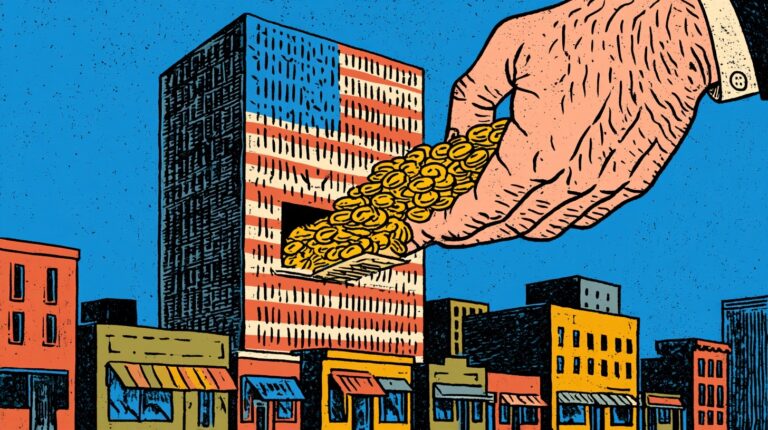
Wednesday, October 14, 2026Image Credit: Custom image by FEE

Stop Calling It Capitalism When It’s Government Favoritism


How the free market gets blamed for cronyism.

Words have specific meanings. Unfortunately, capitalism is frequently misused by supporters and critics alike. Too often, what people defend or condemn is not free-market capitalism at all.

Although distinctions exist among capitalism, free enterprise, and free market, for the purposes of this essay, I use capitalism to mean free-market capitalism: an economic system based on private property, voluntary exchange, competition, freedom of entry and association, and freedom of contract—including wages negotiated without government-imposed minimums. Government’s role is that of a referee: protecting property rights, enforcing contracts, and preventing force and fraud, not granting subsidies, bailouts, or special privileges.

Consider Michael Moore’s Capitalism: A Love Story (2009) and Robert Reich’s Saving Capitalism (2017). Both criticize corporate power, political influence, and government favors for large businesses. On corporate welfare, I agree with their criticisms on economic and moral grounds. Why should taxpayers subsidize businesses they might never voluntarily support? Why should politically connected corporations receive special privileges? And why should businesses making poor decisions be rescued at taxpayers’ expense?

These are legitimate complaints. But why blame free-market capitalism for government interference with the competitive market process?

In a free market, businesses must satisfy customers to earn profits. Persistent losses can signal that resources would be better used elsewhere. Rather than rescuing failing firms with taxpayer money, the free-market perspective is to allow the market process to work. As I sometimes jokingly tell my students when explaining this principle, it’s time to say, “Bye-bye, die-die!” to businesses that fail to satisfy consumer needs. (Figuratively speaking, of course.)

Some call government favoritism crony capitalism. I dislike that expression because it still associates the problem with capitalism. Calling someone a “nice jerk” doesn’t change the fact that you’re calling that person a jerk. Likewise, attaching crony to capitalism leaves the impression that capitalism itself is the problem. Why not simply call it cronyism, corporate welfare, or government favoritism? The defining feature is political privilege, not voluntary exchange.

Another misconception is that defending capitalism means defending big business. Being pro-market is not the same as being pro-business. Free-market advocates defend competition and voluntary exchange, not every corporation or business decision.

Consider manufacturers demanding protective tariffs, corporations seeking exclusive tax incentives, or industries lobbying for regulations that discourage competitors. Rather than competing for customers, these businesses seek political favors. Economists call this rent-seeking. The greater the potential rewards from government favoritism, the stronger the incentive to pursue politicians rather than customers.

Interestingly, critics from opposing ideological perspectives sometimes agree about corporate welfare. Consider my former professor, the late free-market economist Walter E. Williams, and Robert Reich, a progressive political commentator and former US secretary of labor. In his PragerU video “Is Capitalism Moral?” Williams explained that voluntary market transactions are positive-sum games because both parties expect to benefit. By contrast, he described government programs such as farm subsidies, business bailouts, and food stamps as zero-sum games in which some benefit at the expense of others. Reich has similarly criticized corporate welfare for benefiting politically connected businesses at taxpayers’ expense. Although their economic philosophies differ considerably, both recognized problems associated with government favoritism.

Consider Amazon’s proposed second headquarters in New York City. In 2018, state and local officials offered Amazon an incentive package potentially worth approximately $3 billion, primarily through tax credits and other benefits tied to investment and job creation. Progressive Representative Alexandria Ocasio-Cortez opposed the deal, questioning why a wealthy corporation should receive preferential treatment while communities faced pressing public needs.

A free-market advocate would oppose the deal on different grounds: no business, large or small, should receive taxpayer-funded subsidies or special privileges. The objection is not merely that Amazon received benefits unavailable to other businesses; it’s that government should not grant such favors in the first place. Businesses should compete for customers’ dollars, not taxpayers’ dollars. Government should enforce the rules, not pick winners and losers.

Amazon abandoned its New York plans in February 2019, but the controversy illustrates how different economic philosophies can identify the same problem. One emphasizes inequality and public priorities; the other emphasizes competition and market discipline.

The disagreement extends beyond subsidies to the question of monopoly power. In one of his videos, John Stossel shows a clip of Robert Reich describing Amazon as a monopoly. Stossel then challenges that characterization, pointing out that consumers have alternatives, including Walmart, Target, and Alibaba. This raises an important question: Should government determine when a company has become “too big,” or should consumers determine which businesses succeed through their voluntary purchasing decisions?

A company’s size alone does not establish monopoly power, and size itself is never a justification for government intervention. From a free-market perspective, the relevant distinction is between a business that grows by satisfying customers and one that benefits from government-created barriers to competition. Likewise, voluntary mergers should not require government approval merely because officials believe the resulting company would be “too large.”

None of this means that free markets require the complete absence of government or that all corporate misconduct results from intervention. The crucial distinction is between government enforcing general rules that protect property rights, contracts, and voluntary exchange, versus government granting special privileges or interfering with voluntary business decisions, including mergers and acquisitions.

There is nothing inconsistent about criticizing corporate misconduct while defending free-market capitalism. Any politician claiming to support free markets should, to be philosophically consistent, oppose government intervention beyond protecting property rights, enforcing contracts, and preventing force and fraud. That includes subsidies, bailouts, special privileges, and antitrust laws that interfere with voluntary market competition. Government should act as a referee, not determine which companies are “too big” or which businesses should be permitted to merge. Consumers—not politicians or bureaucrats—should determine which businesses succeed and how large they become. Unfortunately, politicians in both major parties routinely claim to support free markets while advocating policies that undermine them.

So the next time someone points to a corporate bailout, subsidy, or protectionist tariff as evidence that capitalism has failed, ask: Is this business succeeding because customers voluntarily support it, or because government granted it a special advantage?

If the problem is government favoritism, stop blaming capitalism. Call it what it is: cronyism.

Ninos P. Malek

Ninos P. Malek is an Economics professor at De Anza College in Cupertino, California and a Lecturer at San Jose State 
University in San Jose, California. He teaches principles of macroeconomics, principles of microeconomics, economics of social issues, and intermediate microeconomics. His previous experience also includes teaching introductory economics at George Mason University.

Iran’s Oil Exports Have Collapsed to ZERO

Iran’s oil industry has been brought to a standstill, and the economic consequences are becoming impossible to ignore. Iran’s seaborne crude oil exports collapsed from a 14-day average of 230,000 barrels per day at the beginning of September to ZERO, remaining there into October. This is an extraordinary development for a country that depends upon petroleum revenues to finance its government, support its currency, and obtain the foreign exchange necessary to purchase imports. Washington has spent decades attempting to cripple Iran’s economy through sanctions, but the naval blockade has accomplished something far more devastating in a matter of weeks.

Claire Jungman, Vortexa’s director of maritime risk and intelligence, stated, “The blockade is doing what years of sanctions never managed.” There are now an estimated 83 million barrels of Iranian crude sitting aboard tankers, including 43 million barrels trapped west of the Strait of Hormuz. Iran has the oil, it has potential buyers, and it has enormous financial obligations, but it cannot freely deliver its product and collect the revenue. Liquefied petroleum gas exports have also collapsed by 48% from the previous month, reaching their lowest level since at least January 2023. The government is being deprived of its principal source of hard currency while the costs of maintaining the state and its military continue.

This is precisely what I have explained regarding the sovereign debt crisis throughout the Middle East. These governments built their budgets around petroleum revenues, and when that income disappears, the financial structure begins to unravel. They cannot simply replace billions in lost export earnings by increasing taxes on a population that is already struggling. Government employees still expect to be paid, military expenditures continue, imports must be financed, and outstanding obligations do not disappear because the oil tankers cannot leave port. The longer this blockade continues, the more difficult it becomes for Tehran to maintain the financial machinery upon which the government depends.

Iran’s currency has already been devastated. The rial has lost approximately 35% of its value against the dollar since July, while annual inflation reached 73.6% in September. Imagine living under a government where the purchasing power of your savings is being destroyed at that pace while the country loses access to its most important source of foreign exchange. Imported goods become more expensive, businesses struggle to obtain necessary supplies, and the average family pays the price for decisions made by politicians who never seem to suffer the same consequences as the people they govern.

The economic contraction is equally alarming. The International Monetary Fund now projects Iran’s economy will shrink 7.6% in 2026, while Iranian government figures show GDP contracted approximately 10% during the spring compared with a year earlier. Industrial production, trade, and household consumption are all suffering. A country cannot lose its export revenue, experience a currency collapse, and maintain normal economic activity simply because its leaders insist they remain financially secure. The government may be able to survive politically for some time, but the private economy is being systematically deprived of the capital necessary to function.

China’s position is particularly important because Beijing has been one of the principal destinations for Iranian petroleum. Vortexa reports that China’s demand for Iranian crude has weakened as Russian oil has filled part of the gap. This illustrates how international capital and trade flows adjust regardless of the political arrangements governments believe they have established. Russia benefits from replacing Iranian supplies, while Tehran loses both revenue and bargaining power. Russia now accounts for 80% of the high-risk petroleum exports tracked by Vortexa among Iran, Russia, and Venezuela. Moscow may be politically aligned with Tehran, but that does not mean Russian producers will voluntarily surrender their own market share to rescue Iran’s finances.

Washington may believe that eliminating Iran’s oil revenue will force Tehran to negotiate, but economic warfare carries consequences well beyond the intended target. Iran still possesses the ability to threaten shipping through the Strait of Hormuz, one of the most strategically important energy corridors in the world. The more desperate its financial position becomes, the greater the incentive for its leadership to use whatever leverage remains. A blockade intended to weaken one country can therefore create disruptions throughout the region, raising transportation costs, insurance premiums, and energy prices for nations that have nothing to do with the original dispute.

We are already witnessing the inflationary consequences of this conflict. American gasoline prices surged 9.1% in September, and the energy component of the Consumer Price Index increased 5.2% in a single month. The same government attempting to deprive Iran of petroleum revenue must now confront the consequences of higher energy costs at home. Energy enters virtually every stage of production and distribution, so the disruption does not end at the gasoline pump. It works its way into transportation, agriculture, manufacturing, and ultimately the cost of living for ordinary households.

The global economy is interconnected, whether politicians wish to acknowledge it or not. Iran loses its oil revenue, Russia captures additional market share, China adjusts its purchases, and Western consumers confront higher energy costs. Every government involved believes it can manipulate the outcome through sanctions, blockades, or military pressure. But international commerce does not operate according to political wishes, and the economic damage rarely remains confined to the country originally targeted.

Martin Armstrong, Armstrong Economics

Why Are California’s Governments So Lousy at Fighting Wildfires?

Bigger agencies, higher spending, and expanded workforces don’t always make government more effective.

My recent trip to Malibu from Los Angeles was my first post-wildfire drive through the Pacific Palisades and, my goodness, there’s nothing like seeing something with one’s own eyes to grasp the enormity of the devastation. The obliterated hulks along Pacific Coast Highway 21 months after the tragedy raise multiple issues, including ones related to the excruciatingly slow rebuilding process.

This being California, the state has yet to grapple sufficiently with the reasons the wildfires started—and the failed response to them. But late is better than never, so I applaud a new report that Gov. Gavin Newsom commissioned from the nonprofit Fire Safety Research Institute. Released this month, it looked at the nitty-gritty of how the fires started and how multiple agencies reacted. The results aren’t pretty.

The New York Times provided the best summary: “The comprehensive analysis found that while several state and local agencies fell fatally short in their preparation and response, the clearest lesson from the disaster was the extent to which climate-driven fires are outstripping modern firefighting.” The report found LA officials failed to take the fires seriously enough at the outset. County officials handled the Altadena evacuations in a “chaotic” manner. They were unprepared for the intensity of the fire storms.

We’ve all read about some of the inexplicable stupidity. The Santa Ynez Reservoir was empty during the fires because of a repair to its protective cover, yet it’s empty again (although it’s in the process of being refilled). The California Coastal Commission allegedly delayed new permits for the Los Angeles Department of Water and Power to install fire-resistant utility poles because of concerns about an endangered weed. The commission disputes that report—and there’s still heated debate involving multiple agencies.

If we can’t get multiple agencies on the same page on one minor question about milkvetch, I’m skeptical California can deal with the basics. The report said the tragedy involved “multiple interlinked systems rather than any single factor or failure.” In one example by Patch, the Los Angeles County Sheriff’s Department remained at normal staffing levels. The Los Angeles Fire Department was reportedly so concerned about overtime costs that it reportedly responded slowly.

This epitomizes California’s approach to everything: Bigger agencies, higher spending, and expanded workforces. The left hand never knows what the right hand is doing. Other priorities outside of public protection—budgeting, meeting union demands, turf battles—take precedence. This isn’t malicious, but reflects the fundamental nature of government.

Even after the state suspended rebuilding regulations, the rebuilding process is still in a quagmire because of the number of involved agencies. How could California realistically streamline a wildfire-fighting process that involves an alphabet soup of local, county, regional, and state bureaucracies? Even the feds are involved because around 45 percent of the state’s land area is owned by them. The wildfire issue is a statewide problem, so the conclusions should resonate beyond LA.

Furthermore, the report argues that California needs to change its overall approach toward wildfire resilience. Back to the Times analysis, which noted that climate-driven fires are becoming more intense and that’s challenging the traditional ways that the state has battled wildfires. But how often have you seen governments respond efficiently to external economic or environmental changes? All governments are slow-moving freight trains.

Everything government does is mired in the past. As an unrelated example, the nation’s education system isn’t much different than the one created in the 1800s—despite all the technological changes that should have sparked a revolution. When COVID hit, private schools adapted and provided successful at-home learning, whereas the public schools watched students fall behind and truancy rates soar. It’s not any different with any public service, including firefighting.

My fear: California policymakers will read that summary about “climate-driven” fire risks and do what they always do: blame the problem on climate change and double down on the state’s counterproductive climate policies. They are designed to change the entire Earth’s weather patterns (even though California is responsible for less than 1% of the world’s greenhouse emissions), rather than adjust our regulatory system to make us more resilient in the face of warming trends.

California’s union-controlled state and local governments aren’t about to adjust firefighting budgets so they can further stretch their dollars. State firefighters generally earn more than $250,000 in annual total compensation, with some Los Angeles firefighting officials earning pay levels that boggle the mind. Instead of trimming costs, California has been ratcheting up pay levels.

California state officials haven’t even been forthright about their approach toward brush clearance. For instance, four years ago Newsom touted an important wildfire-prevention program that at the time hadn’t completed a single project. We hear promises, but little action.

That’s government for you. It doesn’t do anything well and is incapable of learning the right lessons even from the best reports. Driving along PCH was just my latest reminder of this sad truth.

Steven Greenhut, Reason

Victor Davis Hanson: NATO Has Become a One-Way Street

This is Victor Davis Hanson for the Daily Signal.  

Our on-and-off relationship with our European allies and friends is in another low spot. There’s a lot of developments that have been going on that I don’t think they quite appreciate have created a loss of confidence in the United States about the reliability of our NATO allies. 

And this transcends the earlier existential problem that all of our NATO allies, 32, had over 20 years promised but reified that and ratified it the last 15 years, they would spend 2% of GDP on defense. And as you remember, in 2016, after the election, and Donald Trump, remarked as he was going to enter office in 2017 that all but six of them had not met their requirements. 

And after all this bullying, all this acrimony, now almost all of them, I think with one exception, have made the 2%. But now we’re into another series of crises.  

The former head of German intelligence was just found out in his retirement, I think he’s 80, that he was a traitor, and that he had been selling or trafficking in secrets that involved German and NATO security to existential enemies like China and maybe Russia. 

That creates a lack of confidence in the security that we have with the Germans.

And Britain, remember, we have a dual-use base, an RAF and a U.S. Air Force base in the United Kingdom, and the idea, of course, is forward deployment. So if we would get into a crisis with China, with Russia, over Ukraine, almost anywhere in the world, we would have maybe 11 of our $320 million B-1 bombers that have capability to carry nuclear weapons and huge payloads, but they would be based and safe in this air base that was patrolled by our allies, the British. 

Now we learn that some terrorists had a dry run where they got very close to this base and were in the process of filming it and doing reconnaissance work.  

And we learned two things from the British government, Prime Minister [Andy] Burnham. Number one, they were trained by or in the service to Iran, the greatest terrorist threat in the world. 

And number two, they were let out on bail.  

How can you say that—the most dangerous terrorists that we’ve seen in the U.K. that are actually scouting out ways to destroy an American bomber fleet is from Iran, or at least influenced by Iran or hired by Iran, but then let them out on bail?  

And then we get to the recent argument from our allies that they want nothing to do with the Iran war. 

They understand that the Strait of Hormuz and Iran’s oil and the oil of the Gulf are  critical to their oil needs, and they understand that the wealth of the Gulf States is essential for them to export commodities. And they understand the principle that Iran is a dangerous country.  

And for 50 years, they have said in a course with us that it should not and will not be nuclear, although neither they nor the American presidents, seven of them, have done anything about it. 

So we go and try to stop that threat. France then immediately says that this was not an approved U.N. war, and they cannot use French airspace to use American assets, not NATO assets, American assets, in, over their airspace. The U.K. says you cannot use the Diego Garcia base, which is critical in the Indian Ocean, for operations in the Middle East, long-distance operation. 

Italy says you cannot use your dual-use base with us in Sicily to land aircraft to go after Iran. Spain says you’re not gonna use our base. You’re not even getting near our airspace.  

Switzerland and Austria are neutral, but they’re pro-U.S., and if their push came to shove, they wouldn’t be able to avoid a European continental war, and they would seek protection from whom? Probably us. They said nobody gets near our airspace.  

None of these European countries said we will help the U.S. Navy patrol the Strait of Hormuz to ensure that it’s open and global commerce is uninterrupted. Okay. 

And of course, we have our Canadian friends who said last year we may or may not have met our 2%, but for the last 15 years, we won’t spend 2%. 

But of course, we expect to be, under the nuclear umbrella of, as we have been, of the United States, and we expect if there was ever an existential threat to the North American continent, you would not distinguish Canadian from American interest, even though we’re not armed and not capable with 79 45-year-old jets, given your 4,000 or 5,000. 

So I could go on, but you get the impression that it’s again a reminder that it’s a one-way street. Remember the argument that our European friends are using to us. They are saying, “You’re a NATO power, and you’re pledged to protect the North American, space.” Of course, we’ve never… Only once after 9/11, and that was sort of symbolic. 

Some NATO planes helped us after 9/11 to make sure there were not terrorists in our skies. But generally, the threats that face Europe are not going to threaten the United States, and the threats that face the United States, we don’t count on NATO partners, volunteering to go to Taiwan or to protect us from a Chinese missile. 

None of that. All we ask is, “Can we use our NATO assets, the use of our bases, and your airspace to cut the travel time, the distance, from our bases, to Iran, and we don’t have to come all the way from the United States?”  

And they said, “No. You cannot do that.” And so we are saying, “Well, Ukraine  is threatened by Russia, but Russia’s army does not threaten us.” 

There’s no way in the world that the Russian army is ever going to run the United States. It is going to overrun Ukraine maybe, maybe the Baltic states, maybe some of the Scandinavian states, maybe the European states. But it’s not gonna ever endanger us.  

We have a strategic problem with Russia, and we handle that on our own with our nuclear deterrent: submarines, land base, and bombers. 

So let’s get this straight, Europe. You are saying to us that when we have a shared threat and it’s in your neighborhood, and it’s of interest to us that you will not help, but you’re not gonna go beyond that, but you will not even lend your airspace to help us.  

And at the same time, you’re saying, as the NATO big guy in the alliance, that you expect us to guarantee your safety and to arm the Ukrainians to the teeth and to deter the Russians from invading further and closer into Europe, even though we know, according to your logic, they’re not threatening us at all. 

Now, the truth of the matter is, if Ukraine is overrun and Russia goes into the Baltic states or Europe, we will probably come, as is our obligations under NATO. But the Europeans are making that harder and harder to sell to the American people because it’s a one-way street. When we need you to protect Europe, you better be there. 

When you need us not to protect us from a nuclear weapon from Iran, not to join us in battle, just to let us use your airspace, you can’t even do that. And we had to be uncouth and crude and scream and yell to make you protect yourself with a meager 2% investment of GDP in defense. I know what you’re gonna say to us. 

So it’s a one-way street. And so we have made the argument that in the Mediterranean and the Middle East, which are the backyards of Europe, it’s essential that Iran not get a nuclear weapon for their protection and ours, and we are willing to handle that problem. We’re not asking NATO, we’re not asking individual countries to bomb, Iran or to send weapons. 

We have open borders. We’re overrun with immigrants. We made bad decisions about our green energy. We warred on fossil fuels. We have certain culture that has a 1.3 continental-wide fertility rate that’s unsustainable.  

We have immigrant populations that do not want to assimilate. And we have a socialist paradigm that is not sustainable, so we can’t help you. You can’t help. 

At least you could say, “This is not working. This is not working, and we want to make reforms in our economy, our energy, our immigration, so we can free up capital to fulfill our partnership, and we want it 50/50. When you need us, we’re there, and when we need you, you’re there.” And if it doesn’t happen that way, then the NATO paradigm is not sustainable. 

It will not work for the Europeans to deny us just the use of the airspace to deal with a common threat and then expect us to risk our key cities in any potential nuclear standoff with Russia, because that’s what would happen. To protect the integrity of Europe, if we couldn’t do it with traditional forces, it would ultimately be a standoff to use American deterrence to protect Europe, and that would entail our danger to protect your continent. 

And so, yes, we can be crude. Yes, we can yell and scream, but ultimately, this remains an asymmetrical and thus unsustainable relationship.  

Victor Davis Hanson is a Daily Signal senior contributor, hosting a podcast, producing video commentaries, and writing a weekly column. He is the author of “The Counterrevolution The Fall and Rise of Donald Trump and the MAGA Movement.”