Why I Am Not a Liberal

Last May a study came out suggesting that merely giving people money doesn’t do much to lift them out of poverty. Families with at least one child received $333 a month. They had more money to spend, which is a good thing, but the children fared no better than similar children who didn’t get the cash. They were no more likely to develop language skills or demonstrate cognitive development. They were no more likely to avoid behavioral problems or developmental delays.

These results shouldn’t have been a big surprise. As Kelsey Piper noted in an essay for The Argument, a different study published last year gave families $500 a month for two years and found no big effects on the adult recipients’ psychological well-being and financial security. A study that gave $1,000 a month did not produce better health, career, education or sleep outcomes or even more time with their children.

Way back in 1997, Susan E. Mayer, a University of Chicago sociologist and behavioral economist, published “What Money Can’t Buy.” She began her research believing that cash transfers would make a big difference in people’s lives but was persuaded by the evidence that even if you doubled a family’s income, it would have a limited effect on their children’s dropout and teenage pregnancy rates or other outcomes. She stated her findings clearly: “The results in this book imply that once children’s basic material needs are met, characteristics of their parents become more important to how they turn out than anything additional money can buy.”

She added, “Parental income is not as important to children’s outcomes as many social scientists have thought.” Rising out of poverty also requires the nonmaterial qualities we now call human capital, such as skills, diligence, honesty, good health and reliability. Mayer concludes, “Children of parents with these attributes do well even when their parents do not have much income.”

As a society, we are pretty good at transferring money to the poor, but we’re not very good at nurturing the human capital they would need to get out of poverty. As a result, we do an OK job supporting people who are in long-term poverty but a poor job of helping them lift themselves out of poverty. As Piper noted in a subsequent post, we spend more money combating poverty today than the entire U.S. G.D.P. from 1969, yet “the share of Americans whose pretransfer income places them in absolute poverty has barely fallen.”

Sign up for the Opinion Today newsletter  Get expert analysis of the news and a guide to the big ideas shaping the world every weekday morning. Get it sent to your inbox.

Piper’s essay kicked up a bit of an internet storm. You might have thought the progressive reaction would have been: We need to keep giving poor people money, but we also need to focus on the human and behavioral factors that will enable them to build comfortable, independent lives. But that wasn’t the reaction. The progressives I saw doubled down on the thesis: Poor people just need money.

Matt Bruenig’s contention, also in The Argument, was typical. He scorned the very idea that focusing on human capital is a good way to improve social mobility. He wrote, “Cash is the key part of every welfare state in the developed world and absolutely critical for keeping poverty down.” We shouldn’t make fighting poverty overly complicated, he argued. “As a policy matter, these are mostly solved problems.” Just write people checks.

This is consistent with something I’ve noticed all my life — the materialist bent of progressive thought: the assumption that material conditions drive history, not cultural or moral ones. A couple of decades ago, Thomas Frank published “What’s the Matter With Kansas?” based on befuddlement that Kansans were apparently voting against their economic self-interest. Doesn’t economics drive voting behavior? Progressives have often argued that improving schools is mostly about spending more money, that crime is mostly the product of material deprivation.

Conservatism, as you know, is a complete mess in America right now. But reading conservative authors like Edmund Burke, Samuel Johnson, Fyodor Dostoyevsky, Gertrude Himmelfarb and James Q. Wilson does give you an adequate appreciation for the power of nonmaterial forces — culture, moral norms, traditions, religious ideals, personal responsibility and community cohesion. That body of work teaches you, as Burke wrote, that manners and morals are more important than laws. You should have limited expectations about politics because not everything can be solved with a policy.

Many years ago, I came across a study that neatly illustrated the power of culture. The researcher Nima Sanandaji calculated the poverty rate of Americans with Swedish ancestry. It was 6.7 percent. They also looked at the poverty rate in Sweden, using the American standard of poverty, and it was also 6.7 percent. Different political systems, same outcome.

Neoconservatism came along and took conservative insights and applied them to policymaking. During the Iraq war the word “neocon” came to mean the opposite of its real meaning, but originally it was a movement within the Democratic Party to correct the policy failures of the Great Society. Thinkers like Irving Kristol and Nathan Glazer had been poor immigrant kids. They were willing to spend money to fight poverty, but they wanted the programs to nurture the values that they had seen firsthand help people rise: hard work, family and community cohesion, reliability, a passionate commitment to education. These values tend to inhere in communities before they are transmitted to individuals.

Progressives, by contrast, are quick to talk about money but slow to talk about the values side of the equation. That’s in part for the best of reasons. They don’t want to blame the victims or contribute to the canard that people are poor because they are lazy.

But there’s something deeper. Progressivism emerges from a different lineage. Karl Marx influenced many people who are not Marxist, and he saw the world through a material-determinism lens — people’s consciousnesses are shaped by their material conditions.

Since the dawn of the Progressive movement over a century ago, the left has been more technocratic. Those early Progressives tried to make a science of society and govern according to scientific principles.

Today the social sciences are the narrow doorway all of human knowledge has to pass through if it’s going to influence policymaking. We want studies! The social sciences are great. I use them all the time. But when overly quantitative, they can misrepresent reality. They see only what can be quantified. They see only masses of people whose data can be tabulated, not unique individuals. As Christian Smith, a Notre Dame sociologist, has been arguing for decades, the social scientists obliterate the subjective experiences of the people they study. Human agency disappears if research subjects are reduced to a bunch of variables that can be correlated. People who overly rely on social science knowledge are going to tend to focus on money because it can be counted more easily than culture. People who rely on government to solve problems will tend to overemphasize the power of money because that’s the thing government most easily controls.

This materialistic bent leads to all sorts of bad judgments. For example, Joe Biden and his team had one job: to make sure Donald Trump never set foot in the White House again. They tried to accomplish that the only way they knew how: throw money at the problem. The vast bulk of the new Biden spending went to red states to employ workers without college degrees. Politically, the project was a complete failure. Populism is not primarily economic; it’s about respect, values, national identity and many other things. All that spending did not win anybody over.

Today most of our problems are moral, relational and spiritual more than they are economic. There is the crisis of disconnection, the collapse of social trust, the loss of faith in institutions, the destruction of moral norms in the White House, the rise of amoral gangsterism around the world.

I’ve been driven away from the right over the past decade, but I can’t join the left because I just don’t think that tradition of thought grasps reality in all its fullness. I wish both right and left could embrace the more complex truth that the neocon Democrat Daniel Patrick Moynihan expressed in his famous maxim: “The central conservative truth is that it is culture, not politics, that determines the success of a society. The central liberal truth is that politics can change culture and save it from itself.”

If you can find some lefties who are willing to spend money fighting poverty but also willing to promote the traditional values and practices that enable people to rise, you can sign me up for the revolution.

David Brooks

Democracy Dies in Darkness ?

We’re told that democracy dies in darkness. My own take on the subject? Liberty perishes in an orgy of unearned guilt and other psychological conflicts. Psychological problems develop when people hold contradictory, irrational or unsustainable ideas, ideas such as, “Someone is coming to rescue me,” or, “I shouldn’t have to be totally responsible for myself.” —Michael J. Hurd

Trump: US Has Lost India, Russia to China

The United States has “lost” India and Russia to China, President Donald Trump said early Friday.

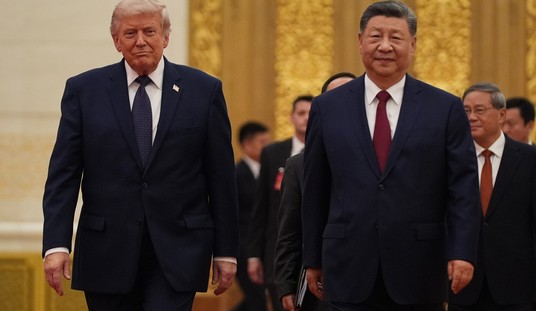
The president, posting a photograph of Indian Prime Minister Narendra Modi and Russian President Vladimir Putin alongside Chinese President Xi Jinping, quipped on Truth Social that it “Looks like we’ve lost India and Russia to deepest, darkest, China. May they have a long and prosperous future together!”

Trump’s comments were in response to a photo taken during last week’s Shanghai Cooperation Organization (SCO) summit in Tianjin, where Xi hosted leaders of Russia and India along with dignitaries from about 20 Eurasian nations.

The gathering, which ran through Monday, preceded a massive military parade in Beijing, marking 80 years since the end of World War II.

Founded in 2001, the SCO brings together China, India, Russia, Pakistan, Iran, and several Central Asian states, with 16 additional countries participating as observers or dialogue partners.

Beijing and Moscow claim that the organization counters Western-led alliances, such as NATO.

Modi, on his first trip to China since 2018, pledged to advance ties “on the basis of mutual trust, dignity and sensitivity,” while Xi, according to state media, urged that the two nations see each other as “partners rather than rivals” and as “opportunities for development rather than threats.”

China and India remain tense rivals, having fought a deadly border clash in 2020. Still, Modi stressed that the well-being of 2.8 billion people depended on closer ties. Analysts say India’s disputes with Washington over trade and its purchases of Russian oil could push New Delhi into closer alignment with Beijing and Moscow.

Other leaders at the summit included Iranian President Masoud Pezeshkian and Turkish President Recep Tayyip Erdogan, and side meetings touched on the conflicts in Ukraine and the Middle East, highlighting how both China and Russia are seeking to expand their influence as tensions with the United States and Europe deepen.

Sandy Fitzgerald 

Sandy Fitzgerald has more than three decades in journalism and serves as a general assignment writer for Newsmax covering news, media, and politics. 

RFK Jr.: This is what led to CDC director’s firing

He told the Senate Finance Committee that Susan Monarez told him she was not ‘trustworthy.’

Health Secretary Robert F. Kennedy Jr. said he fired Susan Monarez from the Centers for Disease Control and Prevention because she told him she was not “trustworthy.”

Kennedy’s comments came in response to questions from Sen. Elizabeth Warren (D-Mass.) during a Thursday hearing before the Senate Finance Committee about the agency’s plans. Warren had asked the secretary why he decided earlier this month to abruptly fire Monarez, then the CDC’s director, who was confirmed by the Senate in lateJuly.

“I told her she had to resign because I asked her, ‘Are you a trustworthy person?’ and she said ‘No,’” Kennedy said.

Monarez wrote an opinion piece Thursday that, before she was fired, Kennedy asked her to “pre-approve” recommendations from a key panel of CDC advisers, which were chosen by Kennedy after he fired the committee’s entire membership.

“It is imperative that the panel’s recommendations aren’t rubber-stamped but instead are rigorously and scientifically reviewed before being accepted or rejected,” Monarez wrote.

In a statement, Monarez’s lawyers said that Kennedy’s claims are false and “patently ridiculous.”

“Dr. Monarez stands by what she said in her op-ed in The Wall Street Journal, would repeat it all under oath and continues to support the vision she outlined at her confirmation hearing that science will control her decisions,” wrote Mark S. Zaid and Abbe David Lowell.

It’s unclear whether Monarez will get to testify before Congress about her ouster. During the hearing, Sen. Bernie Sanders (I-Vt.), ranking member of the Senate Health, Education, Labor and Pensions Committee, said he looks forward to Monarez coming before the HELP committee.

HELP Chair Bill Cassidy (R-La.) has not announced an investigation into her being fired.

Kennedy repeatedly denied he fired Monarez because she wouldn’t agree to pre-approve the advisory panel’s recommendations and accused her of lying. The panel is scheduled to meet in Atlanta on Sept. 18-19.

“If she wrote that I fired her because she refused to sign on in advance for the ACIP committee, no that’s not accurate,” Kennedy said. He said he asked her for “clarification” about a statement he says she made related to plans not to sign on to the panel’s recommendations.

“I told her I didn’t want her to have a rule that she’s not going to sign on to it,” Kennedy said.

Several news outlets, including POLITICO, have reported that Monarez was asked to rubber-stamp the panel’s recommendations. Kennedy also admitted to demanding that Monarez fire career CDC scientists.

Sophie Gardner, Politico

They Were Every Student’s Worst Nightmare. Now (because of ChatGPT) Blue Books Are Back.

Students outsourcing their assignments to AI and cheating their way through college has become so rampant, so quickly, that it has created a market for a product that helps professors ChatGPT-proof school. As it turns out, that product already exists. In fact, you’ve probably used it. You might even dread it.

It’s called a blue book.

All of which explains how a paper company in Pennsylvania has unexpectedly found itself on the front lines of the classroom AI wars.

Most blue books for sale in campus bookstores and on Amazon for 23 cents apiece are made by Roaring Spring Paper Products. The family-owned business was founded more than a century ago in Roaring Spring, a small borough outside Altoona that has become the blue-book capital of America. The company now sells a few million of these classic exam books every year and all of them are manufactured in the U.S., said Kristen Allen, its vice president of sales and marketing.

Sales of blue books this school year were up more than 30% at Texas A&M University and nearly 50% at the University of Florida. The improbable growth was even more impressive at the University of California, Berkeley. Over the past two academic years, blue-book sales at the Cal Student Store were up 80%.

But even professors who have gone analog to defeat the latest technology are deeply conflicted about it. Many of them believe students should be using AI to get smarter. It would be stupid not to. These tools will be a part of their lives and knowing how to use them effectively will be an important advantage in their future workplaces.

Ben Cohen, Wall Street Journal

Senator Tim Kaine Tells Americans Their Rights Come from Government

Democratic Senator Tim Kaine from Virginia, in a hearing on Wednesday, told the room:

The notion that rights don’t come from laws, and don’t come from the government, but come from the Creator… That’s what the Iranian government believes… So the statement that our rights do not come from our laws or our governments is extremely troubling.


Tipsheet

Senator Tim Kaine Tells Americans Their Rights Come From Government

Dmitri Bolt

Dmitri Bolt | September 03, 2025 5:30 PM


AP Photo/Ben Curtis

Democratic Senator Tim Kaine from Virginia, in a hearing on Wednesday, told the room:

The notion that rights don’t come from laws, and don’t come from the government, but come from the Creator… That’s what the Iranian government believes… So the statement that our rights do not come from our laws or our governments is extremely troubling.

Senator Ted Cruz blasted Senator Kaine’s comments.

So, Senator Kaine said in this hearing, that he found it a radical and dangerous notion that you would say our rights came from God and not from government. I just walked into the hearing as he was saying that and I almost fell out of my chair. Because that radical and dangerous notion in his words, is literally the founding principle upon which the United States of America was created. And if you do not believe me, and you made reference to this Mr. Barnes, then you can believe, perhaps the most prominent Virginian to ever serve, Thomas Jefferson who wrote in the Declaration of Independence: ‘We hold these truths to be self-evident, that all men are created equal, that they are endowed by their Creator’ not by the government, not by the Democratic National Committee, but by God…

…with certain unalienable Rights.

Senator Kaine didn’t misspeak; he simply revealed the chasm between today’s Democratic Party and the very principles that founded this great nation. If believing rights come from a higher power is “troubling,” then Kaine’s quarrel isn’t with Ted Cruz. It’s with Jefferson, Madison, the Declaration, and America herself.

Editor’s Note: President Trump is leading America into the “Golden Age” as Democrats try desperately to stop it.  

Help us continue to report on President Trump’s successes. Join Townhall VIP and use promo code FIGHT for 60% off your membership.

Our English is Dying

The grammar, punctuation, syntax, and spelling in our country are nothing less than dreadful.  And our youth don’t have a monopoly on this.  It includes major media figures, political leaders, public spokespersons of major corporations, organizations, and the clergy.  Examples:

*  Its a beautiful thing.  Sorry—IT’S A BEAUTIFUL THING.

*  We visited many country’s.  Sorry—WE VISITED MANY COUNTRIES.  Simple plural, no need for a possessive or apostrophe.

*  Attorney-Generals.   Sorry—it’s ATTORNEYS-GENERAL, just like MOTHERS-IN-LAW.

*  We’re going to visit the Stewart’s.  Sorry—WE’RE GOING TO VISIT THE STEWARTS.

This is but a small smattering of the grammatical errors I see and hear everyday in both print and spoken media.  The other night, a screen bullet on the Tucker Carlson Show, read “warrents” instead of “warrants.”  Tucker bears the ultimate responsibility for this.

I understand that our schools have for all intents and purposes dropped traditional English from their curricula.  The explanations given include, “There’s no point in wasting precious classtime on memorizing a bunch of “subjective human constructs.”  But of course, there’s plenty of time to waste on climate change, racism, misogyny, and transgender bathrooms.

Another common explanation is that English is “racist and serves to advance and undergird white privilege.”  Try telling that to Bill Cosby who, despite his alleged crimes and character flaws, had much to say about “black English,” including, “I cannot understand what these kids are saying.”  I’ll take it a step further, “I can’t understand what any of our kids are saying.”

And this isn’t a current development.  Twenty-five years ago, my wife and I hosted a German exchange student for an academic year.  He became a tutor in his English class !  Can you effing believe that?

The public school system is our national disgrace.  The taxpayers are paying $15,000 a pop to educate each of our kids.  The teachers’ unions should be horsewhipped.  And get this–so should the parents.  The schools are supposed to augment what our kids are taught at home by their parents and elder siblings.  My parents worked with me every evening, sometimes unpleasantly so, on my multiplication and division tables, flash cards (anyone remember them), reading, spelling, and so forth.  Our kids would be better off watching Jeopardy and Wheel of Fortune every night than going to school.

Everyone has dropped the ball on this.  Take matters into your own hands.  Don’t wait for the government to educate you children.  They can’t find the doorknob or pour piss from a boot.

I understand we have far more pressing problems in this country than periods and commas.  But the deterioration of English and grammar is just another example of the overall breakdown of discipline in our country.  —Artful Dilettante

FAMOUS LAST WORDS: THE AMERICAN LANGUAGE CRISIS

All quotes from Famous Last Words: The American Language Crisis ReconAllsidered, Harvey A. Daniels.

1.  The common language is disappearing. It is slowly being crushed to death under the weight of verbal conglomerate, a pseudospeech at once both pretentious and feeble, that is created daily by millions of blunders and inaccuracies in grammar, syntax, idiom, metaphor, logic, and common sense…. In the history of modern English there is no period in which such victory over thought-in-speech has been so widespread. Nor in the past has the general idiom, on which we depend for our very understanding of vital matters, been so seriously distorted.Recent graduates, including those with university degrees, seem to have no mastery of the language at all. They cannot construct a simple declarative sentence, either orally or in writing. They cannot spell common, everyday words. Punctuation is apparently no longer taught. Grammar is a complete mystery to almost all recent graduates.

2.  From every college in the country goes up the cry, “Our freshmen can’t spell, can’t punctuate.” Every high school is in disrepair because its pupils are so ignorant of the merest rudiments.

3.  The vocabularies of the majority of high-school pupils are amazingly small. I always try to use simple English, and yet I have talked to classes when quite a minority of the pupils did not comprehend more than half of what I said.

4. Unless the present progress of change [is] arrested…there can be no doubt that, in another century, the dialect of the Americans will become utterly unintelligible to an Englishman. Our language is degenerating very fast.

Elizabeth Warren and the Gullibility of Leftist Totalitarianism

Elizabeth Warren cannot be serious. She is an open socialist committed to the nationalization and government control of private property. She supports government control of medicine, government censorship of social media, gun confiscation for law-abiding, peaceful citizens, vaccine and other medical mandates, huge tax rates and literally unlimited regulation. Under her approach, you and I get absolutely no privacy, while SHE gets unconditional privacy.

We need a new French Revolution now.

*******

Leftists are, at the core, gullible people. They believe absolutely everything that confirms their preconceived, emotionally based views of reality. They believe absolutely nothing else. It’s called confirmation bias. It’s based on unfettered subjectivism and emotional immaturity, and is impervious to any level of IQ. They rushed to believe Trump was dead a few days ago. Now they’re crazed over this easy to fake video of objects being dropped out of White House windows. Leftists will believe anything they wish to believe, which explains their breathtakingly ignorant and pernicious embrace of totalitarian collectivism.

Michael J. Hurd, Daily Dose of Reason

Trump Now Considering Sending National Guard Into a Red State

President Donald Trump has a new city in his sights after he threatened to send the National Guard into Chicago and Baltimore in the name of fighting crime and deporting undocumented immigrants.

Trump has thus far targeted Democratic-run cities in Democratic-run states, but this time could be different, as the president eyes New Orleans — a Democratic-run “blue” city in the red state of Louisiana.

Trump told reporters in the Oval Office Wednesday, “So we’re making a determination now. Do we go to Chicago? Do we go to a place like New Orleans, where we have a great governor, Jeff Landry, who wants us to come in and straighten out a very nice section of this country that’s become quite, you know, quite tough, quite bad.”

He added, “You have New Orleans, which has a crime problem. We’ll straighten that out in two weeks, easier than D.C.”

Trump sent federalized troops into Los Angeles in early June, which a federal judge ruled this week was an illegal move. In a 52-page decision, Senior District Judge Charles Breyer barred the administration from deploying troops to engage in civilian law enforcement. Some 300 troops remain in L.A. and will be restricted in what they can do following Breyer’s ruling. The Department of Justice is appealing the decision.

Jennifer Bowers Bahney