Leftist Critics are Misreading Antifascism: The Course of a Crusade

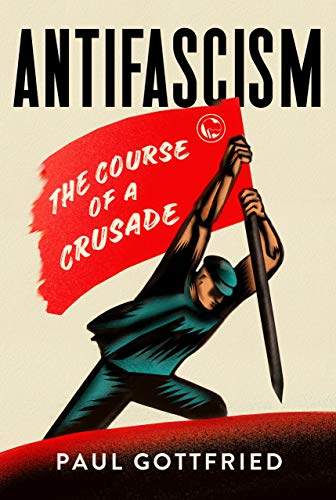
Authoring a book comes with its usual praise and criticism and my latest book, Antifascism: Course of a Crusade, is no exception. One of my critics is the Canadian journalist and columnist at The Nation, Jeet Heer. His review leaves me wondering whether he has actually read my work, which charts the historical roots of the modern antifascist movement.

According to my critic, I—along with others like writer John Vella, who wrote a legitimate review of my book in The American Conservative—are laboring to rehabilitate Italian fascism. Those who have actually read my monograph will realize that I have not produced a lament for the lost glories of Mussolini’s Italy. Although I deal with the Italian attempt to build a fascist state, I am also quite critical of Mussolini’s career, especially his involvement with Hitler’s Third Reich and the unfortunate anti-Semitic laws that Il Duce issued in September 1938.

But Heer is irritated that still I notice the gigantic differences in degrees of tyranny between the nasty Third Reich and the authoritarian Italian fascist state before its takeover by Nazi Germany in 1943. I have no idea why my failure to denounce fascist Italy in a way that would please my critic constitutes a whitewash.Antifascism: The Cours…Gottfried, PaulBuy New $34.95(as of 06:14 EDT – Details)

Also, to Heer’s obvious displeasure, my book tries to show why Italian fascism became an attractive model for interwar national movements, including black and Jewish ones. I examine why young nationalists, who did not intend to murder minorities and who had no interest in making alliances with the Third Reich, were deeply attracted to Italian fascism. Explaining such matters may be as worthwhile an activity as clarifying why the woke left continues to venerate Communist mass murders and outspoken homophobes, a subject that my book most definitely explores. Has Heer ever wondered, as I have for decades, why the woke left continues to pay tribute to Castro, Che Guevara, and Mao, all mass murders who committed much worse crimes than did Mussolini?

If Heer had carefully read my monograph, he would have noticed that I did not produce a screed from the crazy right. Indeed, the second chapter of my book even pays fulsome tribute to those Marxists who treated fascism in a coherent, systematic way. I view these leftist theorists as models of critical analysis and praise the thoroughness with which they examined fascism as a counterrevolutionary movement allied to the capitalist class. Although I am not of their persuasion, my book has nice things to say about German Marxists who came up with usable explanations for Hitler’s dictatorship. But these facts do not faze Heer. Instead, he focuses on the fact that I knew Richard Spencer and collaborated with him on an anthology. Never mind that this collaboration occurred before Spencer went off the deep end into white nationalism; Heer presumes in his brief that my past association with Spencer is a clinching argument.

What irks Heer, and other leftist critics of my work, is that I diss their brand of antifascism. I dislike their hysterics and their efforts to brand those on the right who disagree with them as “fascists.” Moreover, I don’t play the game that I hear on Fox News of presenting the woke left as the grim return of the Marxist Communist monster. The modern antifa leftists are no more Marxists than Dodo birds; they are just loudmouthed bullies who vent hatred on normal people. They entirely lack the mental discipline and bourgeois morality that characterized the Marxists of my youth.

Nonetheless they are bona fide antifascists, as my book demonstrates. Woke leftists deny unchangeable specificities, such as definite ethnicities or sexualities. Antifascist woke leftists believe that, in contrast to fascism’s ascription of fixed identities, human persons have totally fluid essences that can be changed from one minute to the next. The only practical exception to this rule that has emerged concerns the right to call oneself black, which apparently is so exalted a victim category that it cannot be attached to someone who is not inherently of the black race.

Paul Gottfried

What is Antifa ?

Summary: No movement on the American Left except maybe Black Lives Matter has captured the attention of media and the general populace in recent months quite like Antifa. Antifa is a very loosely organized and decentralized radical left movement characterized by its aggressive and directly confrontational opposition to what it considers to be fascism, coupled with its embrace of radical left anarchist and/or communist ideologies. For those of us who rather like our traditions of capitalist liberal democracy with all its flaws, understanding Antifa is critical.

No movement on the American Left—save perhaps for Black Lives Matter—has captured the attention of media and the general populace in recent months quite like Antifa. But Antifa is poorly understood. What exactly is it? Where did it come from? What does it want? And who supports it?

These questions do not have simple and straightforward answers. This is further complicated by the large amount of misinformation floating around regarding Antifa and the extent of its activities. But that does not mean there are no answers at all. A number of authors have conducted in-depth research on Antifa in the past few years. Relying on their writings and combining them with other publicly available information, it becomes possible to provide a measure of clarity for those seeking to understand this highly opaque and amorphous movement.

What Is Antifa?

Antifa (a contraction of the term “anti-fascist”) is a very loosely organized and decentralized radical left movement characterized by its aggressive and directly confrontational opposition to what it considers to be fascism, coupled with its embrace of radical left anarchist and/or communist ideologies.

In his recent book Unmasked: Inside Antifa’s Radical Plan to Destroy Democracy, journalist Andy Ngo defines Antifa as “an ideology and movement of radical pan-leftist politics whose adherents are mainly militant anarchist communists or collectivist anarchists. . . . What unites this group of leftists is its opposition to so-called fascism, though importantly, what is defined as fascism is left wide open.” Historian Mark Bray gives a broadly similar definition of “anti-fascism” in Antifa: The Anti-Fascist Handbook. To him, it is “an illiberal politics of social revolutionism applied to fighting the Far Right, not only literal fascists.”

Contemporary American Antifa is probably best thought of as a movement or ideology, rather than an organization. This presents a descriptive and definitional problem right from the start because many may broadly identify with Antifa beliefs and practices without necessarily being affiliated with any actual Antifa group. Bray has opined, “The radical left is much bigger than antifa—much, much bigger.” Who then qualifies as being part of Antifa? It is impossible to put a precise number on Antifa membership, and describing any putative far-left protester or rioter as “Antifa” would broaden that term beyond a point where it would have any useful meaning.

There are Antifa organizations, however, and they represent the most logical place to focus any inquiry. Such groups often explicitly self-identify as Antifa, but observers have also described them as such, noting obvious defining characteristics. Antifa groups typically operate locally. For example, Rose City Antifa—the oldest and arguably most prominent extant Antifa group in the United States—is active in Portland, Oregon, while Atlanta Antifascists operates in that metropolitan area. As far as anyone knows, these groups are not organized hierarchically, and there is no individual “leader” of Antifa.

Although essentially autonomous, some Antifa groups have a degree of affiliation that goes beyond simply a shared ideology. According to writer Mark Hemingway, “the closest thing to an antifa organization” is the Torch Network. It claims 10 member chapters on its website, including some of the more nationally well-known Antifa groups. Although Torch Network members “work together to confront fascism and oppression,” there is not much in the way of oversight or control. Indeed, chapters “may call themselves whatever they want, and can organize the best way they see fit.” The extent of collaboration between Torch Network members has been described by one member chapter as “occasionally exchang[ing] information and advice.”

Antifa exists primarily to oppose “fascism.” Rose City Antifa breaks down its activities into three broad categories: direct action, education, and solidarity. Direct action, no doubt, garners it the most notoriety. Andy Ngo writes, “‘Direct action’ is a dog whistle for protest activity that includes violence,” though Rose City Antifa euphemistically describes it as work that “prevents fascist organizing, and when that is not possible, provides consequences to fascist organizers.” Ngo himself was physically attacked in 2019 during a Portland protest and has sued Rose City Antifa for their alleged role in that attack.

That said, most of Antifa’s activities are not physically violent. Bray writes, “In truth, violence represents a small though vital sliver of anti-fascist activity.” Antifa is heavily engaged in doxxing: publicly exposing the private information of those whom they oppose, with the goal of shaming them or otherwise bringing about negative consequences. This involves substantial time spent on research—one Rose City Antifa member estimated it at “about a hundred hours per week.”

Antifa is also quick to align itself with, and provide support to, other groups that share its objective of “a classless society, free from all forms of oppression.” This is the “solidarity” prong from Rose City Antifa’s three-part breakdown. Antifa is often closely associated with the Black Lives Matter movement, but the true relationship between the two is considerably murkier.

Similarly to “Antifa,” the term “Black Lives Matter” can refer to anything from an individual’s personal beliefs to a broader movement rooted in those beliefs to any number of distinct organizations that operate within that movement. Unlike Antifa, within Black Lives Matter can be found political ideologies that range from essentially the mainstream liberal left all the way to the deeply radical far-left. Antifa, by contrast, is a radical far-left movement by definition. Also unlike Antifa, many of those who associate themselves with Black Lives Matter do so with peaceful and reformative (as opposed to revolutionary) intent.

Therefore, it’s probably best to conceptualize Black Lives Matter as referring to a spectrum, with only the more radical portion of that spectrum overlapping with Antifa. Precious few Americans who placed a Black Lives Matter sign in their front yard in 2020 would have done the same thing with an Antifa sign. And many Black Lives Matter-connected leaders have condemned Antifa and its associated violence. The president of the Portland NAACP called that city’s riots a “white spectacle” and asked what “antifa and other leftist agitators [are] achieving for the cause of black equality?” Numerous others have expressed concern that militant leftist violence in the name of Black Lives Matter significantly undermines the movement.

In the places and among the people where Antifa and Black Lives Matter do overlap, however, they can be more or less indistinguishable. Antifa-associated individuals and groups frequently use the phrase “Black Lives Matter” in protests and in other contexts. The Movement for Black Lives—one of the primary national Black Lives Matter organizations—espouses anti-capitalist and anti-institutional principles that aren’t terribly far removed from what one might find expressed by an Antifa group.

Andy Ngo argues in Unmasked that at least in Portland and Seattle, Antifa and Black Lives Matter “are one and the same, with the same people showing up to each other’s events.” This appears to be corroborated by the statements of a pseudonymous Rose City Antifa member, who admitted in the New Yorker that, while the group has no role in organizing Black Lives Matter protests, “we are fully supportive, and many of us attend as individuals.”

This brings up the topic of Antifa demographics. Although there is no official census, a few generalizations can be pointed out. Antifa is usually described as being predominately white—one exasperated Black Lives Matter protester reportedly characterized Portland’s militant antifacist culture as “violent and white.” Mark Hemingway noted the same ethnic preponderance, and arrest records and other public information indicate that many Antifa “are itinerant or marginally employed.” Andy Ngo’s research led him to a similar conclusion: Those arrested at leftist riots “are disproportionately individuals dealing with housing insecurity, financial instability, and mental health issues.”
Trump Slump: Waning Liberal Outrage is Killing ANTIFA

The “Trump bump” of liberal outrage that helped propel psychopaths and sadists to positions of cultural authority following the shock 2016 election result is in a free fall.

Yesterday, Buzzfeed-owned HuffPost announced that it would be laying off 47 in-house bloggers, a digital media massacre that may be a harbinger of wider industry trends.

One of those terminated, Luke O’Brien, made a name for himself over the years for using his press credentials to terrorize entire families, including getting them fired and inundated with death threats, over online political disagreements.

O’Brien’s behavior, enabled by former Editor-In-Chief Lydia Polgreen (who saw the writing on the wall and left HuffPost in March 2020), even led to a New York Times chastisement after he made the mistake of subjecting a wealthy Jewish family to his abusive practices. O’Brien openly and proudly flaunts his high status in Antifa circles, credentials typically earned by engaging in low-life behavior. His social media profiles are loaded with the amplification of violent left-wing extremists, which in the long term is bound to make him unhireable in more professional outlets.

The HuffPost staff is by no means the only casualty this week.

The Intercept, a once respected publication that brought us the Edward Snowden leaks, is in dire financial straits according to a recent email appealing to the public for funds. The online magazine lost its star and co-founder Glenn Greenwald to Substack in October 2020 due to the stifling nature of his editors and colleagues. The Intercept in recent years made a decision to depart from its traditional editorial line, which focused on criticizing and exposing government abuses, in order to chase shallow liberal identity politics and engage in generic Democratic Party partisanship. After the inauguration of Joe Biden, the wealthy donors they calibrated their message to attract suddenly stopped writing checks.

Also this week, Antifa doxer Jamie Peck appears to have been booted from Sam Seder’s Majority Report. Seder, who is Jewish, is an MSNBC liberal that in 2017 sought to integrate violent communists and anarchists like Peck into his network to help build a post-Charlottesville anti-white “resistance.” Now in the Biden-era, Seder has made a decision to dispose of the mentally unstable and drug-addled Peck and replace her with the younger and more docile “Young Turks” DNC loyalist, Emma Vigeland.

Many were surprised when transvestite “Antifa” celebrity Emily Gorcenski released a letter on Sunday announcing its retirement from militant anti-white activities. Gorcenski, who enjoyed 15 minutes of fame after Charlottesville, has seen its online engagement decline steadily over the years. According to its farewell statement, Gorcenski has suffered significant personal financial and mental strain and a low return on their time invested, ultimately coming to the realization that being a full time “Antifa” troll just isn’t worth it when all is said and done.

Aside from rich liberals getting bored with outrage clickbait, a number of other developments have put pressure on the Antifa/”SJW” industry. The popular patronage site Substack has allowed anti-woke leftist personalities that identity politics inquisitors thought they had canceled like Freddie DeBoer, Matt Taibbi, Michael Tracey and Glenn Greenwald to operate free of ideological commissars, billionaire donors and corporate sponsors.

There is nothing stopping the 47 laid off HuffPost journalists or the staff at the Intercept from opening up their own Substacks, but the problem is ordinary people don’t feel their opinions and “reporting” on who made a racist joke when they were in middle school is worth anything.

Also contributing to their crisis is that energy is leaving the intellectually oppressive environments of Twitter — where “SJWs” and “Antifa” are given an artificial advantage by CEOs and NGOs — for alternative apps like Clubhouse and Telegram that, while imperfect, tolerate a wider range of ideas and debate.

Last but not least, the biggest pushback against the “Judeo-Left” is coming from other leftists themselve. Alexander Reid Ross and Shane Burley, two Jewish men who are some of the American Antifa movement’s most prominent ideologues, have been collaborating with the Zionist/neo-conservative Daily Beast to accuse socialists that are anti-war, anti-Israel or do not fear talking to people on the right of being National Bolsheviks and Third Positionists. Their article attacking various sensible figures such as Norman Finkelstein for writing for Unz.com or Jimmy Dore for going on Tucker Carlson was widely panned, while Burley is now routinely humiliated and mocked by his own side.

It is hard to see whether this is the end of the inquisition or if the “Antifa” gatekeepers have simply become obsolete. If Merrick Garland and Kristen Clarke are confirmed, the FBI and Department of Justice will have finished morphing into bonafide instruments of open, unconstitutional anti-white tyranny (a process that began under Trump).

Regardless of what comes next, innocent people on both the left and right who have had their lives destroyed by cruel and nasty sociopaths can enjoy a bit of schadenfreude.

Eric Striker, UNZ Review