POLITICAL CLASS OF 1787 POLITICAL CLASS OF 2016
Source: Look How Far We’ve Come, Folks
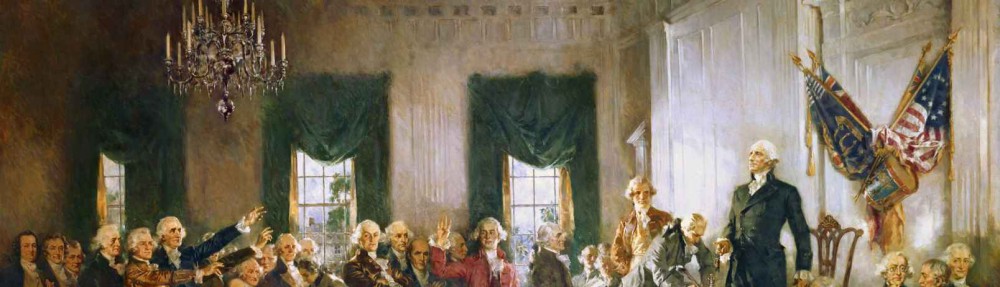
POLITICAL CLASS OF 1787 POLITICAL CLASS OF 2016
Source: Look How Far We’ve Come, Folks


Hillary had another massive coughing attack yesterday while speaking in Des Moines. Her recent coughing attacks:
a. are symptomatic of her advanced stage of alcoholism
b. only happen when she tells the truth
c. are caused by hairballs
d. are common side-effects of anti-psychotic medications
e. all of the above

All in all, we ended up getting about 20 inches of snow. I’m having the time of my life. I love snow. I’ve spent about 12 hours shoveling snow over the past two days. I think it’s the best workout ever. I feel great. I’ve accomplished more in these two days than in all of my 32 years working for the federal government.
There’s lots of talk today about the possibility of Hillary Clinton being indicted. For the benefit of all 13 of my website followers, here’s my quick take on it:
Indicting Hillary quickly, or otherwise getting her to give up her candidacy, is the only chance the Dims have to win the White House. They have to get her out of the race, and soon, to get a winning ticket, i.e. Biden/Fauxcahontas on the ballot by November. (Fauxcahontas being Elizabeth Warren, who earned the name by falsely claiming to be of 1/64th or some such fraction Native American.) If they somehow get Hillary off the ticket and replace her with Biden/Faux, they could win. The outcome, of course, would depend on the GOP ticket and an array of uncertainties. But I digress.
The Clintons, as we know, have the goods on Obama/Jarrett, and vice versa. So the Dims are caught between Iraq and a hard place. Of course, if these people were conservatives/Republicans, the GOP candidate/indictee would be hounded to end his/her candidacy by a groundswell of GOPe suck-ups and the media “in the greater interests of the country.” After a week of phony high drama with a pre-determined outcome, the candidate would withdraw. The GOP would then ask Jeb Bush and John Kasich to come to the rescue, having convinced enough stupid people that a Bush/Kasich ticket would all but guarantee Florida and Ohio going red. We all know the ending to that story.
But the players in this case being Dims, things play out quite differently, and much more unpredictably and dramatically. Dims never cave—ever. Well, let’s just say that historically the GOP holds a 100:1 cave ratio over the Dims. My prediction is that they don’t indict Hillary and she gets trounced in November. The Dims would rather lose than air their dirty laundry, which even the New York Slimes would be forced to devote ink and paper.
As usual, a GOP victory would mean nothing. As someone once said, “All political victories are meaningless unless you defeat stupidity along with it.”
The Artful Dilettante
When every second could mean the difference between life and death, you can count on the Obama Countdown Clock.
Source: Obama Countdown Clock
The following is from “The One World Schoolhouse: Education Reimagined” by Salman Khan, founder of the world famous, online-based Khan Academy, an innovator in childhood and ongoing adult education.
Testing out. What a concept. I’d had no idea that such a thing existed, though even a moment’s notice suggested that it made perfect sense. If a student could demonstrate proficiency with a certain set of ideas and processes, why not let him or her move on to more advanced ones?
Back at my own school, full of enthusiasm, full of hope, I approached the powers that be with the possibility of testing out of my math class. My suggestion was instantly shot down by way of a dreary and all too familiar argument: If we let you do it, we’d have to let everybody do it.
Since I was as self-involved as most people that age, I had no interest in what other kids did or didn’t get to do; I only cared that I myself had been denied, so I sulked and misbehaved (although I did have the therapeutic release of being the lead singer in a heavy metal band). Over time, however, a broader and rather subversive question started scratching at my mind; eventually it became one of my most basic educational beliefs: If kids can advance at their own pace, and if they’d be happier and more productive that way, why not let everybody do it?
Where was the harm? Wouldn’t kids learn more, wouldn’t their curiosity and imagination be better nourished, if they were allowed to follow their instincts and take on new challenges as they were able? If the student graduated early, wouldn’t this free up scarce resources for the students who needed it? True, this approach would call for more flexibility and more close attention to students as individual learners. To be sure, there were technical and logistical hurdles to be cleared; there were long and brittle habits that would need to be altered. But whom was education supposed to serve, after all? Was the main idea to keep school boards and vice principals in their comfort zone, or was the main idea to help students grow as thinking people?
Khan wrote his book to improve education for young people, not to make the case for the privatization of schools. Nevertheless, his book accomplishes both goals.
His successful methods for teaching children via a combination of online YouTube videos, self-directed/adult-monitored study and unstructured collaboration with other students in class settings, caught the attention of no less than Microsoft founder Bill Gates, who utilized Khan’s program to supplement education for his own children.
Khan started in a makeshift office closet of his house and became a million-dollar industry thanks to the effectiveness of his teaching techniques combined with the visibility he was able to quickly attain.
The central (and largely implicit) premise of Khan’s methodology is that only individual minds think.
There is no collective brain. As a result, children can only learn on the individual level. All education must respect, honor and adhere to the objective fact that each child’s mind (like each adult’s mind) is individual, with its own pacing, its own set of requirements and particular idiosyncratic needs and styles.
“Progressive” education, the methodology behind most education as we know it today (public or private), holds that children must learn as a group, and may only advance as a class or a grade, not as individuals, once the whole group is ready to advance. While this method might prove acceptable for the average child, it has the effect of creating profound boredom in the exceptional child, while creating extreme anxiety in the below average child.
Mind you, the concepts “exceptional” and “below average” refer to the individual child only in the context of the group. In his book and in his educational efforts, Khan brilliantly exposes the fallacy of this line of thinking. He found out, for example, that students performing below average in the conventional group teaching model ended up, in some cases, actually flourishing and outpacing the average students once they were exposed to his individualized approach to learning.
This finding suggests that in some respects there may be no such thing as “average” or “superior” children, at least not in the sense we have come to understand. While objective standards can demonstrate the superiority of some childrens’ abilities over others, when we remove them from the group context, many of those previously left behind soar as never before, because there’s no remaining sense of being “left behind” or getting “ahead.” There’s only a concern with learning.
Throughout his book, Khan emphasized that he was not looking for a one-size-fits-all approach to education. He wanted an education model that accepts and respects the need for individual autonomy and self-directed pacing. He did not claim that knowledge is subjective, and that all learning therefore would be completely directed by the child. That would be absurd. At the same time, his studies and experiences dramatically showed how children do not benefit from the grade/classroom model we have all come to know and accept as the only possible way to learn.
Grade levels are set arbitrarily by biological age. If you’re six years old, you’re in first grade. If you’re seven years old, it’s time to advance to second grade. What if you’re motivated, ready and able to be in fifth grade by the time you’re seven years old? Or what if you’re seven years old and need another half a year on first-grade material? Why should biological age dictate your pace of learning, against your own nature or actual capacity at a certain point in time? No answer is ever given. It’s shocking and unthinkable even to ask the question. “Why, that’s just how it has always been done.”
But as Khan points out, this whole approach to education did not always exist, not even in America. He entitles his book “The One World Schoolhouse” to advocate for the modern high-tech equivalent of a one room schoolhouse. His purpose is not “back to basics” as much as utilizing the flexibility afforded by modern technology to enable children, even when learning in group settings, to process and conceptualize information and skills on an individualized, while still objective and rational, basis.
Khan stops short of advocating for removing government from the management or funding of education. However, it’s clear his philosophy and model would get nowhere in our current federally run, government monopolized, single-payer system.
As his quote (above) all but says, today’s schools exist as much, if not more, for the benefit of school officials, teachers’ union demands and other requirements as they exist for the actual teaching of students.
When schools continue to underperform, we throw more tax money at them. When they underperform still more, we throw more tax money at them.
We raise property taxes, including on families of school-age children who can now afford private schools even less.
As long as teachers’ unions get what they want, and as long as school officials do not have to innovate – since that’s too much work and risks offending this or that parent or political pressure group – then all is well, as long as we all spend more money.
As Khan demonstrates in his book, his methodology can even help children in third world countries with few or no resources for funding public schools. Ironically, children in such disadvantaged settings are – in some ways – at a greater advantage, because they’re not burdened down with all the false expectations and commands from the federal authorities to match learning to (1) age level and (2) requirements of the school achievement tests, upon which public schools now rely in order to attain more funding.
Khan’s methodology frees the student by respecting the individuality and autonomy of the child’s mind. He’s similar to Maria Montessori in this respect. He does not claim to have all the answers, and he does not advocate for a one-size-fits-all approach to education.
But what he does understand is a fact that should have been obvious all along: Children are little adults. They are sovereign individuals with developing personalities. While they must be guided by adults and by objective facts and standards, they likewise must learn in their own way, at their own pace, and for the sake of learning.
Children and their schooling do not exist for the sake of pleasing anxiety-ridden parents; demoralized or lazy teachers unable/unwilling to provide innovation; political officials who care nothing except for power, or teachers’ unions who care for nothing other than early retirement pensions and medical insurance benefits.
It makes no more sense to herd children into age-based collectives, expecting them all to learn in the same way at the same rate, than it would make sense to herd all adults into communes or other collectives where everyone is expected to act, think, develop and perform the same.
In fact, whenever the latter has been attempted with adults (Nazi Germany and Maoist Communist China or Soviet Russia come to mind), they have been spectacular and tragic failures for this reason.
So why on earth do we expect it to turn out any better for children?
Michael J. Hurd, drhurd.com
Many a modern preacher is far less concerned with preaching Christ and Him crucified than he is with his popularity with his congregation. A want of intellectual backbone makes him straddle the ox of truth and the ass of nonsense…Fulton J. Sheen
America, it is said, is suffering from intolerance. It is not. It is suffering from tolerance: tolerance of right and wrong, truth and error, virtue and evil, Christ and chaos. Our country is not nearly so much overrun with the bigoted as it is overrun with the broad-minded. The man who can make up his mind in an orderly way, as a man might make up his bed, is called a bigot; but a man who cannot make up his mind, any more than he can make up for lost time, is called tolerant and broad-minded.
A bigoted man is one who refuses to accept a reason for anything; a broad-minded man is one who will accept anything for a reason—providing it is not a good reason. It is true that there is a demand for precision, exactness, and definiteness, but it is only for precision in scientific measurement, not in logic. The breakdown that has produced this natural broad-mindedness is mental, not moral. The evidence for this statement is threefold: the tendency to settle issues not by arguments but by words, the unqualified willingness to accept the authority of anyone on the subject of religion, and lastly the love of novelty.
The science of religion has a right to be heard scientifically through its qualified spokesmen, just as the science of physics or astronomy has a right to be heard through its qualified spokesmen. Religion is a science despite the fact the some would make it only a sentiment. Religion has its principles, natural and revealed, which are more exacting in their logic than mathematics. But the false notion of tolerance has obscured this fact from the eyes of many who are as intolerant about the smallest details of life as they are tolerant about their relations to God.
Another evidence of the breakdown of reason that has produced this weird fungus of broad-mindedness is the passion of novelty, as opposed to the love of truth. Truth is sacrificed for an epigram, the Divinity of Christ for a headline in the Monday morning newspaper. Many a modern preacher is far less concerned with preaching Christ and Him crucified than he is with his popularity with his congregation. A want of intellectual backbone makes him straddle the ox of truth and the ass of nonsense, paying compliments to Catholics because of “their great organization” and to sexologists because of “their honest challenge to the youth of this generation.” Bending the knee to the mob rather than God would probably make them scruple at ever playing the role of John the Baptist before a modern Herod. No accusing finger would be leveled at a divorce or one living in adultery; no voice would be thundered in the ears of the rich, saying with something of the intolerance of Divinity: “It is not lawful for thee to live with thy brother’s wife.” Rather would we hear: “Friends, times are changing!” The acids of modernity are eating away the fossils of orthodoxy.
Belief in the existence of God, in the Divinity of Christ, in the moral law, is considered passing fashions. The latest thing in this new tolerance is considered the true thing, as if truth were a fashion, like a hat, instead of an institution like a head.
The final argument for modern broad-mindedness is that truth is novelty and hence “truth” changes with the passing fancies of the moment. Like the chameleon that changes his colors to suit the vesture on which he is placed, so truth is supposed to change to fit the foibles and obliquities of the age. The nature of certain things is fixed, and none more so than the nature of truth. Truth may be contradicted a thousand times, but that only proves that it is strong enough to survive a thousand assaults. But for any one to say, “Some say this, some say that, therefore, there is no truth,” is about as logical as it would have been for Columbus who heard some say, “The earth is round”, and others say “The earth is flat” to conclude: “Therefore, there is no earth.” Like a carpenter who might throw away his rule and use each beam as a measuring rod, so, too, those who have thrown away the standard of objective truth have nothing left with which to measure but the mental fashion of the moment.
The giggling giddiness of novelty, the sentimental restlessness of a mind unhinged, and the unnatural fear of a good dose of hard thinking, all conjoin to produce a group of sophomoric latitudinarians who think there is no difference between God as Cause and God as a “mental projection”; who equate Christ and Buddha, and then enlarge their broad-mindedness into a sweeping synthesis that says not only that one Christian sect is as good as another, but even that one world-religion is just as good as another. The great god “Progress” is then enthroned on the altars of fashion, and as the hectic worshippers are asked, “Progress toward what?” the tolerant comes back with “More progress.” All the while sane men are wondering how there can be progress without direction and how there can be direction without a fixed point. And because they speak of a “fixed point”, they are said to be behind the times, when really they arebeyond the times mentally and spiritually.
In the face of this false broadmindedness, what the world needs is intolerance. The world seems to have lost entirely the faculty of distinguishing between good and bad, the right and the wrong. There are some minds that believe that intolerance is always wrong, because they make “intolerance” mean hate, narrow-mindedness, and bigotry. These same minds believe that tolerance is always right because, for them, it means charity, broadmindedness, and American good nature.
What is tolerance? Tolerance is an attitude of reasoned patience toward evil and a forbearance that restrains us from showing anger or inflicting punishment. But what is more important than the definition is the field of its application. The important point here is this: Tolerance applies only to persons, but never to truth. Intolerance applies only to truth, but never to persons. Tolerance applies to the erring; intolerance to the error.
America is suffering not so much from intolerance, which is bigotry, as it is from tolerance, which is indifference to truth and error, and a philosophical nonchalance that has been interpreted as broad-mindedness. Greater tolerance, of course, is desirable, for there can never be too much charity shown to persons who differ with us. Our Blessed Lord Himself asked that we “love those who calumniate us, for they are always persons,” but He never told us to love the calumny.
In keeping with the Spirit of Christ, the Church encourages prayers for all those who are outside the pale of the Church and asks that the greatest charity be shown towards them. Charity, then, must be shown to persons and particularly those outside the fold, who by charity must be led back, that there may be one fold and one Shepherd. Shall God, Who refuses to look with an equally tolerant eye on all religions, be denied the name of “Wisdom” and be called an “Intolerant” God?
The Church is identified with Christ in both time and principle; She began thinking on His first principles and the harder She thought, the more dogmas She developed. She never forgot those dogmas; She remembered them and Her memory is Tradition. The dogmas of the Church are like bricks, solid things with which a man can build, not like straw, which is “religious experience” fit only for burning. The Church has been and will always be intolerant so far as the rights of God are concerned, for heresy, error, and untruth affect not personal matters on which She may yield, but a Divine Right in which there is no yielding. The truth is divine; the heretic is human. Due reparation made, the Church will admit the heretic back into the treasury of Her souls, but never the heresy into the treasure of Her Wisdom. Right is right even if nobody is right; and wrong is wrong if everybody is wrong.
The attitude of the Church in relation to the modern world on this important question may be brought home by the story of the two women in the courtroom of Solomon. Both of them claimed a child. The lawful mother insisted on having the whole child or nothing, for a child is like truth—it cannot be divided without ruin. The unlawful mother, on the contrary, agreed to compromise. She was willing to divide the babe, and the babe would have died of broad-mindedness.
Source: Quotes by Robert Higgs
 THE ARTFUL DILETTANTE