The problem with Democrats — Communists — isn’t that they’re “extremists.” The problem is that they’re extremely WRONG. Extremely toxic. Extremely ignorant. Extremely stupid. Extremely intolerant. Extremely arrogant. Those of us who are extremely RIGHT must overtake them. Being wrong is a weakness.
People who are extremely wrong cannot ever win. They only win when we weaken. Show up, vote in massive numbers and refuse to give an inch.
Never let them put you on the defensive. Demand that they explain and defend their views, instead of name calling and threatening. Tell them no more conversations, debates, scolding or guilt trips–until they convince you, rationally, that they are right. This will never, ever, ever happen.
The primaries are over, and the November general election looms.
Suddenly, the Islamo-socialist podcaster Hasan Piker—who is now infamous for blaming America for 9/11 and warning Jews that “someone’s going to come around and take action, not against the state of Israel, mind you, but against American Jews”—is persona non grata on the Democratic stump.
Abdul El-Sayed, the Democratic nominee in the Michigan Senate race, once enlisted Piker to jump-start his lethargic candidacy. Now that he is locked in a close general-election race against a strong Republican, El-Sayed dismisses the antisemite, who has suddenly outlived his usefulness, as a mere “social media person in California.”
Clinton-era Democratic politicos like Rahm Emanuel and James Carville insist that Democrats have divorced themselves from the hard-left Democratic Socialists.
Really?
If that divorce were real, why would so many Democrats be cheering a potential Alexandria Ocasio-Cortez presidential run in 2028? She is, after all, a proud member of the Democratic Socialists of America’s New York chapter.
Did lifelong socialist Bernie Sanders not run twice for president—not as a third-party candidate, but in the Democratic primaries? And did he not nearly capture the nomination in 2016 and 2020 until terrified donors and insiders intervened to abort his candidacies?
Did House Democratic leader Hakeem Jeffries not endorse Democratic mayoral nominee Zohran Mamdani, also a member of the DSA’s New York chapter? And did Jeffries not thereby choose Mamdani over former New York Governor Andrew Cuomo?
Did California Governor Gavin Newsom—the opportunist par excellence, multimillionaire, and presidential hopeful—not recently declare that “capitalism as we know it doesn’t work”? (Who, pray tell, are “we”?)
Has not nearly every major Democratic stalwart, including Senate leader Chuck Schumer, called for a “big tent” party that includes unapologetic socialists?
Many Democrats, of course, reject the socialists’ calls to eliminate the Pentagon, close prisons, and dismantle the Senate. But perhaps only because such wild fantasies cannot succeed, at least for now, and repel most American voters.
Where, then, did these largely young, inexperienced, and naïve Democratic Socialists find their agenda?
Self-declared socialists now demand an open border and mass amnesty for illegal aliens; the abolition of police and prisons; war on fossil fuels; radical DEI mandates; free health care for all; wealth taxes on billionaires and even millionaires; deep defense cuts; and an end to military aid to Israel.
Yet these are hardly the socialists’ positions alone. They closely resemble earlier Democratic Party programs and demands. The socialists now talk a grand leftist game; during the Biden years, Democrats tried to enact much of the agenda the socialists later claimed as their own.
So did newly radicalized Democrats spawn this socialist offspring, or did the socialists radicalize the old party of John F. Kennedy and Bill Clinton?
Who created whom?
The answer is demonstrably clear: Democrats radicalized themselves. Only later did an underfunded, motley socialist crew jump aboard their increasingly extremist bandwagon. By the time the Democratic Socialists of America became nationally known, the new Democrats had already supplied their model of governance.
When Democratic Socialists claim that “billionaires” owe their success to government, they merely echo President Barack Obama’s taunt to successful business owners: “You didn’t build that.”
Obama lifted that moronic socialist meme—like his “spread the wealth” line—wholesale from Democratic Senator Elizabeth Warren. In 2011, Warren boasted that no wealthy American had succeeded on his own, reiterating the classic socialist rationale for confiscation: “the people” make success possible and must therefore be repaid.
In his first term, Barack Obama sought to take over the nation’s health care system while concealing his socialist agenda. He partly succeeded through his now-failing Obamacare plans. His effort rested in part on the claim PolitiFact later named its “Lie of the Year”: “If you like your health care plan, you can keep it.”
Obama also cut more than $100 billion from defense. His “apology tour” and dismissal of American exceptionalism likewise anticipated these more recent socialist one-world talking points.
Who cooked up DEI?
Who but the Obama and Biden administrations vastly expanded government hiring and promotion by race, gender, and sexual orientation? Who unleashed the Justice Department to pressure the private sector to follow suit—until the Supreme Court declared much of this DEI tribalism unconstitutional?
Sanctuary cities and neo-Confederate state and local nullification of federal immigration law were mainstream Democratic policies long before 2020. Biden’s Democrats—not the socialists—destroyed the southern border and admitted more than 10 million illegal aliens. Until the 2024 election cycle, Biden had also effectively imposed a moratorium on deportations.
Long before forming the 2020 Democratic ticket, Kamala Harris advocated banning fracking, while Joe Biden called for banning new fracking on federal lands and waters.
Long before the DSA and DSA-adjacent cohort of Mamdani, Piker, El-Sayed, Ilhan Omar, and Rashida Tlaib began mouthing antisemitic talking points, prominent Democrats like Jesse Jackson (“Hymietown”), Al Sharpton (“diamond merchants”), and Reverend Wright (“them Jews”) had shown the party’s tolerance for licensed Jew-hatred. More recently, more than 100 House Democrats voted to cut off all aid to Israel.
The same pattern applies to political methods. Democratic officials gave wink-and-nod support to the violent Antifa and Black Lives Matter movements long before the Democratic Socialists became a major force.
As early as August 2015, the Democratic National Committee officially endorsed BLM, while many Democrats defended Antifa.
In 2018, then-deputy DNC chief Keith Ellison posed proudly with an Antifa handbook and preened about “the book that strike [sic] fear in the heart of @realDonaldTrump.” By 2020, even FBI Director Christopher Wray was claiming that Antifa was more an “ideology” than a real organization of frequently unhinged and violent protesters.
During the post-George Floyd mania of 2020, then-Senator Kamala Harris, soon to become vice president, praised calls to defund the police. She even boasted on national television that the weeks-old, increasingly violent demonstrations would not—and should not—cease before the election.
Some establishment Democrats went further, personally threatening violence. Who screamed outside the Supreme Court, warning the justices, “You have released the whirlwind and you will pay the price. You won’t know what hit you if you go forward with these awful decisions”? Not a fringe socialist, but the Senate’s top-ranking Democrat.
And in 2018, Democratic Congresswoman Maxine Waters urged her followers to threaten and “harass” Trump cabinet officials.
More importantly, when the Democratic Socialists urge the next Democratic administration to pack the Supreme Court, abolish the Electoral College and the filibuster, and admit Puerto Rico and the District of Columbia as two new left-wing states, where did those ideas originate?
Mainstream Democratic leaders had already embraced the entire agenda during the first Trump administration, if not earlier.
And who is more lawless: the loudmouth, self-proclaimed radical socialists who talk of weaponizing state and federal power, or the still more radical Democrats who actually wielded it?
Who tried to remove a major Republican presidential candidate from ballots in more than 20 states?
Who sent FBI SWAT teams into Trump’s Mar-a-Lago estate?
Who brought four farcical lawfare cases aimed at imprisoning Trump?
Who concocted the Steele dossier and spread the lie that Hunter Biden’s laptop was Russian disinformation?
The answer: mainstream establishment Democrats, acting without any help from a coterie of fringy, downwardly mobile white urban socialists who were then largely irrelevant.
The once-fringe Democratic Socialists became mainstream largely by imitating an increasingly socialist Democratic Party. They did not infiltrate the Republican Party, form a viable third party, or—even after Sanders’s first campaign in 2016—abandon boutique Democratic causes, from open borders to gun control, to concentrate on economic radicalism.
Instead, they adopted the modern Democratic Party’s media, messaging, and methods and joined it, first informally and then formally. Fittingly, they are not called the Republican Socialists, Independent Socialists, or simply Socialists of America.
In sum, the socialists did not swallow the old Clinton Democrats; those Democrats were already gone. A party radicalized over decades instead welcomed younger copycat socialists who proved even more zealous and embittered than their elders—and gave them their first national home.
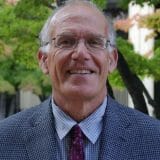
About Victor Davis Hanson
Victor Davis Hanson is a distinguished fellow of the Center for American Greatness and the Martin and Illie Anderson Senior Fellow at Stanford University’s Hoover Institution. He is an American military historian, columnist, a former classics professor, and scholar of ancient warfare. He has been a visiting professor at Hillsdale College since 2004, and is the 2023 Giles O’Malley Distinguished Visiting Professor at the School of Public Policy, Pepperdine University. Hanson was awarded the National Humanities Medal in 2007 by President George W. Bush, and the Bradley Prize in 2008. Hanson is also a farmer (growing almonds on a family farm in Selma, California) and a critic of social trends related to farming and agrarianism. He is the author of the just released New York Times best seller, The End of Everything: How Wars Descend into Annihilation, published by Basic Books on May 7, 2024, as well as the recent The Second World Wars: How the First Global Conflict Was Fought and Won, The Case for Trump, and The Dying Citizen
The Libertarian Party of New York is calling on voters to write in “None of the Above” for governor this year, launching a statewide protest campaign against New York’s ballot access laws after its own gubernatorial nominee failed to qualify for the printed ballot.
In a statement this week announcing its “VOTE NOTA” campaign, the party said it will not support a “named candidate” for governor this cycle and rallied voters to instead write in None of the Above.
Christopher Skelly, communications director for the Libertarian Party of New York, said the effort is intended as a protest against what the party considers a system intended to protect members of the Democratic and Republican parties.
“When the rules make it nearly impossible for principled alternatives to appear on the ballot, the honest response is to withhold consent,” Skelly said. “Writing in None of the Above is a clear, countable statement that none of the major-party options deserve our support.”
New York will have only two gubernatorial candidates appearing on the ballot, with Democratic incumbent Kathy Hochul facing Republican Bruce Blakeman. Hochul will also appear on the Working Families Party line, while Blakeman will additionally appear on the Conservative and Vote Affordable lines.
New York Libertarians initially planned to field Larry Sharpe, nominating Sharpe for governor at the party’s October 2025 convention. Sharpe also announced that he had received the nomination of the We the People Party, the organization once associated with Robert F. Kennedy Jr.’s 2024 independent presidential campaign.
Sharpe ultimately sought ballot access through an independent nominating petition under the Coalition Party name, with Shannon Joy Bones as his lieutenant governor candidate. The State Board of Elections ruled the petition invalid in June, finding that it contained no more than 1,615 possible signatures against the 45,000 required for a statewide independent candidate.
The party has pinned the reasons behind its current strategy on changes to state law enacted in 2020. Sharpe received 95,033 votes as the Libertarian gubernatorial candidate in 2018, clearing the former 50,000-vote threshold and giving the party recognized status for the first time.
New York then raised the qualification requirement two years later to the greater of 130,000 votes or 2 percent in both gubernatorial and presidential elections. It also increased the statewide independent petition requirement from 15,000 signatures to 45,000.
Since that change, the Working Families and Conservative parties, both of which frequently cross-nominate Democratic or Republican candidates, have remained the only recognized parties in the state outside the two major parties.
On a website created for the campaign, the Libertarian Party of New York said its goal is not to elect a governor or regain a ballot line this year, but instead to produce a visible protest vote in support of lower ballot access requirements. However, it is not obvious how the state will treat the effort, given how it views write-ins elsewhere.
New York defines a write-in vote as one cast for a person whose name is not already printed on the ballot, potentially complicating the party’s objectives if it hopes to have a tallied total.
The State Board of Elections also previously declined to recognize an independent nominating petition earlier this summer trying to name “None of the Above,” specifically noting that the document listed no named candidates and provided no candidate residential addresses.
In the meantime, the Libertarian Party of New York said it will continue supporting candidates further down the ballot through what it calls “liberty from below,” focusing on local organizing efforts where it considers them viable.
Twenty-one percent of young Germans between the ages of 14 and 29 are making concrete plans to leave Germany. Forty-one percent can at least imagine doing so. Even among the population as a whole, one in five is considering emigrating. Of course, not everyone who says they are thinking about emigrating actually leaves. But many do – and their numbers are growing.
In 2024, 269,986 Germans left the country. For years, the figure has remained steady at just over a quarter of a million per year. This is not a new phenomenon: Among German citizens, the net migration balance has been negative for more than two decades. In other words, more Germans consistently leave the country than German returnees come back. In 2024, the net loss was 81,000; last year, it was 97,000.
The troubling part is that those who leave are predominantly highly qualified: 75 percent have a university degree. “It is,” Alexander Steffen writes in his recently published book “Goodbye Deutschland”, “the qualified, those with language skills, those with options, those who are needed elsewhere and are not dependent on Germany.” And it is not just those who actually emigrate, but also those who have already mentally checked out of the country. “When it is precisely these people who are mentally quitting, that is not a character flaw on their part. It is the price a country pays for believing for too long that it can milk achievement, lecture people about freedom, and regard success with suspicion without ever having to pay the bill.”
Steffen does not advocate for emigration. He explicitly writes that he wants to stay because he loves his country. But he warns of the consequences when more and more people with little or no qualifications enter the country while more and more highly qualified people leave. Steffen supports immigration. But qualified immigration.
Germany,” Steffen writes, “does not have a problem with the quantity of migration; it has a problem with quality. Too often, it keeps and financially supports people who burden its system, while losing or driving away people who would make the country stronger.”
Steffen has spoken with people – especially young people – who have emigrated or are seriously considering doing so. For him, their motives are also an indicator of what is going wrong in our country. In one sentence: “Elsewhere, success is an invitation; here, it is grounds for suspicion.” Indeed, Germans are particularly envious of successful and wealthy people. This is also shown by a survey of 13 countries – not cited in his book – which demonstrates that social envy in Germany is higher than in almost any other country. According to the Ipsos MORI survey, it was higher only in France. In Poland, for example, a very dynamic and rapidly growing country, envy is much lower.
What motivates the young people the author spoke with? The fundamental complaint is that the state demands a great deal from them and takes a great deal away from them, while providing less and less in return. Florian is 33, comes from Hamburg, and worked in his family’s business. He is now planning to move to Doha. “He comes from the chemical and construction industries, a world in which regulations, labeling requirements, liability rules, and supply chains determine the working day. When he said that he was treated like a criminal here, he did not sound angry, but exhausted.” The final straw was a hefty fine because one out of 5,000 products had been incorrectly labeled due to a completely irrelevant printing error. “A state that punishes a minor mistake more harshly than it ever rewards success has got its incentives backwards.”
Germany,” Steffen writes, “does not have a problem with the quantity of migration; it has a problem with quality. Too often, it keeps and financially supports people who burden its system, while losing or driving away people who would make the country stronger.”
What motivates the young people the author spoke with? The fundamental complaint is that the state demands a great deal from them and takes a great deal away from them, while providing less and less in return. Florian is 33, comes from Hamburg, and worked in his family’s business. He is now planning to move to Doha. “He comes from the chemical and construction industries, a world in which regulations, labeling requirements, liability rules, and supply chains determine the working day. When he said that he was treated like a criminal here, he did not sound angry, but exhausted.” The final straw was a hefty fine because one out of 5,000 products had been incorrectly labeled due to a completely irrelevant printing error. “A state that punishes a minor mistake more harshly than it ever rewards success has got its incentives backwards.”
Germany,” Steffen writes, “does not have a problem with the quantity of migration; it has a problem with quality. Too often, it keeps and financially supports people who burden its system, while losing or driving away people who would make the country stronger.”
Steffen has spoken with people – especially young people – who have emigrated or are seriously considering doing so. For him, their motives are also an indicator of what is going wrong in our country. In one sentence: “Elsewhere, success is an invitation; here, it is grounds for suspicion.” Indeed, Germans are particularly envious of successful and wealthy people. This is also shown by a survey of 13 countries – not cited in his book – which demonstrates that social envy in Germany is higher than in almost any other country. According to the Ipsos MORI survey, it was higher only in France. In Poland, for example, a very dynamic and rapidly growing country, envy is much lower.
Tobias came to Switzerland for an internship and stayed. For working five additional hours a week, he earns twice the net salary and gets an apartment on top of that. But for him and the other people Steffen interviewed, it is not primarily about such figures. It is about a feeling: Working there is simply more enjoyable, he says, because he experiences appreciation not only from his employer but throughout society. Germany, he adds, is not a country he would associate with that word.
Jan is 38, comes from Bavaria, and now lives in Bulgaria, where the tax burden is ten percent. But for him and many others, the following applies: “In the end, they did not flee high taxes, but the deep-seated mistrust that almost automatically comes into play in Germany whenever someone has the audacity to build something of their own. The tax bill was merely the tangible manifestation of a sense of alienation that had actually been there for a long time.”
This reminds me of Sweden in the 1960s and 1970s, when not only did the tax burden become unbearable, but envy of entrepreneurs and the wealthy became widespread. The German writer Hans Magnus Enzensberger wrote about Sweden at the time: “In such a society, the rich, it seems, have little to laugh about. If only it were the taxes! As respectable citizens, they are willing to pay them on time, albeit reluctantly. What hurts them much more is the fact that no one has any sympathy for their plight.” Sweden, Enzensberger wrote, had developed into a country in which the rich felt “superfluous, disrespected, and excluded.”
Steffen’s conversations with the self-employed and small business owners can be summed up as follows: “They did not fail because a form was too long, but because they felt that the state treated them as adversaries rather than as the people who help pay for the whole system.” At some point, people stop fighting that feeling and start looking for alternatives.
A successful tennis player who now lives in the United States says: “In the U.S., I experienced for the first time that success is not something to be embarrassed about. In Germany, people are quick to ask whether you might be wanting too much. In America, they are more likely to ask how big you want to make it.”
I can confirm what Steffen writes from my own experience. A friend of mine, a very well-integrated and highly qualified German of Turkish descent, moved to Switzerland a week ago. The reason: He wants to start a company and cannot imagine doing so in Germany. Another friend of mine, an extremely successful – and wealthy – investor, has been living in Abu Dhabi for several years. “I didn’t leave because of the taxes,” he says. “I left because of the envy.”
J.D. Vance: “My message to Abdul El-Sayed is: You can pal around with terrorist sympathizers, and you can say that America deserves 9/11, or you can empathize not with the children who were targeted at Temple Israel, but with the attacker. These are all despicable things, but they’re all things that the people of Michigan will judge you on based on your record. But whatever you want to talk about, Abdul — keep my wife’s name the hell out of your mouth, because she’s way out of your league.”
El-Sayed is the voice of today’s Democratic Party. It’s a voice of undiluted hatred of the good, of barely contained savagery and brutality. It’s not marginal. Any Democratic voter you know will vote for this barbarian over ANY Republican, and feel smug and self-righteous while doing so.
Future Republicans will experience these kinds of attacks routinely. Communists, like terrorists, have no boundaries, scruples or limits.
Republicans are trying to argue that “socialism is bad because it leads to Communism.” That isn’t why socialism is bad. Socialism is bad because it’s socialism. Socialism is where the government declares all private property as belonging to the government. You may keep some of your property, perhaps, but only for so long as the government says so. You can lose your property at any time. Aside from being horrible in itself, eventually this system leads to the destruction of incentives, the erosion or elimination of profits for big and small business, and government monopolies and mismanagement of every industry (e.g. Amazon, Nike, Netflix, Microsoft, Apple, etc.) presently under the control of the private sector.
Because of the mediocrity, decline and economic collapse which socialism ALWAYS fosters, people become angry, frightened, and uncomfortable. To shut them up, the government begins censorship and, of course, gun confiscation. People are imprisoned more for political dissension than violent crimes. You know the rest.
Socialism is bad because it’s socialism. Socialism and Communism are both examples of the collectivism espoused by Democratic Party icon Zohran Mamdani. If you support Democrats and their grab for socialism, then you are a Communist. Frankly, I don’t care about the labels. If you support socialism, you’re sanctioning evil and you’re sending civilization back to the Middle Ages — and eventually savagery.
You have to hand it to the Huffington Post. Were it not for its slavish devotion to abortion, events most of us would never hear about get publicized.
For example, “Gloria Steinem Speaks At Planned Parenthood Fundraiser, Tackles Gender, Sexuality,” written by Ashley Alman and posted Wednesday. Alman’s own piece is almost incoherent, but it led me to read the story in The City Sentinel, a weekly that serves Oklahoma City, which evidently served as the basis for Alman’s account, and which is hardly the model of accuracy.
Here are a couple of observations.
“The women’s advocate [Steinem] talked about how many women are victims of horrific crimes in the United States,” Alman writes. “There is a son surplus and a daughter deficit because of female infanticide, and there is a huge market in sex trafficking, where the life expectancy is very, very short.”
Pardon?
Steinem (according to The City Sentinel) talked at length about women killed in the United States by boyfriends and husbands, which horrifies anyone and everyone with even a tinge of a conscience. But the second half—about a “son surplus and a daughter deficit because of female infanticide, and there is a huge market in sex trafficking, where the life expectancy is very, very short”—obviously had nothing to do with the United States.
Presumably Steinem was tackling, whether obliquely or directly, the hundreds of millions of “missing women.” Author Mara Hvistendahl is to be credited for raising awareness with her book, “Unnatural Selection: Choosing Boys Over Girls and the Consequences of a World Full of Men.” These millions of “missing women” were prenatally targeted for extinction, because of the availability of ultrasound technology improperly used. [1]
IF the quote is accurate, and assuming–as we should—that Steinem is really talking about gendercide, it was not hundreds of millions of new-born females who were killed (although infanticide surely does occur) but obviously unborn baby girls. Steinem does not flat-out denounce gendercide which illustrates the bind into which a mindless appetite for abortion places pro-abortion feminists.
As an aside, Steinem offers the usual mishmash of feminist herstory and hosannas for Planned Parenthood. The real show-stopper was “Steinem contends it is more accurate to characterize the organization as preventing abortion stating, ‘abortion is only one percent of what Planned Parenthood does,’” according to The City Sentinel’s Darla Shelden.
Usually the utterly misleading formulation is that abortion makes up “only 3%” of PPFA’s “services.” But for Steinem, even that concession is too much.
NRLC’s Dr. Randall K. O’Bannon has debunked this nonsense (“PPFA, abortion, and ‘3%’: “The Most Meaningless Abortion Statistic Ever”). Just remember that PPFA takes in a small fortune performing 330,000+ abortions each year AND that about one out of every nine women coming through Planned Parenthood’s door will have an abortion!
Tip of the hat to Jill Stanek.
[1] We’re written about this tragedy on many occasions. Here are two examples: “It’s a girl: The three deadliest words in the world”; and “Pro-abortionists and “Gendercide”—trying to squirm out of the corner.”
Over the course of two nights this Fall, Republicans from all over our great nation will convene in Dallas, Texas for a clear purpose: To support the outstanding slate of GOP candidates running in the midterm elections this Fall and articulate all we have done and will continue to do to strive for what our Founding Fathers fought for 250 years ago – a more perfect union.
In 2026, the stakes could not be higher. All elections offer voters a path to the future. In November, we must decide whether to take the path of steady progress or ourselves obstruction. One that leads to prosperity, peace through strength, and a doubling-down on core American ideals – or the one littered with far-left liberal ideology and policies that have decimated our cities, outsourced American jobs to China and beyond, and provided the dismal promise of a future filled with high taxes and low wages. The choice is crystal clear.
The Republican Midterm Convention marks a first in American political history – a primetime showcase for President Trump’s success, candidates, and causes that have propelled the 2026 midterms to unprecedented focus. Our Party will also articulate a clear and bold plan of the work we will continue to do on behalf of the hard-working and patriotic Americans after we achieve victory in November.
The message is simple: Americans want strong borders and sound immigration policies, not sanctuary cities and the unspeakable crimes that come with them. They want to continue to reap the profound benefits from the One Big Beautiful Bill: no tax on tips, new pathways to retirement savings, and a vibrant economy that lifts all boats. Parents want a common-sense approach to education, youth sports and school choice – not a liberal lecture on transgender rights and those who think boys should be allowed to play in girls athletics.
Each night will not only showcase the dedicated men and women running in key races around the country but also the voices of everyday Americans – who want to fight to continue President Trump’s common-sense revolution.
Midterm Convention Programming Fast Facts President Donald Trump will appear both nights with a keynote address on the second night Vice President JD Vance will make a keynote address on the first night Night 1 Total: 53 items/speakers Ni
Ahead of 25th anniversary of terrorist attacks, Executive Orders establish citywide day of service and modernize continuity of operations for first time since 2007
New interagency Continuity and Mission Assurance Team will strengthen preparedness, ensure continued service delivery during emergencies
NEW YORK – Today, ahead of the 25th Anniversary of the September 11th terrorist attacks, Mayor Zohran Kwame Mamdani will sign two Executive Orders to honor the victims, first responders, survivors, City workers and families whose lives were forever changed by the tragedy while strengthening City government’s ability to protect New Yorkers and maintain essential services during emergencies.
“I am honored to establish the City’s first Day of Remembrance and Service on September 11th to remember those we lost on that horrific day and the first responders, families and City workers whose lives were irrevocably changed in the aftermath. Through this Executive Order, we are calling on New Yorkers to honor their memory through service and deep reflection,” said Mayor Zohran Mamdani. “We must also recognize that remembrance carries a responsibility to strengthen our city, protect New Yorkers and ensure that government is prepared to deliver for people no matter the circumstances. ‘Never Forget’ is not a slogan. It is a commitment that we must carry forward through action. And that is precisely what these two Executive Orders demonstrate.”
The first Executive Order establishes September 11th as an official Citywide Day of Remembrance and Service. It directs the administration to designate time that day for a moment of silence in honor of those who were killed in the attacks and those who suffered health consequences in the years since. City agencies are also encouraged to hold memorial ceremonies, educational programming and other activities to honor those lost, their families and the first responders who answered the call.
The Mayor’s Office will work with NYC Service to promote community service and volunteer opportunities for New Yorkers and encourage City agencies to participate. While similar Days of Remembrance exist at the State and Federal levels, this is the first such action taken by a New York City mayor.
The second Executive Order strengthens and modernizes the City’s Continuity of Operations planning for the first time since 2007, helping ensure that City government can continue delivering essential services and protecting New Yorkers during an emergency.
The Executive Order establishes the City’s first Continuity and Mission Assurance Team (CMAT), a senior interagency body chaired by the Deputy Mayor for Operations and composed of leadership from NYC Emergency Management (NYCEM), the Office of Technology and Innovation (OTI), the Department of Citywide Administrative Services (DCAS) and the Office of Management and Budget. The team will meet regularly to strengthen operational preparedness, coordinate continuity planning and ensure City government is ready to deliver for New Yorkers, no matter the circumstances.
“By designating September 11 as a Day of Service and Remembrance, we remember those we lost and carry forward the spirit that defined our City in its darkest hours. Service was the legacy of those who answered the call on September 11, 2001, and those who have died since. The greatest tribute we can pay them is to continue serving one another with compassion, courage and a shared commitment to building a stronger New York,” said New York City Fire Department Commissioner Lillian Bonsignore.
“September 11 is a day to remember the lives we lost, honor the heroes who answered the call, and renew our commitment to serving our communities,” said NYC Emergency Management Commissioner Christina Farrell. “Declaring September 11 an official Day of Remembrance and Service ensures that we carry that legacy of service forward. We are putting that same commitment into action by strengthening our Continuity of Operations Program. It will make sure that the City is prepared to keep essential services available when New Yorkers need them most. Together, these actions reflect what resilience means for New York City: remembering where we have been, supporting each other and preparing for what may come next.”
“25 years ago, we experienced the unimaginable — and New Yorkers and city workers came together to rebuild our city,” said DCAS Commissioner Yume Kitasei. “On this upcoming Day of Remembrance and Service, we will join the mayor in recommitting to our promise to never forget the sacrifices made that day and the months after, and as a core member of the Continuity and Mission Assurance Team, DCAS stands ready and prepared.”
“As we reflect on the solemn legacy of September 11th and honor those we lost, we are reminded that preparedness is essential to keeping New Yorkers safe,” said Chief Technology Officer and OTI Commissioner Lisa Gelobter. “Technology powers the City’s critical response capabilities, and modernizing our operational preparedness is essential to keeping New Yorkers safe. Through this Executive Order, OTI is deepening our interagency collaboration with agency partners and City Hall to ensure our systems, communications and emergency playbooks are resilient and built for any challenge.
“9/11 is a significant day in New York City history – a day of tremendous loss and tragedy, and also a day when New Yorkers of all backgrounds came forward to serve each other,” said Chief Service Officer Laura Rog. “Over the last 25 years, our city and country have made the commitment to show up for each other even in the darkest, hardest hours. Every act of service by every New Yorker since 2001 has not only honored the first responders, family and friends and recovery workers impacted, but each act has also woven the legacy of service across generations to turn our grief into a spirit of service that carries us forward.”
“On the 25th anniversary of September 11, we remember the brave first responders who answered the call in the face of unspeakable tragedy, participated in rescue and recovery operations and succumbed to illnesses or suffer from illnesses until this very day. We also honor the thousands of victims who lost their lives on that fateful day, and the family and friends who carry their legacy. And we recognize and appreciate the OMB employees who were working on that day and experienced the aftermath,” said Mayor’s Office of Management and Budget Director Sherif Soliman. “OMB is proud to partner with other City agencies in order to leverage our expertise and institutional knowledge in support of the Mayor’s Continuity of Operations Program, and to ensure that the City’s resources are appropriately marshaled to strengthen the city’s emergency preparedness posture and service delivery capabilities.”
In this Federalist Society America250 series, experts analyze modern legal and policy debates through the lens of the Founding generation. The Founders gave us the tools to answer many contemporary questions; join us as we explore those answers.
During the constitutional convention, Alexander Hamilton raised the idea of a presidential pardon power, borrowing from the British monarchy’s prerogative of mercy. Hamilton’s proposal ultimately resulted in Article II, Section 2 of the U.S. Constitution, which gives the president the authority to pardon individuals convicted of a federal crime.
The first presidential pardon was exercised by George Washington in 1795, when he granted amnesty to individuals who participated in Pennsylvania’s Whiskey Rebellion. Since then, there have been more than 14,000 instances of presidential pardons. From Andrew Johnson’s pardon of Jefferson Davis to Gerald Ford’s preemptive pardon of Richard Nixon to more recent instances including Joe Biden’s preemptive pardon of Hunter Biden and Donald Trump’s January 6th pardons, presidents’ use – and sometimes purported abuse – of the power has been a controversial and fiercely debated executive authority throughout our nation’s history.
Join our panel of experts as they explore the Founders’ views of the pardon power and place recent use in context with the founding generation.
Featuring:
Paul J. Larkin, Senior Legal Fellow, Advancing American Freedom
Andrew McCarthy, Senior Fellow, National Review Institute; Contributing Editor, National Review
James Trusty, Member, Ifrah Law
(Moderator) Jeffrey DeSousa, Florida Office of the Attorney General