Florida Shows How to Push Back Against Campus Speech Radicalism

By Samuel J. Abrams , Jason Jewell
December 29, 2025, Real Clear Politics

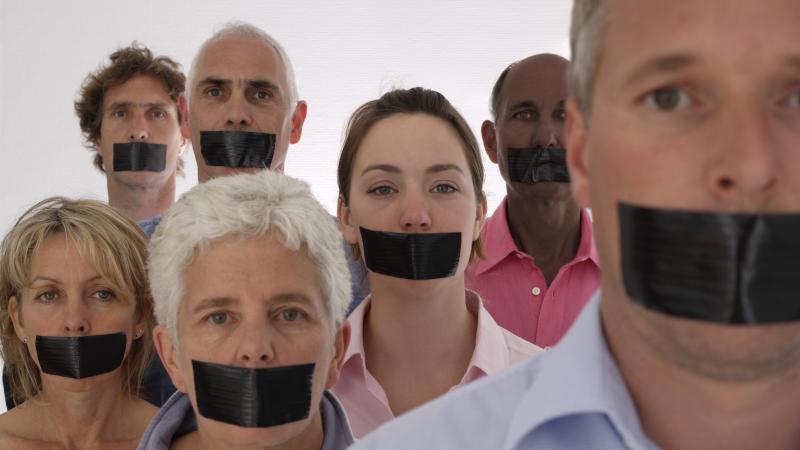
Campus free expression is in crisis. According to the Foundation for Individual Rights and Expression (FIRE), its 2026 College Free Speech Rankings found that student acceptance of disruptive protest tactics has reached record highs. More students than ever believe it is acceptable to shout down a speaker, block entry to campus events, or use violence to silence speech. For the first time, a majority of students oppose allowing any of the six controversial speakers – three liberal, three conservative – that FIRE asked about. The average school earned an F for its speech climate; only 11 of 257 institutions scored a C or higher.

These attitudes have consequences. Turning Point USA events at UC Berkeley have repeatedly descended into chaos. Charlie Kirk faced escalating threats before his murder at Utah Valley University. Public trust in higher education has collapsed alongside these incidents – Gallup and Pew consistently find that only about four in ten Americans express high confidence in colleges and universities.

Against this backdrop, Florida’s public universities offer a revealing counterexample.

FIRE’s annual rankings confirm that Florida’s universities consistently outperform their peers. In the 2025 rankingsFlorida State University placed third nationally – earning one of only three “good” ratings in the country. The 2026 rankings, released just before Charlie Kirk’s murder, showed FSU dropping to 17th, with USF at 24th – still placing both among the handful of schools FIRE identifies as having “consistently outperformed their peers” over six years. These year-to-year swings illustrate a limitation of FIRE’s methodology: with only a few hundred respondents per campus, rankings can shift dramatically from one survey cycle to the next.

The more instructive evidence comes from Florida’s own data. For the past three years, the State University System has administered an annual Intellectual Freedom Survey measuring student attitudes toward free expression, dissent, and disruption. Several of its questions are identical to FIRE’s, allowing for direct comparison. Early iterations struggled with low response rates – just 2.4 percent in 2022, but subsequent rounds introduced incentives and extended completion windows, boosting participation substantially. In 2025, more than 32,000 students responded, over fifteen times the number of Florida students in FIRE’s national sample.

Here is the puzzle: when FIRE surveys a few hundred students at individual Florida campuses, their responses on questions about disrupting speakers track close to national averages. But when Florida asks identical questions to more than 32,000 students, tolerance for coercive tactics drops sharply. The most likely explanation is methodological – larger samples with stronger response incentives capture attitudes that smaller surveys miss. If so, Florida’s data suggest the state’s campus climate may be healthier than even its strong FIRE rankings indicate.

The numbers bear this out. A slim majority of Florida respondents say it is at least “rarely” acceptable to shout down a speaker, but fewer than one-quarter say it is “always” or “sometimes” acceptable. Fewer than one-third believe it is even “rarely” acceptable to block others from attending a campus event, and fewer than one in ten endorse that behavior more strongly. When it comes to violence, just 12.7 percent say it is at least “rarely” acceptable, with fewer than 5 percent expressing anything stronger than minimal tolerance.

Moreover, the trendline in Florida is moving in the right direction: the proportion of its students willing to tolerate violence to prevent campus speech has fallen by about 30% over the past year. Compare this to FIRE’s conclusion that campus toleration of such violence is at record highs nationwide, and Florida’s numbers look even better.

These differences did not emerge by accident. Florida has built a layered policy infrastructure around campus speech.

In 2018, the legislature enacted the Campus Free Expression Act (Section 1004.097, Florida Statutes), which designates outdoor campus areas as traditional public forums, prohibits restrictive “free speech zones,” and authorizes universities to impose only content-neutral time, place, and manner restrictions that are “narrowly tailored to a significant institutional interest.” The law also creates a private cause of action for individuals whose expressive rights are violated.

The following year, the Board of Governors adopted a Statement of Free Expression, signed by the chancellor and all twelve university presidents. It declares that “a critical purpose of a higher education institution is to provide a learning environment where divergent ideas, opinions, and philosophies, new and old, can be rigorously debated and critically evaluated.” In 2021, Board Chair Syd Kitson launched a Civil Discourse Initiative, led by Governor Tim Cerio, requiring each university to develop implementation plans that align orientation programs, student codes of conduct, and employee policies with free expression principles.

At the institutional level, Florida State University and the University of Florida have published detailed guidance distinguishing protected expression from disruption. Both emphasize that counter-protesters “may not obstruct, disrupt, or attempt by physical force to cancel or discontinue speech by any speaker.” USF and other institutions have paired policy with repeated messaging that disagreement is central to academic life, but coercion is not.

The spring 2024 protests revealed how much this infrastructure matters. At Columbia, administrators called in the NYPD twice, watched protesters occupy Hamilton Hall, shifted to hybrid learning, and ultimately canceled the main commencement ceremony. At UF, police cleared an encampment within hours, classes continued without interruption, and graduation proceeded on schedule. Florida’s willingness to enforce time, place, and manner rules swiftly, while Columbia negotiated for weeks, produced starkly different outcomes. Applying these rules consistently is never easy, and Florida suspended several students in ways that drew scrutiny. But the broader lesson is clear: institutions that articulate and defend free expression norms fare better than those that respond with paralysis.

The results speak for themselves. U.S. News & World Report has ranked Florida the number one state for higher education for nine consecutive years, citing low tuition, high graduation rates, and minimal student debt. More recently, City Journal’s 2025 College Rankings – praised in a Wall Street Journal editorial – placed the University of Florida first in the nation among 100 leading universities, public or private, with Florida State seventh. The rankings evaluated schools on free speech climate, academic rigor, and civic education.

City Journal specifically praised UF’s Hamilton School for Classical and Civic Education, which has grown into one of the most ambitious experiments in civic renewal at any American university. Now a full-fledged school with 53 faculty members and more than 1,300 enrolled students, Hamilton offers majors in Philosophy, Politics, Economics, and Law and Great Books and Ideas, with more planned. Its faculty includes scholars recruited from Harvard, Oxford, and Cambridge. This year, Hamilton launched the Beren Program on Jewish Classical Education, supported by $15 million in philanthropic funding, to study the intersection of Jewish, Western, and American civilization. The program reflects a broader commitment: building institutional capacity for serious humanistic education, not just defending against disruption.

Florida has also become a destination for students seeking a welcoming campus climate. After the October 7 attacks, Governor DeSantis invited Jewish students facing antisemitism at other institutions to transfer to Florida, waiving certain application requirements and fees. City Journal cited UF’s response to campus disruptions as evidence of a “welcoming and tolerant climate for Jewish students,” and Florida International University earned a top grade from the Anti-Defamation League for its support of Jewish students. Jon Warech, executive director of Hillel at FIU, put it simply: “The administration here at FIU, they were never going to allow any of that, and it makes our students feel good, comfortable.”

Florida is not alone in pursuing this approach. Arizona State University’s School of Civic and Economic Thought and Leadership, established in 2017, pioneered the model of legislatively-mandated civics education at public universities. According to ASU, seven other states have since copied its approach, creating similar schools and institutes focused on American founding principles, classical texts, and civic leadership. These include the University of Texas at Austin’s School of Civic Leadership, the University of Tennessee’s Institute of American Civics, the University of North Carolina’s School of Civic Life and Leadership, and Ohio State’s Chase Center for Civics, Culture, and Society. What began as an experiment in Arizona and Florida is becoming a national movement.

None of this means Florida has solved every problem. Too many students still view coercive tactics as legitimate, and universities exist precisely to teach why they are not. But Florida’s experience demonstrates something many higher-education leaders have been reluctant to acknowledge: institutional choices still matter.

Campus speech radicalism is often described as an unstoppable cultural force, driven by polarization or generational change. Florida’s data complicate that narrative. They suggest that when universities articulate norms clearly, enforce them consistently, and take responsibility for the climates they cultivate, student attitudes follow – if unevenly, then at least measurably.

At a moment when trust in higher education is fraying and too many administrators respond to disruption with euphemism or paralysis, Florida offers a modest but important reminder. Free speech norms do not sustain themselves. They have to be taught, defended, and measured – or they disappear.

Samuel J. Abrams is a professor of politics at Sarah Lawrence College, a senior fellow at the American Enterprise Institute, and a scholar with the Sutherland Institute.  Jason Jewell is Chief Academic Officer and Vice Chancellor for Strategic Initiatives, State University System of Florida.

How Jobs Become ‘Jobs Americans Just Won’t Do’

I’m seeing it happen in real time.

In the eighties, I had a friend who worked for me on and off.  He was a competent handyman and could do an oil change without screwing it up, something that was always useful in an auto shop, which I ran.  Eventually, however, he got a better paying job as a drywaller.

Anyone who has ever done a home project with even a small drywall repair knows how difficult it is not to have even a small repair stick out like a sore thumb.  Stevie was good and patient.  He has that ability to measure with his eye.  And so he was a very good drywaller, making a respectable wage with some benefits.

But about a decade later, he came back to my shop, needing work.  He explained that his business had been taken over by mostly Hispanic workers, who worked as sub-contractors and were paid not by the hour, but by the number of sheets of drywall they hung.  No benefits, of course.  Their work may not have been great, but it was acceptable.

In all likelihood, many if not most of these new drywallers were illegal aliens.  And in a one-decade cycle, drywalling became one of those jobs Americans just won’t do.

There is no such thing as a job Americans just won’t do.  There are jobs Americans don’t want to or can’t get hired to do at the prevailing wage.

Some guys have the balance of a cat. They can walk on a 60-degree slope as easily as I walk on a treadmill.  They tend to make good roof, chimney, and gutter masters if these are the fields they choose to enter.  A fair number of guys would do this work when it pays a fair wage with benefits to cover the risk.  I would say that in today’s market, that would start $35 an hour up to $45 and top out at $65 to $75 an hour.  But not too many guys would want to do that kind of work for $15–$20 an hour, paid in cash, to illegal aliens.  And if one of those illegal aliens happens to roll off a roof, he will be dropped off at the emergency room with instructions to “no hablar.”  The taxpayers, not the contractors, will pay the medical bills.

Being a truck driver used to be a respectable “lower middle class” job.  Most respectable truck-driving jobs require a CDL (commercial driver’s license) which once required a certain level of study, integrity, and skill to obtain.  Now we are discovering the wonders of the “non-domiciled” CDL, which seems to have no function other than to act as a pipeline to allow a mass of migrants, many illegal, to poach those good jobs and turn them into “jobs Americans just won’t do” by running the wages down and destroying the fair working conditions that limit driving hours, so that zombified drivers running on caffeine and other unregulated stimulants don’t turn our roads into scenes from The Road Warrior.  According to Victor Davis Hanson, this has already happened in his part of California.  And it’s not just the “open road truckers.”   

I work maintaining a large fleet of cars and trucks, and we regularly “out service” vehicles.  Once they have been stripped of our logos, radios, and specialized equipment, the company we pay to help manage the fleet arranges to pick them up (they must be towed out), and eventually they go to auction.  Vendors call contractors, who call sub-contractors.  And at the bottom of that chain, someone shows up at my lot with a flatbed truck or trailer to haul the vehicles away.

Three years ago, the men at the end of this chain showed up with tow trucks and flatbeds and seemed “American” in their speech and demeaner.  Over the past year and half, this has changed.  Guys wearing shorts and sandals (not a scrap of safety gear, such as boots or steel-toed shoes, or at least long pants) with little to no English started showing up with what looked like converted landscaper’s trailers pulled by pickup trucks.  Often, they could not communicate and spoke into their phones in strange tongues (not Spanish).  Through inquiry, I found that most of these guys came from “the Stans” (Uzbekistan, Tajikistan…also one from the Republic of Georgia).  It was clear from their frequent phone calls that they were directed by personnel located outside the United States.  How did they get here?  Who found this loophole to take over this seemingly insignificant industry?  What lack of laws, regulation, and common sense allows this?

So another set of jobs is suddenly “work Americans won’t do.”

There seems to be no stopping of the flow of immigrants, legal, illegal with green cards, without green cards, with H1-B visas and without.  I truly believe that the president is doing all he can do, but now it is time for Congress to step up to the plate and call a halt to all immigration for 25 years.  If there is a dire refugee crisis somewhere, then refugee camps can be set up outside the United States that can act as true temporary safe havens for genuine refugees.  If there is a group of refugees who seem like a good fit into our culture, Congress can go into session, carve out and exemption, and pass it.

Minneapolis Daycare Scandal Reveals The Trajectory Of Blue Zone Fraud Culture

Blue Zone political culture is empty. There’s nothing in it. They don’t make anything, they don’t do anything, they aren’t trying to do anything.

Let’s bracket a great piece of journalism with more details and some context.

By now, I assume most readers here have seen the magnificent work of the independent journalist Nick Shirley in Minnesota, showing widespread Somali fraud in government-funded programs by simply walking up to the front doors of daycare centers and healthcare organizations and inquiring about their services.

Daycare centers with millions of dollars in government funding and no children inside, and neighbors who say they’ve never seen children going in or coming out. This is a slam dunk, and I couldn’t possibly love it any more.

He names the daycare centers he visits, so you can start to find out how much the state of Minnesota knows about the scam without getting off the couch. Daycare centers are licensed and inspected: government inspectors regularly show up with a clipboard and look around. So go look at the record of inspections for Quality Learning Center of Minneapolis, the one in the video with the misspelled sign over the door. The whole thing instantly becomes darkly funny, because there’s no way anyone has ever believed that this is a functioning daycare center running at anything near its declared and funded capacity of 99 children:

I had to shrink the list of violations from the first inspection, in May of 2022, to get a screenshot:

This inspection implies that there have been some children on site at some point, possibly family, but the inspector couldn’t identify anyone in the building: “The program did not have a file for each child,” and, “The program did not have a file for each staff person.” No training, no equipment, no records. This place has never been a functioning daycare center. No one has ever believed that it was. But the government checks kept coming, and government inspectors kept coming around and playing make-believe.

The context for this not-terribly-subtle crony class featherbedding:

As government does more and spends more, government does less. Explosive budget growth leads to declining effectiveness and quality. Low-tax red states pave the roads. High-tax blue states slop cash around to friends. Progressive elected officials view the task of governance as a series of costumed performances.

They’re not trying to run anything. They intend to make faces for the camera and steer money to their friends, the end. Poor infrastructure and “license inspections” that endlessly note “violations” without consequence are — I’m sorry, what was I saying?

I know all of this in my bones, ladies and gentlemen, because I live in California. The California state auditor, screaming in the wilderness, released a long report this month on state programs that have been operated with a high degree of financial risk, without serious efforts to address the risks:

And so this is just normal stuff, California being California:

A story in the New York Times this weekend notes that California has dropped its lawsuit against THAT ORANGE [——-] for withdrawing federal funding to the state’s alleged high-speed rail project. The project was approved in 2008, the Times notes, and has been under active construction for a decade. The plan was to link Los Angeles and San Francisco with bullet trains by 2020. Result: “About 80 miles of guideway have been completed in the Central Valley, according to the authority,” without tracks. I walked around on some of that guideway back in August, if you remember the pictures.

Money is spent. People receive the money. And then … uh … wait, are you saying you actually expected to find childcare at this childcare center? .

Chris Bray, The Federalist

FBI Director Kash Patel Releases Statement on MINNESOTA FRAUD SCHEME

by Jim Hᴏft Dec. 29, 2025 12:00 pm

Independent journalist Nick Shirley released a viral video on December 26, 2025, documenting visits to several state-funded daycare centers in Minneapolis.

These centers, many catering to the Somali immigrant community, were found empty during operational hours, with no children present and signs of disuse, despite receiving substantial public funding through Minnesota’s Child Care Assistance Program (CCAP).

Shirley’s investigation has uncovered over $110 million in suspicious payments in a single day, building on prior scandals like the Feeding Our Future fraud.

The revelations have fueled criticism of Democratic Governor Tim Walz, with Republicans like Rep. Tom Emmer demanding answers and linking the issue to immigration policies. Figures such as Vice President JD Vance, Elon Musk, and President Donald Trump have amplified the story, calling Minnesota a “hub of fraudulent money laundering.”

In response, federal actions include DHS investigations and suspension of certain funds, while Walz’s team defends reforms and labels some reporting as biased.

Shirley’s explosive 42-minute video takes viewers on a tour of deception through South Minneapolis. One glaring example is the Quality Learning Center, licensed to serve up to 99 children but found utterly deserted on a weekday afternoon.

According to state records unearthed by Shirley and his team, this single center pocketed nearly $4 million in taxpayer dollars through Minnesota’s Child Care Assistance Program (CCAP) in recent years, with $1.9 million disbursed in 2025 alone.

When Shirley attempted to enroll a fictional child, staff rebuffed him, claiming the center was “full”—a laughable excuse given the vacant premises.

Shirley’s investigation, aided by a local whistleblower named David who had observed these sites for years without seeing a single child, uncovered a web of similar “daycares.

In one day of digging, Shirley claims his team identified over $110 million in suspicious payments across these phantom facilities.

Federal agents are now storming these sites.

On Sunday, FBI Director Kash Patel released a statement:

CASE UPDATE: MINNESOTA FRAUD SCHEME

The FBI is aware of recent social media reports in Minnesota. However, even before the public conversation escalated online, the FBI had surged personnel and investigative resources to Minnesota to dismantle large-scale fraud schemes exploiting federal programs. Fraud that steals from taxpayers and robs vulnerable children will remain a top FBI priority in Minnesota and nationwide.

To date, the FBI dismantled a $250 million fraud scheme that stole federal food aid meant for vulnerable children during COVID. The investigation exposed sham vendors, shell companies, and large-scale money laundering tied to the Feeding Our Future network.

The case led to 78 indictments and 57 convictions. Defendants included Abdiwahab Ahmed Mohamud, Ahmed Ali, Hussein Farah, Abdullahe Nur Jesow, Asha Farhan Hassan, Ousman Camara, and Abdirashid Bixi Dool, each charged for roles ranging from wire fraud to money laundering and conspiracy.

These criminals didn’t just engaged in historic fraud, but tried to subvert justice as well. Abdimajid Mohamed Nur and others were charged for attempting to bribe a juror with $120,000 in cash. Those responsible pleaded guilty and were sentenced, including a 10-year prison term and nearly $48 million in restitution in related cases.

Trending: Primary Sabotage? Niqab-Wearing Muslim Woman Who Has Voted Democrat Since at Least 2008 is the ONLY ‘Republican’ Running for North Carolina Senate

The FBI believes this is just the tip of a very large iceberg. We will continue to follow the money and protect children, and this investigation very much remains ongoing.

Furthermore, many are also being referred to immigrations officials for possible further denaturalization and deportation proceedings where eligible.

The Quiet Disappearance of Real Chocolate

When ingredients get expensive, definitions start changing.

If a label needs more words, something real was removed.

Corporations didn’t make chocolate worse by accident.

BRIEFING

Grant here. It really seems like slowly but surely all the foods we buy and consume are being quietly and covertly replaced with imposters. And what’s more, it’s literally happening right under our noses. The latest victim in this secret swap-out is chocolate, the decadent, velvety treat that we all eat by the pound. Basically, what looks like a harmless label change on your favorite chocolate bar is actually a signal of how corporations respond when real ingredients get too expensive to keep using. Let’s break it down.

Over the past few years, cacao prices have exploded, up more than 250 percent. It’s a massive increase, and that kind of spike forces companies to make a big decision. They can either raise prices and risk backlash or quietly change what’s inside the wrapper and hope no one notices. Not too surprisingly, many major brands chose the second option.

Now when you look at a label, more and more products now say “chocolate flavor” or “chocolatey coating” instead of just plain chocolate. In places like the UK, those products no longer meet the legal definition because the cocoa content has dropped too low. In the U.S. however, our looser standards have made the downgrade easier to hide.

SOURCE

Everyone needs to start checking chocolate products before purchasing

“This is the first time in human history corporations are selling you chocolate that can no longer legally be called chocolate.”

“To classify a product as chocolate, the UK requires at least 20-25% cocoa (only 10% in America). So many popular brands, including a slew of Nestle products, have quietly changed their labels to chocolate flavor coating.

Cacao prices have shot up 250% over the past 3 years, so Big Food has reformulated to more vegetable oils, sugars, and other fillers. Major brands like Hershey, Mondelez, and Barry Callebaut are also cutting back for less cocoa usage.

With input prices rising, there seems to be Either corporations continue to swap real ingredients for fillers to keep prices the same or content is kept similar but the price gets pushed to the consumer.

Watch out for this over the holidays and expect to pay a little more for properly sourced and formulated products.”

This entire phenomenon is commonly referred to as “shrinkflation,” and it’s definitely not just limited to chocolate.

As a matter of fact, many snacks found in grocery aisles all across America are quietly reducing container volume big time, while packaging looks virtually identical. And, of course, the prices stay virtually the same.

However, there’s now some silver lining forming in the growing awareness around shrinkflation. Yep, brands know we’re now hip to their game, and they’re reversing course big time, now promising to start putting more chips back in the bag, so to speak.

SOURCE

Up until recently, companies got away with giving angry customers the silent treatment or by putting out some carefully worded statement in an attempt to get back in their good graces. Their statements would often read something like: We hear your frustration but c’mon, have some pity on us too. Oh, and by the way, we didn’t raise our prices as much as everyone is claiming so we’re not the bad guys here.

Then, after companies like McDonald’s, Wendy’s and Burger King started seeing their revenue slide, they unveiled value menus and promos and, in some cases, promised to be more judicious about raising prices.

Still, complaints about shrinkflation and skimpflation seemingly went unaddressed by companies. That’s finally starting to change.

After fans of Whole Foods’ iconic Berry Chantilly Cake took to social media to rant about ingredient changes, the Amazon-owned grocery chain had an usually quick response, informing customers that the cake would soon revert to its original recipe.

But wait — it gets even better!

PepsiCo, the owner of Lay’s, Doritos, Tostitos and Ruffles chips, announced it will put more chips in some bags that had mysteriously gotten lighter. A PepsiCo spokesperson told my colleague Nathaniel Meyersohn that Tostitos and Ruffles “bonus” bags will contain 20% more chips for the same price as standard bags in select locations. The company is also adding two additional small chip bags to its 18-bag variety pack, the spokesperson said.

DEBRIEFING

The big picture here is that what’s happening to chocolate isn’t some quirky food industry footnote. It’s part of a much larger pattern most people now recognize as shrinkflation. When real ingredients get expensive, companies don’t just raise prices. They quietly reduce volume, swap inputs, or redefine the product altogether, all while keeping the packaging familiar enough that most consumers rarely notice.

Chocolate just happens to be one of the latest culprits. Or at least, the latest one we’re all starting to take note of. And that’s the key; we’re all thankfully becoming more aware and calling out these corrupt corporations on their games.

For a long time, companies could get away with it. PR teams were hired, and complaints were often brushed off with carefully worded statements about rising costs and shared sacrifice. Things like “We hear you” or “We’re doing our best.” But those scripts have run thin with the American people who are barely scraping by, living paycheck to paycheck most times.

NOW YOU KNOW

When costs rise, honesty is usually the first casualty.

Grant Mercer, Cypher News

Supreme Court Could give Republicans Best Shot at Keeping the House

Republicans’ best shot at keeping the House in 2026 could rest with a crucial Voting Rights Act case before the Supreme Court — and it’s putting some senior Democratic leaders in the hot seat.

By some estimates, the GOP could pick up nine or more congressional seats if the high court strikes down race-based districts.

That looks likely — a majority of the conservative justices indicated they oppose the Civil Rights era restriction during oral arguments two months ago.

“It’s potentially really important for 2026,” Kyle Kondik, managing editor of Sabato’s Crystal Ball at the University of Virginia Center for Politics, told The Post.

At issue is Section 2 of the Voting Rights Act of 1965, which bans any law or map that results in the denial of the right to vote on account of race or color.

In practice, the law has been used to create majority-minority congressional districts that favor Democrats — especially in Republican majority states with large black populations.

“If it comes and it completely changes our understanding of Section 2 and doesn’t protect these districts anymore, you could have a significant impact,” Kondik explained.

“You could see several states in the South potentially eliminating Democratic districts in states like Alabama, Louisiana, and Tennessee.”

Since 1938, the party in control of the White House has lost House seats in all but two elections. Given the GOP’s ultra-slim majority, that could mean they will lose power.

The Supreme Court’s decision could completely upend that dynamic.

One analysis by the New York Times’ Nate Cohn found that if the Supreme Court entirely eliminates the Voting Rights Act race-based districts, Republicans could cut the 24 seats that Democrats hold in the South in half.

That includes nine pickups directly tied to Section 2’s demise.

Record School Spending Fails to Reverse Falling Test Scores

Logo

Logo

Record school spending across U.S. fails to reverse decline in test scores

As national education spending per pupil rises, student enrollment is dropping and test scores across the United States are falling, which raises concern over how effectively taxpayer dollars are being used in public schools.

Since 2002, K-12 public school spending has increased by more than 35%, yet enrollment has dropped 2.1%, which is over a million students over the past five years. Student achievement has also declined, with only one-third of students nationwide scoring at or above the proficient level on the National Assessment of Educational Progress in reading, according to the National Assessment Governing Board.

Currently, 40% of fourth graders are working below the NAEP basic level in reading, the highest percentage since 2002.

These declines continue despite record per-pupil spending. In 2024, New York leads as the highest per-pupil spending state, at $32,284. California is also among the highest, currently at $25,941. The lowest spending states include Utah, Idaho and Mississippi.

According to the National Center for Education Statistics, average reading scores fell three points, while eighth-grade math dropped eight points. These declines were largely due to the COVID-19 pandemic, while total nationwide school district debt rose more than 2.1% from $532.5 billion in 2021 to $543.9 billion in 2022, according to the U.S. Census Bureau.

An increase in teacher and administrator salaries and benefits is a primary cause of rising school spending. Among the 50 states, California maintains the highest average starting teacher salary at $58,409. The average salary for teachers in California is $101,084, according to a WalletHub report.

School spending has risen amid concerns over test scores.

“The continued declines in reading scores are particularly troubling. Reading is foundational to all subjects, and failure to read well keeps students from accessing information and building knowledge across content areas,” National Assessment Governing Board member Patrick Kelly said in a news release.

Now, American public schools are nearing $1 trillion in annual spending, a 35% increase between 2002 and 2023, according to a report by Reason Foundation. During that period, the average per-student spending rose from $14,969 to $20,322.

Since the pandemic, a range of factors has contributed to declining enrollment and test scores, yet states have seen minimal broad improvement in educational outcomes as states continue to increase spending per pupil.

California continues to see rising spending per pupil and uneven performance.

The state spends $25,941 per pupil for a total of over a billion dollars annually.

Despite U.S. News & World Report ranking California 37th in Pre-K-12 education because of high school graduation rates, the National Assessment of Educational Progress reading and math scores are falling, along with college readiness test scores such as SATs.

In 2024, California’s fourth- and eighth-grade math performance on the NAEP was below the national average, with 35% of fourth graders and 25% of eighth graders proficient in math, respectively.

The Los Angeles Unified School District, the nation’s second largest district, has seen student enrollment significantly decrease in the past two decades from 747,009 in 2003-04 to 387,152 students this year.

In June, LAUSD board members unanimously approved the 2025-26 budget of $18.8 billion, which put the district at a $2.9 billion deficit with its projected revenue for the next fiscal year at $15.9 billion.

“Los Angeles Unified has not experienced a decline in test scores since 2020,” an LAUSD spokesperson told The Center Square. “The district continues to deliver historic academic gains, outpacing both the state and other large districts.”

In 2024, the average NAEP score for eighth graders in Los Angeles was 260 out of 500, compared to 262 in 2022. Only 18% of LAUSD students performed at or above the NAEP proficient level in 2024.

In New York, the nation’s highest spending state, per-pupil funding has continued to rise as enrollment declines. New York City public schools, which make up the nation’s largest school district, spent about $25,810 per student in 2019. That rose to more than $32,284 in 2025, with projections nearing $34,717 in 2026.

District enrollment fell from 955,490 students in the 2020-21 school year to 906,248 in 2024-25, with 2026 preliminary estimates showing further declines to 884,400 students.

“For the 2025-2026 school year, we are keeping all of our schools’ budgets stable, investing in all of our students, and ensuring our educators have the resources they need,” former New York Mayor Eric Adams said in a statement sent to The Center Square. “Amidst shifts in enrollment and funding, our educators should only have to focus on one thing: our students.”

Tiny Company Unlocks Bizarre New Source of Energy

Tiny Company Unlocks Bizarre New Source of EnergyIt’s not nuclear, solar or wind – though it’s 100% clean, and virtually limitless.Sponsored | Wall Street Watchdogs

Knee Experts Baffled: New Device Is Changing Lives Fast

Knee Experts Baffled: New Device Is Changing Lives FastSponsored | RejuvaKnee

Compared to the states, test scores in New York City have improved. In the 2024-25 school year, 56.3% of students in third through eighth grade met the state proficiency standard in English language arts, a 7.2 point increase from the prior year. Math proficiency rose to 56.9% a 3.5 point gain.

Yet these improvements, when compared to other states, show New York has continued to rank below the national average in fourth and eighth-grade performance from 2019 to 2024, according to the National Report Card.

States on the other end that have lower spending per pupil are also seeing enrollment shifts.

Mississippi has increased per-pupil spending from about $9,189.61 in the 2019-20 school year to nearly $12,998 in 2025. Over the same period, enrollment declined from roughly 466,002 students to about 424,534.

In Idaho, per-pupil spending in 2024 was $10,246, and test scores still reflect the national decline but remain near or above national averages. Numbers show Idaho is doing better with its test scores than states with higher spending per pupil.

Black Friday Sale: Get Extra 20% Off with Code EXTRA20

Black Friday Sale: Get Extra 20% Off with Code EXTRA20Designed by leading Urologists, this clinically proven, FDA Class 2 device delivers precise vibrations to the prostate to improve prostate health.Sponsored | MV.Health

"Nature's Xanax" Is Now Legally Sold Online In All 50 States

“Nature’s Xanax” Is Now Legally Sold Online In All 50 StatesClinical study shows zero side effects vs prescriptions. See the results.Sponsored | health-headline.com

NAEP data show eighth-grade reading performance fell from about 74% proficient in 2018-19 to roughly 66.7% in 2023-24, which is still successful compared to the 2024 national average of eighth-grade reading performance of 56% proficient.

“In spite of current challenges, public education in Idaho remains strong. Over the last three years, we have seen marked achievement gains and the state continues to show measurable returns on its investments in student success,” Maggie Reynolds, public information officer for the Idaho Department of Education, told The Center Square.

U.S. Department of Education Secretary Linda McMahon continues to voice concerns over the steady national decline of student performance levels in K-12 education despite increased taxpayer-funded spending per pupil.

“American students are testing at historic lows across all of K-12 … nearly half of America’s high school seniors are testing at below basic levels in math and reading,” Secretary of Education Linda McMahon said in a statement when the 2024 NAEP reports came out. “Despite spending billions annually on numerous K-12 programs, the achievement gap is widening, and more high school seniors are performing below the basic benchmark in math and reading than ever before.

Recommended for you

New "Miracle Material" Found in U.S. "Ghost Town"

SponsoredNew “Miracle Material” Found in U.S. “Ghost Town”The Tiny North Carolina Mining Town at the Center of America’s $10 Trillion Resource BoomWall Street Watchdogs

World’s Richest Man Plots The Biggest IPO In History

SponsoredWorld’s Richest Man Plots The Biggest IPO In HistoryWall Street Legend Issues Massive IPO Predictionmoneytrendsdaily.com

Cardiologist: Strong Legs After 60 Comes Down To This

SponsoredCardiologist: Strong Legs After 60 Comes Down To ThisUltra Health Findings

Dementia And Memory Loss have been Linked To a Common Habit. Do You Do It?

SponsoredDementia And Memory Loss have been Linked To a Common Habit. Do You Do It?Health Headlines

Education

School

Study reveals top U.S. states for K-12 education

By The Center Square Staff

Education

Free speech, censorship, stock photo

Free speech under fire nearly 300 times in 2025 on campus

By The Center Square Staff

Education

Judge Roger Benitez

Judge orders California to stop hiding gender transitions from parents, disclose parental rights

By Greg Piper

Unlock unlimited access

No Ads Within Stories

No Autoplay Videos

VIP access to exclusive Just the News newsmaker events hosted by John Solomon and his team.

Support the investigative reporting and honest news presentation you’ve come to enjoy from Just the News.

Learn more

World

Donald Trump

Trump says he had ‘very productive’ call with Putin prior to meeting Zelensky in Florida

Local

Elon Musk

Musk blasts Mamdani’s choice to lead FDNY over lack of experience as a firefighter

Sponsored

AMAC

Join AMAC — The conservative voice for freedom, faith, and America’s future

Culture

Brigitte Bardot

Brigitte Bardot, French actress and animal rights activist, passes away at age 91

All Things Trump

Trump speaking at WH

In Trump’s first year, customer service at Social Security markedly improved, watchdog finds

Sponsored

Knee Experts Baffled: New Device Is Changing Lives Fast

Knee Experts Baffled: New Device Is Changing Lives FastSponsored | RejuvaKnee

Black Friday Sale: Get Extra 20% Off with Code EXTRA20

Black Friday Sale: Get Extra 20% Off with Code EXTRA20Sponsored | MV.Health

World’s Richest Man Plots The Biggest IPO In History

World’s Richest Man Plots The Biggest IPO In HistorySponsored | moneytrendsdaily.com

FBI’s Bongino says he’s shocked ‘to my core’ by probes into Intelligence agencies’ corruption

FBI’s Bongino says he’s shocked ‘to my core’ by probes into Intelligence agencies’ corruptionJust the News

DOJ prosecuting MS-13 gang members on murder, terrorism, racketeering chargesJust the News

Minnesota Democratic lieutenant governor, Senate candidate Flanagan wearing hijab sparks backlashJust the News

Trending

  1. FBI director says previous fraud arrests in Minnesota ‘just the tip of a very large iceberg’
  2. Massachusetts parole board approves release of 39 murder convicts after state’s high court ruling
  3. Study reveals top U.S. states for K-12 education
  4. Trump says he had ‘very productive’ call with Putin prior to meeting Zelensky in Florida
  5. Musk blasts Mamdani’s choice to lead FDNY over lack of experience as a firefighter

Just the News Spotlight

Ezoic

From the States

A jail cell

Massachusetts parole board approves release of 39 murder convicts after state’s high court ruling

Federal Agencies

Richard Grenell

Trump-Kennedy Center president says he plans to seek $1 million in damages over ‘political stunt’

Europe

Hamas

Police in Italy arrest 9 individuals for allegedly raising funds for Hamas

Education

Free speech, censorship, stock photo

Free speech under fire nearly 300 times in 2025 on campus

Culture

Tyler Perry

Entertainer Tyler Perry hit with another sexual misconduct lawsuit

Support Just the News

Ezoic

Congress

Capitol Hill

Viral video on alleged daycare fraud in Minnesota catches attention of members of Congress, Vance

Federal Agencies

Kash Patel

FBI director says previous fraud arrests in Minnesota ‘just the tip of a very large iceberg’

Energy

eagle

Wyoming conservation group sues federal agency to obtain data on eagles killed by wind farms

Logo

© 2025 Bentley Media Group, LLC

Privacy Preferences

We and our partners share information on your use of this website to help improve your experience. For more information, or to opt out click the Do Not Sell My Information button below.ConsentDo Not Sell My Information

(The Center Square) –

As national education spending per pupil rises, student enrollment is dropping and test scores across the United States are falling, which raises concern over how effectively taxpayer dollars are being used in public schools.

Since 2002, K-12 public school spending has increased by more than 35%, yet enrollment has dropped 2.1%, which is over a million students over the past five years. Student achievement has also declined, with only one-third of students nationwide scoring at or above the proficient level on the National Assessment of Educational Progress in reading, according to the National Assessment Governing Board.

Currently, 40% of fourth graders are working below the NAEP basic level in reading, the highest percentage since 2002.

These declines continue despite record per-pupil spending. In 2024, New York leads as the highest per-pupil spending state, at $32,284. California is also among the highest, currently at $25,941. The lowest spending states include Utah, Idaho and Mississippi.

According to the National Center for Education Statistics, average reading scores fell three points, while eighth-grade math dropped eight points. These declines were largely due to the COVID-19 pandemic, while total nationwide school district debt rose more than 2.1% from $532.5 billion in 2021 to $543.9 billion in 2022, according to the U.S. Census Bureau.

An increase in teacher and administrator salaries and benefits is a primary cause of rising school spending. Among the 50 states, California maintains the highest average starting teacher salary at $58,409. The average salary for teachers in California is $101,084, according to a WalletHub report.

School spending has risen amid concerns over test scores.

“The continued declines in reading scores are particularly troubling. Reading is foundational to all subjects, and failure to read well keeps students from accessing information and building knowledge across content areas,” National Assessment Governing Board member Patrick Kelly said in a news release.

Now, American public schools are nearing $1 trillion in annual spending, a 35% increase between 2002 and 2023, according to a report by Reason Foundation. During that period, the average per-student spending rose from $14,969 to $20,322.

Since the pandemic, a range of factors has contributed to declining enrollment and test scores, yet states have seen minimal broad improvement in educational outcomes as states continue to increase spending per pupil.

California continues to see rising spending per pupil and uneven performance.

The state spends $25,941 per pupil for a total of over a billion dollars annually.

Despite U.S. News & World Report ranking California 37th in Pre-K-12 education because of high school graduation rates, the National Assessment of Educational Progress reading and math scores are falling, along with college readiness test scores such as SATs.

In 2024, California’s fourth- and eighth-grade math performance on the NAEP was below the national average, with 35% of fourth graders and 25% of eighth graders proficient in math, respectively.

The Los Angeles Unified School District, the nation’s second largest district, has seen student enrollment significantly decrease in the past two decades from 747,009 in 2003-04 to 387,152 students this year.

In June, LAUSD board members unanimously approved the 2025-26 budget of $18.8 billion, which put the district at a $2.9 billion deficit with its projected revenue for the next fiscal year at $15.9 billion.

“Los Angeles Unified has not experienced a decline in test scores since 2020,” an LAUSD spokesperson told The Center Square. “The district continues to deliver historic academic gains, outpacing both the state and other large districts.”

In 2024, the average NAEP score for eighth graders in Los Angeles was 260 out of 500, compared to 262 in 2022. Only 18% of LAUSD students performed at or above the NAEP proficient level in 2024.

In New York, the nation’s highest spending state, per-pupil funding has continued to rise as enrollment declines. New York City public schools, which make up the nation’s largest school district, spent about $25,810 per student in 2019. That rose to more than $32,284 in 2025, with projections nearing $34,717 in 2026.

District enrollment fell from 955,490 students in the 2020-21 school year to 906,248 in 2024-25, with 2026 preliminary estimates showing further declines to 884,400 students.

“For the 2025-2026 school year, we are keeping all of our schools’ budgets stable, investing in all of our students, and ensuring our educators have the resources they need,” former New York Mayor Eric Adams said in a statement sent to The Center Square. “Amidst shifts in enrollment and funding, our educators should only have to focus on one thing: our students.”

Recommended for you

Tiny Company Unlocks Bizarre New Source of Energy

Tiny Company Unlocks Bizarre New Source of EnergyIt’s not nuclear, solar or wind – though it’s 100% clean, and virtually limitless.Sponsored | Wall Street Watchdogs

Knee Experts Baffled: New Device Is Changing Lives Fast

Knee Experts Baffled: New Device Is Changing Lives FastSponsored | RejuvaKnee

Compared to the states, test scores in New York City have improved. In the 2024-25 school year, 56.3% of students in third through eighth grade met the state proficiency standard in English language arts, a 7.2 point increase from the prior year. Math proficiency rose to 56.9% a 3.5 point gain.

Yet these improvements, when compared to other states, show New York has continued to rank below the national average in fourth and eighth-grade performance from 2019 to 2024, according to the National Report Card.

States on the other end that have lower spending per pupil are also seeing enrollment shifts.

Mississippi has increased per-pupil spending from about $9,189.61 in the 2019-20 school year to nearly $12,998 in 2025. Over the same period, enrollment declined from roughly 466,002 students to about 424,534.

In Idaho, per-pupil spending in 2024 was $10,246, and test scores still reflect the national decline but remain near or above national averages. Numbers show Idaho is doing better with its test scores than states with higher spending per pupil.

Recommended for you

Black Friday Sale: Get Extra 20% Off with Code EXTRA20

Black Friday Sale: Get Extra 20% Off with Code EXTRA20Designed by leading Urologists, this clinically proven, FDA Class 2 device delivers precise vibrations to the prostate to improve prostate health.Sponsored | MV.Health

"Nature's Xanax" Is Now Legally Sold Online In All 50 States

“Nature’s Xanax” Is Now Legally Sold Online In All 50 StatesClinical study shows zero side effects vs prescriptions. See the results.Sponsored | health-headline.com

NAEP data show eighth-grade reading performance fell from about 74% proficient in 2018-19 to roughly 66.7% in 2023-24, which is still successful compared to the 2024 national average of eighth-grade reading performance of 56% proficient.

“In spite of current challenges, public education in Idaho remains strong. Over the last three years, we have seen marked achievement gains and the state continues to show measurable returns on its investments in student success,” Maggie Reynolds, public information officer for the Idaho Department of Education, told The Center Square.

U.S. Department of Education Secretary Linda McMahon continues to voice concerns over the steady national decline of student performance levels in K-12 education despite increased taxpayer-funded spending per pupil.

“American students are testing at historic lows across all of K-12 … nearly half of America’s high school seniors are testing at below basic levels in math and reading,” Secretary of Education Linda McMahon said in a statement when the 2024 NAEP reports came out. “Despite spending billions annually on numerous K-12 programs, the achievement gap is widening, and more high school seniors are performing below the basic benchmark in math and reading than ever before.

Recommended for you

New "Miracle Material" Found in U.S. "Ghost Town"

SponsoredNew “Miracle Material” Found in U.S. “Ghost Town”The Tiny North Carolina Mining Town at the Center of America’s $10 Trillion Resource BoomWall Street Watchdogs

World’s Richest Man Plots The Biggest IPO In History

SponsoredWorld’s Richest Man Plots The Biggest IPO In HistoryWall Street Legend Issues Massive IPO Predictionmoneytrendsdaily.com

Cardiologist: Strong Legs After 60 Comes Down To This

SponsoredCardiologist: Strong Legs After 60 Comes Down To ThisUltra Health Findings

Dementia And Memory Loss have been Linked To a Common Habit. Do You Do It?

SponsoredDementia And Memory Loss have been Linked To a Common Habit. Do You Do It?Health Headlines

Education

School

Study reveals top U.S. states for K-12 education

By The Center Square Staff

Education

Free speech, censorship, stock photo

Free speech under fire nearly 300 times in 2025 on campus

By The Center Square Staff

Education

Judge Roger Benitez

Judge orders California to stop hiding gender transitions from parents, disclose parental rights

By Greg Piper

Unlock unlimited access

No Ads Within Stories

No Autoplay Videos

VIP access to exclusive Just the News newsmaker events hosted by John Solomon and his team.

Support the investigative reporting and honest news presentation you’ve come to enjoy from Just the News.

Learn more

World

Donald Trump

Trump says he had ‘very productive’ call with Putin prior to meeting Zelensky in Florida

Local

Elon Musk

Musk blasts Mamdani’s choice to lead FDNY over lack of experience as a firefighter

Sponsored

AMAC

Join AMAC — The conservative voice for freedom, faith, and America’s future

Culture

Brigitte Bardot

Brigitte Bardot, French actress and animal rights activist, passes away at age 91

All Things Trump

Trump speaking at WH

In Trump’s first year, customer service at Social Security markedly improved, watchdog finds

Sponsored

Knee Experts Baffled: New Device Is Changing Lives Fast

Knee Experts Baffled: New Device Is Changing Lives FastSponsored | RejuvaKnee

Black Friday Sale: Get Extra 20% Off with Code EXTRA20

Black Friday Sale: Get Extra 20% Off with Code EXTRA20Sponsored | MV.Health

World’s Richest Man Plots The Biggest IPO In History

World’s Richest Man Plots The Biggest IPO In HistorySponsored | moneytrendsdaily.com

FBI’s Bongino says he’s shocked ‘to my core’ by probes into Intelligence agencies’ corruption

FBI’s Bongino says he’s shocked ‘to my core’ by probes into Intelligence agencies’ corruptionJust the News

DOJ prosecuting MS-13 gang members on murder, terrorism, racketeering chargesJust the News

Minnesota Democratic lieutenant governor, Senate candidate Flanagan wearing hijab sparks backlashJust the News

Trending

  1. FBI director says previous fraud arrests in Minnesota ‘just the tip of a very large iceberg’
  2. Massachusetts parole board approves release of 39 murder convicts after state’s high court ruling
  3. Study reveals top U.S. states for K-12 education
  4. Trump says he had ‘very productive’ call with Putin prior to meeting Zelensky in Florida
  5. Musk blasts Mamdani’s choice to lead FDNY over lack of experience as a firefighter

Just the News Spotlight

Ezoic

From the States

A jail cell

Massachusetts parole board approves release of 39 murder convicts after state’s high court ruling

Federal Agencies

Richard Grenell

Trump-Kennedy Center president says he plans to seek $1 million in damages over ‘political stunt’

Europe

Hamas

Police in Italy arrest 9 individuals for allegedly raising funds for Hamas

Education

Free speech, censorship, stock photo

Free speech under fire nearly 300 times in 2025 on campus

Culture

Tyler Perry

Entertainer Tyler Perry hit with another sexual misconduct lawsuit

Support Just the News

Ezoic

Congress

Capitol Hill

Viral video on alleged daycare fraud in Minnesota catches attention of members of Congress, Vance

Federal Agencies

Kash Patel

FBI director says previous fraud arrests in Minnesota ‘just the tip of a very large iceberg’

Energy

eagle

Wyoming conservation group sues federal agency to obtain data on eagles killed by wind farms

Logo

© 2025 Bentley Media Group, LLC

Privacy Preferences

We and our partners share information on your use of this website to help improve your experience. For more information, or to opt out click the Do Not Sell My Information button below.ConsentDo Not Sell My Information

istrict enrollment fell from 955,490 students in the 2020-21 school year to 906,248 in 2024-25, with 2026 preliminary estimates showing further declines to 884,400 students.

“For the 2025-2026 school year, we are keeping all of our schools’ budgets stable, investing in all of our students, and ensuring our educators have the resources they need,” former New York Mayor Eric Adams said in a statement sent to The Center Square. “Amidst shifts in enrollment and funding, our educators should only have to focus on one thing: our students.”

BREAKING: FBI Director Kash Patel Confirms Somali Fraudsters are Being Referred for Denaturalization and Deportation

FBI Director Kash Patel dropped a major bombshell on the massive Minnesota fraud scandal on Sunday, revealing that the FBI is pushing for denaturalization and deportation of many involved in the $250 million scheme that ripped off taxpayer dollars meant for hungry kids during COVID. Patel made it clear this is “just the tip of a very large iceberg,” with investigations ramping up to expose even more corruption in federal programs.

In a lengthy statement posted to X in response to the massively viral video uncovering Somali scams by independent journalist Nick Shirley, Patel detailed the takedown of a $250 million scheme centered around the Feeding Our Future network.

This organization, which was supposed to distribute federal food aid to children in need, instead became a hub for sham vendors, shell companies, and large-scale money laundering.

CASE UPDATE: MINNESOTA FRAUD SCHEME

The FBI is aware of recent social media reports in Minnesota. However, even before the public conversation escalated online, the FBI had surged personnel and investigative resources to Minnesota to dismantle large-scale fraud schemes…

— FBI Director Kash Patel (@FBIDirectorKash) December 28, 2025

Patel wrote in full:

CASE UPDATE: MINNESOTA FRAUD SCHEME

The FBI is aware of recent social media reports in Minnesota. However, even before the public conversation escalated online, the FBI had surged personnel and investigative resources to Minnesota to dismantle large-scale fraud schemes exploiting federal programs. Fraud that steals from taxpayers and robs vulnerable children will remain a top FBI priority in Minnesota and nationwide.

To date, the FBI dismantled a $250 million fraud scheme that stole federal food aid meant for vulnerable children during COVID. The investigation exposed sham vendors, shell companies, and large-scale money laundering tied to the Feeding Our Future network.

The case led to 78 indictments and 57 convictions. Defendants included Abdiwahab Ahmed Mohamud, Ahmed Ali, Hussein Farah, Abdullahe Nur Jesow, Asha Farhan Hassan, Ousman Camara, and Abdirashid Bixi Dool, each charged for roles ranging from wire fraud to money laundering and conspiracy.

These criminals didn’t just engaged in historic fraud, but tried to subvert justice as well. Abdimajid Mohamed Nur and others were charged for attempting to bribe a juror with $120,000 in cash. Those responsible pleaded guilty and were sentenced, including a 10-year prison term and nearly $48 million in restitution in related cases.

The FBI believes this is just the tip of a very large iceberg. We will continue to follow the money and protect children, and this investigation very much remains ongoing.

Furthermore, many are also being referred to immigrations officials for possible further denaturalization and deportation proceedings where eligible.

2025 | Cassandra MacDonald

Mamdani picks his mentor: The woke, radical, anti-Israel YouTuber Ms. Rachel

Successful American politicians always know how to pick savvy mentors.

JFK had the speechwriter and strategist Ted Sorensen.

Donald Trump had the Machiavellian operative Roy Cohn.

And Zohran Mamdani has . . . Ms. Rachel.

Why would the man about to be sworn in as mayor of America’s largest city elevate a woke, anti-Israel YouTube children’s entertainer to his inner circle, appointing her as a prime member of his inaugural committee?

Simple: Because Mamdani himself is a child.

The statement is both literally and figuratively true.

At 34, New York’s mayor-elect has held no job of any real significance.

He has no experience running anything, managing anyone, or dealing with challenges on any scale.

But he also belongs to a cohort of young, privileged Americans taught by radical college professors that politics is the art of throwing public temper tantrums, making ludicrous pledges, and worrying not at all about how to fix anything in the real world.

It shouldn’t be all too surprising, then, that Mamdani would turn for inspiration to Ms. Rachel (real name Rachel Anne Accurso), whose latest video teaches a stuffie named Bean Bear how to use the potty.

At 43, she’s old enough to be Mamdani’s cool adjunct professor, introducing him to Karl Marx and inviting him to his first walk-out for Gaza.

And her public persona, just like Mamdani’s, is a political drag show involving smiling a lot and speaking sweetly while pushing the most unhinged progressive agendas imaginable on an audience not nearly mature enough to know any better.

Two years ago, for example, Ms. Rachel was forced to briefly step down from her platform — which currently has a mind-boggling 18.3 million subscribers — after she had an androgynously dressed colleague with facial piercings introduce the tots at home to a gender-non-binary puppet by sweetly cooing “their name is Patches.”

And when Hamas’ marauders crossed the border into Israel and slaughtered men, women and children in their homes, Ms. Rachel was silent, emerging only weeks later as a vocal champion of the only toddlers whose lives she holds dear — Palestinians.

Earlier this year, she sat down with the former Qatari-paid shill Mehdi Hasan to talk about “the precious children [who] have been un-alived in Gaza,” repeating claims that were as laughingly inaccurate as her grammar.

You shouldn’t count on Mamdani’s other consiglieri to right the ship, either.

That list includes luminaries like Cynthia Nixon, everyone’s least-favorite “Sex and the City” cast member, and parenting podcaster Katia Reguero Lindor, the wife of New York Met Francisco Lindor.

Throughout the mayor-elect’s campaign, much attention has been paid to Mamdani’s anti-Jewish sentiments, from his refusal to condemn such phrases as “globalize the Intifada” to his affiliation with known supporters of terrorism like Imam Siraj Wahhaj, whom federal prosecutors named an unindicted co-conspirator in the 1993 World Trade Center bombing.

These decisions speak volumes about Mamdani’s moral character, but his selection of Ms. Rachel is more troubling still.

It shows not only Jews but New Yorkers of all persuasions that their new mayor’s inner circle is populated not by seasoned and serious adults passionate about governing, but by influencers best known for their rendition of “The Wheels on the Bus.”

If you’re wondering what the next four years under Mamdani portend, spend a few minutes on Ms. Rachel’s channel and ask yourself if this is the person you’d like to have the mayor’s ear when it comes to instructing the NYPD, say, or coming up with a sensible and realistic housing policy.

And ask, too, why the child mayor, having his pick of advisors, chose a social media star just as famous for her crazed political views as she is for getting kids to learn their ABCs and their zoo animals.

Any competent and committed public servant should have known better than to allow someone like the cloying kiddie crooner pushing lunatic ideologies anywhere near the levers of power.

That Mamdani rushed to anoint Ms. Rachel as his advisor is further proof, as if any further proof was needed, that New York is about to be governed by the most infantile crew ever placed at the helm of a major American municipality.

Liel Leibovitz is editor at large for Tablet and senior fellow at the Hudson Institute.

When Is It Time To Leave?: A Woke Cancer Is Growing In The Church

American Christianity includes more than 200 denominations. One of the fastest growing is the orthodoxy of Woke. Woke Christianity is the single greatest threat to the modern church since the first century.

There are two ways to tell if your church or religious organization has gone woke. First, what’s missing? And second, what replaced what’s missing?

If sound biblical preaching about sin, salvation, Jesus’ virgin birth, and other teachings are absent, that’s not woke; it’s just weak. But if those essentials were replaced by Critical Race Theory (CRT), tolerance, and a watered-down social Gospel, a woke cancer is growing.

The church has adapted to the landscape of society for ages, in most cases, harmlessly. Stained glass sanctuaries gave way to coffee shops. Hymns became “worship” — change happens. Is social justice merely another minor adjustment, or is “progress” just a deception in disguise?

A Black Lives Matter logo or rainbow banner would be an obvious red flag (pun intended). If pastor Samuel is now Samantha, do not walk away, run! Most warning signs are less obvious. How can you discern if an organization is relevant versus woke?

What is woke in a church context? Webster defines woke as: “Aware of and actively attentive to important facts and issues (especially racial and social justice).” While it can be other things, woke is most often applied to race issues, so let’s focus there.

Woke ascribes to the unbiblical philosophy that only two groups exist in history: The oppressed and the oppressors. Wealthy, educated, successful people are oppressors; everyone else is oppressed. To question the sacred doctrine of CRT is to be racist.

Jesus ministered to everyone crossing racial, ethnic, and national lines. We should be aware of injustice and oppression. Justice for the weak and oppressed is urged in Scripture (Isa. 1:17; Micah 6:8). God is not an elitist. He shows partiality to no one (Gal. 2:6, Eph. 6:9) — few Christians would argue otherwise.

Christians lead the world in helping the poor, elderly, widows, and orphans (Psalm 68:5) as we should. In 2021, American Christians donated over $145 Billion to charities, making Christians by far the most loving, caring people in the world, but that’s insufficient for the woke.

Wokeness teaches that we are not responsible for our own lives. We’re born privileged or oppressed. The Bible says we are personally accountable for our sins (James 1:13-15). God created us all equal. Acts 17:26 says we are all created “of one blood.” The sin of racism requires repentance, like any other sin. Wokeness replaces repentance with reparations.

Here are four of many warning signs your organization is going woke.

Traditional biblical doctrines redefined or “reinterpreted”

God’s word is timeless and unchanging. It applied when Moses wrote Genesis, and it applies now. “Every good and perfect thing comes from God, the Father of lights who does not change” (James 1:17).

Moral standards mirror “norms” instead of Jesus

When did “norm” replace right? Norms change. Sin is sin. The Bible is the inspired word of God, and salvation comes by faith alone in Jesus alone (Acts 4:12). If a pastor cannot articulate a faith statement that agrees with those basics, you must leave. You owe it to God to honor His word, His promises, His authority, and His Son’s sacrifice at Calvary.

Personal experience over biblical truth

There is no “your truth;” there is only God’s truth. If a church emphasizes life experiences over biblical facts, they’re wrong. Get out. Life experiences shape our personality, but they can be incorrect. God and the Bible are not. Focus your faith on what cannot change: “I am the Lord. I change not!” (Malachi 3:6).

Don’t judge!

Sixty-one years ago, Dr. Martin Luther King, Jr. proclaimed a dream that all people would be judged by the contents of their hearts, not the color of their skin. Now, the woke crowd demands that we judge, segregate, and condemn based on skin, race, and (assumed) privilege.

Wokeness is wicked, insidious, shifty, and deceitful. What’s woke this week won’t be woke enough next. What’s the solution? Judgment, discernment, moral conviction, and courage.

Contrary to the woke world, Jesus commands us to judge. He says it clearly, using the exact opposite criteria from the woke tolerate anything mob:

“Stop judging outward appearances and start judging justly” (John 7:24). Yes — The Son of God tells people to wisely, righteously . . . judge.

The antidote for woke is a biblical worldview. The two cannot coexist. God offers people something much better than being “woke”; through His Word, a life of being “awake.”


Alex McFarland