The Truth About the Three-Fifths Compromise


The Constitution’s Three-Fifths Compromise, which counted three-fifths of a state’s slave population for purposes of taxation and the apportionment of representatives and presidential electors, was repealed by the Reconstruction Amendments over 160 years ago. Yet it still stirs strong political passions that are unfortunately not matched by knowledge of its genesis, content, or effects.

A few weeks ago, Justin Lafferty, a member of the Tennessee House of Representative, stated that the three-fifths compromise was part of an abolitionist movement to end slavery. Other commentators have denounced the compromise, arguing instead that it was wrong because it denigrated slaves as three-fifths of a person. Both perspectives illustrate the distortions that inevitably occur when history becomes a casualty of our culture wars.

The three-fifths compromise reveals the intricacies of history and the care necessary when critiquing the actions of our forebears. Correctly understood, it reveals that historical events are themselves dependent on their own past and have unforeseen future consequences. And it also shows the importance of considering history counterfactually: there is indeed an argument that the three-fifths compromise ultimately helped end slavery, even if had nothing to do with the abolition movement, because the compromise was necessary to the creation of the union. History can ask normative questions, but only if it is not turned into a simple-minded morality play, where it is assumed that even the best of actors of the past acted only under our current constraints.

The Three-Fifths Clause and the Constitutional Baseline

The Clause provided:

Representatives and direct Taxes shall be apportioned among the several States which may be included within this Union, according to their respective Numbers, which shall be determined by adding to the whole Number of free Persons, including those bound to Service for a Term of Years, and excluding Indians not taxed, three fifths of all other Persons 

Note that the text of the Clause is itself complex. On the one hand, it gave the southern states more representatives than if only free persons were counted, but it also made them liable for more direct taxes which are proportioned according to representation. These states must take the bitter as well as the sweet. Moreover, the Clause consciously avoids mentioning slavery. This omission increasingly annoyed southern states, which dared to celebrate the institution when they wrote the Confederate Constitution.

But most importantly, understanding its text on representation dispels a misconception. It would have been worse for the opponents of slavery if slaves had been counted fully in the enumeration. A full count would have yielded slave-holding states more members in Congress and more presidential electoral votes. The great evil at the time of the Constitution was slavery itself and the inextricably linked fact that slaves did not have the franchise. The three-fifths clause added to this wrong by giving the southern states more power than if slaves had not been counted at all, but the discounting the enslaved population reduced the power of these states compared to full counting.

The harder question is whether this perspective furnishes the right baseline. Did the three-fifths compromise replace a result that would have been worse for ending slavery? This question forces us to consider how such an unusual fraction of three-fifths came to be included in the Constitution.

The first time that three-fifths appears was in an attempt to amend the Articles of Confederation, which regulated the relations among the states before the Constitution. The states had trouble raising money and some representatives, including James Madison, tried to create more authority in the continental Congress to impose taxes. The three-fifths provision in that amendment formulated an apportionment among the states for taxes. Slaves were an important source of wealth and thus the view was that some portion of that productive power should be included in the proportion of taxable economic activity. The reason that slaves were not fully counted for the purpose of taxation provides a window into one of the many evils of slavery: Self-ownership is far more conductive to productivity than slavery. The amendment was defeated for other reasons, but the principle of including a discounted proportion remained available for future use.

The consequences of the compromise underscore a historical reality that should be emphasized in every history course: decisions have profound results that no one intended at the time.

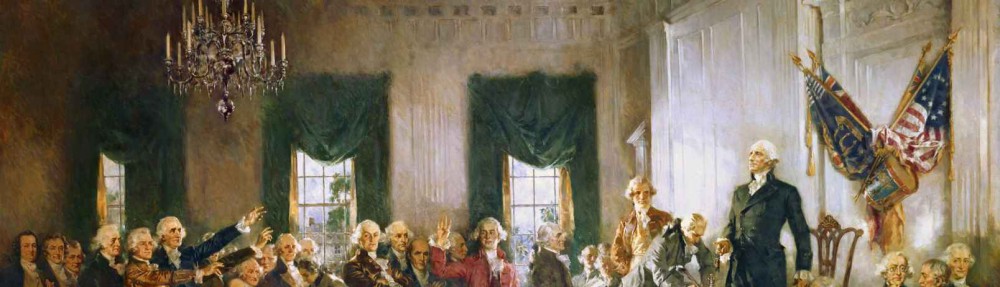
At the Philadelphia Convention, James Wilson of Pennsylvania, one of the most important architects of the Constitution, proposed that the proportion be used as a basis of apportionment. Charles Pinckney of South Carolina seconded the motion. Thus, its genesis shows it was a compromise with an opponent of slavery joining a defender to propose it. Abolition was not a possible proposal if the Constitution were to be ratified. As William Ewald, a professor at the University of Pennsylvania Law School and biographer of Wilson puts it, “the Convention would have come to a rapid end if [Wilson] had pushed for abolition.”

The Convention then defeated a proposal put forward by southern delegates to count the slaves fully for the purpose of apportionment. This motion reveals a kernel of truth in the Tennessee Representative’s position: The three-fifths proposal prevailed over one that would have given more power to the southern states.

The Compromise and Its Consequences

Wilson knew better than we do what deals had to be done for the union to be founded. To think otherwise is to engage in a kind of condescension toward the past. The greatest statesmen of any era understand the constraints under which they operate. Sadly, there was no way the Constitution could both have abolished slavery and created a union of the thirteen states.

We can consider whether it would have been better, in principle, not to have created the union at all—not to have made these compromises—by looking at future history counterfactually in a way that the Founders could not do.

If the northern and southern states had not been able to forge a union because of a failure to compromise, the most likely alternative would have been two regional compacts that resembled the Constitution in giving stronger powers than those of the Articles of Confederation to a central government. As Akhil Amar has explained, there was a geopolitical necessity to such a strengthening of government. The states needed a more effective constitutive mechanism to defend themselves against foreign powers.

But sectional compacts would have entrenched slavery for much longer. The South would not have faced the abolitionist pressures from the North. And of course, they would not have seceded from the larger union, triggering the civil war that ended slavery. More subtly, the Constitution’s creation of a commercial republic engendered a political climate that valorized free labor—an ideal that was in fundamental tension with slavery.

Another irony of the three-fifths clause is that it made possible Jefferson’s election—the so-called Revolution of 1800. That consequence was widely understood at the time when the extra electoral votes that he gained as a result of the three-fifths clause were termed the “slave power,” by those most opposed to slavery in the North. John Adams would have triumphed if the Southern states had not been able to count their enslaved populations, even at discounted rates.

While I am not by any means a partisan of Jefferson, the general view is that his victory in 1800 was one for democracy over elitism, for freedom (for those who were not slaves—and it should be noted that abolition was not yet part of the national political debate) over the tyrannical Alien and Sedition Acts. It probably also was essential to the Louisiana purchase that was the first step to the United States becoming a continental power, both because Jefferson was a more flexible negotiator than Adams and because as President, he was willing to put aside constitutional scruples over the federal authority to do so that his party would have strongly pressed had it been in opposition.

Thus, the unintended consequences of the three-fifths compromise democratized the nation’s political culture and expanded its boundaries. This sequence of events underscores a historical reality that should be emphasized in every history course: decisions have profound results that no one intended at the time. Like the effect of the three-fifths compromise on slavery, it is more proof of Kant’s dictum that “out of the crooked timber of humanity no straight thing was ever made.”

The Danger of Critical Race Theory

Rep. Lafferty’s remarks came in an attack on critical race theory. Supporters of that theory seized on his error to suggest that they showed why critical race theory is needed. But the incident shows nothing of the kind. First, his critics often got their understanding of the three-fifths compromise wrong, not recognizing that fully counting the slaves would have been worse for the cause of ending slavery. Second, while Lafferty was not correct in connecting the clause with abolitionism, the three-fifths compromise was likely one of the compromises needed to create the union, which likely ended slavery faster than the plausible alternatives. Critical race theory, which sees American history as a simple tale of racial subordination, would suppress such analysis. Third, even the three-fifths compromise is far more complex in its effects than can be captured through the prism of race. Critical race theory, like Marxist theories of history, is terribly reductionist. Party lines in history always lead to a flattening of a past’s many dimensions.

John O. McGinnis

Are You on the Take ?

Because a politically connected businessman wants more for himself, and politicians have the power to demand that developers kiss their rings, Edgewater’s dump is still a dump.

Home prices keep climbing. It’s another reason to let people build housing.

But corrupt politicians sometimes prevent that.

The little town of Edgewater, New Jersey, sits right across the Hudson River from Manhattan. A developer, Maxal Group, bought a dumpsite there and proposed building more than a thousand new waterfront apartments.

The town said no.

Why? The development would generate $12 million a year in taxes for Edgewater. To please the politicians, Maxal even offered to build parks and a school at no cost.

But Edgewater Mayor Michael McPartland and his town council rejected the parks, school, and extra tax revenue.

Instead, they spent tax money on lawyers to try to seize the property using eminent domain law. They claimed they wanted to use site to park garbage trucks.

Why would they do this? So garbage could have a beautiful view of Manhattan’s skyline?

Reportedly, they did it because they wanted to please a competing developer, Fred Daibes, says Justin Walder, lawyer for the Maxal Group in my new video.

A lawsuit he filed alleged “corrupt transactions” between Daibes and Edgewater politicians. Walder says the politicians received “undervalued rentals, loans for their business purposes through a bank that Mr. Daibes started.”

Daibes did once tell a reporter, “You can’t be in Edgewater and not be affiliated with me.”

McPartland even lived in a building owned by Daibes and paid below-market rent, said Walder.

McPartland later denied that. The mayor and city council say they denied the project because it was too big.

But “they just approved a larger project!” Walder told me.

That larger project, twice as tall as Maxal’s, was controlled by developer Daibes.

Daibes declined our requests for an interview.

Edgewater’s mayor and city council didn’t even respond to our requests.

So, I dropped in on one of their meetings.

“Are you on the take?” I asked. “Rejecting one building in favor of the one owned by the guy where you live?”

That led to awkward silence.

I continued. “Is it true that four of you are getting loans from Mr. Daibes’ bank, and is it true that you (McPartland) get a discounted apartment in Mr. Daibes’ building?”

More silence.

Then the town’s lawyer turned to the mayor and said, “As your legal counsel, I’m going to suggest and recommend that you don’t answer the question.”

The mayor didn’t. He ended the meeting.

That confrontation occurred several years ago.

John Stossel

After Stossel TV released video of that moment in Edgewater, McPartland issued a statement that said: “The complaint filed and the biased reporting are slanderous and defamatory to me and the other members of the council. I am somewhat constrained with what I can say, given this matter is in litigation. But I look forward to shining a light on these greedy and profit-only driven developers who are looking only to helicopter into Edgewater, overdevelop the site and then leave with their profits.”

The Middle East is About Religion, not Land

If you’ve seen videos of recent attacks on Jews in New York City, Los Angeles, London and elsewhere, you may have missed a very revealing aspect of those attacks. They were almost always — as they have been for decades — accompanied by curses such as, “F—- the Jews.”

Now, given that the perpetrators are almost always Muslims — whether immigrants or children of immigrants from an Arab or other Muslim country — two questions present themselves:

Why attack American or French or British Jews? And why curse “the Jews”? In other words, given that the recent wars have been between Hamas and Israel, why aren’t these attacks outside of Israel on Israelis and Israeli institutions? And why level curses at “the Jews”?

The answer is this: The Muslims who seek Israel’s destruction do so because Israel is Jewish, not because Israel occupies the West Bank or Gaza.

First, the Muslim world sought Israel’s destruction from the day Israel was established in May 1948, before it occupied a centimeter of the West Bank or Gaza.

Second, Israel does not occupy Gaza. Israel withdrew completely from Gaza 16 years ago.

Third, the Palestinians rejected a state of their own five times:

Rejection No. 1: In 1937, the British Peel Commission offered the Arabs 80% of the geographical area known as Palestine. The Jews were offered 20%. The Arabs rejected it.

Rejection No. 2: In 1947, the Arabs rejected the United Nations partition plan.

Rejection No. 3: In 1967, in the course of defeating the attempt by Egypt, Syria and Jordan to destroy Israel, Israel conquered the West Bank from Jordan, Gaza from Egypt and the Golan Heights from Syria. Most Israelis had no interest in retaining Gaza or almost any part of the West Bank except for East Jerusalem, the Jewish city in which Jews have lived for 3,000 years, from 1,400 years before Muhammad was born. The Palestinians, as the Arabs of Palestine came to be known, and all the Arab states rejected partition and peace.

Rejection No. 4: In 2000, at Camp David, Israeli Prime Minister Ehud Barak offered Palestinian leader Yasser Arafat a Palestinian state in all of Gaza and 94% of the West Bank (Set ITAL)with East Jerusalem as its capital. But Arafat rejected the offer. In the words of U.S. President Bill Clinton, Arafat was “here 14 days and said no to everything.”

Rejection No. 5: In 2008, Israel tried again. Prime Minister Ehud Olmert went even further than Ehud Barak had, expanding the peace offer to include additional land to sweeten the deal. The Palestinians said no, again.

The reason for all these Palestinian/Arab rejections of a state of their own was that it meant a Jewish state in the Middle East still existed.

The Middle East dispute has never been about land. Israel is the size of New Jersey. It is slightly larger than El Salvador. If it were the size of Manhattan, the Palestinians and many Muslim states would still seek its destruction. There are 22 Arab states in the Middle East, but there is no room for one Jewish state. There is even a state with a Palestinian majority: Jordan. The issue is not land. The issue is religion.

Why is Iran wholly preoccupied with destroying Israel? It has nothing to do with Muslim solidarity; the Iranians don’t give a damn about Palestinians. It is entirely about hatred of Jews and the Jewish state. If the Iranians cared about fellow Muslims, they would be targeting China, which is accused by the United States and other Western countries of committing genocide against the Uyghurs — a predominately Muslim ethnic group that lives in China — a charge that includes forced sterilization of Uyghur women.

Westerners want to believe it is about land — in part because they are secular and think in secular terms. And in part because they need to believe that the dispute is about land. Only then can they blame Israel. If it were about a Muslim desire to destroy the Jewish state, they could no longer blame Israel. Even worse: They would have to blame Islamist fanaticism.

Dennis Prager

Socialists are Children


Caring about the whole world is a fancy way of caring only about oneself.

In 1886, Henry James, who may be the greatest novelist of all, published what he considered at the time to be his greatest work—The Princess Cassamassima. Unfortunately, critics hated it. But it is an extraordinarily deep and penetrating novel, and it deals with a theme that is causing us a great deal of trouble at the moment—socialism.

It may be surprising that socialism was already a problem in the late 19th century, but of course Karl Marx, not to mention his spiritual predecessor, Jean-Jacques Rousseau, had already come and gone. A fresh generation of pseudo-intellectuals with too much free time on their hands was looking back on the Paris Commune of 1871 and even on the blood-soaked French Revolution with admiration, and looking forward to the time when they, too, would get to empower the underprivileged by exterminating the overprivileged.

It is difficult not to develop a deep and abiding hatred of the novel’s title character, an enormously wealthy and beautiful princess who, casting about for some meaning to the life she hates, becomes passionately devoted to social revolution and to elevating the lower classes. She is a greater destructive force than any deliberately evil character, combining her grandiose concern for the whole world with an almost limitless self-absorption.

She wants to see the worst slums of London. She wants to meet the lowest people in society—for the sake of their being low. She even wants to give up her money and luxury. And so she trades in her prime London residence for a vulgar little house with only one servant. She finds it disgusting that so many people work so hard and earn so little while others have so much more than they need.

The way the princess thinks is identical to today’s cutting-edge socialists. Except that a Bernie Sanders or an Alexandria Ocasio-Cortez manages gradually to amass wealth rather than giving it away. But there exists the same condescending attitude towards those who must work for a living, and an idea of “saving” them, not through one’s own work, but through stealing the work of others.

Suppose this 19th-century socialist visited you today, and you told the princess about life in contemporary America: The working classes no longer go hungry. They can afford places to live. In America, people of the working classes own more than one set of clothes and can afford more than one pair of shoes—several, even. Ninety-three percent of households have access to their very own carriage, which can go ten times faster and ten times farther than the horse carriages she’s familiar with, which were reserved for the rich. Even the lowest income earners can keep their homes warm in the winter. Moreover, the working classes have access to on-demand, private entertainment—the equivalent of 100,000 plays, and 1 million concerts. Even the poorest homes can afford to light a candle—the equivalent of hundreds of candles—whenever they choose. All their children get to go to school until they’re 18, and anyone who wishes to can get a college degree.

Your 1890s socialist would be knocked off her feet by a society as wonderful as this one. It represents undreamt-of success: Bravo, our princess would think: The revolution has clearly happened, and has achieved everything. More than everything! We 19th-century socialists might have hoped to improve the conditions of the poor, but we never in our wildest dreams imagined we’d get this far, not even if we’d confiscated every penny from every wealthy person in the world. How did you do it?

Then we’d have to laugh a little and say, “Well, that’s capitalism, baby. And sorry to disappoint you, but we still have people who are wealthier than everyone else. It’s just that now our poor people are more comfortable than your wealthy people were. And they live longer, too.”

The princess furrows her brow: “How long did all this take?”

“A little more than 100 years. Less, for some important bits, like novocaine for example. But we’re actually so comfortable now that we can spend our time worrying about what gender we are.”

“Well,” says the princess, “100 years is a very long time. I’m sure a proper socialist revolution would have achieved all of this much more quickly!”

And then we’d have to break it to her—how all the socialist revolutions actually went, how well they succeeded. How they produced societies powered not just by oil but by millions of slaves in labor camps (labor camps that still exist in China, North Korea, and elsewhere to this day). How tens of millions of the working class were shot. How hundreds of millions were starved. How Trotsky’s “food armies” swept over the countryside to steal the farmers’ produce to feed the city elites. How the rebelling peasants went to hide in the forests and were exterminated with history’s first use of air-dropped chemical weapons (the Tambov Rebellion, 1921). How Chinese peasant families swapped children—so they wouldn’t have to eat their own (the Great Leap Forward, 1958).

At this point, the princess wouldn’t want to hear any more. She wouldn’t believe it, no matter what you told her. She would again be in exact harmony with today’s socialists, who, despite a century of experiments and counter experiments, despite the creation of extraordinary everyday comforts in America, and despite hundreds of millions of deaths elsewhere, still refuse to consider that socialism conceivably might not work.

A socialist you argue with today might as well have died in 1890, for all the history he’s learned. For a socialist, history has no past, it exists only in the future: History is simply what is about to happen. History is what he’s going to make.

Socialists don’t give a damn about the objective conditions of the working man. Any honest assessment would have to admit that the typical American enjoys an excellent and historically superior quality of life. During any given decade of the Soviet Union, Russian workers would be willing to die—as many did—for a chance to enjoy what every American gets as standard.

Socialists claim to give a damn about the relative conditions of the working man. That is, it doesn’t matter how comfortable the average person is. What matters is the inherent unfairness of someone else being more comfortable. So while any normal observer would be astounded at how much progress America has made, and how quickly it made it, a socialist today sees society exactly as a socialist from 1890 saw his own. And a socialist 100 years from now will look at his new world and see exactly the same thing: No progress whatsoever. Socialism is immune to progress.

And in the final analysis, socialists don’t care about the relative conditions of the working man either. What a socialist really cares about are conditions relative to himself: Specifically, he cares that no one seems to understand what a gifted, special, vitally important human being he is.

Caring about the whole world is a fancy way of caring only about oneself. A social crusader sees himself as a liberator, as someone who will become a great immortal by uplifting an entire section of society. This messianic attitude explains why Marxism is woven through all companion socialisms—like Black Lives Matter race socialism or trans-rights sexual socialism—movements which should, in theory, have nothing to do with Marxism but which always do.

Socialists need only an aggrieved class. It doesn’t much matter who that class is. The operative belief is the socialist’s belief in himself—his belief that the one thing all these people need is for him to save them.

The socialist’s chosen underclass, whether it be the proletariat or a minority group or all women—is really just a damsel in distress. The most old-fashioned, most chauvinistic, most anti-leftist cliché of all: that is how a socialist sees his chosen cause. A damsel in distress can do nothing on her own, and is capable of no independent action. The damsel can do nothing to improve her own lot. She is at a permanent disadvantage; she is a victim. She has nothing to say for herself, she is in fact of no value at all except as a token or symbol—she simply waits to be rescued. And in the act of rescuing, the socialist validates his own existence. By rescuing her, in other words, he feels less worthless.

Whether a youth or an adult, a socialist is really nothing but an unhappy child. A child with every sense of self-importance, but no sense of self-worth. And that is a sad reflection on the failure of our education system, and on society’s broader failure to give our young people projects worthy of their energy and devotion.

This is from the introduction to This Deception, a memoir by reformed Soviet spy Hede Massing: “Communism in the United States has little, if any economic base. It does not primarily appeal to the poor and the downtrodden . . . . During adolescence, when children are normally fighting parental domination to walk by themselves, when they are questioning traditional beliefs, Communists separate children from parents and beliefs, and substitute Stalin for father and Marxism for religion. The Ku Klux Klan should be more fully analogized in this respect to communism.”

That was written in 1951. Stalin is dead now. What else has changed.—Dan Gelernter

Insanity in the Air

Southwest Airlines reports an unprecedented amount of passenger misconduct in the last few weeks– hundreds of incidents [reported at Fox News 5/25/21]. What’s happening? Society is going berserk. Why? Because state, local and national rulers have become authoritarian. They treat us like we’re helpless, unable to think for ourselves or act responsibly, and this is what starts to happen. Many people start to fulfill or “act out” the claim, in part because of simmering rage over the loss of freedom and the utter insanity we are being told to swallow on a daily basis. In turn, these incidents–not just on airplanes, but throughout society–will be used as an excuse to clamp down even more on our few remaining liberties. Watch and see.

Michael J. Hurd, Daily Dose of Reason

The Rise of Corporate-State Tyranny


In explaining his shift away from Maoist economics, Deng Xiao Ping, chairman of the Chinese Communist Party, described his market-oriented changes as “socialism with Chinese characteristics.” Today, American businesses, as well as the media and academic establishments that serve them, increasingly embrace what can best be described as “Chinese capitalism with American characteristics.”

A convergence between the world’s two superpowers is taking place. In the United States, as property and power further consolidate, the “diffusion of power,” so critical to democracy, erodes and autocracy develops naturally. Only players at the highest level possess the heft and the motivation to influence policy.[1] This powerful front consists of a new alliance between large corporate powers, Wall Street, and the progressive clerisy in government and media.

Its agenda consists of several goals. On the corporate front we have the emergence of “stakeholder” capitalism, which embraces the state’s priorities implicitly and those of the progressives generally, as a way to please regulators, the woke among their employers, and, to some extent, their own consciences. In this they resemble companies in authoritarian states—like Mussolini’s Italy, Hitler’s Germany, and today’s China—where private capital accumulation is permitted but dissent from the agreed norms of the media-government-academy, once the privilege of individuals and corporations, is now largely verboten.

Yet complicity in the West differs from fascist or corporate socialist standards in one important way. In wealthy societies, a large part of the corporate elite does not see widespread economic growth or rising living standards as a goal but as an impediment to meeting the demands of the “stakeholders,” who are largely defined by the clerisy, their orbit of nonprofits, cowed media, and their academic mentors. Profits are fine in this arrangement but only if they do not increase the material consumption of the populace while allowing new advantages to select racial or lifestyle minorities. The new corporatism is not bad for established capitalists but offers little to the middle or working classes, or, for that matter, to smaller independent businesses.

The New Convergence

The concentration of power in few hands, whether in the Chinese or American variant, has its true antecedents not in Marxism, as is often claimed, but in European fascism. Benito Mussolini, who viewed himself as a “revolutionary” transforming society, not a traditionalist, wanted the state to become “the moving center of economic life.”[2] He successfully co-opted Italian industrialists to build new infrastructure and the military, and he used them to fight off Italy’s historically militant and socialist-oriented unions.[3] Corporate power was essential to the ideology of fascism; it was critical to achieving its revolutionary goals. Not only did Mussolini rely heavily on large landowners and companies for his seizure of power in the run-up to the March on Rome. Once the fascists were in power, Confindustria, the leading organization of Italian industrialists, was glad to see the end of class-based chaos and welcomed the state’s infrastructure surge. This may have not made all capitalists fascists at heart but it preserved what Mussolini called “formal adherence to the regime.”[4]

Most importantly, fascist corporatism, by rejecting the autonomy of private interests, parallels today’s fashionable theories like “stakeholder capitalism” and the environmental “Great Reset.” As in the fascist state, corporations now take it on themselves to be conscious change agents for particular political and moral agendas. Two doctrines guide these actions. First, “stakeholder capitalism,” which holds that corporations must push onto society doctrines concerning gender, “systemic racism,” and other elements of the woke agenda. Second, the “Great Reset,” which seeks to have companies essentially “save” the planet by slowing material growth for the working and middle classes while maintaining rich profit opportunities through “disruption” of energy and other industries. Both doctrines currently guide the majority of America’s major corporations.

China has already followed this model, and America’s corporations are on the cusp of doing so. In China, as one scholar observes, corporatism is “a socio-political process” where monopolies flourish with the assistance and connivance of state agencies. They follow state strictures by embracing the official ideology, celebrating the Communist Party’s vision, and enforcing ideological conformity among employees and even foreign business partners.

Chinese authorities see that “a conflictual-competitive system,” like that usually dominant in America, “will hold back national economic priorities and damage the social fabric.”[5] Under the rubric of “Corporate Social Responsibility,” the state still holds the command keys, and, although entrepreneurs are allowed to get rich, they cannot deviate much from the state orthodoxy.[6]

Rather than allowing independent corporations to adopt their own agenda, as was traditionally the case in the West, Chinese corporate power kowtows to the mandarins of the Communist Party. Since 2000, a hundred billionaires—the number of Chinese billionaires in 2017 was just behind the number of billionaires in the United States and growing much more quickly[7]—from tech and other sectors sit in the country’s Communist legislation, a development that Mao Tse-Tung would never have countenanced.[8]

The Emerging American Corporate State

In China, these policies are focused around a single figure—Xi Jinping—who combines the boldness of Mussolini with the backing of the world’s ascendant economic and technological power. The Democratic Party may seek to play this role, usually in the guise of Franklin Roosevelt’s New Deal but with very different ends in mind. FDR’s New Deal was about expanding ownership and productivity while the current version is more about constricting the population and depressing their standard of living.

Indeed, the United States has been on the path toward corporate-government autocracy for some time. A recent study in the Review of Finance notes that three-quarters of American industry have become more concentrated, with both fewer and more dominant players, since the late 1990s.[9] This has been most notable not in the manufacturing sector but in nontangible fields of finance, technology, and media; all have seen growing barriers to the entry of possible competitors. A tenth of the US economy is made up of industries where four firms dominate more than two-thirds of the market, with finance and information technology now among the most concentrated.[10]

The financial sector is particularly illustrative of this trend. According to a recent study by the Federal Reserve Bank of Minneapolis, concentration of insured deposit funding among the top four commercial banks in the United States rose from 15 percent in 1984 to 44 percent in 2018, a roughly threefold increase.[11] Local banks have disappeared and been replaced by online and large national financial institutions. Between 1983 and 2018, the number of banks fell from 11,000 to barely 4,000. This is not an anomaly, but a trend.

Even more disturbing has been the rapid consolidation of power in a handful of technology and social media firms. Rather than providing benefits that spread through society as some originally had hoped, the recent rise of the Big Tech oligarchy has primarily profited a handful of investors and top corporate executives, not the workers or consumers who have faced stagnating incomes and purchasing power.[12]

The 2020 COVID-19 pandemic accelerated this autocratic pattern by shifting more business online; and it has accelerated the shift of shared personal data to the tech oligarchs on both sides of the Pacific.[13] As most businesses have struggled, the powers of the tech industry have flourished.[14]

Today, a handful of giant corporations account for nearly 40 percent of the value of the Standard and Poor Index, a level of concentration unprecedented in modern history.[15] The leftist blog The Bellows notes that last year Amazon tripled its profits and Jeff Bezos made $70 billion while billionaires had earned over $1 trillion since March.[16] Alphabet, Amazon, Apple, Facebook, and Microsoft now make up 20 percent of the stock market’s total worth.[17] Overall, in 2020, the top seven tech firms added $3.4 trillion in value.[18]

Although these companies often collude with each other,[19] they sometimes fight with each other—like the daimyo in medieval Japan.[20] Increasingly, competition is not between newcomers and established companies but among a remarkably consistent array of rich, ultrapowerful tech companies, with nearly identical upper management and financial backing. These forces are not looking for competitive capitalism but for ways to achieve 80 to 90 percent of key markets that allow for windfall profits and the accumulation of enormous wealth in few hands.[21] They increasingly lord over the commanding heights of technology, media, and information economies that so dominate the modern economy.[22]

The Progressive Embrace of Corporatism

These recent trends mark a significant break in the American tradition of individualist, competitive capitalism. In the past, companies generally viewed their primary interest as supporting their shareholders. Throughout most of the nineteenth century, America’s economy was dominated by small family-owned firms and regional companies—for example, department and grocery stores—usually focused on a single region. Although not perfect by any means, this economy was largely self-regulating as competition was often intense.

The shift to greater financial concentration allowed some companies, starting with the railroads, to achieve market power over huge swaths of the economy—like farmers who needed to ship their goods. When a surfeit of corporate power threatened national or regional interests, early progressives understandably petitioned government, local or federal, to step in. The early progressives—unlike the current Democratic Party—rose in part to limit corporate power and concentration through regulation and antitrust actions. As the progressive Supreme Court justice Louis Brandeis noted in 1941, “We can have democracy in this country, or we can have great wealth concentrated in the hands of a few, but we can’t have both.”[23]

Yet even as he wrote these words, progressivism was beginning to embrace bigness. The call for “rationalization” of, or government intervention in, the economy made sense in the midst of a depression caused in part by oversupply and too frothy capital markets. The necessities of the Second World War legitimated giant corporations as necessary to defeat the fascist powers and, later, the Soviet Union.[24]

By the 1950s and 1960s, John Kenneth Galbraith’s so-called “New Industrial State,” run largely by managers, had replaced the old buccaneering capitalists. But even if big companies dominated the economy, the rulers of the big companies in the “New Industrial State” still had to share power with others who often had very different priorities.[25] In 1960, three major American manufacturers dominated the automobile industry: General Motors, Ford, and Chrysler accounted for a whopping 93 percent of all cars sold in the United States as well as 48 percent of global sales—but they still had to deal with the New Deal legacy of regulation and, most importantly, a vital and powerful labor movement.[26]

At the same time companies also had to deal with a diversity of small shareholders; households in 1960 accounted for 90 percent of all corporate equity. That percentage is now barely one-third. The role of large mutual and pension funds, as well as of foreign investors, has waxed greatly and concentrated key economic decision-making in an ever-smaller number of hands.[27]

Not only was power less concentrated but the system worked for a broad spectrum of people. More important still, job growth was strong and workers in general benefited along with their bosses.[28] This arrangement worked for most Americans.

Over the ensuing decade, many of the alternative centers of power—local businesses, small financial institutions, and unions—all gave ground. Corporate concentration grew markedly after 1987 and through both Bush presidencies, Clinton, and Obama. In contrast to the old industrial and energy sectors, financial, tech, and social media firms have the advantage of having few unions and are frequently controlled by a few insiders who keep their founders in almost complete control.[29] Remarkably, the “party of the people” under the Obama administration protected the largest banking firms, and prevented antitrust enforcement against large corporate interests.[30] The ostensibly progressive White House presided over a continued decline in the share of income going to workers, and the growth of overweening, concentrated power metamorphosed through a series of financial arrangements that allowed even the companies behind the 2008 recession to come back with surprising ease. “Don’t blink,” suggested the New York Times’s Gretchen Morgenstern in 2012, “or you’ll miss another bailout.”[31]

Monopolistic control is critical to maintaining the enormous profit margins and unprecedented wealth of the oligarchical class. Now elite corporations can operate with virtual impunity. Rather than a competitive economy, we are seeing the emergence of what Aldous Huxley called “a scientific caste system,” where the highly credentialed and technologically dominant have almost total reign.[32] Tech oligarchs, notes the French socialist economist Thomas Piketty, see themselves not merely as business people but as exemplars whose success serves to “destroy artificial inequalities” while “highlighting natural inequalities.”[33] The new aristocracy regards itself as intrinsically more deserving of their wealth and power than the old managerial elites or the grubby corporate speculators.[34] They believe that they are not just creating value but building a better world. These are not just the rich and well-placed but also the elect.

The New Democratic Party

The current Democratic Party may represent the apotheosis of the new corporate state. It raises record sums from the corporate elite[35]—notably, the tech oligarchs[36] and their Wall Street allies.[37] Among financial firms, communications companies, and lawyers, Biden outraised Trump by five to one or more.[38] Equally important, the tech giants actively helped direct Biden’s presidential campaign,[39] providing digital savvy,[40] with Mark Zuckerberg himself financing election day operations in many critical states.[41] Time magazine’s approving exposé of the corporate elites’ scheme to unseat President Trump noted that an “informal alliance between left-wing activists and business titans” had succeeded in influencing election results through both cash donations to Democrats and manipulation of media for political ends.[42]

The oligarchs often couched their support in progressive and even patriotic rhetoric that also served their economic interests. They needed to turn back challenges posed by real progressives, like Bernie Sanders and Elizabeth Warren, who openly challenged their power.[43] Oligarchs like Jeff Bezos, through his mouthpiece the Washington Post, backed Biden and consistently denigrated Sanders.[44] They also have a great interest in reducing conflict with China, which they see as a key market and a source of supply, and they also seek to restore the flow of high-tech de facto indentured servants imported from abroad, who constitute upward of 40 percent of Silicon Valley’s high-tech workforce.[45]

The current surge of oligarchic power is supported by massive lobbying operations, now the largest in Washington, which have found allies among some right-wing libertarians, including the Cato Institute and the Heritage Foundation, which doggedly justify censorship and oligopoly on private property grounds.[46] Little attention is paid to this growing concentration of market power.

The Biden-led Democratic Party promises a fresh springtime for oligarchs. The prominence of corporate lobbyists[47] in the new administration all but assures that Biden, like Barack Obama,[48] will wink and nod[49] as Microsoft, Amazon, Apple, Facebook, and Google acquire or crush competitors, and function increasingly beyond constitutional limits of censorship to control and limit political debate.[50]

In contrast to the drama and conflict that characterized the Trump era, Biden’s regime promises an almost China-like “harmony” between the most powerful corporations and the government. In contrast to Trump’s very eclectic, if unstable, cabinet, the Biden administration follows the now predictable path of packing itself with former employees of big, connected Ivy League law firms, many with close ties to the tech industry.[51] Biden’s early appointments have, as the American Prospect reveals, profited from clients among the tech oligarchs and other major corporations.[52] A golden era of corporate collusion with government seems assured.

The Rise of Stakeholder Capitalism

Just as their counterparts in fascist Italy or contemporary China, our business elites see themselves not just as profit-seeking entrepreneurs but as conscious and empowered shapers of social reality. The now widely promoted notion of “stakeholder capitalism”holds that companies need to be judged on standards that reflect woke agendas on climate change and“systemic racism,”[53] and that they embrace the latest trends on gender issues.[54] Not surprisingly, this idea is supported by progressives and their advocacy-oriented media mouthpieces.[55]

This shift mirrors their Chinese counterparts: many corporations now see themselves as instruments of political and cultural conditioning well beyond serving customers and shareholders. Chinese social media have worked overtime to assure the world that the pandemic was not generated in China while spreading the falsehood that instead America is to blame.[56] Rather than seeing COVID-19 as a failure of Chinese society, they are using it as proof that Beijing has developed the ultimate new policy role model for addressing it.[57]

China’s rise demonstrates the power of an elite that embraces their country’s autocratic system. Most upper-middle-class Chinese, contrary to the hopes of some Western observers, are defenders of the authoritarian state since they see it as a helpful ally. As historian David Goodman observes, a sense that the “party state” works is critical to maintaining support and harmonizing business with economic objectives. Rather than being opponents of the socialist state, the top 15 percent in China strongly supports it out of their own self-interest.[58]

In America and the West, “stakeholder” capitalism increasingly resembles not the current Chinese model but something more akin to China during the Cultural Revolution a half century ago, with the rise of a “virtuocracy” based on revolutionary purity, class, and even ethnic background.[59] Similarly, employees at Google, Microsoft, and Accenture are required to ascribe to, or at least not dissent from, progressive orthodoxy, including demands by antiracists to discriminate by gender, ethnicity, and race.[60] If a manager fails to toe the line, he may find himself unable to move up and can even be fired.[61] Even advertising has turned “woke.” The razor company Gillette has produced ads that attack “toxic masculinity”; similar woke approaches have been adopted in ads from firms such as Audi, Procter and Gamble, Apple, and Pepsi.[62]

These changes, notes English intellectual John Gray, reflect in part the progressive takeover of universities, particularly the more elite ones. Gray suggests that many business leaders—and the vast majority of students at the Harvard Business School—favor what he calls “hyper-liberalism,” which is defined as a “mixture of bourgeois careerism with virtue-signaling self-righteousness.”[63] A version of the campus cancel culture, a kind of “corporate vigilantism,” has now become common in the corporate boardroom.[64] One observer notes that it also allows the wealthiest people on the planet “the benefit of sounding progressive, inclusive and egalitarian while obscuring the class interests of those pushing it.”[65] Some of the reasons also have to do with conditions closer to home. Many tech executives, notes Bay Area Council head Jim Wunderman, are “scared of their own employees,” who tend to be influenced by well-funded and relentless nonprofits and academic radicals. Even a slight departure from the approved narrative can lead to digital opprobrium, which few corporate leaders want to endure.[66]

This agenda is being pushed not only by companies but perhaps even more effectively by their fortune-blessed offspring, the well-funded charitable foundations—including those founded by the children of the fossil fuel-dependent firms like Ford and Rockefeller, as well as by monopoly capitalists like Bill Gates. These institutions almost universally embrace and promote wokeness on issues like gender, race, and climate change.[67] The next generation of plutocratic funders, like the Pritzkers, Laurene Powell Jobs, and Mark Zuckerberg, along with scores of other trustifarians, will operate in a similar fashion, funding this agenda for decades to come.

The Great Reset

In 1972, the sociologist Daniel Bell predicted a shift in elite attitudes as companies turned from making things to essentially selling ideas. He also identified the change in the nature of corporate ownership, which was moving from families to ever-larger financial institutions. These things, he noted, changed “the cultural value system.”[68] The new capitalist ideal was more “sensate,” more bohemian than traditionally bourgeois, less shaped by the Protestant ethic, family, local community, and religion. Increasingly, he predicted, the corporate class would function free of any such “moral grounding” and instead seek “status and its badges, not work”; these, he suggested, would emerge as “the mark of success.”[69] In this environment, preening and posturing are essential, as is a tendency to simply embrace whatever ideologies are adopted by the media and political leadership, whether out of firm belief or as a matter of self-protection. It is no longer enough to be successful by creating jobs and needed services. One must be thought of as virtuous by embracing fashionable, progressive morality.

Seizing on the opportunity presented by the COVID-19 pandemic, the “Great Reset,” introduced by the World Economic Forum’s Klaus Schwab, proposes that large corporations reject their traditional goals and market capitalism in favor of serving racial and gender “equity” or saving the planet. The “Great Reset” advocates the reevaluation of the principles of democracy, particularly if they are perceived as not meeting the values embraced in the “reset.” Eric Heymann, a senior executive at Deutsche Bank, suggests that to reach the climate goals of Davos, corporations will have to embrace “a certain degree of eco-dictatorship.”[70] Corporations must explicitly embrace top-down authoritarianism.

Secure in their wealth and power, the new hegemons feel little fealty to traditional ideas about competition, individual rights, and merit; some, including Bill Gates, openly endorse the notion that science and math are themselves racist for focusing on grades and performance—messages now becoming au courant in our schools.[71] Rather than seek out the best from employees, even our most celebrated entrepreneurs embrace standards, or the lack of standards, that would have made their companies’ rise unlikely.

Ironically, many of the more woke companies—the NBA, Nike, Coca-Cola, and Google, among others—see no contradiction in supporting claims of “systemic racism” and “social justice” while cooperating with Chinese authorities to abuse basic human rights in Hong Kong or to impose forced labor in Xinjiang.[72] Boldly progressive firms like Airbnb have no problems sharing customer data with China’s security state; nor does Apple show compunction in building their products with slavelike labor.[73] To the American elite one can be endlessly woke at home, while ignoring the implications, and utter hypocrisy, of their engagement with China’s corporate state.

The Class Politics of Scarcity

In the world being proposed by advocates of the “Great Reset,” particularly its environmental policy, the clear losers are the middle and working classes, many of whom are increasingly alienated from the agenda of the corporate state.[74] These groups have been devastated by the pandemic: up to 30 percent of all small businesses face bankruptcy and the ranks of the poor have grown by eight million.[75] The new regulatory and tax policies of the oligarch-friendly Biden administration could well make the creation of new grassroots ventures or new family wealth exceedingly difficult, as their per capita cost of compliance is far higher.[76]

The new corporate agenda increasingly embraces the idea of “degrowth,” a conscious slowing of economic growth at a time of increased class stagnation, by embracing the notion of austerity for the masses. This view is widely promoted by environmental groups but it also has a history of corporate support.[77] Indeed, the widely hailed Club of Rome report in 1972 was financed not by Green activists but by the Agnelli family from Fiat, once a linchpin of Mussolini’s original corporate state.[78] The Report predicted massive shortages of natural resources, slower economic growth, less material consumption, and ultimately less social mobility.[79]

It seems odd that companies would embrace slower growth, but this view is based on the notion that without massive shifts in how people consume, the planet will become uninhabitable. There’s also an element of political pressure as firms face the possibilities of protests, lawsuits, and even jail time if identified as “climate criminals.” These views have gained support in the UN and also among parts of the Democratic Party [80]

Sadly, these draconian steps are based somewhat on apocalyptic predictions that are often exaggerated or even plainly wrong.[81] The 1970s environmentalist prognosis about running out of natural resources, including energy, metals, and food, did not come true while resources became, in many cases, far more abundant than expected.[82] Yet, despite a half century of missed prophecies, the corporate embrace of limiting consumption and growth has, if anything, gotten greater. This is also reflected in the huge donations, often as high as $100 million, to environmental groups, including the Sierra Club, which received donations from moguls like Ted Turner, Michael Bloomberg, and Richard Branson.[83]

The policies advocated by these groups do offer new opportunities for Wall Street investors, Silicon Valley venture capitalists, electric car manufacturers, and renewable energy producers who have seized on opportunities to reap subsidies for producing Green, but all too often unreliable, and expensive energy. These firms, powered largely by government largesse, now constitute, in Bjorn Lonborg’s phase, “the climate industrial complex.”[84]

Yet at the same time as they enrich the already affluent, these policies tend to be directly injurious to the middle and working classes—by inflating energy and housing prices, for example, or by stifling industrial development. James Heartfield, a Marxist historian, suggests that the now fashionable “Green capitalism” represents a new ruse for the upper classes to force the middle and working classes to absorb the costs of centrally imposed scarcity, under the pretext of “human survival.”[85]

As Benjamin Friedman has argued, there’s been a long-standing connection between economic growth and social and political progress, not only financially but in terms of racial relations, family, and support for environmental improvements.[86] By contrast, “degrowth” will hold little opportunity for the mass of people, instead only leading to the sullen acceptance of what Fritz Varhenholt, a long-time environmental advocate in the German Social Democratic Party, calls “deindustrialization and loss of prosperity.”[87]

The reality of this grim future is already evident in places like California, where the climate change agenda has achieved near religious status and has produced policies that slow growth on the periphery, the one place where middle-class families could afford homes, dropping homeownership rates there for younger people far more than elsewhere—something we also see in such climate-centered environments as Canada and Australia.[88] In Britain, the government’s Climate Change Committee is now considering legislation that will make it impossible to sell single-family homes—including those built decades ago—that do not meet stringent energy standards.

For the poor, the prospects are even worse. Wherever the conventional Green policies central to the “Great Reset” have been imposed—California, Britain, Canada, Australia, Greece, Germany, France—the result has been to create high levels of “energy poverty.”[89] The Jacques Delors Institute estimated that some thirty million Europeans would not be able to adequately heat their homes during the 2020–2021 winter.[90]

Monopolizing Ideas

Getting the public to accept or at least acquiesce to diminishing living standards presents a major hurdle for oligarchic degrowth strategies. The public may be less willing than their cloistered superiors to give up their own, more modest aspirations for what is defined as “the greater good.” A recent poll questioning respondents’ policy preferences for the first one hundred days of the Biden administration showed that only 13 percent prioritized about climate change, that only 11 percent desired social justice reform, and that only 7 percent focused on foreign affairs.[91]

Efforts to sell the new corporate order will likely run into widespread and growing skepticism toward both mainstream and social media.[92] Success thus requires adopting the surveillance- and algorithmic-based propaganda now common in China.[93] America’s tech firms already assist China in deploying such technologies and they could employ them here, albeit without government control.[94]

The need to redirect people’s minds from above has been gaining adherents among the political cognoscenti. Jerry Brown, the former governor of California, openly favors applying “the coercive power of the state” to achieve environmental goals while promoting the “brainwashing” of the uncomprehending masses, a concept very much congruent with the logic behind Chinese thought control.[95] Remarkably, even prominent journalists at the New York Times and other mainstream outlets advocate ramping up further censorship, increasingly with widespread congressional support. These views may well reflect the shift in journalistic ethics, which have increasingly rejected standards of objectivity or even the need to give readers alternative views, although censoring or demonetizing competitors may also bring some financial rewards as well.[96]

Our tech firms already have demonstrated that they can indeed cut off discordant information. As Matt Taibbi has noted in the case of Hunter Biden’s incriminating computer, major outlets like NPR simply refused to cover the story while Twitter and Facebook succeeded in deplatforming the New York Post, America’s oldest newspaper.[97] Twitter and Facebook felt empowered to curb President Trump and his administration for its numerous inaccuracies, but never censored often equally absurd anti-Trump conspiracies.[98] In a remarkable act of corporate coordination, the oligarchic firms demonetized, and removed from the cloud, the Parler website, which was accused of sparking violence, although other sites, including Facebook and Twitter, played a bigger role in helping the Capitol Hill lunatics to organize.[99] Concern over such bans is shared by those like the German chancellor Angela Merkel and the Russian dissident Alexei Navalny, who have lived under autocratic regimes.[100]

Calls to control information have also been adopted by increasing numbers of prominent liberal legal scholars. For them, again, Chinese repression seems more of a role model than a cautionary tale.[101] Of course, in America, it’s not party cadres who enforce thought control but firms like Facebook and Google that seek to eliminate views—or, in Amazon’s case, to ban books or movies—that violate their worldview.[102] This censorious attitude is not just used against dissidents, crackpots, or white nationalists; it is even used against those on the Left, such as long-time environmentalist Mike Shellenberger. His offense was daring to point out the shortcomings and vast exaggerations of the Green lobby and their corporate allies.[103]

China has already shown how technology can monitor personal posts and opinions that stray from orthodoxy, often with the help of American companies.[104] Ultimately, a handful of firms in the Bay Area and the Puget Sound could employ techniques of information control and surveillance that would have delighted Stalin, Hitler, or Mao. As Aldous Huxley warned, “A thoroughly scientific dictatorship will never be overthrown.”[105]

The Great Divergence: National versus Global

The biggest difference between the two corporate states increasingly lies in business attitudes toward their host nations. The goal assigned to Chinese businesses is essentially a national one—assuring that the Middle Kingdom overcomes the West, an agenda that includes the dominance of space as well.[106] In this struggle, as economist Yi-Zheng Lian suggests, stealing technology is not only tolerated but encouraged as part of “a nation of patriotic thieves.” And if these businesses appear too powerful or independent, the regime has the power, and uses it, to restrain and even imprison them.[107]

Generally, Chinese companies work with government to expand markets and enhance national wealth.[108] This allows the Communist Party cadres to do something other than moralizing; they can point to real successes. As someone who started visiting China forty years ago, it is evident to me that the country has made enormous strides. Despite the pollution and other ill effects of urbanization, China has experienced a reduction of extreme poverty and a huge growth in monthly wages, up almost fivefold since 2006.[109] At a time when the middle class shrank in the West, China’s middle class increased enormously from 1980 to 2000, although its growth appears to have slowed in recent years.[110]

Such past record of social progress lends credence to President Xi’s “China dream” and its promises for an even better future for the average Chinese. Xi and his deputies may embrace some of the “Great Reset” notions, but not at the price of national prosperity and igniting class conflict, particularly among the 60 percent of the urban workforce who labor in the low-wage, informal economy.[111] “The very purpose of the [Chinese Communist] Party in leading the people in revolution and development,” Xi Jinping told party cadres a decade ago, “is to make the people prosperous, the country strong, and [to] rejuvenate the Chinese nation.”[112]

It is increasingly clear that national interest, or even the notion of liberal democracy, has little purchase among the leaders of America’s new corporate state. Apple’s Tim Cook, for example, waxes enthusiastically about a “common future in cyberspace” with autocratic China.[113] Wall Street actively lobbies on behalf of China, hoping to cash in on investments that strip America’s productive capacity but enrich Wall Street.[114] Oligarchs like Michael Bloomberg describe China, a country of business opportunity for his firm, as “ecologically friendly, democratically accountable, and invulnerable to the threat of revolution.”[115] Furthering his flattery, he said that that Xi Jinping is “not a dictator.”

America’s corporate elite has suggested—in ways China’s ruler would likely never be so foolish to countenance—an inexorable “globalization” that, as a recent OECD report reveals, thrives largely at the expense of the middle and working class but benefits its wealthiest citizens.[116] As the left-wing American Prospect notes:

China noticed this aspect of our economic philosophy and, at some point in their dalliance with Western capitalism, the Chinese Communist Party figured out that corporations and individuals, not the government, control nearly everything in America. Natural resources, intellectual property, entertainment, culture, ideas. And when China paired that knowledge with their observation of our intense duty to individual self-interest, the hack was born: Make it profitable for individuals, institutions, organizations, or shareholders, and they will hand the keys of the American castle over to China one piece at a time without thinking twice. In fact, it will be their social responsibility to do so.[117]

Contradictions: The Corporate State and the Socialist Left

The increasingly obvious abandonment of the nation by its elite could pose an existential threat to the durability of the corporate state. Certainly, more radical elements, including Black Lives Matter, who receive large funding from the oligarchs, may not long be satisfied with virtue signaling by corporate chieftains. Indeed, without the unifying menace of Trump, as Christopher Caldwell noted in the New Republic, the “national front” forged by Biden—which includes near unanimous support from the corporate state—could unravel.[118] Driven by ideology, the progressive movement could morph in directions that resemble those of the Jacobins of the French Revolution, with their disdain for “the privacy of individual citizens” as well as their desire to remove heads, or the Red Guards unleashed during the Cultural Revolution in China, who were initially embraced even by “moderate” leaders like Deng in the late 1960s.[119]

The gap between aristocratic piety and consumptive excess may not play well long-term among outraged zealots from the Left. Many Green activists have long been hostile to classical liberalism and capitalist enterprise.[120] Radicals like Representative Alexandria Ocasio-Cortez do not distinguish between “good” billionaires and “bad ones.”[121] They do not believe billionaires should exist at all. In this respect they reflect the notion endorsed by Barry Commoner, one of the founding fathers of modern environmentalism, that “capitalism is the earth’s number one enemy.”[122]

Ultimately, the woke oligarchs may find that they have virtue signaled their way to a confiscatory form of socialism. Among grassroots Democrats in the plutocrat-funded Democratic Party there is now more support for socialism than capitalism. Confiscatory wealth taxes, and a huge boost in capital gains taxes on the rich are being widely embraced in the very high-tech heartlands of Washington state and California, where there’s even a growing socialist movement among employees in Silicon Valley. One wonders if the owners of the Petrograd steel works in 1917 felt the same when they saw their workers holding up red flags and cheering Lenin and Trotsky.

Contradictions Over Class and Culture

At the same time, the corporate state faces a grassroots challenge, usually associated today with the Right. The attempts to curb companies in the fossil fuel, real estate, aviation, and automobile sectors for climate reasons may not appeal much to oil riggers, factory employees, or construction workers who drive old trucks.[123] These workers also will find out that most Green jobs turn out to be mainly ephemeral, essentially positions that are already present and, where they actually exist, pay far lower salaries, are usually shorter-term, and are far less likely to be unionized, particularly as compared to the roughly 750,000 high-paying jobs in the fossil fuel sector.[124]

Not surprisingly, rapid decarbonization has elicited opposition not only from conservatives but from unions—and not only in energy but also in manufacturing, construction, and logistics. Already a handful of Democrats, such as Ohio’s Tim Ryan, see the current fusion of corporate and political interest as essentially an abandonment of their constituencies.[125] Indeed, even in minority communities—particularly those hurt by Green policies and the strict lockdowns in some states—many shifted more toward Trump in 2020.[126]

Other parts of the elite agenda—for example, the notion of forcibly densifying suburbs and restricting single-family zoning—are also not likely to play well with the general public. Homeownership, the primary way middle- and working-class people achieve wealth, is often decried by progressives, while many on Wall Street look forward to a fully “rentership” society. Oligarchs, living in unimaginable splendor, may want the plebs to live in rented, small apartments in their “degrowth” universe, but this is not likely to be a popular stance.

The corporate state’s embrace of cultural radicalism, in Hollywood and elsewhere, also could prove combustible.[127] Using schools to indoctrinate young people to see America as a systemically flawed society may not appeal to those who did not attend the primary centers for elite indoctrination like the Ivy League, Berkeley, or Stanford. One can comfortably genuflect to intersectionality in Manhattan or Malibu but, according to one recent survey, barely 8 percent of the population embraces the political correctness agenda, with most, including most minorities, seeing it as a “problem.”[128]

New Alliances, a New Resistance

The dangers spelled out above are not ideological but constitute a threat of autocracy that has more in common with Mussolini’s Italy or contemporary China or Russia than with Western neoliberal states. You can still become rich in such systems, but that is dependent on compliance with the official ideology. Corporate executives, who may once have been devotees of free markets and ideas, now find it more congenial to play along with the state, which they also endeavor to control through campaign finance and the manipulation of information.

Yet, at least for now, our constitution provides some room for action. Strong actions to break up or at least restrain the acquisitions of the largest firms—notably, in tech and finance—are a viable response. Breaking up these firms, or turning them essentially into regulated utilities, also makes sense. Certainly, other actions to guarantee free speech rights and to preserve some degree of local autonomy have appeal across the political spectrum.

There is a political opportunity here. Opposition to the clear shift to domination by the economic few could provide the basis for a potential alliance between traditional conservatives, who are concerned with issues of market forces, family, and free speech, and those on the Left and in parts of organized labor, who fear the overweening power, and detest the vast wealth, of the corporate elites.[129] Conservatives who may traditionally oppose government controls on business may find common cause with socialists worried about allowing so much power to be concentrated in so few hands.[130]

In the end, the key lies with the engagement of the middle and working classes, whatever their race or even political views. The Main Street merchant, the small bank, and the independent artisan need to unite against the overweening power and self-confidence of the corporate state. Future American prosperity, given the nature of our society and our history, cannot be controlled from the center, but must be allowed to bubble up to the surface.[131]

We have not yet reached Huxley’s Brave New World or even China’s high-tech police state, though we are headed in that direction. Our classes are not yet fully shaped by the whims of cadres or determined in birthing vats. The sinews of civic culture to some degree remain—churches, independent journals, local associations, small businesses—that can flex against the imposition of a “scientific dictatorship.” But the battle against the corporate state can only succeed if citizens put aside their political blinders and understand that the consolidation of political and economic power represents a fundamental challenge to maintaining a functional, as opposed to a merely nominal, democracy. This is neither a right- nor a left-wing issue but an imperative if we wish to preserve our Republic before it is too late.

Joel Kotkin

Bibi and Hamas–the Only Winners

“Israel is winning the battles, but Hamas is winning the war.”

So ran the headline in the Jerusalem Post atop an analysis of the Gaza war, which began, “The IDF is registering great achievements in Operation Guardian of the Walls, but meanwhile the house appears to be collapsing from within.”

Hard to disagree.

Consider this New York Times commentary about Israel’s prime minister from the runner-up to the Democratic presidential nominee in the primaries of 2016 and 2020, Sen. Bernie Sanders:

“Mr. Netanyahu has cultivated an increasingly intolerant and authoritarian type of racist nationalism …(and) legitimized these forces … by bringing them into the government. … Racist mobs that attack Palestinians on the streets of

Jerusalem now have representation in its Knesset.”

Sanders’ wing of the party is moving toward the Palestinian side of the conflict. “Israeli air strikes killing civilians in Gaza is an act of terrorism,” says Rep. Ilhan Omar of Minnesota.

Tweets Michigan’s Rep. Rashida Tlaib: “Israel targeting media sources is so the world can’t see Israel’s war crimes led by the apartheid-in-chief Netanyahu. It’s so the world can’t see the killing of babies, children and their parents. It’s so the world can’t see Palestinians being massacred.”

Wisconsin Rep. Mark Pocan concurs: “We cannot just condemn rockets fired by Hamas and ignore Israel’s state-sanctioned police violence against Palestinians — including unlawful evictions, violent attacks on protestors & the murder of Palestinian children … US aid should not be funding this violence.”

While Israeli attacks are killing Hamas commanders and destroying the sites from which Hamas has fired 3,000 rockets, Israel is suffering serious and intangible losses.

Palestinians in Jerusalem and on the West Bank have risen in solidarity with Arabs and Muslims in Gaza. A dozen were slain last week.

Arab citizens of Israel are daily fighting Jews in cities like Jaffa, Acre and Lod. Writes the Post: “With riots shaking all parts of Israel,” the country “is being torn apart from within.”

Beyond Gaza, Jerusalem, the West Bank and Israel, Lebanese and Jordanians are protesting on the border. In U.S. and European cities like Berlin, London, Paris and Madrid, protesters numbering in the thousands and tens of thousands are marching in solidarity with the Palestinians and condemnation of Israel as a racist and an “apartheid” regime.

Saturday’s morning attack that brought down Gaza’s 12-story tower that housed the Associated Press and Al Jazeera caused a backlash in much of Western media against Israel, which claims the building contained an Hamas intelligence center and was a legitimate target.

House Speaker Nancy Pelosi and President Joe Biden have come out in defense of Israel’s right to attack sites from which rockets are being fired into Israel. Senate Majority Leader Chuck Schumer, however, has been more muted in backing Israel’s attacks on Gaza.

The GOP seems more solidly behind Israel. More than three dozen Senate Republicans last week urged Biden to “unequivocally” support Israel’s right to defend itself and to “immediately” end negotiations with Iran on sanctions relief, charging Tehran with supporting terrorist activity by Hamas against Israel.

In a letter to Biden, 44 Republican senators wrote:

“Over the past couple days, Palestinian terrorists in Gaza, who are funded by Iran, have launched a series of rocket attacks into Israel. They are targeting Israeli civilians and cities, including Israel’s capital Jerusalem.”

Where Israel goes from here, however, is currently unclear.

President Donald Trump’s Abraham Accords, in which the UAE, Bahrain, Morocco and Sudan established relations with Israel, appear now to be on hold.

For, on Sunday, a statement by the 57-nation Organization of Islamic Cooperation called for an immediate halt to what it described as Israel’s barbaric attacks on Gaza and blamed “systematic crimes” against the Palestinians for the fighting which has lasted for a week.

The OIC statement came after a virtual meeting in which Saudi Arabia condemned Israel’s violation of the sanctity of Muslim holy sites and evictions of Palestinians from their homes in East Jerusalem.

Clearly, the principal winner from this conflict is Bibi Netanyahu, who was within days of being replaced as prime minister by an opposition coalition when fighting erupted. He is now seen by Israelis as a decisive war leader, defending the country from thousands of rockets and severely pushing the enemies firing those rockets.

As for the two-state solution to which the world has been committed for decades, that prospect seems further from reality than ever.

Having seen what Hamas is capable of and willing to do, what Israeli will be eager to enter a peace agreement with the Palestinians that would mean vacating much of the West Bank, sharing Jerusalem as the capital of both countries, and a Palestinian right of return to lands from which their families were driven in the 1948-1949 Israeli War of Independence, which Palestinians remember as the Nakba, or catastrophe.

A military truce may be at hand, but that is all it will be — a truce before the next round of fighting.

Patrick J. Buchanan is the author of “Nixon’s White House Wars: The Battles That Made and Broke a President and Divided America Forever.”

For the 100th Time: Lock Her Up

Governor Gretchen Whitmer of Michigan was recently busted for not wearing a mask in a crowd of people — in violation of her own never-ending mask mandates for the state of Michigan.

In the therapy field we say, “You can’t NOT communicate.” And one of my personal mottos has always been: Don’t listen to words; listen to actions. When words and actions conflict, the actions will tell you the truth. Need I say more? As Michigan residents know better than anyone, this woman is a TOXIC TYRANT. She should be hauled off to prison and tried for brutal violations of her state’s Constitution, not to mention the U.S. Bill of Rights.

She has literally murdered people through her insane restrictions on daily life for no real reason and she used a mostly non-fatal virus as an excuse to practice dictatorship. Her online “apology” is about as meaningful as the “apology” of a spouse abuser promising not to ever do it again (after the 53rd offense). The people of Michigan should rise up and do what needs to be done: Remove her from power, and prosecute the hell out of her.

Michael J. Hurd, Daily Dose of Reason

How American Journalism Became A Mouthpiece Of The Deep State

Reporters joke that the easiest job in Washington is CIA spokesman. You need only listen carefully to questions, say, “No comment,” and head to happy hour. The joke, however, is on us. The reporters pretend to see only one side of the CIA, the passive hiding of information. They meanwhile profit from the other side of the equation, active information operations designed to influence events in America. It is 2021 and the CIA is running an op against the American people.

Leon Panetta, once director of CIA, explained bluntly that the agency influenced foreign media outlets ahead of elections in order to “change attitudes within the country.” The method was to “acquire media within a country or within a region that could very well be used for being able to deliver a specific message or work to influence those that may own elements of the media to be able to cooperate, work with you in delivering that message.” The CIA has been running such ops to influence foreign elections continuously since the end of WWII.null

The goal is to control information as a tool of influence. Sometimes the control is very direct, operating the media outlet yourself. The problem is this is easily exposed, destroying credibility.

A more effective strategy is to become a source for legitimate media such that your (dis)information inherits their credibility. Most effective is when one CIA plant is the initial source while a second CIA plant acts seemingly independently as a confirming source. You can push information to the mainstream media, who can then “independently” confirm it, sometimes unknowingly, through your secondary agents. You can basically write tomorrow’s headlines.

Other techniques include exclusive true information mixed with disinformation to establish credibility, using official sources like embassy spokesmen “inadvertently” confirm sub details, and covert funding of research and side gigs to promote academics and experts who can discredit counter-narratives.

From the end of WWII to the Church Committee in 1976, this was all dismissed as a conspiracy theory. Of course the U.S. would not use the CIA to influence elections, especially in fellow democracies. Except it did. Real-time reporting on intelligence is by nature based on limited information, albeit marked with the unambiguous fingerprints of established tradecraft. Always give time a chance to explain.

Through Operation Mockingbird the CIA ran over 400 American journalists as direct assets. Almost none have ever discussed their work publicly. Journalists performed these tasks for the CIA with the consent of America’s leading news organizations. The New York Times alone willingly provided cover for ten CIA officers over decades and kept quiet about it.

Long term relationships are a powerful tool, so feeding a true big story to a young reporter to get him promoted is part of the game. Don’t forget the anonymous source who drove the Watergate story was an FBI official who through his actions made the careers of cub reporters Woodward and Bernstein. Bernstein went on to champion Russiagate. Woodward became a Washington hagiographer. Ken Dilanian, formerly with the Associated Press and now working for NBC, still maintains a “collaborative relationship” with the CIA.

That’s the tradecraft. The problem for America is once again the tools of war abroad have come home, just the same as when post-9/11 the NSA turned its antennas inward. The intelligence community is currently operating against the American people using established media.

Some of it can’t be more obvious. The CIA always planted stories abroad for American outlets to pick up. To influence public opinion they lied to journalists in the run up to the 2003 Iraq war. The agency works directly with Hollywood to control movies about itself.

Turn on any of the advocacy media outlets and you see panels of former CIA officials. None however is more egregious than John Brennan, former director, who for years touted Russiagate when he knew from information gathered while he was still in office that it was all fake. Brennan probably leaked the foundational lie alleging Trump was dirty with Russia to the press in January of 2017 as the kickoff event to the info op still running today.

Brennan’s role is more than speculation. John Durham, the U.S. attorney leading the ongoing “how it happened” Russiagate investigation into the intelligence community, has requested Brennan’s emails and call logs from CIA. Durham is also examining whether Brennan changed his story between his public comments (not under oath: say anything) and his May 2017 testimony to Congress (under oath: watch out for perjury) about the dossier. Reporter Aaron Mate is less delicate, laying out the evidence Brennan was “a central architect and promoter of the conspiracy theory from its inception.” Even blunter is Senator Rand Paul, who directly accuses Brennan of trying “to bring down a sitting president.”

How that worked helps show how info ops intertwine with covert ops. Justice Department Inspector General Michael Horowitz’s report shows the FBI unleashed a full-spectrum spying campaign with the primary document of the information op, the Steele Dossier, as an excuse. Dossier author and ex-British intel officer Christopher Steele also created a textbook information loop to publicize his work, secretly becoming his own corroborating source.

The Horowitz report also shows it was a 5 Eyes team effort; Australian diplomat Alexander Downer, a man with ties to his nation’s intel services, arranged a meeting with Trump staffer George Papadopoulos to set in motion FISA surveillance. British GCHQ monitored Trump officials and passed info to the NSA. The op used CIA assets, shadowy academics Stefan Halper and Joseph Mifsud, as dangles. There was even a honey trap with a female FBI undercover agent inserted into Israeli-arranged social situations with a Trump staffer.

It was all based on nothing but disinformation and the American press swallowed every bit of it to falsely convince a vast number of citizens their nation was run by a Russian asset. Robert Mueller, whose investigation was supposed to propel all this nothing into impeachment, ended up exercising one of the last bits of political courage Americans will ever see in walking right to the edge of essentially a coup and refusing to go one step more.

The CIA is a learning institution, and it recovered well from Russiagate. Details can be investigated. That’s where the old story fell apart. The Steele Dossier wasn’t true. But the a-ha discovery was the realization that since you’ll never formally prosecute anyone, you don’t need to bother with evidence when you can just throw out accusations. The new paradigm let the nature of the source—the brave lads of the intelligence agencies—legitimize the accusations. Go overt and let the unexpected prestige of the CIA as progressive heroes substantiate things. It worked.

So in December 2017 CNN reported Donald Trump, Jr., had advance access to the WikiLeaks archive. Within an hour, NBC’s Ken Dilanian and CBS both claimed independent confirmation. It was a complete lie. How do you confirm a lie? Ask another liar.

In February 2020, the Office of the Director of National Intelligence (ODNI) briefed the House Intelligence Committee the Russians were election meddling again to favor Trump. A few weeks earlier, the ODNI briefed Bernie Sanders the Russians were also meddling in the Democratic primaries in his favor. Both briefings were leaked, the former to the New York Times to smear Trump for replacing his DNI, the latter to the Washington Post ahead of the Nevada caucuses to damage Sanders. Who benefits is always a good question. The answer was Joe Biden.

In June 2020 the New York Times stated the CIA concluded the Russians “secretly offered bounties to Taliban-linked militants for killing coalition forces in Afghanistan — including targeting American troops.”  The story ran near another claiming Trump had spoken disrespectfully about fallen soldiers. Neither was true. But they broke around Trump’s announcement about withdrawing troops from Afghanistan and were aimed at discouraging pro-military voters.

Earlier this month the Washington Post, citing anonymous sources, claimed the FBI gave a defensive briefing to Rudy Giuliani in 2019, before he traveled to Ukraine. Giuliani supposedly ignored the warning. The story was “independently confirmed” by both NBC and the New York Times. It was totally false.

We are left to wonder how all these media outlets keep making the same mistakes with sources and only in disfavor to Trump, et al., and never the other way. They have become a machine as trustworthy as the spies they rely on.

The American system always envisioned an adversarial role for the media. One of the earliest challenges to freedom of the press was the colonial-era Peter Zenger case, which established the right of the press to criticize politicians free from libel charges. At times when things really mattered, men like Edward R. Murrow worked their craft to preserve democracy. Same for Walter Cronkite reaching his opposition to the Vietnam War, and the New York Times reporters weighing imprisonment to publish the Pentagon Papers.

In each of those instances the handful of reporters who risked everything to tell the truth were held up as heroes. Seeing the Times fighting for its life, the Washington Post co-published the Pentagon Papers to force the government to make its case not just against a rival newspaper, but the 1A itself.

Not today. Journalism is devoted to eliminating practitioners unwilling to play the game. Few have been targeted more than Glenn Greenwald (with Matt Taibbi as runner up.)

Greenwald exploded into a journalistic superhero for his reporting on Edward Snowden’s NSA archive, founding the Intercept to serve as a platform for that work. Then something very, very odd made it appear the Intercept outed one of its own whistleblower sources. Evidence suggests the source was a patsy, set up by the intel community, and exposed via Matt Cole, one of the Intercept journalists on this story. Cole was also involved in outing CIA officer John Kiriakou as a source on torture. Whistleblowers were made to think twice before turning to the Intercept.

Greenwald’s later criticism of the media for accepting Deep State lies as truth, particularly concerning Russiagate, turned him into a villain for progressives. MSNBC banned him, and other media outlets ran smear stories. He recently quit the Intercept after it refused to publish his article on Hunter Biden’s ties to China unless he deleted portions critical of Joe Biden.

Greenwald wrote:

the most significant Trump-era alliance is between corporate outlets and security state agencies, whose evidence-free claims they unquestioningly disseminate… Every journalist, even the most honest and careful, will get things wrong sometimes, and trustworthy journalists issue prompt corrections when they do. That behavior should be trust-building

But when media outlets continue to use the same reckless and deceitful tactics — such as claiming to have “independently confirmed” one another’s false stories when they have merely served as stenographers for the same anonymous security state agents while “confirming” nothing — that strongly suggests a complete indifference to the truth and, even more so, a willingness to serve as disinformation agents.

After decades of success abroad with info ops, the CIA and others turned those weapons on us. We are seeing the Deep State meddle in presidential politics, simultaneously destroying (albeit mostly with their cooperation) the adversarial media while crushing faith in both our leaders and in the process of electing them. Democracy has no meaning here.

Peter Van Buren is the author of We Meant Well: How I Helped Lose the Battle for the Hearts and Minds of the Iraqi PeopleHooper’s War: A Novel of WWII Japan, and Ghosts of Tom Joad: A Story of the 99 Percent.null

[Pics] School expels teen over outfit, regrets it when they see who dad is
Thanks To This Unique Offer, Seniors Can Affordably Replace Their Old Tub In As Little As 1 Day
[Photos] Barbara Eden Turns 89, This Is Her Now
Famous Movies Lines That Were Ad Libbed
[Pices] The Most Accurate War Movies Of All-Time
[Photos] Traci Lords Is 53 & This Is How She Lives Now

Sponsored Content

Recommended byhttps://lockerdome.com/lad/13045197114175078?pubid=ld-dfp-ad-13045197114175078-0&pubo=https%3A%2F%2Fwww.theamericanconservative.com&rid=&width=652

https://disqus.com/embed/comments/?base=default&f=tac1&t_i=&t_u=https%3A%2F%2Fwww.theamericanconservative.com%2Farticles%2Fspies-journalists-and-info-ops-against-america%2F%3Futm_source%3DFFF%2BDaily%26utm_campaign%3D8a8e0fa741-FFF%2BDaily%2B05-24-2021%26utm_medium%3Demail%26utm_term%3D0_1139d80dff-8a8e0fa741-318078877&t_e=&t_d=How%20American%20Journalism%20Became%20a%20Mouthpiece%20of%20the%20Deep%20State&t_t=How%20American%20Journalism%20Became%20a%20Mouthpiece%20of%20the%20Deep%20State&s_o=default&l=en#version=3413adea966d34cbf861a9e4eda8ee02

Older Posts

FOREIGN AFFAIRSPOLITICSAnother Opinion Columnist Pushing War With Iran Who Doesn’t Actually ExistThe fake opinion columnists primarily targeted right-of-center outlets receptive to a hawkish line against IranPAUL BRIAN AND ARTHUR BLOOM SEPTEMBER 2, 2020

Get a roundup of the most important and intriguing stories from around the world, delivered to your inbox every weekday.

1. Make a Donation

2. Join our Newsletter

Email Address

3. Subscribe to our Magazine

null

Our Public Health System is Utterly Corrupt

A sure sign of a country’s collapse is the open corruption of its public and private institutions. When corruption no longer has to be hidden but can be openly flouted, the values and standards that comprised the country’s soul have eroded away.

Try to find an American institution that is not corrupt. Even when presented with the Covid threat the US public health system could not rise above the greed for profit. Effective cures, such as HCQ and Ivermectin were demonized and in many states prohibited. Most Covid deaths are the result of non-treatment.

Throughout the alleged “Covid Pandemic” regulatory agencies, health bureaucracies, medical associations, state governors, media, and Big Pharma have acted to prevent any alternative to a vaccine.

From day one the emphasis was on the profits from a vaccine. To get people to submit to an experimental and untested vaccine required the absence of cures. To keep the road open only for a vaccine even supplements such as NAC, which has shown effectiveness as both preventative and treatment of Covid, has been challenged by the FDA in its use as a supplement. In response, amazon.com, a major online marketer of dietary supplements removed NAC from its offerings. https://www.lewrockwell.com/2021/05/no_author/fda-protects-covid-19-vaccine-makers-seeks-withdrawal-of-competing-dietary-supplement/

The generation of fear was essential to stampeeding people to line up to be vaccinated. The fear was supplemented by threats of inability to travel, to attend sports events, to resume working at one’s job.

A Covid test, known as PCR, was intentionally run at high cycles known to result in a very high percentage of false positives. These false positives guaranteed a high infection rate that scared people silly. Economic incentives were used for hospitals to report all deaths as Covid deaths, thus greatly exaggerating Covid’s mortality.

As you might have noticed, last winter had no reporting of flu cases as flu was added to the Covid statistics.

A number of reports have been published that the Covid vaccine does not prevent some vaccinated people from coming down with Covid. Other reports say that vaccinated people become spreaders of Covid. There are also reports of a large number of deaths and injuries from the Covid vaccine. https://www.paulcraigroberts.org/2021/05/22/covid-vaccine-more-dangerous-than-covid/

In order to suppress the facts and keep the Covid vaccine selling, the Center for Disease Control (CDC), which supported running the PCR test at high cycles in order to inflate the number of Covid cases, runs the PCR test at much lower cycles in the case of infected vaccinated people in order to minimize the number of vaccinated people who came down with Covid.

To further create an artificial picture of the vaccine’s effectiveness, asymptomatic and mild infections are excluded from the reporting of vaccinated people who catch Covid. Only vaccinated people who catch Covid who have to be hospitalized or die from Covid are counted among the people who caught Covid despite being vaccinated. However, unvaccinated people with only minor symptoms or false positives from a high cycle PCR test are added to the number of Covid cases. https://www.zerohedge.com/covid-19/caught-red-handed-cdc-changes-test-thresholds-virtually-eliminate-new-covid-cases-among

See also: https://off-guardian.org/2021/05/18/how-the-cdc-is-manipulating-data-to-prop-up-vaccine-effectiveness/

This is obvious and blatant manipulation of statistics in order to scare people about Covid while reassuring them about the vaccine’s effectiveness. Overstating the number of cases among the unvaccinated while simultaneously understating the number of people who caught Covid despite being vaccinated is shameless and protects the contrived picture of the safety and effectiveness of the vaccine.

The falsification of statistics in order to produce massive public fear and the prevention of treatment with known safe and effective cures in order to maximize death rates produced billions of dollars in profits for Big Pharma and associated industries, with Moderna’s CEO topping the list of nine new billionaires made rich from the rollout of Covid vaccines. These billionaires rode to their riches on the deaths of hundreds of thousands of people who died from an enforced lack of treatment —mandated deaths to protect vaccine profits. https://www.rt.com/news/524294-vaccine-billionaires-patent-waiver/

Will anything be done about this extraordinary corruption of the American public health system?