The Eclipse of Europe

For centuries up to and including the 20th, Europe seemed the central pivot of world history.

Then came the Great Civil War of the West, our Thirty Years’ War (1914-1945), where all of the great European powers — Britain, France, Germany, Italy, Russia — along with almost all of the rest, fought some of history’s greatest battles.

Result: Europe’s greatest nations were all bloodied. All of Europe’s empires fell. The colonial peoples were all largely liberated and began the great migration to the mother countries. And Europe was split between a U.S.-led West and a Moscow-dominated Soviet bloc.

Yet, even during that four-decade Cold War, Europe was viewed as the prize in the struggle.

By the time that Cold War ended in triumph for the Free World, a European Union modeled on the American Union was rising, and almost all of Europe’s newly freed nations began to join the NATO alliance.

Yet one senses today that Europe’s role in world history is passing, that the American pivot to China and the Indo-Pacific is both historic and permanent, and that as the past belongs to Europe, the future belongs to Asia.

Asia, after all, is home to the world’s most populous nations, China and India; to six of the world’s nine nuclear powers; and to almost all of its major Muslim nations: Indonesia, India, Pakistan, Bangladesh, Turkey and Iran, as well as to the world’s largest economies outside the USA: China and Japan.

And Europe?

In 2016, Great Britain voted to withdraw from the EU. This summer, the British joined the Australians and the U.S. in an AUXUS pact that trashed a cherished French deal to build a dozen diesel-powered submarines — and to replace them with British- and U.S.-built nuclear-power subs.

Paris saw this as a “betrayal,” a “stab in the back” by allies whom Gen. Charles De Gaulle had disparaged as “les Anglo-Saxons.” Yet AUXUS was also an undeniably clear statement as to where the Australians saw their future, and it was not alongside France, but the USA.

Still, this was the worst U.S. affront of our French ally since President Dwight Eisenhower ordered the British and French out of Suez.

But, at least then, Ike could say in 1956 that he had not been alerted to the British-French invasion of Egypt and that our NATO partners had acted without his knowledge or consent.

To protest the treatment of France in the submarine deal, President Emmanuel Macron recalled his ambassador to the U.S., something that had never been done since France recognized the American colonies and came to their aid during our War of Independence.

Indeed, the submarine agreement forced cancellation of a grand party at the French embassy in Washington, D.C., to celebrate the 240th anniversary of the Battle of the Capes.

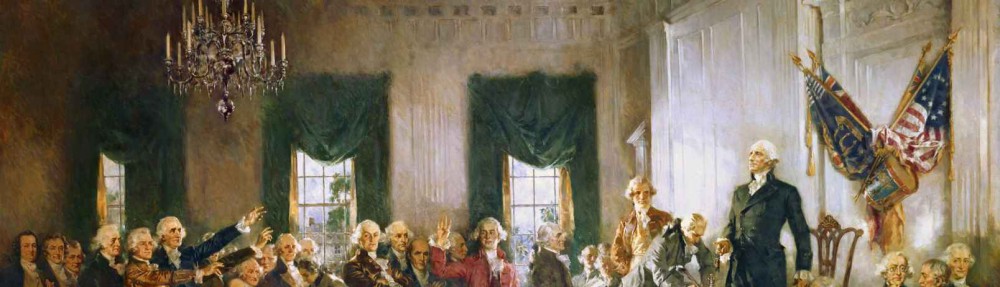
This was the critical British-French naval battle at the mouth of the Chesapeake in 1781, where a French fleet prevailed, enabling it to provide Gen. George Washington’s army cover as it surrounded, shelled and compelled the surrender of Gen. Lord Cornwallis’ army at Yorktown.
But if the British are out of the EU, and the French are estranged from their NATO allies, Germany yesterday held an election, where, for the first time in its history, the Christian Democratic Union of Konrad Adenauer, Helmut Kohl and Angela Merkel was reduced to a fourth of the national vote.

The new leader of Germany, after months of negotiations, may be the leader of the Social Democrats, in concert with the Greens. But even that government may not be cobbled together by Christmas.

Neither of the prospective chancellors for the Christian Democratic Union or the Social Democratic Party has the stature of Merkel, who has been both leader of Germany for the last decade and a half but also de facto leader of Europe.

And consider the present condition of NATO, once celebrated as the most successful alliance in history for having deterred any Soviet invasion of NATO Europe for the entire Cold War.

In 2001, invoking Article V about an attack on one being an attack on all, NATO joined the Americans in their plunge into Afghanistan to deal with the perpetrators of 9/11.

This August, 20 years later, all our NATO allies pulled out as the Afghan army crumbled and vanished and the Afghan regime collapsed. Our NATO allies thus shared in the ignominy of the American retreat and defeat.

Not only is the center of political gravity shifting from Europe to Asia, European unity seems a thing of the past.

As Britain has left the EU, Scotland is considering secession from England. Catalonia is still thinking of secession from Spain. Sardinia is considering secession from Italy. Poland and Hungary are at odds with the EU over domestic political reforms said to be in conflict with the demands of the bureaucrats in Brussels.

As for the southern-tier EU and NATO nations, Spain, Italy and Greece, their main concern is less an invasion by Russia than the ongoing invasion from across the Mediterranean from Africa and the Middle East.

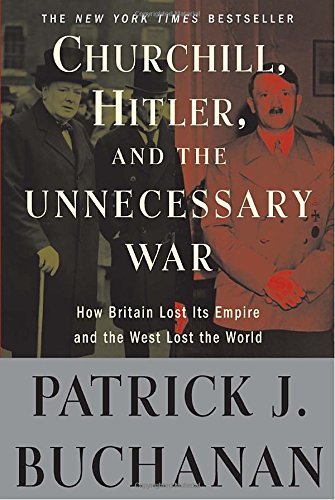
Patrick J. Buchanan is the author of “Nixon’s White House Wars: The Battles That Made and Broke a President and Divided America Forever
Is There a Revolutionary Movement Developing in Europe ?

U.S. media provides little news of Europe. What is provided is strictly “narrated.” Consequently, Americans are unaware of what seems to be a spontaneous, leaderless, popular uprising against mandated lockdowns and masks. There are large demonstrations in Germany, and they have spread to Vienna and to Copenhagen. The people have more sense than the public authorities and reject the Covid mandates.

In The Netherlands, the Hague Court has ruled that the Covid curfew has no legal basis and “is a far-reaching violation of the right to freedom of movement and privacy and limits, among other things, the right to freedom of assembly and demonstration.” https://www.rt.com/news/515699-hague-court-dutch-covid-curfew/

Klaus Madersbacher, proprietor of the antikrieg.com website, thinks that Germans are associating the fear-based campaign that is asserting new government controls over people’s lives and activities with an American hegemonic agenda. He believes that it is a revolutionary mass movement that should now become organized under leadership in order to achieve the independence of countries and their peoples.

One wonders if insouciant Americans are capable of a revolutionary temperament or whether the only protests Americans will witness are the Establishment-funded Antifa and BLM riots that loot and burn private businesses.

Here is Madersbacher’s analysis of what he is witnessing:

A New Revolutionary mass movement

Klaus Madersbacher

QUERDENKEN is a revolutionary mass movement directed against the US-controlled German regime, similar in essence to the revolution of the Iranian people in 1978 against the US-run dictatorship of the Shah in Iran. It should be emphasized that the Iranian revolution was a peaceful revolution in the course of which the Iranian security forces refused to fight against their own people. The same type of revolutionary movement seems to be emerging in countries under the dominance of the United States of America.

Instead of serving their own people, European regimes serve the interests of Washington, which seems driven to obtain supremacy over the world for material reasons and also as a way out of the economic crisis in which it finds itself.

The theater with and around the coronavirus is staged with the explicit intention of distraction and of creating fear and a climate of general insecurity that leads to control measures that enable hegemonic power, perhaps resulting in a “global reset” that serves the interest of the few at the expense of the many. It is against these measures that the Germans and neighboring nations are rising up in an unprecedented and unforeseen readiness to defend themselves as a people and a society. I read the protests of the last several months as clear expressions that the German people are no longer willing to submit to puppet governments that fail to represent the interests of the people.

Germans and Europeans are used as support for Washington/NATO’s push against Russia and Asia, which is clearly against European interests. If spontaneous cooperation is achieved among European peoples, Washington’s aspirations are defeated, and representative governments will form in place of Washington’s puppet states.

Since the ruling European governments are neither willing nor able to represent the interests of their peoples, they have lost the confidence of the people and forfeited the right to remain in power. Constitutionally prescribed steps can be followed as far as possible to remove them from office.

First steps /measures

As a first step, a revolutionary council should be elected consisting of two or three members per federal state.

The revolutionary council will accept no guidance from the EU, Washington, or any agreements that limit the exercise of national sovereignty.

Existing governmental and financial institutions will continue in operation, but the revolutionary council will reestablish all civil liberties, such as freedom of movement, freedom of income, freedom of expression, freedom of assembly and freedom of travel. The institutional structure of government will then be thoughtfully reconstructed to be consistent with human rights and national wellbeing.

The Covid control measures will be revoked.

The campaign of fear will be halted, and open public discussion by independent medical and scientific experts will be used to determine reasonable measures to protect the population from Covid.

Layoffs, terminations & repossessions resulting from Covid ordinances will be reversed.

Fines and penalties collected under Covid ordinances will be repaid, and court judgments against citizens under Covid ordinances will be reversed.

The Iranian Revolution against the Shah shows that revolutionary mass movements can be peaceful. To reconstruct the state to serve the people, a constitutional requirement is required that permits the passage of no law that cannot be proved in open discussion to serve the people over organized interests. To protect the people’s interest, schooling will be used to support the ethos that honor, not material interests or service to ambition, is the basis for government service.

These idealistic aims will never be fully achieved, but their conscious cultivation can preserve the freedom of European peoples.

Paul Craig Roberts