Unknown's avatar

About theartfuldilettante

The Artful Dilettante is a native of Pittsburgh, PA, and a graduate of Penn State University. He is a lover of liberty and a lifelong and passionate student of the same. He is voracious reader of books on the Enlightenment and the American colonial and revolutionary periods. He is a student of libertarian and Objectivist philosophies. He collects revolutionary war and period currency, books, and newspapers. He is married and the father of one teenage son. He is kind, witty, generous to a fault, and unjustifiably proud of himself. He is the life of the party and an unparalleled raconteur.

End the Culture War; Separate School and State

A Florida bill restricting classroom instruction regarding sexuality in kindergarten through third grade has become the latest culture war skirmish.

Supporters of the bill say government schools have no business being involved in this type of instruction with young students. They make a good point. The use of government power to indoctrinate children in certain political and social beliefs — regardless of the wishes of parents — is a major problem.

While the instruction at issue in Florida is associated with efforts of leftists, the temptation to seek to achieve ideological objectives through education policy can be strong among conservatives as well.

The Ohio legislature is considering a bill similar to the Florida bill. Because the Ohio bill applies to private schools participating in Ohio’s taxpayer-funded school voucher program in addition to government schools, conservative legislators supporting the Ohio bill are vindicating the warning of conservatives and libertarians that allowing government to subsidize private school tuition would lead to government control of private schools.

Other conservatives are trying to force schools to adopt a “patriotic” curriculum. This is just as pernicious as leftists’ efforts to force schools to teach critical race theory. Students indoctrinated in critical race theory will graduate believing that white male capitalists are the source of all evil. Students indoctrinated in “patriotism” will graduate believing every bit of propaganda sponsored by the war party and will smear all dissenters from the “party line” as unpatriotic spreaders of disinformation from Russia or whatever country replaces Russia as global enemy number one.

In a free society, parents — not politicians, bureaucrats, or teachers unions — would control education. Parents would decide whether and when their children’s education will include topics like sexuality, race theory, and the evidence for and against Darwinism.

Parents’ demand that their children receive a quality education reflecting the parents’ values could be met by a free market if the government got out of the way. A free-market education system would provide parents with a variety of options, including religious and secular private schools, community-based schools, and homeschooling.

People searching for a quality homeschooling program that incorporates libertarian ideas without ever sacrificing education for indoctrination should look into my homeschooling curriculum.

The Ron Paul Curriculum provides students with a well-rounded education that includes rigorous programs in history, mathematics, and the physical and natural sciences. The curriculum also provides instruction in personal finance. Students can develop superior communication skills via intensive writing and public speaking courses. Another feature of my curriculum is that it provides students the opportunity to create and run their own businesses.

The government and history sections of the curriculum emphasize Austrian economics, libertarian political theory, and the history of liberty. However, unlike government schools, my curriculum never puts ideological indoctrination ahead of education. Interactive forums provide students with the opportunity to interact with their peers outside of a formal setting.

I encourage all parents looking to provide their children with an indoctrination-free education to go to RonPaulCurriculum.com for more information about my homeschoolirobertsng program.

Paul Craig Roberts
The War For Globalism In Ukraine

During the 1999 Kosovo air campaign, President Bill Clinton told Americans, “That’s what this Kosovo thing is all about.… It’s globalism versus tribalism.”

In 1999 very few Americans paid attention to Clinton’s remarks. Kosovo was yet another conflict on someone else’s soil with little or no relevance to daily life in America. Frankly, Clinton’s use of the word “tribalism” probably confused many Americans. To most Americans, nationalism means devotion to the country, the U.S. citizen’s readiness in crisis or conflict to place the needs of the country above the citizen’s own. American nationalists aren’t tribal. They want to protect and defend the United States, its historic institutions and the rights embodied in its laws, not start wars.

The term “globalism” has since evolved to mean much more than free trade and comity between nations. Today, the Western nation-state and the nationalism it inspires are condemned by globalists as the sources of prejudice, exclusivism, and war. In retrospect, Clinton’s use of the term “globalism” is in continuity with the Biden administration’s proxy war against Russia.

To Washington’s contemporary ruling political class, globalism involves more than purchasing products manufactured by cheap labor in non-Western countries. Washington-led globalism now promises the dissolution of traditional political and social forms of human organization—national governments, borders, identities, cultures—and replaces them with a world of consumers united only by their dependence on amorphous corporations, unaccountable non-governmental organizations (NGOs), and supra-national institutions.

Put another way, globalism is now synonymous with the progressive left’s view of the postwar liberal international security order that must expand to survive. Washington’s proxy war in Ukraine is the globalist scheme to transcend the continuity of history, culture, and geography embodied in the nation-state, to homogenize disparate peoples in the process of assimilating rapid social and technological change. In this sense, Ukrainian President Volodymyr Zelensky’s recent call for Washington and its strategic partners to establish global control of Russia’s nuclear weapons aligns nicely with the Biden administration’s progressive globalist vision.

And therein lies the problem. Nations and their peoples do not evolve in a vacuum, nor do they surrender their existence without a fight.

These points should alert Washington to the fact that its proxy war for globalism in Ukraine involves national identity, a dynamic force that stirs the deepest human emotions. Yet it is not just two kinds of nationalism, Ukrainian and Russian, rooted in language, culture, and history, that are in conflict. Washington’s brand of globalism, dressed in the guise of NATO expansion, directly challenges Russian national identity and culture. It is Russia’s unique geographic role in linking European and Asian civilization, as well as its Orthodox Christian culture—a belief system enshrined in Russia’s current state ideology, foreign, and security policy—that are imperiled.

In light of U.S.-led NATO military interventions in the Balkans, Afghanistan, and Iraq, it is fundamentally dishonest to pretend that NATO’s encroachment on Russia’s western border is benign. But it is far more dangerous to ignore the truth that, in Moscow’s view, NATO expansion into Ukraine is inextricably linked with the extension of globalism to Russia.

Statements by the U.S. Secretaries of Defense and State that Washington wants to “weaken” Russia make it clear that Washington’s allegedly benevolent “rules-based order” is of no benefit to Russia. In fact, the statements simply confirm in Russian minds the belief that the U.S. is a co-belligerent in Ukraine’s war for NATO expansion.

Perhaps even more important is the suggestion that Poland, NATO’s proverbial wild child, would provide so-called “peacekeeping forces” to Ukraine. It’s no secret to Europeans that Poland dominated most of Ukraine for nearly 400 years, or that Moldova, though technically Romanian, spent 300 years as a vassal state of the Ottoman Empire. Washington’s apparent readiness to introduce revanchist Polish forces into Western Ukraine and, potentially, revanchist Romanian forces into Moldova suggests that Washington’s globalists will do anything to harm Russia even if it involves advancing the territorial ambitions of Russia’s historic enemies.

War still tests the legitimacy of those who govern inside the warring states, as well as the resilience of their societies. This observation applies to the Biden Administration as much as it does to the governments of Zelensky and Putin. As he presides over fiscal crisis, scarcity, and rising criminality in America, and displays his willful ignorance of Eastern Europe and its peoples, President Biden and his supporters on the Hill are stirring a regional pot that could quickly boil over with dangerous consequences for Washington and its NATO partners. As Sigmund Freud wrote of Biden’s “internationalist” predecessor Woodrow Wilson, Biden “has a marvelous ability to ignore facts and believe what he wants.” However, it’s much tougher now than it was in 1917 to pull the wool over Americans’ eyes.

Washington actively cultivated Ukraine’s war with Russia for many years, harnessing Ukrainian nationalism—the incendiary force globalists claim to loathe—in service to their cause. It worked. Now the same globalists are prolonging the war with arms, advice, and encouragement, even though Ukraine is being destroyed.

In the last 30 years, Washington’s overemphasis on military assistance and intervention in the pursuit of regime change has drawn the U.S. into conflicts and crises in the Balkans, the Near East, North Africa, and Southwest Asia. American nationalists are not responsible for the current war in Ukraine or the last three decades of Washington’s self-defeating wars. But American nationalists are needed now more than ever to stop the globalist war to destroy Russia before that war spreads like a cancer across Eastern Europe. 

Douglas MacGregor

The Times We Live In (from Voices of the Past)

“A decline in courage may be the most striking feature which an outside observer notices in the West in our days … Should one point out that from ancient times declining courage has been considered the beginning of the end?”

— Aleksandr Solzhenitsyn

**************

“It is ordained in the eternal constitution of things, that men of intemperate minds cannot be free. Their passions forge their fetters.”

— Edmund Burke

In other words: Snowflakes will not embrace freedom.

**************

” … our particular problem in the present day … is an overwhelming tendency toward conformity … In such times ethics tend more and more to be identified with obedience. One is ‘good’ to the extent that one obeys the dictates of society … It is as though the more unquestioning obedience the better.”

— Rollo May, writing decades ago with perfect clarity about the reality of 2022 in America, and everywhere else

*************

“The truth has no defense against a fool determined to believe a lie.”

— Mark Twain

The Left Has No Values Other Than the Struggle for Power

Shakespeare’s King Lear shows the subversion of the most fundamental of all relationships, that of parent and child, by the corrupt and unbounded lust for power. It is a painful and horrifying play to read. We follow first how the old king preferred his older daughters’ insincere flattery to his youngest daughter’s selfless honesty. Valuing obedience over truth, he failed a parent’s most important duty: modeling for one’s children the moral courage necessary to have a decent life and a decent world.

As the play proceeds, Lear’s moral failing, common enough and seemingly limited in effect, turns out to have opened the gates of hell. The flattering daughters conspire against their aged father and their honest sister, turning Lear from his throne and executing the true daughter.

As darkness triumphs, Lear verges into insanity as all hope is quashed. The Earl of Gloucester, angered at the King’s daughters’ horrific betrayal of their father, seeks justice, but he is in turn betrayed by his own illegitimate son and is punished by having his eyes put out.

Yielding in despair to the darkness that is now physical, the blind Gloucester seeks to kill himself. He asks a peasant to direct him to the edge of a high cliff, where he intends to end his life.

But here at this darkest of moments, when death is about to cement its triumph over light, Shakespeare allows a redemptive ray to shine into the gloom. The peasant is really Gloucester’s true heir and loyal son, Edgar. Edgar tricks his father into thinking that he had indeed jumped off the cliff, but that his life had been miraculously spared. Edgar persuades the confused Gloucester, telling him, “Thy life’s a miracle!”

This is a redemptive moment in a play filled with unremitting pain. Everywhere else in the play, destruction has been let loose and its demons howl triumphantly. Yet here is the still, small voice, invoking a miracle in the face of it all. We cling to it, for all else is lost.

Life is a miracle. Its sacredness is the first of the self-evident, unalienable rights that a newborn America declared to the world. It is the basis on which all other rights depend, for without life, any and all political rights are meaningless.

Many in this benighted age want to affirm all kinds of rights of children against their parents — just survey the rights given by school boards, legislatures, and courts to children to free them from parental supervision even before they come of age. Yet they will not affirm the most basic of rights. They do not hold life itself miraculous and sacred, but subject it entirely to the power of someone else.

It is consistent with other aspects of the modern anti-human agenda. Behind the concerted attack of critical race theory, for instance, is the idea that all of life is merely a power struggle and that our ideals are merely clever propaganda to deceive the non-white races from grabbing power themselves.

This in turn is consonant with the Marxist-Leninist approach, which derides conscience and transcendent truth, and reads all reality as being nothing more than the struggle of one class to take power away from the other.

It is consonant with Nazism because Nazism not only reads everything as a power struggle and rejects transcendent moral truth, but it also sees all things in racial terms.

In all these systems, there must be no other loyalty than to the struggle for power. Life itself is meaningless without power. Therefore, children must be removed from their parents’ control and placed in indoctrinating schools and youth organizations. Ultimately, they are used to police their parents, sometimes happily turning them in to be executed. And children who do not serve the ends of those in power are expendable and worth no less than their parents. The only meaning left is the pursuit of power, and life is a war of all against all and nothing more.

And in the triumphs of these terrible systems, there remained only the little rays of light of those who still see the miracle – Natan Sharansky and Aleksandr Solzhenitsyn in the Gulags, Anne Frank and Viktor Frank in the hell of Nazi Europe, and the others like them whom we may never know. And though Russian communism and German Nazism may have been defeated in the end, their toxic beliefs morph slightly and find new faithful again and again. Always, they subordinate life and meaning to the pursuit of power.

The issue before the Supreme Court now is not the large moral question. The Constitution specifies that those questions are settled politically by the people following the ways and methods that they have agreed upon by ratifying that basic law. The Court will be deciding only whether the Constitution in fact establishes the right of a woman to abort a fetus and grants the fetus no rights at all, not even that of life.

But one cannot dismiss the rights of either mother or fetus without joining ranks with Lenin, Stalin, Hitler, and the older daughters of King Lear in embracing the will for power over even the most fundamental and primordial bonds, without rejecting the miracle of life.

The moral issue was stated with stunning clarity by someone most unlikely — the author and psychedelic pioneer, Ken Kesey. In a 1971 interview with the late left-wing political satirist Paul Krassner, Kesey put the issue this way:

You are you from conception, and that never changes no matter what physical changes your body takes. And the virile sport in the Mustang driving to work with his muscular forearm tanned and ready for a day’s labor has not one microgram more right to his inalienable rights of life, liberty and the pursuit of happiness than has the three months fetus riding in a sack of water…How can abortion be anything but fascism again, back as a fad in a new intellectual garb with a new, and more helpless, victim?

For Kesey to say this was not really so unlikely if we look beyond the stereotypes. His core insight was the ability to heal the mind from the abuses of power, a theme that stretches from his great One Flew Over the Cuckoo’s Nest through his fostering of deeper consciousness through psychedelics and performance art. For Kesey, life was a miracle, and he believed his life’s work was to raise the consciousness of life’s miraculous reality hidden so often behind the power games that people take for an end in themselves.

They aren’t.

Subordinating the helpless to the powerful can lead to monstrous consequences. The granting of a right to dispose of life, especially life at the stage in which it is utterly powerless, has consequences. It is time to act in the light of that truth.


Samuel Klatzkin

Notice to Readers: The American Spectator and Spectator World are marks used by independent publishing companies that are not affiliated in any way. If you are looking for The Spectator World please click on the following link: https://spectatorworld.com/.

Are Biden Democrats Holding a Losing Hand ?

Sometimes nothing is a real cool hand.”

In the movie classic “Cool Hand Luke,” the convict Luke, played by Paul Newman, explains that to his fellow inmates after winning the pot in a hand of poker without even a pair of deuces.

President Joe Biden should take notice. For, right now, “nothing” is the hand he is looking at going into the 2022 election.

With the economy the predominant issue, the last business day of April brought disquieting news for Democrats.

“Nasdaq Caps Worst Month Since 2008,” blared Saturday’s lead headline in The Wall Street Journal. “Dismal Data Fuel Stagflation Fears,” ran the top headline in the Financial Times.

“Market Plunge Reflects Alarm of Pain Ahead,” blared The New York Times. Subhead: “Decline in April was worst in two years.”

“Trajectory in Question as Markets Tank Again,” said page one of The Washington Post. To what was the Post referring?

Nasdaq had closed down over 4%. The Dow Jones Industrial Average was down over 900 points on the day. The S&P 500 was off 3.6% Friday, raising April’s loss to nearly 9% of its value. Not since World War II has the S&P begun a year with a worse performance.

This bloodbath in the markets is piled atop an 8.5% inflation rate and a shrinkage of 1.4% in the GDP over the first quarter. If a similar decline follows in the second quarter, the economy on which Biden’s party stands or falls in November will officially be in recession.

With Biden’s disapproval rating already running 10 points higher than his 42% approval, the economic issue could bring an even larger rout of House Democrats than would be normal at the midterms.

The issue now ranked second as a national concern is the crisis on the border where 2 million illegal migrants crossed over in Biden’s first year and the “gotaways” who evaded every U.S. official while sneaking in are estimated in the hundreds of thousands.

Some 8,000 migrants now cross the U.S. border every day. And according to the Biden administration itself, half again that many will be crossing daily if Title 42, which enables border authorities to turn back migrants into Mexico for health concerns, is lifted this month.

Third in voters’ concern is the explosion in violent crime, especially “mass killings” that involve four victims dead or wounded, not including the perpetrator. This year, mass killings are nearly matching the record number set in Biden’s first year.

There was a time when mass murder, like the St. Valentine’s Day Massacre in Chicago by the Al Capone gang, or Charlie Starkweather’s murderous rampage across the Great Plains in 1958, were rare events.

Now people shooting up malls, trains and subways, and running down people with cars and trucks are daily occurrences.

Biden is not responsible for the explosion of carjackings and mass killings or cop shootings. But his party has come to be identified with its left wing’s campaign to “defund the police” and refocus on the “root causes” of crime, the social conditions said to produce criminals, rather than the criminals themselves.

The Republican Party has come to be identified with solutions that involve more police, more prosecutors and more prison cells and inmates, which, increasingly, is where the country is at.

In addition to the issues turning against the Democrats, Biden has himself become a drag on the party. His low poll numbers, verbal foot faults, visible frailty and perceived “cognitive decline” all handicap efforts to portray him as a strong, engaged and decisive leader.

The wild card in Biden’s poker hand is the war in Ukraine.

Biden has funneled $3.7 billion into the Ukrainian war effort and sent Javelin and Stinger missiles and, lately, heavy artillery. He is pressing Congress for an additional $33 billion — $20 billion of that in military aid — over the next five months of this fiscal year.

Thus far, the U.S. political class in this capital has been largely united and supportive of the Ukrainians.

But dissent is rising. Why, it is being asked, are we so focused on the Eastern borders of Ukraine when the Southern border of the United States is being breached illegally by 200,000 invaders every month, and thousands more “gotaways” — some of whom are sex traffickers, drug dealers, terrorists and members of Mexican cartels.

The future of the United States is not likely to be altered in a significant way by who eventually controls Mariupol or the Sea of Azov.

But more than 2 million migrants every year walking into the United States at will cannot but have an impact on the future character and composition of the nation that has lost control of its border.

Is whether Moscow controls Luhansk and Donetsk, which it did for the duration of the Cold War and for decades before, more important to us than whether the America we grew up in becomes more of a Third World than a Western nation?

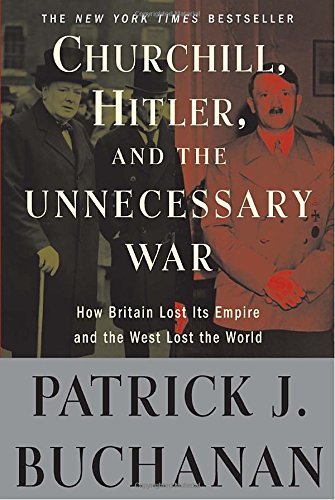
Patrick J. Buchanan is the author of “Nixon’s White House Wars: The Battles That Made and Broke a President and Divided America Forever.”

Our World of Lies

If the inflation narrative we are being fed is true, the sanctions policy of the US government makes no sense as the worst sufferers are the American and European populations who are paying for the supply restrictions in higher prices and interest rates.

As Russia is an exporter of energy and minerals, higher prices result in more export earnings. It is Americans and Europeans hit with the high prices who are experiencing the sanctions.

Ask yourself why with supply shortages, disrupted supply chains from the mindless lockdown policy, and rising inflation the US government drove inflation higher by inhibiting supply with sanctions. Is the cause of the current inflation Federal Reserve money printing or is the cause the reduction in the supply of goods and services caused by Washington’s Covid protocol and “Russian sanctions”?

Ask yourself why the Biden regime is more concerned about gangster-state Ukraine than it is about the US inflation rate and the welfare of American citizens.

Ask yourself if the current high gasoline price is really a result of sanctions preventing oil from coming to market. As far as I can tell, Russia continues to sell oil and natural gas. It is only the small US purchases of Russian oil that have stopped. The small amount of oil involved cannot explain the price rise. Most likely it is the oil companies using the “crisis” narrative to raise prices.

Ask yourself if an interest rate rise by half a percentage point is enough to cause a 1,000 drop in the Dow Jones. Presumably, the argument is that a higher interest rate raises costs and drops earnings, thus the stock market’s decline. But if higher interest rates raise costs, how are they anti-inflationary? Most likely the stock market fell because the Federal Reserve said it is halting its policy of printing money to support stock and bond prices. Instead, the Federal Reserve is going to sell stocks and bonds from its $9 trillion dollar portfolio built by buying stocks and bonds for more than a decade in order to support the New York Banks and Wall Street. When Quantitative Easing began, the Federal Reserves portfolio was $800 billion. Today it is 11 times larger. This huge increase in the Federal Reserve’s portfolio explains the long rise in the Dow Jones and the fortunes made on Wall Street.

None of the narratives we are fed are true. The narratives serve agendas that are not disclosed to the public.

It is a fiction that “Western democracies” are self-governing. Hoerw can people self-govern when they live in a world governed by false explanations serving hidden agendas?

Paul Craig Roberts

You Have the Power to Think for Yourself. Use it!

People sometimes ask me if anything annoys me about my job. I love what I do. But if anything gets to me, it’s when a client pays me good money for advice, and then doesn’t take it – returning again and again with the same problem. Far and away, the guidance most often ignored is, (1) if you want to be successful, stop caring about what others think. And (2), stop feeling that you’re obligated to do anything for anybody other than something you freely choose to do.

Not believing these two things undercuts people in business, in their personal and family relationships and in everyday life in general. I’ve spent well over 30 years trying to help people correct and/or undo the damage done by not heeding these basic rules. Yes, it’s hard to overcome misguided childhood brainwashing, but as adults we have the power to change our thinking for the better. Fresh thinking starts with a choice: “I’m not going to think that way anymore. I’ve been programmed by others and ultimately by myself. But I can change.” Truer words were never spoken.

Sometimes perfectionism gets in the way. “I successfully changed my thinking before, but I fell back in the old patterns. I can’t change.” Yes you can. If you did it once, you can do it again. It’s worth it, because willfully engaging in erroneous thinking is the worst thing you can do to your happiness.

So here it comes: What others think doesn’t matter. If someone tells you something that’s rational and logical, then by all means listen. But judge with your own mind if it is indeed logical. How many times have you said to yourself, “I followed what so-and-so said. But it didn’t work out.” You can’t blame so-and-so for your choice to follow his, hers or anybody’s advice. There are no shortcuts. If something is worth doing, it’s worth thinking about. Otherwise, you’ll never own your accomplishments – or your errors. And if you don’t own your errors, you’ll never grow.

Here it comes again (are you sitting down?): You don’t owe your life to others. You don’t automatically owe anything to anybody, unless you freely take on the obligation. If you choose to have a child, then that child is a responsibility that you chose. If you promise to do something for somebody, you should keep your word. After all, it’s your pride and integrity at stake. Saying what you mean and meaning what you say is the best way to fuel your self-interest and self-esteem. You owe that to yourself.

As for those who claim that you owe them “just because,” don’t listen! This is the most toxic nonsense known to mankind. “You’re doing better than I am. Must be nice! Give me some of what you have.” This can apply both to material or non-material things, and either way it’s wrong. Your honestly achieved success is not at a cost to anyone else. Note the words “honestly achieved”: Outside of lying or stealing, you have nothing to feel guilty about. The world is full of people – occupying some the highest offices in the land, unfortunately – who explicitly say, “Your success is something to feel guilty about. Give it away!” Take it from a mental health professional: Nothing is more destructive to your motivation, esteem or good will. The people who seek to loot your spirit (or your wallet) often have guns and jails on their side, but even more powerful is the force of unearned guilt many have been persuaded to buy into. Every well-written self-help book can be summed up this way: Don’t let abusive or irrational people make you feel guilty. It’s THEIR problem, not yours.

There’s a lot of stupidity in the world, and much of it has a toxic agenda. But as long as you keep these two simple rules in mind, you’ll havbe tremendous power that only the very smart are willing to grant to themselves.

Michael J. Hurd, Life’s a Beach

Ruth from “Ozark”: A Heroine Trying to Burst Out

If you enjoyed “Ozark,” as I did, the character of Ruth is probably the primary reason why. On the surface she was a bad guy, as is everyone in this era of antiheroes. But through the “badassery” there was authentic sensitivity, a bit of wisdom and an individualist spirit determined to overcome her morally and economically trashy background. And she almost succeeded. Ruth was a heroine trying to break out. This is why I responded to her so strongly, and why I think many others (subconsciously) did so too. Ruth was written as a character that seemed meant for a better era, and the viewer could not help but root for her. The whole show ultimately evolved into something of a Greek tragedy, but I will stop there in case you haven’t yet seen it.

Michael J. Hurd, Daily Dose of Reason

Holodomor: Ukraine Famine of 1933 was a Government-Made Disaster

Since the 19th century, global nutrition levels have increased and malnutrition is on the wane. We have never had access to so many calories from so many different goods available to so many people at such low prices. The threat of famines has thus, unsurprisingly, faded. In the 1870s, some 142 people per 100,000 died due to famines. In the decade that just ended, that number stood at … 0.5 per 100,000 – a 99% reduction.

Yet, there is a paradox. It is in the period of rising nutritional levels that we observe the worst famines in human history. Indeed, prior to the 20th century, most famines caused by natural factors (e.g. climate, disease) were not exactly extreme events as those that generally come to mind such as the Holodomor in the Ukraine during the 1930s or the Great Famine in China during the 1950s and 1960s. These pre-20th century famines were more like periods of dearth with severe malnutrition. True, there were horrible episodes caused by natural events such as the Great Irish Famine, but this was an exception more than a rule.

The reason for this distinction is that famines and dearth of food caused by natural events have indeed waned heavily. No market economy with a liberal democracy suffered through a famine during the 20th century. However, famines produced out of human design increased considerably. The ten worst famines of the 20th century could all be attributed directly (e.g. the Holodomor) or indirectly (e.g. wars) to government policies. And these ten worst famines are amongst the worst famines in all of humanity’s history.

However, one should notice that I just distinguished between “directly” and “indirectly.” That distinction is important because it points to the obvious fact that these famines were never monocausal. As such, there are always debates about these extreme famines: was the famine started by a drought; was the famine started by government policy, were the famine deaths due to governments failing to provide relief? Disentangling these finer threads is a very daunting task.

Fortunately, recent work by Natalya Naumenko in the Journal of Economic History provides us with such a disentanglement in the case of the Holodomor in the Ukraine during the 1930s.

The Holodomor is ideal for such an effort. First of all, the death toll was horrific: six to eight million died in 1933. Second, many scholars debate whether the famine was precipitated by a drought and whether government policies (such as the collectivization of farms that had started in the 1920s and the banning of private food trading in order to facilitate procurement of wheat by the government for export) made things worse.

To provide the disentanglement, Naumenko collects district-level data about mortality, weather, collectivization, agricultural inputs, ethnic composition and urbanization. Combined with other data sources, she first discredits the idea that droughts had taken place before 1933 in ways that made the local populations vulnerable. The temperatures in those years were roughly similar to previous years even though the months of May and June 1932 were marked by unusually high levels of rainfall.

Then, she attempts to assess the relative contribution in 1933 of the different factors. Variations in climate characteristics are found to pack very little explanatory firepower: they explain less than 10% of the excess mortality in that year. However, the effects of collectivization and government procurements of wheat do provide strong explanatory power: between 52% and 57% of excess mortality is explained by variations in the rate of collectivization of the farm economy across districts.

To tie those facts together, Naumenko then investigates the effect of collectivization on farm output. Unsurprisingly, areas with higher rates of collectivization exhibited smaller sown area per capita. Collectivization was also associated with a drop in livestock per capita. These two mechanisms suggest that there was clearly an institutional root to the famine. As Naumenko summarizes succinctly, it is necessary to “put the blame where it belongs:” at the feet of “government policies that make the food supply susceptible to disaster when environmental conditions are less than perfect.”

This work of economic history is not just worth reading because of its well-executed nature. It is worth reading because it is a potent reminder of how governments can fuel some of the worst disasters in human history.

Vincent Geloso is a visiting assistant professor of economics at Bates College. He obtained a PhD in Economic History from the London School of Economics.