THE ARTFUL DILETTANTE

Keeper of the Flame of the Enlightenment

THE ARTFUL DILETTANTE

The Age of The Enlightenment

The development from Aquinas through Locke and Newton represents more than four hundred years of stumbling, tortuous, prodigious effort to secularize the Western mind, i.e., to liberate man from the medieval shackles. It was the buildup toward a climax: the eighteenth century, the Age of Enlightenment. For the first time in modern history, an authentic respect for reason became the mark of an entire culture; the trend that had been implicit in the centuries-long crusade of a handful of innovators now swept the West explicitly, reaching and inspiring educated men in every field. Reason, for so long the wave of the future, had become the animating force of the present.

Confidence in the power of man replaced dependence on the grace of God—and that rare intellectual orientation emerged, the key to the Enlightenment approach in every branch of philosophy: secularism without skepticism.

In metaphysics, this meant a fundamental change in emphasis: from God to this world, the world of particulars in which men live, the realm of nature . . . . Men’s operative conviction was that nature is an autonomous realm—solid, eternal, real in its own right. For centuries, nature had been regarded as a realm of miracles manipulated by a personal deity, a realm whose significance lay in the clues it offered to the purposes of its author. Now the operative conviction was that nature is a realm governed by scientific laws, which permit no miracles and which are intelligible without reference to the supernatural.

Just as there are no limits to man’s knowledge, many [Enlightenment era] thinkers held, so there are no limits to man’s moral improvement. If man is not yet perfect, they held, he is at least perfectible. Just as there are objective, natural laws in science, so there are objective, natural laws in ethics; and man is capable of discovering such laws and of acting in accordance with them. He is capable not only of developing his intellect, but also of living by its guidance. (This, at least, was the Enlightenment’s ethical program and promise.)

Whatever the vacillations or doubts of particular thinkers, the dominant trend represented a new vision and estimate of man: man as a self-sufficient, rational being and, therefore, as basically good, as potentially noble, as a value.

The father of this new world was a single philosopher: Aristotle. On countless issues, Aristotle’s views differ from those of the Enlightenment. But, in terms of broad fundamentals, the philosophy of Aristotle is the philosophy of the Enlightenment.

In epistemology, the European champions of the intellect had been unable to formulate a tenable view of the nature of reason or, therefore, to validate their proclaimed confidence in its power. As a result, from the beginning of the eighteenth century (and even earlier), the philosophy advocating reason was in the process of gradual, but accelerating, disintegration.

The Political Game on the Pandemic

After the advent of the Covid-19 pandemic, progressives (i.e., “liberals”) used it as a game to point out all the things that President Trump and his administration were doing wrong to address the crisis. Hardly a day went by without some leftist pointing out the faults and failures of Trump’s efforts.

Now that Joe Biden is president, you can bet your bottom dollar that the same thing is now going to happen in reverse. Conservatives are going to have a field day pointing out all the faults and foibles of the Biden administration as it attempts to deal with the pandemic. You’re already witnessing this phenomenon with respect to the distribution of the virus vaccine.

Even some libertarians have gotten into this political game, spending time pointing out all the debacles and failures of, first, Trump, and now Biden, in addressing the crisis.

Of course, this phenomenon isn’t new. It has been employed by conservative and progressives (and some libertarians) for decades. In fact, over the years many think tanks and educational foundations have prospered by simply writing articles, publishing books, holding conferences, and giving speeches simply pointing out the faults and failures of welfare-warfare state programs.

The problem, however, is that conservatives and liberals, along with some of the libertarians, who play this game never address the solution to the problem. Some of them simply devote themselves to constantly pointing out the failures of the programs but without offering any solution. Others end their articles and op-eds with a popular refrain: “The system needs reform,” leaving the implication that there is some possible reform that will resolve the problems.

The advantage for these critics is that the parlor game goes on forever, so long as the system is kept intact or even reformed. That’s because the system itself is inherently defective. No matter who is running it — conservative, progressive, or libertarian — the result will be the same—massive dysfunctionality.

America’s healthcare system is a combination of socialist central planning and healthcare interventionism. That’s an inherently defective system. So long as it is kept intact and even constantly reformed, there are going to be problems. We have seen this throughout the pandemic. And we are now seeing it with the distribution of vaccines. And there will continue to be problems regardless of who is in charge and regardless of what healthcare reform is adopted.

Thus, we can spend the rest of our lives pointing out the problems or we can instead devote our efforts to the solution. I say we are better off focusing more on the solution than on the problems.

What is the solution to America’s healthcare woes? A complete separation of healthcare and the state, much as our ancestors separated church and state. No more Medicare and Medicaid. No more FDA and Centers for Disease Control. No more government lockdowns or mask mandates. The complete end of all government involvement in healthcare.

There is no other solution. The current healthcare paradigm has clearly failed. While hope springs eternal for leftists that Biden will finally make their socialist healthcare system work, it’s just not going to happen. That’s because no one can make an inherently defective paradigm work. When a paradigm is shown to be inherently defective, the only rational course of action is to shift to a new paradigm, especially one that works.

The only solution to America’s healthcare woes is the free market. The free market produces the best of everything. It would produce the best healthcare system and it would produce the best approach to dealing with threats to healthcare. The sooner we adopt this new paradigm, the better off everyone will be. The longer we delay, the worse off everyone will be.

People have a lot of fun pointing out the perverse outcomes of a socialist system. But it’s just a game. Of much greater importance is raising people vision to a higher level — to what we need to do to get out of this socialist morass. Of course, if were were to succeed in ending America’s socialist healthcare system, there would be no more faults and failures to mock and ridicule. Maybe that’s what scares the people who love participating in this parlor game.

Jacob G. Hornberger, Future of Freedom Foundation

The Wisdom of Ayn Rand

Talk about a quote decades ahead of its time (Thanks Richard Bramwell):

“It is a tragic irony of our time that the two worst, bloodiest tribes in history, the Nazis of Germany and the Communists of Soviet Russia, both of whom are motivated by brute power-lust and a crudely materialistic greed for the unearned, show respect for the power of philosophy (they call it “ideology”) and spend billions of their looted wealth on propaganda and indoctrination, realizing that man’s mind is their most dangerous enemy and it is man’s mind that they have to destroy–while the United States and the other countries of the West, who claim to believe in the superiority of the human spirit over matter, neglect philosophy, despise ideas, starve the best minds of the young, offer nothing but the stalest slogans of a materialistic altruism in the form of global giveaways, and wonder why they are losing the world to the thugs.”

~Ayn Rand, Introduction to “Ominous Parallels” (1982) by Leonard Peikoff

Fascism in America

Two of my memes from social media yesterday:

Here’s an inexpensive COVID relief bill: SHUT DOWN the government and leave the economy the hell alone. Cost: $0

Biden doesn’t want to reopen government schools. I agree. Defund them, shut them down and PRIVATIZE education.

From an article entitled, “The GameStop Rally Is a Lively Party, and Regulators Aren’t Welcome”:

“The stock market saga surrounding GameStop has shown that retail investors hold immense potential. Where GameStop gave power to the players, financial apps have given power to the people. These apps have brought investing to the palms of countless hands across the world. Maybe these new investors will “disrupt” the market, but every great innovation was at one point termed a market disruption. This is no different.”

It’s fascinating to watch leftist Democrats rush to use government regulation to protect the hedge fund investors from market losses. Our Uniparty, the Democrats, are now everything they always claimed their conservative opposition to be. Money, not markets, are all these shallow, power-grubbing leftists care about.

From another article entitled, “Why Corporations Should Cater to Consumers, Not Causes”:

“Firms leveraging situations and social issues is not new, but showcasing their moral authority despite a disinterested consumer base is.”

Exactly right. Business is not politics. Businesses should focus on the product or service they’re selling, NOT on political views. Unfortunately, that becomes impossible in a fascist state where government has so much sway over companies via regulation and taxes, that businesses no longer function AS businesses.

#NotMyDictatorship

A Tsunami of Hate

There is one party that seeks to demonize, criminalize and extinguish dissent.

Everybody agrees that our country is in crisis – and agrees that it is the worst crisis since the Civil War. But at the same time, we tell ourselves a comforting tale about the source of the crisis that perpetuates the problem instead of providing a path to ending it. We say our politics are “divisive” and talk about “unity and healing” as though that would miraculously be achieved if everybody stopped … what? Disagreeing? All politics is divisive. That’s the healthy basis of our constitutional order: the freedom to disagree. To suppress disagreement, to outlaw it – as many Democrats and their Big Tech and media allies are demanding these days – is to end democracy as we know it.

The problem is not that we disagree. We are not suffering as a nation from healthy disagreement. We are suffering from a Tsunami of Hate emanating from the Democrat Party that seeks to demonize, criminalize and extinguish dissent from the 75 million supporters of Donald Trump. It is now official Washington dogma that to question an election result – something the congressional Democrats have done in the face of every Republican presidential victory since 2000 – is now “insurrection” and “domestic terrorism,” or the incitement thereto, and needs to be prosecuted and suppressed.

You can’t have a democracy if this is the attitude of a party that controls all three branches of government, is enabled by a corrupt and compliant media, and is determined not just to defeat, but to humiliate, destroy and expunge from the record an ex-president who is supported by a greater segment of the American electorate than any American leader before him.

There is Democrat-sponsored legislation pending that would prevent any public building or artifact, even a “bench” from being named after the 45th president of the United States. There is a farcical witch-trial to impeach the same villain even though he has left office and is now a private citizen. There is even Democrat talk of stripping Trump of his pension, despite the fact that he gave his entire $1.6 million salary as president to the American people – something no president before him has done. If ever there was a public lynching, short of stringing the victim from the nearest tree – and there are no lack of leftwing calls for that – the Democrats’ unrelentingly vindictive assault on the defeated Donald Trump down to the last petty detail is it.

But what is in effect a total war is not merely a war to cancel Donald Trump. If it were, it would be reprehensible enough, but not a threat to the nation itself. This demonic hate directed by the Democrat Party towards Trump is also hate for the 75 million Americans who voted for him. And there is no shortage of reminders of that. Ordinary Americans in all walks of life who happen to think that Trump’s presidency – which included record employment and record economic growth, delivered benefits for all Americans, particularly American minorities, secured America’s borders, defeated America’s terrorist enemies and led to an unprecedented reconciliation between Arab nations and the State of Israel – was a worthy achievement are treated as social pariahs, have their careers destroyed and (shades of the Kremlin) are regarded as mentally unfit and in need of deprogramming.

In a March 2020 interview with Axios, James Clyburn – the third ranking Democrat in the House and the political figure most responsible for Biden’s primary victory – raised the specter of Hitler when speaking about Trump, calling the president a racist and likening modern-day America to Germany during the Nazi Party’s rise to power. “I used to wonder how could the people of Germany allow Hitler to exist,” said Clyburn. “But with each passing day, I’m beginning to understand how. And that’s why I’m trying to sound the alarm.”

A Tsunami of Hate – not “divisiveness” – is the root cause of our political crisis and the most existential threat we have faced since the war to end slavery.

The fact that the threat posed by the Democrats’ Tsunami of Hate is not just to Trump and his supporters, but to America itself, was evident in one of Biden’s first directives as president, declaring that a war on America’s “systemic racism” would be a priority of his administration: “The fact is systemic racism touches every facet of American life.”

This is one of the Big Lies that have become articles of faith for Democrats, and is easily refuted. The 1964 Civil Rights Act outlawed “systemic racism.” Here is the Wikipedia description of the law:

The Civil Rights Act of 1964 (Pub. L. 88–352, 78 Stat. 241, enacted July 2, 1964) is a landmark civil rights and labor law in the United States that outlaws discrimination based on race, color, religion, sex, national origin, and later sexual orientation and gender identity. It prohibits unequal application of voter registration requirements, racial segregation in schools and public accommodations…

If systemic racism or institutional racism were a serious problem in America – let alone touched “every facet of American life,” – as Biden says, what do you think would happen? Assume, as Biden and woke Democrats generally seem to think that all white people are racists, there are thousands of black attorneys, attorneys general, prosecutors, judges, legislators and occupiers of the highest seats of government. If there was a scintilla of truth in this statement there would be thousands, maybe hundreds of thousands of lawsuits filed under the Civil Rights Act. There are no such lawsuits. The claim that “systemic racism touches every facet of American life” is itself a racist lie, whose evident target is white people, since according to the woke, “people of color” can’t be racist.

Not surprisingly, one of Biden’s first week initiatives was a systemically racist plan to provide financial assistance to small businesses whose owners were black, Asian, Hispanic, and Native American. Only whites were excluded. But Asian Americans as an ethnic group have higher incomes than white Americans. So what rationale for this policy is there but anti-white racism?

How virulent is the anti-white and anti-American racism of the Democrat Party? Consider this unhinged but also unchallenged statement by Vice President Kamala Harris defending the Black Lives Matters rioters whose “protests” caused billions in property damage, led to 25 deaths and injured 2000 police officers in the summer of 2020: “The reality is that the life of a black person in America has never been treated as fully human… It’s no wonder people are taking to the streets [to protest]. And I support them.”

In other words, the 44th president of the United States, the “most admired man in America” for over a decade wasn’t treated as “fully human,” or Martin Luther King – the only American with a national holiday in his honor (courtesy of President Ronald Reagan). This lunatic hatred of white America is now not only acceptable in the Democrat Party but the hateful creed of its leaders.

To be fair, there are two main areas of systemic racism in America today, but both are supported and enforced by the Democrat Party which is why they exist. The first is the systemic racism that traps inner city children – mainly ethnic minorities – in inferior schools that for fifty years and more have failed to provide 80 percent of them with the skills that are necessary to succeed. Every year 40% of inner city children drop out of school without graduating, and 40% of those who do, are functionally illiterate. The Democrat teacher unions – the same which went on strike during the pandemic with full pay at the expense of children who could not afford to miss school – exert absolute control over these school systems and have stifled all attempts at reforms. They are unalterably opposed to every alternative to their racist policies from charter schools to vouchers give inner city kids the same privilege as their middle-class counterparts, which would allow their parents to enroll them in schools that will teach them.

The other nationwide systemic racism is affirmative action programs which discriminate against all ethnic groups but those designated “oppressed” – a convenient leftist fiction used to justify all manner of injustice. If you’re black or Pacific Islander or Hispanic, go to the head of the line for a job, a promotion, a place at Harvard, a coveted training position to become a surgeon or other medical specialist. If you’re white or an ethnic minority whose community supports educational values and scores well on exams, like Asians, forget that place at Harvard, you’re screwed.

How racist is that? And how readily is this racism supported by a president and an administration, which like our most dedicated foreign enemies thinks America is a nation of slavers and racist oppressors, while at the same time our borders are under siege by black, brown and Asian minorities desperate to become citizens of the most tolerant, inclusive and egalitarian society on earth.

America will not be healed until the Democrat Party returns to its senses, repudiates its current racist attitudes, and stops demonizing its opponents as what Speaker Nancy Pelosi has called “enemies of the state.”

David Horowitz

Thomas Sowell: A Beacon of Reason in a Nonsensical World

When I hear the name Thomas Sowell, it gets my immediate attention. Dr. Sowell, recently retired from his position as Senior Fellow at Stanford University’s Hoover Institution, is an American economist turned social theorist, political philosopher, and best-selling author.

Born in North Carolina in 1930, Sowell grew up in Harlem, New York. He dropped out of high school at age 17 due to financial difficulties and problems at home, but went on to serve in the United States Marine Corps during the Korean War. Following the war, he received a bachelor’s degree from Harvard, graduating Magna Cum Laude in 1958. The following year, he received a master’s degree from Columbia University. In 1968, he earned a Doctorate in Economics from the University of Chicago.

Sowell served on the faculties of Cornell University and University of California, Los Angeles, and also worked for think tanks such as the Urban Institute. He has written more than 30 books and is a National Humanities Medal recipient for innovative scholarship which incorporated history, economics and political science.

What I appreciate most about Mr. Sowell is his unique perspective as an African-American conservative with libertarian leanings who came of age during the Jim Crow era.

The best way to experience Sowell is to view a sampling of his many famous quotes and dialogues. Here are 25 quotes to make you think.

Education

1. “Too much of what is called ‘education’ is little more than an expensive isolation from reality.”

Health Services

2. “It is amazing that people who think we cannot afford to pay for doctors, hospitals, and medications somehow think that we can afford to pay for doctors, hospitals, medications and a government bureaucracy.”

On Government & Politicians

3. “The real minimum wage is zero.”

4. “The most basic question is not what is best, but who shall decide what is best?”

5. “Socialism in general has a record of failure so blatant that only an intellectual could ignore or evade it.”

6. “The big divide in this country is not between Democrats and Republicans, or women and men, but between talkers and doers.”

7. “Capitalism knows only one color: that color is green; all else is necessarily subservient to it, hence, race, gender and ethnicity cannot be considered within it.”

8. “If you have been voting for politicians who promise to give you goodies at someone else’s expense, then you have no right to complain when they take your money and give it to someone else.”

9. “The first lesson of economics is scarcity: There is never enough of anything to satisfy all those who want it. The first lesson of politics is to disregard the first lesson of economics.”

10. “Balanced budget requirements seem more likely to produce accounting ingenuity then a genuinely balanced budget.”

11. “It is hard to imagine a more stupid or more dangerous way of making decisions than by putting those decisions in the hands of people who pay no price for being wrong.”

12. “Whenever a problem is proclaimed in the media there will almost invariably be a solution proposed in politics. Often the solution is worse than the problem.”

13. “You will never understand bureaucracies until you understand that for bureaucrats procedure is everything and outcomes are nothing.”

On the Workplace

14. “People who enjoy meetings should not be in charge of anything.”

15. “Talkers are usually more articulate than doers, since talk is their specialty.”

16. “The least productive people are usually the ones who are most in favor of holding meetings.”

On Taxes and Entitlements

17. “The assumption that spending more of taxpayer’s money will make things better has survived all kinds of evidence that it has made things worse.”

18. “Despite a voluminous and often fervent literature on income distribution, the cold fact is that income is not distributed: It is earned.”

19. “One of the consequences of such notions as entitlements is that people who have contributed nothing to society feel that society owes them something.”

20. “One of the sad signs of out times is that we have demonized those who produce, subsidized those who refuse to produce, and canonize those who complain.”

21. “The welfare state is not really about the welfare of the masses. It’s about the egos of the elites.”

On Race, Diversity, Multiculturalism

22. “Racism is not dead, but is on life support—kept alive by politicians, race hustlers and people who get a sense of superiority by denouncing others as ‘racists.’”

23. “The next time some academics tell you how important diversity is, ask how many Republicans there are in the sociology department.”

24. “What multiculturalism boils down to is that you can praise any culture in the world except Western culture- and you cannot blame any culture in the world except Western culture.”

In Conclusion

For those who are in lockstep with a particular political narrative on how they feel the world should be, I leave you with this Thomas Sowell pearl of wisdom:

25. “Mistakes can be corrected by those who pay attention to facts but dogmatism will not be corrected by those who are wedded to a vision.”

Dear Readers,

Big Tech is suppressing our reach, refusing to let us advertise and squelching our ability to serve up a steady diet of truth and ideas. Help us fight back by becoming a member for just $5 a month and then join the discussion on Parler @CharlemagneInstitute!

Jon Henschen

Jon Henschen is president of Henschen & Associates, a Twin Cities-based firm that matches financial advisors to independent broker dealers. He has more than 25 years of experience in the financial services industry and has worked as a registered financial advisor in both the independent and wirehouse channels. Jon has been featured in numerous financial publications, including the Wall Street Journal, Bloomberg News, Reuters, and the New York Post.

President Biden’s Push To Force Workers To Join Unions

President Biden’s “closed shop” labor union agenda would rob all those working for a living the liberty and latitude to do so freely and of their own choosing.

We have now entered the Joe Biden presidency in the United States. Calling for a restored unity among the American people, the new president has come out of the starting gate with a plethora of executive orders and legislative policy proposals being sent to the Democratic Party-controlled Congress. Virtually all of them involve increased government spending, regulation, and planning over wider areas of economic and social life.

Among these are political interventions in the workplace. During his first day in the White House, Biden formally announced his intention to have Congress increase the national minimum wage from its current $7.25 an hour to $15 per hour. That raising an employer’s expense of hiring workers may result in some existing or potential workers being priced out of the market, especially among the unskilled and inexperienced and young, is ignored or rationalized away by those determined to follow a more interventionist policy course. (See my article “Freedom and the Minimum Wage”.)

Joe Biden Will Push for Increased Union Power

The new president also made it clear in his campaign promises that a Biden administration would do all that it could to strengthen the pervasiveness and power of labor unions in the American economy. His campaign literature insisted that everything good that has happened for the ordinary worker in America has been due to “workers who organized unions and fought for worker protections.” Union organizing and collective bargaining, it was said, have been the basis of labor betterment in the United States. The problem is, it was stated, “there’s a war on organizing, collective bargaining, unions, and workers.”

To remedy this, “Joe Biden believes the federal government should not only defend workers’ rights to organize and bargain collectively, but encourage collective bargaining.” Thus, Biden’s agenda includes pushing union organizing in non-union workplaces and limiting employer attempts to argue and persuade against it to their employees. This would also include preventing even-handed deliberative processes before a union vote is taken, limiting worker privacy from the prying eyes of union organizers, undermining secret balloting, and forcing workers to pay union dues even when they would like to opt-out of union representation and support.

Biden Wants Unions Everywhere, But Workers Do Not

Indeed, if Biden’s vision for expanding and intensifying union power were to come to fruition, the entire U.S. economy would be transformed into union-controlled “closed shops,” with few escape hatches for those who want to be free of union dictation of their conditions of work and earned wages. When looking over the decades, however, it is fairly clear that many if not most workers either do not want to be represented by unions or are sufficiently indifferent that they show no interest in going out of their way to push for union representation and determination of their work conditions and wage negotiations.

Fifty years ago, in the 1970s, union membership among the U.S. workforce as a whole was about 30 percent. In 2019, according to a Bureau of Labor Statistics 2021 report, union membership was barely above 10 percent, representing a two-thirds decline over the last five decades. Indeed, in the private sectors of the labor market, overall union membership only came to 6.2 percent of that part of the workforce in 2019. The only thing sustaining American unionism at all is the government sector, where union membership totals 33.6 percent of those employed by the federal (25.6 percent), state (29.4 percent), or local (39.4 percent) branches of political power.

For well over a hundred years, the rationales and reasoning in defense of unionization and collective bargaining have been the presumption that workers as individuals and as groups are at an inherent disadvantage in their dealings with employers. “The bosses” will underpay, cheat, and exploit those they hire at unfair wages and undesirable workplace conditions. No doubt, these types of arguments will be made once again by those in the Biden administration and then echoed by many in the mainstream press and social media.

Freedom of Association vs. Union Forced Membership

It seems to be worthwhile, therefore, to challenge the premises and presumptions in the labor union case for making America a labor market “closed shop.” To begin with, an underlying and fundamental principle in the American political and economic system has been the idea of freedom of association. Individuals should have the personal liberty to freely associate with any other members of society for lawful and commonly shared goals, purposes, and activities.

This principle also implies its opposite: that individuals may not be compelled or coerced into joining or participating in any association without their voluntary consent. The underlying premise of a free society is the right of individuals to say, “No,” whether this involves joining a church, entering into a contract, participating in any social club or group, or membership in a labor union.

Broadly, the arguments against an individual employee’s right to work without membership in a union have been of three general types: (1) only unified union membership can protect all workers against the superior bargaining power of the employer; (2) only compulsory union membership can protect other workers from the “unfair” competition of non-union members that may result in the wages of all workers in that industry being pushed below their “fair market value;” and (3) only mandatory union membership (and dues-paying) prevents non-union members from a “free ride” at the expense of union workers in a company or industry. Let us look at each of these arguments, in turn.

Supposed Worker Bargaining Disadvantage with Employers

First, the supposed superior bargaining power of the employer. The inferior position of the individual worker is claimed to be due to a number of factors. It is argued that the individual worker must accept the wage offered to him by the employer, since if he does not accept it, there are always many other workers looking for jobs ready to take his place.

This ignores the fact that competition is two-sided in virtually every modern, developed market, and especially in a country like the United States. Any employer who fails to offer a wage tending to reflect the anticipated value that the worker contributes to a company’s profitability runs the risk that the potential employee with useful and productive skills will search out alternative employment where his skills are more highly valued by another employer wishing to get ahead of his competition.

The same applies to a currently employed worker who, if he believes that he is not receiving a wage commensurate with his actual market value, will see the advantage of changing employers in the same or a related market. This forces any employer attempting to “lowball” his workers to raise his wage offers, or run the risk of losing a growing number of qualified workers without whom he may not be able to retain his market position relative to his rivals.

Another argument claims that the individual worker has an inferior bargaining position because the individual worker cannot “wait” to look for a better job. First, if the worker does not earn wages he cannot eat. The employer can wait to find a worker willing to take any salary he wishes to offer because he has “capital” to live off until such a worker comes along who will accept the lower wage the employer wishes to pay. Second, it is stated that labor is a perishable “commodity.” It cannot be “stored” to sell on another day. So, if the worker does not take the wage offered, that lost day’s labor can never be regained.

However, there are limits to any such claimed “waiting” advantage on the part of the employer. Every day of less output produced because needed workers are not yet hired is a day with lost sales revenues resulting from reduced output than could have been produced and sold on the market. Thus, waiting to find workers who might be willing to accept wages less than their real market value imposes a cost on the employer in the form of smaller profits and less market share that could have been acquired, if a wage more in line with workers’ worth was offered and accepted.

Financial capital may be “stored” rather than invested in hiring workers and producing output. It can be held as cash or loaned out (short-term) for some interest return. But delaying the hiring of workers who would otherwise have gladly worked at reasonable market-valued wages results in the prospective employer earning neither profit nor interest if a part of his financial capital is held as cash. And even if lent out to earn short-term interest, the potential employer loses every day the difference between the interest he may earn and the greater profits that could have been his if he had not delayed hiring needed workers for productions that could have been manufactured and sold.

The Claim of “Unfair Competition” from Non-Union Workers

Second, it is claimed that unions protect wages from unfair non-union competition. It is argued that unions are able to collectively negotiate wages above what individual workers could negotiate on their own. If non-union workers could compete for union jobs, those union-secured, higher wages would be competed down. Thus, all workers will be better off if required to join and jointly negotiate through the representing union.

Labor, however, like every other good or service offered on the market, is subject to the law of supply and demand. If a union successfully negotiates a wage above the one that would have been competitively established on the market, fewer workers may be employed, since the higher the wage the less profitable the number of workers potential employers find it attractive to hire (or retain). In other words, wages that compulsory unions may successfully impose run the risk of pricing some workers out of the labor market.

In this instance, the “conflict” is not between “labor” and “management,” but, instead, between union members and non-union workers. The union “locks out” others in the labor force who would have been willing to work for prospective employers on terms mutually attractive to the two sides.

This forces the locked out and displaced workers to search out alternative gainful employment in jobs and with employers that may be less well-paying and not as attractive. The union members’ gains are, as a consequence, at the expense of other workers, who must find employment in other markets and thereby pushing down wages in that alternative part of the labor market below what would have prevailed if the union had not resulted in an “oversupply” of labor in the alternative labor market.

This process can and often does entail locked out workers having to migrate out of the state where they had previously found work, or where they would have chosen to reside, if not for compulsory union membership rules pushing non-union workers out of that part of the labor market, and that part of the country in which “closed shop” conditions prevail.

Asserted Need for Compulsory Union Dues to Prevent Free Riding

Third, the need for union membership to avoid non-union free riders. It has been argued that the higher wages and better working conditions negotiated by a labor union benefits not only the union members but all other workers in the company or industry who are covered by the union terms of employment. If non-union members are able to benefit from the “positive” results of union activities it is only reasonable that they should be required to bear a part of the costs of obtaining those favorable work conditions and wages. Thus, non-union workers should, if not required to join the union, be at least obligated to pay union dues to assist in defraying the organizational and related expenses to provide those benefits.

At the same time, the potential for “free riding” reduces the incentive to belong to a union, and thus may result in fewer union members and weaker unions unable to effectively negotiate on behalf of workers’ interest.

The free rider problem can only arise when the gains from the actions of some cannot be prevented from benefiting others who have not participated in covering the costs that have generated those “positive” results. However, excludability is possible in the case of union-generated wages or work conditions by simply stipulating in the negotiated union contract that the terms of that contract only apply to union members.

If non-union workers are unable to obtain from employers the wages and work conditions equal to or better than those arranged by the union, that will act as a positive incentive for non-union employees to find it in their own interest to, then, join the union. If, however, non-union employees are able to negotiate for themselves wages and work conditions not much different from (or even superior to) those covered by the union contract that would, itself, be a clear demonstration that union membership and dues are superfluous.

Free Labor Markets and Personal Liberty

This, now, gets us to the opposite argument; that is, the case for freedom of association and the individual’s right to work and negotiate the terms of his employment without union interference or compulsion. Among the arguments for a free, competitive labor market, are: (1) The case for personal liberty; (2) The gains from competition; (3) The benefits from labor mobility and workplace flexibility; (4) An efficient use of scarce resources for improved productivity.

First, the case for personal liberty. The hallmark of a free society is the extent to which the individual has the liberty to make decisions guiding his own life, including the occupation or profession he chooses to follow to earn a living and that gives meaning and enjoyment to his daily activities. By definition, then, union exclusion of workers who would, otherwise, find gainful employment on the basis of free and voluntary contract between themselves and willing employers is a restraint not only on trade, in general, but a restriction on the personal liberty of workers to enter into consensual association with others for peaceful and lawful mutual benefit.

The same applies to compulsory payment of union dues as a “tribute” to a union for the right to work for a particular employer or in a specific industry. Indeed, it can be argued that it is a form of imposed tax for the privilege of working within the “jurisdiction” over which the union claims authority and employment control.

Compulsory Unions Restrict Market Competition

Second, compulsory unionism limits labor market competition. “Closed shops” have historically had one essential goal, that being anti-competitive and thus monopoly restriction on segments of the labor market. The purpose is to limit the supply in various occupations, professions, and trades as a means to raise the price of labor above the levels at which the free interactions of market supply and demand would have set wages.

Companies or cartels that attempt to act monopolistically bear the cost of leaving a portion of their capital and equipment idle precisely to withhold potential output with the hope of deriving a sufficiently higher net revenue by selling less at a higher price. They must weigh the cost of underutilized plant and equipment relative to the higher price with the decreased output.

Compulsory unions, however, restrict entry into their market to reduce the supply and raise the wages of some workers, but bear no such similar cost. Their responsibility and “costs” extend no further than a weighing of the advantages and disadvantages to the workers who remain employed under the union wage and work condition rules negotiated on the basis of collective bargaining. Those workers priced out of employment in the closed shop are no longer voting or dues-paying members, and therefore no longer an element in the union leadership’s decision-making.

The burden of the compulsory union’s actions, therefore, falls on the shoulders of the excluded workers. They bear a cost they had not bargained for or agreed to. And, thus, the unemployment or less valued employment that these displaced workers now face are a negative “externality” that these unions impose on others without their agreement or consent.

Free and open labor markets reduce the unions’ anti-competitive and potentially monopolist practices. The number of workers employed in an industry, occupation, and trade reflects the consumer demand for the products workers can produce. As long as the value of the product is greater than workers’ opportunity costs of being employed in some other way of earning a living, the supply of workers will increase, the output of the desired goods and services will expand in supply, and the prices at which those goods are offered to consumers on the market will decline.

Free Labor and Market Mobility and Flexibility

Third, the benefits from labor mobility and workplace flexibility. Compulsory unionism and the closed shop tend to reduce and limit labor mobility between industries and regions of the country. Competitive markets normally experience constant change requiring continual adjustment and adaptation to new circumstances. Consumer demands change; resource availabilities are modified; capital investments shift from one line of production to another; and technological innovations transform how and where goods and services can be profitably supplied and in what amounts.

Union restrictions retard the required adaptations and adjustments that must constantly be undertaken in different ways and different places if markets are to be continuously moving in the direction of sustainable coordination and balance.

With free labor markets, workers and employers have the flexibility and openness to find the “right” patterns of worker employment, to perform the tasks and types of work in and between industries that the shifting conditions of market supply and demand suggest are the most profitable and advantageous for both employees and employers.

Free Labor Markets Foster Efficiency and Productivity

Fourth, more efficient and productive are workers under free labor markets. An open labor market environment enables workers and other resources and capital to be effectively allocated and employed where best business judgments suggest, in a world that is always changing and in which, therefore, that is an irreducible amount of uncertainty and risk.

It is not that businessmen never get it “wrong” or workers never have second thoughts about jobs they’ve taken. It is rather that given the inescapable fact that some decisions will always turn out to be wrong, what labor markets, as well as all other resource and capital markets, must have is the greatest potential to readjust and transform what, how, and where production is undertaken and job opportunities are found to exist.

It has become a cliché to say that America now exists in a far more competitive, global economy. It is nonetheless very much true, even in a pandemic global setting. This requires the ability for the competitiveness and creative adaptiveness for those living and working in the United States to be able to make the most of opportunities that they discover and wish to take advantage of. For this to be possible and profitable, people must have the liberty to work where, at what, and on the terms that they, as individuals, find most lucrative, based on the mutual gains from trade into which they may decide to enter.

Joe Biden’s pro-union labor agenda, if implemented, would rob all those working for a living the liberty and latitude to do so freely and of their own choosing. They would be reduced to servants and supplicants to those controlling the unions and who possess the power to allow or prevent people from working in various walks of life, while determining the wages and conditions under which they may accept and find employment. That would be a high price to pay just so Joe Biden can fulfill his promises to the labor unions to whom he and the Democratic Party are beholden for campaign contributions and votes on Election Day.

Made available by the American Institute for Economic Research.

Dr. Richard M. Ebeling is the recently appointed BB&T Distinguished Professor of Ethics and Free Enterprise Leadership at The Citadel. He was formerly professor of Economics at Northwood University, president of The Foundation for Economic Education (2003–2008), was the Ludwig von Mises Professor of Economics at Hillsdale College (1988–2003) in Hillsdale, Michigan, and served as vice president of academic affairs for The Future of Freedom Foundation (1989–2003).

Biden’s Presidency Has Already Failed

Donald Trump may soon look back at his defeat as the best thing that ever happened to him. The former president has been disgraced and double-impeached, and faces criminal prosecution. Fortunately for him, he slipped out of Washington, D.C., just in time to avoid the blame for an economic catastrophe no one can fix.

No one inside this political system, anyway.

Over the last month, 5.2 million Americans filed for first-time unemployment. As of December, the key civilian labor force participation rate was 61.5%. Those are staggeringly bad numbers, comparable to those of the Great Depression. And this is following a year of atrocious job losses. “It’s literally off the charts,” Michelle Meyer of Bank of America said in May. “What would typically take months or quarters to play out in a recession happened in a matter of weeks this time.”

A little history: The last time the economy tanked was at the end of George W. Bush’s presidency, during the 2008-09 subprime mortgage crisis. We were seriously freaking out by the time Barack Obama was sworn in. The Great Recession was the worst meltdown since the Great Depression. Tens of millions of Americans lost their jobs and/or their homes, many to illegal bank foreclosures.

Yet the Great Recession, bad as it was, was nothing compared to what we face now. In January 2009, first-time unemployment filings totaled 600,000. We were terrified! And rightly so.

It’s nine times worse now .

And in January 2009, the labor force participation rate was 65.7%. About 7 million Americans have been unemployed so long that they have given up looking for work since 2009. They’re not in the official unemployment rate, but they’re jobless in all the ways that matter. They’re broke; they’re not paying taxes; and they’re a burden on the welfare and health care systems.

Obama’s first-term economic stimulus package was anemic. It bailed out Wall Street, not Main Street. So it took seven years to dig out of the hole — nearly the entirety of Obama’s two terms. Insufficient stimulus led to big Democratic losses in the 2010 midterm elections, the Occupy Wall Street movement on the left and Trump’s populist takeover on the right (interestingly, Trump carried counties where it took longer to recover).

Every intelligent Democrat looks back in regret at Obama and the Democratic Congress’ decision not to go big to put people back to work. “The Obama stimulus was too small and too subtle,” Derek Thompson writes in The Atlantic. “It was too small because the Republican opposition was intransigent, and the Democratic coalition was uncomfortable with the multitrillion-dollar deficits necessary to close the GDP gap.” President Joe Biden faces exactly the same situation.

Now it’s worse — much worse. “The magnitude of the crisis in 2008 was enormous, but this time we’ve got multiple overlapping crises,” Biden’s senior campaign policy advisor, Jake Sullivan, remarked in September.

It’s a six-alarm fire. But help is not on the way. “Key Republicans have quickly signaled discomfort with — or outright dismissal of — the cornerstone of Biden’s early legislative agenda, a $1.9 trillion pandemic relief plan that includes measures such as $1,400 stimulus checks, vaccine distribution funding and a $15 minimum wage,” The Washington Post reported on Jan. 25. “On top of that, senators are preparing for a wrenching second impeachment trial for former President Donald Trump, set to begin Feb. 9, which could mire all other Senate business and further obliterate any hopes of cross-party cooperation. Taken together, this gridlock could imperil Biden’s entire early presidency, making it impossible for him to deliver on key promises as he contends with dueling crises.”

Even if Biden were to pull a miracle bunny out of his hat by convincing Congress to pass his stimulus package intact, those $1,400 checks won’t be nearly enough to pull the economy out of a tailspin. Obama’s stimulus, worth $995 billion in today’s dollars, was half the size of Biden’s. But Biden has a hole nine times bigger to dig out of. In relative terms, then, Obama’s stimulus was 4.5 times that of Biden’s — and everyone agrees it was way too small.

Progressive economists, the same experts who were right about Obama’s mini-stimulus 12 years ago while Very Serious Pundits were dead wrong, calculate that Biden should spend two to three times the $1.9 trillion he is requesting from Congress in order to save the economy. “Congress is debating a stimulus package right now that would leave our estimate of true unemployment still hovering around double digits,” says Mark Paul, political economist at the New College of Florida and the co-author of a report by the progressive think tank The Groundwork Collaborative. “We have the tools to put the economy back on track. Unfortunately, Congress lacks the political will to act.”

The painfully slow rollout of the COVID-19 vaccine, exploding infection rates and soaring unemployment point to a brutal winter followed by a long, hot summer, 1968-style. Biden isn’t asking for enough. Congress won’t approve the little bit he’s asking for. And the failure of American democracy to address our crises will soon be evident to everyone.

As rage boils over from far left to far right, the Jan. 6 coup attempt at the Capitol may soon look like less of a historical anomaly than a precursor to collapse or revolution. If I were Biden, I might call The Donald and ask him if I could hide out at Mar-a-Lago.

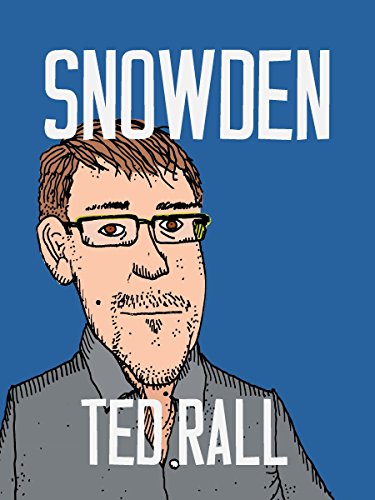
Ted Rall, UNZ Review

The Obsolete Man

“You walk into this room at your own risk because it leads to the future. Not a future that will be, but one that might be. This is not a new world, it is simply an extension of what began in the old one. It has patterned itself after every dictator who has ever planted a ripping imprint of a boot on the pages of history since the beginning of time. It has refinements, technological advances, and a more sophisticated approach to the destruction of human freedom. But like every one of the super-states that preceded it, it has one iron rule: logic is an enemy and truth is a menace.

This is Mr. Romney Wordsworth, in his last forty-eight hours on Earth. He is a citizen of the state, but will soon have to be eliminated because he’s built out of flesh and he has a mind. Mr. Romney Wordsworth, will draw his last breath in The Twilight Zone.” Rod Serling

There is much trepidation amongst many of our citizens as to what the future of America holds. Many Americans have even voiced the opinion that that they have lost faith in our Democracy with Biden & Harris occupying the WH. With Congress turning left, it has just added to their angst. As a Christian, I have concerns about our courts, and the way many legislators and voters accepted the illegal votes. Now there is barely a whisper of concern for the assault on our Christian values already being instituted by the Biden administration. Through it all, regardless of who occupies 1600 Pennsylvania Avenue, my hope is in a Heavenly Kingdom, not an earthly one.

In Rod Serling’s Twilight Zone episode of, “The Obsolete Man”, the premise is that the state is God, and thus there is no need for books or God. In fact, the conversation between Romney Wordsworth and the official of the state, who will deem Mr. Wordsworth obsolete because of his belief in God, is classic Rod Serling style:

The official from the state says to Mr. Wordsworth, that the state has declared there is no God. To which Mr. Wordsworth, a mild mannered librarian with the boldness of a lion, declares; “You can’t get rid of God with an edict.”

As I have been watching the downward progression of America year after year, I see that we are creeping closer to the edict that was voiced by the state in “The Obsolete Man”. That of eradicating God. America is on a fast track of the author’s statement in the Invictus poem: “I am the master of my fate, I am the captain of my soul.”

A people, or nation, without God at the helm has no meaning. We/It become just an entity unto ourselves/itself that will eventually come crashing down. None of us know what 2021 and beyond holds, but the God who created us, does. He who created us does not make us obsolete, but rather people who have meaning. Happy New Year to all of you, and Thanks for Listening.

Adam Lustig