Unknown's avatar

About theartfuldilettante

The Artful Dilettante is a native of Pittsburgh, PA, and a graduate of Penn State University. He is a lover of liberty and a lifelong and passionate student of the same. He is voracious reader of books on the Enlightenment and the American colonial and revolutionary periods. He is a student of libertarian and Objectivist philosophies. He collects revolutionary war and period currency, books, and newspapers. He is married and the father of one teenage son. He is kind, witty, generous to a fault, and unjustifiably proud of himself. He is the life of the party and an unparalleled raconteur.

Distinguishing Critical Race Theory from Marxism. Your Life depends on it.

For the purpose of making your way adaptively and smartly in a society that is systemically anti-white, you need to understand what distinguishes Critical Race Theory from Marxism and quit the socialism/Marxism theoretical escapism, for once and for all.

Get this into your head: For conflict in society, Marxism fingers social class; critical race theory saddles whites. You, if you are white!

More on this do-or-die distinction in my latest YouTube video, 

“Distinguish Critical Race Theory From Marxism: Your Life Depends On It!”

David Vance and I further flesh out the Marxism vs. Critical Race Theory vexation in our weekly, Wednesday chat.

Whatever conservatives think of Marxism—and this writer follows the antiwar, anti-state, free market Austrian School of economics—Marxism in the origin is serious political economy; an intellectual treatise with gravitas. Critical Race Theory is a priori gibberish.

Scrap that: Befitting the boors who originated CRT anti-whitism—the theory is based on reasoning backwards: if B then A; if white then … complete that sentence with all manner of evil that comes to mind.

We also discuss uni-party politics, the futility of it, and the war on MAGA folks, all 74 million of us. And, prompted by David, I might have thrown in a quip about plagiarism made way back, in a witty joust between Oscar Wilde and James McNeill Whistler—two giants of the West your kids should know, but don’t, because … critical race rot.

Ilana Mercer

Today’s Radicals are Really Rational People

President Trump was right again and again. However, that’s not the problem. The problem is that our culture–meaning our media, our corporate world, our schools and universities–are rotten; rotten to the core. And past the point of rehabilitation. The real radicals, going forward, are the millions to whom objective truth still matters. If you want to be free in the future–and I mean the near future, not only the future of your children and grandchildren–then you must be prepared to challenge ALL of the lunacy and dishonesty. Our culture has gone mad. Many of the people in America are not insane; but our culture truly is.

Michael J. Hurd, Daily Dose of Reason

Andrew Bernstein’s book is “among the best single presentations of the case for capitalism. (It is) amazingly good.” – Harry Binswanger

Below we present an excerpt from Andrew Bernstein’s The Capitalist Manifesto. In a recent “Meeting of the Minds” podcast, Dr. Harry Binswanger had this to say about Dr. Bernstein’s book:

“(H)e wrote a terrific book including one on capitalism that…in its first eight pages totally wipes out any alternative to capitalism and shows the capitalism is the ideal system. It is…among the best single presentations of the case for capitalism….(It is) amazingly good.”

At the request of Dr. Bernstein, we present those first eight pages here:

The Great Disconnect

Here are the most important facts:

The capitalist revolution began in Great Britain in the late-18th century. Since that time, the capitalist nations have been the freest countries of history. In Western (and now parts of Eastern) Europe, in the United States, in Japan, Hong Kong and the other Asian Tigers hundreds of millions of human beings are guaranteed freedom of speech, of religion, of intellectual expression, of assembly, and of voting. Men are free there to earn and to own property – their own homes, farms and land. They are free to start their own businesses and to retain the profits that they earn. A hallmark of capitalism is a rule of law that protects private property, safeguards investments and enforces contracts. The fundamental moral principle upon which capitalism is based is that individuals have inalienable rights and that governments exist solely to protect those rights. Capitalism requires the limiting of governmental power to maximize the freedom of the individual.

Capitalism, the system of individual rights, has brought increased freedom to men all over the world. In Europe, capitalism ended feudalism, the dictatorship of the aristocracy. In America, the principle of individual rights impelled the British colonists to throw off the rule of the monarchy and establish history’s freest nation – and the logic of the country’s founding principles led, in less than a century, to the abolition of slavery, a practice that existed everywhere in the world through all of history, and one still practiced widely today throughout the non-capitalist world. In post-World War II Japan, under America’s influence, a semicapitalist, vastly freer society replaced the military dictatorship that preceded it. In Hong Kong, Taiwan and South Korea, the freedom of their capitalist or semi-capitalist systems enabled those countries (or colonies) to become havens for millions of refugees fleeing Communist oppression. 1

More broadly, it is to the capitalist nations across the globe that immigrants come, millions of them, both historically and currently, often fleeing political and/or religious persecution in their homelands. They come on rafts to the United States from Cuba. By the millions and for 15 years, the Vietnamese “boat people” fled for their lives from Communism – and today, more than 1.6 million of them have found freedom, mostly in the West. Muslims seeking religious and political freedom flee to the Western capitalist nations from all over the Islamic world. And, of course, for more than 150 years, America has been the hope and the chosen destination of persecuted peoples from around the globe, including from Ireland, Jews from Eastern Europe, Sicilians suppressed by the 19th century remnants of aristocratic rule, and Chinese and Koreans oppressed by the Communists.2

Finally, the Western capitalist nations, by inflicting military defeat on the Fascists, and political-economic defeat on the Communists, eliminated the scourge of totalitarianism from large parts of the earth, bringing greater freedom to hundreds of millions of human beings in Japan, Germany, Italy, Eastern Europe and Russia.

Capitalism is the system of freedom.

Freedom leads to dramatic economic results. The “great laboratory” of capitalist West Berlin side-by-side with communist East Berlin provided the most vivid example — West Berlin, a modern, prosperous commercial center, East Berlin so destitute and squalid that, by 1989, the rubble remained from World War II battles four decades earlier. The striking truth is that the capitalist nations are the wealthiest countries of history. For example, famine, the scourge of all non-capitalist societies, past and present, has been wiped out in the West. There has never been a famine in the history of the United States. Has there ever been one in any capitalist country? The author does not know of any.3 Regarding the empirical correlation between economic freedom, i.e., capitalism and prosperity: the Heritage Foundation and the Wall Street Journal jointly publish an annual survey examining the degree of economic freedom in the world. Its title is the Index of Economic Freedom. “The story that the Index continues to tell is that economically freer countries tend to have higher per capita incomes than less free countries… The more economic freedom a country has, the higher its per capita income is.” The editors organize 155 countries into four categories, which are, in ascending order – repressed, mostly unfree, mostly free and free. “Once an economy moves from the mostly unfree category to the mostly free category, per capita income increases nearly four times.” The mostly free countries, including Japan, Taiwan, Canada, Poland and Sweden, have an average per capita income of greater than $11,000. Additionally, the per capita income among free countries is, on average, almost double that of the mostly free countries. The free countries, including the United States, Great Britain, Hong Kong and Singapore show an average per capita income of greater than $21,000.4 Capitalism is the system of wealth.

But under statism, conditions are diametrically opposite. Many political systems have ruthlessly suppressed the rights and lives of individuals. Feudalism, military dictatorships, theocracies, National Socialism (Nazism) and Communism are merely several examples. What these and other such systems share in common is the denial of individual rights. These are the anti-capitalist systems in which the individual is forced to live and die for the state. The horrors of such lack of freedom are historically and currently manifest.

Under feudalism, for example, the common man – the overwhelming preponderance of mankind – was suppressed by the ancien regime. Heretics were often burned at the stake; countless women were condemned to death for practicing “witchcraft;” the serfs were tied to the land and possessed few rights, and the most advanced thinkers were persecuted – Galileo’s forced recantation under threat of torture was merely the most notorious such case.

In the 20th century, statism reached its most virulent form. The National Socialists plunged the world into the most catastrophic war of history and butchered 25 million innocent victims in a 12-year reign of terror. The Communists were just as prolific in their commitment to brutality, establishing in Russia, China, Cambodia, North Korea, and elsewhere totalitarian regimes that murdered a numbing 100 million victims in 80 years.

In Africa, oppressive dictatorships and ghastly tribal slaughters are the norm. In Sudan, the Islamic regime currently holds tens of thousands of blacks in slavery. In Rwanda, Hutu “militia” in 1994 hacked to pieces 800,000 victims, mostly members of the Tutsi tribe. In Somalia, endless, bloody warfare rages between rival warlords. In Zaire, the dictator, Mobutu, bankrupted the economy, pushing countless individuals into starvation by embezzling billions of dollars. In Zimbabwe, the Marxist dictator, Mugabe, stole the land from commercial farmers with the inevitable result: famine for millions of people. The shocking truth is that more than 225 years after the American Revolution, freedom is virtually unknown around the globe.5

Statism – the subordination of the individual to the state – leads inevitably to the most hideous oppression.

Further, just as the freest nations, i.e., the most capitalist ones, are the wealthiest – so the most repressed countries are the most destitute. For example, according to one economist, Angus Maddison, feudal Europe and its aftermath was as miserably poor as is commonly believed.

Economic growth was non-existent during the centuries 500-1500 — and per capita GDP rose by merely 0.1 percent per year in the centuries 1500-1700. In 1500, the estimated European per capita income was roughly $215; in 1700, roughly $265.6

In the 20th century, China under Mao suffered massive famine that killed anywhere from 20 to 43 million individuals – and hundreds of millions subsisted on less than a dollar a day. Also under the Communists, conditions were similar in North Korea and worse in Cambodia. The Soviet Union and its slave states of Eastern Europe were miserably poor by Western standards. The repressive dictatorships of Africa are countries where per capita living standards are measured in hundreds – not thousands – of dollars. Across the globe, the oppressed nations of Asia, South America and the Middle East are unspeakably poor.7

For example, the Index of Economic Freedom shows that the repressed nations – including Cuba, Iran, Iraq (under Saddam Hussein) and North Korea – have an average per capita income around $2800. The mostly unfree countries – including Russia, Saudi Arabia, Egypt and Brazil – possess an average per capita income of approximately the same. This means that the freer countries – the semi-capitalist and capitalist nations – enjoy per capita incomes from four to ten times as great as those in the non-capitalist world.8

Additionally, it must be pointed out that the unfree nations of the world have per capita incomes as high as $2800 for primarily one reason: the enormous aid they receive in various forms from the West, especially the diffusion of American technology. Without investment, loans, aid, technical training, and supplies, etc., from the capitalist nations, the unfree countries would subsist in vastly worse misery than they already do. As merely one example, without massive food shipments from the West, an incalculable number of human beings would starve to death in the endless famines that recur in the unfree countries, from Ethiopia to North Korea to Zimbabwe.9

Statism – in all its forms – is the system of appalling destitution. The facts show that capitalism is the system of freedom – and that it creates wealth. The facts similarly show that statism is the system of repression – and that it causes poverty. Capitalism is the system of freedom and prosperity. Its antithesis – statism in any form – is the system of oppression and destitution. Despite these facts, however, widespread antagonism toward capitalism exists; and generally from among society’s most educated members – Humanities professors, writers, artists, journalists, teachers, clergymen, and politicians.

Anti-capitalist intellectuals and writers present a constellation of related criticisms. They hold that capitalism creates inequalities of income, that it exploits the workers and the impoverished, that it supplants spiritual values with materialism, and that it leads to imperialism and war. Successful businessmen, according to their view, accumulated fortunes largely by means of fraud and peculation. Such accusations come alike from socialists and conservative defenders of the current mixed economies, from secularists and religionists, from Marxists and from Catholic clergymen, from Jews and from Muslims. Marx and Engels, for example, wrote: “The bourgeoisie [the practitioners and supporters of capitalism]…has left remaining no other bond between man and man than naked self-interest and callous ‘cash payment’… In one word, for exploitation veiled by religious and political illusions, [the bourgeoisie] has substituted naked, shameful, direct, brutal exploitation.”10

Pope Paul VI in the encyclical, Populorum Progressio, claimed: “But it is unfortunate that on these new conditions of society a system has been constructed which considers profit as the key motive for economic progress, competition as the supreme law of economics, and private ownership of the means of production as an absolute right that has no limits and carries no corresponding social obligation.” The Pope went on to state that “a certain type of capitalism has been the source of excessive suffering, injustices and fratricidal conflicts whose effects still persist.”11

Such “liberal” modern American historians and writers as Charles Beard, Richard Hofstadter and Matthew Josephson routinely denigrated leading industrialists and capitalists, arguing that Cornelius Vanderbilt, John D. Rockefeller, Andrew Carnegie, J.P. Morgan, et al., built their careers by “exploiting workers and milking farmers, bribing Congressmen, buying legislatures, spying upon competitors, hiring armed guards, dynamiting property, [and] using threats and intrigue and force.”12

The system of freedom and wealth is repeatedly and savagely attacked by many intellectuals and other highly educated individuals — worse, by men and women claiming to be “liberals,” humanists, lovers of man, i.e., the very individuals who should function as the protectors and preservers of human life. There is an enormous disconnect between the facts of capitalism’s nature and history – and the evaluation of these by many “progressive” writers and the millions whose thinking they influence. The facts of capitalism’s nature and history are not unknown. Certainly, the educated critics are well aware of them. Capitalism’s enemies are simply unimpressed. Why? What is responsible for the great disconnect? The reason is that the objections to capitalism are not based on factual grounds – and all the evidence in the world establishing the freedom and prosperity of those living under capitalism will not influence the system’s critics to the slightest degree.

The criticisms are motivated solely by moral and philosophical theories.

Since long before capitalism’s 18th-century inception, moral theories antagonistic to egoism and profit-making have been dominant. From its birth, therefore, capitalism was an intellectual anomaly: a great boon to human prosperity that was unsupported, even opposed, by men’s dominant moral and philosophical codes. Hence the tragic historical spectacle of capitalism providing abundance for the first time for untold millions while sustaining repeated intellectual blows from its moral and philosophical enemies — from thinkers who claimed to care about mankind.

For example, socialists – whether of a Marxist or non-Marxist variety – insist that it is an individual’s moral obligation to sacrifice himself for the state. Capitalism, they accurately point out, is not founded on principles of self-sacrifice. Rather, capitalism rests on an egoistic moral code – on the inalienable right of each and every man to his own life. The freedom that capitalism offers an individual to pursue his own personal, selfish happiness is, to socialists, anathema. To them, individual rights and political-economic freedom are appalling because they follow logically from an egoistic moral code that they regard as evil. As a further example, modern egalitarians seek equality of income. But, contrary to their wishes, the freedom of the capitalist system will always lead to enormous disparities of income, because, in fact, individuals are not equal. They are not equal in talent, they are not equal in initiative, they are not equal in capacity to satisfy customer demand. Left free, some individuals will cure cancer, some will make the baseball Hall of Fame, some will drop out of school, some will work in the local grocery store, some will refuse to work and sponge off of families, friends, and private charities.

The enormous general prosperity of the capitalist countries – the ability of capitalism to inherit widespread poverty and then proceed to create a vast middle class – does not and will not begin to impress egalitarians. The principle of economic equality – not universal prosperity – is their moral god. Consequently, they admire the “equal” destitution of Cuba’s citizens and repudiate the unequally-shared wealth of America. To them, it is morally superior if everybody subsists roughly equally on $1,000 annually and morally inferior if some possess millions while others live on “merely” $15,000 or $20,000 or $30,000. Rational men prefer to earn $15,000 in a country where others are millionaires to $1,000 in a country where others are equally poor. But egalitarians loathe the economic inequalities necessitated by the freedom of the capitalist system.

Finally, to a devout religionist, such as contemporary Islamists, what matters the earthly riches and comforts enjoyed by those in the capitalist countries? To them, all that matters is salvation in a higher world. If Allah repudiates the secularism, selfishness, and materialism of capitalism, if such a life leads to eternal damnation, then the religionist must abjure it, even seek to annihilate it. Islamic terrorists, after all, did not destroy the towers of the World Trade Center simply because they were tall buildings. For years, they targeted those buildings because they were the nerve center of the world financial markets, located in the Wall Street area of New York City, the world’s commercial center. Those towers were, in terms both practical and symbolic, at the heart of global capitalism – and this is exactly why they were destroyed.

Too often, freedom’s supporters have limited themselves to responses that demonstrate capitalism’s unparalleled ability to increase men’s prosperity. While true and important, such defenses miss the essence of the criticism. It is as if a great dialogue regarding the most momentous issues held across a span of centuries has been conducted at cross purposes. The critics argue on moral grounds; the supporters on economic grounds. The critics, wedded to a moral code of self-sacrifice, are oblivious to capitalism’s practical success. The supporters, equally wedded to such a code, are morally disarmed against the onslaught of their antagonists — and are reduced to the citation of empirical facts and figures. The supporters, unable to break free of the conventional creed urging selflessness, have too often regarded capitalism’s inherent pursuit of self-interest as a guilty secret, akin to an unsavory skeleton in a family closet.

It is time to come out of the closet.

For two centuries, capitalism has cried out for its supporters to finally embrace the code of rational egoism as an undiluted virtue of which to be proud. That will be an important part of this book. The torrent of facts showing capitalism’s practical superiority will be presented within a philosophical framework showing that capitalism is the only moral system for human beings.

Two intellectual tasks must be accomplished in order to establish capitalism as the ideal social system. The first is to factually document the enormous practical benefits to man’s life wrought by capitalism. These are the tasks of history and economics. The second is the job of philosophy: to show that morality arises only because of the factual requirements of man’s life on earth, i.e., the concepts “good” and “evil,” “right” and “wrong,” are based in the facts of human nature, specifically in the objective requirements of human survival and prosperity. Only when the good is shown to be that which promotes man’s life will it be possible to understand and appreciate the enormous moral virtue embodied in capitalism’s unparalleled ability to do precisely that. All codes upholding human sacrifice must be exposed as anti-life, therefore, antigood, i.e., immoral. When the philosophical job is accomplished, then and only then will men have the moral code by means of which to properly evaluate capitalism’s stunning, life-giving success.

The tragic spectacle of capitalism’s life-promoting achievements evaluated by means of moral philosophies woefully unequipped to understand or appreciate them will finally, after 200 years, end. Part One of this book performs the practical task. In examining capitalism’s essence, its predecessors, and its earliest days, it provides sufficient factual evidence to establish the system’s historic achievements and to refute the common misconceptions that have been fostered about its nature and its past. The data presented are illustrative of the moral-philosophical theories of egoism, individualism, and man’s mind as his means of survival — theories that are later identified and articulated as the intellectual foundation upon which capitalism rests.

Part Two — the book’s most important section — is dedicated to the philosophical task: the explanation of the rational moral theories necessary to understand capitalism’s nature and achievements — and to finally assess them properly. After two centuries, the great disconnect between facts and evaluation will mercifully be brought to an end. The book’s thesis will be clear: capitalism is the only moral political-economic system because it alone embodies the rational principles upon which human survival and prosperity depend.

Part Three refutes the chronic moral accusations leveled against capitalism — that it is responsible for war, imperialism, and slavery. It shows that, on the contrary, capitalism and the moral principles on which it is based represent the antidote to these horrors that have long afflicted mankind — and, conversely, that statism and the moral principles on which it is based bear causal responsibility for them.

Part Four is devoted to explaining the essential reason that capitalism is economically superior to any form of socialism or statism more broadly. The writings of the great economists both explain the workings of a free market and validate it as the only means by which to create widespread prosperity. That economics is relegated to the end of this book, therefore, represents no slap at the economists. Quite the contrary, for to a significant degree they have done their job superbly. It is time for the moralists and philosophers to do theirs.

Finally, the Appendix applies the moral principles elucidated in the book to the important and long misunderstood topic of the “Robber Barons.” When evaluated from the standpoint of a rational code of ethics that upholds the requirements of man’s life as the standard of morality, the enormous productivity of Carnegie, Rockefeller, Hill, Harriman, et al., stamps them as productive geniuses who were enormous benefactors of the human race. Originally, this chapter was included in Part One but needed to be cut because of space limitations. But the topic was too important to be removed from the book, so was included in its present form.

The overall goal of rational cognition in any field is to reduce a vast complexity of phenomena to a principle(s) that explain it. For example, consider the quest of the Pre-Socratic philosophers to explain the teeming multiplicity of nature in terms of a single material principle — whether water, air or Anaximander’s “boundless.” The Greeks called it “finding the one in the many.” Regarding the enormity of capitalism’s success, both morally and practically, in different centuries, on far-flung continents, involving a hundred issues, the explanatory principle that will emerge is: capitalism is par excellence the system of liberated human brain power. This principle will recur throughout the book. The moral and philosophical theories presented in this book are grounded fully in the revolutionary intellectual work of Ayn Rand — and the reader is strongly encouraged to read her seminal novel, Atlas Shrugged, as well as her non-fiction works, The Virtue of Selfishness and Capitalism: The Unknown Ideal.

This book is written for the rational mind anywhere and anytime, whether the reader is a professional intellectual or an intelligent layman. It seeks to make the case for individual rights and freedom in terms intelligible to all rational men.

This book is in full, one-hundred percent support of capitalism, and repudiates all forms of the initiation of governmental force, whether in the economic or personal affairs of innocent men. As such, the presentation is neither balanced nor open-minded, if “open-minded” means the belief that all opinions hold equal cognitive weight — for they do not. Rather, the book is objective. It is open exclusively to facts and to rational argumentation. It is because of its objective method that its content is relentlessly pro-capitalist, for no facts exist and no rational arguments can be adduced to show the superiority of statism.

The author has a proudly selfish stake in promoting capitalism. As an American — though a teacher — he is rich, as are all Americans by both historic and current non-capitalist standards of wealth and poverty. Since capitalism is the only system capable of creating universal prosperity, he recognizes that his ongoing wealth depends on its continued existence.

All readers who seek to preserve their own wealth — or more urgently, to earn wealth and economically rise — should recognize a similar selfish stake in understanding and promoting the content of this book. A final point is that many of the great men in the history of freedom and capitalism are heroes — and this book is written by an unabashed hero 

The Truth About Slavery

Was slavery a wrong or an inherited institution?

Did slavery originate in the English colonies in North America in the 17th century or do its origins go back before the time of recorded history?

Is slavery racist or is it based on economic motive?

If a person wants understanding, these are important questions.

But if a person wants to engage others in emotion for the purpose of gaining preferment and its rewards, money and power, or simply to enjoy the self-righteousness of moral denunciation of one’s fellows, these questions are in the way. The fact that these questions are never asked and are not a part of black studies programs in universities or the New York Times’ fake history project–the 1619 Project–is conclusive evidence that today slavery is an emotive word used to demonize white people and to bring preferment to black people.

Slavery is presented to American school children as something that white people did to black people. Therefore, white people are racists and must pay in some way for the slavery of black people that ended in the US 156 years ago.

There are so many unasked questions. For example, how did the blacks brought to North America become slaves? Who enslaved them? The answer, which explodes the narrative, is that blacks were enslaved by other blacks.

The main source of slaves for the slave trade was the black Kingdom of Dahomey. Dahomey engaged in slave wars with other black kingdoms or tribes and became the dominant power.

As Encyclopedia Britannica says, “Dahomey was organized for war, not only to expand its boundaries but also to take captives as slaves. Slaves were either sold to the Europeans [or Muslims] in exchange for weapons or kept to work the royal plantations that supplied food for the army and court.”

The socialist Karl Polanyi wrote the classic work: Dahomey and the Slave Trade published in 1966. The book does not fit our woke time and the black studies agenda, and it is no longer available in print.

Today Dahomey is known as Benin. On the beach at Ouidah there is a contemporary monument, the Gate of no Return, commemorating the lives of the Africans captured by the black Kingdom of Dahomey and sold to Arabs and Europeans as slaves or traded for firearms.

In other words, the origin of black slaves was black slave traders.

Why did European sea captains bring black slaves to North America? The answer is that there was fertile land capable of producing profitable crops and no labor force. Those who held land grants or charters from the English king needed labor to make the land usable. There was no other work force.

Slaves were brought to the US not because of racism but for economic motives. Black Africans sold other black Africans to merchants for firearms that established Dahomey’s dominance. The merchants sold the slaves as a labor force to those who held land that originated in land grants or charters from the English monarch and had no one to work it. Slavery was established as the agricultural labor force long before the United States existed.

This brings us back to the opening question of this essay. Was slavery a wrong or an inherited institution? Whether or not something is wrong depends on the morality of the time. At the time the black Kingdom of Dahomey and the other blacks with whom Dahomey engaged in slave wars did not consider slavery wrong. Neither did the Arabs who for centuries had raided European coastal towns for white slaves. Neither did the Europeans who brought the purchased slaves to North America. Neither did the colonists who purchased a labor force. Neither did the original slaves, captives who themselves had fought in slave wars.

Slavery had been a fact of life for millenniums. Long before white peoples had black slaves, they had white slaves, and were themselves slaves owned by Arabs. In the late 18th and early 19th centuries North Americans were enslaved when US merchant ships were captured by North African provinces of the Ottoman Empire. For some years the US Congress paid large sums to ransom Americans enslaved in Algiers, Tunis, and Tripoli. President Thomas Jefferson tired of it and sent US Naval forces that captured Tripoli and broke up the practice of enslaving captured American merchant ship crews—thus in the US Marines anthem—“to the shores of Tripoli.”

Slavery was everywhere. It was an inherited institution. In the African slave wars, a man could begin the battle a free person and if defeated find himself a slave. A person born to slave parents knew no other life. In North America where slaves comprised the agricultural labor force, everyone was born into a society in which slavery was an established institution. It was the result of a choice made in a distant time when there was no alternative labor force.

The American and French revolutions, as they are called, resulted in an idealism of the free autonomous person, and those affected by this ideal turned on slavery as wrong, as it seems to be under this ideal of Western Civilization. However, it was not wrong in black Dahomey.

How one disposes of an entire labor institution and replaces it was never described by those who wanted an end to slavery in the 19th century. Landowners owned the land and the labor. To require them to free their slaves would be to deprive them of a large part of their capital. If they freed their work force, they would have to hire them back with wages, but after such a capital loss where would the wages come from? Would taxpayers fund a government program to compensate owners for freeing their slaves? These are major questions during a time period when many other major questions took precedence. To reconfigure a country’s established institutions is an extraordinary undertaking. The Communists attempted it in the 20th century, and did not meet with success.

Mechanization has replaced the bulk of the agricultural work force, but it wasn’t an available alternative at the time. If it had been, what would have provided the livelihood for the freed slaves? In the end it was sharecropping, which kept the former slaves tied to the land as they had been as slaves and as medieval serfs had been tied to the land. Instead of wages, sharecroppers shared in the ownership of the crop and the proceeds from the sale.

In the US the heavy immigration would have eventually produced a free labor force except for the fact that until the frontier was closed at the end of the 19th century, immigrants could move west and claim land they occupied. Most preferred working their own place to working as labor for another person.

Jobs offshoring has eliminated most of the American manufacturing labor force, and those who had manufacturing jobs find themselves today with diminished living standards. Artificial Intelligence (AI) and robots are eliminating much of the rest of human employment. The question of human employment in a world of automation and AI remains an evaded question, just as abolitionists evaded the question of the fate of freed slaves. President Lincoln wanted to send them back to Africa or to a Central or South American destination.

If slavery was such an evil, why did Congress resurrect slavery with the 16th Amendment in 1909 and the states ratify it in 1913? To understand what I mean, ask yourself what is the definition of a slave? A slave is a person who does not own his own labor or the products of his labor. If you are subject to an income tax, you do not own your own labor.

Part of a slave’s work goes to his own maintenance. Otherwise, if he is not fed, clothed, housed, and his health attended to, his owner loses his labor. The rest of his labor could be appropriated by his owner to cover the cost of the slave’s purchase and to turn a profit. For a 19th century slave in the US the tax rate was approximately 50%. For a medieval serf, the tax rate was lower as he had less technology and therefore was less productive. A medieval serf could not reproduce if his tax rate exceeded 30%, or such was the view years ago when I studied the medieval economy. Unlike a slave, a serf was not bought and sold. He was attached to the land. Like a slave, he was taxed in terms of his labor. The lord of the manor had use rights in the serfs’ labor, and the serfs had use rights in the land.

Formerly serfs were free farmers. After the collapse of Roman power, they had no protection against Viking, Saracen, and Magyar raiders. To survive they provided labor to a chieftain who constructed a walled tower and maintained fighting men. In the event of raids, serfs had a redoubt to which to flee for protection. In effect, serfs paid a defense tax. They exchanged a percentage of their labor for protection. Serfdom became an established institution and continued long after the raids had stopped. In England serfdom was ended by the Enclosures which stripped serfs of their use rights in land and created a free labor market.

Consider the US income tax. When President Reagan was elected the tax rate on investment income was 70%. The top tax rate on wages and salaries was 50%. In other words, the privileged (mainly white) rich were taxed at the same rate as 19th century black slaves.

How is an American on whose labor the government has a claim a free man? Clearly, he is not a free man. We can say that there is a difference between a present day American and a slave, because the government only owns a percentage of his labor and not the person himself–unless the person does not pay his taxes, in which case he can be imprisoned and his labor hired out to private companies who pay the prison for the use of the prisoner’s labor.

The extraordinary failure to ask the relevant questions discussed in this essay has caused a racial division in the US infused with hatred. This hatred is cultivated every day by an irresponsible media, by the Democrat Party, by the universities, by the NY Times 1619 Project, and by the critical race theory taught in public schools. Now that all this hate has been created, how do we get rid of it? With misinformation passing as scholarly fact, how do we recover truth and escape the lies that are destroying us.

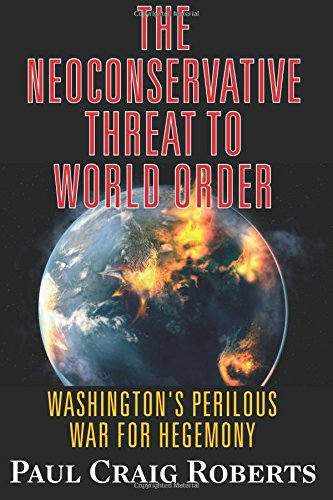
Paul Craig Roberts, UNZ Review

The Unimaginable Arrogance of Socialists

“Socialism, like the ancient ideas from which it springs, confuses the distinction between government and society.

As a result of this, every time we object to a thing being done by government, the socialists conclude that we object to its being done at all.

We disapprove of state education. Then the socialists say that we are opposed to any education.

We object to a state religion. Then the socialists say that we want no religion at all.

We object to a state-enforced equality. Then they say that we are against equality.

And so on, and so on.

It is as if the socialists were to accuse us of not wanting persons to eat because we do not want the state to raise grain.”

Frédéric Bastiat, “The Law”

The Forgotten Gifts of American Voluntarism

 Over the course of the pandemic, many were cheered by the myriad ways in which people rallied to help their fellow citizens. But many protested—wasn’t this the government’s job? Shouldn’t the government supply PPE rather than relying on citizens to sew face masks, ensure that children didn’t go hungry, and to feed and house front-line medical staff? With much of this discussion shaped by the polarizing response to then-President Donald Trump, it is helpful to be reminded that the debate about the respective roles of the government and the citizens in responding to crisis goes back even before the country’s founding.

Elisabeth S. Clemens’ Civic Gifts: Voluntarism and the Making of the American Nation-State supplies this history. Dr. Clemens, who is the William Rainey Harper Distinguished Service Professor of Sociology at the University of Chicago and a specialist in the political development of the United States, takes an episodic approach by studying crises from the Boston Tea Party through the Great Depression and World War II. Her focus is on benevolent or charitable associations, which step in to meet welfare needs during crises. At issue is the proper balance among self-reliance, voluntary associations, and government to provide for citizens’ welfare. Dr. Clemens sees an “unexpected prevalence of charity and benevolence” from both government and voluntary associations. “The puzzle,” she writes, “is to understand how charity and the gift became central elements in a purportedly liberal and individualistic political culture.”

Conservative readers who believe widespread charity and a robust civil society are spontaneous components of a healthy liberal democracy may be less puzzled about how charity and individualism go hand-in-hand. This quibble aside, there is much to appreciate in this important history of voluntary associations and their relationship to government. Particularly noteworthy is Dr. Clemens’ attention to the power of ideas to shape action, evidenced by her frequent quotations from speeches, correspondence, and papers of the men and women who led or opposed various associations and benevolent initiatives. Dr. Clemens challenges what she sees as a too-simple narrative of Americans as inveterate founders and joiners of associations, a narrative she attributes to “a stylized summary of Alexis de Tocqueville’s Democracy in America.” She presents a history of voluntary associations that is complicated and contested (and she points out Tocqueville’s own account of associations is more nuanced than is often supposed).

As Dr. Clemens explains, voluntary benevolent associations were essential to the very founding of the United States. When the British blockaded the port of Boston in retaliation for the Boston Tea Party, “communities throughout the colonies contributed sheep, cattle, barrels of rice, and the occasional pipe of brandy to the Boston Committee on Donations” to sustain the Bostonians, who “were understood to be suffering for a nation or polity that had not yet been formally declared.”

But while support for the Boston Committee on Donations helped to write a “story of peoplehood” and paved the way to the Founding, Dr. Clemens writes that this did not translate into unqualified support for voluntary associations among the Founders and early civic leaders. Dr. Clemens quotes Noah Webster’s statement that voluntary associations were “useful in pulling down bad governments; but…dangerous to good government;” Thomas Jefferson’s view that “permitting the spread of voluntary associations and corporations would threaten equality by allowing a small minority, a cabal, to exercise disproportionate influence over public life,” and George Washington’s objections to “the promiscuous mixing of mutual benevolence and state- and national-level political didacticism.”

Of course, these same men led voluntary associations. Webster, for example, founded the Connecticut Society for the Abolition of Slavery and Washington was the first president general of the Society of the Cincinnati. But Dr. Clemens surprises readers who supposed early American leaders were unambiguously supportive of associations as civic institutions by describing their worry that associations could be vehicles for factions. Voluntary associations had an important role, but not as organizations dispensing charity in place of government. Washington, for example, arranged for the charitable funds of the Society of the Cincinnati to be turned over to and dispensed by state legislatures to avoid citizens’ dependence on a private association.

Dr. Clemens writes that, by the Civil War, three competing visions about the relationship between benevolent voluntary associations and government had emerged. One vision kept alive the views of Washington, Jefferson, and Webster, that there should be no “promiscuous mixing” of these associations with government functions. Dr. Clemens cites Samuel Gridley Howe, a physician and member of the United States Sanitary Commission. The commission was founded during the Civil War to advise the U.S. Army’s medical corps, but became a vehicle for channeling citizens’ donations to Union soldiers. Howe eventually resigned, writing “it would be a misdirection of public charity to do what the Government can do, and ought to do, and will do.” This vision emphasized self-reliance, but when it came to providing for soldiers, their widows, or the worthy poor, it is government that should meet these needs, not charities.

Another vision championed these associations as a popular check on the power of government. This vision sought to replicate the success of the Boston Committee of Donations through broad citizen contributions to support (and thereby influence) government and civic causes, and to build a sense that the nation was striving to meet shared aims. During the Civil War, this view was exemplified by the exact organizations that Howe found so objectionable: the United States Sanitary Commission and its peer the United States Christian Commission. Dr. Clemens quotes one observer: “the Sanitary and Christian Commissions, in their ultimate results, are to make the armies of the world the armies of the people and not of kings.”

A final vision agreed on the importance of associations supporting government and civic causes, but distrusted populism. This was the vision of business and social elites, who wanted to ensure voluntary associations “bypassed both the strict constraints of electoral democracy and the dangerous powers of a centralized bureaucratic state.” During the Civil War, this vision was exemplified by organizations in major cities such as “the elite-dominated [New York] Union Defense Committee [which] raised volunteer regiments, collected funds to support soldiers’ wives and families, and eventually took charge of public funds to support their voluntary effort.”

Despite being a major force in American civil life from the Boston Committee on Donations through the first quarter of the 20th century, popular benevolent associations are nearly absent today.

While the first vision opposed any mixing of charities and government, the other two embraced this mixing but were at sharp odds about whether popular or elite sensibilities should lead. Dr. Clemens tells how the tensions between the latter two visions led to blows between Ernest Bicknell, who embodied elite-led benevolence at the turn of the 20th Century as secretary of the Chicago Bureau of Associated Charities, and Father Basil, a Catholic priest. Frustrated by the Bureau’s denials of his request for support for a home for boys, Father Basil went to the Bureau’s offices and gave a beating to Ernest Bicknell. Father Basil had stopped by a courthouse on his way and been advised that the fine for assault ranged from three to one hundred dollars—apparently a price was worth paying to deliver a message to the elites that they should harken to those actually working and living among the poor.

Dr. Clemens describes how each of these three visions had their champions and critics during the Civil War, depressions of 1873 and 1893, the 1906 San Francisco earthquake, World War I, and the Mississippi Flood of 1927. Leading players appear repeatedly: Ernest Bicknell survived his encounter with Father Basil to go to San Francisco in the wake of the earthquake—uninvited by local authorities but at the direction of several Illinois organizations—and would later become first national director of the Red Cross. Over the decades, these three visions were realized in new forms. Community Chests, for example, became favored vehicles for elite philanthropy, while Block-Aid—which introduced the first “call this number now” appeals—became a vehicle for popular support of government relief efforts.

The Great Depression fundamentally reset this contest as the economic crisis overwhelmed the ability of citizens and voluntary associations. Instead, the government took primary responsibility for providing for citizens’ welfare. However, even during the Depression, voluntary associations still enjoyed support in many quarters. Franklin Delano Roosevelt himself championed the March of Dimes, then known as the Committee to Celebrate the President’s Birthday, to raise funds for polio research and treatment. In short, each vision persisted, even as the balance shifted inexorably away from citizen self-reliance to voluntary associations entwined with government and to government itself.

Dr. Clemens’ account of these episodes and how different visions informed the balance of citizen self-reliance, voluntary associations, and government in response to those crises is a valuable history; it provides us a new framework in which to take stock of the health of American voluntary associations and civic life during our current pandemic crisis. To do so, we may ask how—if at all—her three visions remain present today.

The vision most conspicuous today is of elite-led voluntary associations working in concert with government. For example, during the Obama Administration, as Megan E. Tompkins-Strange detailed, the Bill & Melinda Gates Foundation, the Eli and Edythe Broad Foundation, and other elite philanthropies played a major role in reshaping education policy (so much so that an Obama-era Department of Education official once referred to the “Obama Administration” as the “Gates Administration”). During the pandemic, celebrity chef José Andrés’ World Central Kitchen exemplifies a new kind of elite-led voluntary association that works in concert with government: FEMA subsidized WCK to provide food in Puerto Rico after Hurricane Maria, and during the pandemic, state and local governments are using FEMA funds to provide meals from WCK.

Despite being a major force in American civil life from the Boston Committee on Donations through the first quarter of the 20th century, popular benevolent associations are nearly absent today. Dr. Clemens notes that “by December 1917, 22 percent of the American population had made a least the basic contribution that signified membership in the organization” to support the American effort in World War I. Today, Americans are so fragmented and polarized that no organization has the trust of so many. To be sure, Americans give more generously than ever: during 2020, giving rose 11%, and small donorswhose gifts had fallen off in recent years, contributed to that boost. Indeed, there may be reasons to favor smaller, local associations over a national association such as the Red Cross; but the fact that it is difficult to imagine so many coming together to support a single organization testifies to a lost sense that we can rally to face together national challenges. Dr. Clemens book, completed shortly before the pandemic, ends with a nostalgic hope that Americans could recover the possibility of mobilizing in a crisis through voluntary associations, acting as “democratic citizens [who] insisted that government depended not only on popular consent but popular contribution.” The events of the fifteen months have shown just how difficult it would be to realize that hope.

Dr. Clemens’ excellent study helps us understand the visions and practices of voluntary benevolent associations throughout America’s history—and provides a vantage point for assessing the erosion of our feelings of solidarity and common purpose with our fellow citizens.

Jacqueline Pfeffer Merrill

The Actual Definition of Inflation

Inflation, as this term was always used everywhere and especially in this country, means increasing the quantity of money and bank notes in circulation and the quantity of bank deposits subject to check. But people today use the term `inflation’ to refer to the phenomenon that is an inevitable consequence of inflation, that is the tendency of all prices and wage rates to rise. The result of this deplorable confusion is that there is no term left to signify the cause of this rise in prices and wages. There is no longer any word available to signify the phenomenon that has been, up to now, called inflation. . . . As you cannot talk about something that has no name, you cannot fight it. Those who pretend to fight inflation are in fact only fighting what is the inevitable consequence of inflation, rising prices. Their ventures are doomed to failure because they do not attack the root of the evil. They try to keep prices low while firmly committed to a policy of increasing the quantity of money that must necessarily make them soar. As long as this terminological confusion is not entirely wiped out, there cannot be any question of stopping inflation.”

–Economist Ludwig von Mises