Unknown's avatar

About theartfuldilettante

The Artful Dilettante is a native of Pittsburgh, PA, and a graduate of Penn State University. He is a lover of liberty and a lifelong and passionate student of the same. He is voracious reader of books on the Enlightenment and the American colonial and revolutionary periods. He is a student of libertarian and Objectivist philosophies. He collects revolutionary war and period currency, books, and newspapers. He is married and the father of one teenage son. He is kind, witty, generous to a fault, and unjustifiably proud of himself. He is the life of the party and an unparalleled raconteur.

The Actual Definition of Inflation

Inflation, as this term was always used everywhere and especially in this country, means increasing the quantity of money and bank notes in circulation and the quantity of bank deposits subject to check. But people today use the term `inflation’ to refer to the phenomenon that is an inevitable consequence of inflation, that is the tendency of all prices and wage rates to rise. The result of this deplorable confusion is that there is no term left to signify the cause of this rise in prices and wages. There is no longer any word available to signify the phenomenon that has been, up to now, called inflation. . . . As you cannot talk about something that has no name, you cannot fight it. Those who pretend to fight inflation are in fact only fighting what is the inevitable consequence of inflation, rising prices. Their ventures are doomed to failure because they do not attack the root of the evil. They try to keep prices low while firmly committed to a policy of increasing the quantity of money that must necessarily make them soar. As long as this terminological confusion is not entirely wiped out, there cannot be any question of stopping inflation.”

–Economist Ludwig von Mises

The Wisdom of Ayn Rand

An anti-concept is an unnecessary and rationally unusable term designed to replace and obliterate some legitimate concept. The use of anti-concepts gives the listeners a sense of approximate understanding. But in the realm of cognition, nothing is as bad as the approximate . . . .

One of today’s fashionable anti-concepts is “polarization.” Its meaning is not very clear, except that it is something bad—undesirable, socially destructive, evil—something that would split the country into irreconcilable camps and conflicts. It is used mainly in political issues and serves as a kind of “argument from intimidation”: it replaces a discussion of the merits (the truth or falsehood) of a given idea by the menacing accusation that such an idea would “polarize” the country—which is supposed to make one’s opponents retreat, protesting that they didn’t mean it. Mean—what? . . .

It is doubtful—even in the midst of today’s intellectual decadence—that one could get away with declaring explicitly: “Let us abolish all debate on fundamental principles!” (though some men have tried it). If, however, one declares; “Don’t let us polarize,” and suggests a vague image of warring camps ready to fight (with no mention of the fight’s object), one has a chance to silence the mentally weary. The use of “polarization” as a pejorative term means: the suppression of fundamental principles. Such is the pattern of the function of anti-concepts.

Observe the technique involved . . . . It consists of creating an artificial, unnecessary, and (rationally) unusable term, designed to replace and obliterate some legitimate concepts—a term which sounds like a concept, but stands for a “package-deal” of disparate, incongruous, contradictory elements taken out of any logical conceptual order or context, a “package-deal” whose (approximately) defining characteristic is always a non-essential. This last is the essence of the trick.

Let me remind you that the purpose of a definition is to distinguish the things subsumed under a single concept from all other things in existence; and, therefore, their defining characteristic must always be that essential characteristic which distinguishes them from everything else.

So long as men use language, that is the way they will use it. There is no other way to communicate. And if a man accepts a term with a definition by non-essentials, his mind will substitute for it the essential characteristic of the objects he is trying to designate . . . . Thus the real meaning of the term will automatically replace the alleged meaning.

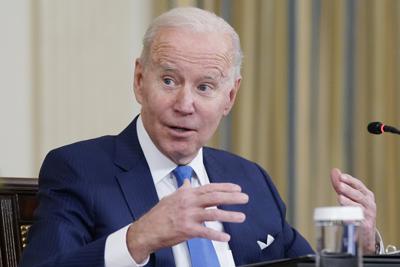
Will Biden be America’s Hugo Chavez

The Communists came to power in Venezuela when the party seeking power — under Hugo Chavez — wrote all the election rules and everyone had to play by them. Not surprisingly, Chavez became the dictator; when he eventually died, his party remained in power. That same Communist party starves and tyrannizes its citizens to this day.

Hyperinflation played a role in the ability of the Communists to seize power in Venezuela. Similarly, back in the 1930s, hyperinflation played a role in the ability of Hitler to seize power in Germany. Tyrants feed on fear, and deliberately worsen conditions so that people will remain afraid. Fear gives them more power and control. Does any of this sound familiar?

People in Venezuela (and many who fled) look back on Hugo Chavez like people look back on Hitler. Could the same be said one day of Joe Biden? “How could they be so stupid to elect this fool? He ruined America.” Of course, the government rewrote the election rules here, too. They did so unofficially in 2020, and in 2021 and 2022 they will make it official, by passing laws that permanently rig future elections in one party’s favor. And most of us decided to roll over and accept it. Trump in 2024? It’s a joke. Nobody is going to get power from these statists. Most don’t (yet) realize what we’re up against. It’s really no different than if the Nazis had won in 1945, and America is now a totalitarian dictatorship.

Inflation, by the way, is not caused by mean people raising their prices. Read an economics book. It’s caused by the government’s expansion of the money supply (since the government controls the currency, not the market, ever since we went off a gold standard.) When the Federal Reserve artificially increases the supply of the dollar (usually so it can spend), it makes the value of your dollars lower than it would otherwise be; this triggers a rise in prices. It happened in the 1970s and it’s happening again. Since 2020, the government of the U.S. has been massively expanding the money supply (because of unprecedented spending) and as a result we’re getting higher prices with everything. Millions will suffer and dislike it, but in their fear they’ll give a green light to tyrants that could make 2020 and early 2021’s “scamdemic” look like child’s play.

If you think the United States is too prosperous, too special or too infallible to fall prey to similar disasters, you could be in for a rude awakening. It’s your country. If you lose it all by tolerating or actually voting for these dictators, then it’s YOUR fault. I’m going to say so … while I still can.

Michael J. Hurd, Daily Dose of Reason

Memorial Day in Post-American Republic

The honor implied by Memorial Day is not for fighting in wars; it’s because soldiers fought for FREEDOM. Honor consists of standing up for yourself and your loved ones, and — in the process — for the rights of all. In the last year or more, we have watched with horror and disgust as millions of free people eagerly and gleefully welcome the onset of tyranny. They wear their face diapers and applaud open anarchy, defunding of police, violation of individual privacy, open violation of election laws, hyperinflationary spending, debasement of the military, and looting in the streets, all in the name of showing how “virtuous” they are, by an utterly insane and depraved standard of virtue. Through it all, millions of others stand bewildered, confused and horrified, but unsure of what to do.

And now we’re supposed to celebrate our nation’s virtue, rationality and freedom on the occasion of Memorial Day.

On the one hand, it makes sense to treasure the noble efforts of those who fought for freedom, to treasure those efforts now more than ever before. When you begin to lose something valuable, you appreciate it even more. But it’s also horrifying to think that these people who died and suffered in past wars — for their own freedom, of course, but also to preserve freedom for all time — would have died for the likes of what we’re witnessing today. So Joe Biden can stack the Supreme Court and ruin what’s left of our economy? So Kamala Harris can snicker and sneer giving a commencement address at the distinguished Naval Academy in Annpolis as she participates in the dismantling of our republic, and openly licks her chops at the prospect of finishing the job herself very soon (she hopes)?

But here we are. Those of us who still value our freedom and liberty, and the uplifting stature of man such a condition implies — the things these soldiers fought for — have been victimized by tyranny, election fraud, a ruined small business economy, daily censorship by government-connected oligarchs and so much else. The challenge, going forward, is not to think or act like victims. We must do what those soldiers did, in our own way and as circumstances require: Reassert the value of individual rights and defy, antagonize, resist, nullify, ignore, secede, disobey and ultimately defeat the forces of evil. As Winston Churchill would say: Never, ever, ever give up. If the Brits could endure the subway tunnels as the Nazis bombed London in World War II, surely we can figure out a way to resist Joe Biden, Kamala Harris and Nancy Pelosi. If we can’t defeat such unworthy adversaries, then maybe we deserve what we get.

In a way, it’s tougher today than during World War II and the Cold War. The Nazis never took over the nation’s capital of the United States; and the Soviets never bombed it. But today’s enemies of freedom are now in office, wielding arbitrary power they intend never, ever to relinquish. We are an occupied nation, even if some of us (in understandable psychological denial) still think we’re not.

Those brave soldiers fought and died for victory over the tyrants in Britain, the slave-holding South, Nazi Germany, Imperial Japan, Communist Russia and the totalitarian Middle East. Now we have to figure out a way to defeat the enemies in our midst. That’s the spirit in which a decent person can celebrate Memorial Day, as well as other great American holidays, going forward: as a nod to the past and the hoped-for future, but not for the present at all.

Michael J. Hurd, Daily Dose of Reason

The Continuing Pandemic of Tyranny

People who continue to wear masks, even when they’re no longer required in most places, become unhinged at the sight of others not wearing masks.

People who opt NOT to wear masks are now on the defensive. Some feel so defensive they keep wearing masks anyway.
Interestingly, the people who opt NOT to wear masks do not become unhinged at the sight of others wearing masks. They might think it’s stupid or silly, but it doesn’t cause them to have meltdowns.

Why aren’t the mentally unhinged required to explain themselves? Instead, the rational and the sane are the people who must apologize.

THIS illustrates both the sickness and the evil of our times. Not just with regard to masks — but with nearly everything.

*******************

Sure, let’s have an honest investigation into the origins of the COVID-19 virus.

But how about an investigation into:

1) Why so many people lack critical thinking skills and the virtue of independence; and,

2) Why so many people place their trust into the LEAST intellectually and morally qualified to be trusted with anything — the Cuomos, the Newsoms, the Pelosis, the Bidens, the Faucis, etc.

THIS would be a really interesting study.

Michael J, Hurd, Daily Dose of Reason

When Were the Gospels of Matthew and Mark Written?

The Christian faith rests on the truth of the Gospels. Liberal New Testament scholars and theologians have put that in doubt in many ways. One is by dating Luke’s writing of Acts in the range 80-110 AD. In part 2 of this series I explained why the evidence shows it should (must!) be dated to 60-62 AD. This gives us confidence that legendary ideas haven’t crept into the text. (See also Tom Gilson’s Too Good to be False.)

In addition, archeologists and historians have shown that Luke was a first rate historian. A.N. Sherwin-White, a leading expert on ancient Roman law, wrote, “[T]he confirmation of historicity [of Acts] is overwhelming…any attempt to reject its historicity even in matters of detail must now appear absurd. Roman historians have long taken it for granted.” (Roman Society and Roman Law, p. 173).

The Gospel of Luke and Acts — A Two-Volume Set

There is an immediate and obvious connection between Acts and the Gospels. New Testament scholars consider the Gospel of Luke and Acts as a two-volume set. Luke wrote both books, and he addressed them to the same person, Theophilus (Luke 1:3, Acts 1:1). How much earlier did he write his Gospel?

While we can’t be certain, the apparent continuity between the end of Luke and the beginning of Acts implies only a short time interval between them. Unlike Mark and Matthew, Luke makes no mention of Jesus’ post-Resurrection appearance in Galilee near the end of his Gospel. Instead he focuses on Jerusalem:

Thus it is written, that the Christ should suffer and on the third day rise from the dead, and that repentance and forgiveness of sins should be preached in his name to all nations, beginning from Jerusalem. You are witnesses of these things. And behold, I send the promise of my Father upon you; but stay in the city, until you are clothed with power from on high. (Luke 24:46-49).

This parallels Acts (1:8), “But you shall receive power when the Holy Spirit has come upon you; and you shall be my witnesses in Jerusalem and in all Judea and Samaria and to the end of the earth.”

Other similarities between the end of Luke and the start of Acts (the Ascension, the return to Jerusalem) strengthen this link. If Acts was written in 60 AD, then we can reasonably conclude that the Gospel of Luke was completed about 59 AD.

The First Epistle of Clement (1 Clement)

Before you go thumbing through your copy of the Bible looking for it, note that 1 Clement is not one of the 27 books of the New Testament. Still, a number of early Christians in various regions did regard this letter as canonical. There was nearly unanimous agreement about its authenticity. Clement was a Christian leader in Rome writing to Christians in Corinth. He became bishop of Rome in the last decade of the first century. There is also a tradition among early church fathers that he had close personal contacts with Peter and Paul. Most scholars have dated the writing of 1 Clement to 92-98 AD. As is the case with Acts, however, the evidence doesn’t support such a late date. We’ll see shortly how important this is.

Even the liberal New Testament scholar John A.T. Robinson argued for an early date of 1 Clement in his 1976 book Redating the New Testament (full pdf here). He noted, “Not only is the author not writing as a bishop, but the office of bishop is still apparently synonymous with that of presbyter (42.41f.; 44.1,4f.; 54.2; 57.1), as in the New Testament and all the other writings we have examined.” (p. 328) This would place 1 Clement prior to the 90s.Please Support The Stream: Equipping Christians to Think Clearly About the Political, Economic and Moral Issues of Our Day.

In 1988 Fr. Thomas J. Herron completed a deeper analysis on 1 Clement. It was published in a more accessible form in 2008 (4 years after his death) as Clement and the Early Church of Rome: On the Dating of Clement’s First Epistle to the Corinthians. In the first chapter Herron gives 11 lines of internal evidence for an early dating. He also lists several external evidences. I only have space to cover a couple cases.

The first example is based on a fact that I discussed in part 2 — the destruction of the temple in Jerusalem in 70 AD. Not only is this event not mentioned in 1 Clement, but in 41.2, Clement writes, “Not in every place, brethren, are the continual daily sacrifices offered, or the freewill offerings, or the sin offerings or the trespass offerings, but in Jerusalem alone. And even there the offering is not made in every place, but before the sanctuary in the court of the altar; and this too through the high-priest and the aforesaid ministers.” In this passage he is clearly speaking in the present tense of temple offerings in Jerusalem.

1 Clement begins with the statement, “Owing to the sudden and repeated misfortunes and calamities which have befallen us.” Earlier scholars had assumed this description referred to the persecution of Christians under Emperor Domitian in the late 90s. But, the case for this rests on very flimsy evidence. Instead, Herron (following earlier scholars) links this passage to the chaotic political situation in Rome in 69 AD, the “Year of Four Emperors.” These two constraints, together, imply that 1 Clement dates from the first months of 70 AD.

Applying 1 Clement to the Gospels

Why even bother with 1 Clement, though? It’s simple — Clement quotes from or refers to about 13 books of the New Testament (Clement of Rome’s New Testament). In particular, he quotes from both Luke and Matthew, in chapters 13 and 46. Not only must these gospels predate 70 AD, but they must do so by at least a few years to allow time for their widespread distribution. This gives an upper limit of the mid-60s for their composition. This is consistent with the earlier date for Luke I quoted above.

Can we be more specific on Mark and Matthew? And what about John? These are the topics of my next installments.

Guillermo Gonzalez received his Ph.D. in astronomy from the University of Washington, Seattle in 1993. He has also held positions at The University of Texas at Austin, Iowa State University, Grove City College, and Ball State University. Dr. Gonzalez has published over 80 peer-reviewed research papers on topics related to astrobiology and quantitative stellar spectroscopy. He is co-author of the second edition of Observational Astronomy, a widely used undergraduate textbook. He is also co-author, with Jay W. Richards, of The Privileged Planet: How our Place in the Cosmos is Designed for Discovery.

No Matter What You Think about COVID, it’s Still the Government’s Fault


If you think COVID was an exaggerated crisis and an excuse to establish a regime based on tyranny and control, then you have government (and its media) to blame. If you think COVID was a horrible tragedy unlike other illnesses or tragedies that should have been prevented, then you have government (especially the Chinese government and its arm in America, the Democratic Party) to blame.

Government is virtually always the problem, and virtually never the solution. The only value of government is an armed police force and military–provided those two things are kept in strict check with the sole aim of protecting private property and other individual rights.

Black Lives Matter is catastrophically wrong. They say let’s have NO police but otherwise have unlimited government control and unlimited government services. In other words: Communism. The exact opposite is true. If you want to destroy America, support the collectivism of Black Lives Matter. If you want to save it, support the complete opposite.

Michael J. Hurd, Daily Dose of Reason