How Your Government Really Works

Some of the harshest critics of government corruption are thoroughly corrupt – and everyone in the upper reaches of government is complicit due to their silence.

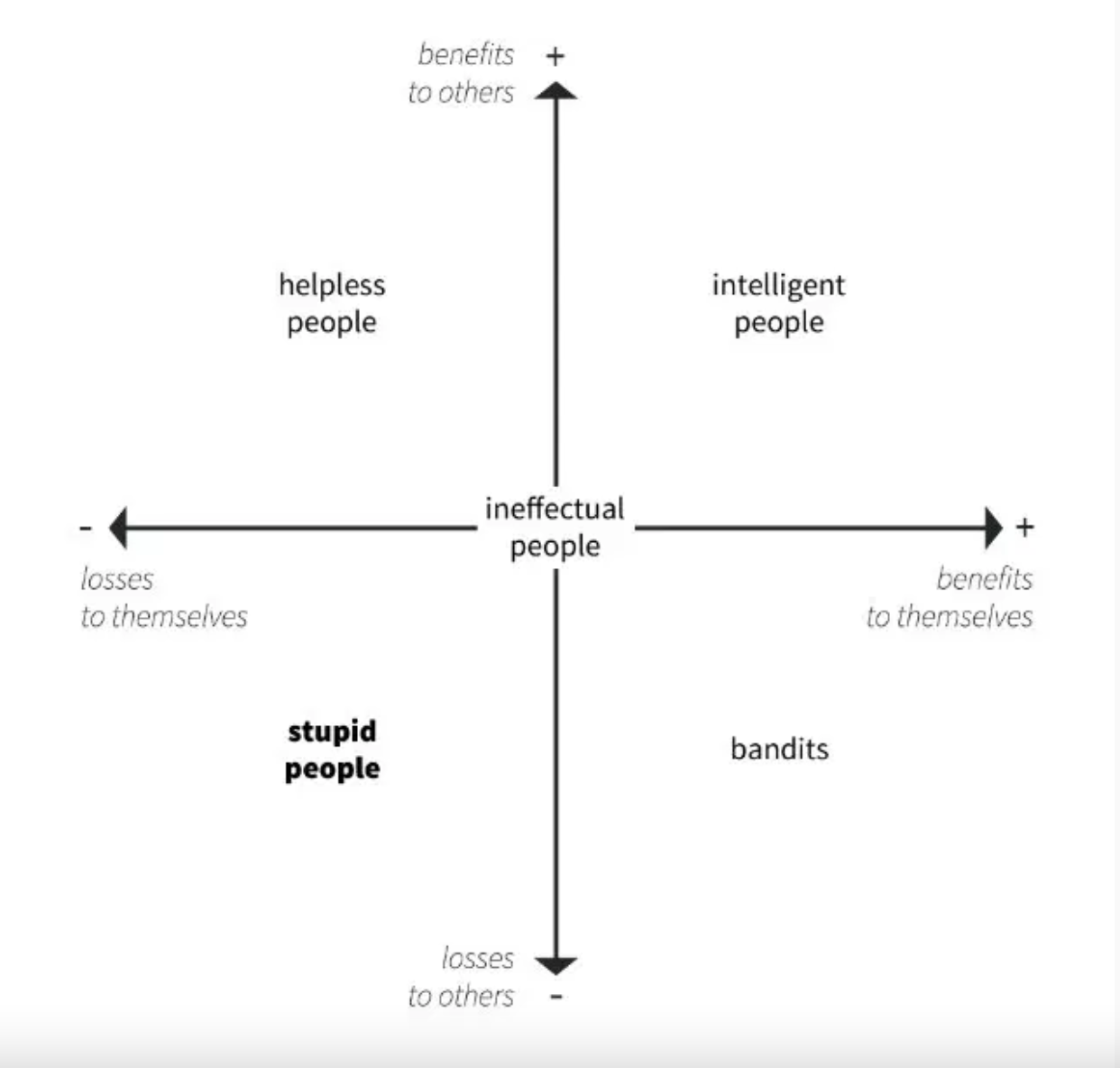
I spent over 40 years in government service. I don’t consider myself an expert on the subject but after 40 years you cannot avoid acquiring a more than basic knowledge of a subject. One of the lessons I learned is that knowledge is power. There are people in government who keep their ears to the ground in order to gain as much knowledge as possible. I was not one of them, but I could not avoid learning who was sleeping with whom and other supposedly private matters. An example of this lesson: a coworker of mine walked into a chief’s office while he was on the couch with a woman who was not his wife. I should not have to clarify that they were in a horizontal position. This coworker was shortly promoted to supervisor and transferred to what I suspect was an ideal location. Ambitious people pay attention.

The higher reaches of powerful organizations are composed of ambitious people who are not necessarily competent in the areas they are responsible for, but they are aware of the situations that will advance their careers. The current situation with the Lincoln Project illustrates this point. The Lincoln Project claims to be “holding accountable those who would violate their oaths to the Constitution and would put others before Americans.” That’s a pretty noble endeavor. One of the founders of this group, John Weaver, resigned after charges of sexual harassment which included a 14-year-old boy.

Imagine a situation where a thoroughly reprehensible individual is an essential member of a team. The team is working to prevent a disaster that will possibly result in death of millions. Without this individual the team will fail. However, this individual is a monster, a pedophile, and a possible murderer. What do you do? Some people will ignore his behavior. Others will denounce him and accept the damage this will cause. It should also be noted that the prospects of whistleblowers are not very good. By exposing this individual, you are alienating a large number of powerful people who may share his vices. The Lincoln Project issued a severe condemnation of Weaver, denouncing his “deplorable and predatory behavior.” But this was only after a New York Times report detailed his history. Perhaps his coworkers were unaware of his activities. I find that unlikely though. So, their self-righteous condemnations of President Trump ring hollow

It is almost impossible for prominent people to conceal their behavior. The late Senator John McCain’s wife Cindy claimed, “Epstein was hiding in plain sight. We all knew about him. We all knew what he was doing, but we had no one that was — no legal aspect that would go after him. They were afraid of him. For whatever reason, they were afraid of him.” The important part of this statement is: “We all knew about him.” Jeffrey Epstein was prostituting young girls and Cindy McCain knew about it. She did not report it. What was she afraid of? Vladimir Bukovsky pointed out one of the problems with exposing people: “The movers and shakers of today have little interest in digging for the truth. Who knows what one may come up with? You may start out with the communists and end up with yourself.”

It is not surprising that men behave badly. Every profession has members exposed as predators. Entertainment has Harvey Weinstein. The news media has Matt Lauer. The government has the Congressional Office of Compliance (COC) which supposedly disbursed the ridiculously low sum of $17 million over a twenty-year period to cover sex-related incidents. Senator Ted Kennedy’s activities included public sex in 1985 and 1987 at La Brasserie restaurant. Kennedy reportedly had a high-ranking aide who served as “a pimp… whose real position was to procure women for Kennedy.” The late NPR reporter Cokie Roberts claimed, “(Rep. John) Conyers’ predatory behavior was an open secret among the press corps.” She stated, “Don’t get in the elevator with him, you know, and the whole every female in the press corps knew that.” She also stated, “You know they are so used to it. I mean, the culture of Capitol Hill for so many decades was men being bad.”

Predatory behavior should be exposed, and the perpetrators should be punished. However, this has to be done with discretion. Some charges are fabricated or exaggerated. There are often attempts to discredit the victims. Paula Jones was described by Newsweek’s Evan Thomas as “some sleazy woman with big hair coming out of the trailer parks.” Leslie Stahl reported on CBS that John Tower danced naked on a grand piano with his mistress, a Russian ballerina. Reporters had to go back 30 years in order to find questionable evidence that Judge Roy Moore was a pedophile. You might have noticed that the individuals with bogus or questionable charges are conservatives. That may be the case, but all members of the elite are complicit. When Utah Senator Orrin Hatch — a conservative Republican — was asked if he thought Sen. Kennedy had a drinking problem, he responded, “I wouldn’t comment on that.” Hatch knew all about Kennedy’s behavior but would not even comment on his drinking.

John Dietrich is a freelance writer and the author of The Morgenthau Plan: Soviet Influence on American Postwar Policy (Algora Publishing). He has a Master of Arts Degree in International Relations from St. Mary’s University. He is retired from the Defense Intelligence Agency and the Department of Homeland Security. He is featured on the BBC’s program “Things We Forgot to Remember:” Morgenthau Plan and Post-War Germany.

Advertisement

Read more: https://www.americanthinker.com/articles/2021/02/how_your_government_emreallyem_works.html#ixzz6mf9CrWks
Follow us: @AmericanThinker on Twitter | AmericanThinker on Facebook

Read more: https://www.americanthinker.com/articles/2021/02/how_your_government_emreallyem_works.html#ixzz6mf8mpQef
Follow us: @AmericanThinker on Twitter | AmericanThinker on Facebook

Conservatives Must Read Marx

Yes, conservatives, Karl Marx, the Manifesto, The German Ideology, Capital, The Eighteenth Brumaire . . . the lot of it. Close your Hayek and Friedman, forget the Invisible Hand for a while, Reaganism is history, Edmund Burke won’t help you, the Revolution is here and you’re in it.

Start reading, now, not Marx on private property or money, commodity fetishism, or the labor theory of value. Read him for one thing: class relations, for you are a class whether you like it or not.

When the populists among you started to talk about politicians as a “class” that crossed party lines, composed of Democrats and Republicans both, you made one important mistake. Not that legislators and high officials weren’t a distinct group with their own interests—that was clearly correct. Rather, you didn’t follow out the implication that the political class’s class behavior put conservatives into a class, too. The elite has marked you as a collective problem, and they’re busy dealing with you.

It’s not a culture war, not anymore. There is no common civic ground on which liberals and conservatives meet and hash things out. In the 1990s we had genuine debates in the public arena, Stanley Fish versus Dinesh D’Souza over political correctness, Lynne Cheney versus revisionist historians over the meaning of America, Clinton Democrats versus congressional Republicans over gays in the military.

The debates are over now. The Woke brigades won’t battle your ideas. They follow the motto of that brilliant manager of men, Joseph Stalin, who reasoned quite soundly: “No man, no problem.”

The marketplace of ideas offends them—you offend them. Now, they have the power of termination. While conservatives wrote bestsellers such as The Closing of the American Mind and trounced leftist spokesmen on the cable news shows, thousands of progressives and identity politicians were claiming space in university administrations, human resources in corporate America, school boards and city councils, editorial offices, and Silicon Valley, law schools and museums and libraries, not to mention the many activist organizations that have our most distinguished liberal institutions cowed.

From those posts, usually out of the public eye, they exert their power against you. It’s economic, not cultural. When Tucker Carlson defended Trump’s Wall, his antagonists didn’t collect evidence against his words. No, they threatened his advertisers with boycotts. When Jordan Peterson refused an Ontario law mandating pronoun usage, his critics didn’t mount arguments against him. They demanded the University of Toronto fire him. Money, jobs, resources, access—that’s the target now. Academia requires that all job candidates compose a “diversity statement,” essentially a loyalty oath that imposes leftist ideology onto the hiring process. An honest conservative doesn’t survive, and that’s the point.

This was the long march through the institutions, and it’s done. An open contest of ideas needn’t happen, not when leftists control the pipelines. Why risk it when they already have the power? They are so much better at personnel than you are. They don’t have to justify what they do if everyone in the room agrees with them. No conservatives, no problem. If they deprive you of jobs, they annul your ideas. If they reject your manuscripts and cancel your TV shows and keep you out of the teaching ranks, the rising generation and mass of citizens barely know you exist.

From then on, liberal ideology looks like reality. A class-based power play assumes the guise of natural truth. As Marx put it, one class’s values “increasingly take on the form of universality” (German Ideology). This is a sign of success—he calls it a “trick”—because it obscures the material conditions that exalted those values, including the suppression of the interests of other classes. As long as people accepted the oppression they suffered as “the way things are,” not a class set-up, they couldn’t resist it, at least not effectively. What they needed was class consciousness.

Conservatives don’t like to think of themselves as a class. They reject Marx’s definition of history as class struggle. Life isn’t 100 percent economic and human beings have souls that transcend politics. OK—but the Woke don’t care. They treat you as a class, and it works. They target your livelihood, so you better start thinking about a better response than “That’s not right.”

Popular conservative thinkers warn very astutely of the dangers of class warfare and everything-is-political thinking. When it comes to advising a subordinate class how to climb out of a pit, though, they’re pretty much worthless. Marxism, on the other hand, taught scattered and powerless laborers how to become a labor movement. You, too, can learn the lessons of organization while skipping the poisonous doctrines of Communism.

Mark Bauerlein is a senior editor at First Things and professor of English at Emory University, where he has taught since earning his Ph.D. in English at UCLA in 1989. For two years (2003-2005) he served as director of the Office of Research and Analysis at the National Endowment for the Arts. His books include Literary Criticism: An Autopsy, The Pragmatic Mind: Explorations in the Psychology of Belief, and The Dumbest Generation: How the Digital Age Stupefies Young Americans and Jeopardizes Our Future. His essays have appeared in PMLA, Partisan Review, Wilson Quarterly, Commentary, and New Criterion, and his commentaries and reviews in the Wall Street Journal, Washington Post, Boston Globe, The Guardian, Chronicle of Higher Education, and other national periodicals

A Doctor’s View of the New mRNA Vaccines

It’s important to know both what we know about the new vaccines and what we don’t know.

I’ve practiced for 35 years. I am always honest with my patients, even if conversations are difficult or confrontational. I will also be honest about saying “I don’t know.” This happens when a diagnosis is not readily apparent or when there are limits to the help I can give. With the passage of time, I’ve learned that what we don’t know about medicine outweighs what we do know.

I’ve always been a proponent of older, more established vaccines. However, they are imperfect and, like all medical treatments, can have side effects. Unfortunately, in the conversation about the new COVID-19 vaccines, the tenets of honesty and a willingness to admit ignorance are being compromised.

Operation Warp Speed was remarkable, but it leaves an uncomfortable question: Is it a good thing to rush a vaccine (or medicine) to the public without the usual safeguards? Operation Warp Speed might be a great business objective or military goal, but is it great for a medical treatment?

The pharmaceutical industry, government health authorities, and the media insist the new vaccines are safe and effective. While the initial results are promising, this is not the whole truth. Both honesty and acknowledging ignorance require answering a few questions.

What do we know about the new TYPE of vaccine being given?

Pfizer and Moderna were the first COVID-19 vaccines to be approved. Both use a new technology called mRNA vaccine, which has never been broadly given to a human population to prevent any disease.

Let that sink in for a moment.

All previous vaccines take a weakened virus or a piece of the virus and inject it into humans to induce an immune response sufficient to prevent a disease. Pfizer’s and Moderna’s vaccines inject mRNA, which is a protein code that instructs the body to make a part of COVID-19’s spike protein that will then induce an immune response.

Our bodies daily use our own mRNA to carry instructions from DNA to make various proteins the body uses. While this new vaccine science sounds intriguing, it has never been tried in humans in this scope. It may be a breathtaking scientific advancement heralding a new path for all vaccines. It may also be less effective or have currently unknown side effects.

Is the mRNA vaccine for COVID-19 safe?

So far, the limited study of the vaccines approved for emergency use (one major study for each vaccine approved) has shown some short-term side effects. The vaccine is a two-shot series and side effects were prominent after the second shot. Side effects were more common if the recipient was younger than 65 years old.

Side effects

The injection site has usually gone away in 4-5 days. The other side effects resolve, on average, in 2-3 days.

Early reports after giving the vaccine have also included allergic reactions ranging from mild to a few cases of anaphylaxis (serious allergic reaction). Allergy may be to mRNA itself or the lipid nanoparticles/PEG vehicle it is housed in. The long-term side effects are not currently known, as the main study length and follow up have only been four months.

Is the mRNA vaccine effective?

In the main study from Pfizer’s vaccine, 8/17,000 patients got symptomatic COVID-19 in the treatment group during the short follow up. In the placebo group, 162/17,000 patients got symptomatic COVID-19 during the study time. There was also a trend towards those getting the vaccine having a less severe disease and needing less hospitalization.

The Moderna study had 30,000 patients split into treatment and placebo arms. In the vaccine group, 11/15,000 patients came down with COVID-19. In the placebo group, 185/15,000 patients came down with COVID-19.

It was hard to ascertain death avoidance in these small studies. However, the two initial studies are favorable and show a 95% efficacy. Now that more information about the studies is known, Peter Doshi, associate editor of the British Medical Journal, wrote an editorial that the true efficacy may be much lower because the study excluded people with COVID-19 symptoms but a negative test and other factors.

How long does immunity last?

This is unknown. Injected mRNA goes away in days, but it is thought that the immune response will be long lasting. Whether patients will need boosters at some point is not known.

What about mutations in the COVID-19 virus? Will the vaccine still work?

Viruses always mutate and scientists following COVID-19 estimate it mutates, on average, twice a month. Most of these mutations are minor and will likely not change the vaccine effectiveness. These mutations also usually do not make the virus more deadly.

What is antibody dependent enhancement?

COVID-19 is in the family of Coronavirus that causes the common cold. The pharmaceutical industry has been trying without success for the last two decades to make a vaccine against the common cold. A safe vaccine against the common cold would make some company a lot of money!

One problem in the animal studies on coronavirus family vaccines was “antibody dependent enhancement.” When animals were inoculated, they developed a robust immune response, which is a good result.

However, when the animals were later exposed to the coronavirus against which they were vaccinated, their immune system went into overdrive, and they developed an overwhelming, fatal immune response called a “cytokine storm.” Fatal cytokine storms also happened to some COVID-19 patients when their infection was severe.

Human responses do not always correlate to animal responses. So far, there have been no signs that humans have a cytokine storm when exposed to COVID-19 after receiving the vaccine. Obviously, this would be catastrophic for any vaccine.

Should we be concerned about other long term side effects from mRNA vaccines?

A concern that deserves mention is the possibility that a cross-reaction and immunity to other parts of the spike protein could cause auto-immune disease or other problems.

A former Pfizer VP, Dr. Michael Yeadon, who has over 30 years of experience in immunology and drug research, filed a Stay of Action petition with the European Medicine Agency (like our FDA) to halt the trials of mRNA vaccines over concerns it might affect sterility in women.

Yeadon is worried that the mRNA vaccine was coded for a region of the spike protein that was similar to Syncytin-1, which is a protein that is essential for the development of the placenta. If a woman’s body makes antibodies to this protein, she could become sterile when vaccinated for COVID-19. This is a theory, not a proven fact, and no one has studied it. Yeadon’s insistence on more studies to make sure this will not happen seems reasonable.

What to make of all these concerns?

Medicine is always about a risk/benefit analysis, subject to the first maxim of “do no harm.” Usually, new medicines or new vaccines are used only after multiple studies show over long periods of time (for vaccines, at least five years) prove they’re safe and better than the older treatments.

While the new mRNA vaccines have good initial results and may be a breakthrough, they should be viewed as experimental and would best be used in high-risk patients (older patients or those with health conditions raising COVID-19 mortality) until we know more. Patients should receive extensive informed consent to understand the risks and benefits. Patients also need to know that if they have a serious complication, Congress already protected the pharmaceutical companies from litigation around emergency vaccines.

The mantra of “safe and effective” is not only incomplete, but it also ignores other pathways out of the pandemic. For healthy people, early outpatient treatments are being developed to treat COVID-19. These would be a safer option than taking an experimental vaccine. Young people (<60 years old) who have very low mortality from COVID-19 should approach getting the new vaccine as if they were consenting to be in an experimental trial of a new vaccine.

Our history shows there are good reasons why new medicines and vaccines are not rushed into widespread use until we have multiple studies and time to assess the safety and efficacy of the new treatments. If the death rate from COVID-19 were much higher, it might make the risks acceptable to try an experimental vaccine. Given that the COVID-19 death rate is a little higher than a bad flu, my opinion is that younger and healthier people need a more rigorous risk/benefit analysis before taking the mRNA vaccine.

Thomas Siler, M.D.

To a Tyrant, Lockdowns ARE Effective

Biden is a lockdowner. His advisers are lockdowners. Lockdowns don’t work. We have demonstrated that. We’re not turning back, Maria. And they will not be able to get away with targeting Florida.””

— Florida Governor Ron DeSantis, on Occupier Biden’s threat to stop people from traveling across state lines, including into Florida.

I admire DeSantis’ words and spirit. But the tyrants in D.C. are going to do whatever the hell they feel like. They are lawless savages in suits. Watch and see. Biden will use the U.S. military to arrest citizens who disobey his decrees. After what this leftist cabal has already gotten away with, this will be a piece of cake to them. At least so long as they can get soldiers and police officers on board.

Lockdowns DO work, from a dictator’s point of view. They keep us obedient, masked, compliant and subservient.

Michael J. Hurd, Daily Dose of Reason

Trump Acquitted (Again), But Trump Hatred Continues

Last week’s second impeachment trial of former President Trump should serve as a warning that something is very wrong in US politics. Far from a measured, well-investigated, rock-solid case against the former president, America was again abused with day after day of character assassination, innuendo, false claims, and even falsified “evidence.”

The trial wasn’t intended to win a conviction of Trump for “incitement” because the Democrats already knew that the votes were not there. So, just as with the last impeachment trial, the goal was to fling as much dirt at Donald Trump as they could while the cameras were rolling. Their hatred of Donald Trump is so deep and visceral that probably a psychologist would have been more beneficial to them than yet another impeachment trial.

It would be incorrect to say that the House managers’ case fell apart, because they had no case to begin with. They never had a case because they made no effort to develop a case. The Chief Justice of the Supreme Court saw from the beginning that this was no legitimate impeachment trial and informed Senate Majority Leader Chuck Schumer that he would not preside. Without the Chief Justice, there was no Constitutional impeachment trial. So they put on a show trial instead.

As Constitutional law professor Jonathan Turley kept asking, why didn’t the House schedule a single hearing to investigate what really happened up to and on the day of the Capitol melee on January 6th? They had weeks to do so. Professor Turley believes they might even have been able to make a decent case if they had tried.

Why did they not call witnesses? Were there no rioters who could be called to explain under oath how Trump’s speech had inspired them to enter the Capitol building to overturn the election?

Were they afraid that under cross-examination we might have found out more about Trump chief of staff Mark Meadows’ claim that Trump offered to deploy 10,000 National Guard troops in Washington before January 6th but that his offer was rebuked? What about reports that Capitol Hill Police were left without back-up and unprepared for what happened? House and Senate leadership is responsible for security at the Capitol and they obviously failed. Why?

The House and Senate Democrats (and a few Republicans) did not succeed in their ultimate goal: preventing Trump from ever running again for political office. But that doesn’t mean they are giving up. They are not about to give citizen Trump a moment of peace. They are intent on continuing their witch hunt but it looks less and less like any desire for justice. It looks like fear. They are afraid if he is allowed to run again he may be elected. So they cannot allow that vote to happen.

And they accuse Trump of undermining democracy.

There were a number of reasons to impeach and convict President Trump while he was in office. Bombing Syria on bogus grounds without authorization was one of them. But Democrats love war as much as Republicans so they weren’t about to uphold their Constitutional obligations.

Impeachment 2.0 may be over, but those blinded by hatred for Trump are not about to give up. They are irrational and obsessed. They are also dangerous.

Ron Paul

In Mitch McConnell’s Head, The Band Plays On

An MSN headline reads: “McConnell’s next chapter: Guiding the post-Trump GOP”. The leftist media is clueless. The vast majority of people who support McConnell’s Republican Party DO NOT WANT MCCONNELL. He is part of The Swamp. He, and others like him, are the reason Donald Trump won the Republican nomination and the presidency in the first place. Trump was ousted from office, partly because of fraud and partly because of expedient abandonment by corrupt, detestable individuals like McConnell who stand for absolutely nothing, who seem never to go away and who remain as clueless as ever about what’s happening in America.

I can’t imagine how someone would care about a rotten career politician like Mitch McConnell and, at the same time, have any problem with the occupation of Democrats who have overtaken the former American republic. McConnell is on the sinking Titanic, a murder-suicide against liberty that the insane and overtly evil Democrats are ensuring, while McConnell is saying, “OK, let’s get back to our voyage.” It’s not simply maddening; it’s sheer madness. I have worked in psychiatric hosptials as a mental health professional. I have literally had conversations with schizophrenics in psychosis. NOTHING I ever encountered matches the absurd, darkly hilarious insanity, of what’s happening in our Imperial City. If these are the people now in charge, we are in much greater trouble than most of us yet realize.

In the capital of the former American republic, evil and depravity reign supreme. Pelosi, Schumer, Schiff, AOC, “The Squad” — these almost inhuman ghouls are now determining the post-freedom reality for millions of people if not billions, since the fate of planet Earth has always depended on the fate of freedom in America, since it was founded.

In the seat of power of the once meaningful and now utterly hollow Republican Party, the band plays on … inside Mitch McConnell’s head.

Michael J. Hurd, Daily Dose of Reason

America’s Catastrophic Disintegration

We can observe the disintegration of the United States in the Democrats’ 1930s-style Stalinist Show Trial of Donald Trump. Republicans provided the Senate with video proof that Democrats responded to their 2016 defeat with insurrectionist language whereas Trump did not respond to the stolen 2020 election with insurrectionist language. But in the Democrats’ Show Trial evidence is of no more importance than it was in Stalin’s Show Trials.

https://www.theepochtimes.com/hypocrisy-trump-team-uses-videos-of-democrat-lawmakers-during-impeachment-trial_3694901.html

https://thefederalist.com/2021/02/12/watch-trump-legal-team-obliterates-dems-impeachment-case-with-videos-of-their-violent-rhetoric/

Republicans are treating the Democrats’ double-standard as hypocrisy, but it is much worse than that. It is proof of the insouciance of the American people that has resulted in the loss of standards of truth, civil liberty, and democracy. The ruling double-standards and indifference to evidence—indeed, the preference for lie in place of fact—are proof that American societal and governmental institutions have been completely corrupted. As Andrei Martyanov shows in his new book, America is disintegrating before our eyes. https://www.claritypress.com/product/disintegration-indicators-of-the-coming-american-collapse/

The United States isn’t a nation any longer. It is a collection of peoples without a country. A nation requires a unifying spirit of the people, and the United States has no such unifying spirit. Martyanov observes that there is nothing in common between a white WASP farm worker from Iowa, a Jewish lawyer from Manhattan, and a black rapper from the Bronx. They view the world, America and their place in it differently, and those visions are irreconcilable.

Martyanov writes that “today, the United States is not a nation, certainly not in the traditional sense of having a dominant ethnic nationality, while the foundational American meme and myth of a ‘Melting Pot’ has turned out to be exactly that—a myth. America’s many ethnicities have not been assimilated to form a single nation, but rather are more aptly regarded as a salad bowl” of divergent interests. America is a tower of Babel standing on the shaky ground of Identity Politics. Such a multicultural diverse country does not have a national interest because unity is absent. A house divided cannot stand.

There is no single American identity. Indeed, the foundational ethnicity and foundational ideas embodied in the Constitution are under attack and are opposed as racist and exploitative. This attack is institutionalized in the New York Times’ 1619 Project, in the educational system and in the Democrats’ racial politics. The myth of white racist America has served the purpose of providing the Democratic Party with a historical narrative that legitimizes its efforts to develop an electoral constituency based on the promotion of racial politics. Thus the disunity of the country is institutionalized in the politics of the Democrat Party. In other words, disintegration is built into the cake.

The lack of unity leaves the US in an extremely weak position with regard to Russia. The Russian Federation is also afflicted with diversity. However, acknowledgement of the ethnic Russian foundation of the country is state policy. The Russian Constitution states: “The State language on all the territory of the Russian Federation is the Russian language, the language of the State-founding people.” Such an act of unity in the United States is impossible. All efforts to establish English as the national language have failed. In the US the state-founding people are dismissed as racists. This leaves the United States with no foundation. A weaker position cannot be imagined.

A country without a unifying language is unlikely to be unified in other ways.

In the US the state-founding people are demonized and turned into second-class citizens who must be suppressed because of the systemic racism in their DNA. White Americans are denounced as “Trump deplorables,” “MEGA fascists,” and “enemies of democracy.” They are not even permitted to protest a stolen presidential election.

This leaves the United States as a geographical location in which diverse peoples are further divided by the preaching of hatred. The solution demanded is that the founding ethnicity acknowledge its evil and accept its overthrow by the racially oppressed. Those making these demands are themselves members of the founding ethnicity. It is the white left-wing, the white educational establishment, the white Democrat party, and the white media that are attacking white America as deplorable systemic racists. There can be no greater disunity than this.

The “whiteness” that is being overthrown is not only ethnicity, but all of the values and achievements of which Western civilization consists. Rational thought and free scientific inquiry are themselves under attack. Mathematics itself has been racialized. Martyanov reports that math has been declared racist “by the Seattle Public Schools Ethnic Studies Advisory Committee (ESAC) which released a rough draft of notes for its Math Ethnic Studies framework in late September, which attempts to connect math to a history of oppression. The committee suggests that math is subjective and racist, saying under one section, ‘Who gets to say if an answer is right,’ and under another, ‘how is math manipulated to allow inequality and oppression to persist?’ Not to be outdone in race-baiting was a recent article appearing in The Nation magazine proposing to count votes of black Americans twice in what was defined as ‘Vote reparations.’ The fact that this ludicrous–not to mention openly discriminatory towards the white and other minorities’ population of the United States– idea was even worthy of presenting in what amounts to the herald of the Democratic party’s left wing is a troubling sign, showing the extent of destructive racialist radicalization.”

The destruction of American unity and foundational beliefs is only one reason that the United States is disintegrating. Martyanov provides a number of other causes of our disintegration. One is that not only the US but the entirety of the Western world is no longer capable of providing competent leadership. This failure is general and not limited to government. Martyanov likens the Western world to a “Warhol can of Campbell’s Soup, which is nothing more than a ‘school of pretense.’” The West’s 15 minutes of fame is up.

Western politicians are victims of their pretense. They actually believe that they hold a geopolitical power hand when in fact they are totally outclassed by Putin and Xi. Western self-deception places the physical survival of the West in jeopardy, because “the overwhelming majority of America’s modern political class has no grasp of the forces it is playing with and the possible outcomes.”

The American ruling class is so stupid that it declares American exceptionalism, by which it means Washington’s moral right to world hegemony, while disuniting America with attacks on the country’s founding ethnicity and values. If the United States was founded in white racism, as university faculties, public school systems, Democrat politicians, and the New York Time’s 1619 Project proclaim, what is indispensable about a country whose exceptionalism consists of racism? That this extraordinary contradiction can go unnoticed for years while Washington justifies bombing and dispossessing millions of people in eight countries as “bringing them democracy” while the ruling elite steal elections in America illustrates that the cognitive dissonance of the American ruling elite is off the scales.

The illegitimate Biden regime has no qualms about making clear its hostility to the founding American ethnicity. The regime is staffed up with sexual deviants, black extremists, and Jews who are hostile to “Trump deplorables.” The regime is carrying on a purge of the armed forces of troops that the educational system failed to indoctrinate against themselves. The First Amendment is being misrepresented as a “threat.” A domestic terrorism bill is on its way. It will be used to brand those out of step with the controlled narrative “domestic terrorists.” War has been declared on white, Christian, heterosexual, traditional American males.

And the rulers of this disintegrating country are fomenting conflict with China, Russia, and Iran. The question is whether the United States will disintegrate before it is militarily destroyed.

Paul Craig Roberts

Ayn Rand on Sex

Sex is a physical capacity, but its exercise is determined by man’s mind—by his choice of values, held consciously or subconsciously. To a rational man, sex is an expression of self-esteem—a celebration of himself and of existence. To the man who lacks self-esteem, sex is an attempt to fake it, to acquire its momentary illusion.

Romantic love, in the full sense of the term, is an emotion possible only to the man (or woman) of unbreached self-esteem: it is his response to his own highest values in the person of another—an integrated response of mind and body, of love and sexual desire. Such a man (or woman) is incapable of experiencing a sexual desire divorced from spiritual values.

The man who despises himself tries to gain self-esteem from sexual adventures—which can’t be done, because sex is not the cause, but an effect and an expression of a man’s sense of his own value . . .

The men who think that wealth comes from material resources and has no intellectual root or meaning, are the men who think—for the same reason—that sex is a physical capacity which functions independently of one’s mind, choice or code of values. They think that your body creates a desire and makes a choice for you just about in some such way as if iron ore transformed itself into railroad rails of its own volition. Love is blind, they say; sex is impervious to reason and mocks the power of all philosophers. But, in fact, a man’s sexual choice is the result and the sum of his fundamental convictions. Tell me what a man finds sexually attractive and I will tell you his entire philosophy of life. Show me the woman he sleeps with and I will tell you his valuation of himself. No matter what corruption he’s taught about the virtue of selflessness, sex is the most profoundly selfish of all acts, an act which he cannot perform for any motive but his own enjoyment—just try to think of performing it in a spirit of selfless charity!—an act which is not possible in self-abasement, only in self-exaltation, only in the confidence of being desired and being worthy of desire. It is an act that forces him to stand naked in spirit, as well as in body, and to accept his real ego as his standard of value. He will always be attracted to the woman who reflects his deepest vision of himself, the woman whose surrender permits him to experience—or to fake—a sense of self-esteem . . . . Love is our response to our highest values—and can be nothing else.

Sex is one of the most important aspects of man’s life and, therefore, must never be approached lightly or casually. A sexual relationship is proper only on the ground of the highest values one can find in a human being. Sex must not be anything other than a response to values. And that is why I consider promiscuity immoral. Not because sex is evil, but because sex is too good and too important . . . .

[Sex should] involve . . . a very serious relationship. Whether that relationship should or should not become a marriage is a question which depends on the circumstances and the context of the two persons’ lives. I consider marriage a very important institution, but it is important when and if two people have found the person with whom they wish to spend the rest of their lives—a question of which no man or woman can be automatically certain. When one is certain that one’s choice is final, then marriage is, of course, a desirable state. But this does not mean that any relationship based on less than total certainty is improper. I think the question of an affair or a marriage depends on the knowledge and the position of the two persons involved and should be left up to them. Either is moral, provided only that both parties take the relationship seriously and that it is based on values.

The doctrine that man’s sexual capacity belongs to a lower or animal part of his nature . . . is the necessary consequence of the doctrine that man is not an integrated entity, but a being torn apart by two opposite, antagonistic, irreconcilable elements: his body, which is of this earth, and his soul, which is of another, supernatural realm. According to that doctrine, man’s sexual capacity—regardless of how it is exercised or motivated, not merely its abuses, not unfastidious indulgence or promiscuity, but the capacity as such—is sinful or depraved.

Politics and Ideas

In the Age of Enlightenment, in the years in which the North Americans founded their independence, and a few years later, when the Spanish and Portuguese colonies were transformed into independent nations, the prevailing mood in Western civilization was optimistic. At that time all philosophers and statesmen were fully convinced that we were living at the beginning of a new age of prosperity, progress, and freedom. In those days people expected that the new political institutions—the constitutional representative governments established in the free nations of Europe and America—would work in a very beneficial way, and that economic freedom would continuously improve the material conditions of mankind.

We know very well that some of these expectations were too optimistic. It is certainly true that we have experienced, in the nineteenth and twentieth centuries, an unprecedented improvement in economic conditions, making it possible for a much larger population to live at a much higher standard of living. But we also know that many of the hopes of the eighteenth-century philosophers have been badly shattered—hopes that there would not be any more wars and that revolutions would become unnecessary. These expectations were not realized.

During the nineteenth century, there was a period when wars decreased in both number and severity. But the twentieth century brought a resurgence of the warlike spirit, and we can fairly well say that we may not yet be at the end of the trials through which mankind will have to go.

I.

The constitutional system that began at the end of the eighteenth and the beginning of the nineteenth century has disappointed mankind. Most people—also most authors—who have dealt with this problem seem to think there has been no connection between the economic and the political side of the problem. Thus, they tend to deal at great length with the decay of parliamentarianism—government by the representatives of the people—as if this phenomenon were completely independent of the economic situation and of the economic ideas that determine the activities of people.

But such an independence does not exist. Man is not a being that, on the one hand, has an economic side and, on the other hand, a political side, with no connection between the two. In fact, what is called the decay of freedom, of constitutional government and representative institutions, is the consequence of the radical change in economic and political ideas. The political events are the inevitable consequence of the change in economic policies.

The ideas that guided the statesmen, philosophers, and lawyers who, in the eighteenth century and in the early nineteenth century, developed the fundamentals of the new political system started from the assumption that, within a nation, all honest citizens have the same ultimate goal. This ultimate goal, to which all decent men should be dedicated, is the welfare of the whole nation, and also the welfare of other nations—these moral and political leaders being fully convinced that a free nation is not interested in conquest. They conceived of party strife as only natural, that it was perfectly normal for there to be differences of opinion concerning the best way to conduct the affairs of state.

Those people who held similar ideas about a problem cooperated, and this cooperation was called a party. But a party structure was not permanent. It did not depend on the position of the individuals within the whole social structure. It could change if people learned that their original position was based on erroneous assumptions, on erroneous ideas. From this point of view, many regarded the discussions in the election campaigns and later in the legislative assemblies as an important political factor. The speeches of members of a legislature were not considered to be merely pronouncements telling the world what a political party wanted. They were regarded as attempts to convince opposing groups that the speaker’s own ideas were more correct, more beneficial to the common weal, than those which they had heard before.

Political speeches, editorials in newspapers, pamphlets, and books were written in order to persuade. There was little reason to believe that one could not convince the majority that one’s own position was absolutely correct if one’s ideas were sound. It was from this point of view that the constitutional rules were written in the legislative bodies of the early nineteenth century.

But this implied that the government would not interfere with the economic conditions of the market. It implied that all citizens had only one political aim: the welfare of the whole country and of the whole nation. And it is precisely this social and economic philosophy that interventionism has replaced. Interventionism has spawned a very different philosophy.

II.

Under interventionist ideas, it is the duty of the government to support, to subsidize, to give privileges to special groups. The idea of the eighteenth-century statesmen was that the legislators had special ideas about the common good. But what we have today, what we see today in the reality of political life, practically without any exceptions, in all the countries of the world where there is not simply communist dictatorship, is a situation where there are no longer real political parties in the old classical sense, but merely pressure groups.

A pressure group is a group of people who want to attain for themselves a special privilege at the expense of the rest of the nation. This privilege may consist in a tariff on competing imports, it may consist in a subsidy, it may consist in laws that prevent other people from competing with the members of the pressure group. At any rate, it gives to the members of the pressure group a special position. It gives them something which is denied or ought to be denied—according to the ideas of the pressure group—to other groups.

In the United States, the two-party system of the old days is seemingly still preserved. But this is only a camouflage of the real situation. In fact, the political life of the United States—as well as the political life of all other countries—is determined by the struggle and aspirations of pressure groups. In the United States there is still a Republican party and a Democratic party, but in each of these parties there are pressure group representatives. These pressure group representatives are more interested in cooperation with representatives of the same pressure group in the opposing party than with the efforts of fellow members in their own party.

To give you an example, if you talk to people in the United States who really know the business of Congress, they will tell you: “This man, this member of Congress, represents the interests of the silver groups.” Or they will tell you another man represents the wheat growers.

Of course each of these pressure groups is necessarily a minority. In a system based on the division of labor, every special group that aims at privileges has to be a minority. And minorities never have the chance to attain success if they do not cooperate with other similar minorities, similar pressure groups. In the legislative assemblies, they try to bring about a coalition between various pressure groups, so that they might become the majority. But, after a time, this coalition may disintegrate, because there are problems on which it is impossible to reach agreement with other pressure groups, and new pressure group coalitions are formed.

That is what happened in France in 1871, a situation which historians deemed “the decay of the Third Republic.” It was not a decay of the Third Republic; it was simply an exemplification of the fact that the pressure group system is not a system that can be successfully applied to the government of a big nation.

You have, in the legislatures, representatives of wheat, of meat, of silver, and of oil, but first of all, of the various unions. Only one thing is not represented in the legislature: the nation as a whole. There are only a few who take the side of the nation as a whole. And all problems, even those of foreign policy, are seen from the point of view of the special pressure group interests.

In the United States, some of the less-populated states are interested in the price of silver. But not everybody in these states is interested in it. Nevertheless, the United States, for many decades, has spent a considerable sum of money, at the expense of the taxpayers, in order to buy silver above its market price. For another example, in the United States only a small proportion of the population is employed in agriculture; the remainder of the population is made up of consumers—but not producers—of agricultural products. The United States, nevertheless, has a policy of spending billions and billions in order to keep the prices of agricultural products above the potential market price.

One cannot say that this is a policy in favor of a small minority, because these agricultural interests are not uniform. The dairy farmer is not interested in a high price for cereals; on the contrary, he would prefer a lower price for this product. A chicken farmer wants a lower price for chicken feed. There are many incompatible special interests within this group. And yet, clever diplomacy in congressional politics makes it possible for small minority groups to get privileges at the expense of the majority.

One situation, especially interesting in the United States, concerns sugar. Perhaps only one out of 500 Americans is interested in a higher price for sugar. Probably 499 out of 500 want a lower price for sugar. Nevertheless, the policy of the United States is committed, by tariffs and other special measures, to a higher price for sugar. This policy is not only detrimental to the interests of those 499 who are consumers of sugar, it also creates a very severe problem of foreign policy for the United States. The aim of foreign policy is cooperation with all other American republics, some of which are interested in selling sugar to the United States. They would like to sell a greater quantity of it. This illustrates how pressure group interests may determine even the foreign policy of a nation.

For years, people throughout the world have been writing about democracy—about popular, representative government. They have been complaining about its inadequacies, but the democracy they criticize is only that democracy under which interventionism is the governing policy of the country.

Today one might hear people say: “In the early nineteenth century, in the legislatures of France, England, the United States, and other nations, there were speeches about the great problems of mankind. They fought against tyranny, for freedom, for cooperation with all other free nations. But now we are more practical in the legislature!”

Of course we are more practical; people today do not talk about freedom: they talk about a higher price for peanuts. If this is practical, then of course the legislatures have changed considerably, but not improved.

These political changes, brought about by interventionism, have considerably weakened the power of nations and of representatives to resist the aspirations of dictators and the operations of tyrants. The legislative representatives whose only concern is to satisfy the voters who want, for instance, a high price for sugar, milk, and butter, and a low price for wheat (subsidized by the government) can represent the people only in a very weak way; they can never represent all their constituents.

The voters who are in favor of such privileges do not realize that there are also opponents who want the opposite thing and who prevent their representatives from achieving full success.

This system leads also to a constant increase of public expenditures, on the one hand, and makes it more difficult, on the other, to levy taxes. These pressure group representatives want many special privileges for their pressure groups, but they do not want to burden their supporters with a too-heavy tax load.

III.

It was not the idea of the eighteenth-century founders of modern constitutional government that a legislator should represent, not the whole nation, but only the special interests of the district in which he was elected; that was one of the consequences of interventionism. The original idea was that every member of the legislature should represent the whole nation. He was elected in a special district only because there he was known and elected by people who had confidence in him.

But it was not intended that he go into government in order to procure something special for his constituency, that he ask for a new school or a new hospital or a new lunatic asylum—thereby causing a considerable rise in government expenditures within his district. Pressure group politics explains why it is almost impossible for all governments to stop inflation. As soon as the elected officials try to restrict expenditures, to limit spending, those who support special interests, who derive advantages from special items in the budget, come and declare that this particular project cannot be undertaken, or that that one must be done.

Dictatorship, of course, is no solution to the problems of economics, just as it is not the answer to the problems of freedom. A dictator may start out by making promises of every sort but, being a dictator, he will not keep his promises. He will, instead, suppress free speech immediately, so that the newspapers and the legislative speech-makers will not be able to point out—days, months, or years afterwards—that he said something different on the first day of his dictatorship than he did later on.

The terrible dictatorship which such a big country as Germany had to live through in the recent past comes to mind, as we look upon the decline of freedom in so many countries today. As a result, people speak now about the decay of freedom and about the decline of our civilization.

People say that every civilization must finally fall into ruin and disintegrate. There are eminent supporters of this idea. One was a German teacher, Spengler, and another one, much better known, was the English historian Toynbee. They tell us that our civilization is now old. Spengler compared civilizations to plants which grow and grow, but whose life finally comes to an end. The same, he says, is true for civilizations. The metaphorical likening of a civilization to a plant is completely arbitrary.

First of all, it is within the history of mankind very difficult to distinguish between different, independent civilizations. Civilizations are not independent; they are interdependent, they constantly influence each other. One cannot speak of the decline of a particular civilization, therefore, in the same way that one can speak of the death of a particular plant.

IV.

But even if you refute the doctrines of Spengler and Toynbee, a very popular comparison still remains: the comparison of decaying civilizations. It is certainly true that in the second century A.D., the Roman Empire nurtured a very flourishing civilization, that in those parts of Europe, Asia, and Africa in which the Roman Empire ruled, there was a very high civilization. There was also a very high economic civilization, based on a certain degree of division of labor. Although it appears quite primitive when compared with our conditions today, it certainly was remarkable. It reached the highest degree of the division of labor ever attained before modern capitalism. It is no less true that this civilization disintegrated, especially in the third century. This disintegration within the Roman Empire made it impossible for the Romans to resist aggression from without. Although the aggression was no worse than that which the Romans had resisted again and again in the preceding centuries, they could withstand it no longer after what had taken place within the Roman Empire.

What had taken place? What was the problem? What was it that caused the disintegration of an empire which, in every regard, had attained the highest civilization ever achieved before the eighteenth century? The truth is that what destroyed this ancient civilization was something similar, almost identical to the dangers that threaten our civilization today: on the one hand it was interventionism, and on the other hand, inflation. The interventionism of the Roman Empire consisted in the fact that the Roman Empire, following the preceding Greek policy, did not abstain from price control. This price control was mild, practically without any consequences, because for centuries it did not try to reduce prices below the market level.

But when inflation began in the third century, the poor Romans did not yet have our technical means for inflation. They could not print money; they had to debase the coinage, and this was a much inferior system of inflation compared to the present system, which—through the use of the modern printing press—can so easily destroy the value of money. But it was efficient enough, and it brought about the same result as price control, for the prices which the authorities tolerated were now below the potential price to which inflation had brought the prices of the various commodities.

The result, of course, was that the supply of foodstuffs in the cities declined. The people in the cities were forced to go back to the country and to return to agricultural life. The Romans never realized what was happening. They did not understand it. They had not developed the mental tools to interpret the problems of the division of labor and the consequences of inflation upon market prices. That this currency inflation, currency debasement, was bad, this they knew of course very well.

Consequently, the emperors made laws against this movement. There were laws preventing the city dweller from moving to the country, but such laws were ineffective. As the people did not have anything to eat in the city, as they were starving, no law could keep them from leaving the city and going back into agriculture. The city dweller could no longer work in the processing industries of the cities as an artisan. And, with the loss of the markets in the cities, no one could buy anything there anymore.

Thus we see that, from the third century on, the cities of the Roman Empire were declining and that the division of labor became less intensive than it had been before. Finally, the medieval system of the self-sufficient household, of the “villa,” as it was called in later laws, emerged.

Therefore, if people compare our conditions with those of the Roman Empire and say: “We will go the same way,” they have some reasons for saying so. They can find some facts which are similar. But there are also enormous differences. These differences are not in the political structure which prevailed in the second part of the third century. Then, on the average of every three years, an emperor was assassinated, and the man who killed him or had caused his death became his successor. After three years, on the average, the same happened to the new emperor. When Diocletian, in the year 284, became emperor, he tried for some time to oppose the decay, but without success.

V.

There are enormous differences between present-day conditions and those that prevailed in Rome, in that the measures that caused the disintegration of the Roman Empire were not premeditated. They were not, I would say, the result of reprehensible formalized doctrines.

In contrast, however, the interventionist ideas, the socialist ideas, the inflationist ideas of our time, have been concocted and formalized by writers and professors. And they are taught at colleges and universities. You may say: “Today’s situation is much worse.” I will answer: “No, it is not worse.” It is better, in my opinion, because ideas can be defeated by other ideas. Nobody doubted, in the age of the Roman emperors, that the government had the right and that it was a good policy to determine maximum prices. Nobody disputed this.

But now that we have schools and professors and books that recommend this, we know very well that this is a problem for discussion. All these bad ideas from which we suffer today, which have made our policies so harmful, were developed by academic theorists.

A famous Spanish author1 spoke about “the revolt of the masses.” We have to be very cautious in using this term, because this revolt was not made by the masses: it was made by the intellectuals. And those intellectuals who developed these doctrines were not men from the masses. The Marxian doctrine pretends that it is only the proletarians that have the good ideas and that only the proletarian mind created socialism, but all the socialist authors, without exception, were bourgeois in the sense in which the socialists use this term.

Karl Marx was not a man from the proletariat. He was the son of a lawyer. He did not have to work to go to the university. He studied at the university in the same way as do the sons of well-to-do people today. Later, and for the rest of his life, he was supported by his friend Friedrich Engels, who—being a manufacturer—was the worst type of “bourgeois,” according to socialist ideas. In the language of Marxism, he was an exploiter.

Everything that happens in the social world in our time is the result of ideas. Good things and bad things. What is needed is to fight bad ideas. We must fight all that we dislike in public life. We must substitute better ideas for wrong ideas. We must refute the doctrines that promote union violence. We must oppose the confiscation of property, the control of prices, inflation, and all those evils from which we suffer.

Ideas and only ideas can light the darkness. These ideas must be brought to the public in such a way that they persuade people. We must convince them that these ideas are the right ideas and not the wrong ones. The great age of the nineteenth century, the great achievements of capitalism, were the result of the ideas of the classical economists, of Adam Smith and David Ricardo, of [Claude-Frédéric] Bastiat, and others.

What we need is nothing else than to substitute better ideas for bad ideas. This, I hope and am confident, will be done by the rising generation. Our civilization is not doomed, as Spengler and Toynbee tell us. Our civilization will not be conquered by the spirit of Moscow. Our civilization will and must survive. And it will survive through better ideas than those which now govern most of the world today, and these better ideas will be developed by the rising generation.

I consider it as a very good sign that, while fifty years ago, practically nobody in the world had the courage to say anything in favor of a free economy, we have now, at least in some of the advanced countries of the world, institutions that are centers for the propagation of a free economy, such as, for example, the “Centro” in your country which invited me to come to Buenos Aires to say a few words in this great city.

Ludwig von Mises was the acknowledged leader of the Austrian school of economic thought, a prodigious originator in economic theory, and a prolific author. Mises’s writings and lectures encompassed economic theory, history, epistemology, government, and political philosophy. His contributions to economic theory include important clarifications on the quantity theory of money, the theory of the trade cycle, the integration of monetary theory with economic theory in general, and a demonstration that socialism must fail because it cannot solve the problem of economic calculation. Mises was the first scholar to recognize that economics is part of a larger science in human action, a science that he called praxeology.

America in 2021: The French Revolution — In Reverse

In reading about the French Revolution, it’s not the parallels with America of 2021 that are striking as much as the differences. The French, in 1789, had no middle class. The middle class only emerged after the dawn of capitalism, a century later. In France at the time of the Revolution, there was an elite class who lived off privileges conferred by the monarchy and state-supported clerics; and millions of impoverished peasants. There was nothing in between. The French Revolution ultimately failed, in part because you can’t establish individual rights without property rights, including the right to keep what you earn. America respected all liberty, including economic liberty, for a time, which is why America flourished for so long, longer than any civilization in human history.

The French Revolution bemoaned the lack of a middle class and the depressing reality of a government-funded elite and mass numbers of peasants who never could achieve or improve from one generation to the next. There was no meritocracy; only aristocracy. In America, just the reverse is happening. The government-favored elite class, more than ever beholden to government in the context of trillions in COVID “stimulus” subsidies, now seeks to obliterate the middle class and turn most Americans into stagnant, poor wards of the government. $15 an hour? That’s all most will get in the post-capitalist world. The Biden regime counterrevolution has done it without any explicit Marxist ideology, or calls for a Revolution, although Bernie Sanders and AOC will surely savor their triumphs. They did it all with COVID. Americans, without government having to fire a shot, have made impoverished dependence on government programs the new normal. The tech, superstore and entertainment elites represent the 21st century equivalent of the French aristocrats, only with the thirst for blood and power of Stalin and Hitler (They are that bad; maybe worse). That’s why I keep saying they are capable of ANYTHING as they consolidate more and more power by the day, executive order by executive order. The latest: Biden seeks to restrict travel to politically insubordinate states, such as Florida, in the name of COVID–and in actuality, to punish dissenters who voted for Trump. It’s a warning: “Comply–or else.” If we are not yet in a civil war, we are certainly under a robust and growing dictatorship.

Michael J. Hurd, Daily Dose of Reason