As COVID Vaccine Nears, Government Coercion Begins in Earnest

The New York Times, in a recent cultural exposition on the lingering social effects of the evolving COVID-19 response, quotes several epidemiologists.  The sources also offer their prognostications.

The fully unsurprising consensus among the managerial class?  “Normalcy” (i.e., life before the pandemic) will never be revived.  The measures instituted in March massively restricting freedom of movement (and virtually every other civil liberty) are here to stay. 

In the New York Times piece, Johns Hopkins Bloomberg School of Public Health associate Amy Hobbs declares that “wearing a mask will become part of my daily life, moving forward, even after a vaccine is deployed.”

To that end, the survey administered to the 700 epidemiologists interviewed found that 12% of respondents said they had either eaten at an indoor restaurant within the last month or would have if they had needed to.  Eleven percent rode public transportation or would have.  Ten percent would have visited an elderly relative.

What kind of a life is this?

To pacify a U.S. public they knew would object to being locked out of social life forever, politicians and policymakers paired the early economic shutdowns with assurances that they would be temporary.  After a vaccine has been developed, they promised, life will go back to the way it was before.

In March, the de facto COVID authority figure (who has transformed into something of a public health demigod, dispensing his wisdom to the peasants from on high) assured an anxious public that he and his colleagues had no intention of extending the lockdowns beyond emergency measures in the immediate future.  “I don’t want people to think that any of us feel that staying locked down for a prolonged period of time is the way to go,” Anthony Fauci told CNBC in a May interview.

That commitment to ending the lockdowns as soon as feasibly possible was offered seven months ago.  The most dense population centers remain largely locked down to this day with no end in sight.

Even as early as the spring of 2020, Fauci was warning of the dire consequences of unending forced closures of businesses and social activities.  “Now is the time, depending upon where you are and what your situation is, to begin to seriously look at reopening the economy, reopening the country to try to get back to some degree of normal,” he said.

The lip service that the social engineers paid to a return to “some degree of normal” is now ancient history.

Without adequate explanation (does royalty explain decisions to the masses?), Fauci and Co. turned on a dime.  They are now predicting that economic and social life remain off-limits until fall of 2021 at the earliest.

For reference to the accuracy of the social engineers’ wild crystal-ball forecasts, Fauci and Jake Tapper terrified their viewership on a March Sunday morning with the possibility of “millions” of coronavirus deaths within a few months of the pandemic.

That was in March.  As of December 2020, fewer than 300,000 “COVID-19” deaths have been “recorded.”  Even that figure — already a small fraction of the death toll predicted in the corporate press — is heavily disputed.

The social devastation and political toxicity of the COVID-19 shutdowns manifest in a number of ways, including on the formerly sacrosanct right of Americans to choose their own medical care.

Since the very first days of the pandemic, federal policymakers have waged a concerted effort to push vaccination on the American people — even before a viable COVID-19 vaccine had even entered trials.

While the likelihood of a door-kicking vaccine mandate enforced at gunpoint may be relatively low in the United States, lawmakers, policymakers, and their partners in big business have become more creative in approaching the vaccine policy question.

John Delaney, former Democratic presidential candidate and congressman from Maryland, for example, recently suggested tying coronavirus relief to vaccine status.

Under the plan, if the citizen submits to vaccination, he qualifies for the next round of proposed $1,500 stimulus checks.  If the citizen instead exercises his rights under the Constitution and refuses to comply, he receives nothing.

“We have to create, in my judgment, an incentive for people to really accelerate their thinking about taking the vaccine,” Delaney told CNBC.

Against the backdrop of unprecedented economic suffering among huge swathes of the population, such proposals smack of a special cruelty. Four in ten mothers of children younger than twelve can’t afford to buy enough food to feed their entire family.

Given the dire straits of the times, mandating vaccination in exchange for cash is indeed likely to produce the compliance that policymakers hope it will.

Delaney’s position on the vaccine issue is far from an outlier.  Comments from several D.C. establishment figures — including  Brookings Institution fellow Robert Litan, Bush administration adviser Gregory Mankiw, and Scott Winship of the “conservative” American Enterprise Institute — have indicated widespread approval within the Washington power structure of the proposal.

Barely any major media have pushed back against the serious moral hazards afoot.  These moves betray the true ethos of the ruling establishment: the ends justify the means.  Whether the motivation to incentivize vaccination in the general public is born out of true altruistic concern for their fellow citizens or out of avarice, power brokers nonetheless see authoritarian carrot-and-stick approaches to managing their own constituents as legitimate.

The public polling is clear: 42% of the country do not want the COVID-19 vaccines, with an overwhelming majority citing safety concerns as the primary factor in their position.

Instead of coming to the negotiating table of the public square in good faith to convince supposedly sovereign adults of the purported benefits of vaccination, the ruling class simply resorts to standard third-world coercion tactics — in this case, holding $1,500 of desperately needed emergency relief money hostage.

Ben Bartee a Bangkok-based American journalist, grant writer, political essayist, researcher, travel blogger, and amateur philosopher. Contact him via his portfolio or on LinkedIn.

The Psychology Behind America’s Tragic Downfall

Unhealthy, neurotic people “need” a crisis. Because they’re irrational and neurotic, they can’t stand happiness. Their subconscious generates a disaster for them, something for them to manage so they can feel self-sacrificial and heroic. They find no heroism in happiness, authentic progress, or achievement. In a sick way, they need disaster. It typically follows a period of unprecedented prosperity or happiness, for which they feel guilty. In 30 years as a therapist I have seen this again, and again and again. Ask any therapist, and they will tell you the same. People succeed, and then they suddenly self-destruct. They find true love, something they never thought possible, and they blow it — with betrayal, or by pushing their loved ones away with just plain nastiness.

As I see it, that’s what happened in America. The people in charge and the millions who support their efforts to literally destroy all we had — through legalized rioting, ridiculously heavy-handed and unprecedented lockdowns out of proportion to a virus, etc. — had to destroy what we had. It was going too well. It’s way deeper than Trump. Trump was the one who helped bring about our success: roaring prosperity, defeat of ISIS, peace in the Middle East, record employment for minorities, the end of dependence on oil, etc. We still had serious problems. But things were getting so much better, and looked more hopeful than at any point since the 80s. And then … BAM! The bad guys destroyed it. And millions of us LET them destroy it. Many of us openly encouraged and voted for it. Because we couldn’t stand the happiness.

This is my own definition of sin. Because TRUE virtue consists of achieving your happiness and feeling good about it. In the process, the world is a better place. Instead, by destroying what we had so we can virtue-signal, sacrifice, wear masks, and claim, “Look how selfless I am” … well, there’s no virtue in that. THERE IS NO VIRTUE IN SUFFERING. You think there is? Look at the world you have created for yourselves, your children and grandchildren. You ruined everything. For absolutely no reason. Generations of Americans built, over time, the greatest and most prosperous civilization in human history. And today’s generation blew it — while patting themselves on the back for being “good people.” If you support or endorse this in any way, YOU ARE SICK.

Michael J. Hurd, Daily Dose of Reason

A Republican NeverTrump Postmortem

all the bizarrerie over the last four years, the Republican NeverTrump (RNT) phenomenon is the strangest. Pundits, commentators, and writers who self-identified as Republican and conservative did not see Donald Trump’s historic upset victory as a cause for celebration. Instead, they saw it as a disaster to be mourned and attacked with more vitriol than they ever expended on Barack Obama, not just one of the most progressive presidents ever elected, but a failure both at home and abroad.

Many factors explain this mystery, but one stands out: the revelation that there is indeed a bipartisan political guild that cares more about maintaining its own power, prestige, and perks than instituting policies that keep America safe, prosperous, and free.

It’s understandable that many establishment Republicans would be put off by Trump. He didn’t come from the world of government, universities, and think-tanks, which is unaccountable to the market and so can fail forever. He owned businesses where concrete results are more important than abstract theorizing or rhetorical cleverness. A world where common sense and practical wisdom are more useful than institutional “paradigms,” “grand narratives,” and received wisdom. It galled the intellectual clerisy to think that such a boor and Philistine could achieve the highest office in the most powerful nation in human history.

But once the primaries were over and Trump had won the nomination, these complaints over style and personality were beside the point, and reflected distaste for one particular kind of American identity shared by a critical mass of the over 60 million voters who put him in office. More important was one simple fact: Trump’s victory meant that Hillary Clinton, a deep-swamp creature likely to continue the disastrous polices of Barack Obama––a tax-and-spend, hyper-regulatory, civil society-intruding degradation of the Constitution and the Bill of Rights––would leave our political stage, taking her unpleasant personality, sordid ambition, mediocre achievements, and history of felonious behavior with her.

In other words, the RNT should have focused on the policies Trump had promised: revving up the economy with tax breaks and deregulation; regaining control over our porous southern border and the unvetted multitudes living here illegally; fighting back against the illiberal, anti-Constitutional regime of political correctness; restoring the rights of religious belief and practice in the public square; appointing federal judges who honor the Constitution; and restoring U.S. sovereignty by abandoning feckless multinational agreements that served the interests of both our ungrateful allies and autocratic rivals. In short, Trump realized many of the policy aims that conservatives have been wanting to achieve for decades, aims that a Clinton presidency would have never worked for.

For truly principled conservatives, then, the RNT should have monitored Trump’s actions in office to keep him faithful to these promises and make these aspirations real. Which he did. But no number of successes could overcome their visceral hatred of the upstart who mocked and ignored them and their supposed superior wisdom and specious moral preening, using tweets that bypassed the media filters usually serving progressive interests.

Indeed, starting before he was elected, many RNT wrote diatribes against him, mostly based on style and demeanor and violations of “democratic norms.” Many openly endorsed Hillary Clinton, preferring a seasoned political hack and progressive grifter just because she had the right credentials, and was fluent in the globalist patter of the ruling elite that had misruled the country for decades. They even seemed embarrassed by the vocal and visual “vulgar” patriotism on display at Trump’s rallies with their plethora of pickup trucks and seas of MAGA hats. Some spoke darkly of attacks on democracy and inclinations to fascism––“This is how fascism comes to America,” Robert Kagan shrilled about Trump in the Washington Post.

And don’t forget, Trump’s conservative program to roll back Obama’s “fundamental transformation” of America and restore the Constitutional order was opposed by most of the country’s elite institutions, especially the media, but also many of the entertainment and corporate businesses. Worse, the FBI, CIA, and DOJ were corrupted into peddling the “Russian collusion” hoax for over half his first term.

How unseemly, then, is it for self-proclaimed conservatives and protectors of principle to pile on a president trying to restore the nation to its foundational principles while he’s facing incessant calumny from the media, and battling against the most powerful federal agencies armed with the ability to surveil, wire-tap, subpoena, and bully?

Indeed, so stricken with Trump Derangement Syndrome were some RNT that they turned to leftist plutocrats to fund websites and outfits for continuing their assaults on the president. One fails to see what’s so “principled” about such behavior, or how it displays respect for their “democratic norms.”

But the RNT unwittingly performed for we the people a great service. They exposed the truth about our ruling class––that it comprises a bipartisan guild made up in the main of people from the same socio-economic class that shares the assumptions of technocratic rule by credentialed “experts,” as well as the politically correct book of manners that demonizes conservatives with question-begging epithets like “racist” or “xenophobic” or “Islamophobic.” These breaches of decorum are like wearing white after Labor Day. They typify the vulgar masses who don’t “believe in science” and so question global grifts and boondoggles like anthropogenic, catastrophic global warming, our age’s equivalent of the “scientific racism” and eugenics of the early 20th century. They too were called “settled science” that only the uneducated, superstitious plebeians questioned.

Most important, this bipartisan guild believes in the “rules-based international order,” the congeries of multinational institutions whose rules and regulations should limit and hinder our own national sovereignty, which feeds a dangerous “nationalism” sure to mutate into fascism. And they endorse the narrative of “moralizing internationalism,” the century-old, dubious belief that all peoples across the planet want to be Westerners and enjoy our goods like prosperity, peace, human rights, religious tolerance, sex equality, free speech, and all the other cargo of the Western way.

These are the stale ideas that created the “endless wars” in the Middle East that Trump decried and began to end, even as he brokered normalization of relations between Israel and several Muslim states. And he did it by ignoring one of the foreign policy guild’s most cherished narratives: only a Palestinian Arab state, created at Israel’s expense and a threat to her security, could resolve that long bloody crisis––another reason for the RNT, foreign policy and national security division, to hate the president so intensely.

Of course, Trump’s seeming failure to get reelected has no doubt excited the RNT. Now Joe Biden, if elected by the Electoral College, will be running the government according to the decrepit protocols of the traditional postwar ruling class. That Biden will have won likely with the help of widespread electoral fraud won’t matter, any more than the degradation of journalistic professional standards, or the debasement of the FBI and DOJ, bothered the RNT. Their anger, bitterness, and outrage will be assuaged, and they can return to being the Dem’s “good” Republicans, the ones who will sacrifice conservative interests and principles to progressive ones.

If you think that’s an exaggeration, consider this tweet from Steve Schmidt to Alexandria Ocasio-Cortez, the radical New York Congressman. Schmidt is a high-profile RNT who heads the RNT Lincoln Project. Seeking a partnership with AOC to delegitimize the “other side,” Trump supporters smeared as “white supremacists,” Schmidt tweeted, as reported in PJMedia:

“I have an idea. Let’s approach each other and our points of view with good faith. We say the following with respect and seriousness Ma’am. Our hand is open and we need to work together or we are going to lose America,” Schmidt wrote. “We will not yield and we will never break. We are the side opposed to autocracy.”

Schmidt described Never Trumpers and AOC as “the left and right flanks of a broad coalition. Should we buckle, they will win. We must not. We are together. We pledge to listen. We pledge to learn. We pledge to be open to your ideas and we pledge to compromise. We have no such offer for the other side.”

The Never Trumper went on to praise AOC in the highest of terms. “We all admire your co[n]viction , Integrity and guts. We say the following with respect. Maybe it is the case that we are stronger together. I wish you a merry Christmas and all of your supporters a happy holiday season. We admire your conviction. You are a living example of democracy and the importance of faith and belief in the system,” he wrote.

Here we have the classic Republican “preemptive cringe” on steroids, the self-abasement before a hard-core radical who wants to destroy everything conservatives hold dear. And this is what passes for “principles” and “norms” for RNT? It bespeaks the naiveté of Senator William Borah when war broke out in September 1939: “Lord, if only I could have talked with Hitler, all this might have been avoided.”

The RNT still don’t get that the progressives do not want to “reach across the aisle” or honor “democratic norms.” They want to prevail by any means possible, and transform this country from a politically free republic into a socialist technocracy in which the only approved “freedoms” will be those of the appetites.

If Biden prevails, and the Republicans don’t win at least one of the Georgia Senate seats, we will have moved closer to that outcome. And if we do, the Republican NeverTrumpers will go down in history as the collaborators who helped that disaster come to pass.

Bruce Thornton

Have COVID Lockdowns Saved Any Lives? Let’s Take a Look at the Data

Lockdowns have drastic consequences. Small businesses are closing for good at an alarming rate. Almost 100,000 were gone for good as of September, according to a Yelp survey. The impact on children and young adults is also enormous. Children are out of school, and a recent study shows the loss of learning is significant.

More heartbreaking are increases in mental health issues, abuse, and suicide. A few recent high-profile suicides among young teens, including one eleven-year-old on camera during a distance-learning session, drive the problem home. Opioid deaths are also increasing in over 40 states.

We are told this is the cost of controlling an unusually deadly virus by selected health experts and the corporate media. In fact, Bill Gates appeared on State of the Union with Jake Tapper and said that even with a vaccine, we won’t get back to “normal” until 2022. Dr. Anthony Fauci has told us that even with a vaccine, we will need to mask, social distance, and continue to beware.

One would think in light of these dire predictions and given the horrible toll the response has taken on the economy and young people, the excess deaths due to COVID-19 would be through the roof. But federal data says that does not appear to be the case. The following chart shows annual deaths in the United States, life expectancy, top causes of death, and average deaths per day in the country. Data for 2020 is provisional through December 12th, and all data is taken from the CDC or the National Center for Health Statistics (NCHS):

COVID-19
Federal data on deaths in 2020.

It appears that an excessive number of deaths for the year is not likely. To reach the level of total deaths in any year since 2017, the United States would need to experience between 8,395 to 10,579 deaths per day every day beginning on December 13th. This would be quite a feat given the fact that the case and infection fatality rates for COVID-19 have fallen significantly since the early pandemic with improved treatment.

This data supports an observation Neal Ferguson from the Imperial College made in testimony earlier this year. Ferguson noted the following when he testified in front of the U.K. Parliament:

“We don’t know what the level of excess deaths will be in this epidemic,” Ferguson said. In other words, we don’t know the extent to which COVID-19 will increase annual deaths above the level that otherwise would have been expected. “By the end of the year, what proportion of those people who’ve died from COVID-19 would have died anyhow?” Ferguson asked. “It might be as much as half to two-thirds of the deaths we’re seeing from COVID-19, because it’s affecting people who are either at the end of their lives or in poor health conditions. So I think these considerations are very valid.”

From the comparison of annual deaths from all causes, it appears the COVID death percentage may be even higher. In these deaths that may have been pulled forward, we have seen excess deaths with dementia and heart disease patients who contracted COVID-19. Further, researchers in New Jersey found that 89% of patients who died with COVID-19 had a Do Not Resuscitate (DNR) order in place before testing positive for the virus in three hospitals. Having a DNR generally means an individual has a terminal diagnosis. In this study, that would mean nearly 9 out of 10 deaths were pulled forward.

Even in an analysis of deaths during the height of the pandemic, from March 1st through August 1st, there is absolutely no correlation between public policy, such as lockdowns and mask requirements, and excess deaths. Georgia and Florida experienced a ratio of 1.16 and 1.17 between observed and expected deaths. These states closed late in March and opened in late April or early May.

New York and New Jersey, which had some of the strictest measures in place for months, saw a ratio of 1.65 and 1.60. Florida and Georgia have also had a persistently lower deaths-per-100,000 rate than New York and New Jersey for the entire pandemic. They come in at roughly half of the northern states, despite having almost no mandatory restrictions.

A study in the U.K. has noted a pattern consistent with Ferguson’s prediction, the New Jersey study, and the lack of correlation between pandemic control measures and outcomes:

Conclusion: a significant amount of displacement has occurred that is reflected in the lower than expected deaths in older age groups and Alzheimer and dementia deaths through the summer. In-hospital deaths with a positive covid test are the highest for any setting; however, they contribute much less to the overall excess in deaths. Deaths in the home remain persistently high, and yet they receive little attention.

In other words, because of COVID-19, deaths occurred a few months earlier than might have been expected in particular populations, including the elderly and dementia patients. The increase in deaths at home concerned U.K. health officials earlier this year because they feared they were a result of people not seeking care or not receiving care because of the pandemic.

It is long past the time for the corporate media and health bureaucrats to pay attention to dissenting voices on lockdowns. The current trend appears consistent with COVID-19 accelerating deaths in people, mostly the elderly, who are already suffering from advanced illness. Pneumonia does this, as do certain types of influenza. History will look back on the severe and extended reaction to the COVID-19 pandemic as one of the greatest overreactions in history.

Stacey Lennox, PJMedia

DON’T DO IT !

I just spoke to a biochemist who’s a friend of mine. She’s strongly urging everyone NOT to get the COVID vaccine. It is extremely dangerous, especially in terms of long-term consequences.

Don’t believe a word the government says. Everything the government has has been stolen, and everything the government says is a lie.

The Artful Dilettante

A LIBERTARIAN PERSPECTIVE ON THE MODERN AMERICAN WELFARE STATE

The American welfare state is expensive, of limited efficacy, and crowds out better options for alleviating poverty.

The US welfare state is much larger than commonly believed. The federal government alone funds and operates more than 100 anti‐poverty or welfare programs, at a cost of more than $700 billion annually. State and local governments contribute an additional $300 billion to these programs, meaning we spend more than $1 trillion per year on welfare. In fact, since Lyndon Johnson first declared “war on poverty” in 1965, anti‐poverty programs have cost taxpayers more than $23 trillion (on an inflation‐adjusted basis).

The question isn’t whether all this spending reduced many of the worst deprivations of material poverty. Of course it did, and does. As George Mason University economist Tyler Cowen notes, under most classical economic theories, “a gift of cash always makes individuals better off.” $23 trillion is a huge sum of money by any measure. Regardless of how dim a view one takes of government competence in general, it would be virtually impossible for the government to spend $23 trillion without benefiting at least some poor people.

Measurements of poverty that fully account for welfare benefits, both cash and non‐​cash, show that the real poverty rate is far lower than the official census‐​bureau estimates. And, even a quick eye test shows that the sort of deep poverty that was widespread as recently as the 1960s–where large numbers of the poor lacked electricity or running water, or where malnutrition was widespread–has been all but eliminated.

This has led some to argue for continuing or even expanding the welfare state. But that would be the wrong lesson to draw. There remain ample reasons to question our current approach to fighting poverty.Among them:

THE WELFARE STATE IS UNSUSTAINABLE

Given the escalating cost of anti‐​poverty programs, it is fair to ask, even if those programs provide short‐​term benefits to the poor, whether they are sustainable into the future without seriously endangering economic growth. After all, one cannot redistribute wealth that doesn’t exist.

Even if welfare spending is a relatively small portion of overall federal spending, especially when compared with programs for the elderly like Social Security, Medicare, it nonetheless imposes a significant burden in the form of taxes or debt. Measured as a percentage of GDP, federal welfare spending has increased more than fivefold, from just 0.83 percent of GDP in 1965 to 4.4 percent today.

Moreover, even if future welfare spending can be accommodated without increasing debt or taxes, such spending will likely occur at the expense of other forms of government spending that are more likely to lead to economic growth. Most social welfare spending is pure consumption‐​based spending, rather than anything that could even tangentially be considered an investment. As such, it is far less stimulative of future growth.

Finally, as Tyler Cowen points out, both the poor and taxpaying non‐​poor will reduce their labor force participation in a welfare state. As a result, future economic growth may be slower than it has been in the past. Any policy that encourages more otherwise‐​able workers to drop out of the labor force would further slow growth.

Hundreds of years of history show that a growing economy lifts more people out of poverty that any government program. Yet, the welfare state perversely reduces that growth. This means not only more impoverished people in the future, but also fewer resources with which to provide welfare benefits. That, in turn, means higher taxes or debt, which will further slow growth, and so on, in a vicious cycle. Thus, even if we agreed that our current welfare policies were beneficial and wished to continue them, they may not be economically optimal.

THE WELFARE STATE IS BUREAUCRATICALLY INEFFICIENT

As noted above, the federal government alone runs more than 100 anti‐​poverty programs. Some 70 of these provide benefits directly to individuals, while the remainder are targeted to low‐​income communities. On top of this, there are a multitude of state and local programs. These programs come with overlapping (and often contradictory) eligibility rules, work requirements, and other restrictions, rendering the American welfare state a patchwork system of unaccountability and opaqueness.

It becomes difficult, if not impossible, to determine which programs are effective and which are not, a problem compounded by their being overseen by at least nine cabinet departments, six independent agencies, and dozens of congressional committees. Moreover, the systems complexity can mean that similarly situated individuals can receive wildly different benefits, based solely on their ability to navigate the system. And, while fraud and abuse are smaller than many believe, there is still far too much waste and duplication.

THE WELFARE STATE GETS THE INCENTIVES WRONG

It seems obvious that a successful welfare state would promote–or at least not inhibit–behaviors that have been proven successful at lifting people out of poverty and reducing long‐​term dependence, notably work and marriage. However, our existing welfare programs too often create precisely the wrong set of incentives.

Take work, for example. The interplay of taxes, welfare benefits, and the costs of employment can mean that someone leaving welfare for a job faces some of the highest marginal tax rates of any group. As soon as an individual earns outside income, welfare benefits begin to phase out. At the same time, the new worker must now pay taxes (payroll taxes, for instance, start with the first dollar of income). And, the worker will now incur expenses for such things as transportation, work clothing, and child care. In some states with very high welfare benefits, people can actually be left worse off financially in the short term by taking an entry‐​level job.

THE WELFARE STATE FAILS TO ADDRESS PEOPLE’S REAL NEEDS

It is impossible to walk through many poor neighborhoods, from inner cities to isolated rural communities, and believe that our welfare system is working the way it should. These are areas where the government has spent heavily to reduce poverty. A high percentage of residents are receiving some form of government assistance. And as a result, the poor may well be better off financially than they would be in the absence of government aid. Yet no one could honestly describe those communities or the people living in them as thriving or flourishing in any sense of the word. By that measure, at least, our welfare programs are a failure.

Perhaps The Economist put it best:

If reducing poverty just amounts to ushering Americans to a somewhat less meagre existence, it may be a worthwhile endeavor but is hardly satisfying. The objective, of course, should be a system of benefits that encourages people to work their way out of penury, and an economy that does not result in so many people needing welfare in the first place. Any praise for the efficacy of safety nets must be tempered by the realization that, for one reason or another, these folks could not make it on their own.

If we were to consider welfare according to Maslow’s Hierarchy of Needs, we do a mostly successful job of tending to the base of the pyramid–people’s essential physiological needs. Nearly all Americans have food, shelter, clothing, and so on. But the higher up the pyramid we go, the less our welfare programs accomplish. In the end, we do next to nothing to assist people with needs on the social, ego, or self‐​actualization levels.

That is because satisfying those needs requires a degree of autonomy and self‐​sufficiency that is compromised by reliance on government assistance. People cannot be said to have control over their own lives if they are perpetually dependent on others.

Adding to this, welfare programs are painfully paternalistic. The vast majority of welfare is provided not in the form of cash, but as “in‐​kind” benefits like food, housing, or health care. The government decides how the poor should budget or spend their money. Moreover, legislators often attach a variety of demeaning conditions to benefits. Work requirements are widespread, and might even be justified, but some state legislators also have attached restrictions preventing the poor from purchasing seafood or limiting the number of daily ATM withdrawals they can make.

THERE ARE BETTER ANSWERS

Finally, we should recognize that welfare is not the only way to help the poor. It is possible to achieve similar or even greater levels of poverty reduction through other mechanisms.

For example, private charity is capable not only of dealing with material poverty but can often do a better job of dealing with underlying problems. Americans, after all, are extraordinarily generous. In 2015, we donated $373 billion to charity. Roughly $265 billion of that, or fully 71 percent, was given by individuals (the rest came from corporations, foundations, and other organizations). More than 83 percent of adult Americans make some charitable contribution each year. True, a substantial portion of that giving went to entities like universities, hospitals, and the arts, rather than to direct human services to the poor. But even so, Americans voluntarily gave tens of billions of dollars to help the poor. And it wasn’t just money. We also donated more than 3.2 million hours of our time. Roughly 65 percent of Americans perform some form of volunteer work. And that doesn’t include the countless hours given informally to help friends, family members, neighbors, and others outside the formal charity system.

Additional giving may be necessary to replace the welfare state, of course, but numerous studies have documented a “displacement effect,” whereby government programs crowd out private giving. For example, a comparison of charitable giving across countries confirms the finding that government welfare spending reduces private charitable efforts. Among rich countries, those with lower social expenditures as a share of the economy see a higher portion of their population donate to charity.

At the same time, other reforms–of education, of the criminal justice system, of barriers to economic participation–can reduce the need for welfare. Nothing will do more to reduce poverty than allowing the poor to become full participants in a growing economy.

Libertarians share a goal with those across the ideological spectrum: to reduce poverty and enable every American to rise as far as their individual talents will take them. Our answer to poverty has largely been to create more and more programs, while throwing more and more money at the problem. That has failed to truly empower the poor. There are better alternatives.

Michael D. Tanner, libertarianism.org

Has America’s Suez Moment Come ?

2020 will surely qualify as an “annus horribilis” in the history of the Republic.

By New Year’s, one in every 1,000 Americans, 330,000, will be dead from the worst pandemic in 100 years. The U.S. economy will have sustained a blow to rival the worst year of the Great Depression.

And by the end of December, much of the nation will be back in lockdown, with Joe Biden repeatedly predicting a “dark winter” ahead.

Only at the apex of World War II has the U.S. deficit and debt been so large a share of our economy.

In the wake of George Floyd’s death in Minneapolis, the summer of 2020 produced riots the extent of which rivaled the week after the murder of Martin Luther King in 1968.

Also revealed by the BLM uprising of 2020 was an unknown depth of hatred many U.S. citizens have for their country’s history, as they pulled down and smashed statues of men once revered as the greatest leaders — Washington, Jefferson, Jackson, Lee, Grant, Theodore Roosevelt, Woodrow Wilson.

By year’s end, tens of millions were denying the legitimacy of the designated president-elect, who was to take office on Jan. 20. Both parties were charging the other with trying to “steal” the presidency.
Can a nation so distracted, so divided, so at war with itself continue to meet all of the duties, obligations and commitments that are ours as the self-proclaimed “leader of the free world”? Are we still the people and country we used to be?

While we tear ourselves apart, we remain obligated to defend nearly 30 nations of Europe from Russia. We are committed to ostracizing and isolating Iran and going to war if she should seek to build nuclear weapons like those held by her neighbors Israel, Pakistan, India, Russia and China.

Why is this our duty?

We are strategically “pivoting” to Asia to contain a China that is the rising power of the new century and whose economy and armed forces rival our own, while its population is four times larger.

If South Korea is attacked by the North, or Japan or the Philippines find themselves fighting China over rocks in the South and East China seas, we are obligated to treat any Chinese attack as an attack upon us.

Three decades ago, historian Paul Kennedy used the term “imperial overstretch” to describe what happens to great powers when their global commitments become too extensive to sustain.

This happened to the British at the end of World War II when, bled, broken and bankrupted by the six-year war with Germany, she began to shed her colonies. In the fall of 1956, Prime Minister Anthony Eden, Churchill’s foreign secretary, was ordered by President Eisenhower to get his troops out of Suez under an American threat to sink the British pound.

The British Empire was finished.

The imperial overstretch of the Soviet Empire was exposed from 1989 to 1991, with the withdrawal of its forces from Afghanistan, the fall of the Berlin Wall and the collapse of the Iron Curtain. The captive nations of Eastern Europe broke free. The USSR then disintegrated along ethnic and tribal lines into 15 nations.

Its diversity tore the Soviet Union apart.

On Dec. 2, at Brookings Institution, joint chiefs chair Gen. Mark Milley said: “There’s a considerable amount that the United States expends on overseas deployments, on overseas bases and locations, etc. Is every one of those absolutely, positively necessary for the defense of the United States?” The Defense Department, Milley added, must “take a hard look at what we do, where we do it.”

In a separate talk at the United States Naval Institute, the chairman added that U.S. permanent basing arrangements are “derivative of where World War II ended.”

Indeed, NATO was formed and its war guarantees were issued to Western Europe in 1949, seven decades ago. War guarantees to South Korea, Japan, the Philippines and Australia were all issued from 1950 to 1960.

These commitments to go to war for other nations were issued when Stalin was in the Kremlin, a 400,000-man Red Army sat on the Elbe in Germany, and Mao and his madness had just come to power in Peking.

How long must we sustain all these alliances and soldier on in the “forever wars” of the Middle East? Do we Americans still have the national unity, sense of purpose, and disposition to sacrifice for the cause of Western civilization we had in the early days of the Cold War?

Or has our own Suez moment arrived?

President Trump did not extricate us from the “forever wars,” but he did draw down our troop levels in Afghanistan and Iraq. And he did raise the question of how many more decades must we defend a rich Europe from a declining Russia that has a fourth of its population and a tenth of its wealth.

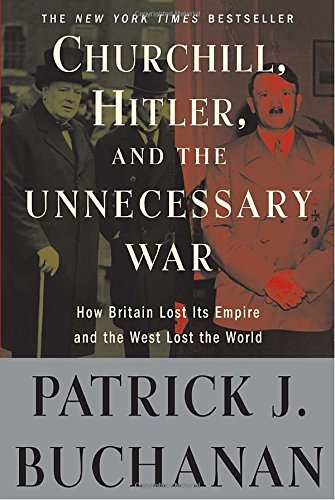
Patrick J. Buchanan is the author of “Nixon’s White House Wars: The Battles That Made and Broke a President and Divided America Forever.”

Ruling Class Gotta Have a War

All of a sudden Elon Musk has become the second richest man in the world. How did he do it? With Tesla, the electric car company, whose stock has risen 650% this year.

How come I always miss out on these deals? It’s not as if Tesla is a secret.

Sensibly, Musk is heading out of California for Texas. After all, why would he want to pay California state income tax on his stock options?

But, let’s face it, Musk has become the second richest man in the world on gubmint subsidies. Electric cars, batteries, you name it: our ruling class is all in on it: to save the world from climate change, and there is money to be made.

Now I don’t know if Elon Musk believes in climate change. But he sure knows how to make money on it.

And now that it looks like Joe Biden is going to steal the election fair and square in the good old American tradition, it’s first and ten for climate change, and both the opponent’s cornerbacks have been sent off the field.

James Delingpole is mourning today that the climate change skeptics have lost. He quotes a Telegraph columnist: “Whatever the merits of their case, climate change sceptics have lost the argument.”

Well, yes, because the whole global ruling class is all-in on it. But why? It’s simple.

Ruling Class gotta have a war.

It’s not hard to figure out. The whole point of being the leader of your tribe, your barony, your princedom, your nation, is to be the brave leader braving everything to save your country — or our planet.

Why else do you think President Wilson injected the U.S. into World War I? Or President Roosevelt into World War II? Or President Johnson into the War on Poverty? Or Joe Biden into the Double War on Climate Change and Systemic Racism?

Because there is nothing more superfluous in this world than a ruling class without a war to fight.

Ruling Class gotta have a war.

That’s why the Dem governors are all rehearsing Shakespeare’s Henry V.

Once more into the mask, dear friends, once more;
Or close the bar up with our COVID dead.

You might ask: what in the world was King Henry doing in France, attacking the innocent town of Harfleur? Didn’t he have enough systemic problems back in England?

You might just as well ask our Democratic governors what bombing bars and restaurants until the rubble bounces is all about.

But if we are going to have a global war on climate change, we may as well do what Elon Musk, the white guy from Pretoria, South Africa, is doing. Go all in as a war profiteer.

But do you notice that nobody is calling Musk a war profiteer? At least not yet? That is because all my liberal neighbors are queueing up to buy Teslas. There is a fine line between a war profiteer and a Henry Kaiser, heroic builder of Liberty ships, and I don’t have the moral chops to know that line. Let’s see what La Wik has to say:

A distinction can be made between war profiteers who gain by sapping military strength and those who gain by contributing to the war.

Ah yes, silly me. Elon Musk is in the clear, because he is gaining “by contributing to the war.”

And then there is the war on systemic racism. Do you know, I suspect that there is nothing to compare with the ruling class’s usual war except a Holy War.

Ruling Class gotta have a war.

You see, in a Holy War, the ruling class politicians get to join up with the ruling class priests. Boy, oh boy, do they have fun together. Of course, we moderns have to go back eons to find a Holy War to study, way back in the dim and distant past in ancient China when the political priests decided to purge all the Evil Ones from society in the Maoist Great Proletarian Cultural Revolution.

So, what do you think our Great Woke War on Systemic Racism is all about? Chopped liver?

Yep, ruling-class men still need to show that they are man enough to send the Forlorn Hope into the breach, and ruling-class women still need to out-virtue-signal the other women, who are probably witches, anyway.

For if the ruling class doesn’t have climactic climate change wars and moral systemic racism wars to fight, what would the robin do then, poor thing?

Elon Musk has the answer to that: Go to Mars! And I dare say that in a twinkling of a nose-ring, the Wokies will be complaining about Systemic Spacism, and the next Sandy O will be advocating for a Blue Space Deal.

But I tell you what I think of those next-gen Wokies: “To the Moon!”

Christopher Chantrill @chrischantrill runs the go-to site on US government finances, usgovernmentspending.com. Also get his American Manifesto and his Road to the Middle Class.

Natural Rights…America’s Lost Concept

The concept of “natural rights” was core to America’s original Bill of Rights and Declaration of Independence. “Natural rights” means you HAVE rights whether they are recognized, or not. Rights have OBJECTIVE power. Tyrants despise this concept. They view rights as things for themselves to give out or take away, based upon whatever whims or standards they deem acceptable. That’s why the tyrants in charge of America’s statehouses are so perversely gleeful as they issue new edicts by the day. You have to understand: America’s governors and mayors are morally and mentally sick people. They GET OFF on what they’re doing, i.e., the giving and taking away, and giving back, and then taking away of rights again. Rights don’t work that way. Not in reality. Sadly, tyrants have ruled throughout human history. But the interesting thing is that, in the end, they are always defeated, when their victims have had enough. Americans don’t have to wait 100 or 500 years to rise up. We can do so any time. We have a legacy of freedom and liberty to end this now. Our rights are natural, a given at birth and by our very natures; THIS is the recognition that the Cuomos, Newsoms, Kamalas and Bidens of the world hope you never recognize. It’s their Kryptonite.

Michael J. Hurd, Daily Dose of Reason

The Party of Trump

ya’ll remember the Country Club Republicans? They held sway over the GOP for many years. East Coasters like Nelson Rockefeller and the Bushes. None of them liked Ronald Reagan, but we did. They did everything they could to side-line our dear Ronnie.

True patriotic Republicans have had to put up with being dismissed by the Country-Clubbers, we were not hoity-toity enough for them. Or pro-choice enough for them.

Then comes the TEA Party which embarrassed the crap out of them. The George Will’s of the world denigrated us. The Karl Rove’s of the world worked to displace us. But then Donald Trump came along and without a stitch of blue-bloodness in his system he got our motors running.

The Country-Clubbers have morphed into Never-Trumpers.

Well, guess what? The GOP is now the Party of Trump.

Oliver Wendall Holmes once said that a mind that is stretched by a new experience can never go back to its old dimensions.

The Party of Trump will never go back to being second place because we are this country’s truest citizens.

Slyfox